Tag: manufacturing

  • Doms Industries inks 51 per cent stake in Super Treads to bulk up stationery play

    Doms Industries inks 51 per cent stake in Super Treads to bulk up stationery play

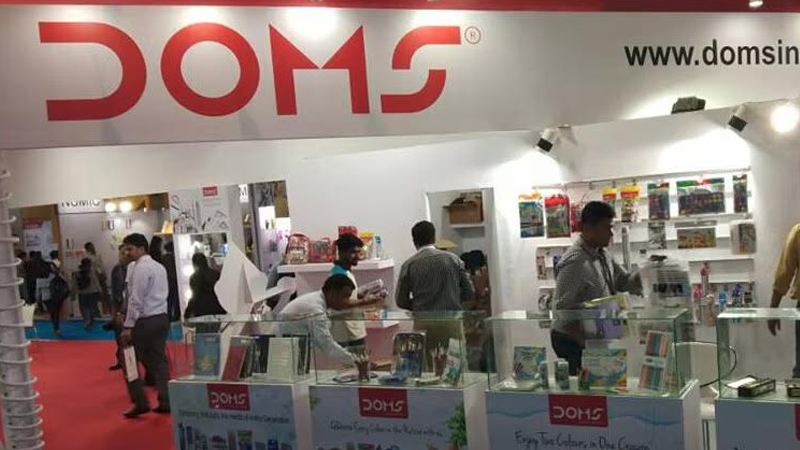
    MUMBAI: Doms Industries Limited has acquired a 51 per cent equity stake in Super Treads Private Limited (STPL) for up to Rs 6.12 crore, the company confirmed after a board meeting held on May 19. The strategic acquisition will be executed through a secondary share purchase, subject to due diligence and regulatory clearances.

    The move is aimed at strengthening Doms’ manufacturing base in the paper stationery segment and extending its reach in eastern India. STPL, which has been in operation for over two decades, has built its niche as an OEM supplier specialising in notebooks and paper stationery.

    “Our proposed acquisition of a majority stake in STPL is a key step in enhancing our manufacturing capacities and geographically diversifying our paper stationery infrastructure to efficiently reach our consumers, thus further strengthening our competitiveness in this segment,” said Doms Industries Ltd MD Santosh Raveshia.

    He added, “This investment aligns with our vision of leveraging our growing brand reputation and well-entrenched distribution network to deliver our unique and differentiated range of products at the most competitive prices. With Rakesh Maheshwari and his team, we have got this wonderful opportunity to partner with great technocrats, like-minded entrepreneurs who have a great zeal to offer something unique to the market. We are confident that this partnership would lead to significant long-term growth and value creation for all of us”.

    STPL promoter director Rakesh Kumar Maheshwari described the deal as a strategic inflection point. “This partnership represents a strategic milestone for our company, combining our manufacturing expertise with Doms’ national distribution capabilities and established brand. This collaboration will be instrumental in realising our full potential and enable us to explore opportunities, thereby unlocking new avenues for growth and innovation. In Doms, we have found a perfect strategic partner to help us pursue a brand-led business journey”, he said.

    Once finalised, STPL will become part of the broader Doms Group portfolio, which already includes Pioneer Stationery Private Ltd, Micro Wood Private Limited, Skido Industries Private Limited, Uniclan Healthcare Private Limited and associate firm Clapjoy Innovations Private Ltd.

    Marathon Capital Advisory Private Limited served as the strategic advisor to Doms on this acquisition.

  • LTIMindtree and Google Cloud team up for AI-powered business makeovers

    LTIMindtree and Google Cloud team up for AI-powered business makeovers

    MUMBAI: LTIMindtree, the digital transformation firm, has announced a strategic alliance with Google Cloud, promising to inject a dose of agentic AI into businesses worldwide. Think of it as giving your company a digital shot of espresso, powered by Google’s Gemini models and a whole lot of cloud magic.

    This isn’t just a casual fling; it’s a full-blown partnership aimed at redefining the cloud landscape. LTIMindtree plans to whip up industry-specific solutions, creating a “green corridor” for AI-powered innovation. The company is talking market development initiatives, go-to-market strategies, and enough training to turn its workforce into AI whisperers.

    The collaboration will see LTIMindtree leverage Google Cloud’s Vertex AI to create bespoke solutions for the BFSI, manufacturing, hi-tech media and entertainment, retail, and CPG sectors. It’s aiming for rapid deployment and top-notch customer support, promising to maximise ROI while modernising infrastructure.

    LTIMindtree president global AI services, strategic deals, partnerships and whole time director Nachiket Deshpande said: “Our partnership with Google Cloud marks a significant milestone in our journey towards innovation and growth. By combining our strengths, we are poised to deliver unparalleled value to our customers and drive transformative change in the cloud ecosystem.”

    Google Cloud  president global partner organisation Kevin Ichhpurani added, “Generative AI has the power to increase business efficiencies and transform how organisations operate. With LTIMindtree’s expertise and Google Cloud’s leading AI technology, customers can deploy powerful solutions that solve industry challenges and significantly improve business performance.”

    LTIMindtree is setting up a dedicated team of AI aficionados to ensure a smooth ride, promising seamless implementation and consistent growth for its  clients. In essence, this partnership isn’t just about cloud computing; it’s about cloud conquering, with a dash of AI flair.

  • Apple’s success in India shows manufacturing as key to employment: Ashish Dhawan

    Apple’s success in India shows manufacturing as key to employment: Ashish Dhawan

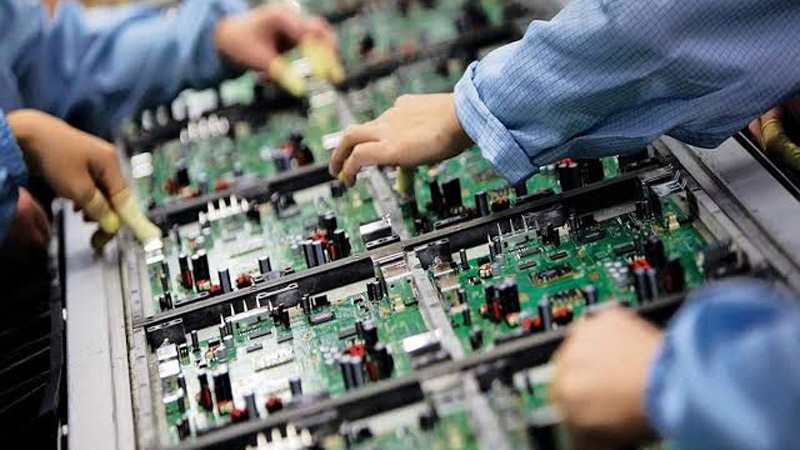
    Mumbai: The Convergence Foundation (TCF) founder-CEO Ashish Dhawan emphasised India’s success in electronics manufacturing as a clear sign of the country’s potential to boost job creation. Dhawan highlighted Apple’s rapid expansion in India, with its 29th factory being established in the country in just two to three years.

    “Many doubted India’s capability in manufacturing, questioning our productivity. But Apple’s success shows we can make it happen. This should instill confidence in India’s capacity for large-scale electronics production,” Dhawan stated.

    He urged stakeholders to view this success as a step toward addressing India’s labour-intensive exports gap, stressing the country’s demographic advantages and lower labour costs compared to China. However, he cautioned that significant reforms are still needed, particularly around reducing regulatory hurdles, improving ease of doing business, and investing in infrastructure.

    Dhawan stressed the importance of tying manufacturing growth to job creation. In a conversation with Foundation for Economic Development (FED) founder-director Rahul Ahluwalia, he pointed out that while sectors like automobile manufacturing have become more capital-intensive, industries like electronics assembly and apparel can create more jobs, which is critical for India today.

    “The government’s role in enhancing competitiveness has been vital,” Dhawan said, crediting both central and state governments for their efforts to improve labour and land policies. “Business leaders are calling for competitiveness, and the government is responding.”

    Dhawan also urged India to set its sights on matching the success of East Asian economies like South Korea, Taiwan, and Vietnam. He cited Uttar Pradesh as an example, pointing out the stark difference in exports between the state and Vietnam, despite UP’s much larger population. Dhawan called for a strategic push to capture the world market in labour-intensive sectors, comparing India’s performance with East Asian benchmarks.

    Dhawan further advocated for India to become the world’s skills hub. He pointed out that India already leads in global remittances, receiving $120 billion annually, and projected this could grow to $300 billion if India strategically sends more skilled workers abroad.

    He also called for government-to-government arrangements to facilitate temporary work visas in OECD countries, where 50 million jobs are expected to open up over the next two decades. India, Dhawan argued, is well-positioned to supply skilled labour in sectors like healthcare, domestic services, and more.

  • Dabur acquires majority stake in Badshah Masala

    Dabur acquires majority stake in Badshah Masala

    Mumbai: Dabur India has announced that it has signed definitive transaction agreements to acquire 51 per cent shareholding of Badshah Masala,which is engaged in the business of manufacturing, marketing and export of ground spices, blended spices and seasonings.

    This acquisition is in line with Dabur’s strategic intent to expand its foods business to Rs 500 crore in three years and expand into new adjacent categories. This also marks Dabur’s entry into the over Rs 25K crore branded spices and seasoning market in India.

    Dabur has acquired 51 per cent stake in Badshah for Rs 587.52 crore, less proportionate debt as on the closing date, with Badshah being valued at Rs 1,152 crore. This translates to a revenue multiple of around 4.5x and EBIDTA multiple of around 19.6x of FY’ 22-23 estimated financials.

    Announcing the acquisition, Dabur India chairman Mohit Burman said, “The Indian spices and seasoning category is a large and attractive market. Badshah Masala is one of the key players in this space. Our investment in Badshah Masala will help expand this business and continue to provide unmatched quality products. This acquisition will accelerate our growth strategy as we continue to build our Foods business. We intend to leverage our international market presence to grow this business globally.”

    “The transaction is expected to be Cash EPS neutral in the first year and accretive thereafter. The acquisition is expected to be completed within this fiscal. As per our agreement, we will acquire the balance 49% shareholding after 5 years,” Dabur India group director P. D. Narang said.

    Dabur India CEO Mohit Malhotra said, “Branded Spices market in India is growing at healthy double digits, led by increasing consumption, upgradation from unbranded to branded and growing preference for regional flavours across states. The market is dominated by regional players and holds significant potential for growth in the future. Dabur has an existing Foods portfolio and views ground and blended spices as a good addition to this portfolio. Badshah portfolio will gain from Dabur’s extensive distribution reach. We look forward to unlocking further synergies and market opportunities to capture the full potential of Badshah Masala.”

    Badshah Masala Private Limited Managing Director Mr. Hemant Jhaveri said, “We are delighted to enter into a strategic partnership with Dabur. Dabur stands for Trust and Heritage and joining hands with Dabur will help drive the future growth potential of Badshah on a stronger trajectory. Our companies are a great fit. This transaction will enable us to accelerate our growth by adding our products to Dabur’s broad portfolio to meet the needs of consumers across geographies.”

    Ajay Shah, advisor to Badshah Masala said, “This strategic investment of Dabur brings together two strong Indian brands. This deal is growth oriented, mutually complementary, value accretive and beneficial for both the companies.”

  • MIB secretary Apurva Chandra visits Tata Play’s technology centre

    MIB secretary Apurva Chandra visits Tata Play’s technology centre

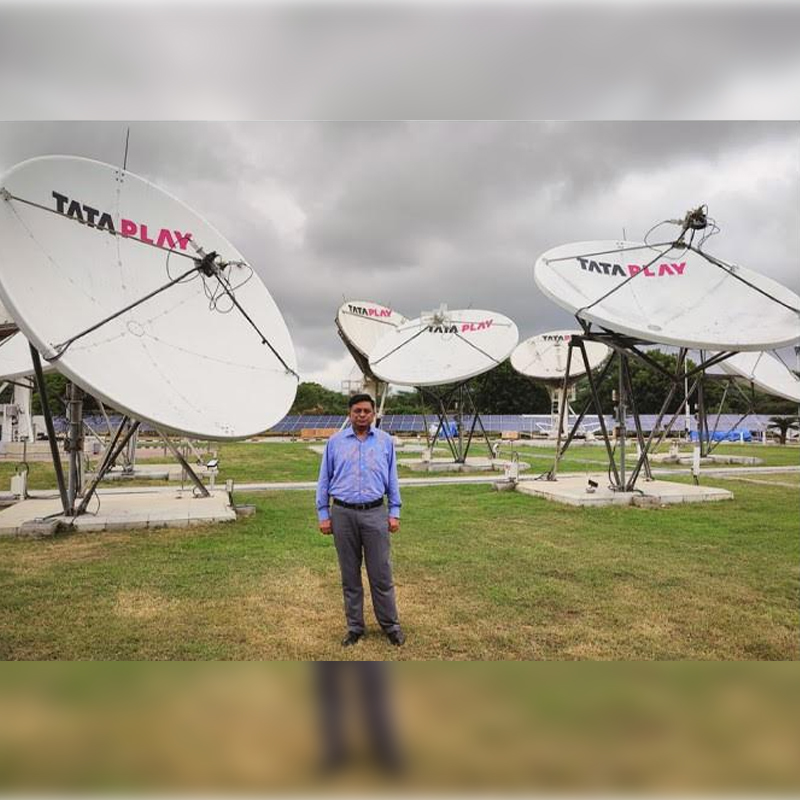
    Mumbai: Ministry Information & Broadcasting (MIB ) secretary Apurva Chandra has visited Tata Play’s technology center in New Delhi to explore how Tata Play is leveraging technology and providing benefits to the end consumers.

    While exploring various ideas about technology that can benefit the customers, Chandra spent a considerable time understanding the complexities of a content distribution platform and steps Tata Play is taking to boost Make in India efforts for manufacturing set-top-boxes.

    During his visit, the Tata Play team demonstrated to Chandra the complete satellite communication and direct-to-home (DTH) delivery workflow and discussed other topics of mutual interest.

    Last year, Tata Play launched the first batch of Make-in-India set-top boxes in association with Technicolor Home and Flextronics. Earlier, Tata Play’s managing director & CEO Harit Nagpal had said that the India made set-top boxes would help generate employment and serve Indian consumers better.

    Tata Play has invested in advanced digital infrastructure and partnered with global leaders to provide superior technology. The company has a pan-India footprint of 23 million connections.

  • PDS onboards Saurabh Saxena as group CIO

    PDS onboards Saurabh Saxena as group CIO

    Mumbai: PDS, a design-led sourcing, manufacturing and supply chain platform has announced the onboarding of Saurabh Saxena as group chief information officer (CIO). The appointment further reinforces the company’s commitment to its ‘digital’ pillar and a future ready PDS platform, it said.

    Prior to joining PDS, Saxena was with IBM for over 10 years where he was the head of analytics, strategy, insights & operations for IBM Cloud (data & AI, automation and security) business in the Middle East and Africa.

    “As a design-led sourcing and manufacturing company, our business is a synchronised function across geographies and skill,” said PDS Ltd vice chairman Pallak Seth. “An agile and creative business such as ours places a strong emphasis on foresight, therefore the pace of technological advancements will be instrumental in charting out the company’s growth story. It is great to have Saurabh join PDS to navigate our digital transformation journey.”

    “PDS’ digital and IT transformation agenda is focused on integrated business processes that enable collaboration for our customers and suppliers alike. Data analytics and insights from our global operations will enable improved visibility, insightful product design & development, and better decisions leading to operational excellence,” added PDS Group CEO Sanjay Jain.

    A seasoned professional, Saxena has over 20 years of experience with management consulting and advisory, P&L ownership, operational leadership including various disciplines like data analytics & insights, project management, sales and business operations, enterprise solutions, and product management. Previously, he has consulted CXO’s and entrepreneurs on data and AI solutions. 

    He holds an MBA (IT systems, strategy and marketing) and a BE degree in computer science and engineering.

  • WK Life to open manufacturing unit in India

    WK Life to open manufacturing unit in India

    Mumbai: London-based Gen Z brand WK Life has announced to launch a manufacturing unit for high-end electronic goods in Northern India by the end of this year. The company intends to manufacture 30 percent of its products in India which boasts a skilled and disciplined workforce, low cost of manpower, and strong technical and engineering capabilities, it said in a statement on Monday.

    “The consumer electronics industry is expected to reach Rs 1.5 lakh crore by 2025 from the present Rs one lakh crore, indicating an increase in demand for electronic items in urban as well as rural markets. So as to meet this demand we have decided to set up our own manufacturing units,” said WK Life director Rohit Sahni. “We are also tying up with prominent manufacturers in India. Our homemade, chemical-free personal care items are already in the market.”

    The brand forayed in India in October 2018, and has since then opened 14 new stores in Delhi, Noida, Gurgaon, Jaipur, Lucknow, Mohali, Hyderabad, and Guwahati. The company offers a wide range of electronic gadgets such as home theatres, bluetooth speakers, headphones, wireless chargers, bluetooth mic, charging cables, mobile accessories, power banks, mobile cases, and other items including backpacks, hand bags, kids fashion accessories, and scented candles.

    As the retail sector continues to witness high margin growth in India, WK Life is planning to make its brand more visible in the market through retail chains and expanding its geographical boundaries to metros and tier-2 cities.

    “The driving force in India is its vast population and with better markets and more organised retail spaces, it’s become easier to reach out to them,” said WK Life co-director Gaurav Dabas. “We believe the quality of products plays a very important role in trust-building, which is one of the many reasons why we focus on physical retail chains as compared to omnichannel presence. Our offline sales have gone up by 30 percent in the last one year. We are planning to expand to over 125 retail stores across India in the next two years,” he added.

  • Dabur India appoints Rahul Awasthi as executive VP – manufacturing

    Mumbai: Dabur India has appointed Rahul Awasthi as executive vice president – manufacturing. Awasthi was head of planning, technology, and innovation at HUL.

    He has 27 years of experience in the FMCG industry in the manufacturing, technology, innovation, and supply planning domain. “With multiple strategic and execution roles across locations, brings in both local and global perspective on the table,” the company said while welcoming its new EVP.

    Dabur India is one of India’s leading FMCG Companies and among the world’s largest Ayurvedic and Natural Health Care companies.

  • FICCI demands infrastructure status for broadcast industry in pre-budget memo

    FICCI demands infrastructure status for broadcast industry in pre-budget memo

    NEW DELHI: The Indian broadcast, cable and direct-to-home (DTH) sectors have been demanding a infrastructure status for the industry as well as seeking all benefits and incentives available for the infrastructure industry including the availability of finance at a concessional rate.


    To this effect, the Indian Broadcasting Foundation (IBF) had earlier this month urged the Union Government to grant “Infrastructure Status” to the broadcasting industry.


    Now, making this demand, the Entertainment Wing of FICCI has said in a pre-budget memorandum to Finance Minister Arun Jaitley that the sector should be allowed tax concessions as per Section 80-IA of the Income Tax Act.


    The digitisation process and the deployment of set top boxes (STBs) are heavy capital oriented and thus require huge investments, which may force various amalgamations and thus they should be allowed to set off accumulated losses and unabsorbed depreciation allowances to be carried forward as per Section 72 A of the Act, the industry body said.


    Parity with Manufacturing Industry under Section 72A of the Act


    It also said that the disparity between the service and the manufacturing sector is very adversely affecting the growth and consolidation of the Service sector.


    The tax benefits under Section 72A of the Act in respect of amalgamation or de-merger (carry forward and set off of accumulated loss and unabsorbed depreciation allowances) are currently limited to industrial undertakings or a ship, hotel, aircraft or banking. The definition of industrial undertaking should be widened to include service industry, broadcasters and content production companies.


    Rationalisation of Indirect taxes


    The rate of taxes, which range from 30 – 70 per cent, especially the entertainment tax imposed by the states, over and above the service tax, are punitive in nature, FICCI said, adding that such punitive level of taxation incentivises unhealthy practices, such as piracy, revenue leakage on account of under reporting of revenues, etc. It is important that the overall taxation level is brought down for the sector as a whole.


    State Entertainment tax legislations levy high taxes on the subscription earned by cable operators and DTH operators. The non-availability of credit of central taxes against the state taxes and vice versa increases the tax burden on the entertainment industry. In addition to this, the Central Government has levied service tax at 14 per cent on the transfer of copyrights, which is already being taxed as ‘goods’ under the various state VAT legislations.


    Payment for Content Production


    FICCI said there is ambiguity since the tax authorities have been adopting a view that the payment towards production of content is in the nature of fees for technical services and subject to tax at the rate of 10 per cent under section 194J of the Act whereas Explanation III to section 194C of the Act clarifies that payments made towards a contract, concerning broadcasting and telecasting including production of programmes for such broadcasting or telecasting, would fall under the definition of ‘work’ for the purpose of section 194C of the Act.


    It suggested that to avoid difference in positions adopted by the tax payer and tax department on applicability of relevant section and to mitigate resultant litigation and hardship, a clarification may be issued regarding appropriate classification of content production services and applicability of relevant section for withholding of taxes.


    Carriage Fees/Placement Charges


    FICCI has demanded that the Government should provide a clarification that the payments made towards carriage fees are not in the nature of royalty or fees for technical services and TDS is required to be made on such payments as per section 194C of the Act.


    It said that the tax department is contending that since cable operators are providing technical services, payments made towards placement of channels is subject to TDS under section 194J of the Act.


    Broadcasters pay placement or carriage fee to the cable and DTH operators to place their channel in prime bands, which in turn enhances the viewership of the channel. Such charges are paid under a contract merely for placing the channel on agreed frequency bands.


    Deduction of tax at source under Section 194H on the “15% agency commission”


    FICCI recommended a clarification that no taxes need to be deducted at source by broadcasters on the “15 per cent agency commission” as mentioned in the invoice raised by broadcasters to advertisement agency or advertisers.


    FICCI said the 15 per cent agency commission mentioned by broadcasters in its invoices for ad airtime sale raised on ad agency or advertisers is merely a presentation in the invoices and not a real transaction. Neither the broadcasters nor ad agency recognises the same as revenue or expense. It is customary in nature, as is also evident from the fact that even on the invoices raised directly on advertisers; the said 15 per cent agency commission appears.


    Broadcasters are not supposed to make any payments towards 15 per cent agency commission mentioned in the invoice, as there is no agreement or arrangement to pay such the commission with ad agencies or advertisers. In fact, broadcasters do not make any payment in respect of the said commission mentioned on the invoices.


    At the outset, FICCI said that the Indian media and entertainment industry grew from Rs 918 billion in 2013 to Rs 1026 billion in 2014, registering an overall growth of 11.7 per cent. The industry is estimated to achieve a growth rate of 13 per cent in 2015 to touch Rs 1159 billion. The sector is projected to grow at a healthy CAGR of 13.9 per cent to reach Rs 1964 billion by 2019.


    As per FICCI, television clearly continues to be the dominant segment but strong growth had been posted by new media sectors. Gaming and digital advertising recorded a strong growth of 22.4 per cent and 44.5 per cent compared to the previous year.


    The benefits of Phase I and II of cable digital addressable system (DAS) rollout, and continued Phase III rollout are expected to contribute significantly to strong continued growth in the TV sector revenues and its ability to invest in and monetise content. The sector is expected to grow at a CAGR of 15.5 per cent over the period 2015-2019.


    Tax Exemptions for Radio Broadcasting


    While noting that radio is anticipated to see a spurt in growth after rollout of FM Phase III licensing, FICCI asked the Government to consider providing tax holiday of five years for new capital investment in Phase III; reduce customs duty on capital equipment for radio broadcasting to four per cent; and consider service tax exemption for billings to service recipients covered in the negative list.


    Tax Holiday for five years for setting up of new screens


    Noting that the film sector had shown a minimal growth of 0.9 per cent in 2014 over 2013, FICCI said there had been an increase in piracy, since the number of screens for viewing films had not increased in proportion to the increase in number of films and the number of people viewing these films.


    FICCI said that it was essential to extend the benefit to cinema owners in terms of 80-IB of the Act to multiplexes constructed after March 2005 to encourage the set-up of multiplexes and thereby improve the density of cinema houses in the country. This will encourage setting up of new screens in India and help in improving screen density.


    Reduction of prescribed time limit under Rule 9A and 9B


    FICCI suggested that the existing period of 90 days before end of the financial year (under Rule 9A and 9B of IT Rules) is suitably reduced to grant relief to assessees whose feature films have incurred losses and have been released for exhibition in the last quarter of the financial year.


    Under Rule 9A of the Income Tax Rules, if a film producer sells all rights of exhibition of his feature film, the entire cost of production is allowed as a deduction in computing the profits and gains of such previous year.


    However, if the film producer does not sell all rights of exhibition of his film, it is released for exhibition on a commercial basis at least 90 days before end of the financial year and the film producer is eligible to claim deduction of the entire cost of production. Otherwise, a feature film is released for exhibition on a commercial basis within a period 90 days before end of the financial year and the producer is eligible to claim deduction of cost of production only up to a ceiling limit and any excess cost of production is carried forward to the next financial year. This ceiling limit is the amount of revenues generated by the feature film in the financial year.


    In certain cases where not all rights of exhibition of a feature film are sold and it is released for exhibition on a commercial basis within 90 days before end of the financial year, the feature film performs poorly and it is exhibited only for a short duration. Consequently, the film producer may not recover costs. In such cases in view of the prevailing IT Rules, the film producers are unable to claim a deduction of entire production cost and, the loss is to be carried forward to the next financial year. Accordingly, such film producers are unable to claim losses in the year the feature film is released for exhibition despite no further scope of income. A similar situation exists in the case of expenditure of distribution rights in view of Rule 9B of IT Rules.


    Exemption of Service Tax on major inputs/input services


    FICCI recommended that major inputs / input services that are used in relation to theatrical rights in movies, be exempted from service tax. Since the major inputs/input services used in relation to revenue earned from theatrical rights are taxable, the CENVAT credit of service tax paid on such inputs/input services is blocked in the supply chain due to applicability of CCR. Eventually such taxes result in increase of the cost of production thereby defeating the purpose of providing an exemption on the output service.


    Re-instatement of the Service Tax exemption on Transmission of digital cinema


    FICCI also recommended reinstating the exemption to digital cinema service distributors, as it existed earlier under notification 12/2007 ST of 1 March, 2007, which had been rescinded with the introduction of the negative list.


    Service tax on transmission of digital cinema is a direct cost to the producers since the same is in relation to theatrical exhibition of cinematograph film (which is an exempt service with effect from 1 April, 2013) and hence no credit can be availed of such service tax.


    Clarity on export status of post-production services


    FICCI asked for clarity on the inclusion of post-production activities in the exclusion to this Rule. Alternatively, the second proviso to the Rule 4(a) of the POPS Rules be re-worded.


    Given the various technological advances in the Indian film industry, many Indian entities are hired by foreign producers for carrying post production activity. For such activities, the content is temporarily imported into India (either physically or electronically) and re-exported after completion of service. Post-production activities, which may be performed in India, do not find explicit mention in the proviso that carves out exceptions to the performance based rule in POPS Rules.


    Service Tax exemption to on-screen advertising in cinemas


    The industry body said on-screen advertising in cinemas and multiplexes should be exempted from levy of service tax.


    After 1 October, 2014, the negative list of services was amended and on-screen advertising within cinemas is liable to service tax.


    The on-screen advertising within cinemas caters to advertisers with small businesses, with limited resources. For large advertisers, on-screen advertising is a secondary medium of advertising at best and they have a small contribution to onscreen advertising within cinemas. The on-screen advertising forms an important source of revenue for the exhibitors, which are already reeling under the pressure of multiple taxes. Re-instatement of service tax on such revenue will only increase their tax burden.


    Applicability of Service Tax on food and beverages sold within Cinemas


    The food and beverages (F&B) sold in theatres during movies are subject to VAT under local state laws and the same is paid by the exhibitors. But with effect from 1 April, 2011, restaurant services became taxable whereby services rendered by any air-conditioned restaurant serving alcohol were made liable to service tax and later with effect from 2013 the condition of serving alcohol was withdrawn. However, it is still not clear whether the sale of F&B by cinema halls and multiplexes is covered in this service.


    Unlike restaurants, there is no seating arrangement, no cutlery is provided and no waiter serves F&B and hence there is no element of service involved in any meaningful manner.


    FICCI said levy of service tax is intended on “restaurants” rendering certain services and is not intended on sale of food, beverage and snacks from candy counters in cinema theatres.


    Service Tax exemption on entry to award functions, musical performance etc.


    The Union Budget of 2015 had amended the negative list of services and effectively withdrawn the unconditional service tax exemption, which was granted to tickets for award functions, music events, sports events etc. With effect from June 2015, service tax is payable when the consideration for admission to entertainment events such as award function, concert, pageant, sporting event etc. is more than Rs 500 per person.


    However, FICCI said payment for admission to any event is already liable to a high state entertainment tax and levying of a service tax of 14 per cent over and above the high rates of entertainment imposes a high burden on the entertainment sector.


    The industry body asked for a clarification to specify that the value of ticket for the purpose of levy of service tax on such admission (where the ticket price is more than Rs 500) should be the value excluding Entertainment tax. It also wanted clarification on if service tax is payable, the same should be computed on a value exclusive of Entertainment tax and accordingly no service tax should apply on entertainment tax amount.


    Customs Duty exemption on film equipment under the ATA Carnet


    The ATA Carnet permits duty free temporary admission of goods into a member country. The list of exempted products covers filming equipment too. However, there is no Customs Notification in order to exempt the import of filming equipment from the levy of Customs Duty, on the lines of the ATA Carnet.


    FICCI recommended that Customs Duty should be exempted on film equipment under ATA Carnet. The film production equipment is very expensive and not easily available in all countries because of which the film producers are compelled to temporarily import the same on lease for the purpose of producing the film. In absence of a customs notification to exempt filming equipment, the ATA Carnet duty exemption benefit cannot be extended to import of filming equipment.

    These imports significantly increase the burden of tax on the film producers.


    Proposals for Animation, Gaming and VFX Industries


    FICCI also made some recommendations for the Animation, Gaming & Visual Effects (VFX) industries.


    It asked for a 10-year tax holiday for the Animation, Gaming, and VFX industries; and removal of withholding tax on revenues accruing from sales of mobile games in non-India markets as well as removal of withholding tax on the development contracts given to mobile game developers outside India.


    FICCI also asked for removal of withholding tax paid by expats working in India for Indian mobile game development companies.


    The Minimum Alternate Tax (MAT) applicability for units undertaking animation work in SEZ should be withdrawn to encourage export of animated contents.


    The industry body wanted restoration of STPI advantage scheme for AVGC or ITES for another 10 to 20 years and cover/encourage exports as well as IP creation.


    To promote domestic gaming market, excise duty on local manufacture should be brought down to nil (similar to film and music industry). This will enable CVD to be brought to zero also. The effective reduction in taxes would be around 15 per cent. Import duty on consoles (gaming hardware) to be brought down to zero per cent to increase the installed base to enable the local developer ecosystem to flourish.


    There should be a provision of 50 per cent reimbursable MDA (Market Development Assistance) for travel and registration fees to international market events.


    The Government should extend support under Market Development Assistance (MDA) activity for Indian companies to exhibit by setting Indian Pavilions in the world markets. What is needed is to help bringing local production companies to international markets, collect and disseminate information and support creating the infrastructure needed for a healthy media market to develop.