Tag: manufacturers

  • Lights, lamps and food this festive season

    Lights, lamps and food this festive season

    Mumbai: The festive season brings along with it a basket full of hope, happiness, smiles, lights, and, of course, food! We Indians have a fetish for scrumptious food, and for us, any occasion is incomplete without good food—the festive season, therefore, isn’t any different. Just like most of the other product categories, the food category also saw a slump during the pandemic but has obviously risen from it. With the onset of the festive season, I tried to get a glimpse of how the festival of lights has turned out to be for food brands, the trends and innovations that we witness in this category and much more.

    Discussing the revival of the food category this festive season, Greendot Health Foods (manufacturers of the snack brand, Cornitos) managing director Vikram Agarwal is of the opinion that the last two years have been crucial for the food industry. Due to the pandemic, consumers were spending less because they had fewer options. “Now, the spending has increased, which has further increased the demand. The growth is expected for festive season gifting due to the rise in digitisation and an increase in socialisation among individuals as well as corporates,” he brings out.

    Consumers’ spending on food

    Agarwal is positive about the consumer spending this festive season. “The Cornitos’ product portfolio encompasses a whole range of gift packs for people across all demographics, and this festive season we are expecting an increase in sales by 15 to 20 per cent,” he reveals.

    4700BC’s (the gourmet popcorn brand) founder, Chirag Gupta, quips that the season has been phenomenal for them. In comparison to the previous two years’ holiday seasons, they are seeing a 60-70 per cent increase in 2022.

    “Usually, the average order value (AOV) is Rs 600 – Rs 700. But during Diwali, since a lot of bulk gifting happens, the AOV is about Rs 1,400. Other than this, 25 per cent of all our sales came from the B2B sector, with partners like Google, Microsoft, Discovery Network, Lufthansa, Amazon, and Samsung. So, we can proudly say that the country has been looking at us as a clutter-breaking gift,” he exclaims.

    Who are these consumers?

    Agarwal points out that the youth love Cornitos. “We assure our consumers that their health and taste are not compromised. Consumers have adopted a more health-conscious lifestyle post-pandemic and are also interested in healthy snacking. Cornitos stands out among its competitors in terms of its unique flavours and healthy ingredients. It is a gluten-free snack that is cooked in healthy corn oil and is cholesterol-free,” he says. Cornitos’ reach was previously only in the metropolitan cities, but now the demand in tier II and III cities has also increased.

    Gupta mentions that the consumers for 4700BC range from the age group of 18 to 40 years. There is an equal proportion of males and females. Purchases come from tier I locations and the rest of the country in equal proportions. They segment their customers into netizens, early adopters, and hedonistic shoppers.

    The netizens are the constant scrollers and brand advocates. The early adopters are experimenters, who are always the first group of consumers to cross the chasm and try new offerings. They also include connoisseurs—they believe that food is not just an essential need but an element of pleasure—and, thirdly, trendsetters.

    The hedonistic shoppers include, firstly, self-pamperers—it has always been about pleasure attainment for them and the ones who know how to celebrate themselves. Secondly, affluent achievers—they keep looking for a new form of expression to motivate and appreciate their team; and thirdly, blue-bloods.

    Although the number of consumers has increased, the purchasing audience of 4700BC has remained the same.

    Show me the money!

    Talking about the growth in numbers as compared to the festive season of the last two years, Agarwal explains that companies are motivating employees by offering them gifts to celebrate the festivities. He is expecting a 20 per cent rise in demand for corporate gifting over 2021.

    Gupta of 4700BC brings out that their revenue growth in the gifting segment was at Rs 21 million and had been increasing. FY’ 22 saw a 1.6x YOY growth to Rs 67 million. He expects a similar trend for FY’ 23, that is, the revenue should reach about Rs 120 million.

    “We usually see a jump of 40 per cent in festive sales, and we expect a similar jump this year as well at the minimum level. Last year was also good, but the number of orders was relatively lower in relative growth. This year we are expecting and clocking a lot more,” he says.

    He goes on, “As per the current data, since the last two years were relatively low due to covid, we are seeing 60-70 per cent growth this year. All we can say is that we are overwhelmed by the response this gifting season and all the efforts in building a distinct tone and narrative have paid off.”

    Advertising and marketing spends and strategy

    Gupta reveals that 15-20 per cent of their revenue is targeted to be spent on marketing during festive times. “The spending has always been defined based on the sales and offtake of the year. We are always known to be wise spenders. We are very mindful of our growth, and we frugally spend to always keep the top line healthy,” he adds.

    This year, 4700BC wanted to build its long-term narrative of how Mr. BC makes the most of the present. A character whose madcap personality could carry this gifting narrative for many more years to come. “We intended to create a distinct space in the entire gifting culture of the country. Over the years, the advertisements we saw across festive seasons became monotonous and non-experimental. So, we were like, we want to start a new narrative,” Gupta says.

    However, he is quick to say that they did not want to be specific to Diwali or any festive occasion and wanted to create something that could have longevity all year round. “Essentially, cost optimization. Those intriguing content building blocks were the gangster party and then the divorce party. Also, it helps us stay true to our core—international,” he states.

    Over the last two years, 4700BC has built its gifting range. Even for Diwali, they had beautiful packaging for The Pataka. Over the last few years, they have shared information about the products and built awareness about them.

    Agarwal of Greendot Health Foods elucidates that they have a media plan in place and marketing spend is going on during the festive season. They have utilised social media, print ads, in-store branding, and festive exhibitions to reach their consumers.

    Trends and innovations

    The challenge this season, according to Gupta, is clutter—the number of product options available to consumers and the amount of communication each brand uses. These are the innovations that we will see this festive season. Brands should develop new and unique products and communicate to get the consumer’s attention. The gifting market’s size from FY’ 22 to FY’ 25 is expected to grow at a compound annual growth rate (CAGR) of 20 per cent, from Rs 12 billion to Rs 21 billion.

    This year, with the return of the festivities and the pandemic receding to a great degree, the ceremonial festival exchange of gifts in larger numbers has been anticipated, says Agarwal. Consumers have adopted a healthy lifestyle in the past two years. Cornitos offer healthy and flavourful festive packs that are always in demand.

    With the rise in digital usage, our everyday life starts with our phones and ends with them too. Everything has become so much easier with e-commerce sites, through which customers can explore and shop for their favourite products without leaving their houses. Cornitos also launched their own shopping website in 2020—https://shop.cornitos.in/—for the convenience of our consumers and are getting festive packs ordered through it.

    Cornitos has launched festive packs called “boxes of joy,” themed specially crafted gourmet selections. The brand differentiators are attractive packaging and combinations of exciting flavours and products for delightful munching moments in the festive season.

    Agarwal wraps up, “This festive season we see innovative food products. More healthy products will be on the retail shelves. Easy-to-cook/packaged food is more preferred these days due to a busy and active lifestyle.”

  • Govt. offers incentives under ‘Make in India’ programme to electronics manufacturers

    Govt. offers incentives under ‘Make in India’ programme to electronics manufacturers

    NEW DELHI: More than 50 multi-national companies as well as Indian business houses had come forward with proposals to set up manufacturing units for electronic goods including set top boxes after the government announced relaxations to promote the ‘Make in India’ policy. 


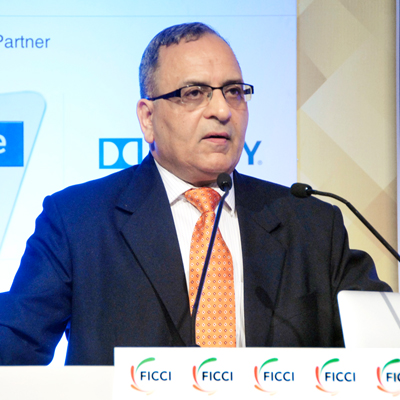
    Taking part in the section on Electronic Manufacturing at the Times Television’s Digital Summit here, Communications and Information Technology joint secretary Ajay Kumar said that the whole process will mean recreating the IT industry and changing the eco-system as Indians had got used to importing cheap equipment from overseas.


    However, he said that the IT industry was on the verge of ‘explosive growth’ because it had huge brain power, demographic profile, and a government determined to promote the ‘Make in India’ and ‘Digital India’ programmes.


    Kumar claimed that the government was giving several incentives including a 25 per cent incentive in the manufacturing sector for electronic goods. Training programmes had been created for in-house human resources and there was focus on innovation and research and development.


    However, Manufacturers’ Association for Information Technology (MAIT) vice president Nitin Kunkdienker said, “The government’s policies are still not helpful to the growth of the sector. A mere announcement of a national policy is not enough if states do not encourage to collaborate on various issues.”


    He said even the central ministries did not talk to each other, referring specifically to the IT Ministry, the Information and Broadcasting Ministry, the Home Ministry, the Finance Ministry and the External Affairs Ministry.


    In many states, the Chief Ministers had no control over the affairs relating to the industry. There was also need for process improvement such as customs etc. and the government should be able to optimize its advantages. It should also bring in the educational institutions on the programmes to create a system that sets standards.


    Amar Babu R K of Lenovo referred to a general mistrust between the government and the industry.


  • MSOs not ordering STBs, say manufacturers

    MSOs not ordering STBs, say manufacturers

    MUMBAI: The former Information & Broadcasting (I&B) Minister Prakash Javadekar had emphasised the need for bringing in indigenous Set Top Boxes (STBs) and the new administration is also keen to do the same. It was with this in mind that I&B secretary Bimal Julka held a meeting with indigenous STB manufacturers recently.

    Julka said that the issue of C-Form had already been addressed by the government to ensure level playing field for the domestic manufacturers as compared to imported STBs. The meeting was to assess the readiness of the manufacturers to meet the 11 million STB requirements since they had stated that sufficient capacity had been installed.

    A meeting had also been held with the Prime Minister regarding availability of conditional access system (CAS). The issue of interoperability of STBs was also being scrutinised and a task force meeting on the same had also been held.

    The STB manufacturers informed that they have been in touch with operators for their requirements but their response has not been encouraging. According to them the operators are anticipating change in timeline of digitisation and a change in policy, leading to their slow uptake.

    The manufacturers stated that they are prepared to go head on with the imported boxes as well as have a penal clause on penalty. Since no order was coming from operators, it was a difficult task to prepare production since time was needed to receive the components from suppliers.

    Therefore, they manufacturers have requested the Ministry to facilitate a process so that MSOs look at indigenous STBs for phases III and IV of digitisation. A joint meeting between the three could be held to resolve concerns.

    Julka clarified that 2015 and 2016 are the final dates for digitisation, so there needs to be no apprehension on that front. Monitoring of the digitisation programme would be scaled up in accordance with the implementation strategy being set in the Ministry.


  • Govt will provide all facilities to local STB manufacturers for DAS: Javadekar

    Govt will provide all facilities to local STB manufacturers for DAS: Javadekar

    NEW DELHI: Information and Broadcasting Minister Prakash Javadekar today clarified that the new dates for Phase III and IV for digital addressable system were the outer limits but all attempts would be made to achieve the target well before that.


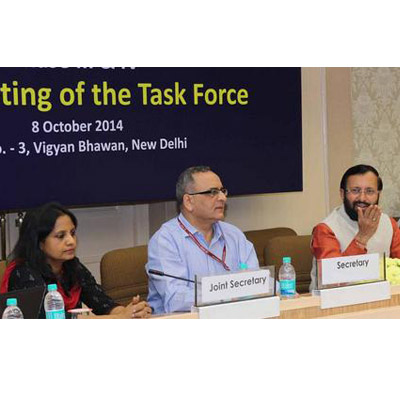
    Reiterating that the main aim of the new deadlines was to encourage DAS with use of India-made set top boxes, he told the first meeting of the DAS task force for the final two phases here today that the Government has facilitated C form issue for indigenous manufacturers.


    At the outset, he said the entire digitisation programme was an integral part of Prime Minister Narendra Modi’s Digital India plan.


    He also pointed out that he represented the viewer and consumer, who had no voice unlike the other stakeholders who were present at the meeting.


    Javadekar said the cable TV digitisation process aimed at providing the consumer with greater choices and affordable and qualitative options. The overall objective was to be sensitive to the needs and choice of the consumer. The choice of the consumer was paramount in defining the inputs, strategies and roadmap for the remaining phases of the digitisation process.


    He called upon the manufacturers to innovate and explore new technologies for addressing the different consumer tastes and needs.


    The Minister added that in the next phase of digitisation, the price mechanism offered to the consumer would be a key determinant of the process, particularly as DAS was being extended to rural areas. As a consequence, it was mandatory for all stakeholders to sensitise the consumers on the benefits of the process in view of the rural outreach of the programme. 

    Regarding the indigenisation of STBs, the Minister said that the concerns of the industry had been taken up with the Finance and Communications and IT Ministries and STBs were declared as part of ‘telecommunication network’.


    The Minister said the task force ought to identify timelines for implementation so as to ensure the timely completion of Phase III and Phase IV. All issues concerning the key stakeholders needed to be debated at length so as to ensure the mainstreaming of the process with the existing policy. The need of portability of set top boxes so as to provide the option of interoperability to the consumers was an issue that could be looked into by the concerned stakeholders.


    Every meeting of the task force was critical as it identified critical inputs so as to ensure the effective implementation of the timelines and processes. Every viewer should be able to get the best viewing experience over the next two years, he added.


    He also wanted portability for STBs on the lines of portability for mobile phones and said the government and the task force will study this issue.


    Earlier speaking on the occasion, I and B secretary Bimal Julka said the task force provided an important platform to debate and overview issues related to the digitisation implementation. It also provided an opportunity to understand the concern of stakeholders.


    The experience of such meetings during the first and second phase of implementation of the programme had been extremely useful in streamlining the roadmap for effective implementation. He said the consumer is the judge of what he gets to see and content rules. He said a lot of complaints had been received from stakeholders during the implementation of the first two phases but he hoped to get more suggestions as well.


    The meeting saw various stakeholders raise issues concerning them. Taxation was raised by STB manufacturers and auditing was requested by consumer groups. The broadcaster suggested that the deadline should be reduced to 2015 for both phases. No TRAI member attended the meeting.


    Javadekar also assured that there will be sub committees that will monitor the process of digitisation.  

  • Digiserv announces suite of content delivery services

    Digiserv announces suite of content delivery services

    MUMBAI: Digital Entertainment Services (Digeserv) in the US has announced that it will provide the complete suite of services necessary for the motion picture industry to move cost effectively and expeditiously from analogue to digital film and advertising delivery.

    Unlike many previous companies in the industry, Digeserv says that its diversified management team has performed film and advertising delivery in the entertainment industry for over 30 years. The firm says that it is committed to all industry participants to offer integrated, modular and complete services that expedite delivery and optimize cost and quality in the transition to digital. The firm adds that it is industry and participant neutral and is able to provide interfaces so any industry participant can benefit from its capabilities:

    Digital Network Services – Digeserv says that itsnetwork services will be open to each participant in the motion picture industry so any digital delivery companies, exhibitors and studios can move their content securely to ensure the digital delivery of films, pre-show and alternative content on a more cost effective basis. The digital network services will offer 24×7 service delivery with standardised protocols, thereby making access uniform throughout the industry.

    Digital Equipment Services – These the company says will accommodate any manufacturer’s equipment with the objective of increasing throughput while lowering cost and facilitating standards that permit DCI compliance throughout the industry. Each equipment package will accommodate both advertising as well as other digital content delivery.

    Funding Platform – The company says that it will make available to the industry a financial platform that permits the cost effective funding of exhibitor equipment that meets its compliance standards. In addition, the platform will monitor and settle all commercial trade transactions electronically between all parties in the distribution chain, whether they be digital delivery companies, studios, exhibitors, manufacturers or other vendors. The financial platform will allow all parties to minimize their working capital requirements with certainty of payment in settling all trade transactions.

    Alternative Content – The company adds that it has been approached by numerous content providers that would like to utilise the Digiserv open network services for offering new venues not currently available to the motion picture industry.

    The firm will provide a demonstration of its digital entertainment services and capabilities early next year in the US. After its demonstration, the firm will consult with all parties in the industry to exhibit how each participant can benefit by implementing a lower cost solution using proven technology and delivery partners.