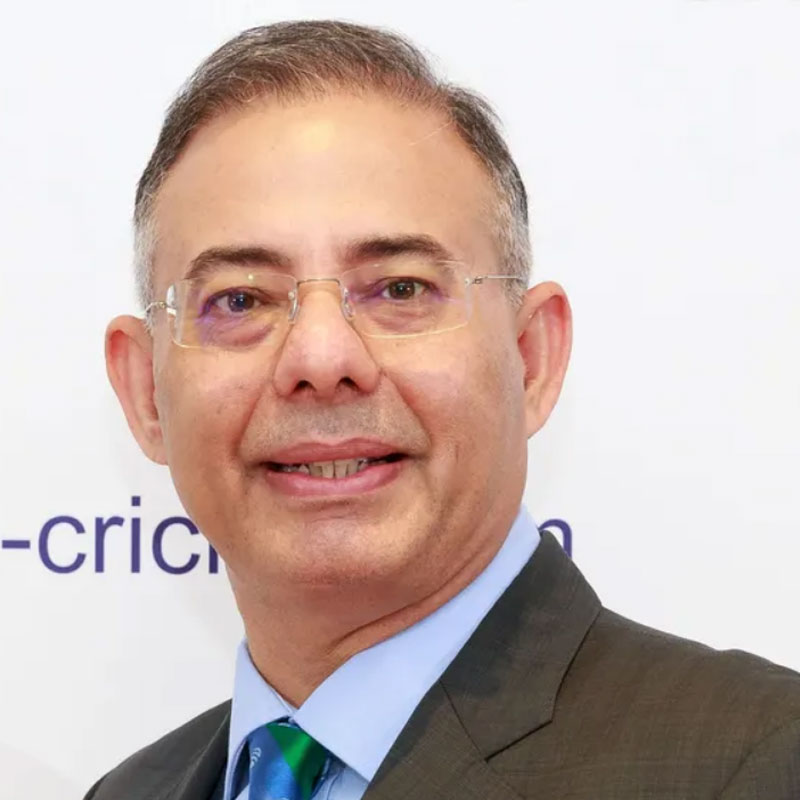
Tag: Manu Sawhney

  • ICC chief Manu Sawhney sent on leave after internal investigation

    ICC chief Manu Sawhney sent on leave after internal investigation

    NEW DELHI: International Cricket Council (ICC) chief executive Manu Sawhney has been asked to go on leave in light of adverse findings of his management style which emerged in an internal culture review of the sport's governing body.

    According to a report by PTI, Sawhney's conduct came under the scanner during an internal investigation by audit firm PricewaterhouseCoopers, and he may resign before his term ends. The report based its findings on the opinions of 85 employees and ex-employees of the ICC, with the federation’s chief coming under scrutiny for his allegedly "abrasive behaviour" with colleagues.

    The preliminary investigation has concluded that Sawhney’s conduct over the last 12 months has been unsavoury and against the ICC's way of leading its operations. Allegations range from the petty (“arrogance and high-handedness”) to the serious, such as “hiring and sacking employees at whim.”

    The ICC's human resources committee, led by England and Wales Cricket Board chairman Ian Watmore, discussed the findings of the report and sent a unanimous recommendation for the move to act against Sawhney to the ICC Board. In case Sawhney chooses not to resign, it could lead to a long-drawn removal procedure by the all-powerful board of directors.

    Appointed to the position in January 2019, Sawhney succeeded the popular David Richardson after a seven-year stint, and took charge formally in April that year. Several media reports stated that his “authoritarian style of functioning” was a far cry from the inclusive approach of his predecessor and understandably it has not gone down well with the employees. He has also been at loggerheads with certain influential cricket boards over various policy decisions, against the backdrop of a battle within the global body between two different visions of the future of the game.

    Sawhney, who has one more year left in his current tenure, was previously associated with Singapore Sports Hub and prior to that functioned as the head of ESPN Star Sports, also in Singapore, for 17 years.
  • Countdown to ICC Men’s T20 World Cup 2021 begins

    Countdown to ICC Men’s T20 World Cup 2021 begins

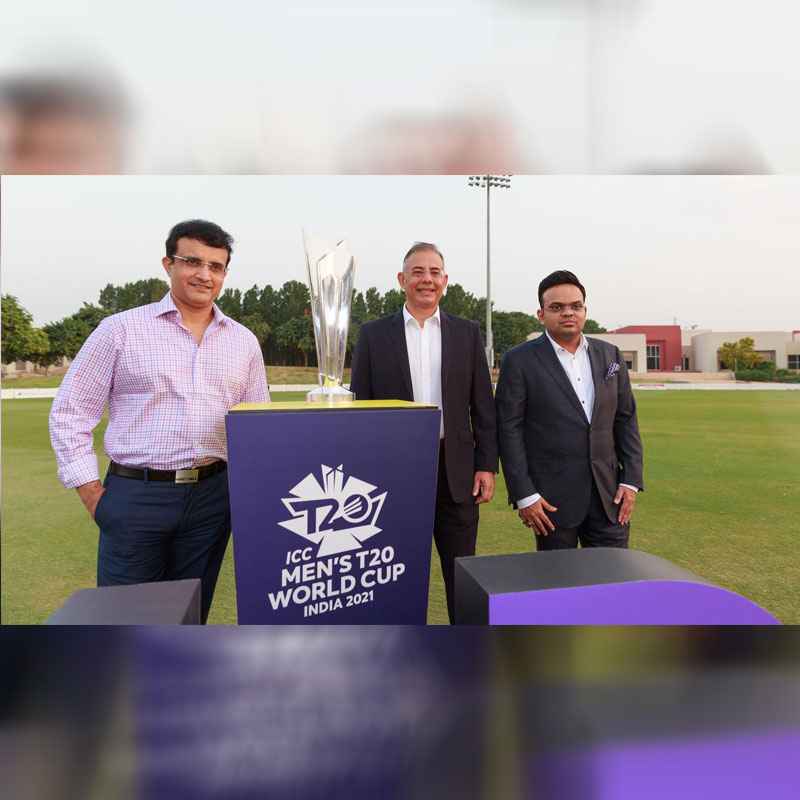
    MUMBAI: Five years after hosting the marquee event, India is once again gearing up to stage the ICC Men's T20 World Cup. Deferred by a year due to the Covid2019 pandemic, the competition is now slated to be held in October-November 2021. With less than 12 months to go before the opener, the ICC and the BCCI came together in Dubai to launch a countdown and reveal the brand identity of the 16-team tournament.

    Inspired by the colours of India and the intense passion that fans have for the game, the brand identity is bright and full of energy and embodies the excitement that comes with the fast and fierce pace of world’s best T20 cricket. Functionally, the design has been carefully constructed to come to life across all channels especially for digital and motion graphics.

    ICC chief executive Manu Sawhney is optimistic that it will be possible for fans to attend. “With Diwali just two days away and with the countdown to the tournament in India underway, this is an opportune moment to unveil our brand identity that so wonderfully reflects the vibrant festival of lights.”

    He further added, “We are working very closely with the BCCI to deliver a stellar tournament bringing the world’s best players together to go head to head in the first global cricket event since the advent of the pandemic. Our focus will be on staging a safe and secure event that fans from across the world can enjoy.”

    With the BCCI having successfully concluded the IPL in Dubai in a bio-bubble, all eyes will now turn to how it manages to stage the World Cup. Even as the country registers 45,000+ cases on the regular, board president Sourav Ganguly and honorary secretary Jay Shah insisted that India would be in fighting fit shape to host, and said that the BCCI would ensure all necessary protocols are in place.

    “The BCCI will leave no stone unturned in ensuring that the health and safety of everyone concerned in this showpiece event is taken care of. While we are determined to provide a rich cricket-viewing experience, I would also like to assure the ICC and member boards that India is known for its warm hospitality and we will make you feel at home. In these times of pandemic when there are severe restrictions, the BCCI believes in the policy of innovating and adapting, and I am confident that we will overcome every challenge,” added Shah.

    Former India captain Sourav Ganguly, who has participated in numerous ICC events as a player, said he is now looking forward to calling the shots off the field as an administrator. “It is a matter of great honour for us to be hosting the ICC Men’s T20 World Cup. India has successfully staged several global events since the ICC Men’s Cricket World Cup in 1987 and I am sure cricketers from around the world would be excited at the prospect of playing in our cricket loving country.”

    The seventh edition of the Men’s T20 World Cup will be the first global cricket event since this year’s highly successful ICC Women’s T20 World Cup, which climaxed with a record 86,174 people attending the Australia-India final at the Melbourne Cricket Ground on International Women’s Day.

    The teams participating in the tournament scheduled for October-November next year are Afghanistan, Australia, Bangladesh, England, India, Ireland, Namibia, the Netherlands, New Zealand, Oman, Pakistan, Papua New Guinea, Scotland, South Africa, Sri Lanka and the West Indies.

  • ‘We are the biggest investor in the game of cricket’ : Manu Sawhney – ESPN Star Sports managing director

    ‘We are the biggest investor in the game of cricket’ : Manu Sawhney – ESPN Star Sports managing director

     ESPN Star Sports has pumped in a whopping $2.25 billion to acquire the rights for ICC including the two World Cups, the Champions League T20, Cricket Australia and England and Wales Cricket board. The mix includes cricket across the three formats of T20, ODIs and Test matches.


    The mark of aggression has spread to other sports including the Fifa World Cup soccer rights and the Olympics.


    For over a year, Manu Sawhney has been shepherding this drive to crush competition and establish leadership position as a sports broadcaster by acquiring driver content rights over a longer period of time.


    “This is the best in cricket that could be there in the market and places us in the position of matchless leadership not only in Asia but on a global scale,” he says.


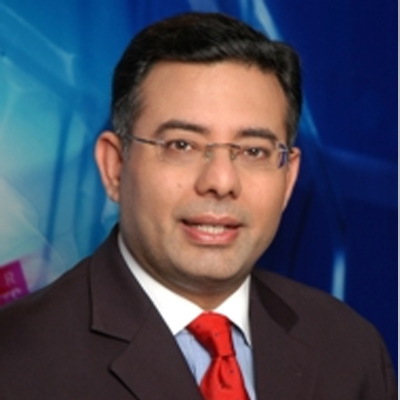
    In an exclusive interview with Indiantelevision.com’s Sibabrata Das, ESS managing director Sawhney elaborates on how the ESPN-Star joint venture company is gearing up to be not just a TV brand but also dominate in the digital new media space with its comprehensive content across sports, platforms and markets.


    Excerpts:


    The Indian Premier League was touted as the biggest prime time reality show on Indian television. Why didn’t ESPN Star Sports buy into that hype?
    We wanted to first evaluate how the T20 format of the game would evolve as a product cycle. Remember, we were the first to recognise the power of this new format at the international level when we acquired the ICC rights which include the two World Cups.


    With the IPL doing well, we have now bagged the Champions League T20. It will involve the best of the best where the top teams from various domestic leagues including the IPL, Australia, South Africa, England and others compete to win the title of Champions of Champions. The IPL also becomes a feeder league for this global tournament.


    We recognise that various formats continue to get developed and broaden the appeal of the game across new markets and demographics, providing increasing number of platforms for leverage and exploitation.

    Was the IPL miss a reason why ESS paid higher ($975 million) for the Champions League T20 when it could have got it at a much lower price with DIC’s $751.3 million bid being the second in race?
    When we are in a bidding environment, we do not punt but go ahead with an amount which we believe adds value to our business. We thought $612 million for the BCCI rights was too high for us, but somebody else thought it made business sense. We make a bid thinking what value the property can bring to us, how prepared we are today to leverage it, and how well placed are we for the future to fully realise the potential.


    Our investment in content follows this strategy and allows us to present a sound proposition to our partners. The acquisition of Champions League T20 has been done with this focused, planned and future oriented approach backed by a solid business plan, ensuring our profitability and long term growth.


    As a property, CL T20 has all the necessary ingredients of a blockbuster property, not only on the national level but on a global scale.


    After the inaugural edition this year in December, the tournament is to be scheduled right before the festive period featuring more top quality international teams and increased number of matches spread over a longer duration. This amplifies the opportunities around the property.

    But aren’t you also risking on the most expensive cricket property (calculated on a per game basis)?
    Tell me one property today which is available across the globe with all commercial rights – and that, too, for a period of 10 years! CL T20 is the only such property. This allows us multitude of opportunities to build, develop, customise, and fully realise immense value around the property. And it makes CL T20 most unique and premium as compared to any other domestic or international property currently around from the business perspective.


    Even if we were to compare it with a property like IPL, we have tremendous advantages. The rights around IPL do not include title sponsorship, umpire sponsorship, stadium advertising, official sponsor, ticketing and licensing. These rights amount to sizeable contribution and are expected to grow manifold over the next 10 years as the CL T20 further develops as the most premium tournament.


    The domestic nature of the tournament also limits IPL’s appeal internationally. This affects international syndication and other related rights. On the other hand, we have had significant success with the ICC on the international syndication front and today are better placed than anybody else to fully realise the value of this premium property in the global market.


    Unlike others, we are not just a broadcast brand but today the most comprehensive sports content provider in the region and the biggest cricket content provider in the world. With our three strong TV brands (ESPN, Star Sports and Star Cricket), two robust mobile brands (mobileESPN and Star Sports Mobile) and the most comprehensive online offering in form of www.espnstar.com, we are better placed than anyone else to fully leverage and exploit multiple opportunities across platforms for building our business on the back of CL T20 across the region and globally.

    Even in the ICC bid, ESS’s winning punt was $1.1 billion while the second highest bidder with $900 million was way behind. Are we seeing a more aggressive ESS?
    We are today the biggest investor in the game of cricket in the world with the ICC, Cricket Australia, England and Wales Cricket board rights and the newly acquired CL T 20. This not only provides us with a good mix of all forms of cricket – the new age blistering Twenty20 format, the popular ODIs and the ever-green Test matches, but along with the ICC it also gives us a very strong lineup of top quality cricket with a World Cup every year for the next 10 years. This is the best that could be there in the market and places us in the position of matchless leadership not only in Asia but on a global scale.


    While IPL has been a successful property, in ICC we have the pinnacle of international cricket while CL T20 gives us the very best of the international domestic competition. With the acquisition of CL T20, we have enhanced our driver content portfolio for cricket and our leadership position as a sports broadcaster not just for few years but a longer period of time.

    Do you see the high rise in cost for cricket properties a function of competition or is it based on a realistic projection of business growth?
    The escalation in the rights cost is because of competition as well as growth in the market that you are able to reach. The T20 format, for instance, has expanded the demographic profile from a male skew to young and female audiences. The emergence of new platforms is also playing a part in defining the value in the marketplace.

    India is no longer a low-cost media economy. As the market matures, there will be consolidation. There is, after all, a limited amount of driver content that is available

    ESS enjoyed high revenues from DTH operators as it was carried on the basic tier. But this year Tata Sky and the new DTH operators like Reliance ADAG’s Big TV are not willing to put the three channels on that package. With MSOs (multi-system operators) also consolidating, do you see growth on subscription revenues being hit?
    There is a huge opportunity for sports broadcasters like us and platform providers to work together in building the subscriber base. In global markets, digital subscribers grow on the back of HD, interactivity and video-on-demand; the driver content is live sports. In India, the market is still in infancy. New technologies like DTH, IPTV and mobile are bringing in paradigm shifts. With the power that we have on content across sports, we see tremendous scope to increase our revenues.

    With the ICC Champions Trophy, which was scheduled to be held in Pakistan in September, being deferred, will you be re-negotiating the bid amount with ICC?
    The ICC Champions Trophy is a showcase of game’s best elite players from the world’s top national cricketing sides. It was, therefore, important to ensure full and committed participation of the best teams from all qualified nations for ICC Champions Trophy to retain its premium status. Unfortunately, too much ambiguity existed for many months about the realistic possibility of the event being staged in Pakistan, which led to the current situation where the options available were very limited.


    As the global broadcast and production partner of the ICC, ESS was fully committed to producing and broadcasting the ICC Champions Trophy in a truly engaging and entertaining manner for fans across the globe. Accordingly, all necessary broadcast arrangements were made by ESPN Star Sports as per plans agreed with ICC for covering the event in Pakistan.


    The late decision to defer the tournament did come with its own set of difficulties for various organisations involved in the tournament, and this affected ESS’s business commercially too. Various questions have arisen as a result of this postponement, particularly issues relating to ensuring teams’ participation in the tournament when it is eventually played as well as the knock-on impact of the rescheduling on the overall cricket calendar.


    It is expected from the ICC to decide on these critical matters in the near future. We will only be able to assess the overall impact on our business based upon the way in which these issues are resolved and after we are able to study the short and long term implications of ICC’s actions for ourselves. We reiterate our commitment to working with the ICC in evolving a mutually satisfying solution.

    Isn’t ESS’s aggression spreading to other properties as well including the Fifa World Cup where ESS is said to have bid $40.5 million (up from around $8 million)?
    We have been aggressively mopping up content. In football, we have the exclusive television rights to broadcast Fifa’s stellar lineup of international football events including the 2010 World Cup for the Indian sub-continent. We have the exclusive rights to show over 275 international football games including the Fifa Confederations Cup. We have a multi-year exclusive agreement with The Football Association (The FA), for broadcast rights to The FA Cup, England Internationals and The FA Community Shield on multimedia platforms for the 2008/9 – 2011/12 seasons for 20 countries across the region. This, coupled with the existing partnership with Premier League with which ESS holds BPL rights for 22 countries in Asia through 2010 and rights of UEFA Champions League in key markets, places us as the single largest football content provider in the region.


    In motorracing, we have renewed partnership with FIA for another 5 years across the region and for the first time, secured rights across various platforms and in many key markets acquired terrestrial rights as well. This flagship racing property along with other leading properties like A1, MotoGP and WRC, sets ESS apart from any other network or broadcaster in the region.


    We have also renewed our partnership with Tennis Australia for another seven years, acquired French Open for India, and continue partnership with NBA and key Golf majors including Augusta Masters, The US Open and The Open, among others.


    We have acquired the Olympic rights. The partnership with the International Olympic Committee will allow us to show the Vancouver 2010 and London 2012 Olympic Games for 22 countries across the Indian subcontinent and South East Asia.

    This is the first time that IOC has awarded the rights to one single pay-TV platform across the region.

    Have your programming hours also gone up?
    In addition to the acquired content that we have the rights for, we produce over 3650 hours of original programming per year, which is probably the largest quantum of original programming around these sports.


    To give you an idea, we produce over 1500 hours of original football content and over 1000 hours of cricket content. In addition, our flagship studio show, SportsCenter, offers the best round-up of sporting action around the globe with five localised editions in Asia on ESPN. And along with our entertainment-focused sports bulletin show Score Tonight on Star Sports, we produce over 1000 hours of original sports news programming every year. This lineup of content makes us the prime choice of over 310 million passionate sports fans and business partners and associates across Asia.

    Our content strategy is to build a sustainable and scalable biz across sports, platforms and markets

    How important is the Indian market for ESS?
    It is a very important market for us and continues to contribute to the overall growth of our business in Asia. The media industry in India itself has seen rapid growth in the last few years. There is appetite for quality content and so are the opportunities to leverage and further build the business.


    While cricket has been, for many years, the most popular sport in India, it still continues to grow. This popularity is growing beyond India playing cricket to other international cricket as well as growth of strong female TG for cricket. The dedicated 24×7 cricket channel, Star Cricket, quickly reached penetration levels of 90-95 per cent after its launch last year.

    India is also steadily developing into a multi-sports market. Other sports like soccer, motor sports, tennis, hockey and golf are increasingly becoming more popular and gaining viewership as well. With that in mind, and considering the huge viewership base, India will continue to be a key market for ESS.

    India offers a lot of potential in terms of ESS’s new media initiatives. ESS has invested in a focused manner in the Indian market. With our multi-platform capabilities on the back of some of the most premium content in the form of ICC, CL T20, Fifa and F1, ESS is better placed than ever today to fully exploit the opportunities from the emerging media scenario in India.

    Do you see consolidation in the sports broadcasting space in India?
    India is no longer a low-cost media economy. As the market matures, there will be consolidation. There is, after all, a limited amount of driver content that is available. We hope to leverage our leadership position as and when such opportunities throw up. We are not just TV dependent but have grown our presence in the new digital media space. And we are not just an India product.

    What have been your focus areas since you took charge as managing director of ESS one year back?
    My focus has been on four key areas. The content strategy is to build a sustainable and scalable business across sports, platforms and markets.


    Besides continuing to acquire and develop the strongest, most comprehensive and relevant content, we have enhanced our multi-platform presence.


    While television is the biggest format in which consumers want to watch sports, new media platforms are growing in importance. Growing ESS’s presence in the digital space is a key thrust area for the company and we have invested huge resources to provide a new improved platform.


    We have launched the sharp new version of www.espnstar.com and are offering advertisers an expansive range of customised and creative advertising opportunities. The new Star Sports Mobile complements the mobileESPN offering through entertaining and engaging content with exclusive video highlights from Arsenal and Liverpool FC and Star Sports’ original programmes.


    Skyhawk is a new business management system that has been successfully integrated between internal systems across functions to provide competitive advantage and smoother operations.


    We have also made significant investments in improving our business and operational processes through adoption of new technology over the last one year with an aim to scale up our operations more efficiently for future expansion. Our focus has also been on human resource development and I have worked towards creating project teams within the organisation spanning across departments and markets entrusted with an objective to scout for new ideas to help grow our business.

    How has the last one year been for ESS?
    We have seen growth in bottomline and topline across the region. Our task is to take ESS to the next level in scalable business across sports and markets.
  • Entertainment industry to be valued at Rs 650 billion

    Entertainment industry to be valued at Rs 650 billion

    A comprehensive report on the entertainment industry, the first of its kind, has been compiled by the Federation of Indian Chambers of Commerce and Industry (Ficci) along with Arthur Anderson. The report reveals very positive and optimistic figures projected for the entertainment industry’s growth. The media committee is headed by Lalit Modi and the members include Plus Channel’s CEO Amit Khanna, Sone Entertainment Television’s CEO Kunal Das Gupta and ESPN India Chairman Manu Sawhney along with representatives of film, music and entertaiment industry.

    The report says that the Indian entertainment industry’s turnover will touch Rs 650 billion in the year 2005 from the current Rs 150 billion. The television software industry is slated to grow to Rs 90 billion, music industry to Rs 22 billion from the current Rs 12.54 billion where as the live entertainment sector would be worth Rs 33.65 billion from the current Rs 2 billion.

    The survey suggests private or progressive participation in Doordarshan. Other suggestions are as follows:

    * Creating a special anti-piracy cell with the police department to combat the growing piracy menace.
    * Developing closer association with international cells guarding against piracy and streamlining anti-piracy laws with that of US, UK etc.
    * Bringing the industry in parity with the information technology sector with respect to overseas investment and stock listing norms.
    * Providing stable legislation for the issue of radio broadcasting licences.
    * Reviewing the functioning of the Censor Board in light of the changing scenario and citizens increasingly demanding the right to make their own decisions on entertainment.
    * Issuing board regulations/guidelines for banks and financial institutions to facilitate lending to this intellectual property related industry.
    * Reviewing archaic laws and onerous responsibilities cast on the industry particularly in the film exhibition and live entertainment sectors.

    The Ficci has organised a conference on 30 March and 31 March, 2000 in Mumbai to discuss the problems faced by the entertainment industry. Industry bigwigs and political bigwigs are slated to attend the seminar.