Tag: Manu Jain

  • VAMA.app strengthens leadership with new CTO, CBO appointments

    VAMA.app strengthens leadership with new CTO, CBO appointments

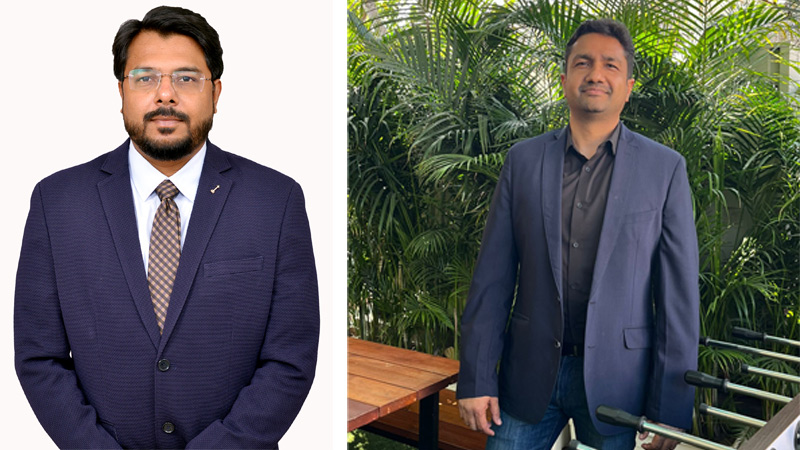
    Mumbai: VAMA.app, a virtual platform transforming the traditional offline Mandir ecosystem into a digital realm, announces the expansion of its leadership team with the appointment of Divick Kishore as chief technology officer (CTO) and Nitin Saxena, previously instrumental within the organisation, ascends to the role of chief business officer- operations & partnership. These strategic hires mark a significant milestone for VAMA.app as it endeavours to fortify its technological infrastructure and propel innovation.

    As the CTO of VAMA.app, Divick will leverage his extensive expertise to drive technological innovation, enhance product offerings, and accelerate the platform’s evolution in the digital spiritual services landscape. Nitin, in his elevated role as chief business officer of operations & partnership, will continue to drive operational efficiencies to new heights, enrich VAMA.app’s strategic partnerships, and spearhead initiatives that will solidify the platform’s presence in the market and fuel its ascent.

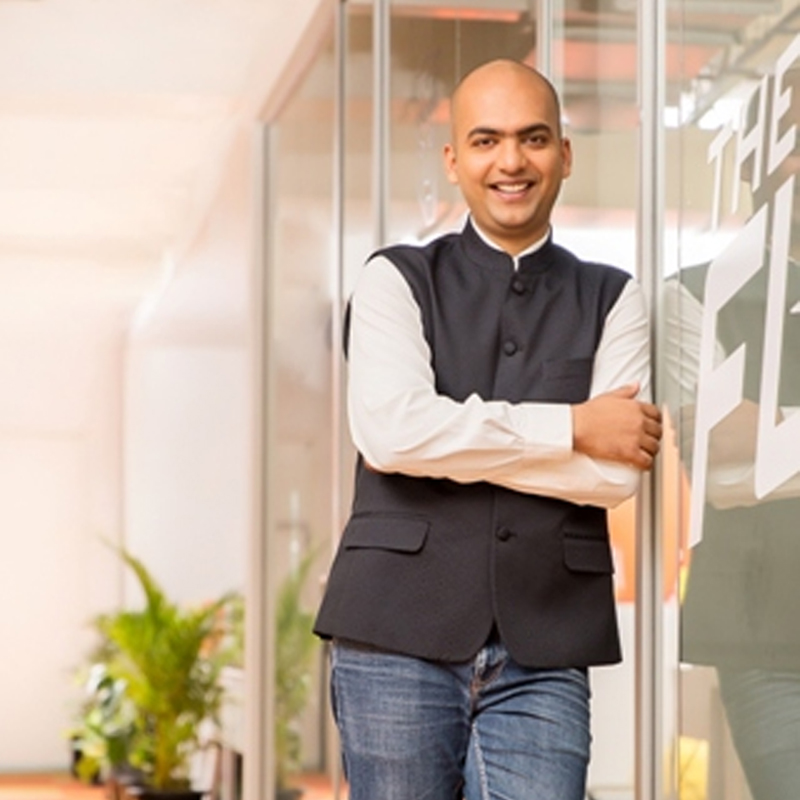
    Commenting on bolstering the leadership team, VAMA.app co-founder Manu Jain said, “The future of the astrology and Religious Tech market in India is on a trajectory of exponential growth. The foundational shift in consumer behaviour towards digital spirituality, bolstered by our innovative platform, sets the stage for this expansion. With Divick and Nitin’s impressive backgrounds and visionary leadership, we are poised to propel VAMA.app into its next phase of expansion. Our aim is to enhance the technological infrastructure and business strategies to better serve the digital and spiritual needs of our growing user base.”

    Speaking on his appointment at VAMA.app, Divick Kishore said, “Joining VAMA.app marks the commencement of an exciting chapter where the confluence of opportunity and innovation beckons. I am committed to steering our technological vision towards realising efficiencies and enhancing productivity through the adoption of cutting-edge solutions. Our goal is to elevate the spiritual experience for our users, setting new benchmarks in the digital spirituality realm.”

    Further adding to this, Nitin Saxena, said, “It’s exhilarating to further my journey with VAMA.app in this enhanced capacity. The digital transformation of spiritual services offers a unique landscape to innovate and expand. I look forward to deepening our business strategies, cultivating meaningful partnerships, and driving growth that is both sustainable and impactful. Together, we are set to redefine the spiritual journey for our users, ensuring value creation for all stakeholders involved.”

    Divick brings over two decades of invaluable experience as a tech entrepreneur, showcasing expertise across diverse technological domains. Divick arrives at VAMA.app with a notable background, including a significant tenure as co-founder and former CTO of InstaAstro, where he was pivotal in scaling the platform’s operations significantly since its inception. Divick’s entrepreneurial prowess is evident in his role in establishing GoRapid Technologies, steering it to significant success before its acquisition by PhonePe. This further highlights his exceptional ability to develop, scale, and lead technology-driven enterprises to triumph. His career journey also includes a leadership stint at Times Internet Limited.

    Nitin brings to VAMA.app over two decades of extensive experience spanning various industries including Power, Telecom, ITES, and International Business. He will assume responsibility for overseeing Business Operations and Partnerships. His comprehensive understanding of the D2C business, Go-to-Market Strategy, Mass Retail landscape, Customer Experience Excellence & New Geography Commercial Launches cultivated through extensive engagements across India, Nitin’s distinguished tenure as the Head of Business Development & Expansion to New Geographies at Adani Group driving GTM for launches, streamlining business operations & creating state-of-the-art business processes, coupled with notable accomplishments at Vodafone, underscores his adeptness in driving substantial growth and operational excellence.

    Established in late 2020 by visionaries Aacharya Dev, Himanshu Semwal and Manu Jain, VAMA.app has rapidly evolved to redefine the spiritual landscape for its users. With an impressive roster of partnerships that includes over 250 temples and a network of more than 300 astrologers, VAMA.app stands as a beacon of innovation in the faithtech domain. By offering a comprehensive suite of services such as e-pujas, e-darshans, and astrology consultations, VAMA.app caters to a wide array of spiritual needs, firmly establishing itself as a pivotal platform for those seeking to connect with their faith in the digital age.

  • Xiaomi India partners Ranveer Singh

    Xiaomi India partners Ranveer Singh

    MUMBAI: Xiaomi India has announced its partnership with Bollywood superstar Ranveer Singh to endorse Xiaomi’s line of smartphones. Singh also showcased the yet to be launched Redmi Note 7 in a free-spirited web film.

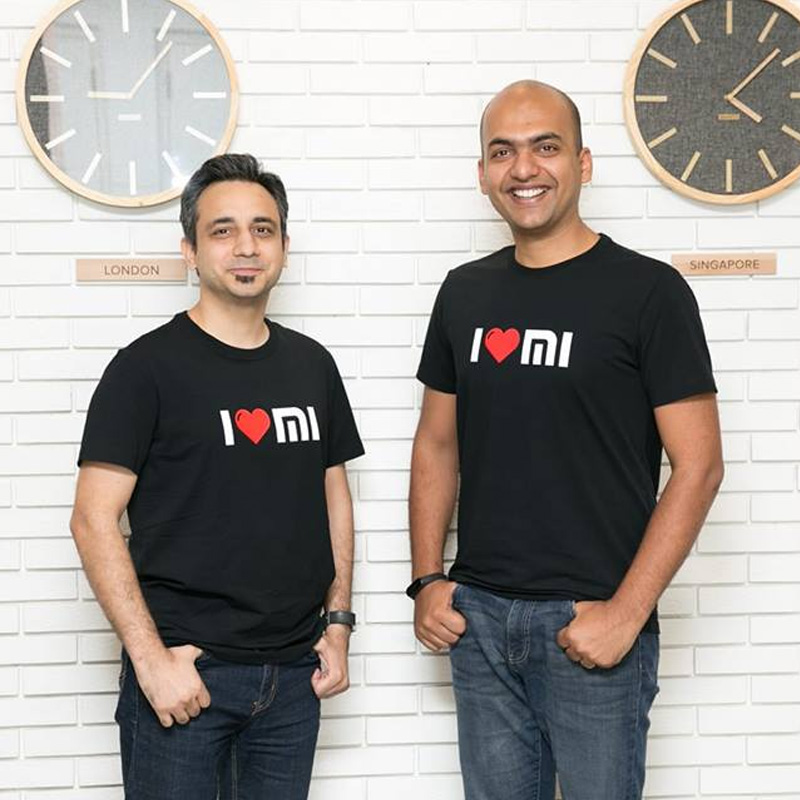
    Singh joins the Xiaomi India family, and will be responsible for bringing the disruption factor across the entire Xiaomi smartphone series. Ranveer’s announcement sees him being introduced in a web film in which he is showcasing Redmi Note 7 while dancing his heart out to the track ‘I am sexy and I know it’. The web film in the end reveals Singh's and Xiaomi’s association as Manu Jain, MD of Xiaomi India calls Singh and the two confirms the alliance.

    Xiaomi India chief marketing officer Anuj Sharma said, “Xiaomi is built with the love of Mi Fans, and we are really excited that our fan family is growing with Ranveer joining us. Ranveer has a huge appeal across all demographics and regions and is known for the passion and the extreme attention to detail which he brings to his role, and just like Xiaomi’s belief of bringing innovation to everyone, Ranveer believes in doing the best for his audience.”

    Ranveer Singh said, “Xiaomi is the number one smartphone brand. The company has been making waves since its entry into the market. We share similar beliefs of providing the best to our consumers, and I am really looking forward to disrupting the market together with Xiaomi for their smartphone series starting with Redmi Note 7.”

  • Anuj Sharma joins Xiaomi India as head of marketing

    Anuj Sharma joins Xiaomi India as head of marketing

    MUMBAI: Chinese mobile giant, Xiaomi, has appointed Anuj Sharma as the new head of marketing for India business.

    Sharma’s appointment comes at an interesting time when the company is looking to accelerate market growth ahead of the festive season.

    Welcoming Anuj Sharma on board, Xiaomi India head Manu Jain said in a Facebook post and a tweet: “Anuj will be heading end-to-end marketing at Xiaomi India, including all functions and product lines. At Xiaomi, we believe in ‘marketing without advertising’. We’ve always innovatively used social media, Mi Community and various Mi Fan forums to do our marketing, rather than spending crores in traditional advertising!”

    With an experience of over 15 years in the technology domain, Sharma worked at Lenovo and Motorola where he headed online sales, product management and product marketing.

    Sharma has over 15 years of experience in the technology domain, having had a long stint at Lenovo & Motorola, where he played various roles, including heading online sales, product marketing & product management.

    Known as the ‘Apple’ of China, Xiaomi mobiles entered the Indian market in 2014 with an exclusive sales tie-up with Flipkart for smartphone Mi 3. The company spent zero marketing dollars for the first three years.

  • Xiaomi highlights trademark ringtone in new ad

    Xiaomi highlights trademark ringtone in new ad

    MUMBAI: Since its inception in 2014, Xiaomi has grown exponentially in the Indian smartphone industry.

    The brand earned its number one position in India for three consecutive quarters, and currently dominates the smartphone market with a substantial 30.3 per cent share as per the latest IDC research (Q1 2018), wherein one out of three smartphones sold in India is a Xiaomi phone.

    Xiaomi’s philosophy of bringing innovation for everyone combined with its robust India infrastructure of after-sales, well-established set of manufacturing units, innovative sales model and its 400+ strong workforce has significantly boosted the brand’s outreach. However, the growing popularity of the brand is mainly because of its passionate Mi fans who are not only increasing in numbers but also share great mutual love and admiration for the brand.

    The campaign offers a common fundamental feature that every Xiaomi user deeply connects with – its trademark ringtone. The campaign showcases that while people in India would be busy going about with their everyday lives, they may often hear and resonate with the sound of Xiaomi’s ringtone in the midst of their daily bustle. The campaign proves how this simple ringtone works as a subtle, yet powerful reminder of the brand’s widespread presence among the people of India. And the sound of this tone may often brim excitement in any given social space, leading several people to wonder if it’s their call to take.  

    The brand has now launched a new campaign that aims to connect with all individuals and Mi fans across diverse customer segments. Although Xiaomi India’s traditional audience was mostly technology enthusiasts of age group 18-40 years, who endorse the geeky spirit and can discern value irrespective of price bands; the brand has moved well beyond this, and now enjoys a widespread presence across different customer categories.

    The ‘Kiska Baja’ campaign will run across different channels which include television, radio, out of home, digital media and print media.

    The TVC campaign videos are launching across first three weeks of July, where the first launched during the India tour of England T20 cricket match. The overall campaign including other media will roll out within two months from July to August. 

    Kiska Baja campaign is a collaborative effort of the Xiaomi brand marketing team led by Karan Shroff, and Lowe Lintas, and is directed by Ayappa. 

    Xiaomi India VP and MD Manu Jain says, “Kiska Baja is a sincere effort from our team to portray where our brand stands today, and how our major success resulted because of all the massive love and attention we received from the people of India. As we continue providing innovative products of high quality with best specs at honest pricing, we hope our customers will also enjoy our technology and deeply connect to our widely growing Mi community across India.” 

    Lowe Lintas chairman and CCO Arun Iyer mentions, “The idea was inspired by real life events. Wherever we went, airports, offices, supermarkets we heard a familiar tone. Realising this, we decided to have fun with the idea of what happens when there is a Xiaomi in every pocket.”

  • Xiaomi India retains smartphone market leadership in Q1 2018

    Xiaomi India retains smartphone market leadership in Q1 2018

    MUMBAI: Xiaomi India continued to lead the Indian smartphone market as per IDC’s quarterly mobile phone tracker in Q1 2018. Xiaomi retained its top smartphone brand position with a substantial 30.3 per cent market share, widening the gap between itself and the number 2 smartphone brand. Xiaomi also continued its dominance in the online smartphone market with 59.6 per cent market share. The popularity of Redmi Note 5 and Redmi 5A and Xiaomi’s efforts in expanding its offline presence are key contributors for Xiaomi’s growth in the smartphone market.

    Xiaomi India vice president and managing director Manu Jain says, “All the success which Xiaomi enjoys today is proof of the love we have received from millions of our Mi fans. We are thankful to each and every one of them for putting their faith in us and we promise to work hard to retain it.  Xiaomi will strive to deliver on its philosophy towards providing high quality innovative technology at an honest price and bring the best of technology to everyone.”

    True to its unconventional spirit, Xiaomi India released a unique video. With Xiaomi’s sales continuing to gain momentum, the video gives viewers a series of quirky insights on the vast scale of its smartphone sales in India over the last 3.5 years. The video aptly summarises the incredible scale of Xiaomi’s impact of smartphone sales, making quality and innovation available to everyone. 

    The video was conceptualised by the brand marketing team of Xiaomi India led by Karan Shroff, brand marketing lead, Xiaomi India and created by Schbang Digital Solutions. For example, if all Xiaomi phones sold were stacked together, it would run 25 times deeper than the depth of Mariana trench, world’s deepest oceanic trench at 10,994 meters and 35 times the height of Mount Everest at 8848 meters. The total weight of all Xiaomi phones sold measure 25 times more than the recorded weight of a blue whale. The video shares a similar fun fact on how the charge from batteries of all Xiaomi phones sold could easily light up the Burj Khalifa for as long as five days, which would stand as a distant dream to many other phone brands. This also highlights the powerful battery life that most Xiaomi smartphones are known for. With its highly engaging content, this video certainly leaves viewers with some great food for thought. Interesting facts like these indicate Xiaomi’s rapid success and growing positive outreach across the country.

    Xiaomi was founded in 2010 by serial entrepreneur Lei Jun. With presence in over 70 countries and regions, Xiaomi is expanding its footprint across the world to become a global brand.

  • Xiaomi adds VAS to aid monetisation

    Xiaomi adds VAS to aid monetisation

    MUMBAI: Xiaomi is leaving no stone unturned to capture the Indian imagination. After wowing the country with its spectacular moderately priced phones, the company is looking at giving value addition to its customers here.

    Considering India as its core market after its home-ground China, Xiaomi became India’s number one smartphone brand in India in Q4 2017 beating Vivo, Samsung and Apple, according to International Data Corporation. Hardly four years since launch, the company today has a whopping 31 per cent market share in the country and has over nine million units shipped in Q1 of 2018. 

    Xiaomi India vice president and managing director Manu Jain believes that the company’s core philosophy is to deliver innovation for everyone by making high-quality, well-designed products accessible to everyone at “honest pricing” and the company is able to do this because of its unique business model, which Xiaomi will monetise from internet services in the long run.

    The mobile handset maker has now announced the launch of Mi Music and Mi Video, marking Xiaomi’s move into offering value-added internet services for local users. Mi Music is Xiaomi’s pre-installed music app which offers an integrated music streaming service along with the ability to store offline music while Mi Video is Xiaomi’s pre-installed video app which provides integrated video streaming across platforms. 

    The music app by Xiaomi is quite similar to other music apps available in the Indian market such as Saavn, Gaana, iTunes, Jio Music. Xiaomi has partnered with digital entertainment organisation Hungama Music wherein Xiaomi mobile consumers will have access to Hungama’s music library. The app will offer over 10 million freemium tracks across 13 Indic language choices. Users can also download music offline from Mi Music app at Rs 899 per annum.

    Hungama Digital Media Entertainment managing director and CEO Neeraj Roy says, “We are delighted to launch Hungama Music on Mi Music. We are committed to delivering the best of content with unlimited playlists to the highly engaged Mi Fan community and with this launch we take our partnership with Xiaomi to the next level.”

    Mi Video functions similar to YouTube. The apps are the first internet services that Xiaomi has brought to India. Mi Music in India has nearly seven million daily active users. Mi Video is designed to be a platform for video content aggregation and a powerful local video player. Mi Video content is powered by Hungama Play, SonyLiv and Voot currently, with more partners coming onboard soon. 

    Currently, Mi Video offers more than 500,000 hours of content with nearly 80 per cent free content. The service currently offers more than 12 video formats such as AVI, MP4, MOV, MKV, and MKA, MPEG, M2TS amongst others. It also supports multilingual subtitles, private folders, and multiple audio tracks. Mi Video also offers one tap cast to any Smart TV with DLNA and Miracast support.

    Roy also announced that in the coming months, Hungama will bring more exciting features including gamification and continue to build on the rich user experience.

    The  apps were announced at the Mi Pop Play event, which is created by Xiaomi to bring Mi Fans from across the country for a day to celebrate with Xiaomi executives.

    The company believes in giving back to its consumers. “We at Xiaomi never make over five per cent of profit on all our hardware devices whether it is a smartphone, a television or any other accessory and if we ever make more than that, we make sure we return it back to our consumers. The philosophy has worked well for our brand in China, India and other parts of the world,” says Jain.

    Xiaomi currently has three manufacturing facilities in India in Andhra Pradesh and Tamil Nadu. The move came after the Indian government imposed a 10 per cent duty on key smartphone components. 

    With a presence in over 70 countries and regions, Xiaomi is expanding its footprint across the world and wants to become a global brand.

    Also Read :

    Xiaomi gets Katrina Kaif to endorse Redmi Y

    Xiaomi partners TVF to promote  latest TV range

    Madison Media wins media mandate for Xiaomi

    Hungama raises $25 MN in funding round led by Xiaomi along with 3 investors

  • Xiaomi gets Katrina Kaif to endorse Redmi Y

    Xiaomi gets Katrina Kaif to endorse Redmi Y

    MUMBAI: Xiaomi Mobile has brought in Bollywood actress Katrina Kaif as the product endorser for its new Redmi Y series in India.

    Xiaomi vice president and managing director Manu Jain said, “The Redmi Y series is designed for people who need a smartphone that can complement and enhance their everyday routine and lifestyle. Katrina is one of those individuals who work extremely hard to complement every situation she is a part of. ”

    Actor Katrina Kaif said, “I am super pleased to be endorsing a product series which has been designed to enhance everyday routine and complement everyone’s lifestyle, as I personally believe in that philosophy. Xiaomi believes in providing high end technological innovation to everyone, and is the fastest growing smartphone brand in the world.”

    Alongside the new series of phones, Xiaomi also unveiled the global version of MIUI 9, the latest upgrade to its popular Android-based operating system, which includes several new features designed for India.

  • Expect an inflexion point soon, says Jabong’s Praveen Sinha

    Expect an inflexion point soon, says Jabong’s Praveen Sinha

    MUMBAI: With our increasingly frenetic lives, especially in metros and towns, more and more people are opting to shop online instead of tiring themselves out at stores and malls.


    No wonder online retail is booming business with an e-commerce website going live almost every other day. That these portals often make little or no profit and are forced to raise funds to stay alive is a separate story. 


    The journey of Jabong.com – the Indian fashion and lifestyle e-commerce site co-founded by Praveen Sinha, Arun Chandra Mohan, Manu Jain and Mukul Bafana in January 2012 – is no different.


    One of the most visited e-commerce sites during the Great Online Shopping Festival 2013, reportedly, Jabong is currently raising a fresh round of equity funding, estimated at $100 million, of which it has received $27.5 million from British development finance institution CDC. Just last month, another online retailer, Myntra.com, raised $50 million through equity funding.


    While Jabong co-founder and MD, Sinha, refused to comment on raising funds, he spoke of where the company and the business of e-commerce is headed in an interview to indiantelevision.com.


    Excerpts…


    How would you think Jabong.com fared in 2013?


    The year was pretty good; in terms of growth and health, the financial and operational matrix, and when it comes to revenue. We saw twice the growth and almost thrice the revenue last year.


    The interesting insight is that in 2013, we saw more than 50 per cent purchases from consumers from cities other than the top four metros. Secondly, the combination of social media and mobile worked in our favour as both play the role of influencer and act as enablers for people to buy online. So, for us, these platforms have become more important. And with a good balance between payment options, we didn’t see a significant change/imbalance in terms of cash-on-delivery (COD) or online payment. As we grow, the percentage of online buyers is increasing, though not significantly, and that shows trust is building among people and they are putting more faith in us.


    Where do you see the company going in 2014?


    Similar growth is obvious. I think there will be an inflexion point, where we will see even more growth than what we are seeing today. I’m not sure whether that point will come in 2014 or 2015 and the reason I’m saying so is because the growth which I’m referring to will only happen in the fashion and apparel categories.


    These categories have the highest demand, followed by electronics. That said, if you compare India with other countries, there is a huge gap between where we are and where we need to be.


    For example in telecom, when we started, we had least penetrated landline numbers but with the onset of mobile, we saw good penetration. Now, it is really high. So, if we compare e-commerce to telecom penetration, e-commerce will see a huge jump. Internet penetration and usage for retailing is around 15-20 per cent in India while in other countries, it is up to 40-60 per cent. Therefore, the gap will be filled up though we don’t know if it will happen this year or next year or year-on-year.


    The e-commerce business has changed drastically over the years. What are the reasons behind the changes? How big is the industry now?


    There are multiple reasons for the change. Firstly, it is trust. There is a history to why people didn’t trust. E-commerce is not very new in the country; there were a few players already in the market but the quality of products wasn’t right, delivery was an issue, so was pricing. People were not happy with the experience. Secondly, there has been an increase in the number of people online. Thirdly, the players, especially new entrants, wanted to build on trust so they came up with return policy, COD. Fourthly, it was not only about selling unknown or luxury brands which only a few people knew about, but also popular brands. Assortment build was huge. It is now value for money. People are now getting a good choice and at a lower price. It is a win-win situation for the customers.


    Another point is about the infrastructure where logistics have evolved; some companies have built their own logistics to have better payment options. Also, brands are ready as they are getting more space. For instance, a brand with a presence in 40-60 cities would reach say 6,000 cities at one go through e-commerce.


    Do you see e-commerce companies cutting across age-groups or will they continue to target the youth?


    By the next generation, e-commerce will cut cross all ages. The internet is new, so most of the internet population is made up of people in the age group of 15-35 years. This age group is very comfortable using technology while the older generation spends more time online checking emails rather than buying. However, this will change over time and people will shift from just content to purchasing as well.


    Will too much competition benefit or harm the industry as companies have special discounts to lure customers?


    If you don’t give discounts, how do you make profit? Globally too, there are a lot of e-commerce companies but very few have scaled up. It’s not that these don’t give discounts.


    Both the offline and online worlds have their pros and cons. A strong plus point of the online world is that we don’t have to open up a high-end physical infrastructure. So, you don’t have high rentals and high operation costs. Also, you don’t have limited period of service. All these factors allow us to have savings.


    What e-commerce companies do is they give out that saving to customers as discounts so that the whole sector grows. Even today, the sector is not even one per cent of the economy. Even in the case of developed countries like the US and developing ones like China, this was the model followed before it became profitable.


    Which period of the year is best for Jabong.com? What makes it the best?


    There is no best season for us. We create our own throughout the year. It is mostly occasion-based, for example Diwali, Valentine’s Day etc. but we create our own occasions and repeat the patterns.