Tag: Mansi Sharma

  • Max Factor unveils ‘What’s Your X’ campaign

    Max Factor unveils ‘What’s Your X’ campaign

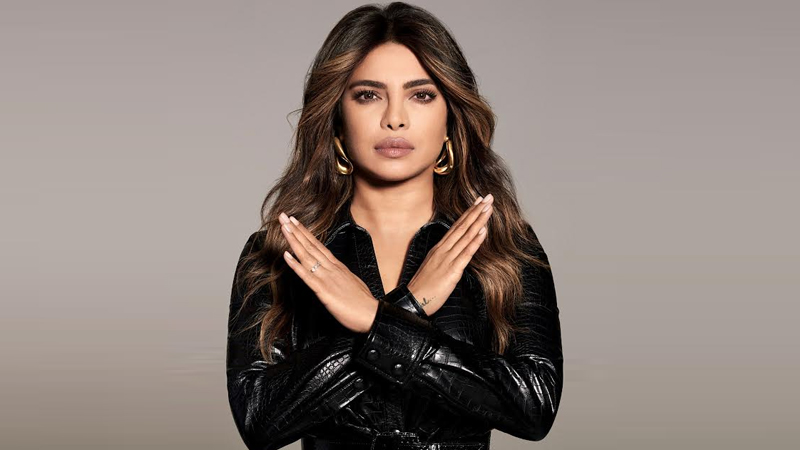
    Mumbai: Max Factor, a Hollywood makeup brand known for its innovations and technology, is entering India’s beauty scene. With Priyanka Chopra Jonas as its global ambassador, Max Factor has launched the ‘What’s Your X’ campaign. This campaign celebrates being ahead of the curve and encourages people to embrace their unique qualities and express their true selves with confidence.

    Max Factor’s tagline, “Reveal Your Extraordinary,” aims to empower individuals to showcase their unique beauty and personality. The ‘What’s Your X’ campaign celebrates individuality and the distinctive qualities that make each person exceptional. It highlights the strength of womanhood and promotes authenticity, community, body positivity, and self-love.

    In collaboration with celebrity makeup artist Mehak Oberoi, known for her work with stars like Kiara Advani, Shilpa Shetty, and Malaika Arora, the campaign features top beauty influencers Sakshi Sindhwani, Ishani Mitra, Tarini Manchanda, Simmy Goraya, and Smriti Khanna. Priyanka Chopra Jonas plays a key role in the campaign’s launch and engagement.

    “Max Factor has always championed the cause of being yourself and nobody else. As the brand that invented mascara, compact powder, and some of the key makeup categories for generations to come, we’re extremely thrilled to launch our social media campaign speaking to the youth of India,” said House of Beauty creative director Mansi Sharma. “By collaborating with 400 of the country’s top  influencers and beauty experts, who in essence are the voice of today’s beauty consumer, we aim to take over social media and highlight the power of makeup as a tool for self-expression, celebration, and confidence.”

    Celebrity makeup artist Mehak Oberoi added, “Associating with Max Factor for the ‘What’s Your X’ campaign has been an incredible experience. As a makeup artist, I see firsthand how makeup can transform not just appearances, but also confidence and self-expression. This campaign is about more than just beauty; it’s about empowering people to recognize and celebrate their unique qualities. I am  excited to be part of this journey and to see how individuals across India reveal their extraordinary selves.”

    The campaign is now live. Through this influencer and marketing campaign, the brand aims to reach 35 plus million customers, further solidifying its presence in India’s dynamic beauty landscape.

  • “We wanted to create a brand for Indian body skin concerns”: Boddess Beauty’s Mansi Sharma

    “We wanted to create a brand for Indian body skin concerns”: Boddess Beauty’s Mansi Sharma

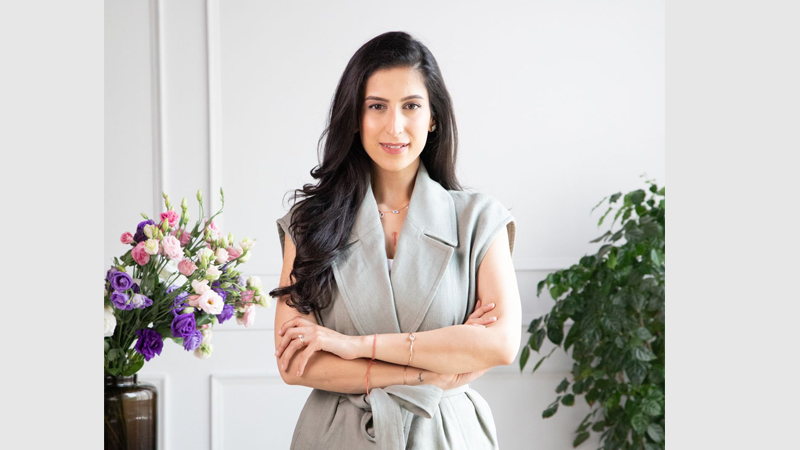
    Mumbai: Born during the pandemic, Boddess Beauty has emerged as a dynamic force in the beauty and wellness industry. Founded by entrepreneurs Mansi and Ritika Sharma, this beauty and wellness platform boasts a diverse portfolio of 100 plus renowned brands. Committed to empowering every woman, they recently introduced their own label ‘The Honest Tree,’ a clean and vegan bath & body brand.

    With a blend of curated products, offline & online platforms, and strategic collaborations, Boddess emerges as a beacon of resilience, with Mansi Sharma leading creative endeavors, setting new benchmarks in the ever-evolving beauty landscape.

    Indian Television caught up Boddess Beauty co-founder and creative director Mansi Sharma to gain insights into her entrepreneurial journey, on the launch of ‘The Honest Tree’, AR/VR playing a role in enhancing the beauty shopping experience, and much more…

    Edited Excerpts:

    On the inspiration behind embarking on the entrepreneurial journey of creating Boddess Beauty

    Boddess was the product of a deep love for beauty technology and a passion for making beauty brands available to a pan-India audience; not just in major tier one cities. Back when we started we realised that the Indian consumer has both the appetite and the curiosity for experiencing world-class beauty products and brands, but insufficient access. Through our years of experience in the industry, we curated a collection of top skincare, makeup, body care, fragrance & accessories brands to bring to the Indian consumer.

    On the key challenges Boddess faced during its launch in the pandemic, especially in the beauty and wellness industry, and how did the brand successfully overcome them

    As an omnichannel platform we were lucky to be able to tap into our online community when malls and public spaces were shut down. We also noticed a shift from makeup to a deeper penetration in skincare, hair care and eye makeup as growing categories as they catered to demands of the time. Every crisis brings with it an opportunity; these were just a few of the many opportunities we were presented with during the pandemic.

    On the creation of your private label, ‘The Honest Tree,’ and its differentiating aspect in the market

    With a deeply entrenched philosophy of growing premiumisation and more importantly personalisation, we wanted to create a brand for Indian body skin concerns, based on the reality of India’s extreme climates, pollution levels and harsh sun exposure. After studying the market, we realised a lot of local Indian brands focused solely on face care, and most highly efficacious body care products came from abroad and at a high price. After almost a year of experimentation, studies, and trials we came out with a line that provides a luxurious body care experience, catering to Indian/South Asian skin concerns at an attractive price point. Our first-of-its-kind back-acne lotion targets a niche but widely experienced concern of body/back acne that prevents consumers from exposing their body skin confidently. The response we’ve gotten is extremely gratifying for it, and this is just one of twenty-one state-of-the-art SKUs in our collection.

    On the collaboration with Netflix’s “Kho Gaye Hum Kahan” and partnerships with entertainment industry projects aligning with Boddess’ brand strategy

    The collaboration has a very interesting story – I had a brief stint working with Tiger Baby Films during which I came across the script of KGHK and heard that the film was looking for a beauty brand partner. I felt that the film’s characters were a perfect match to our target consumer and introductions were made. The rest as they say is history.

    On seeing technology, such as augmented reality or virtual try-ons, playing a role in enhancing the beauty shopping experience

    It has gone from a ‘good to have’ to a ‘must have’ status among retailers at this point. With the advent of e-commerce and online shopping having means of experiencing products and brands without having to physically be present is becoming increasingly important whether that is in fashion or beauty. However, one must note that by no means do these technological advances replace the in-person shopping experience completely. Our loyal e-commerce customers still love swatching, trying and playing with our products before they purchase. Virtual try-ons and augmented reality exist to complement the overall 360-degree retail experience instead of replacing any format.

    On Boddess Beauty maintaining a balance between offering a diverse range of beauty products from renowned brands while ensuring affordability for a wider consumer base

    Our selection of brands and products extend themselves right from premium to masstige and mass, but we are very selective based on product efficacy, brand ethos and consumer demand. We understand that India, being an extremely price-sensitive market is also an extremely aspirational market, with every consumer having the desire for premiumisation as well as personalisation. Therefore, it’s essential to provide a brand curation that leaves the customer inspired.

    On your role as creative director at Boddess Beauty, shaped by international experience, contributing to reshaping beauty standards, combating ageism and colorism, and promoting inclusivity in the Indian beauty industry

    I don’t think a world of beauty exists for us in which we are not redefining what it means to be beautiful, feel beautiful and look beautiful. From a very young age beauty has meant happiness for me. I want women and men alike to feel happy in their own skin, with makeup and skincare available as tools for them to enhance that happiness. Our campaigns with female doctors, technicians and several other inspiring figures have shed light on the beauty that comes with empathy, service and empowerment.

    On Boddess Beauty’s future expansion plans, both in terms of product offerings and market reach

    We have just launched two exciting new brands – Max Factor and The Honest Tree (our own body care label) with a few other major international brand launches in the pipeline. Stay tuned for brand announcements in the near future. In terms of our physical expansion, given the roaring response to our Itanagar store, we endeavour to be present in tier 2 and 3 cities wherein a large beauty footprint is still missing.

  • Boddess Beauty elevates Mansi Sharma as creative director of House of Beauty

    Boddess Beauty elevates Mansi Sharma as creative director of House of Beauty

    Mumbai: Boddess Beauty & House of Beauty, India’s premier Omni channel multi-brand, has elevated Mansi Sharma to creative director. In addition to being the co-founder, in her new role, Mansi will play a pivotal part in nurturing and expanding the portfolio of private-label brands under Boddess Beauty.

    Mansi Sharma brings a wealth of knowledge and expertise in understanding brands to her new position. Her previous tenure at the renowned Eff creative group, an INC. 500 listed creative agency headquartered in New York provided her with a diverse and extensive branding and marketing background across industries such as beauty, fashion, health & wellness, and finance. Notably, Mansi spearheaded the establishment of Eff Creative Group’s APAC headquarters in Southeast Asia, based in Singapore, where she served as a director. Her experience in both international and regional markets positions her as an ideal candidate to lead the creative endeavours at House of Beauty.

    “I am thrilled to take over the new position as creative director of Boddess Beauty. I am very passionate about storytelling, product development, and launching brands. In my new role, I will be driving innovation and growth within our private label portfolio and expanding its footprint in all parts of the country. The aim of Boddess Beauty is to bring world-class innovative products, brands, and beauty practices to aspiring consumers pan India. Our private label is deeply rooted in the wants, needs, and concerns of specifically Indian skin. We’re here to bring you products that serve your skin’s personal needs.  My passion for branding stems from a love for products and the promise that comes with them, which truly improves the lives of people; whether they are in the realm of beauty or otherwise.” said Boddess Beauty co-founder, and creative director Mansi Sharma.

    Ms. Sharma has an MBA from MIT Sloan School of Management and a Bachelor in Political Science with a Minor in Psychology from New York University. Her creative vision is deeply rooted in the belief that at the heart of every brand and product lies a compelling narrative. Drawing inspiration from her passion for films and literature, she aims to infuse this ethos into every aspect of her role at Boddess Beauty. Her mission is to redefine conventional standards of beauty, tackling issues such as ageism and colourism, and advocating for inclusivity and diversity within the beauty industry.

  • Keep the content debate out of TRP manipulation: Zakka Jacob

    Keep the content debate out of TRP manipulation: Zakka Jacob

    NEW DELHI: One of the most reliable voices on prime time news television for the past decade, Zakka Jacob is a unique breed of journalist in today’s high-decibel newsrooms; the executive editor of CNN-News 18, Jacob is known as the ‘thinking man’s journalist’ for a reason. The man is admittedly trying his best to cater to the unique needs of his channel’s audience that likes to miss a few shouting matches and wants balanced coverage on any topic and present a holistic news cycle covering every topic.

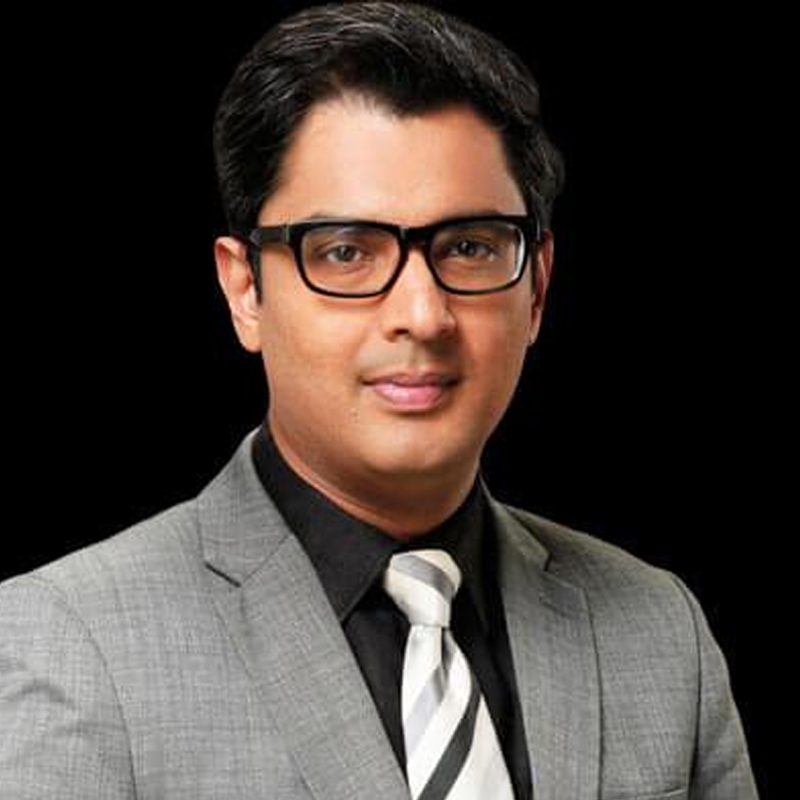
    In a candid conversation with Indiantelevision.com’s Mansi Sharma, the award-winning anchor discussed in detail his journey in the news world, how he sees the new era of journalism, and how he plans to stay true to his own and CNN’s brand. Edited excerpts follow:

    On his tryst with journalism

    Journalism was not something that I had planned to do or was aspiring to do. It just happened. I was born and raised in Chennai and like every other guy growing up there, I had two career options insight; either be a doctor or an engineer. I wasn’t bright enough to study biology so I chose PCM, and did my engineering. Now, again as an engineer, I had two options; head to the US or get into the IT field. And I wasn’t really interested in either at that time. In fact, I couldn’t do coding to save my life. 

    It so happened that I was always an active participant of the cultural groups at my school and college. I used to participate in quizzes, debates and won a few competitions too. So, when there was an opportunity to audition for the post of a radio presenter at All India Radio, I went for the auditions and got selected. From there, I got introduced to a few friends who informed me that Sun News was hiring and I joined them. I moved to Delhi after college and joined Headlines Today in 2003. That’s where it all started.

    On his early days in the industry

    Yes, I did not have any professional training but at that time, I feel, it was easier to get into the field of journalism. All you needed to have was a lot of curiosity about the world and the willingness to learn. 

    I remember when I moved to Delhi, a friend of mine had made me meet S Srinivasan as they were hiring fresh faces at Headlines Today. It was one of the two English language news channels then and I had thought that I would not make it. Because I did not fit the bill; they were looking for young and glamorous boys and girls. Srinivasan had even asked me why an engineer like me wants to be a journalist. But he definitely saw something in me, to this date I don’t know what that was. Maybe I was this enthusiastic young kid for them. When Uday Shankar interviewed me, he had told me that if you really want to do it then you will have to be in the business for many years. And so I have been here. 

    Yes, the initial few months were difficult. I was either doing late-night shifts or hosting the early morning show at 6-7 am and then an accomplished anchor would take on. Also, it was November and being from Chennai, I had never experienced winters. So, doing this job, late-night shifts in winters, everything was challenging. But I was lucky that I got mentors like Srinivasan and G Krishnan, and a lot of friends who were also new to journalism. It was quite exciting as well. 

    On his role models and inspirations

    When I had started, the top three names in the Indian news industry were BarkhaDutt, Rajdeep Sardesai, and Arnab Goswami. I obviously watched them a lot. And then there were people — I won’t say I wanted to imitate them but I did learn a lot watching them and maybe subconsciously had a lot of impact on my personal style of reporting — like Tim Sebastian and Stephen Cole of the BBC. 

    On his favourite coverages

    There are many events that come to my mind but the three that are very close to my heart were the 2004 general election. It was the first general election that I covered and the outcome of it was very surprising. Everyone was expecting Vajpayee to come back but that did not happen. The other one was the tsunami that happened at the end of the same year. Those were the places where I had spent my childhood and everything was gutted, devastated. That left a huge impact on me, personally. 

    Also, the 26/11 attacks; that was not just another terrorist attack. The siege went on for days altogether. I remember we spent 100 hours straight in the office. We were covering everything live. People used to nap for a few minutes within the office and then get back to work. Additionally, it was great learning for all of us as journalists as to what we can show on live television and how to report on such incidents. 

    On the new emotionally-driven reporting style of TV news

    Personally, I get some of the outrages that are happening. In India, right now, people are genuinely concerned and angry; be it the services, or the condition of the cities, or Covid, there are enough reasons for the citizens to be angry. And at some level, they (newsreaders) are trying to convey the same. That’s okay. 

    But what has happened of late is that there has been made a division on ideological lines; some journalists are called left-leaning, some are called right-leaning, some are accused of favouring the ruling party. I don’t like such labelling. At the end of it, it is about bringing stories that matter, that impact people. That’s what this profession is all about. 

    The involvement of politics in news is nothing new. It is the reflection of how society is. What journalists and editors should try to do is be honest and non-partisan. They need to be true to the story. I am okay with a few talk shows, chat shows, or prime time debates to have some sort of views or ideologies. But at the end of the day, show stories that matter, be true to the coverage. 

    On the new programming style of channels

    To a certain extent, yes the channels are spending a lot of time on one single story. But channels spend an inordinate amount of time on one story because the ratings (TRP) is the function of two things; the number of people who are watching a channel, and the amount of time they are spending. So, if we are able to maintain the viewers’ interest, they will watch the channel for longer. It, therefore, happens in the case of developing stories that channels spend a lot of time on the same topic; be it the Sushant Singh Rajput case or the Hathras case. But we must know how to aggregate it. 

    On TRP manipulation

    See, it’s a matter of investigation. And I keep saying one thing, I also said it on my show the day the story broke that we need to separate the content part out of this issue. The content is not the debate here. You always have the choice to change a channel if you are not liking its content. The fundamental issue here is the integrity of the process with which these ratings are measured and that needs to be addressed. 

    On advertisers pulling out ad monies from certain channels

    I support them (the advertisers) completely. Ultimately an advertiser is paying money for their particular products to be shown based on the ratings. And they are impacted the most if the TRP is manipulated.

    On challenges facing the TV news industry

    I think that the biggest challenge, about which even we were worried till six months back, is people tuning out of television. The biggest pressure, therefore, remains the ratings pressure. But I think that people are coming back to television. For any developing story, any breaking story, no other medium can cover it better than television. People are realising that and they are coming back to television. But the challenge will remain to have the viewers stay with us. 

    On CNN's editorial strategy

    I think we have realised over time that our audience doesn’t like shouting matches. Even a slight change in our reportage results in a dip in our viewership. The channel is known for our stories and presentation and our viewer knows that. So, we stick to the stories that we do best. We have to stay true to our viewers. 

    Advice to young journalists

    For me, the most important factor is the curiosity to learn, to grow. So, be curious about the news, know what is happening in the world around you. Also, read at least five newspapers on a daily basis; preferably one foreign, one regional, and three national sources. Most importantly, keep an open mind. Don’t come in journalism because you want to be the next BarkhaDutt or the next Arnab Goswami. Come into journalism because you want to tell the little guy’s story. These days it is important to go to a good J-school, but that’s not a deal-breaker for me. 
     

  • Why Bigg Boss remains the most bankable property for Colors

    Why Bigg Boss remains the most bankable property for Colors

    MUMBAI: Ever since its launch more than a decade ago, reality show Bigg Boss – fashioned after the Dutch series Celebrity Big Brother – has never failed to entertain and titillate audiences. The first edition of the show, with Arshad Warsi as the host, aired on Sony Entertainment Television with a TRP of 2.72. Then it passed into the hands of Colors, where it scored an impressive TRP  of 6.99. According to BARC data, Bigg Boss 13 garnered 13.8 million impressions in the finale week last year, breaking the record set by its previous seasons.

    Season 14 kicked off ahead of the festive season and has already racked up 3.9 billion viewing minutes in its launch week, the highest in the last three seasons.

    With the exciting matches in the IPL hogging up daily viewing time,  Bigg Boss has not made it into the top five programmes of Hindi general entertainment channels in week 40, but Colors  has consistently been in the top five channels in the HSM (U+R) market and urban market for the past five weeks. In fact, with the launch of the reality show, Colors secured the second position on  BARC's  pay platform and urban market charts for the first time in five weeks. Weekly impressions recorded on the pay platform chart were 676930 billion and 497722 billion in the urban market. chart

    So, what makes Bigg Boss so popular?

    There could be multiple reasons. Just like the IPL is to Star Sports, Bigg Boss is a tentpole show for Colors. It is a franchise that allows brands and channels to grow with it, a show that grows year-on-year. When it comes to this dramatic reality show, there is no middle ground, one either loves it or hates it. For people who watch it, it's a cult following.

    The show currently has a total of 15 sponsors. Apart from the presenting sponsors – Mobile Premier League (MPL), Dabur Dant Rakshak Ayurvedic Paste and TRESemmé and Lotus Herbals – the channel now has 14 associate sponsors that include Captain food’s Chings, Vicco, Greenlam Laminates, Garnier Men, Mamaearth, Somany Tiles and Lifebuoy. The associate sponsors only for Colors HD comprise Philips, MDH Masale, Fogg, Honda, Urban Company, Duroflex and LG Electronics.

    Havas Media Group India MD Mohit Joshi predicted the latest edition of the reality show will be more popular and profitable than its predecessors. With all signs pointing to a subdued festive season, viewers are bound to tune in and get their thrills from elsewhere. “Bigg Boss 13 was the most-watched reality show with 10+ million impressions, as per data released by BARC India. Owing to the fact that the audiences have been starved for fresh content on TV, there is going to be huge traction which is why it will be preferred by brands and advertisers,” said Joshi. 

    Viacom18 Hindi mass entertainment chief content officer Manisha Sharma shared that with Bigg Boss, the network tries to break its own benchmarks and introduces something new and innovative every season. “It is an important cog in the wheel of our business at a network level and also creates viable opportunities for brand associations. The mechanics of the show is such that it has something for everyone; be it celebrities, viewers, brands, advertisers.”

    Since Bigg Boss grabs eyeballs, it makes sense for advertisers as well. According to a person closely associated with the show in the past, it is attractive to broadcasters not just because it’s a monetisable property, but it keeps paying dividends even in the long run.
     
    “Hypothetically speaking, if you spend Rs 140 crore on the property in three months, you will make a profit on it. It is compelling content for advertisers and brands," he said.

    Format

    Bigg Boss is a show that thrives on drama and controversy. It deliberately brings together highly opinionated and egotistical  individuals and leaves them to stew in a pressure cooker environment for three solid months. The show appears on your television screens every day, and, before you know it, becomes a habit.

    There are drama queens, a few foreign names (for example: Pamela Anderson, Jade Goody and Sunny Leone), struggling actors and a political or religious figure. Contestants are eliminated and replacements are introduced to keep things interesting. Love affairs and big fights abound; there is no telling friend from foe – it is like watching a Bollywood melodrama unfold in real time.

    The format of Bigg Boss indulges its viewers’ voyeurism, and makes for great gossip with friends, colleagues and family. It frequently ranks as one of the top trends on social media.

    “It generates an ecosystem of viewers, fans, and admirers that further builds the show up and creates conversations about it and the contestants,” Sharma further added.

    Brand Integration Opportunities

    Brands want to get associated with a programme  which gives them higher recall value. Think IPL and you associate it with the IPL,  Maruti Suzuki well the quickest connect is with India’s Got Talent. Bigg Boss as a reality show provides greater brand integration opportunities than daily soaps. It has evolved not only in terms of costs but concepts, scripts, marketing and production every year.

    Apart from regular brand visibility, the channel provides businesses with tailor-made tasks and branding opportunities for them for a span of 100 plus  days, said Sharma. They get higher visibility than any other reality show in the space. “The interesting content and higher viewership is also one of the factors that make Bigg Boss an apt engagement foreground for the brands and hence some of them also renew their partnerships with us year on year,” she elaborated.

    Bigg Boss is also a show which sometimes is at the receiving end of a heavy viewer backlash, but Havas' Joshi shrugged off this concern, saying, “We live in a ‘socially connected’ world where anyone can express his/ her point of view. Hence public opinion is what we as individuals and brands have to live with.”

    Joshi also asserted that the show's nature and format are such that it is bound to attract a lot of positive as well as negative chatter. The reason why brands continue to associate with the property is for its reach. When their promotional vehicle faces flak, brands have to manage their online reputation smartly and sensitively, pointed out Joshi.

    Every brand that comes on board is very well aware of the nature of the show, and the publicity that it garners, added Sharma. “We also manage our clients very well who put in immense trust in us which is the reason they keep coming back to us.”

    Salman Khan As The Host

    One of the biggest draws of Bigg Boss is undoubtedly the celebrity of its host – Salman Khan. The actor has an army of diehard fans, many of whom tune in on weekends just to watch Khan delivering justice to contestants who caused chaos in the house that particular week. This time around though, viewers are missing the hand slapping, physical contact,  between Khan and his coterie of famous friends, courtesy the Covid2019 pandemic. However, clever creative and production is more than making up for this minor absence. 

    Big Boss 13 got high traction in both urban as well rural markets and Joshi said this was due to the fact that it is like a doorway allowing the audience to virtually enter into the lives of celebrities. And the presence of Salman Khan adds an extra dose of excitement.

    Monetisation

    Given the sheer scale and viewer base, Bigg Boss is one of the biggest reality shows on Indian television right now. It has all the ingredients that make it a winning property. It is the most talked about, most trended show, and has created a community that thrives on it for entertainment. “Bigg Boss takes things to another level for us in terms of content and viewership. It possesses the power to catapult the channel to the number one spot and contribute in a big way to the revenue,” said Sharma.

    Even with the kind of expense that is resting on the property, Bigg Boss is a great opportunity for brands and advertisers to get on board, she explained, since the viewers connect and engage with the show because they can see contestants going through a whirlwind of emotions in the midst of great angst and drama. “It is a perfect blend anyone can ask for and the kind of integration opportunities we end up doing on the show is humongous. It benefits the brands massively.”

    Winners Get Popularity

    Bigg Boss has proved to be a stepping stone to bigger and better things for many of its contestants. Just by participating in the show, they’re able to amass a loyal fan base, leading to brand endorsements, TV shows, and much more.

    But fame is a fickle friend. Season six winner Urvashi mentioned that her life did not particularly change post-Bigg Boss in any manner. However, winning the title did mean a lot to her because people got to see her as a person, she added. “It has given me a title, helped me in reaching the audience and the masses… A show like Bigg Boss plays in different ways for each contestant's careers. For me, the show added a trophy to my kitty while for others it may lead them to other things. To each their own, I say.”

    Though Colors has time and again proved its mettle, it would be interesting to see how long it can sustain the Bigg Boss phenomenon raging through India.