Tag: Manoj Sinha

  • NDCP2018 may get Cabinet nod by July-end: Minister

    NDCP2018 may get Cabinet nod by July-end: Minister

    NEW DELHI: The India government is hopeful that the New Telcom Policy 2018, which has been rechristened as National Digital Communication Policy 2018 incorporating TRAI’s suggestions to make regulations contemporary, will get the Cabinet approval by July end this year.

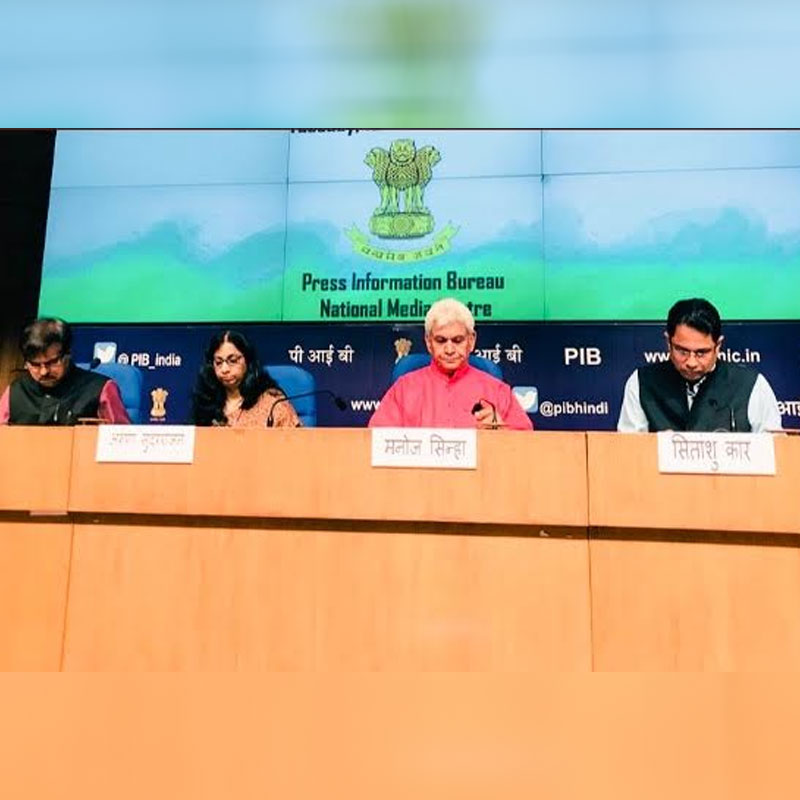
    “We are hopeful that the Cabinet approval for the National Digital Communication Policy 2018 (NDCP 2018) would come through by July-end,” Communications Minister Manoj Sinha said today while briefing the media on the government’s and his ministry’s achievements over the last four years. He added that the NDCP has some “ambitious goals”.

    The NDCP 2018 broadly envisages having more synergies amongst various ministries and other government organisations at a policy level so better coordinated moves could be made to make India’s regulations not only more contemporary, but also help in creating a business-friendly environment in an era when communications and entertainment services are showing high degree of convergence.

    The Department of Telecoms, however, in the draft NDCP 2018 put out for public comments, discarded TRAI’s suggestions to make it the converged regulator on the lines of FCC and Ofcom. The process of getting public and stakeholders’ comments on the NDCP 2018 was completed some time back and the Department of Telecoms is in the process of finalizing a draft policy for Cabinet’s direction.

    Sinha lauded his ministry’s achievements in bridging the digital divide and to a question from the media said that one of the foremost unfinished programmes is to see the full implementation of PM Modi’s dream project of Digital India.

    “Our biggest achievements in the area of telecommunications have been overcoming the pervasive trust deficit through transparent auctions of spectrum and bridging the digital divide in the country by undertaking digital infrastructure projects such as BharatNet on an unprecedented scale,” the minister tweeted after the media briefing.

    Dwelling on in-flight connectivity (IFC) and providing communications services aboard aircrafts over Indian space, Sinha said over the next one year the government could be in a position to provide IFC services. 

    Asked about government plans to rollout 5G services, the Minister informed that a panel set up in the ministry is looking into the issue and assured that India will “not miss the 5G bus” even if it had missed the 3G and 4G gravy-train.

    Also Read:

    DoT addresses broadband issues in policy out for public consultation

    Comment: India’s NTP 2018 gets digital makeover but needs complimentary policies

    TRAI stands up to DoT on use of foreign satellites for comms services on aircrafts
  • Govt assures ease in licensing norms to TV channels, satellite operators

    Govt assures ease in licensing norms to TV channels, satellite operators

    NEW DELHI: The Ministry of Communications (MoC) yesterday, while allaying concerns of the broadcast and satcom industries, assured that the government would further ease norms for doing business in India and that processes were underway for implementation soon to do away with multiple permissions for communications frequencies.

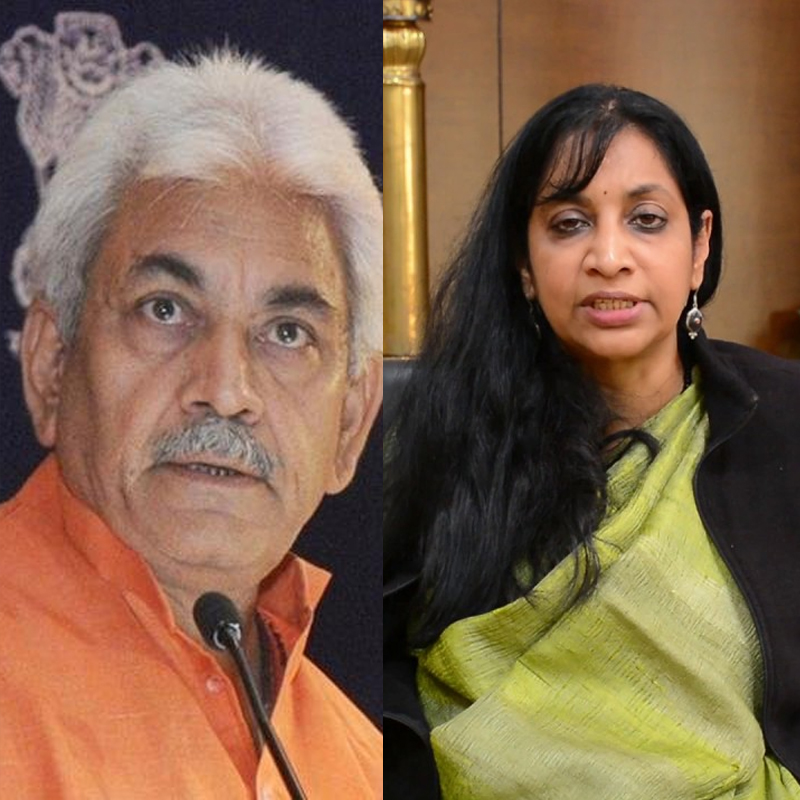
    While communications minister Manoj Sinha said that it was “time to take a fresh approach” to satcom policies, in conjunction with the department of space, the senior most official, secretary Aruna Sundararajan, stressed that soon the government would unveil a single window for frequency-related permissions.

    Speaking at an event organised by Broadband India Forum, called Satcom 2017 and themed ‘Accelerating Satellite Broadband for Inclusive Growth’, Sinha said that the role of satellites in “making available affordable broadband” had been witnessed in various parts of the world. He added it was time that the department of space takes a “fresh approach” to making use of technologies like satellites and cable-delivered broadband — which complement India’s multi-million rupees’ fibre optics network project or Bharat Net— to realse the dream of a digital India championed by PM Modi.

    Pointing out that India was on the threshold of becoming the “largest broadband economy in the world”, Sinha said, “Satellite communications has a special role to play.”

    Speaking earlier, Suderarajan echoed minister Sinha’s vision in making India truly digital and said that MoC was working with Ministry of Information and Broadcasting (MIB) and other related government organisations to create software, akin to a single-window, for various frequency-related approvals and permissions.

    “There are anomalies in frequency allocations (for TV channels and satellite ops),” MoC secretary said, adding that the ministry is in dialogue with other government agencies to remove such irritants so that the “extra burden of cost (on part of the industry players) could be done away with”.

    Both minister Sinha and Sunderarajan promised to take up with the the department of space, various concerns raised by TV channels and satellite operators, mostly foreign, relating to lengthy clearance processes, which were in sharp contrast to the PM Modi-led government’s claim of continuously easing norms for doing business.  

    “I understand that broadcasting has a problem as many agencies are involved. I can tell those present here that we are working with MIB to create a single software for approvals and permissions,” joint wireless advisor RB Prasad reiterated at another conference session, clarifying that an issue about ownership and management of the said portal is being presently discussed to close the matter.

    While stressing that proliferation of affordable broadband will empower Indians in general, which was the government’s target, the top MoC official informed that by the end of the year 100,000 gram panchayats or local village administrations will be broadband-enabled under the Bharat Net project. For the remaining of the targeted 650,000 villages, Sunderarajan said, “Satellite component will be important.”

    Meanwhile, TRAI chairman RS Sharma, speaking to reporters on the sidelines of the Satcom 2107 conference, said that while the open sky policy mandated that the service provider or anyone that wants to provide broadband will be able to contact satellite operators, there were still some “deficiencies” in the system. “That, we will need to work out,” he was quoted by PTI as saying. He, however, ruled out a separate consultation paper on the same. The new telecom policy, scheduled to be unveiled in the first quarter of 2018, will exemplify all those issues, Sharma noted.

    Also Read:

    MIB, TRAI allay industry fears on sat capacity leasing & content regulations

    TRAI sees merit in using satcom for broadband delivery

  • TRAI’s broadband duct idea be made into a law, govt urged

    TRAI’s broadband duct idea be made into a law, govt urged

    MUMBAI: The idea that every building plan must have a broadband cable duct should be made into a law, the union minister Manoj Sinha has been urged.

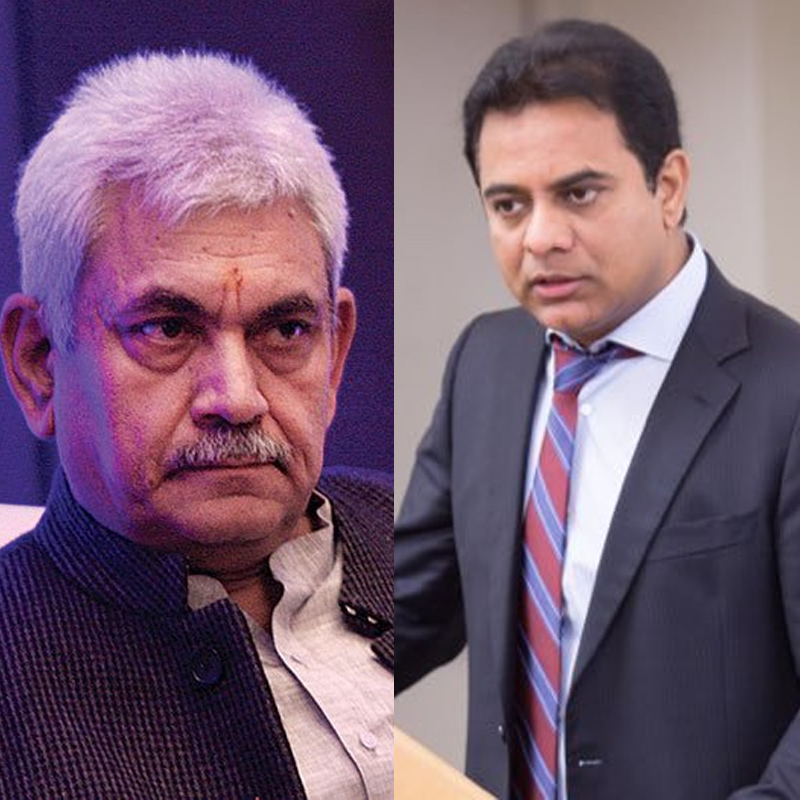
    Telangana IT minister K T Rama Rao, in a letter to Sinha, said that the state expected that the categorisation of broadband service as a utility and mandating duct-laying in building would pave the way for an exponential increase in broadband penetration in India, PTI reported.

    Rao said that the state had created the Telangana Fiber Grid Corporation Limited to build a broadband network to reach every home, institution and government office. Telangana Fiber Grid (T-Fiber) was envisioned to establish a top-class network infrastructure to facilitate the realisation of ‘Digital Telangana’ goal on the back of Mission Bhagiratha, a drinking water project.

    Hailing the TRAI’s suggestion that every building plan must have the duct, Rao requested Sinha to make that into a law to ensure that the last meter connectivity issues for broadband networks were resolved.

    Rao said that they had learnt that the Telecom Commission had approved of the TRAI’s recommendation that a completion certificate (CC) to the building should only be given if it had incorporated the duct in its plan.

    Rao, who is popular as KTR, also sought Sinha’s intervention in directing the ministry of urban development to give similar directive to all state governments to implement the TRAI recommendation.

  • Rs 37-bn panchayat wifi plan by Mar ’19, IMG to meet today

    Rs 37-bn panchayat wifi plan by Mar ’19, IMG to meet today

    MUMBAI: The central government is drafting an ambitious Rs 37-billion plan so as to cover around 5.5 lakh villages with wifi facility for all panchayats by March 2019, a senior Department of Telecom official has said. Also, data shared by the telecom minister Manoj Sinha showed that internet service has started in 33,430 gram panchayats as of 6 September.

    The inter-ministerial panel (IMG) of the Telecom Commission is scheduled to meet on Friday to consider phase-2 of BharatNet project under which 1.5 lakh GPs are to be covered with high speed broadband network.
       
    This month, the government expected to put out a tender for 2.5 lakh GPs (gram panchayats) to be covered so that 5.5 lakh villages would have had access to mobile broadband, the telecom secretary Aruna Sundararajan said, PTI reported.

    The government expects to start broadband services with about 1,000 megabit per second (1 gbps) across 1 lakh gram panchayats by 2017-end.

    Earlier, the plan was to provide 100 megabit per second connectivity to village panchayats, but, under the new BharatNet, the broadband speed has been enhanced 10 times to one gigabit per second at every panchayat level.

    One lakh wifi will used under BharatNet service. The other 1.5 lakh need not be on BharatNet from Day 1. Once BharatNet was completed, the government planned to integrate all wifi backward with BharatNet, Sundararajan said.

    At download speed of 1 gbps, an user can theoretically download a video equivalent to the size of a general Bollywood movie in about 2 seconds.

    Under the new policy, the government will focus on linking some 40,000 villages and increase availability of regular Internet access facility to 70 crore people, from 30 crore, by 2022.

    The secretary pointed out the pace of implementing BharatNet had accelerated by seven times in the last one month. Earlier, 150 installations a day were being done.

    As of July 2017, 2,21,925 kilometres of optical fibre cable (OFC), covering 1,00,299 gram panchayats, were laid and 25,426 GPs provided with broadband connectivity.

    The government, Sundararajan said, has already completed optical fibre rollout in one lakh GPs and is installing electronic equipment for commissioning of broadband services.

    The department has crossed 61,000 GPs where electronic (equipment) have been installed. In the next 2-3 months, it will complete the installation as well as integration to the network. The network for one lakh GPs will be functional before the end of this year.

    Also Read:

    GTPL Hathway pockets Rs 480-mn Gujarat govt contracts

    Fortinet deploys over 500 WiFi locations across Mumbai

    Wi-Fi: TRAI plans to set up ‘open’ WANI, seeks inter-operable, sachet-priced model

    NDMC-MTNL tie up to provide free Wi-fi & FTTH

  • Mobile data traffic grew by 76%, tele-market to cross Rs 6.6 trn by ’20

    NEW DELHI: Communications minister Manoj Sinha has said consumption of video content is forecast to be 75 per cent of India’s mobile data traffic by 2021, compared to 49 per cent in 2016.

    He said the Indian telecom industry has seen a paradigm shift from a voice centric market to a data-centric market. While voice business still contributes a large chunk towards operator revenues, data revenues have shown an exponential growth trajectory over the last few years.

    Speaking at a workshop on Telecom India here, the minister said that by the end of 2016 the number of internet subscribers in India was 391.50 million making India globally the 2nd highest in terms of internet users. He added that mobile data traffic also grew by 76 per cent in India in 2016, primarily attributed to increased smart phone penetration. This growing usage of smart phones, especially in urban areas, has increased the usage of internet on hand-held devices – in 2016, 559 megabytes of mobile data was generated per month by an average smart phone, up from 430 megabytes per month in 2015.

    Sinha said advancements in innovative IoT technologies like health monitors, smart transport, smart meters among others, is projected to result in 21 per cent increase in M2M services. These advances will result in a significant growth of mobile data, and as the telecom sector moves to newer technologies, TSPs will need to identify innovative avenues to monetise this data opportunity. He said the Indian Telecom Market is expected to cross the Rs 6.6 trillion revenue mark by the year 2020.

    Sinha said that one of the projects under the ‘Digital India’ initiative was ‘BharatNet’, launched to deploy high-speed optical fiber cables to connect 250,000 Gram Panchayat across the country by 2018. The project is being implemented in Phases, with more than100,000 gram panchayats connected under Phase-I as of July 2017 and states like Kerala, Karnataka, Chhattisgarh, Haryana, Uttar Pradesh and Madhya Pradesh nearing 100 per cent completion.

    This project would also help in increasing the fiberized sites in India which currently stands at less than 20 per cent as compared to other developed countries.

    Major achievements of the Indian telecom industry, Sinha said, include over 400 million internet users; FDI quadrupled in FY2016-17 recording inflow of approximately $ 5.6 billion; greater than 20 per cent tower sites now diesel free; rural tele density increased by 30 per cent over the last five years; more than 3/4th of the data consumption was from 3G/4G; tje telecom industry generates over 4 million jobs direct and indirect’ LTE device ecosystem grew by 270 per cent from 2015; and 38 new mobile manufacturing units set up since September 2015.

    He added that the government was working aggressively to connect 54,000 unconnected villages and would speed up its efforts after getting due reports from all states. An inter-ministerial group is looking into the financial health of the sector.

    Telecom secretary Aruna Sundararajan said India is attempting to do nothing short of charting a new digital strategy for growth. She said the new Telecom Policy will be a key building block for achieving the growth target of 10 per cent from the current 7.6 per cent as Telecom and IT are the two sectors contributing to 16.5 per cent to the GDP, and there are immense possibilities for it to go up to 25 per cent.

    ALSO READ :

    India leads y-o-y mobile data growth, 1m global users added per day: Ericsson

    “Cost of data is the only barrier for hyper growth of Hotstar & other OTT platforms:” Ajit Mohan

    Tele data & VoIP service rev may expand at 3% CAGR by ’21

    Digital is way forward but auxiliary for top brands: Reports (updated)

  • Broadband connectivity in gram panchayats to be completed by Mar ’19

    NEW DELHI: Broadband connectivity will be provided under Phase-II of the BharatNet project to remaining 1,50.000 gram panchayats in the country using an optimal mix of underground fibre, fibre over power lines, radio and satellite media.

    Communications minister Manoj Sinha said in the Parliament that this phase is targeted to be completed by March 2019.  

    Sinha said, according to information provided by the Telecom Regulatory Authority of India (TRAI), there were 422.19 million broadband subscribers and the internet penetration (internet subscriber per 100 population) was 32.86% in the country as on 31 March 2017.

    The National Telecom Policy-2012 envisages 600 million broadband connections by the year 2020, he said. 

    He said the Government had planned the BharatNet project to provide 100 Mbps broadband connectivity to all Gram Panchayats – approximately 2,20,000 in the country.

    Under the first phase of the project, 100,000 Gram Panchayats are to be connected by laying underground Optical Fibre Cable (OFC) which is under implementation. 

    The Minister said that the provision of last mile access to the network and broadband service provisioning shall be through Wi-Fi or any other broadband access technologies in all 2,50,000 GPs in the country.

    As on 23 July 2017, the status of implementation of BharatNet is:  

    No. of GPs where OFC laying is completed: 100,299 GPs 

    Optical Fibre Cable laid: 221,925 Kms 

    Broadband Connectivity provided in GPs: 25,426 GPs 

    Also Read:

    Broadband subs growth slows further, wireline broadband loses subs

    Broadband: Futuristic policy to deal with communication & entertainment challenges

    Wireless b’band data speed ideas date extended

    Broadband speed: TRAI extends ideas date to 20 July

  • Broadband: Futuristic policy to deal with communication & entertainment challenges

    NEW DELHI: The communications ministry has initiated a move to relook at the current telecom policy as data is going to drive the industry rather than voice in view of the exponential increase in broadband usage and smartphones which were vehicle of both communication and entertainment.

    The minister Manoj Sinha said over the weekend that this will be done through public consultation, as the need of the hour is to ramp up for the Digital era.

    Sinha said his ministry was dealing with an extremely dynamic industry and progressive market which is evolving at an extremely rapid rate.

    Speaking at the 10th Anniversary Celebrations of IPTV Society here, Sinha said whether it is broadband spectrum, Internet adoption/availability, data protection, or cyber security, what was applicable five years back is no more relevant in today’s context, and new policies will need to be futuristic.

    They will also need to be capable of dealing with India’s challenges and figuring out ways to deal with those challenges, he added.

    The minister said while the buzz today is 4G, the government is already gearing for introduction of 5G. and so “we need to think of and prepare for an ecosystem where Internet of Things (IoT) and Artificial Intelligence (AI) are mainstream, and connectivity is seamless, designed to improve the quality of e-governance and education, as well as to enable financial inclusion, smart cities, and an intelligent transportation system amongst other things”.

    Quoting experts, Sinha said India along with North America, will lead the way in numbers of 5G subscriptions by 2022, and that 5G will speed up the digital transformation in a number of industries, enabling new use cases in areas such as IoT, automation, transport and big data.

    He said broadband is of vital importance to India, as indeed to all customers globally, to ensure digital connectivity as this is the stepping stone to higher productivity as is proven in many developed economies. “It enhances commerce, improves banking facilities, improves administrative facilities and empowers the public as a whole. Broadband development is the cornerstone of Digital India and every Indian and remotest location will be empowered through the Digital India initiative.”

    He lauded the Broadband India Forum for bringing out credible research documents from time to time in the form of white-papers and reports, independently or in combination with reputed research agencies on relevant issues which are of value to all stakeholders and for the future of broadband in India.

    The minister released a paper by Broadband India Forum and ICRIER which he described is of economic significance for the digital economy concerning ICT Applications.

  • High-speed data services & on-demand bandwidth expectation prompt new telecom policy

    NEW DELHI: A new telecom policy, which will be application driven as compared to connectivity-driven National Telecom Policy 2012, will be ready soon. This was indicated by communications minister Manoj Sinha while speaking at a seminar here on ICT: Engendering New Governance Structure.

    The new policy has to be focussed on the end-users and should look at the newer opportunities for expanding the availability of telecom services. He said the advent of high speed data services and enhanced expectations of the users to get real time on-demand bandwidth to run near real time live applications (such as OTT & VoD) had prompted the ministry to prepare new policies.

    The Minister said there had been a six-fold increase in Data traffic in India rom 561 million GB in the first quarter to 2988 million GB in the third quarter of 2016-17, which was a whopping 400 per cent jump.

    He said that for the first time, the Ministry had decided to involve a large pool of experts from outside the department to get more inputs from the citizens and stakeholders for the new policy.

    He said the communications Sector had assumed the position of an essential infrastructure for socio-economic development in an increasingly knowledge-intensive world. He said as of April 2017, the country had close to 1.2 billion telephone connections, including 1.17 billion wireless telephone connections and similarly witnessed the rapid growth of the broadband connections now stands at 276.52 million.

    Sinha said that while service providers are rapidly deploying the 4 G technology, his focus is on the need to expand the connectivity to all parts including the north-eastern and Left Wing Extremism affected areas; and to keep an eye on future generation that is 5 G technology and ensure that India plays a key role in standards development and get a healthy share of the innovations and patents in the 5G technology pool.

    He said the FDI equity inflow in telecom sector from April 2016 to March 2017 was US$ 5564 million, which is more than four times the average inflow of about 1.3 billion dollars every year since 2013-14.

    The Minister said the information superhighways are a must for growth in the 21st century. He said the Indian Telegraph Right of Way Rules 2016 had been notified to ease the cable laying approval process and helps in Ease of Doing Business for Telecom Service Providers.

    The Department of Telecom has announced the ‘Central Equipment Identity Register’ to pave the way for setting up of International Mobile Equipment Identity (IMEI) based device registration and authentication that will settle the cases of Mobile Phone Theft to a great extent.

    The department is also actively considering the TRAI recommendations on addressing Telecom Consumer Grievances and urged the officers to propose a state-of-the-art technology driven solution that records, monitors and provides end-to-end monitoring of every grievance.

    Telecom secretary Aruna Sundararajan said the world was looking at India as the next growth engine to grow from 7.6 percent to above 10 percent and this required huge effort by both the government and the private sector. She urged the Department of Telecom to become an Engine of Transformation and to act as infrastructure builder rather than a regulator.

  • Inter-Ministerial group examining TSPs’ system issues

    NEW DELHI: Communications minister Manoj Sinha has said that an inter-ministerial group (IMG) has been formed to examine systematic issues impacting viability and repayment capacity in telecom sector.

    He said the IMG would furnish recommendations for resolution of stressed assets at the earliest and recommend policy reforms and strategic interventions for telecom sector.

    The IMG has held wide consultations with Banks and telecom service providers and is likely to submit its report shortly.

    The Minister assured that the necessary corrective steps will be taken by the Government for ensuring orderly growth in this sector in terms of services to the common-man including in rural areas.

    The Minister said this in a meeting with promoters of telecom service providers where representatives of Department of Financial Services and State Bank of India were also present.

    The industry put forward the problems of telecom sector causing financial stress on the companies and roadmap for addressing the situation.

  • 99% telecom-related plaints resolved on Twitter

    NEW DELHI: About 99 per cent of the complaints have been resolved through social media since the launch of Twitter Sewa in August last year for registration and resolution of complaints.

    According to data released by the Bharat Sanchar Nigam Ltd, a total number of 27,988 complaints had been received as on as on 15 April 2017 and it had resolved 27,965 grievances with a resolution rate of 99.91%.

    Communications Minister Manoj Sinha having twitter account @manojsinhabjp has been calling for daily status reports on resolution of telecom and postal related complaints received through this platform.

    Similarly, India Post has handled 27,000 tweets and resolved them promptly.

    In case of Telecom, consumer complaints relate mainly to telephone bills, broadband connectivity, faulty connections, shifting of landline phones and wi-fi hotspots, while in the case of postal services complaints are mainly in the nature of slow delivery of their articles containing PAN Cards, Roll numbers, parcels, money orders and medicines etc. Issues relating to repairs of Post Office buildings, technical issues with saving banks accounts are also sorted out quickly.

    Also Read :

    YuppTV makes live streaming easy with Freedocast  

    Sanjeev Kapoor launches mobile app with EscapeX