Tag: Manoj Sinha

  • Husk Power Systems appoints William Brent as CMO

    Husk Power Systems appoints William Brent as CMO

    New Delhi: Rural energy company Husk Power Systems, which operates renewable mini-grids in Asia and Africa, announced the appointment of William Brent as chief marketing officer (CMO).

    In his new role, Brent will be responsible for developing and implementing marketing and communications strategy for the company.

    Before joining Husk, Brent spent five years as chief campaign officer at Power for All, a non-governmental organisation focused on energy access, where he was at the helm of the strategic partnerships, branding, and communications focused on mini-grids.

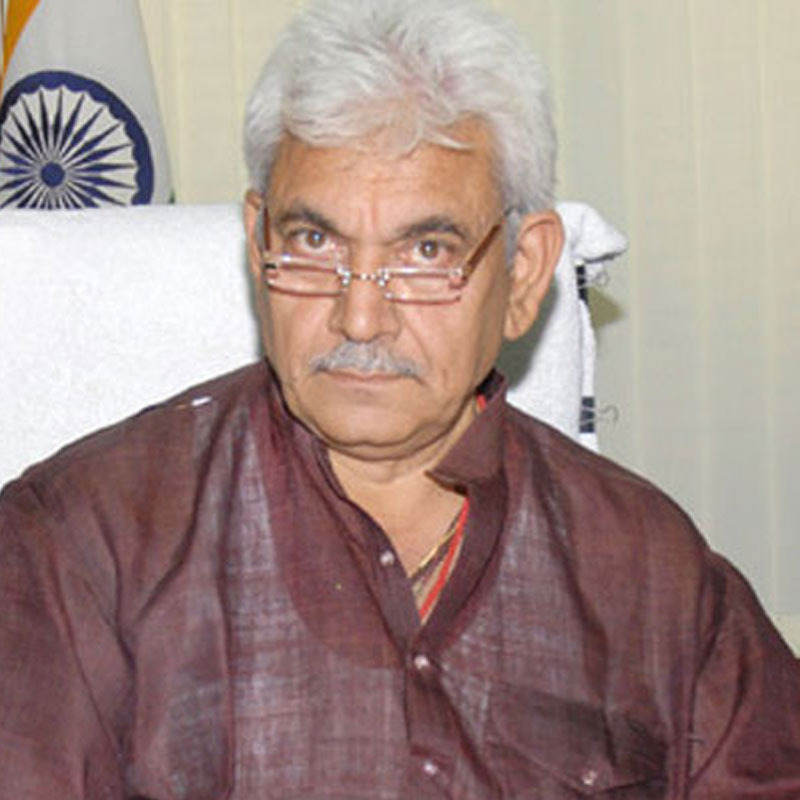
    Husk chief executive officer and co-founder Manoj Sinha said, “I am excited to welcome William to Husk’s senior leadership team and I look forward to working with him to build a world-class rural clean energy brand that is recognised by customers, governments, investors, and employees across Asia and Africa.”

  • 250 mobile apps launched at the second edition of India Mobile Congress

    250 mobile apps launched at the second edition of India Mobile Congress

    New Delhi: Shri Manoj Sinha, Hon’ble Minister of State (Independent Charge) for Communications and Minister of State for Railways, launched 250 mobile apps at the India Mobile Congress, one of the biggest marquee Mobile, Internet, and Technology event for South-East Asia. These apps are related to artificial intelligence, integrated services, health, pharma, security, safety, food, sports, social networking, travel, education, and disaster management, among others.

    As the smartphone industry continues to grow, the adoption of apps has also grown over the past few years. IMC provided the perfect platform for these startups to launch their ventures in front of a global audience that constituted the who’s who of the telecom and technology industry.

    Speaking on the occasion, Mr. Rajan S Mathews, Director General, COAI said, “The second edition of IMC has received tremendous response and the participation has been overwhelming. It is a matter of great pride for us to provide such a large platform for young entrepreneurs to showcase their innovation. The flourishing smartphone industry opened new windows of opportunities and the app industry is definitely a frontrunner where new opportunities are concerned. With people increasingly becoming dependent on mobile apps, the prospect of innovative and relevant apps being launched becomes more real.”

    While apps offer a definite business case, many apps launched today are targeted at public welfare. Apps for blood donation and cleanliness point to the fact that today social welfare is at the helm for many and it augurs well for the nation at large.

    Some of the following apps were launched today – ONGO Framework, Build4Us, Dalmia BestPrice, Antariksh Technology Ventures (OPC) Pvt Ltd, khabar aap kaa, Reverie Language Technologies Pvt. Ltd, Flock, Rubique Technologies, CricDost (XSC Techsol Pvt Ltd), Get Set Go, GenieTalk, Interperso, KONNECT, V-Cloakroom, KOMPASS PRO, ISOMETRIK, Ride Lord, Goldbin, cleaneety, Fridel, Road Inspector, Blood bank, Davaorder, No Food Waste India, Online Teacher training, Web Cycle, Cyanodoc Healthcare, Abbidyn, Knowmad.app, Delhi Blood Bank, Vaani, Indovators, Titration ColorCam (Light Lab, IISER Kolkata), Urban Yogi, WildWatch, Oniv, Street Buddy, Budget Travel, PayJal, The Community Warehouse, Seehat, Sutras, Healthol, Heuro, Ohire, Smart Cities Wheel, Voice Verso, MIHI, BlockMark, DisasterAid, Nexgen Conferences Pvt. Ltd, Bigfix, Biztips, Seehat, Datacultr among others.

    Follow updates on #IMC2018

    For more information please visit us at www.indiamobilecongress.com

    For more updates please visit:
    Twitter: @exploreIMC
    Instagram: @exploreIMC
    Facebook: http://www.facebook.com/IndiaMobileCongress
    YouTube: https://goo.gl/UcZhCP

  • “3-day India Mobile Congress 2018 concludes; showcasing the latest and the best in digital communications technologies, products, services, and applications; and establishing the future horizons for the digital communications sector in the country”: Manoj

    “3-day India Mobile Congress 2018 concludes; showcasing the latest and the best in digital communications technologies, products, services, and applications; and establishing the future horizons for the digital communications sector in the country”: Manoj

    India Mobile Congress(IMC) 2018 – a marquee event which provided a peep into the exciting future in the rapidly evolving area of digital communications – ended today, with participants and organisers promising to be back next year. This year’s event, with its’ theme of “New Digital Horizons – Connect. Create. Innovate.”, established the IMC as a regular platform for global and local stakeholders in the sector to collaborate in the cause of exploring opportunities and leveraging possibilities, with specific focus on South and South-East Asia.

    Addressing members of the press and media on the last day of IMC 2018, Minister of State (Independent Charge) for Communications, Shri Manoj Sinha said – “Having participated in the World Mobile Congress in Barcelona earlier this year, I can assure you that IMC 2018 was no less – in terms of substance, scale, and style. The IMC is just a two-year old baby, and it has already acquired a personality of its’ own. It will now be an important annual event on everyone’s calendar.”

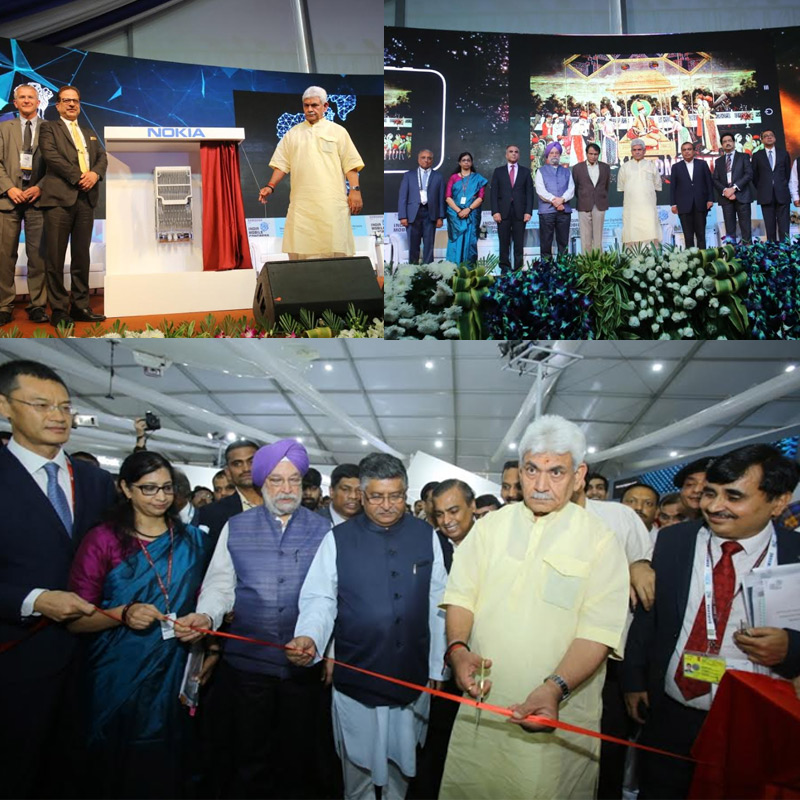
    The mega 3-day event was inaugurated on October 25 by Shri Manoj Sinha,Minister of State (Independent Charge) for Communications, in the august presence ofShri Suresh Prabhu, Minister for Commerce & Industry and Civil Aviation; Shri Ravi Shankar Prasad, Minister for Electronics & Information Technology and Law & Justice, and Shri Hardeep Singh Puri, Minister of State (Independent Charge) for Housing & Urban Affairs. Also gracing the inaugural function were captains of the telecom industry – Shri Mukesh Ambani, Chairman, Reliance Industries; Shri Kumar Mangalam Birla, Chairman, Aditya Birla Group; and Shri Sunil Bharti Mittal, Chairman, Bharti Enterprises.

    The IMC 2018 conference and exhibition was held over a total area of more than 50,000 square-metres, with more than 5,000 delegates in attendance. Delegations from 20 countriesparticipated in the event, which saw more than 300 companies showcasing their latest and best technologies, products, services, and applications. According to the organisers, more than 50,000 curious visitors attended the various sessions and viewed the futuristic solutions on display at the exhibition stalls.

    An extremely relevant addition at this edition of the IMC was the presence of high-level ministerial delegations from several BIMSTEC and ASEAN countries. Hon’ble Ministers from the European Commission, Cambodia, Myanmar, Nepal, and Lao PDR led their respective delegations, and participated in plenary sessions which were focused on the specific needs, challenges, and opportunities applicable to member countries of these regional forums. The presence of the high-level delegations also offered them an opportunity for bilateral meetings with their Indian counterparts, where topics of mutual interest were discussed, and possibilities of strengthening cooperation were explored.

    Among the companies whose participationcontributed to the success of IMC 2018 were global and local giants such as Samsung, Intel, Ericsson, Nokia, Cisco, NEC, Accenture, KPMG, E&Y, Facebook, Huawei, Sterlite, Vodafone Idea, Reliance Jio, Airtel, and BSNL. Several exhibition stalls set up by these companies attracted crowds of interested visitors, while leaders from the companies enriched the discourse through their participation in the various plenary sessions. The exhibition stalls covered a variety of interesting possibilities, hinged around 5G, Internet of Things, Augmented and Virtual Reality,Artificial Intelligence, Robotics, Smart City Solutions, Fintech, Health-Tech, Autonomous Cars, and Cyber Security, amongst others.

    An interesting feature of this edition of the IMC was the focused attention on the critical Start-ups ecosystem. More than 200 start-ups marked their presence at the event, with their booths displaying ideas and innovations which seek to leverage the potential of digital communications to create and meet ever-changing consumer needs – in areas such as artificial intelligence, integrated services, healthcare, pharma, security, safety, food, sports, social networking, travel, education, and disaster management, among others. As Shri Manoj Sinha, while inaugurating the simultaneous release of 250 start-up applications at the IMC 2018 today, said – “The sheer volume and quality of what I see here is amazing. Who knows, we may right now be releasing the WhatsApp and Google Maps of tomorrow!”

    The event was also noteworthy for some very remarkable announcements which clearly established the direction of the Indian digital communications industry over the next several years. The Government of India announced the commitment of the industry to rollout One Million WiFiHotspots in the Country by December 2019. The National Frequency Allocation Plan (NFAP) 2018 was also unveiled at the event. NFAP 2018 frees up a total of 605 MHz spectrum in the 5-GHz band for Wi-Fi services. Several spectrum bands for Short Range Devices and Ultra WideBand Devices have been made license exempt, benefitting the public as well as industry. As Smt.Aruna Sundararajan, Secretary (Telecom) and Chairman, Telecom Commission, Government of India said – “These initiatives provide an excellent launchpad for achieving the goals such as Broadband for All, which are outlined in our recently released National Digital Communications Policy (NDCP) 2018.”

    In his concluding remarks, the Minister added – “Our Government, under the leadership of the Hon’ble Prime Minister Shri Narendra Modi, remains committed to make the digital communications sector a core part of our national infrastructure. The initiatives and reforms we have announced here will provide a strong boost to employment generation and digital economic activity – especially in the rural and semi-rural areas of the country. We are determined to succeed in our endeavours, in partnership with industry, academia, regulators, and startups.”

    Shri Sinha thanked the Department of Telecommunications and the Cellular Operators Association of India for designing and successfully organising a best-in-class event.

    Follow updates on #IMC2018

    For more information please visit us atwww.indiamobilecongress.com

    For more updates please visit:
    Twitter: @exploreIMC
    Instagram: @exploreIMC
    Facebook: http://www.facebook.com/IndiaMobileCongress
    YouTube: https://goo.gl/UcZhCP

  • Interoperable Bharat Wi-Fi to provide 1mn hotspots by ’19-end

    Interoperable Bharat Wi-Fi to provide 1mn hotspots by ’19-end

    NEW DELHI: Indian Telecom Minister Manoj Sinha has said the country will rollout one million Wi-Fi hotspots in the country by December 2019 via Bharat Wi-Fi, a country-wide common inter-operable platform. His colleague, IT and Electronics Minister Ravi Shankar Prasad later highlighted the government was also taking steps towards effective data protection as the country becomes more digital.

    Announcing the connectivity initiative at the inauguration of the second edition of the India Mobile Congress 2018 (IMC) yesterday here, the Telecom Minister said Bharat Wi-Fi will be owned and operated by telecom service providers, ISPs and virtual network operators (VNOs) and consumers will have access to Wi-Fi hotspots of any of the partnering operators.

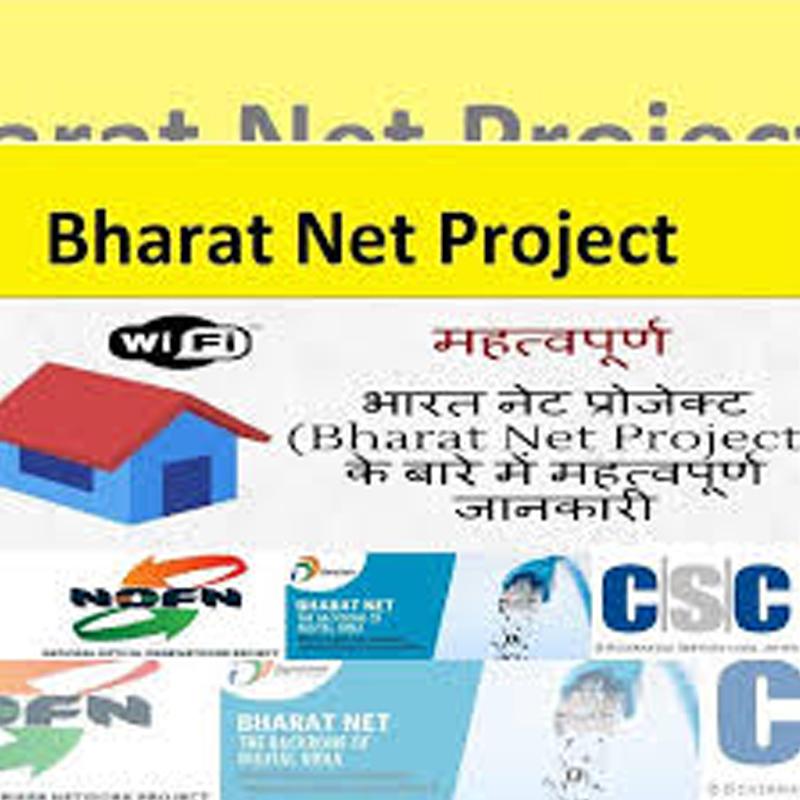
    The interoperable Wi-Fi initiative is part of the Indian government’s fibre optic project BharatNet that aims to connect the country’s 250,000 gram panchayats or local village administrations and has “put mobility in the centre of next digital revolution”, the Minister highlighted, adding rise in convergence of services has led to adoption of new technologies.    

    Pointing out that revenue generation in India’s telecom sector has seen a rise of 220 per cent in the last four years, Sinha said, along with the information technology segment, the two sectors presently contribute approximately 6.5 per cent to the country’s GDP and has the potential to grow further.

    Sinha, along with his other ministerial colleagues and industry stalwarts, including Reliance Industries’ Mukesh Ambani and Bharti Airtel’s Sunil Mittal, also unveiled the National Frequency Allocation Plan 2018 (NFAP), a roadmap for the Indian digital communications industry.

    The NFAP released a quantum of 605 MHz license-exempt spectrum in 5GHz band for wireless access services and radio local area networks in outdoor to meet the ever-growing appetite for data (from a current figure of 50 MHz since 2007).

    The frequency allocation plan also offered over 30 license-exempt bandwidths for short range devices (SRDs), ultra-wideband devices (UWDs) and additional spectrum for M2M services, creating opportunities for the public to enjoy benefits from technologies and enabling the industry to build domestic manufacturing eco-system. India has signalled its spectrum plans for 5G services aspiring to adopt the next generation technology.

    “The country is at the cusp of a digital revolution with disruptions happening in each and every sector and industry. With growing smartphone and internet penetration and with the finalisation of National Digital Communication Policy 2018, these are exciting times for the telecom sector, and the society at large,” Sinha said, adding that the launch of several innovative products will pave the path to accomplish Prime Minister Modi’s “vision of a digitally connected India”.

    The three-day India Mobile Congress 2018 has been organised by Department of Telecoms and Cellular Operators Association of India (COAI).

    Earlier in the day while RIL’s Mukesh Ambani said Jio is ready to again disrupt the market with its fixed-line broadband service, Bharti Airtel’s Sunil Mittal exhorted the government to make more telecom industry-friendly policies as the sector continues to be highly taxed, similar to the tobacco industry, which is proving to be detrimental.

    Among the key highlights of the first day of the IMC was the participation of 5G trials by companies like Reliance Jio InfoComm, Intel, Nokia and Qualcomm.

  • 5G stole the limelight at IMC 2018 Day 1, with Live Demonstrations

    5G stole the limelight at IMC 2018 Day 1, with Live Demonstrations

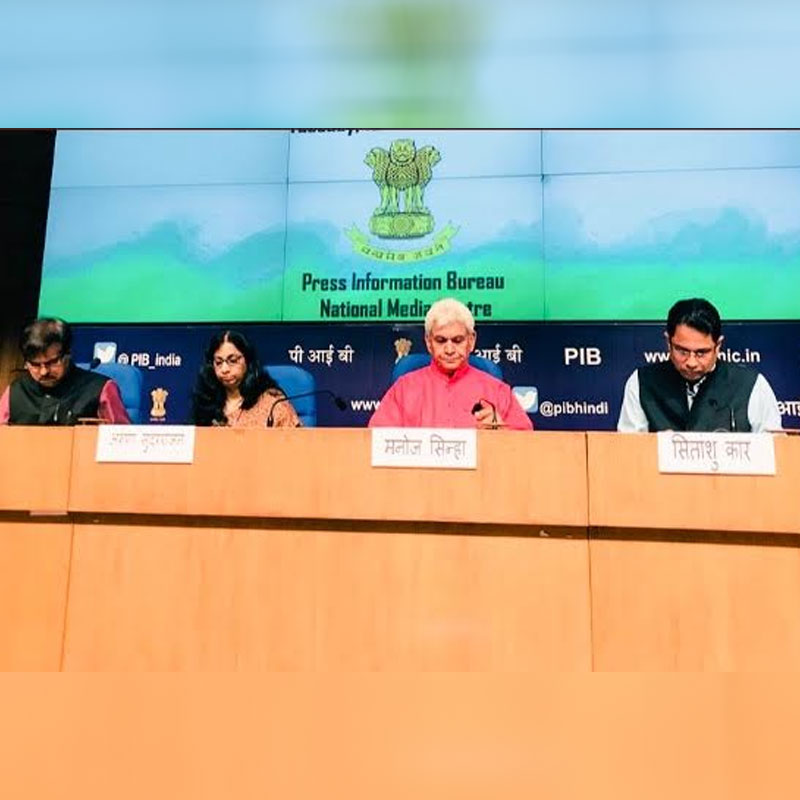
    New Delhi : India Mobile Congress 2018 (IMC 2018), South Asia’s biggest Mobile, Internet and Technology event, kicked-off today amidst much fan-fare at Aerocity, New Delhi. Chief Guest, Shri Manoj Sinha, Hon’ble Minister of State (Independent Charge) for Communications and Minister of State for Railways, inaugurated the event, which is jointly organised by the Department of Telecommunications and COAI. The event witnessed the presence of more than 15,000 people including international exhibitors, media, global speakers and other notable delegates, including several established and budding entrepreneurs.

    While addressing the gathering, Hon’ble Minister Shri Manoj Sinha, stated that the Government would leave no stone unturned in extending its support to India’s ICT and TMT sectors. Apart from showcasing India’s rich technology heritage and the road ahead, the three day event highlighted India’s massive ICT innovation potential and brought to light, several game-changing technologies that will shape India’s digital future in the coming times. The event, themed “New Digital Horizons: Connect, Create, Innovate”, witnessed exemplary participation and support from global information and communications technology companies. The platform saw an impressive international presence with over 300 exhibitors, 2000 CXOs and 190 global speakers.

    Key Highlights of the Day-1

    On Day 1, a number of exhibitors including Reliance Jio Infocomm, Intel, Nokia and Qualcomm participated in 5G trials. This was the first time people could get a glimpse of what is to be expected from 5G in the years to come and how it can affect the scope and development of futuristic technologies. A number of discussions were pivoted around how such technologies will shape India’s digital future. The sessions showcased India’s 5G potential and the numerous unique use cases 5G will have in India. There were live 5G demonstrations by companies such as Nokia, Ericsson, Qualcomm, Reliance Jio infocomm and the like.

    The introductory panel discussion, around the theme – The India Story (Stack 3.0) – Connect, Create, Innovate, was the pick of the conference sessions. The second-half of the day saw a number of interesting and vital discussions on The Evolving Regulatory Landscape in the New Digital Ecosystem-Regulatory Brief, Enabling Futuristic Networks – Reducing complexity to Redefine connectivity, Digital Identity – A revolution or a threat, Connecting the Unconnected – Building Next-Gen ICT Infrastructure for the Masses, Gadgets of Tomorrow – Connected Intelligence, graced by speakers such as Mr. Ajit Pai, Chairman, U.S. Federal Communications Commission, Mr. David Hammarwall, Head of Product Line 5G RAN, Product Area Networks, Ericsson, Mr. Vinayak Godse, Senior Director, Data Security Council of India, Mr. Bimal Dayal, CEO, Indus Towers and Mr. Jonathan Wood, Senior Director, Intel Next Generation and Standards, Intel.

    IMC 2018 also hosted the ASEAN & BIMSTEC Conclave which was addressed by delegates including Shri Manoj Sinha, Hon’ble Minister of State (Independent Charge) for Communications and Minister of State for Railways and 16 other Ministers from ASEAN & BIMSTEC Countries, H.E. Mr. Pichet Durongkaveroj, Hon’ble Minister of Digital Economy and Society, Govt. of Thailand, H.E. Khennavong Bounsaleumsay, Vice Minister, Ministry of Posts and Telecommunications (MPT), Lao PDR, H.E. Thant Sin Maung, Hon'ble, Union Minister of Transport and Communications, Govt. of Myanmar, H.E. Chea Manit, Under Secretary of State, Ministry of Posts & Telecommunications (MPTC), H.E. Tram Iv Tek, Minister of Posts and Telecommunication, H.E. M Shahidul Islam, Secretary General, BIMSTEC. A number of topics curated for consumer interest garnered excitement and enthusiastic participation from the delegates. One such session involved a discussion on “Smart Cities: Automating the way we live”.

    Key highlights of the day:

    Nokia

    Nokia’s state-of-the-art manufacturing unit in Chennai has started manufacturing 5G New Radio (NR) based on the 3GPP 5G New Radio Release 15 standard. It is the factory to start manufacturing 5G radio equipment in India. The Chennai plant is one of the largest telecom equipment manufacturing plant in the country, recently reaching the 4 million units annual production milestone of 2G, 3G and 4G units. It serves both domestic as well as global customers, shipping to over 100 countries.  As part of an on-going program, known as the ‘Conscious** factory’, the Nokia Chennai plant recently implemented the first 'real-world' Smart Manufacturing application of Industry 4.0 in India leveraging solutions such as Augmented and Virtual Reality (AR/VR), connected Robotics, Artificial Intelligence, Big Data Analytics, and Internet of Things to enhance operations and increase productivity.  The plant is equipped with cutting-edge manufacturing technologies, such as the state-of-the-art surface mounting technology, with a capacity of 12.8 billion components every year, 3D automated optical inspection and X-Ray inspection capability.

    Huawei

    Huawei Reiterates Commitment to Bringing 5G to India with Full Range End-to-End Technology Showcase at IMC 2018 – Conducting industry’s first 5G use case demos in partnership with Airtel, Huawei paves ROADS to a fully connected and intelligent world.

    Mr. Randeep Sekhon, Chief Technology Officer, Bharti Airtel said, “Ubiquitous high speed networks will open doors to a digital world that will be full of exciting digital innovations. Having conducted India’s first in-lab 5G test with Huawei, we are delighted to extend our partnership to demonstrate cutting edge AR and VR based use cases for 5G.”

    Follow updates on #IMC2018

    For more information please visit us at www.indiamobilecongress.com

    For more updates please visit:

    Twitter: @exploreIMC

    Instagram: @exploreIMC

    Facebook: http://www.facebook.com/IndiaMobileCongress

    YouTube: https://goo.gl/UcZhCP

  • DoT may approach Cabinet for 4G spectrum to BSNL, MTNL in November

    DoT may approach Cabinet for 4G spectrum to BSNL, MTNL in November

    MUMBAI: While all major telecom operators have already gained highly from 4G roll-out, state-owned operators BSNL and MTNL have been left behind in the race due to impending 4G spectrum. Survival of both the companies highly depends on 4G services roll-out. However, according to a PTI report, department of telecom (DoT) is planning to seek the Cabinet's approval in the next two months for the allocation of 4G spectrum to these two firms.
    As per a source quoted by news agency, draft Cabinet note is expected to be ready in mid-October after which it will be floated for inter-ministerial consultation. Following the move, DoT(http://www.indiantelevision.com/iworld/telecom/cabinet-approves-new-telecom-policy-180926) will approach the Cabinet with a revised draft note in November.

    MTNL provides service in two metros Delhi and Mumbai as BSNL operates all over India except in these two cities.
    A detailed project report has already been submitted by BSNL to the government seeking spectrum for 4G services in lieu of equity. Earlier communication minister Manoj Sinha informed Parliament BSNL sought Rs 6,652 crore as equity infusion from the government to fund its spectrum purchase worth about Rs 13,885 crore.
    The corporation is seeking spectrum in the 2100 MHz band for all circles, except Rajasthan. For that particular state, BSNL(http://www.indiantelevision.com/iworld/telecom/bsnl-ties-up-with-softbank-ntt-for-5g-iot-deal-180924) is looking for spectrum in the 800 MHz band.
    MTNL chairman and managing director P K Purwar requested the government to grant it 4G spectrum in lieu of equity worth around Rs 6,500-7,000 crore and extend its mobile license which is expiring till 2021.
    "I fully agree that survival of BSNL and MTNL without 4G spectrum is tough. There are some decisions of the apex court. We have made a strategy to settle them. I will try by end of this year, it should not be in 2019 but in 2018, the government should decide on the allocation of 4G spectrum," Sinha said earlier.

  • Cabinet approves new telecom policy

    Cabinet approves new telecom policy

    MUMBAI: New telecom policy branded as the National Digital Communications Policy (http://www.indiantelevision.com/iworld/telecom/new-telecom-policy-may-go-to-cabinet-in-2-weeks-dots-sundararajan-180905) (NDCP) 2018 finally got an approval from the cabinet. The new policy aims to attract USD 100 billion in investment and create 40 lakh jobs in the sector by 2022, PTI reported.

    Providing broadband access to all, creating 40 lakh new jobs, and increasing India’s ranking in the global ICT Index to 50th spot- these are some of the key objectives of NDCP 2018.
    “We also expect GDP contribution of the telecom sector, which has been around six per cent, to grow to 8 per cent… and expect USD 100 billion investment to come in,” communication minister Manoj Sinha said.
    As communication systems have been going through rapid change globally in areas like 5G, Internet of Things and Machine to Machine Communication, Sinha said a “consumer-centric and application-driven policy” was needed to be brought in.
    The new policy(http://www.indiantelevision.com/iworld/telecom/comment-indias-ntp-2018-gets-digital-makeover-but-needs-complimentary-policies-180508) is focused on increasing high-speed broadband penetration, with use of modern technologies like 5G and optical fibres across the country at affordable rates.

  • FDI in telecom jumped 5X in 3 years

    FDI in telecom jumped 5X in 3 years

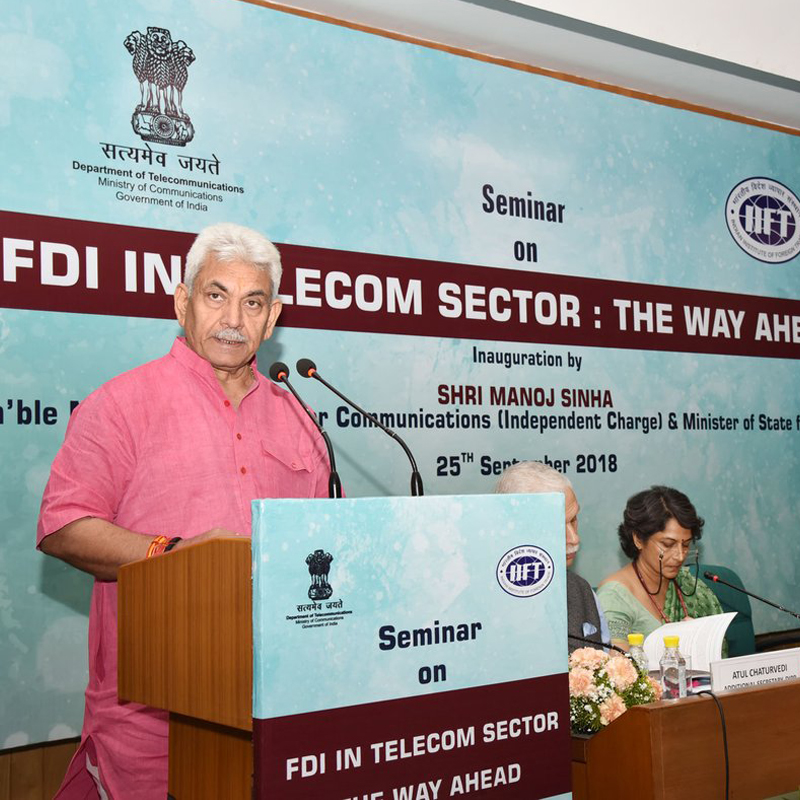
    MUMBAI: During the last three years, the Indian telecom sector has not only witnessed major disruptions but also nearly five times jump in foreign direct investment (FDI). While the amount of investment stood at $ 1.3 billion in 2015-16, it reached $ 6.2 billion in 2017-18, Communications minister Manoj Sinha said. The government is also looking at the funding of $100 billion for the draft National Digital Telecommunications Policy.
    “India needs massive investment in developing newer technologies which are accessible and affordable to the people and at the same time creates productive employment. For India to utilise its demographic dividend it is absolutely necessary to create semi-skilled jobs in short run, and the telecom sector will play an important role in creating those employment opportunities,” he added.
    The sector has also seen a few mergers, acquisitions in the same period. Highlighting that, Sinha said consolidation in the sector will strengthen it. He also calls international investors and telecom players to take part in the growth of the sector as Indian economy is back on the growth trajectory.
    He also added India already announced plans to launch commercial 5G networks by the year 2020. The 5G rollout will leave big opportunities for investing in the newer emerging technologies like AI, IoT, data analytics.
    Telecom secretary Aruna Sundararajan was also present at the occasion. She emphasised the fact that foreign investment is necessary to secure scientific, technical and industrial knowledge. The expert pointed out that the telecom sector has always been one of the core sectors attracting highest FDI inflows and overall this trend has been positive for the past two decades.
    “National Digital Communications Policy, 2018, will be the new platform for convergence of all the stakeholders, where we will be working with growth-oriented investment perspective, rather than with fiscal perspective alone,” she added.

  • BharatNet project will boost rural broadband services: Telecom Minister

    BharatNet project will boost rural broadband services: Telecom Minister

    NEW DELHI: There are 412.60 million broadband connections in the country of which 106.52 million are in rural areas, Communication Minister Manoj Sinha said yesterday.

    Sinha said in the Lok Sabha or India’s Lower House of Parliament that broadband services in rural areas have seen good progress on the back of substantial development in the telecommunication sector.

    “The number of broadband connections in the country as on 31 March 2018 stood at 412.60 million out of which rural broadband connections are 106.52 million, which constitutes 25.82 per cent of total connections,” he said, adding that the government is implementing the flagship BharatNet project to link each of the 250,000 gram panchayats or the local village administrations in the country through optical fibre network.

    This is the largest rural connectivity project of its kind and is the first pillar of the Digital India programme, he said.

    Phase-I of the project has been completed in December 2017 and over 100,000 village administrations have been made service-ready. Phase II of BharatNet project, which aims to connect 150,000 gram panchayats (GPs) through high speed broadband, has been launched and is targeted to be completed by March 2019.

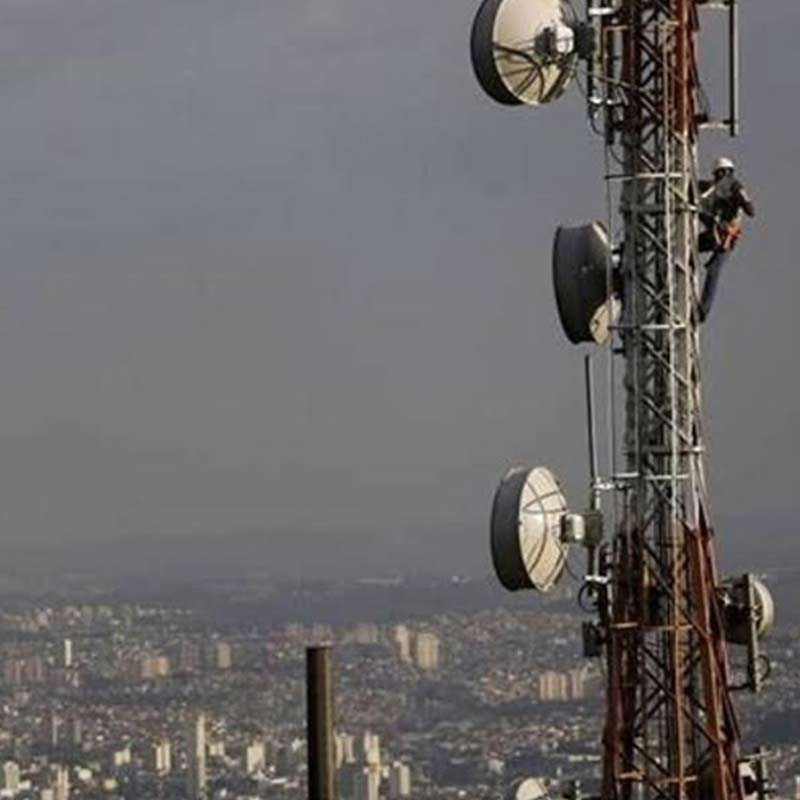
    The optical fibre being laid under the BharatNet project is expected to be the primary means for internet backhaul, which can be leveraged to service the telecommunications towers in the rural areas. This, in turn, will give a boost to mobile internet availability and adoption in the rural areas. 

    As part of BharatNet project, the last mile connectivity, through Wi-Fi or any other suitable broadband technology is being provided at all the GPs in the country. At each GP, on an average five access points are envisaged that include three points for government institutions and two for public places.

    Overall mobile Internet penetration in the country has seen major changes in the last four years. The total number of Base Transceiver Stations (BTS) across the country has increased from 790,000 in 2014 to more than 18,00000 as of March 2018 of which 905,000 BTS are of 4G. The increased number of BTS has resulted in greater adoption of mobile internet across the country, the Minister said. 

  • NDCP 2018, net neutrality rules cleared by Telecom Commission

    NDCP 2018, net neutrality rules cleared by Telecom Commission

    NEW DELHI: India’s Telecom Commission, the second highest decision-making body regarding telecom policies, yesterday late evening approved the National Digital Communication Policy 2018 and also net neutrality rules, which bar service providers from discriminating against internet content and services by blocking, throttling or granting them higher speed access.

    Some mission critical applications or services like remote surgery and autonomous cars will, however, be kept out of the purview of net neutrality framework.

    “The Telecom Commission approved net neutrality as recommended by TRAI…some critical services will be kept out of its purview,” Telecom Commission Chairman and Secretary Department of Telecoms Aruna Sundararajan told reporters here, according to a Press Trust of India report.

    The Telecom Regulatory Authority of India (TRAI) had recommended restrictions on service providers from entering into agreements which lead to discriminatory treatment of content on the internet. It had also favoured tweaking of licensing norms of players to ensure “explicit restrictions” on discrimination in internet access, based on content.

    The Department of Telecom will set-up a multi-stakeholder body for monitoring and enforcement of net neutrality comprising government representatives, internet of things providers, telecom operators, civil society members and consumer organisations. DoT will seek recommendations from TRAI on traffic management for critical services.

    The Commission also approved the new telecom policy — rechristened National Digital Communications Policy (NDCP) 2018 — for seeking approval of the Union Cabinet, Sundararajan was quoted by the PTI report as saying.

    “Everybody in the meeting said that digital infrastructure is even more important than physical infrastructure for India… CEO of Niti Ayog [Amitabh Kant] said that for…districts, we must ensure digital infrastructure is provided at the earliest. Therefore, India must have ease of doing business and enabling policy environment,” Sundararajan said.

    The NDCP, which looks at having more synergies amongst various government organisations and ministries, aims to attract $100 billion investments, 400,0000 new jobs, 50 megabits per second broadband access to every citizen in the digital communications sector by 2022 with the help of reforms.

    A government official, who was part of the meeting, was quoted by PTI as saying that the Telecom Commission has approved installation of around 12.5 lakh Wi-Fi hotspots in all gram panchayats (village administrations) with viability gap funding of around Rs 60,000 million by December 2018.

    Under the Wi-Fi project all police stations, post offices, primary health centres, schools will be connected with Wi-Fi by December 2018 and there will be a couple of  additional hotspots that will be available for round the clock public access.

    The PTI report added that the commission has also approved avoidance of double tax on virtual network operators (VNOs) who provide retail services of telecom operators.

    According to the proposal approved, VNOs will be required to pay levies based on their adjusted gross revenue earned from any value addition that they will be do over the top of service they will buy from telecom operators for selling it to end consumers.

    Earlier, telecom minister Manoj Sinha had said that his department looks to get approval of the Cabinet for NDCP 2018 by July-end.