The successful and neat coverage of the Commonwealth Games on the one hand and the messy affair of the B S Lalli ouster dominated a major part of the activities of Prasar Bharati during 2010, the only other tremor being the lightning mass casual leave towards the end of the year.
Lalli‘s woes
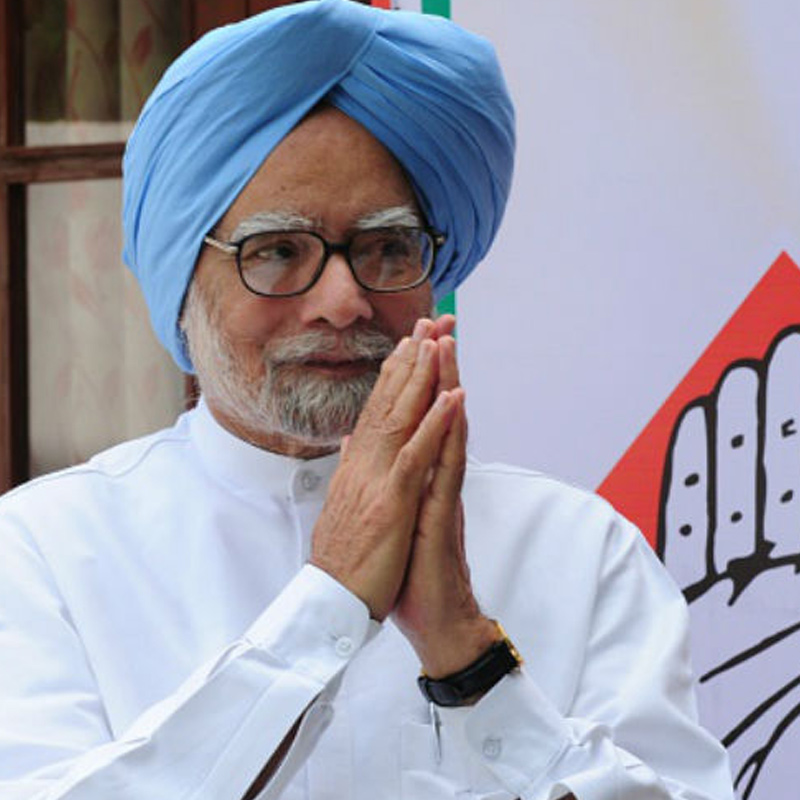
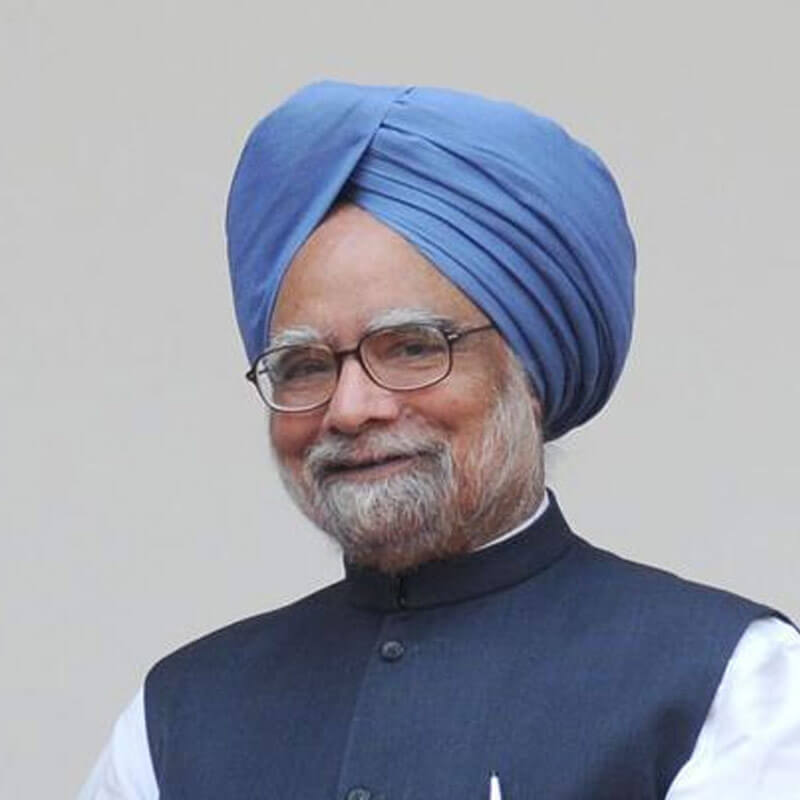
Following a reference to her by Prime Minister Manmohan Singh, President Pratibha Devisingh Patil finally gave her consent early in December to an inquiry by a Supreme Court judge into financial irregularities by Prasar Bharati chief executive officer Baljit Singh Lalli.
The Central Vigilance Commission had in mid-November established four of the seven charges by the Central Vigilance Commission (CVC) against Lalli. The charges were related to contracts for management of advertisement revenue arising from the telecast of cricket matches on Doordarshan during 2007; the non-telecast by Doordarshan of T-20 cricket World Cup matches held in South Africa in September 2007; engagement of legal entities to represent Prasar Bharati; purchase of radio broadcasting rights for 13 cricket series held during 2007-09; and hiring of transport and accommodation for the conduct of the Commonwealth Youth Games in Pune in 2008.
Though this initially led to Lalli’s wings being clipped with a three-member committee with the Members (Personnel) and (Finance) along with the CEO being asked to run the pubcaster, it was ultimately decided to suspend Lalli and Information and Broadcasting Ministry additional secretary Rajiv Takru was appointed the officiating CEO of Prasar Bharati, pending inquiry by a Supreme Court judge.
As Takru who is an Indian Administrative Service officer of 1979 batch is a senior Ministry official, this raised the issue about whether this implied a complete takeover of the autonomous pubcaster by the Ministry.
The Board also formed five committees dealing with the subjects of finance, personnel, production and content, project monitoring and implementation and strategy and vision with a view to streamline the functioning of the national broadcaster.
CWG and its aftermath
Though the coverage of the Commonwealth Games in October went off without any hitch despite fears, Prasar Bharati‘s total revenue from the Commonwealth Games stood at Rs 581 million, falling far short of the expected target of Rs one billion.
Of this, Doordarshan posted revenue of Rs 559.9 million, contributing to a major slice of Prasar Bharati‘s income during this period.
Doordarshan had earned only Rs 36.98 million from the Olympic Games in Beijing in 2008, Rs 1.3 million from the Commonwealth Youth Games in Pune in 2008, and Rs 360,000 from the World Military Games in 2007 in Mumbai and Hyderabad.
The pubcaster is attempting to get exclusive telecast rights in the country of the Olympic Games 2012 in London.
The Commonwealth Games were covered by Prasar Bharati in agreement with UK-based Satellite Information Services (SIS) Live. The British broadcasting group had been shortlisted out of the two consortiums which had filed their bids when the last date closed for this purpose.
Disgruntled Staff
Prasar Bharati was jolted out of its complacency when a majority of the staff of Doordarshan and All India Radio went on a lightning mass casual leave under the aegis of the National Federation of Akashwani and Doordarshan employees on 23 and 24 November, affecting transmission for around 48 hours.
NFADE, an umbrella organisation of 21 service associations, was protesting against the ‘mess created in Prasar Bharati over the last two years’ and seeking a repeal of the Prasar Bharati Act 1990 on the ground that it has no relevance in today’s context.
While radio was badly affected and beamed repeat programmes, Doordarshan kendras managed by taking the feed from Delhi.
The NFADE had threatened a second round of 72-hour mass casual leave from 13 to 16 December, but this was prevented almost at the last minute after hectic negotiations, and the pubcaster setting up a committee headed by V Shivakumar, Member (Personnel) in the Prasar Board, which will have representatives of the Federation to examine the various grievances raised by them.
The Ministry assured NFADE that it was prepared to examine various clauses of the Prasar Bharati (Broadcasting Corporation India) Act 1990.
The Group of Ministers on Prasar Bharati is already dealing with the issue, although Minister Ambika Soni said that repealing the Act as demanded by the NFADE would be counter-productive and the United Progressive Alliance would be accused of trying to control the media.
Government to continue support to Prasar Bharati
The Group of Ministers (GoM) attached to Prasar Bharati, reconstituted early in 2010 with Home Minister P Chidambaram at its head, recommended in mid-December that the level of government support should be maintained for the public service broadcaster for the next five years from 2010-11 to 2014-15.
This support will be reviewed after this period is over. However, the GoM has also said 50 per cent of the annual operating expenses of the Prasar Bharati should be borne by the pubcaster from its internal extra budgetary resources while the remaining 50 per cent will come from government grants.
The GoM also recommended that the accumulated arrears of space segment and spectrum charges of the pubcaster up to 31 March 2010 should be waived, and future charges would be included in the total operational expenses.
The GoM is also clear that plan capital funding by government to the pubcaster may be in the form of grant-in-aid and not in the form of loan. The loan-in-perpetuity and capital loan should be converted into grants, and the interest on loan-in-perpetuity, capital loan and penal interest should be waived.
The ban on recruitments should be relaxed and the GoM set up a four-member Committee of Joint Secretaries to look into various demands of employee organisations. This is in addition to the Committee under Prasar Bharati Board Member (Personnel) V Shivakumar after the mass casual leave by employees.
In addition, a scheme of Rs 6.2 billion has been approved for Doordarshan and Rs 9.08 billion for All India Radio for the purpose of digitisation under the Eleventh Plan and is already under implementation.
Clearly, this was done because the pubcaster is under financial stress. Prasar Bharati has posted revenue of Rs 4.66 billion for the six-month period ended September, while expenditure stands at Rs 12.05 billion.
Prasar Bharati had posted revenue of Rs 11.76 billion for the fiscal ended March 2010 while expenditure stood at Rs 29.49 billion.
Staff shortage
Despite long agitation by various sections of staff in Prasar Bharati and even strong strictures by Parliamentary Committees, All India Radio and Doodarshan continue to suffer from massive shortage or sanction of trained manpower.
A total of 46 low power transmitters are presently relaying partial transmission (including ten each in Andhra Pradesh and Orissa) and activities at 22 Doordarshan studio centres are limited.
Similarly, a total of 24 stations of All India Radio in different parts of the country are only working as relay kendras, while another five – Dharmanagar and Longtherai in Tripura, Dungarpur in Rajasthan, Rairangpur in Orissa, and Suryapet in Andhra Pradesh – are technically ready but not commissioned because of shortage or sanctioning of trained operational and maintenance staff.
Doordarshan at present has 66 studio centres and 1415 transmitters. In the case of AIR, stations are functioning at a total of 238 places. AIR has a total of 380 transmitters (177 FM, 149 MW, and 54 Short Wave).
Some of the AIR transmitters are working sub-optimally as they have outlived their useful life of more than 20 years. Problems have also been faced in AIR because of shortage of staff. The old transmitters are being replaced in phased manner with state-of-the-art Digital Technology Transmitters. Replacement or upgradation of 34 FM Transmitters, 40 Medium Wave Transmitters, and five Short Wave transmitters have been taken up in the Eleventh Plan, and the quality is expected to improve after this work is completed.
Early in 2010, Prasar Bharati had been reprimanded by the Parliamentary Committee on Empowerment of Women for its lethargy in not finalising recruitment rules and failing to make recruitment in the Indian Broadcasting (Programme) Service started in 1990 to train a separate cadre of employees for All India Radio and Doordarshan. Towards the end of the year following an agitation by employees, a task force was set up to go into manpower and recruitment problems.
While the Committee welcomed the decision that all Central Government employees recruited for Akashvani or Doordarshan until 5 October 2007 are to be deemed as on deputation with effect from April 2000 until their retirement, it regretted that its recommendation in 2009 for finalisation of recruitment rules to implement this within three months had not been complied with.
The Prasar Bharati Amendment Bill 2010 giving effect to the recommendation of the GoM for treating all government officers and employees recruited by All India Radio or Doordarshan as on 5 October 2007 to be on ‘deemed deputation‘ with effect from April 2000 till the time of their retirement was introduced in Parliament towards the end of the year.
It had observed in 2009 that there was a shortage of 44.8 per cent of the sanctioned strength in group ‘A‘ and about 40 per cent in Group ‘B‘ in Doordarshan, and 58.8 per cent of the posts in Group ‘A‘ were vacant in All India Radio. As many as 4629 posts in Doordarshan and 6433 posts in All India Radio remain unfilled.
It noticed that recruitment to the post of programme executives was last made 18 years earlier in 1991. The case is no different in various other categories of AIR and Doordarshan.
However, Soni said towards the end of the year that the government was considering a roadmap for taking new initiatives in the Prasar Bharati set up. The initiatives would aim to firm up the mandate given to Prasar Bharati as a public broadcaster, Soni added.
Though the Prasar Bharati (Broadcasting Corporation of India) Act was passed in June 1990, it was notified as a statutory corporation only from November 1997. Section 11 of the Act had given employees the option to decide whether they wanted to join the Corporation or go back to the government, but no action was taken as the rules for various categories of employees have not been drawn up in the past 12 years.
After a long gap of almost 20 years, the Ministry sent a proposal to the Union Public Service Commission for reviewing of the Departmental Promotion Committee for the year 1990 to 1993 for promotion of programme executives and other feeder grades of the Indian Broadcasting (Programme) Service.
The much-delayed action was taken on the directions of the Principal Bench of the Central Administrative Tribunal (CAT) in New Delhi for promotions to Junior Time Scale of the IB(P)S.
DD Modernisation
Early in 2010, the Union Cabinet gave the green signal on the proposal for digitisation of transmitters and studios in the Doordarshan network during the 11th Plan, and Prasar Bharati got a plan allocation of Rs 6.2 billion to begin work on 40 digital terrestrial transmitters and other equipment.
The approval by the Cabinet Committee on Infrastructure covered the networking of DTT through satellite, augmentation of Digital Media centers (DMCs) by providing the following: equipment and facilities for maintaining the digital infrastructure; five sets of digital measurement equipment at zonal offices; 60 UPS at High Power Transmitters to ensure uninterrupted power supply, R&D and Training; digitalisation of 31 partially digitalised and 8 analogue studio centers; digitalisation of archiving facilities; and digitalisation of news automation system and e-governance and IT scheme.
Earlier, Doordarshan had set aside an amount of Rs 12.09 billion of a total approved outlay of Rs 13.69 billion just for digitisation in the 11th Five Year Plan (2007-2012).
The Ministry had prepared a proposal for Rs 6 billion to Doordarshan for completing digitisation. The Government is confident of meeting its deadline of complete digitisation of the electronic media by 2017.
The DD Urdu channel, which had failed to take-off despite being included for mandatory carriage by all cable operators, is set for a revamp and re-launch. The channel, which was launched on 15 August 2006, had initially begun beaming with sponsored programmes or those taken from other channels of Doordarshan. It has begun commissioning of new programmes.
Additionally, the channel had allotted a daily slot to the Maulana Azad National Urdu University for the telecast of informative and educational programmes produced by its Media Research Institute after a five-year MoU that continues till 2012.
The channel is telecast on INSAT 4A satellite and has also been brought on the Digital Video Broadcast – Hand-held (DVB-H) mode.
DD Urdu presently telecasts a fresh band from 5 pm to 11 pm and the shows are then repeated on the channel.
The channel has been riddled by a number of controversies. Initially, it had been found that blank tapes had been submitted by producers who had failed to complete the shooting of their 13-episode series when the channel was first launched. Later, there were complaints of lack of trained staff.
AIR Modernisation
While the Planning Commission in a report had said that a sum of Rs 59 billion would be required over the next ten years for digitisation of All India Radio, the Information and Broadcasting Ministry has prepared a proposal for Rs eight billion for expediting digitisation in AIR.
Doordarshan and AIR, which beam terrestrially to reach all over the country, have both stepped up the process of digitisation, which will free up spectrum currently used for analogue transmission, allowing more channels to come in.
All India Radio has 374 transmitters as compared to 299, when Prasar Bharati was formed. But 200 new AIR transmitters have been approved in spillover schemes under the 11th Five Year Plan.
The Planning Commission, in its report on Going Digital presented in October 2006, decided to go in for 100 per cent digitisation of FM radio and five short wave radio stations. Thus, Prasar Bharati would require Rs 94.31 billion over a period of ten years.
As far as AIR is concerned, an outlay of Rs 36.8 billion is meant for the infrastructure required for digitisation, which includes Rs 5.35 billion for external services (short wave transmission).
The Commission said the revenue generation capacity is expected to increase and it is expected that just over Rs 169 billion would be earned by Prasar Bharati during this period.
At present, AIR employs transmission in MW, SW and FM band in analogue mode only. Only one Low Power DAB transmitter at Delhi has been set up for experimental purposes.
Keeping in view the worldwide trends of transition in digital mode, AIR plans to introduce Digital Radio Mondale (DRM) transmission below 30 MHz – MF and HF band – by upgrading its existing DRM compatible transmitters. All new transmitters including the replacement of old transmitters would be done by DRM compatible transmitters. For transmission, above 30 MHz introduction of DRM + and DAB are being examined.
However, all digital transmission as and when introduced, will be in simulcast mode for about 10 years. This would be necessary as receivers in the beginning may prove costly. Once the receivers become affordable by the masses, the simulcast mode would be phased out.
With a view to provide digital quality direct sound broadcast to the listeners, it is proposed to expand the existing DTH services during the 11th Plan.
AIR has plans to introduce its audio multimedia contents both in satellite and terrestrial mode to the mobile hand held devices in DMB/ DVB-H/ other standards.
It is proposed to use the Internet platform to serve listeners having internet connectivity. This will support non-linear listening. Though no additional spectrum is required for DRM transmissions in MW and SW band, additional spectrum would be required for DRM transmitters in FM and VHF band as well as ‘L’ Band.
During the migration from Analogue to Digital Radio, new frequency assignments are to be identified to facilitate smooth migration and for some time, both the existing analogue transmissions as well as new digital transmissions would continue. Hence, there will be spectrum constraint during this transition phase. Also, the spectrum for digital migration may need to be identified for both Prasar Bharti as well as private FM broadcasters.
The Telecom Regulatory Authority of India (Trai) had suggested a three-stage process of digitisation: Tier One cities by 2013, Tier Two cities by 2014 and Tier Three cities by 2016. But this needed indepth study and consultation with the stakeholders including cable operators, multi-system operators, and broadcasters, the regulator said.
Meanwhile, All India Radio is all set for an exponential growth. Presently broadcasting FM channels from 172 stations, AIR has commissioned another 320 FM radio stations. As many as 246 of these will be transmitters beaming programmes from other centres.
Of the AIR FM stations under implementation in various parts of the country,
Uttarakhand is to get the largest number with seven. Following this will be Andhra Pradesh, Uttar Pradesh, Assam and Maharashtra who are to get six channels each. Arunachal Pradesh and Orissa will have five each and the other states will get two to four channels each.
A sum of Rs 1.44 billion has been allocated in the Eleventh Plan for expansion and revamping of the FM transmitter network while a sum of Rs 3.85 billion has been approved for expansion and revamping of the Medium Wave channels of All India Radio.
In addition, there is a non-plan allocation of Rs 900 million from Internal Extra Budgetary Resources (IEBR) for programme activities, and Rs 100 million for development of programmes under the Software Plan Scheme.
A scheme of Rs One billion has been approved by the Government for strengthening the transmission of broadcasting signals in Jammu and Kashmir to counter hostile propaganda from across the border.
AIR also received a boost with the Government deciding to permit relay of All India Radio news (unaltered) by private FM radio channels on such terms and conditions as worked out with Prasar Bharati. The government, thus, rejected the view of Telecom Regulatory Authority of India (Trai) that news should be allowed to be accessed from AIR, Doordarshan, Press Trust of India, United News of India, and any other authorised news agency or television news channel.
Controversies
The year was not without its share of controversies as far as Prasar Bharati was concerned. Doordarshan issued disconnection notices to seven channels to make place for the high definition channels that were launched to coincide with the Commonwealth Games on DD Direct Plus which is the only free to air direct-to-home platform.
But Doordarshan was forced by the Telecom Disputes Settlement and Appellate Tribunal (Tdsat) to let channels of the Zee group, Enter 10 Television and Seven Star Satellite remain on DD Direct Plus.
The country‘s only free-to-air DTH platform has a capacity of 59 channels while it beams 57 TV channels, apart from 21 channels of All India Radio. The TV channels include 21 Doordarshan channels.
The augmentation of the capacity of the country’s only free direct-to-home platform DD Direct Plus to 97 channels will cost Rs 554.3 million. The augmentation in the first phase will be completed on 31 March 2011. The plan is to increase DD Direct Plus‘ capacity to 200 by the end of the financial year 2011-12.
In yet another controversy, CEO Lalli denied any move to change the frequency of the popular All India Radio FM Gold from 106.4 to 100.1 MHz. Lalli blocked any move to change the frequency, when it was brought to his notice on 31 October.
Asked why FM Gold was on the same frequency which was used by Radio Dhamaal in 10 other cities, Lalli said this was the work of the Wireless Planning and Coordination (WPC) wing of the Department of Telecommunication. However, he said he had already made a noting in this regard for the reference of the Information and Broadcasting Ministry. FM Dilli on 100.1 MHz had been launched especially to carry commentaries of the Commonwealth Games, and the channel has been shut down.
Indo-Bangla Treaty
India and Bangladesh agreed in 2010 to exchange programmes through their respective radio and TV organisations and provide facilities for visiting radio and TV persons in each other’s country associated with the development of broadcasting.
The two countries will also exchange two journalists each including those engaged in dissemination of Government information. This followed the signing of a Cultural Exchange Programme for 2010-2012 to promote cooperation in the fields of art and culture, youth affairs and sports, and mass media.