Tag: Manmohan Singh

  • AIR, DD to beam President’s address and PM flag hoisting on 15 August

    AIR, DD to beam President’s address and PM flag hoisting on 15 August

    NEW DELHI: All India Radio and Doordarshan will beam the message of President Pranab Mukherjee to the nation on the eve of Independence Day on 14 August.


    The flag hoisting ceremony and Prime Minister Manmohan Singh’s message to the nation from the ramparts of Red Fort will also be beamed live on 15 August.


    While the President’s address will be from 7:00 pm on 14 August in English followed by a Hindi translation, the Independence Day programme will commence from 06:25 am.


    AIR will broadcast both the events on all its medium wave channels including the Indraprastha channel and Vividh Bharati, and also on the two FM channels, FM Gold and FM Rainbow, apart from all regional kendras.


    The regional channels will broadcast translations in regional language of the President’s broadcast. Doordarshan will telecast the events on DD National, DD News, DD Bharati, and DD Sports.


    Both AIR and DD will also beam a round-up of the events all over the country later in the evening on 15 August.

  • Business chambers welcome hike in FDI in telecom

    Business chambers welcome hike in FDI in telecom

    NEW DELHI: The Federation of Indian Chambers of Commerce and Industry (FICCI) and the Indo – American Chamber of Commerce (IACC) has welcomed the decision of the government to increase the foreign direct investment in the telecom sector to 100 per cent.


    According to a decision on FDI taken in a meeting chaired by Prime Minister Manmohan Singh, it had been decided to allow up to 49 per cent FDI by the automatic route for basic and cellular services etc., and from 49 per cent to 100 per cent through the Foreign Investments Promotion Board.


    According to FICCI, the decision on enhancement of FDI limit in the Indian telecom sector from 74 per cent to 100 per cent is a positive sign and showcases government’s commitment towards improving the current investment sentiment in the sector and aiding the telecom industry to recuperate from its debt issues. “Along with the National Telecom Policy 2012 and other necessary reforms, this pro-industry announcement will benefit the Indian economy and consumers in the long term,” said FICCI president Naina Lal Kidwai.


    Welcoming the proactive steps taken by the government to ease the foreign direct investment (FDI) norms in the country, primarily to stem the deteriorating current account deficit, Indo-American Chamber of Commerce (IACC) national president Shourya Mandal said, “These measures are inevitable against the backdrop of steep fall in the cross-country capital flows and subsequent heightened competition among the nations to attract the limited capital.”


    In a statement Mandal said, “Undoubtedly, we have to put in place a set of checks and balances to uphold our sovereignty and interest of the domestic industry, while attracting FDI. Our rules and regulations are framed taking cognizance of that factor. Unwarranted polemics on that count should be avoided to chase our goal of transforming ourselves into a developed country from an emerging economy.”


  • NBSA Chairperson Justice J S Verma passes away

    NBSA Chairperson Justice J S Verma passes away

    New Delhi : The Indian news broadcast industry lost a guide and mentor late last evening in the passing away of 80 year old Justice (Retd.) J.S. Verma, chairperson of the News Broadcasting Standards Authority (NBSA).

    Verma, a former chief justice of India and former chairperson of the National Human Rights Commission (NHRC), was appointed the first chairperson of the NBSA, a self-regulatory body set up by News Broadcasters Association (NBA), on 2 October 2008. He took over the role at a time when the government was making noises that the it would step in an censor the news TV industry if it did not get its self-censorship act together. His first major challenge had been to draw up guidelines for news channels, following the terrorist attacks in Mumbai a month or so into his appointment.

    The NBA has mourned his passing on. In a press note it said: “He believed that self-regulation in the broadcast media is the best way forward in achieving a balance between the media's duty to empower the participatory role of the people in governance. In his frequent interaction with members of NBA he would tell them that in a democracy, it was the media's duty to inform the people of everything of significance; but the right to inform did not include the right to mis-inform as the media's right is no greater than an individual's right, which was again subject to reasonable restrictions. He advised members that self-regulation was the best way so that there was no occasion for any outside intervention to regulate.”

    During the past four years of his association with NBSA, he took ‘pro-active steps to ensure that broadcasting standards improve. The entire electronic news broadcasting fraternity deeply mourns the passing away of this extra ordinary person who lived by his principles and convictions until the very end.’

    The Broadcast Editors' Association too condoled the passing away of Verma.

    In a condolence message, Information and Broadcasting Minister Manish Tewari said, ‘Justice Verma was an iconic personality, who gave jurisprudence, a new perspective with the judgements that he pronounced. As a firm believer of judicial accountability and probity, Justice Verma will always remain etched in public memory. The entire country deeply mourns the passing away of this extra ordinary intellectual who lived by his principles and convictions till the very end.’

    Prime Minister Manmohan Singh said Justice Verma was held in great respect as a public figure not only for his vast understanding and knowledge of law and the many path-breaking judgements he delivered as a Judge, but also for his deep sensitivity to the concerns of the common man and his fierce commitment to the public good. His service to the country continued even after his retirement as Chief Justice of India, and the positions he held included Chairman, National Human Rights Commission and Chairman News Broadcasters’ Standards Authority.

    Verma, born January 18 1933, was the 27th chief justice of India from 25 March 1997 until his retirement on 18 January 1998. After obtaining degrees of B.Sc. and LL.B. from Allahabad University, he joined the Bar in 1955; became a judge of the Madhya Pradesh High Court in 1972; its chief justice in 1985; the chief justice of Rajasthan in 1986; a judge of the Supreme Court of India in 1989; and then the chief justice of India. He was also the acting governor of Rajasthan, twice between 1987 and 1989.

    He headed the commission to inquire into the security lapses leading to Rajiv Gandhi’s assassination (1991-1992); and the Committee to suggest operationalisation of the Fundamental Duties (1998- 1999). He was the chairperson of the NHRC from 4 November 1999 to 18 January 2003. After demitting that office Verma engaged himself in pursuing matters of national and public concerns, and advocating measures for amelioration of the polity.

    In the aftermath of the gang rape in Delhi on 16 December 2012, the Indian government on 23 December 2012 appointed a three member committee consisting of J. S. Verma, justice Leila Seth and Gopal Subramanium as members to look into possible amendments of the criminal law to provide for quicker trial and enhanced punishment for criminals committing sexual assault of extreme nature against women. In view of the significance and urgency of the task, the committee undertook and performed the herculean task within 30 days.

    He is survived by his wife and two daughters who along with their families were with him at the time of his demise.

  • Sanjay Dutt not to seek pardon; Katju appeals to President for forgiveness on humanitarian grounds

    Sanjay Dutt not to seek pardon; Katju appeals to President for forgiveness on humanitarian grounds

    NEW DELHI: Even though actor Sanjay Dutt has said he would surrender when the time comes and would not be seeking pardon, Press Council of India Justice Markandey Katju has sent a written appeal to President Pranab Mukherjee seeking pardon for the actor and a 71-year old woman.

    Both Dutt and the woman were sentenced to five years in jail by the Supreme Court last week in a case related to the 1993 Bombay blasts. Dutt has already served eighteen months in prison.

    On 21 March, the apex court asked Dutt – convicted of illegal possession of weapons – to surrender within four weeks.

    Asked about Dutt‘s statement, Justice Katju said, "That makes no difference to me…I will appeal for him because he is not a terrorist and he has been in jail for 18 months. He has suffered a lot and in a way he has faced is punishment."

    A copy of the letter has also been sent to Prime Minister Manmohan Singh and Home Minister Sushil Kumar Shinde.

    Earlier, Justice Katju had written to the Maharashtra Governor, pointing out that Article 161 of the Constitution grants Governors and the President the authority to pardon or reduce a sentence. In his letter, he had said that the Supreme Court has not found Sanjay Dutt guilty for the 1993 bomb blasts, but only found him guilty of having in his possession a prohibited weapon without licence. He reiterated his stand today.

    When asked on what grounds he was seeking pardon for Mr Dutt, Justice Katju said that "public good is one of them, there can be many other considerations like humanitarian considerations for grant of pardon," and added that the order of the President and a Governor is not subject to judiciary review.

    Justice Katju also said that he had issued his appeal for Dutt without having interacted or spoken to the actor.

    "I have not talked to Sanjay Dutt, I have not contacted him, and he has not approached me. In my first appeal which I issued for pardon, I did it without contacting him," he said.

    Speaking out for the first time since the Supreme Court convicted him, 53-year old Dutt had appealed to the media for privacy and said: "…When I am not going for pardon, there is no debate."

    An emotional Dutt, who broke down while addressing the media in Mumbai, said he had the highest respect for the court. "This a very, very tough time," he said. "Just let me be in peace till I go in." He said he felt shattered.

    He said he loved his country. He also said he would be completing his work commitments.

  • PM applauds celebration of Indian cinema centenary in France

    PM applauds celebration of Indian cinema centenary in France

    NEW DELHI: Prime Minister Manmohan Singh has said that the decision of French film Festivals including Cannes to celebrate the centenary of Indian cinema will further strengthen cultural relations between India and France.

    Singh said this in a statement to the Media during the state visit of French President Francois Hollande to India in New Delhi today:

    Singh said culture is as strong a binding force as any between India and France and a new Cultural Exchange Programme was signed today.

    The second edition of “Bonjour India” is being organized currently in India.

  • Expanding teledensity and broadband services major challenges: PM

    Expanding teledensity and broadband services major challenges: PM

    NEW DELHI: Prime Minister Manmohan Singh today flagged off three major challenges for the industry and the Government to take the Telecom revolution to the next level: deepening penetration of basic telecom services, providing affordable and accessible broadband services, and strengthening domestic manufacturing capabilities across the entire value chain in telecom and electronics.

    Addressing the Seventh edition of India Telecom under the theme ‘New Policy Framework: Envisioning the Next Telecom Revolution‘, Dr. Singh said: “The Indian telecom sector has seen phenomenal growth over the past decade or so. With around 965 million telephone connections, India is the second largest telecom market in the world as a whole. The telecom sector has also been the driver of foreign direct investment and FII flows into our country. It has contributed in a major way to the dynamism of our economy.”

    The three-day ‘India Telecom‘ is organised by FICCI in association with the Department of Telecommunications, Communications and Information Technology Ministry. This is the biggest telecom event in the Indian subcontinent and has been the forum for emerging knowledge center, inspiring innovation, technology transfer, exchange of innovative ideas and joint ventures in telecom sector since 2006.

    The Prime Minister said during the last one year, the government had taken a number of initiatives in the telecom sector. “We have announced the New Telecom Policy-2012. We have attempted to clarify the policy positions on a number of complex issues. We have attempted to ensure adequate availability of spectrum and its allocation in a transparent manner through market-related processes. I am confident that the futuristic policy regime that we are now putting in place will address, and address effectively, the concerns that have been worrying investors and will provide a new impetus to the growth of telecommunication industry in our country,” remarked Dr. Singh.

    He listed three broad aspects which should guide the collective efforts in telecommunications in the years to come.

    The first issue is the penetration of basic telecom services in our rural economy. The exponential growth of the telecom sector has been primarily driven by growth in the use of telephones in urban areas. The full potential of telecommunications in enabling higher growth will not be realised until the use of telephones spreads much wider in the rural economy of India as well. While urban India has today reached a teledensity of 169 per cent, the teledensity in rural India stands at only 41 per cent. Not only this, the bulk of the 59 per cent people who do not use phones in rural areas is perhaps from the socially and economically backward sections of our society.

    He added, “We must address this rural-urban divide if we have to achieve our goal of socially inclusive growth. Today, network coverage is there in most parts of our country and the bulk of the population is already covered. It is possible that there are economic or other barriers preventing the spread of telephone usage. There is also an economic case for investing in business at the bottom of the pyramid. I urge industry, which has shown great innovation in the telecom sector, to come up with strategies to expand teledensity in rural areas. I also urge the Department of Telecommunications to think big and think creatively to see how the resources available to it, either through the USO Fund or otherwise, are better used to achieve this purpose. We cannot and we should not have an India where lack of a phone is a hindrance to inclusive growth. The New Telecom Policy-2012 envisages 70 per cent rural penetration by 2017 and 100 per cent by 2020. We should all work together to achieve these targets and in fact do better than what we have promised.”

    On the issue of availability of broadband services,Singh said broadband improves the lives of people by providing affordable access to information and knowledge. Many Information and Communication Technology applications such as e-commerce, e-banking, e-governance, e-education and telemedicine require high speed Internet connectivity. Studies show that there is a direct correlation between an increase in broadband connectivity and growth in a country‘s GDP.

    “The advent of smart phones and tablets at reasonable prices along with wide availability of telecom infrastructure across our country would provide an opportunity for us to ensure an equitable spread of broadband services. We must, therefore, seize this opportunity. Recognizing the significance of broadband connectivity as a tool for empowering our rural masses, our government has launched the National Optical Fibre Network project to provide broadband connectivity to all our Panchayats. This unique project will usher a new era in telecommunications by establishing information highways across the whole length and breadth of our country, particularly in rural areas,” said Singh. In this context, he urged all government departments and the private sector to work creatively to ensure that this infrastructure is efficiently used to make broadband services truly affordable and accessible.

    “I would also like to reflect on the thinning down of our domestic manufacturing capabilities in telecom in particular and in electronics in general over the past two decades. We need to strengthen our domestic manufacturing capabilities across the entire value chain in telecom and electronics. The new Telecom and Electronics Policies lay down the regime for enabling this to happen. Now it is for the captains of our industry, particularly in the private sector that they have to seize this unique initiative. As a major automobile buying country, we have developed a strong automotive sector. I believe this can be and must be replicated in telecom and electronics as well. We need leaders in telecom and electronics manufacturing who can break new ground and create the ecosystems to enable India to be a major producer of hardware,” stated Dr. Singh.

    Telecom Minister Kapil Sibal announced that nationwide Mobile Number Portability (MNP) is expected to be rolled out by February next year, which will allow users to retain their numbers even if they move from one state to another.

    Sibal said, “For the timely implementation of the National Telecom Policy (NTP) 2012, the Department of Telecom has finalised broad agenda for next three months from December 2012 to February 2013.”

    Some of the key initiatives to be completed by February 2013 mentioned by him were approval of spectrum assignment and pricing, unified licensing regime, M&A guidelines, finalisation of guidelines for spectrum sharing, creation of fund for R&D and manufacturing and MNP on a nationwide basis.

    Minister of State for Telecom Milind Deora pointed out that the telecom sector is at a nascent stage and technologies and policies are still evolving. “We need to create a data ecosystem and all Indians must have access to voice services, high-speed internet connection at affordable prices and New Telecom Policy 2012 aims to achieve this target by 2020. Also, unified license which is approved by the Cabinet will further help in penetrating rural India,” Deora explained.

    FICCI President R V Kanoria said the New Telecom Policy 2012 will provide a platform for socially inclusive growth of the telecom sector. “It will help in formulating the next step to sustain this growth and ensure affordable telephony, impact the services, delivery and will empower rural India,” he added.

  • Delhi HC allows Mehengai song in its original form

    Delhi HC allows Mehengai song in its original form

    NEW DELHI: Prakash Jha‘s film Chakravyuh will release this Friday with the song on ‘Mehengai‘ (inflation) in its original form following the reversal of a single judge order by a division bench of the Delhi High Court.
    The single judge Kailash Gambhir had on 15 October restrained the filmmaker and others from playing the song as he felt the use of the word Bata in the song violated the shoe brand‘s credibility and trademark.
    The film Chakravyuh is already showing its song Mehngaai on YouTube and other media. The Bata Company had, when asking the court to stay its screening, broadcast and advertising, demanded removal of its brand name from the song or withdrawal of the entire song from the film.
    A bench comprising Justices Pradeep Nandrajog and Manmohan Singh in an interim order said, “there is nothing defamatory in the word ‘Bata‘ and (its use in the song) is only referential, more symbolic and does not refer to particular activity of a person.”
    The court held that issues related to freedom of expression are quite complex and posted the matter for November for further hearing.
    After winning a legal battle in Kolkata against the use of the word Birla, this is Jha‘s second win against the shoe major.
    The Birla family has also demanded removal of the word Birla from the song. Appearing on behalf of Birla, the law firm Khaitan & Co had on 3 October sent a legal notice to the film director saying “The Birlas are deeply hurt, and have strong reservations against the use of their name in such a derogatory manner in the song.”
    The song written by T M Turaz also names the Ambanis and the Tatas. The film‘s promo, however, carries a disclaimer saying “the names used in the song are symbolic and do not intend to harm or disrespect any brand or individual”, which is in conformity with the directions of the Central Board of Film Certification (CBFC), the petitioner had contended.

  • Top political personalities condole passing away of Dara Singh

    Top political personalities condole passing away of Dara Singh

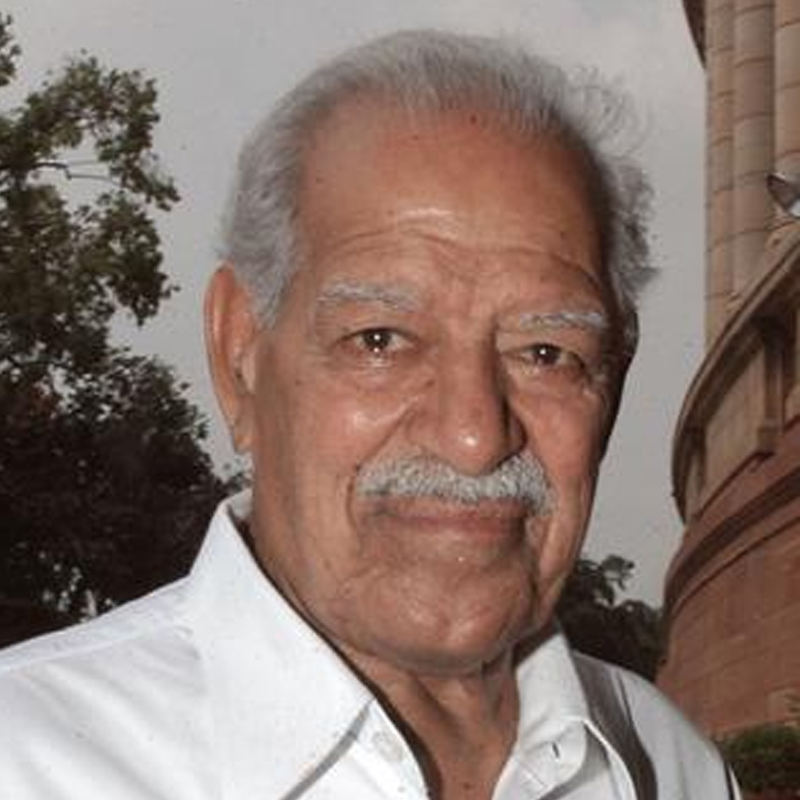
    NEW DELHI: Rustam-e-Hind Dara Singh, who passed away early this morning, has been described by Vice President M Hamid Ansari as an enduring role model to the youth and sportsmen in the country.

    The Vice-President, Prime Minister Manmohan Singh, and Information and Broadcasting Minister Ambika Soni expressed grief on the death of the veteran actor who had never lost a fight during his career as a wrestler.

    Ansari said Dara Singh’s acting career was most memorable for the intensity and diversity of characters that he had portrayed. His role as a nominated Member of Parliament (Rajya Sabha) is remembered by one and all.

    Dr. Manmohan Singh said Dara Singh had been a noted film actor, producer, and an internationally acclaimed wrestler. He added: “A self educated son-of-the-soil, he rose to the heights of the entertainment world, sports arena and public life with humility and grace.”

    Soni said, “Dara Singh ji will always have a special place in our hearts for his immense contribution to the Indian film industry in various capacities as an actor, director and producer. I also recall his distinguished record as member of the Rajya Sabha.”

  • Economic confidence of Indians shaky: Ipsos

    MUMBAI: India’s economic confidence remained shaky due to gloomy investor sentiments, chronic gaps in infrastructure, high inflation and interest rate, according to a report by global research firm Ipsos.

    According to the Ipsos Economic Pulse of the World Survey, India‘s economic confidence dropped further by two points to 70 per cent in the month of May compared to the previous month.

    However India continued to hold the second most economically confident country position after Saudi Arabia which stayed at the top of the table with a wide margin at 88 per cent.

    Ipsos India CEO Mick Gordon said, “The symptoms of Indian economy being in poor health are building fast with growth rate slipping to a nine-year low of 6.5% in 2011-12, current account deficit touching a high of 4% and inflation at a high of 7.55% in May. Rupee has plunged sharply in recent weeks especially on account of foreign fund outflows and gloomy investor sentiments. It has lost over 20% against the US dollar over the past few months.”

    “The chronic gaps in infrastructure, a shortage of skilled labour, unproductive farming, government expenditure on inefficient subsidies, barriers to overseas companies looking to invest and a proposal for punitive retrospective taxation on foreign companies has added to the already slowing growth,” added Gordon.

    Half of the Indian population believe their local economy is good and 54 per cent people expect that the economy in their local area will be stronger in the next six months.

    “Now hopes of revival are pinned at Dr. Manmohan Singh who takes over the finance portfolio. He is expected to bring in changes to revive the stalled economic growth, arrest the rupee‘s fall and deal with the fallout of a possible breakup of the euro zone, a tough task,” added Gordon.

    The Ipsos report, which examined citizens‘ assessment of the current state of their country‘s economy, said that the overall global economic engines has lost significant steam in May and has dropped another point to 37 per cent, the lowest it has been since the economic downturn of 2009.

    The Ipsos Economic Pulse of the World survey was conducted in May 2012 among 18,713 people in 24 countries such as Argentina, Australia, Belgium, Brazil, Canada, China, France, Germany, Great Britain, Hungary, India, Indonesia, Italy, Japan, Mexico, Poland, Russia, Saudi Arabia, South Africa, South Korea, Spain, Sweden, Turkey and the United States of America.

    Saudi Arabia again shows the strongest proportions of people rating their current national economic situation as ‘good’ (88 per cent). They are followed by: India (70 per cent), Germany (69 per cent), Sweden (64 per cent), China (63 per cent) and Canada (62 per cent).

    Only a handful of those in Spain (three per cent), Italy (three per cent) and Hungary (three per cent) rate their national economies as ‘good’, followed by Japan (nine per cent), France (nine per cent) and Great Britain (10 per cent).

    Countries with the greatest improvements in this wave are Belgium (+7 to 28%), Argentina (+7 to 45%), Indonesia (+4 to 40%) and Russia (+3 to 36%).

    The nations that saw the sharpest declines are Brazil (-10 to 49 per cent), Sweden (-7 to 64 per cent), Mexico (-5 to 28 per cent) and the US (-4 to 23 per cent).

  • HC restrains Emami from airing oil ad featuring Big B

    NEW DELHI: Ayurvedic oil maker Emami Ltd. has been restrained by Delhi High Court from airing a TV commercial of its “Navratan” oil with megastar Amitabh Bachchan.

    Another oil manufacturer, G.K. Burman Herbal (India), alleged that Emami‘s commercial degraded its product.

    Justice Manmohan Singh in an ex-parte interim order directed Emami to stop all forms of the TV commercial.

    Burman Herbal sought permanent injunction on “circulating, distributing, telecasting, broadcasting and advertising” any material defaming or maligning its product.

    The petitioner alleged that Emami “knowingly and fraudulently” made the advertisement to harm the goodwill and reputation which they earned in the last 25 years.

    “The sole motive of Emami is to drive out healthy competition from the market and to make illegal and unlawful gains,” alleged the petitioner.

    G K Burman Herbal India is seeking permanent injunction for infringement of its trade marks and copy right violation and damages worth Rs two million.

    Ajay Sahani, counsel for Burman, submitted before the court that the product Himgange Ayurvedic Oil was developed by the company‘s founder Gautam Kumar Burman in 1987.

    He also claimed that the product had distinctive artistic features by way of the shape of a green background label which carried the trade mark “Hingange” in a distinctive artistic vernacular font in yellow colour, with the expression ‘Ayurvedic Teil‘ in white artistic vernacular font below it.