Tag: Manmohan Singh

  • Liva unveils ‘Feel It All’ campaign

    Liva unveils ‘Feel It All’ campaign

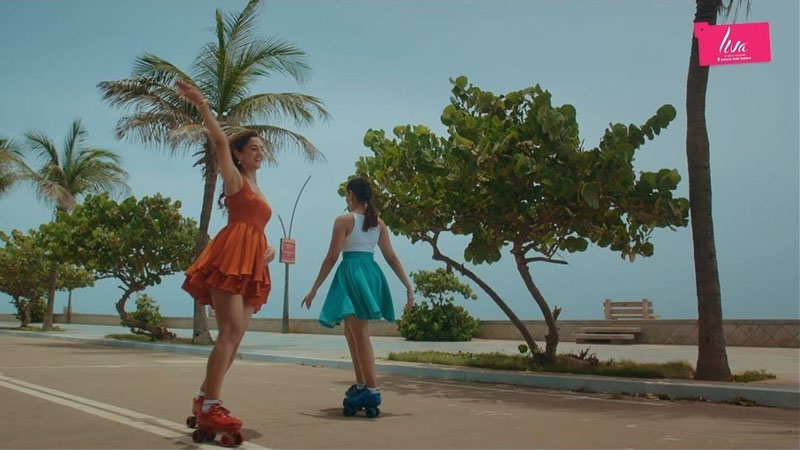
    Mumbai: Liva, a natural-origin fabrics brand, has launched its latest campaign, ‘Feel It All,’ inviting consumers to rediscover fabric’s importance in their clothing choices. By merging tactile sensations with emotional experiences, ‘Feel It All’ showcases how garments crafted with Liva fabrics enrich and transform everyday moments. Qualities like softness, fluidity, comfort, ease of movement, lightweight, and breathability are what make Liva crafted garments superior.

    The campaign highlights how the choice of right fabrics play a crucial role in defining and enhancing the way we feel throughout the day. Whether it’s the fluid drape of a dress that moves with ease or the breathable comfort of a top that makes you feel light on a sunny day, Liva transforms these ordinary interactions into extraordinary experiences.

    Grasim Industries Ltd CMO of Birla cellulose, Manmohan Singh elaborated on the campaign’s essence, “In today’s fast-paced world, the role of fabric in our clothing choices often gets overlooked. With ‘Feel It All,’ we aim to reignite the appreciation for the fabric that lies at the heart of every outfit. This campaign is about showcasing an experience and joy one feels when in Liva fabrics – comfortable, unrestricted and in style.”


    With ‘Feel It All,’ Liva reaffirms its commitment to providing natural-origin fabrics that offer unparalleled comfort and style, making every moment feel just right.

    Executed by the creative team at Gozoop, ‘Feel It All’ employs a robust digital strategy to communicate Liva’s brand essence across multiple platforms. The campaign blends social media engagement, interactive digital content, content marketing, and public relations to communicate the message while engaging with the audience effectively.

    Gozoop Digital creative director, Nishant Chhinkwani said, “Light, breathable, and flowy, Liva mirrors the essence of effortless comfort. Our campaign directly draws a parallel between these attributes and what the consumer wants to experience – the lightness of being, the freedom to take the world by storm, and a sense of connection with others, and oneself. In a nutshell, it’s about feeling it all, while keeping it fun and breezy.”

  • Navyasa By Liva unveils their AW’23 collection – The Garden of Eden

    Navyasa By Liva unveils their AW’23 collection – The Garden of Eden

    Mumbai– Navyasa By Liva, a contemporary saree and women’s wear brand, announces the grand unveiling of their AW’23 collection – The Garden of Eden. This highly anticipated collection is designed to cater to the modern woman, offering a mesmerising blend of ethereal prints and chic designs that weave a vibrant and colourful story. Navyasa By Liva focuses on creating effortlessly elegant pieces that are lightweight and fluid, empowering women to embrace their true selves.

    Elli Avrram, a popular actress and dancer, walked as the showstopper for the collection launch at a recent fashion week. She adorned a floral saree combined with foil decoration from the new collection looking stunning in red. She looked comfortable yet extremely stylish in the fluid and fashionable crepe saree that was draped on her like a second skin.

    The Garden of Eden has a diverse selection of versatile and genuine pieces curated by Na. The collection draws inspiration from the unparalleled beauty of nature and showcases an exquisite range of outfits adorned with imagery of natural wonders. The colours and patterns on these garments are reminiscent of a kaleidoscope.

    Right from work wear, and festive wear to evening glam; the collection has something for every occasion. The sarees have a wide range of options including modern, textured, artistic, traditional, embellished, and patterned made with premium fluid Liva fabrics. These simple yet elegant pieces are perfect for those who want to wear a saree that is comfortable yet high on style quotient.

    Co-ord sets remain a raging trend and the Garden of Eden collection has some select pieces that are designed to stand out in a crowd. The one-shoulder Kaftans, Jumpsuits, Tunics, and embroidered Kaftans exude elegance.

    Commenting on the collection, Birla Cellulose, Aditya Birla Group chief marketing officer ManMohan Singh, said, “With this collection, we look forward to fulfilling the aspiration of modern women who want high-fashion outfits that are easy to wear and move in. The entire collection is sustainable, of natural origin & skin friendly.”

    The collection features a diverse range of fibres, weaves & motifs coming together to create a harmonious range of sarees & apparel, suited for the festive season. The collection boasts bold prints and wearable silhouettes that not only exude fashion-forwardness but also practicality. What sets this collection apart is its thoughtful craftsmanship using sustainable Liva fabrics, derived from nature, thus showcasing a commitment to preserving the environment.

  • Former I&B minister Priya Ranjan Dasmunsi passes away

    Former I&B minister Priya Ranjan Dasmunsi passes away

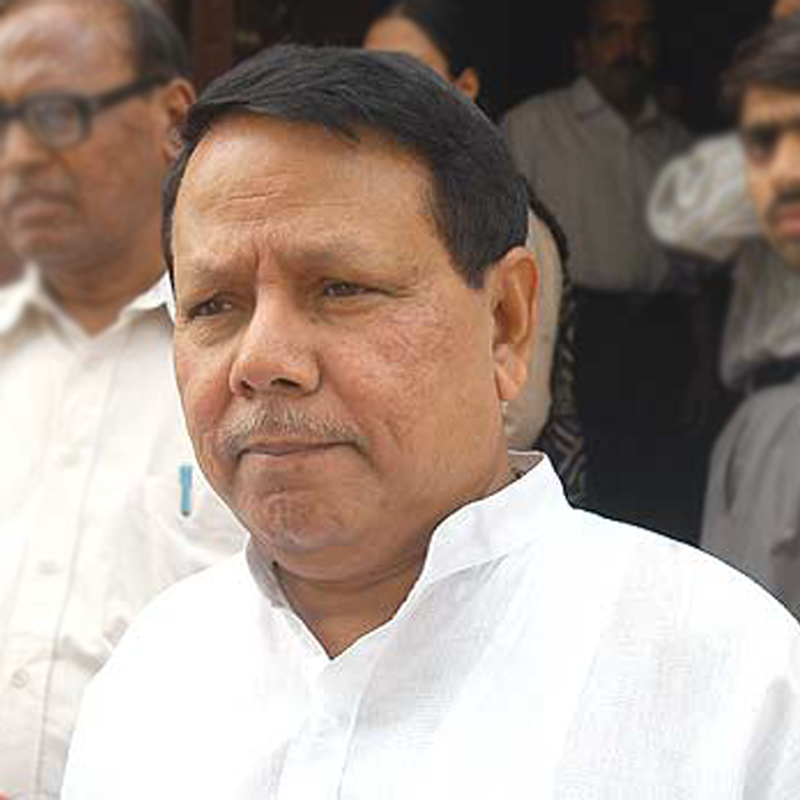
    NEW DELHI: Former Information and Broadcasting (I&B) minister Priya Ranjan Dasmunsi, who took several unpopular decisions during his tenure, died after being in a coma since 2008. He was 72.

    He had suffered a massive stroke in 2008 leaving him paralysed and unable to speak and lapsed into a coma during treatment. He had been critically ill over the past month, according to the Apollo hospital, and died at 12.10 pm on 20 November.

    As I&B minister during the first term of the Manmohan Singh-led government from 2004-2008, Dasmunsi was instrumental in passing a law in 2007 which resulted in all broadcasters holding rights to sporting events having to forcibly share signals with Prasar Bharati. His term also saw several bans on western television networks, including a three-month ban on the Sony-owned television network AXN and Fashion TV following the broadcast of programs deemed “obscene” by him.

    In 2006, Dasmunsi was the first Indian to be a match commissioner in a FIFA World Cup game between Australia and Croatia. He was heading the Indian football governing body at the time of his stroke in 2008, which led to Praful Patel taking over as president. Dasmunsi served as the president of the All India Football Federation for almost 20 years.

  • Manmohan’s ex-advisor, scribe Baru joins FICCI

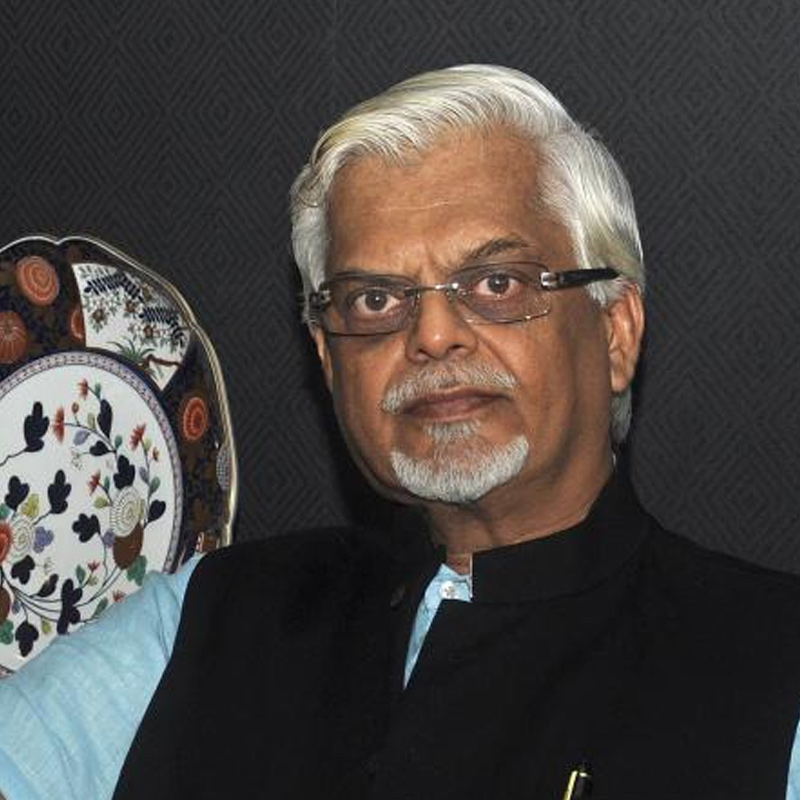
    NEW DELHI: Sanjaya Baru, former official spokesman and media advisor to the former prime minister Manmohan Singh, will take over as the secretary-general of the Federation of Indian Chambers of Commerce and Industry (FICCI) from 1 September 2017.

    This follows the completion of the five-year term of Dr A Didar Singh who had joined FICCI after his retirement as secretary in the government.

    A former journalist, Baru – who was attached to PMO from 2004 to 2008 – is a political commentator and policy analyst, currently serving as director for geo-economics and strategy at the International Institute of Strategic Studies in Singapore.

    FICCI president Pankaj Patel said: “Dr Singh, nearing completion of five years as the secretary-general of FICCI, has been for some time been looking for a relatively lighter role within the organisation and in view of this, the FICCI Committee has decided to appoint Baru.”

    FICCI has completed 90 years of its glorious existence growing from strength to strength. With Dr. Singh’s personal efforts, FICCI has shaped up extremely well during the last five years and has been extremely resilient in dealing with domestic and global challenges as well as supporting Indian industry in capitalizing on new emerging opportunities,” Patel added.

    Patel said Dr. Singh would now be holding the position of the principal advisor to FICCI president from 1 September.

    Earlier, he had served as associate editor at The Economic Times and The Times of India, and then as the chief editor of Business Standard. His father B P R Vithal served as the finance and planning secretary during Manmohan Singh’s stint as the secretary of finance in the early nineties.

    In April 2014, his memoir The Accidental Prime Minister, about his time at the Prime Minister’s Office (PMO) alleged that the prime minister was completely subservient to Congress President Sonia Gandhi, who wielded significant influence in the running of the Singh administration, including the PMO itself. The book had sparked off a controversy, with the PMO officially denouncing it as “fiction”. Baru, however, has said he set out to show an empathetic portrait of the prime minister.

  • CNN-News18’s ‘Virtuosity with Vir Sanghvi’ to feature Sanjaya Baru

    CNN-News18’s ‘Virtuosity with Vir Sanghvi’ to feature Sanjaya Baru

    MUMBAI: In this week’s episode of Virtuosity, Vir Sanghvi will be seen talking to Sanjaya Baru, a veteran journalist and media advisor to former prime minister Manmohan Singh from 2004 to 2008.

    The episode will air on 12 November at 10 pm with a repeat at 10:30 am and 7:30 pm on Sunday.

    On the show, he talks in-length about his new book and rejects all accusations that have been built around Vinay Sitapati’s biography on Narasimha Rao, alleging that there has been a systematic attempt in Lutyens’ Delhi to constantly talk about Chandraswamy, Harshad Mehta and communalism to erase and undermine the legacy of PV Narsimha Rao. He added that history will be kinder to Rao.

    A national bestselling author of his book The Accidental Prime Minister, he has recently released his new book 1991 How PV Narasimha Rao Made History to mark the 25 anniversary of liberalization of the Indian economy.

    The weekend show features a big news story and provides added context, insight and nuance that may not be immediately discernible. The show will have Sanghvi, in his inimitable style, break down the story being featured and make it relevant and relatable for the viewers. He will present the facts, make use of history, use a lifetime of his personal experiences to break through the clutter and bring forth the key aspects of the story.

  • CNN-News18’s ‘Virtuosity with Vir Sanghvi’ to feature Sanjaya Baru

    CNN-News18’s ‘Virtuosity with Vir Sanghvi’ to feature Sanjaya Baru

    MUMBAI: In this week’s episode of Virtuosity, Vir Sanghvi will be seen talking to Sanjaya Baru, a veteran journalist and media advisor to former prime minister Manmohan Singh from 2004 to 2008.

    The episode will air on 12 November at 10 pm with a repeat at 10:30 am and 7:30 pm on Sunday.

    On the show, he talks in-length about his new book and rejects all accusations that have been built around Vinay Sitapati’s biography on Narasimha Rao, alleging that there has been a systematic attempt in Lutyens’ Delhi to constantly talk about Chandraswamy, Harshad Mehta and communalism to erase and undermine the legacy of PV Narsimha Rao. He added that history will be kinder to Rao.

    A national bestselling author of his book The Accidental Prime Minister, he has recently released his new book 1991 How PV Narasimha Rao Made History to mark the 25 anniversary of liberalization of the Indian economy.

    The weekend show features a big news story and provides added context, insight and nuance that may not be immediately discernible. The show will have Sanghvi, in his inimitable style, break down the story being featured and make it relevant and relatable for the viewers. He will present the facts, make use of history, use a lifetime of his personal experiences to break through the clutter and bring forth the key aspects of the story.

  • ‘Too much of sensation, not enough sense; too much of Delhi, not enough on the rest:’ Rajdeep Sardesai

    ‘Too much of sensation, not enough sense; too much of Delhi, not enough on the rest:’ Rajdeep Sardesai

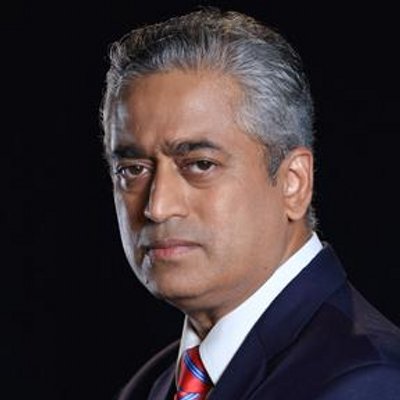
    ‘Main zindagi ka saath nibhaata chala gaya,’ is the song that you hear when you call him. With a journalistic experience of 26 years in print and television specialised in covering national politics, this man lets his work do the talking for him. He has never abandoned hard hitting real life stories behind his brand name and has always been open and unbiased about his thoughts. Known for his fearless coverage of news and love for music, he is none other than India Today Group consulting editor Rajdeep Sardesai.

    He is also the author of 2014: The Election that Changed India. Sardesai started his career in 1988 and entered television journalism in 1994. He has bagged several awards for his journalistic excellence. Known for his humble nature and love towards his family, cricket, music, food and news, Sardesai has seen the struggle for a byline in print to an anchor on TV news channel.

    Speaking to Indiantelevision.com’s Megha Parmar, Sardesai sheds some light on PM Narendra Modi, his new hire, social media trends and the big stories witnessed in 2015.

    Read on:

    2015 was all about PM Modi traversing the world… to countries far and wide. Do you believe news channels did justice to the coverage? Don’t you think it was more about discussing his wardrobe choices and pondering about the purpose of him visiting a country rather than putting light on other important ones?

    PM Modi travelling to different parts of numerous countries is just one part of the insight. There are lots of other insights to it. If you see from his point of view, his visits abroad are his highlights. I think no Prime Minister has ever got such coverage before. Manmohan Singh had also travelled to as many countries as Modi in his tenure as a PM, but we didn’t see any coverage on that. Modi is known by his nature and is a great showman. Be it his trip to San Francisco or his trip to Australia, he knows what will sell. Talking about if we did justice to the coverage, I think yes, we did manage to highlight few other important details behind his visit. Having said that, I have also observed that many a times TV news channels act more like cheerleaders and not as journalists while covering such stories.

    In your book, ‘2014 The Election that Changed India,’ you mention about being neutral towards Modi. How difficult was it for you to remain neutral after covering what happened in 2002?

    The 2002 riots have affected me and as an observer I have the right to question politicians and criticise them. The book is my perception on where I stand on Modi. I have just put down my views about the same in my book. I share strong feelings with what happened back in 2002.

    How difficult was it to let go a channel that you had built from scratch? How has been your journey with the India Today Group so far?

    It was very difficult to part ways from the channel. That has been the most emotionally and professionally difficult decision of my life. Talking about the India Today Group, the journey has been good so far. They have been very supportive and have allowed me journalistic freedom and that’s what I value more than anything else.

    Indian media went bonkers over the Sheena Bora case, was it really required or was it simply another way of pleasing the voyeur in us?

    Frankly, it was not required at all. In my view, it’s just an example of how sensationalism replaces sense. The fact though lies that it was indeed a great news story. Mother killing a daughter story is always going to be a great news story. Having said that, we could have covered it much better. We could have laid down many facts than going into so much of gossip and trivia. We lacked on showing less facts, which needed to be covered. It was a big story. But the two questions that are to be asked is, the proportion i.e. did we over cover it and secondly, did we focus more on gossip and trivia and not facts?

    Has the age of a neutral journalist gone? Do anchors or journalists have to start taking sides?

    I don’t want to use the word neutral but according to me the age of the serious journalist, who takes up journalism seriously is under serious threat. A serious journalist would like to do stories beyond what was done in the Sheena Bora case. I don’t think we as journalists should be limited in our thoughts. Though few organisations believe in the idea that unless he or she does not take a strong stand about something, the viewers will be confused. Therefore they resort to taking sides at times for the sake of a strong position. A journalist should always push himself and should be hungry to get something exclusive and unique from a story.

    You voiced your opinion on how news channels missed the bus on the Chennai floods coverage. What steps can be taken by news broadcasters to ensure that this doesn’t happen again?

    The way out is to realise that there is a world beyond Delhi. We need to change our mindset. It is just with the mindset of the people. They have to change their mindset and have to understand that news is not only about Delhi. We followed the Nepal story better than what we did for Chennai floods and we should ask ourselves the reason behind this. I think every big story should be covered in a major way by not restricting ourselves to demographic boundaries.

    Do you think journalists are under threat from people or do you believe that social media is acting as a threat too? Can it affect the newsrooms on what stories to be followed through its trends?

    I don’t think it is a threat. I think social media is a gift to us. One can and should always try to use social media more creatively and constructively. We can’t follow social media just because of the trends or the #tags. It can be a great source of information for good stories. It can play as a compliment to the journalists. But if you only follow what is trending on Twitter or the ‘masala’ on Facebook, then I don’t think we are utilising social media to its fullest.

    If there is a large group on social media that follows me but still targets me, I take pride in that. I have the right to dissent just like everyone but you cannot abuse me. People have to understand what role we as journalists have to play in society.

    Talking about social media affecting newsrooms, today a company can fix the #trends. If the newsrooms get influenced by it, it’s terrible and I think one needs to re-think about what he is exactly trying to do by resorting to such things.

    Do trending #tags like presstitutes bother you?

    It bothers me deeply. It bothers me more because it came from a minister who used such kind of a language. I think and strongly believe that General VK Singh owes an apology to journalists for using that word in the manner he did. And the unfortunate part is that if the ministers do it, then the public will also resort to such things. They will also say that journalists are ‘presstitutes.’ There will be a few journalists who may have done a few things you could object to, but still you can’t use such words. It’s a very unfortunate word and I am sorry to say that a minister has used such a word. Twitter is a double-edged sword. As I said, it can be a great source of information or it can be a deadly aggregator of hate and anger that targets people and will lead on to building enemies. 

    Your views on the usage of the keyword intolerance and the way it was ridiculed.

    I think the way it began was unfortunate. In our country there is so much of threat that even if I give you a serious answer someone will object to it. It’s not about intolerance or religious intolerance. It’s about the lack of respect towards someone’s viewpoint. If I say something you don’t agree with, you might get angry and call me anti-national. That troubles me. India is an extremely tolerate country in many ways. What we are losing is our capacity to listen to the other side’s point of view. I think we need to get some perspective behind this entire debate and we should realise that we need to have a dialogue with each other. Everyone is saying their own thing and moving away in the society, which is not leading any of us to a logical conclusion.

    Is there a reason behind the profession attracting so much of negative criticism in the society?

    I think the fact is that we as journalists have also somewhere lost our way. We have lost our moral compass. We tend to do things sometimes in a manner that it’s bound to face criticism. It’s not that we can hide from that. We are also involved in it. If you mix sense with sensation, there will be people commenting ‘yeh toh nautanki hi karte hai.’ If you reduce a studio to a fish market, people will point fingers at you. But it still does not justify the use of words like ‘presstitiutes.’

    A few days back Harsha Bhogle said how he no longer understood television and its role in sport when he came across young journalists and their obsession with negativity because their editor would not allow anything that was non-confrontational, not aggressive or demanding. What do you have to say about this?

    I am an optimistic. I myself believe that we should have more positive stories. I myself try to do at least one positive story in a day. I agree that there is too much of negativity currently, and you need to have more positive feel-good stories as well. But that doesn’t mean that journalists should abandon negative stories. When there is a negative story, we will obviously have to report it. If in a 24 hours new channel, we cannot see one positive story then there is something wrong and we have to rectify that. It’s all about proportion; cover the Sheena Bora case but don’t cover it at the expense of the other news. Cover other news, but don’t cover it at the expense of the Chennai floods.

    Will we soon see TV news divided into two parts? Debates and News?

    I think viewers are tired of what many of the news channels are providing them. I know it’s a staple diet in the news space; but it is the cheapest way of doing journalism. Getting five people in the studio and making them fight is cheap. It doesn’t cost you much. The viewers want different ways of stating factual information from you. It will work but not in the long run.

    With growing competition, news channels have to witness a fight of breaking news first. What is your take on that?

    The thing about being first is the most stupid thing that you can have in journalism. It is stupid to go through this ‘tamasha’ of who breaks it first. What is important is the way you write and interpret it rather than being the first to break it. Breaking news at one level is breaking down now.

    Is digital gradually taking over TV when it comes to breaking news? What should news broadcasters be doing to keep the TV news audience enact?

    Yes I think so. I think earlier TV was the first resource for information. The traditional is losing its importance now. I think we will have to do much more quality stuff. Quality differentiating news is the need of the hour. The future is about quality and not quantity. The quicker the media changes its working structure; the lesser the TV channels will have to worry about its audience. They will follow the news channels eventually.

    Should ratings determine the editorial strategy as only few people have meter boxes whereas there are so many digital followers of the news channels? Is it fair to curate content for people meters and forget the followers?

    I think we should be conscious about ratings but it cannot decide content, in my view. Content should be decided on the basis of quality. If you give out quality content, you will get good enough ratings in the long run. The system itself is so flawed, that you cannot have ratings to decide your content. It is definitely unfair for the followers who are not a part of the ratings. In the end, we would be left pleasing and entertaining the people rather than enlightening them with quality news.

    Your views on the declining standards of news media is no secret. Where do you think news went wrong in 2015?

    One of the stories that we missed out in this year is Chennai floods. We did not cover it properly in the early days. Later on it was good. The first part wherein Chennai was being hit by the floods is something that I would call as our failure. We have to move beyond the Delhi centric view of the world. And I still think that we tend to focus more on the sensation element rather than on the sense.

    The other one is the Sheena Bora case and how we covered it. I personally enjoyed covering the Bihar elections where I was talking to the people and not the politicians. I think you can cover politics differently and not only through politicians. I think there is too much of sensation, not enough of sense and too much of Delhi, not enough coverage on the rest.

    Will 2016 also see news going the HD way? Is it the need of the hour?

    I think so. But even that depends on the economics of the channel. I don’t think at this moment news channels are going that way. Economically it doesn’t make sense to me. I am sure it will happen in a year or two.

    What will you advise young igniting minds who aspire to be journalists?

    To the evolving mindset I will suggest to keep your minds free and open to ideas. Always be passionate about news and never force your mind towards anything.

  • The line between supporters and fanatics has blurred, says Dilip Cherian

    The line between supporters and fanatics has blurred, says Dilip Cherian

    To quell the raging Rajdeep reaction, it seems PM Modi moved swiftly by getting a story out that emissary Adani called to say sorry! While its right or wrong, true or false arguments prevail, Rajdeep became a symbol of something, a fabulous place for any TV journo to be, brand enhancing and truly a victory for Image Managers on either side.


    But then, it’s still sad, that it’s not only Hong Kong’s protestors, who are not the ones taking to the streets. The Modi lovers at Madison Square Garden sadly had closet protestors amidst them too! Clearly, this is also the season for violent expressions of distaste and distrust, and Rajdeep Sardesai was just unlucky to be a kind of lightning rod. Provocations and partisan videos aside, clearly something was very wrong amongst those gathered to greet and preen for Modi in New York City that fateful day. And its best, it’s now put to rest!


    But a basic malaise seems to have spread even further and Modi may not quite know yet. On a live television channel in New Delhi a former diplomat commenting on the excitement over Modi’s US visit lapsed into the totally unparliamentary word of “tuttoo” to describe Manmohan Singh’s relationship with the United States. A shocked anchor groaned visibly on screen, other guests were similarly aghast, but apologies were not quite forthcoming! The regrettable Rajdeep incident, too, had several up in arms against the treatment meted out to Rajdeep, but, significantly, many others who have been defending the mob’s actions as well. And it’s good that Modi’s minders put their word out too – in a manner of speaking. Clearly, the line between supporters and fanatics has blurred considerably even as the line between the “us” versus “them” perception has deepened and widened.


    Clearly, between the protestors in Hong Kong facing the wrath of an obdurate Chinese administration and the voices that seem to assume that Modi would support them in a similarly enthusiastic manner, the message that comes through visibly on television screens in a variety of ways is of a new aggression, a new violence, and that unholy suspicion that silencing the enemy is probably what the New Age mantra seems to have become.


    (These are purely personal views of India’s image guru, Dilip Cherian who is also the consulting partner at Perfect Relations and a former editor of Business India and of the Observer newspapers. He is a columnist and business analyst and indiantelevision.com does not subscribe to these views.)

  • News channels reform before Modi’s big Budget 2014

    News channels reform before Modi’s big Budget 2014

    NEW DELHI: The presentation of the general budget on 10 July morning by Finance Minister Arun Jaitley will perhaps be the most keenly watched analysis of the financial shape of the nation since the early 90s when the then Finance Minister Manmohan Singh presented his budget.


    This is also perhaps the first time in recent years that the budget is being presented by a man from the legal profession.


    Although only Lok Sabha TV has the permission to cover the budget live from inside the portals of Lok Sabha, almost every channel in the country – and certainly every business channel – will be taking the beam from Lok Sabha TV and then adding its own analysis programmes.


    CNBC TV18, Doordarshan News, Times Now, and most other News channels plan to commence the discussion on the budget from around 8.00 am with experts talking about expectations, and then beaming the live presentation from 11.00 am onwards.


     The entry of websites like moneycontrol.com and economylead.com streaming the budget and by social media will be an added feature this year, as many websites have already announced plans in this regard.


    With the new dispensation in place, the aspirations of the common man are soaring high and many are wondering whether the ruling Bharatiya Janata Party will live up to its slogan of ‘Acche din aaney waley hain.’


    The presentation is expected to be followed soon after by the reaction of Prime Minister Narendra Modi on Doordarshan and Lok Sabha TV and an exhaustive interview of Jaitley about his budget on Doordarshan.


    In addition, channels will cover live the press meet by senior Finance Ministry officials in the afternoon about the various facets of the budget.


    The coverage on CNBC TV18 will be led by Shereen Bhan, on Times Now by Arnab Goswami, and on NDTV 24×7 by Prannoy Roy. Times Now has articulated its standpoint by saying ‘Everyone deserves a piece of this super budget. Get Yours.’ The channel though also warns that it may be a bitter pill.


    Other channels like CNN-IBN, Aaj Tak, ABP News, Sahara Samay, P-7, News X and others have also lined up experts who will analyse the budget. The channels will also have teams that will go to Parliament House premises to get the reactions of various political leaders.


     For the business channels, it will be a particularly exhaustive day as they will also have a link with the National Stock Exchange and Bombay Stock Exchange to get the latest ups and downs.


     Zee Business which is a Hindi business News channel will telecast the pre-Budget discussions and analysis from 7.00 am onwards and will bring in live and uninterrupted coverage of the Budget Speech. The channel will articulate, analyse and keep the common man abreast of all the impacts that Budget is going to have on their daily lives.


     Interestingly themed as the ‘Abki baar, sapne sakaar,’ Zee Business will have expert panels, business leaders and corporate captains throughout the day to give their expert advice. After the Finance Minister’s speech, Zee Business will undertake a series of power packed Budget Bulletins. Some of these bulletins will comprise high power panel discussions and will involve expert comments from the nation’s top business leaders and policy makers.  Some of the key Ministers holding important portfolios have already appeared and shared their views, and will also do so during post-Budget analysis programmes. They include Power, Coal, New & Renewable Energy Minister Piyush Goyal, Information & Broadcasting Minister Prakash Javadekar and Commerce & Industry Minister Nirmala Sitharaman.


    Special shows have been conceptualised with thorough research from the industry point of view without losing the ground reality and its impact on the common man. Expert opinions, industry perspective viz–a–viz market reaction and informative bulletins will be telecast.


    Zee Business will also organise a viewer’s engagement programme throughout the day from different parts of the country where commoners get a voice to air their reaction and feedback on the pertinent issues on budget.


     Zee Media CEO Samir Ahluwalia said, “With clear understanding of the expectations of the India Inc. as well as indications of the common man, Zee Business is poised to present a comprehensive Budget coverage. Through special programming and initiatives focusing on budget expectations, analysis and impact, Zee Business will once again ensure specialised coverage on Budget Day.”


    Added CNBC-TV18 managing editor Shereen Bhan, “The key question we will be asking is if the budget will be able to deliver. There will be a sharp focus on market reactions, the stance taken by other countries giving India a thumbs up and about investment in domestic capital. We will analyse the long term and short term ideas the government has as well as the reforms that will be taken up to revive the economy.”

  • Suhasini Haidar to join The Hindu as diplomatic editor

    Suhasini Haidar to join The Hindu as diplomatic editor

    MUMBAI: On Saturday, Suhasini Haidar tweeted saying that she will be joining The Hindu as its diplomatic editor.


    Indiantelevision.com broke the news of CNN-IBN deputy foreign affairs editor and prime time anchor deciding to quit from her current position.


    Haidar also tweeted that she hopes to keep doing World View, CNN-IBN’s international affairs show, too.


    Haidar began her career in 1995, with CNN International, working at the Delhi bureau that also covered Pakistan at the time (CNN subsequently opened its Islamabad bureau).Later on she moved to CNN-IBN. In her 20 years of journalism, Haider has covered issues concerning Pakistan, Sri Lanka, Syria, Lebanon and Libya. She regularly contributes as a columnist on Indian Foreign Policy for various newspapers.


    In 2010, she won the prestigious News Television “Best TV News Presenter” Award. Haidar is credited to be the only journalist to have interviewed Indian Prime Minister Manmohan Singh and his family, a show that also won her the Indian Television Academy award as ‘Best Chat show’ for the year.