Tag: Manish Tewari

  • FTII to get Rs 800 mn for infrastructure development in 12th Plan

    FTII to get Rs 800 mn for infrastructure development in 12th Plan

    NEW DELHI: The Film and Television Institute of India (FTII) is expected to receive a sum of Rs 800 million under the 12th Plan for infrastructure development.

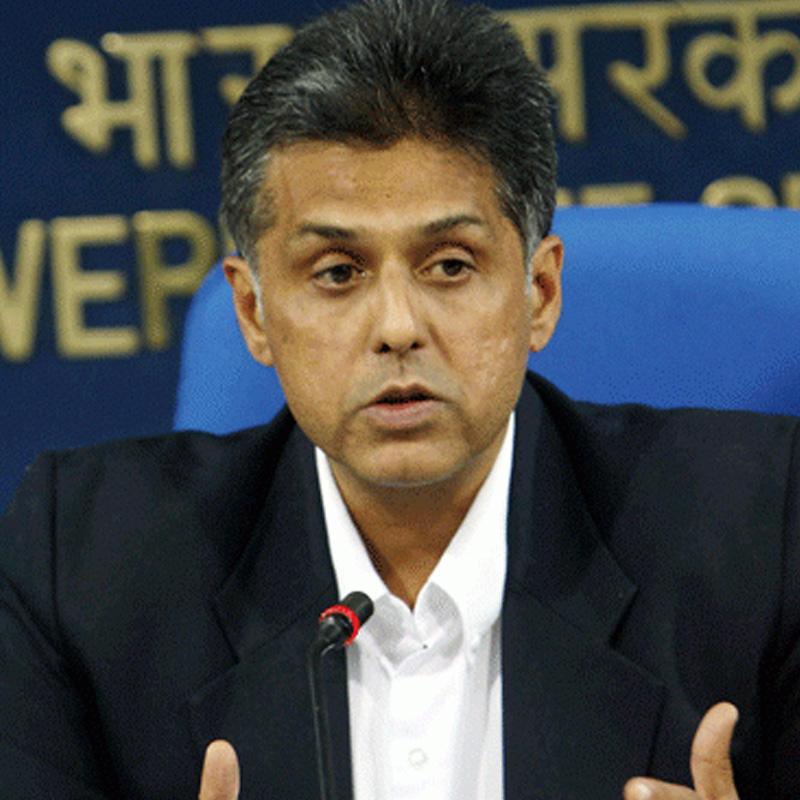
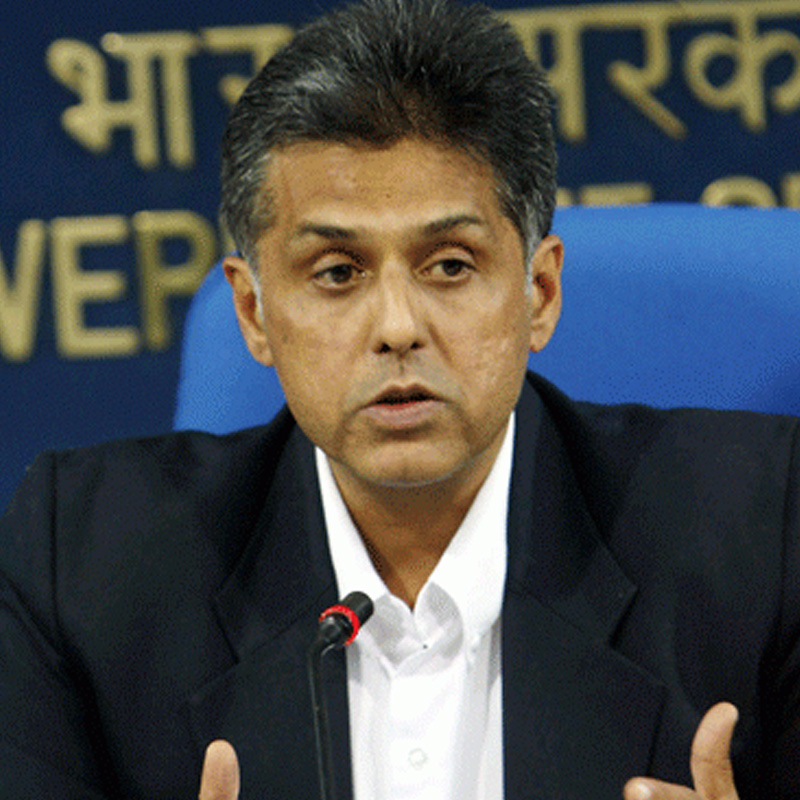
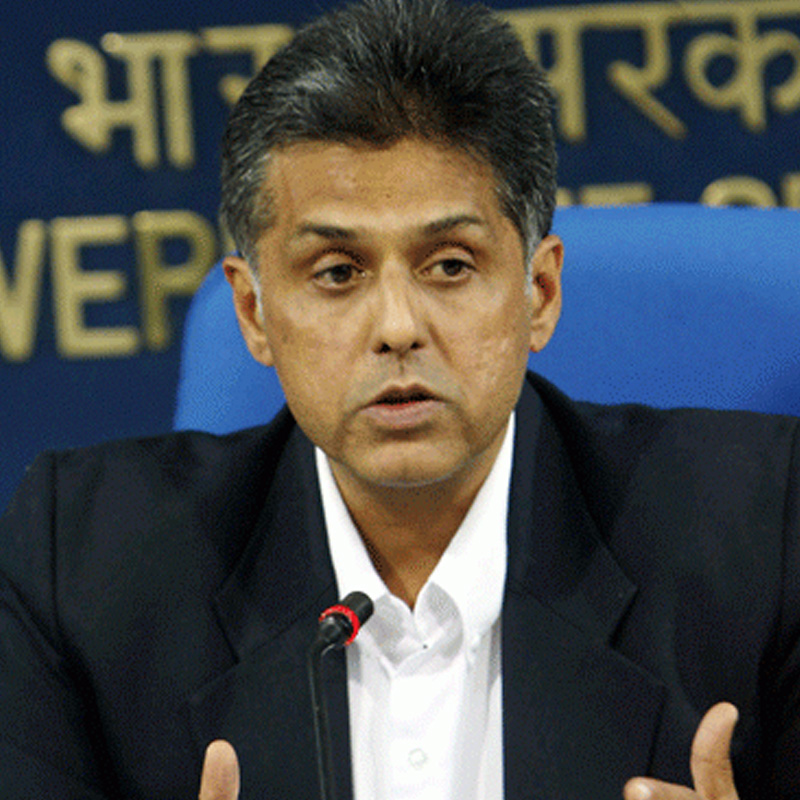
    Information and Broadcasting Minister Manish Tewari told Parliament that for the 11th Plan an amount of Rs 373.1 million was provided. Funds are provided under Plan and Non-Plan heads to the Institute.

    The Institute has reported an average teacher-student ratio of 1:7. The salaries of the staff and faculty are governed by Pay Commission recommendations. The development plans proposed by the Institute are taken up as part of Plan schemes and funds are provided accordingly. Every administrative/financial issue being brought to the notice of the Ministry is addressed at highest level.

    Courses are being conducted regularly from 2009 onwards. Due to backlog in completion of courses, a delay has occurred in awarding certificates. Notice has been issued for students who have successfully completed their courses, to collect their diplomas. FTII has also initiated steps to clear backlog in a time bound manner.

  • Higher import duty on STBs will help local manufacturers: Manish Tewari

    Higher import duty on STBs will help local manufacturers: Manish Tewari

    NEW DELHI: Information and Broadcasting Minister Manish Tewari feels the higher import duty levied on set top boxes (STBs) announced in the Union Budget will give an opportunity for domestic manufacturers to benefit and not set back the digitisation process.

    “It is important that when such a huge exercise is undertaken, which involves a revenue of about $4 to $5 billion, essentially paid by the people of India and the multi-system operators, there should be certain tangible benefits which must accrue to Indian manufacturers.” he added while addressing the delegates of Ficci Frames in Mumbai via video-link from New Delhi.
     
    He has said digitisation is a major project that will ensure transparency and bring benefits to all in the long run. While the digitisation process has been set in motion following a legal remit, “there is also a social contract which calls upon all stakeholders in this, whether they are broadcasters, MSOs or cable operators to sort out the issues inter-se, because eventually, it needs to be a win-win situation for the broadcasters and the consumers.”

    He added that “If any section within this large family feels short changed, then obviously there‘s a cause of concern.”
     
    Tewari reiterated the firm backing of the government for the growth of the media and entertainment industry and said “this industry is not only a huge economic multiplier, but it also has the potential of absorbing creative intellect of young people. It is therefore incumbent upon government to put in place appropriate mechanisms which try and play the role of a facilitator and an enabler.”

    Digitisation was a dominant topic of discussion at the media and entertainment industry‘s mega event Ficci Frames 2013 held in Mumbai from 12 to 14 March, with policy makers, industry leaders and experts deliberating on various aspects of the process.

  • Digitisation to fuel revenue growth models: Manish Tewari

    Digitisation to fuel revenue growth models: Manish Tewari

    NEW DELHI: Information and Broadcasting Minister Manish Tewari has said that the ongoing digitisation process would help in building transparency in the system and enable the growth of revenue models in the broadcasting industry.

    The process would also help broadcasters in identifying a balanced growth model through the increased share from the subscription revenues.

    Delivering the key note address at the Seema Nazareth Award function for excellence in print media here today, the Minister said there was urgent need for key stakeholders within the media to introspect in view of the trends that had emerged as a result of corrosive discourse on one side and responsible discourse on the other.

    Referring to the challenges that had emerged because of the growth of social media, Tewari said these tools had created an unprecedented potential to connect with target audience for the dissemination of news and information.

    The impact of this medium was so profound that it had also integrated with the print media in the dissemination mechanism. The changing paradigm in the media landscape had resulted in creating opportunities for the journalistic fraternity.

    Tewari said the institution of the Seema Nazareth Award had provided an ideal platform to encourage and inspire young journalists in the print media. He conferred the Award on Sushmi Dey and two Special Mentions on Shelly Walia and Debolina Sengupta. The Seema Nazareth Award has been instituted by Business Standard.

  • Tewari unveils e-version of Rozgar Samachar

    NEW DELHI: Information and Broadcasting Minister Manish Tewari Tuesday unveiled the e-version of Rozgar Samachar in Urdu by the Publication Division. He said the issue could contain two to four pages of such content in its future editions.

    He said the launch of the e-version of Rozgar Samachar in Urdu was another milestone in reaching out to the people who understood the language in form and spirit. The initiation of the e-version also reiterated the perseverance of Publications Division in a competitive environment where content was balanced with the prevailing business models. The initiative also reflected the use of technology in reaching out to the people in a form and language understood by them.

    With a circulation of over 400,000 copies per week, the Employment News informs about job opportunities in the organizations of Central and State Governments to aspiring youth across the country; published in Hindi, English and Urdu simultaneously.

    To provide benefits of technology to Urdu reading masses, E-Rozgar Samachar (Urdu) is being launched. e-Employment News (English) and e- Employment News (Hindi) are also available to subscribers since August 2012.

    The Minister said the unveiling of a new logo of Employment News with the motto “Opportunities for all” was a manifestation of the commitment to reach out to job seekers thereby seeking to fulfill their aspirations and harness their skills and capabilities.

    Through this new initiative, the publication would not only get a new brand identity, it would also become attractive to the aspiring youth. Lauding the Publications Division for its effort, the Minister said the new logo depicting the search for jobs from a lens would easily be identified by the target audience.

    Tewari also stressed the need for government publications to add content on issues of public interest which pertained to the common people such as issues related to development, national and international affairs.

    Tewari also released ‘India-2013‘ and ‘Bharat-2013‘ a reference annual which provides exhaustive and authentic repository of information about the activities, progress and achievements of various ministries and departments of Government of India during the year since 1957. In this context, the minister mentioned that the publication provided a comprehensive and authentic information about the country‘s march forward and was a must read publication for key stakeholders.

    The logo of employment news was selected from entries of an in-house competition of College of Arts, New Delhi. The logo depicts the search for jobs from a lens. The holder showing nib on one side and the wrench on the other shows that the Employment News is both for skilled and unskilled jobs. The hand is the human element of the logo.

  • Tewari says govt pursuing Phase II digitisation deadline

    Tewari says govt pursuing Phase II digitisation deadline

    MUMBAI: Information & Broadcasting (I&B) Minister Manish Tewari said the government will pursue implementation of the second phase of switchover to digital delivery of television channels in 38 cities with population of one million.

    The government has mandated digitisation in the 38 cities by 31 March, after going ahead with the first phase of digitisation in Mumbai, Delhi and Kolkata. The switchover to digital delivery in Chennai is stuck in court proceedings initiated by Tamil Nadu cable operators against digitisation itself.

    “We will stay the course,” Tewari said in response to a question about digitisation in the 38 cities when he was in the city to give away the first edition of International Advertising Association’s leadership awards. He further said, “Phase II digitisation is on track.”

    He said the government has the learning from the implementation of phase I digitisation and expected all the stakeholders to be firmly backing the effort.

    Addressing the advertising fraternity, advertisers and the media, the I&B Minister dwelled on the issues concerning the media and advertising industries. These included freedom of speech with reasonable restrictions, imperfect television audience measurement model, the need to observe advertising regulations on television and self-regulation vs statutory regulation of content.

    He asked all concerned to think whether content can remain in the self-regulation domain, while suggesting an overarching statutory mechanism to address issues related to convergence across media, entertainment and telecom.

    Tewari assured the media and advertising industries that they will be taken into confidence before taking any decision on any of the contentious issues.

  • Tewari to meet LCOs on Wed over revenue sharing under DAS

    Tewari to meet LCOs on Wed over revenue sharing under DAS

    NEW DELHI: Information and Broadcasting (I&B) Minister Manish Tewari will meet a delegation of Delhi-based local cable operators (LCOs) on Wednesday to hear their complaints with regard to the ‘unreasonable‘ revenue sharing under the digital addressable system (DAS).

    The minister agreed to meet the LCOs after around 300 LCOs from different parts of Delhi forced their way into the venue of the Broadcast Engineering Services (India) Expo this morning and shouted slogans against Tewari and I&B secretary Uday Kumar Varma, who was also present.

    Tewari was heckled as he attempted to leave the venue after his inaugural address at the three-day conference. The minister then asked the LCOs to meet him in a delegation at his office Wednesday morning.

    A S Kohli, a leading cable operator and part of the protesting LCOs, told indiantelevision.com that he expected around 1,000 LCOs from all parts of Delhi to gather on Wednesday.

    Cable Operators Federation of India President Roop Sharma who will also meet the Minister tomorrow told Indiantelevision.com that it was unfortunate that the pleas of the LCOs for a more rational share in the tariff, and the recent blackout in parts of East and North East Delhi had failed to make the government react.

    She said that consumers who wanted both pay and free-to-air channels under DAS regime would have to pay anything between Rs 250 to Rs 300 or even more against amounts ranging between Rs 80 to Rs 150 that they have been paying under analogue.

    LCOs in Delhi have been complaining against the revenue sharing between LCOs and MSOs. LCOs from east and north-east Delhi recently resorted to a day‘s blackout of cable TV to draw the government‘s attention to the revenue sharing formula, which they claim is unfair for the LCOs.

    Another LCO Ashok Pandit said several representations have been made to both the ministry and the Telecom Regulatory Authority of India (Trai) about how the revenue sharing under DAS was unworkable. The revenue sharing ratio is 55:45 between MSOs and LCOs in the basic service tier of Rs 100 for 100 free-to-air (FTA) channels, and of 65:35 in a mix of pay and FTA channels.

    He pointed out that even the MSOs had admitted that it was the LCO who did the entire work of fitting the connections or climbing electricity poles to lay the cable TV wire, and added that it was, therefore, wrong to deprive the LCO of his rightful share. Furthermore, he said many subscribers in east Delhi were paying as low as Rs 75 despite the fact that some of them had more than one TV set in their homes, and would therefore refuse to pay more.

  • A State Govt. cannot ban a film cleared by the Censors, says Tewari even as Court extends stay on Vishwaroopam

    A State Govt. cannot ban a film cleared by the Censors, says Tewari even as Court extends stay on Vishwaroopam

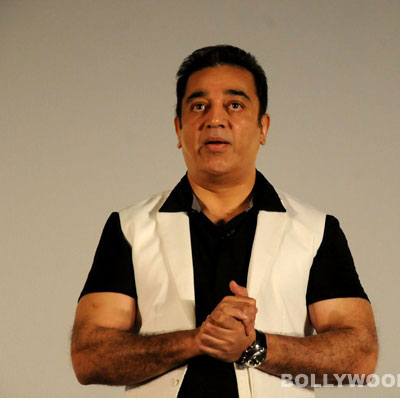
    NEW DELHI: The ban on Kamal Haasan‘s Vishwaroopam by the Tamil Nadu Government may turn out to be a major issue of the powers of the state vis-?-vis the Central Board of Film Certification which functions under the Union Information and Broadcasting Ministry.

    Even as I and B Minister Manish Tewari asked the Tamil Nadu government to reconsider its decision to ban the film, the Madras High Court stayed the release of the film till 28 January with the judge saying he would see the film for himself on 26 January before a final decision.

    Tewari said, “The Supreme Court of India in Prakash Jha‘s matter (relating to Aarakshan) had the occasion of considering the various provisions of the Cinematograph Act and juxtaposing them against the law and order powers which the state government has under the Constitution.”

    “And the Supreme Court was very categorical that Article 246, seventh schedule, list one, entry sixty gives the central government the powers to certify films for exhibition and once the Central Board for Film Certification has taken a particular view, it binds all the other instrumentalities of the state.”

    “I suggest that Tamil Nadu government peruse that judgment of the Supreme Court in Prakash Jha‘s case before coming to any conclusion which may fall foul of the very clear directive which the court has given,” he said.

    Haasan had approached the Court following protests from Muslim groups asking to impose a ban on the film. The film was slated for release this Friday.

    Earlier reacting to the demand for a ban, Haasan had written in a letter: “While I am touched by the voices in support for me and my film, I am appalled at how my film is construed to be against my Muslim brothers.”

    “I have been ruthlessly used as a vehicle by small groups who seek political profile. Icon bashing is a great way to be noticed when you are not one yourself. It is happening again and again. Any neutral and patriotic Muslim will surely feel pride on seeing my film. It was designed for that purpose,” Haasan‘s said.

  • Govt wakes up to the power of social media, begins monitoring

    Govt wakes up to the power of social media, begins monitoring

    NEW DELHI: Stung by the campaigns on the social media both in the Delhi gang rape case as well as on the India-Pakistan exchange of fire on the Line of Control, the Information and Broadcasting (I&B) Ministry has set up a group to monitor the various social media channels on the internet.

    While the anti-corruption campaign and gang rape messages on the social media showed how people could be mobilised to come onto the streets, the campaign relating to the killing of two Indian soldiers also exposed the fragility of this medium to creating tensions between nations.

    It is learnt that the group has been instructed to give a weekly report to I&B Minister Manish Tewari on what the social media is saying on crucial issues. The team is tracking all social media including Twitter, Facebook and blogs.

    The ministry has not just begun monitoring the social media channels, but also increased its own presence on the internet. Even as it had earlier launched a page on Facebook on digitisation, the ministry as well as All India Radio (AIR) and Doordarshan (DD) have created separate accounts on Twitter.

    The ministry also launched itself on YouTube late last year and publicised this at the International Film Festival of India (IFFI) in November. This can be downloaded on android phones and will soon be made available on other smart phones through a special download application.

    India has over 120 million Internet users – Twitter has about 16 million subscribers and Facebook over 60 million from India. The penetration of 3G will mean more exchange of data. Mobile sales may soon touch the 250 million mark in India.

  • Trai asked to expedite views on govt entities in cable TV after Jayalalitha letter

    Trai asked to expedite views on govt entities in cable TV after Jayalalitha letter

    MUMBAI: The Information & Broadcasting ministry has asked the Telecom Regulatory Authority of India (Trai) to expedite the process of re-examining granting of Digital Addressable System (DAS) licence to a government or government-owned entity.

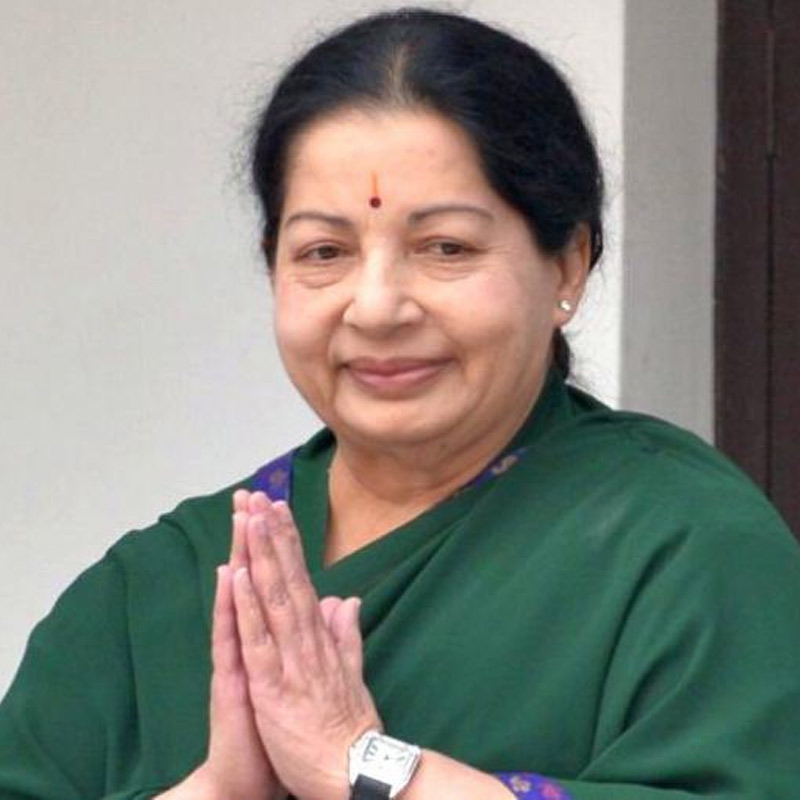
    The move comes in the wake of Tamil Nadu Chief Minister J Jayalalitha writing to Prime Minister Manmohan Singh to expedite the matter of granting DAS licence to the state government-owned cable distribution company Arasu Cable TV Corporation, which has been hanging fire for more than five months.

    "There is a larger question. I am aware of the concerns raised by the Tamil Nadu Chief Minister. The Members of Parliament have also come and met me. That is why we have requested the TRAI chairperson to expedite their consideration… so that we can take a conclusive decision at the earliest," I&B minister Manish Tewari said.

    "We have referred the matter back to the TRAI for reconsideration as to whether the state government or the central government entities should be allowed in the broadcasting or the distribution business," Tewari added.

    Arasu, the dominant MSO in Tamil Nadu, applied for DAS licence on 5 July but is yet to get the licence as the government is mulling whether or not to grant broadcasting or the distribution licences to government-owned entities.

    The government has till date issued DAS licence to 11 MSOs in Chennai.

    While acknowledging that Arasu was granted a license in 2008, he said that there was a recommendation from Trai which doesn‘t allow state government or their instrumentalities to enter distribution or in the broadcasting business.

    Arasu has already placed orders for the supply of Set Top Boxes (STBs), Conditional Access System and Subscriber Management System and erection of Head-End at a cost of about Rs 500 million.

    Arasu, which was lying defunct under the DMK regime, was revived by AIADMK government after it stormed to power in April last year.

    It commenced cable TV services in all the 31 Districts of Tamil Nadu on 2 September, 2011 barring Chennai, which was a conditional access system area.

    Arasu Cable is providing 100 channels to the subscribers at a cost of Rs 70 per month per subscriber. It has 23,000 local cable operators in its network with a subscriber base of six million.
  • Govt expects smooth digitisation in 38 cities in Phase II

    Govt expects smooth digitisation in 38 cities in Phase II

    MUMBAI: The government expects a smooth transition to digital delivery of cable television in 38 cities by 31 March in the second phase, after achieving near total digitisation in the metros of Mumbai, Delhi and Kolkata.

    Information and Broadcasting (I&B) Minister Manish Tewari informed Parliament that he did not anticipate any hurdles in the implementation of digital addressable system in phase II where 38 cities having more than one million population will switchover from analogue transmission from 31 March 2013.

    Digitisation in the southern metro of Chennai, where cable television was to switch over to digital from1 November along with the other three metros, has hit a hurdle as cable operators have sought more time.

    Tewari said the matter was sub-judice in the case of Chennai, where a petition challenging digitisation is pending in the Madras High Court.

    He said the ministry was in constant touch with the multi-system operators (MSOs) to assess and monitor the availability and seeding of set-top boxes (STBs), which were required for delivery of digital signals on to television sets.

    He clarified that the entire cost of digitisation would be borne by the industry. According to an estimate by the Telecom Regulatory Authority of India (Trai) in June 2010, the fund requirement for DAS at all India level was of the order of Rs 200 to Rs 500 billion.

    There is no scheme for providing any economic relief to consumers in the implementation of DAS, he added.

    On the phase I of digitisation, Tewari said a total of 8.10 million set-top boxes (STBs) were installed in the four metros as on 4 December.