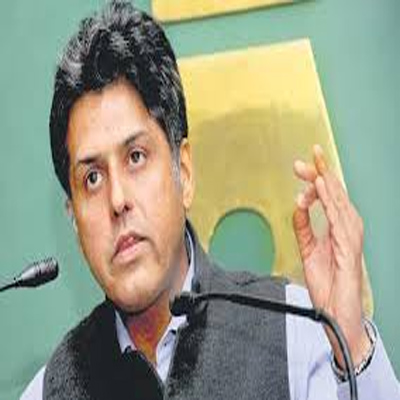
Tag: Manish Tewari

  • India, Senegal agree on joint cooperation in broadcasting and cinema

    India, Senegal agree on joint cooperation in broadcasting and cinema

    NEW DELHI: India and Senegal have agreed to form a joint working group in areas identified under the executive programme for cultural cooperation, including cinema and broadcasting, signed between the two countries.


    The areas identified are based on the Articles 4 and 11 of the agreement pertaining to the Information and Broadcasting Ministry. The Agreement to constitute the joint working group was taken during the meeting between I&B Minister Manish Tewari and Senegal Culture Minister Abdul Aziz Mbaye. Both Ministers agreed to draw a time bound roadmap in order to take the cooperation in the Information and Broadcasting Sector forward.


    During the discussions, Mbaye accepted the invitation to visit the International Film Festival of India in Goa in November this year. Both Ministers also agreed to identify cooperation in areas pertaining to co-production in the film sector, sharing the experience by India in setting up the National Museum of Indian Cinema and the efforts being made by India to establish a single window clearance for film shooting in the country.


    Tewari apprised the Minister from Senegal on the potential of the areas of cooperation in the film sector and the participation in festivals such as the Children’s Film Festival and the Documentary Film Festival organised by the Films Wing of this Ministry.


    Tewari also outlined the initiatives undertaken by the Ministry in the Broadcasting space. He specifically referred to the laws/rules/regulations formulated pertaining to Cable TV/DTH/HITS. Special mention was made regarding the digitisation process in the country and the endeavour to create a viable business model for the industry through this process.


    The Senegal Minister referred to the possibilities of cooperation between the Public Broadcaster and the Senegalese Government Broadcaster in the near future.


    Tewari also offered to cooperate in training and capacity building through the Indian Institute of Mass Communication. This segment could be promoted through workshops, training modules and orientation courses.


  • China expected to be principal guest country at IFFI Goa

    China expected to be principal guest country at IFFI Goa

    NEW DELHI: Chinese cinema is expected to be given the pride of place at the International Film Festival of India in Goa in November this year.

    This emerged during talks between Information and Broadcasting Minister Manish Tewari and Chinese Minister of State Administration for Press, Publication, Radio, Film and Television Cai Fuchao.

    The two Ministers had delegation level talks covering a wide range of subjects in the Information and Broadcasting sector.

    During the discussions, it was proposed to accord the status of Principal Guest Country to China during IFFI 2014. The International Film Festival of India is scheduled to be held from 20 to 30 November. The Chinese side may consider facilitating participation of prominent Chinese films with film personalities in the ‘Competition’ and ‘Cinemas of the World‘ sections of the festival. Both sides could consider cooperation between Film and Television Institutes of the two countries through exchange programmes of students and faculty”, Tewari added.

    It was also agreed that a roadmap should be outlined to enhance bilateral cooperation in critical sectors of the Films and Broadcasting. It was reiterated that such a roadmap would enable enhancing people to people contact between the two countries.

    During the discussions Tewari and Cai Fuchao were assisted by senior officials belonging to the Information & Broadcasting and SAPPRFT from the Chinese side. Both sides agreed to enhance cooperation and capacity building between personnel of the public broadcasters in both countries, strengthen cultural exchange programmes related to convening of Film Festivals and enhance exchange between the private film industries of both countries.

    One of the key highlights of the discussion was the decision to enhance student exchange programme between Film Institutes of India and the Beijing Films School. Both sides agreed that the hosting of the Chinese Film Festival in Delhi was an important step to enhance the role and relevance of films between the people of both countries. Both sides also agreed to work out the modalities for strengthening capacity building of technical personnel of Broadcasting Sector. Another critical area of discussion pertained to exploring the possibility of Co-production agreements between India and China in the audio visual sector.

  • Surrogate advertising notification awaits govt clarification

    Surrogate advertising notification awaits govt clarification

    NEW DELHI: A notification issued on 27 February 2009 on surrogate advertising has still not been operationalised as the government has failed to work out a mechanism for differentiating between surrogate ads and genuine brand extensions of tobacco and alcohol products, parliament was told earlier this week.

    The notification came following a long pending demand from broadcasters to allow bonafide advertisements of genuine brands using the brand name/logo which is associated with tobacco products or alcohol.

    A committee of secretaries from different ministries held a meeting on 22 January this year and resolved to work out a formula, but this has not happened. Prior to that, A note was circulated to the department of consumer affairs, department of industrial policy & promotion, department of legal affairs, department of health and family welfare and the department of revenue.

    The committee had decided that information & broadcasting and health and family welfare ministry officials would decide a note for operationalisation of the notification and inform the cabinet secretariat within a month. In case the two ministries do not agree, the matter would be referred again to the committee, it had been resolved.

    Meanwhile, information & broadcasting minister Manish Tewari told parliament that the committee had also decided that issues regarding advertisements on genuine brand extension for both tobacco and alcohol products will continue to be dealt with together.

    Telecast of advertisements on private satellite/cable TV channels is regulated under the Cable Television Networks (Regulation) Act, 1995 and Rules framed thereunder. Rule 7 (2)(viii)(A) of the Advertising Code provides that no advertisement shall be permitted which-promotes directly or indirectly production, sale or consumption of cigarettes, tobacco products, wine, alcohol, liquor or other intoxicants.

    A proviso says that a product that uses a brand name or logo, which is also used for cigarettes, tobacco products, wine, alcohol, liquor or other intoxicants, may be advertised on cable service subject to the following conditions:-

    (i) the story board or visual of the advertisement must depict only the product being advertised and not the prohibited products in any form or manner;

    (ii) the advertisement must not make any direct or indirect reference to the prohibited products;

    (iii) the advertisement must not contain any nuances or phrases promoting prohibited products;

    (iv) the advertisement must not use particular colours and layout or presentations associated with prohibited products;

    (v) the advertisement must not use situations typical for promotion of prohibited products when advertising the other products;

    Provided further that:-

    (i) the advertiser shall submit an application with a copy of the proposed advertisement along with a certificate by a registered chartered accountant that the product carrying the same name as cigarettes, tobacco products, wine, alcohol, liquor or other intoxicants is distributed in reasonable quantity and is available in substantial number of outlets where other products of the same category are available and the proposed expenditure on such advertising thereon shall not be disproportionate to the actual sales turnover of the product.

    (ii) All such advertisements found to be genuine brand extensions by the ministry of information & broadcasting shall be previewed and certified by the Central Board of Film Certification as suitable for unrestricted public exhibition and are in accordance with the provisions contained in sub-clause (i) to (v) of the first proviso, prior to their telecast or transmission or retransmission.

  • Thespian Pran presented Dadasaheb Phalke award by I&B Minister Manish Tewari

    Thespian Pran presented Dadasaheb Phalke award by I&B Minister Manish Tewari

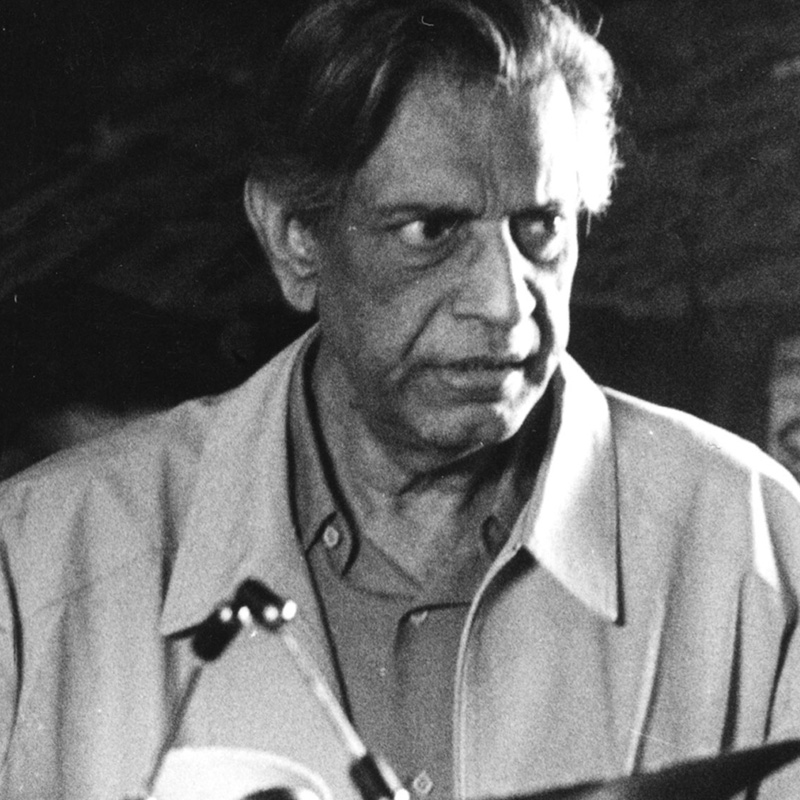
    New Delhi: Veteran actor Pran Sikand today received the highest honour in cinema, the Dadasabhe Phalke Award, from Information and Broadcasting Minister Manish Tewari.

    As the actor, now 93, has been forbidden to travel by his doctors, he was presented the award at his residence in Mumbai.

    This is probably the first time that a Dadasaheb Phalke awardee has been presented this award at his residence, since the awards were instituted in 1971. The then President had come down the stage to present the same award to showman Raj Kapoor in 1988 when he had a sudden asthmatic attack.

    The citation reads: ‘This highest award in cinema given by the Government of India is conferred upon Shri Pran for his outstanding contribution to Indian Cinema. His impressive performances have bestowed an entirely unique new dimension to the negative and character roles in Hindi cinema. His contribution to mainstream Hindi cinema is well recognized ensuring him the place of one of the most illustrious and celebrated actors of Indian film industry. During his career, he has given sterling performances in over 350 films and in each one of them, he brought new mannerism and style, holding the audience spell bound by his acting. This citation is in recognition of Shri Pran’s inspiring journey in the Indian cinema spanning over several decades.’

    The award comprises a Swarn Kamal, citation, shawl and a cash prize of Rs 1 million.

    Addressing reporters after presenting the thespian with the prestigious award Tiwari said, “When an actor of Pran’s caliber is awarded with the Dadasaheb Phalke, the nobility and the significance of the award only multiplies manifold.”

    The Minister was accompanied by I & B Secretary Uday Kumar Varma and senior officials of the Ministry.

    Pran Sikand is the 44th recipient of the Dadasaheb Phalke Award, that was instituted in 1969, the birth centenary year Dadasaheb Phalke, considered the Father of Indian Cinema.

    Born as Pran Kishen Sikand, the legendary actor has worked in over 350 films in a career spanning over six decades. He made his debut as an antagonist in Dalsukh Pancholi`s Punjabi film ‘Yamla Jat’ (1945) and went on to essay a number of iconic characters in Hindi Cinema after that.

    Pran became a symbol of villainy after his portrayals of a bad guy in a series of films including hits like ‘Madhumati’, ‘Ziddi’ and ‘Ram Aur Shyam’.

    He was equally good when he stepped into character roles and won many hearts as loveable Malang Chacha in ‘Upkar’ and in ‘Sharaabi’ and ‘Parichay’, thoroughly entertained in ‘Victoria No. 203’ and ‘Karz’, and epitomised on-screen friendship in the role of a rough but kind Pathan in ‘Zanjeer’.

    He also acted in super-hit films like ‘Milan’, ‘Half Ticket’, ‘Barsaat Ki Ek Raat’ ,’Devdas’, ‘Madhumati’, ‘Kashmir Ki Kali’, Upkar’, ‘Brahmchari, Johny Mera Naam’, ‘Purab Aur Paschim’ and many more.

  • I&B minister Manish Tewari’s update on Phase II digitisation data

    I&B minister Manish Tewari’s update on Phase II digitisation data

    New Delhi: The level of cable television digitisation in 38 cities in 14 states and one union territory of Phase II has touched 89.8 per cent, including 28.33 per cent DTH homes as on 21 April, three weeks after analogue switch-off.

    Thus, a total of 14,379,454 digital set top boxes have been seeded out of a total demand of 16,013,059 total TV households. The houses where STBs have been installed include 4,536,676 DTH subscribers.

    According to a report presented to parliament by information & broadcasting minister Manish Tewari yesterday, the total number of TV households has been computed by making provision of twenty per cent for multiple TVs in offices/shops or homes.

    Pointing out that a toll free number receives complaints from subscribers and others, Tewari said these are normally forwarded to the multi-system operators in the area concerned.

    14 cities have already crossed the 100 per cent with Hyderabad at the top with 191.07 per cent followed by Ludhiana (175.91 per cent), Allahabad (160.46 per cent), Faridabad (142.69 per cent), Chandigarh (119.23 per cent), Meerut (112.24 per cent), Jaipur (111.84 per cent), Varanasi (111.78 per cent), Amritsar (111.03 per cent), Thane (109.33 per cent), Jodhpur (107.94 per cent), Aurangabad (103.37 per cent), Indore (102.29 per cent), and Nasik (101.75 per cent).

    By the government’s own claim, Ghaziabad, Pune and Kanpur have crossed the 90 per cent mark.

    Srinagar stands at the bottom with 22.28 per cent seeding of STBs, with Visakhapatnam at 29.61 per cent, Coimbatore at 29.74 per cent, and Jabalpur with a DAS reach of only 45.32 per cent. All the other 17 cities have crossed the 57 per cent mark.

    The ministry had announced earlier this month that analogue signals has been completely switched-off in the five states of Maharashtra, Punjab, Rajasthan, West Bengal, Haryana, and the Union Territory of Chandigarh.

    DAS continues to be stayed in the cities of Bhopal, Indore, Jabalpur, Hyderabad, and Visakhapatnam. The Karnataka and Gujarat High Courts had learlier this month quashed petitions seeking extension of DAS thereby paving way for the analogue signals to be switched-off. In addition, stay continues in Chennai which was part of Phase I because of court case.

    The Supreme Court is expected to hear tomorrow a special leave petition by the Indian Broadcasting Foundation seeking to quash all pending cases in various high courts and also ensure there is no postponement of the date of digitisation.

  • Allahabad HC reaffirms I&B ministry role in case of STB non-availability

    Allahabad HC reaffirms I&B ministry role in case of STB non-availability

    NEW DELHI: The Allahabad high court has clarified that that the information and broadcasting ministry has been mandated under the Cable TV Networks Rules 1994 to make interim arrangements if any subscriber complains he has not been able to get a set top box from his cable operator.

    A division bench of justice Uma Nath Singh and justice Satish Chandra while dealing with a case recently, quoted from an earlier judgment in this regard to say that the rules drawn up by the ministry were clear on this issue.

    (For the consumers, this judgment implies that they are free to approach the ministry in the event of the multi-system operator or the local cable operator not fulfilling the mandate of supplying the STB. The ministry has already set up a toll free number and complaints from consumers or LCOs relating to STBs or other aspects relating to digitisation are already being passed on to the concerned MSO, I and B minister Manish Tewari told the Parliament yesterday.)

    The court dismissed as without merit a petition by the Uttar Pradesh Cable Operators Welfare Association through its president Anil Upadhyay.

    In its petition, the association had sought extension of time as it said that there was shortage of digital set top boxes even as it fully supported digital access systems. It was stated that in UP, the STBs are not available in sufficient quantity, as it is an imported item mainly from China. There is no workshop in the state for repair of the set top boxes.

    In his arguments, additional solicitor general of India K C Kaushik said that digitisation was almost complete in UP as 100 per cent work has already been done in the Districts – Ghaziabad, Meerut, Varanasi and Allahabad – and 82 to 86 per cent work had already been done in the cities of Kanpur, Lucknow and Agra up to 14 April.

    Interestingly, the court in its judgment said ‘the set top box is not compulsory but is an option for the consumer, who wants to avail the better signals or selected channels. Further for providing better (digital) signals, there are many service providers, other than the petitioners, like DTH.‘

    While dismissing the case for extension of time, the court referred to another judgment of the Court in a related case by the Lucknow Metro Cable Operators Association wherein that court had said ‘Rule 13 (5) of the Rules contains a provision that in the event of failure of the concerned operator to supply and install a Set Top Box, the respondent (information and broadcasting ministry) may, in order to protect the interest of subscribers, take interim measure to ensure supply of signals. Under Rule 14, the ministry has been empowered to resolve dispute of various kinds including arrangements for handling complaints and redressal of grievances of the subscribers. The authority may also look into the efficacy of such arrangements and issue necessary directions to the concerned parties for compliance.‘

    That order had also pointed out that it was clear that all consumers were not aware of digitisation. ‘It is natural that everybody may not be aware whether there has been proper public awareness campaign about DAS scheme or not, and whether supply and installation of set top box has been carried out as required by Rule 13 of the Rules‘, that order had said.

  • NBSA Chairperson Justice J S Verma passes away

    NBSA Chairperson Justice J S Verma passes away

    New Delhi : The Indian news broadcast industry lost a guide and mentor late last evening in the passing away of 80 year old Justice (Retd.) J.S. Verma, chairperson of the News Broadcasting Standards Authority (NBSA).

    Verma, a former chief justice of India and former chairperson of the National Human Rights Commission (NHRC), was appointed the first chairperson of the NBSA, a self-regulatory body set up by News Broadcasters Association (NBA), on 2 October 2008. He took over the role at a time when the government was making noises that the it would step in an censor the news TV industry if it did not get its self-censorship act together. His first major challenge had been to draw up guidelines for news channels, following the terrorist attacks in Mumbai a month or so into his appointment.

    The NBA has mourned his passing on. In a press note it said: “He believed that self-regulation in the broadcast media is the best way forward in achieving a balance between the media's duty to empower the participatory role of the people in governance. In his frequent interaction with members of NBA he would tell them that in a democracy, it was the media's duty to inform the people of everything of significance; but the right to inform did not include the right to mis-inform as the media's right is no greater than an individual's right, which was again subject to reasonable restrictions. He advised members that self-regulation was the best way so that there was no occasion for any outside intervention to regulate.”

    During the past four years of his association with NBSA, he took ‘pro-active steps to ensure that broadcasting standards improve. The entire electronic news broadcasting fraternity deeply mourns the passing away of this extra ordinary person who lived by his principles and convictions until the very end.’

    The Broadcast Editors' Association too condoled the passing away of Verma.

    In a condolence message, Information and Broadcasting Minister Manish Tewari said, ‘Justice Verma was an iconic personality, who gave jurisprudence, a new perspective with the judgements that he pronounced. As a firm believer of judicial accountability and probity, Justice Verma will always remain etched in public memory. The entire country deeply mourns the passing away of this extra ordinary intellectual who lived by his principles and convictions till the very end.’

    Prime Minister Manmohan Singh said Justice Verma was held in great respect as a public figure not only for his vast understanding and knowledge of law and the many path-breaking judgements he delivered as a Judge, but also for his deep sensitivity to the concerns of the common man and his fierce commitment to the public good. His service to the country continued even after his retirement as Chief Justice of India, and the positions he held included Chairman, National Human Rights Commission and Chairman News Broadcasters’ Standards Authority.

    Verma, born January 18 1933, was the 27th chief justice of India from 25 March 1997 until his retirement on 18 January 1998. After obtaining degrees of B.Sc. and LL.B. from Allahabad University, he joined the Bar in 1955; became a judge of the Madhya Pradesh High Court in 1972; its chief justice in 1985; the chief justice of Rajasthan in 1986; a judge of the Supreme Court of India in 1989; and then the chief justice of India. He was also the acting governor of Rajasthan, twice between 1987 and 1989.

    He headed the commission to inquire into the security lapses leading to Rajiv Gandhi’s assassination (1991-1992); and the Committee to suggest operationalisation of the Fundamental Duties (1998- 1999). He was the chairperson of the NHRC from 4 November 1999 to 18 January 2003. After demitting that office Verma engaged himself in pursuing matters of national and public concerns, and advocating measures for amelioration of the polity.

    In the aftermath of the gang rape in Delhi on 16 December 2012, the Indian government on 23 December 2012 appointed a three member committee consisting of J. S. Verma, justice Leila Seth and Gopal Subramanium as members to look into possible amendments of the criminal law to provide for quicker trial and enhanced punishment for criminals committing sexual assault of extreme nature against women. In view of the significance and urgency of the task, the committee undertook and performed the herculean task within 30 days.

    He is survived by his wife and two daughters who along with their families were with him at the time of his demise.

  • Centenary Film Festival to feature retro of Ray

    Centenary Film Festival to feature retro of Ray

    MUMBAI: A screening of the silent film ‘Throw of Dice‘ to the accompaniment of live music orchestra by maestro Nishat Khan will mark the opening of a special festival being held next week to mark the centenary of Indian cinema.


    A key highlight of the festival includes a special “Satyajit Ray Retrospective” and display the artwork of the cine craftsman of Indian cinema.


    Information and Broadcasting Minister Manish Tewari will inaugurate the Festival and also an exhibition on “Indian Cinema 100 (Celebrating a Century: An Audio Visual Voyage)”.
     
    The six-day festival will commence on 25 April and conclude on 30 April with a play on the life and times of Dadasaheb Phalke by Aamir Raza Hussain.


    The festival will travel to the Siri Fort auditorium, Jamia Milia Islamia University, Jawaharlal Nehru University, and India Habitat Center in an effort to bring it to the doorstep of film lovers in the capital.


    The extravaganza will also include screenings of some classics as well as contemporary Indian films by master directors such as Bimal Roy, Guru Dutt, Shyam Benegal, Adoor Gopalakrishnan and others.


    The festival will also pay tribute to some of the finest actors of popular Indian cinema, who are no longer alive, through the screening of their films. They include Balraj Sahni, Dev Anand, Shammi Kapoor, and Rajesh Khanna among others. The films being screened represent a sprinkling of various flavours of Indian cinema from major film producing regions of the country.


    Eminent filmmakers and actors have been invited to interact with the audiences over the course of the six day festival.


    Films Division will showcase documentaries which have captured on celluloid post-Independent India in all its myriad perspectives through gems out of its rich archives, such as news reels, documentaries, shorts, features and animation films on diverse subjects.


    Another key highlight of the festival is “Cut-Uncut,” a three-day workshop conceived and being executed by members of the Central Board of Film Certification. This event will showcase the growth and evolution of censorship in Indian cinema, through workshops and insightful panel discussions.


    The Centenary celebrations would culminate in the National Film Awards ceremony at Vigyan Bhavan on 3 May, including the presentation of the prestigious Dada Saheb Phalke Award to thespian Pran by President Pranab Mukherjee.

  • India and Bangladesh to Consider Joint Collaboration on Mega-Film on “War of Liberation”

    India and Bangladesh to Consider Joint Collaboration on Mega-Film on “War of Liberation”

    NEW DELHI: India and Bangladesh are to collaborate to jointly produce a film n the War of Liberation of the former east Pakistan and a roadmap in this connection will be drawn up shortly.


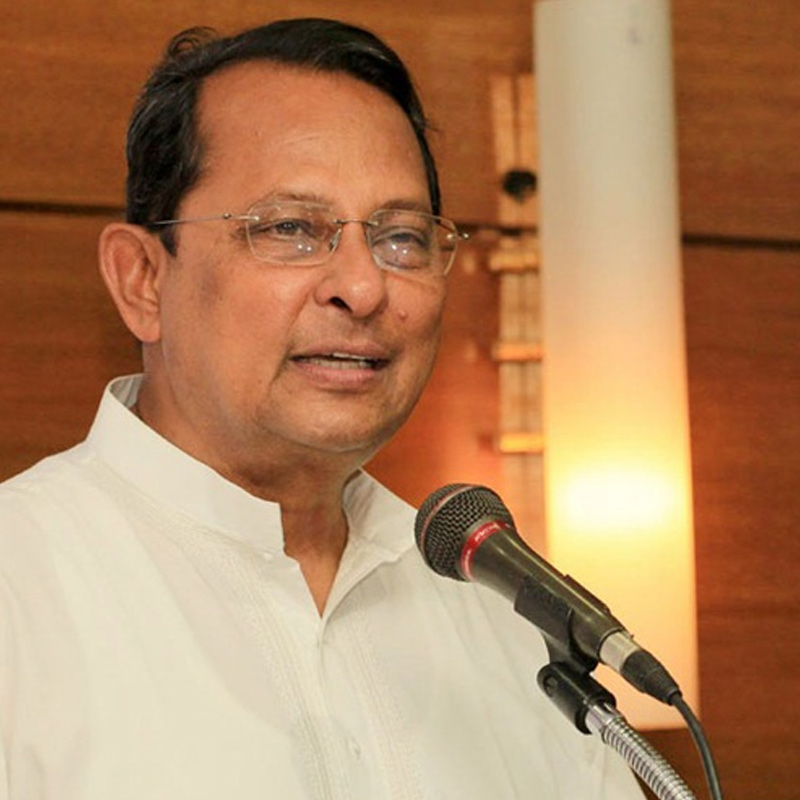
    Bangladesh Minister for Information & Broadcasting Hasanul Haq Inu today requested his Indian counterpart Manish Tewari that the Government of India consider providing the names of the soldiers who had laid down their lives during the War of Liberation. He reiterated that the Government of Bangladesh would like to recognize their contribution made during this historical event.


    The two Ministers had extensive discussions on critical issues related to Information and Broadcasting Sector.


    Both the Ministers agreed to explore the possibility of setting up a joint working group on the critical sectors of the information and broadcasting domain to provide a roadmap for future collaborations between the two countries.


    The Bangladesh Information Minister also requested Tewari to facilitate the downlinking of Bangladesh TV Channels through the private distribution network into India.


    Both Ministers agreed to intensify the collaboration between Prasar Bharati and Bangladesh State Television in view of the Memorandum of Understanding signed between the two entities in 2011. The MoU had focused on mutual cooperation in the broadcast of television programmes between the two broadcasters. It was also mentioned that both countries could consider exchange of programmes and also explore the possibility of executive TV co-production.


    Both Tewari and Inu discussed the possibility of strengthening collaboration as far as training and capacity building was concerned between institutions of mutual interests.


    During the discussions, the Ministers agreed to facilitate the exchange of archival material between the two countries. In this context, Tewari highlighted the major policy initiatives undertaken by the Ministry that had enabled the sector to grow exponentially.


    Specific reference was made to the initiatives undertaken by the Ministry to commemorate 100 years of Indian Cinema, the Digitization programme and the policies that were introduced to promote inclusive growth in the country. Both the Ministers were assisted by senior officials of the Ministries of India and Bangladesh.

  • Sanjay Dutt asserts he will complete his films, says he respects the judicial system

    Sanjay Dutt asserts he will complete his films, says he respects the judicial system

    NEW DELHI: Even as Press Council of India Chairman Markanday Katju has appealed to the Maharashtra Governor to K Sankarnarayanan to grant parole to Sanjay Dutt and the Union Government feels the ball is in the Governor‘s court if he receives an appeal, the actor himself has said "I have always respected the judicial system and will continue to do so, even with tears in my eyes."

    In a statement, Dutt who has been held guilty of being in possession of arms said "I have already suffered for 20 years and been in jail for 18 months. If they want me to suffer more I have to be strong. I am heartbroken because today along with me, my three children and my wife and my family will undergo the punishment."

    He said he was going to complete all his films and would not let anyone down.

    "I am overwhelmed by the support of my fans the industry people, the media and all the well wishers. They have always stood by me and supported me. I know in my heart that I have always been a good human being, respected the system and always been loyal to my country."

    He added, "My family is very emotional right now and I have to be strong for them. I am shattered and in emotional distress. I am sorry I can‘t come down and meet you all. God is great and he will guide me through this."
    Law Minister Ashwani Kumar indicated that the matter will be looked into and an "appropriate" decision taken once such a plea is made by the actor. "The Governor will use his discretionary power when there will be an appeal to him. He has the power to pardon. We should not comment on it," he said.

    Information and Broadcasting Minister Manish Tewari said the authorities will take cognisance of the matter at the appropriate level.

    "Justice Katju has been a very eminent judge of the Supreme Court. Whenever he articulates a position on an issue, people both inside and outside the government listen to it carefully," Tewari told reporters outside Parliament.

    "But there are various aspects to the issue and I am sure that those people within government whether at the state government or level of various other instrumentalities of government, who are seized with the responsibility of dealing with the issue, take the cognizance of the statement and then, if required, formulate an appropriate response and then come back," he added.

    In a letter to Maharashtra Governor, Justice Katju sought pardon for Dutt, whose six years sentence was reduced to five years by the Supreme Court in an arms case related to the 1993 Bombay blasts.