Tag: Manish Tewari

  • MIB urges industry to buck up on implementing TV ratings

    MIB urges industry to buck up on implementing TV ratings

    NEW DELHI: There has been some hue and cry about the manner in which the Ministry of Information & Broadcasting (MIB) has apparently rushed to notify the latest policy guidelines for TV ratings. Following the notification, there have been fears that unless TAM goes to court and gets a stay order on the MIB’s guidelines, industry will most likely be without TV ratings for at least six to seven months. This is because Broadcast Audience Research Council (BARC) states that it will be ready to roll out its ratings only in the third or fourth quarter of 2014. 


    This has alarmed professionals such as Madison chairman Sam Balsara who has gone on record to state that the industry should plead with the Ministry to delay the implementation of the guidelines, and that the industry cannot do with a TV ratings-dark period. 


    MIB officials are pretty clear that this time it is for real. Says a senior Ministry official: “The entire TV ratings shouting match has been going on since 2007. Industry has been complaining that TAM’s methodology is flawed, and they have done nothing about it over the years. And the murmurings against it have been going on for more than a decade.” 


    He goes on to add, that MIB intervened only on the industry’s insistence and now the industry will have to drink its bitter dose of medicine, no matter what. 


    “We have given the industry and TAM enough time to rectify the situation and find an amicable authentic and reliable solution,” says another MIB official. “The Amit Mitra committee report indicated what needs to be done way back n 2010. Why wasn’t it followed and why were corrective steps not taken by TAM or the industry? TAM will have to follow the guidelines and register with us before 30 days are up, otherwise cease operating. We are not against individuals or companies; we are clear that a due process and the rules for TV ratings need to be followed so that transparency and credibility are associated with TV viewership ratings.” 


    In fact, another MIB official was quite critical of the industry-backed TV ratings body BARC too. 


    “It’s taken them three years to get here,” the senior official says. “First, BARC told us that the ratings will be up and running by June 2013, then they told us they would do so by March 2014, and now they are saying September or October 2014. This is simply not acceptable. We timed our rules and regulations based on the fact that BARC would be up by March 2014 and that industry would not have to be troubled by the absence of ratings.” 


    Another senior official appeals that the MIB cannot keep waiting forever for industry to get its act together. “The industry has been dragging its heels for a long time on the TV ratings issue. Now is the time for it to sprint to the finish line, and faster than ever before,” he says. The longer it takes to get its ratings going, the longer it will be without ratings.”


    The fact that TAM Media might challenge the Ministry’s notification in court has not disturbed the MIB at all. “If it goes to court, we will fight it tooth and nail,” says the MIB official. “Industry has to understand, the MIB means business. Let industry also be serious about its business.” 


    “It’s strange, isn’t it?” another official asks rhetorically with a smile on his face. “Industry complains when the ratings are there; they are complaining now that the ratings will not be there for some time. Let it realise that indeed there will be no ratings for a while and come up with a workable solution in their absence which works well for broadcasters, advertisers and agencies. The ball is in industry’s court now. ”


  • Republic Day ceremony coverage to have sign language interpreter during DD telecast

    Republic Day ceremony coverage to have sign language interpreter during DD telecast

    NEW DELHI: The live telecast of the Republic Day parade by Doordarshan channels will have an additional facility this year – a sign language interpreter.


    The Information and Broadcasting Ministry (I&B) has issued directions to Prasar Bharati for making a provision for having an inset box on the TV screens during the telecast of the Republic Day Ceremony, through which the sign language anchor/expert could interpret the proceedings of the Republic Day parade on 26 January.


    The telecast will be on DD National, DD Urdu, DD Bharati and DD News. 

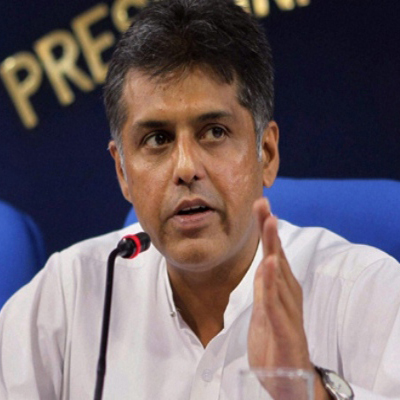
    The decision has been taken in the interest of all those who are differently-abled, hearing impaired citizens. I&B minister Manish Tewari received a representation from the National Association of Deaf recently requesting for providing sign language interpreter in an inset box on TV screens during the live coverage of the Republic Day Parade.

  • Sun Direct to add remaining DD channels within 72 hours

    Sun Direct to add remaining DD channels within 72 hours

    MUMBAI: A week after notices were sent by the ministry of information and broadcasting (MIB) to three DTH operators for not carrying the mandatory 24 Doordarshan channels, one of the three  has decided that it will be adding the remaining six channels to its packages within the next 72 hours.


    “Even before the notice was issued, we had initiated a technical upgrade that will facilitate to add more channels on the same transponder. We took steps nearly three months ago to import equipments and to upgrade our software,” says Sun Direct CEO Mahesh Kumar.


    As far as the reply to the MIB notice is concerned Kumar says that he will be writing to the ministry post the addition stating that it is complying with the rules. He also mentioned that currently Sun Direct is carrying 18 DD channels and within the next three days, all 24 will be carried by it.


    Last week Tata Sky had decided to respond to the MIB’s notice expressing his company’s inability to carry any more DD channels as it lacked the bandwidth on its existing transponders, and stating that new capacity it had signed up for on GSAT-10 has not been delivered to it despite several pleas to all the departments in  ISRO, the MIB, department of space, WPC, and what have you.  This leaves only Reliance Digital to decide a course of action regarding the notice given to it.


    According to the MIB directive all DTH operators have to provide 24 DD channels irrespective of whether they provide them a-la-carte or in packages to their subscribers.

    The channels which cable operators must show are DD National, DD News, DD Bharati, DD Urdu, DD Sports, DD India, DD Kashir, DD Punjabi, DD Girnar, DD Sahyadri, DD Saptagiri, DD Malayalam, DD Podhigai, DD Chandana, DD Bangla, DD North East, DD Bihar, DD Uttar Pradesh, DD Rajasthan, DD Madhya Pradesh, DD Oriya, Gyan Darshan, Lok Sabha TV and Rajya Sabha TV. 

  • I&B minister  Manish Tewari inaugurates BES Expo 2014

    I&B minister Manish Tewari inaugurates BES Expo 2014

    NEW DELHI: The Information and Broadcasting minister Manish Tewari inaugurated the 20th International Conference and Exhibition on Terrestrial and Satellite Broadcasting – BES Expo 2014, today at New Delhi. Speaking on the occasion he said, “The last two decades have witnessed exponential growth in both the broadcasting and telecom sectors, giving rise to 800 plus television channels.”

    Commenting on the problems and challenges faced by the broadcasting sector due to competition for market share, he said the union cabinet has recently approved the proposal of the Ministry of Information & Broadcasting for a comprehensive regulatory framework in the form of guidelines for Television Rating Agencies in India. These guidelines cover detailed procedures for registration of rating agencies, eligibility norms, terms and conditions of registration, cross-holdings, methodology for audience measurement, a complaint redressal mechanism, sale and use of ratings, audit, disclosure, reporting requirements and action on non-compliance of guidelines. 

    Also speaking at the function, Ministry of Information & Broadcasting secretary Bimal Julka, said the ministry is planning to strengthen community radio movement in India, which would help in giving voice to the voiceless. 

    The BES expo is being attended by over 300 eminent broadcasters, media industry professionals and experts from India and abroad. The three day long expo will have deliberations on issues such as terrestrial broadcasting, future of TV, digitization, disaster broadcast systems for information dissemination, regulatory framework in broadcasting and other important issues related to the broadcasting industry. 

  • I&B ministry to take up cable TV monopoly recommendations

    I&B ministry to take up cable TV monopoly recommendations

    MUMBAI: The inter-ministerial committee in the information and broadcasting ministry (MIB) is likely to take up the Telecom Regulatory Authority of India’s (TRAI’s) recommendations on controlling monopoly/market dominance in the cable TV sector this week. These were released by the TRAI on 26 November 2013. This was revealed by MIB minister Manish Tewari to the Times of India (TOI) yesterday.


    According to the TRAI recommendations, a barometer known as the Herfindahl Hirschman Index (HHI) is to be used to measure monopoly of MSOs or cable TV service providers in a market which as defined as a state (with certain exceptions).


    The recommendations state that “the threshold value for any individual/group/entity contribution to the market HHI should be no more than 2500.”  According to the TOI report, this constitutes 50 per cent market share, the market being defined as a state.


    The TRAI recommendations further state that “any M&A among MSO(s) or between an MSO and LCO in a relevant market shall require the prior approval of the regulator. The decision on any proposal, complete in all aspects, shall be conveyed within 90 working days.”


    They go on to further add that in “the cases where any group’s contribution to HHI in a market is more  than 2500 as on the date of issue of guidelines, such legal entity/ ‘group’ shall take necessary remedial measures, within 12 months from the date of issue of guidelines, so as to limit  its ‘control’ in various MSO(s)/ LCO(s) in such a way that the  contribution to market HHI of that ‘group’ reduces to less than or equal to 2500.”


    Tewari told the TOI that the ministry was “seriously looking at introducing a cap on the market share of MSOs to stop monopolistic practices, whether due to political pressure or political ownership, to protect plurality and diversity of content.” 

  • TV ratings: Ownership & FDI questions

    TV ratings: Ownership & FDI questions

    MUMBAI: To have foreign direct investment (FDI) in TV ratings or not, that is the question. And the recently-cleared TV ratings guidelines by the Cabinet Committee of Economic Affairs (CCEA) have brought this to the fore by their silence on this score. While announcing that the CCEA had given the go ahead to the ministry of  information and broadcasting (MIB) last week to the Telecom Regulatory Authority of India (TRAI)-recommended  guidelines for a regulatory framework for TV ratings in India,  minister Manish Tewari had this to say.


    “In so far as FDI is concerned we would make a separate reference to TRAI with regard to the quantum and need of FDI that should be permitted in ratings agencies. After the TRAI recommendations, the question of allowing FDI would be looked at. So as we speak, no FDI will be permitted in TV ratings agencies till we don’t have a recommendation on it.”


    Although the 2013 recommendations do not have any mention of FDI, it is noteworthy to point out that TRAI’s 2008 consultation paper on TV ratings does. The paper says that stakeholders feel that FDI should be restricted to 20 per cent in a TV ratings agency.  It also goes on to suggest that since no security issues were involved and little or no competition was prevailing (only two agencies existed at that time – TAM and aMap  and no regulation existed), that it would be okay of no if no FDI limit was imposed.  “Generally FDI encourages world class technology and international best practices,” TRAI had stated in the paper.


    So even as the TRAI was of the opinion that FDI was all right in 2008, in 2013 it gave the issue an ignore. Currently FDI limits for broadcasters are 100 per cent  for non-news and current affairs channels, for news channels 26 per cent, for cable TV 74 per cent, for DTH 49 per cent, for print 26 per cent for general news etc.


    Tewari stated that the question of FDI would be looked at after the TV ratings guidelines are notified by the ministry. Could the earlier recommendation of 20 per cent work as a guideline today? Or is the government going to be averse to FDI totally?


    Let us take a look at the other major guideline of cross holding in the TV ratings provider. The guideline states very clearly:  ‘No single company/legal entity either directly or through its associates or interconnect undertakings shall have substantial equity holding that is, 10 per cent or more of paid up equity in both rating agencies and broadcasters/advertisers/advertising agencies.’


    If one looks at the holding pattern of Mediametrie – the French ratings agency – which is soon to be announced as the Broadcast Audience Research Council’s (BARC’s) ratings partner,  France Televisions holds 22.89 per cent equity in it, TF1  10.8 per cent, Radio France 13.5 per cent and Union des Annonceurs 11.77 per cent.


    France Televisions in turn owns 49 per cent of TV5 Monde while AEF (formerly called France Monde) that runs France 24 owns 12.6 per cent of France Televisions. Quite a convoluted holding structure, but clearly one where broadcasters could be owning more than 10 per cent equity in the TV ratings provider.


    However, BARC officials are quick to clarify that it is BARC which will be providing the ratings and not Mediametrie. The latter is only a technology supplier and ratings are being outsourced to it. It owns no equity in the ratings company which is BARC. Hence, the question of more than 10 per cent equity ownership by broadcasters in Mediametrie is irrelevant and there will be no violation of TRAI’s guidelines, they emphasise.


    BARC, on its part is a non-profit organisation under section 25 of the Companies Act, with nominated representatives from the Indian Broadcasting Foundation, Indian Society of Advertisers, and Advertising Agencies Association of India. In a response to TRAI’s consultation paper, BARC had stated that even though the three may have conflicting interests in the ratings process, its articles of incorporation clearly state that “each has an equal voice in the design, and monitoring of the rating system, and in the administration of BARC, irrespective of the funding pattern.”


    TAM, on the other hand, has woes on both fronts as it not only does not comply with the FDI guidelines it also is has issues on the cross holding guideline as it is owned jointly by the WPP group and AC Nielsen. It is even listed on the WPP site as one of its companies.


    The key question that everyone is asking at the time of writing is whether TAM Media will move court against the guidelines, as they have come into force so many years after it has been operating in India with the equity and cross holding structures that it has. Or will it give up the fight and pack up just like Coca-Cola did in the seventies, when the government ordered it to reduce the FDI in it to 40 per cent.

  • What now for TV ratings and TAM

    What now for TV ratings and TAM

    MUMBAI: When the cabinet committee on economic affairs announced that it had approved the Telecom Regulatory of India (TRAI) recommendations on TV ratings guidelines in the first week of  2014 the first question that struck everyone was – what will TAM do now?


    The fracas between angry broadcasters and TAM has been brewing for  several years and finally came to its boiling point last year when seven TV networks announced that they were clicking on the TAM TV rating unsubscribe button. This put a big question mark over TAM’s very existence but it managed to get out of the corner it was in by hammering out a solution which was acceptable to most subscribers. 


    As far as the current threat to TAM’s continuance is concerned, the Cabinet’s go ahead to the proposed regulatory framework has now to be notified. When that will happen no one knows, though speculation is that it could be sooner than later. However, what is sure is that TAM will have 30 days from notification date to comply with its guidelines and then seek a licence from the Ministry of Information and Broadcasting (MIB).  From all angles it looks like a pressure cooker-like situation that the TV ratings provider has landed itself in. 


    Broadcasters seem to be the happiest of the lot. NDTV group CEO Vikram Chandra – whose company sued TAM in a New York court two years ago – is cock-a-hoop with delight that the government has affirmed what industry has been voicing since nearly six to seven years: that TAM and the ratings process in India needs to be spruced up.


    “The introduction of firm guidelines is a positive step as everything is clear now. It shows that we should never be hesitant to change something that isn’t right,” says Chandra.


    Whether TAM will manage to find the capital to ramp up its peoplemeter sample to 20,000 within a month or two is something that is concerning industry. What is also a big question mark is how the MIB will view the WPP group’s 50 per cent equity in TAM (through Kantar Media Research 20 per cent, and Cavendish Square Holdings 30 per cent), as mentioned in the NDTV suit with the supreme court in New York.


    “Kantar and Cavendish will have to exit since their parent is WPP. TAM has been worrisome and everyone has realised it. So now it has just two options, either shape up or ship out,” says a senior news broadcaster from the News Broadcasters Association (NBA).


    However, a source from the IBF presents another option. “We are a democratic country so the government cannot force things on anybody. TAM has the freedom to go to the court and appeal against the guidelines,” says the source.


     If TAM decides to oppose the guidelines and go to court and gets a stay order, then we might see some delays in the roll out of the guidelines. This will allow it to continue to operate until a final decision is given by the court, thus buying it some time. Additionally, the industry-backed Broadcast Audience Research Council (BARC) will also get some time to get its act together with the minimum 20,000 meters.


    Media agencies and advertisers aren’t too happy with the way the cabinet has thrust the deadline on TAM.


    Says a senior media professional:  “In the beginning of cable and satellite TV in India in the nineties, we had TAM and INTAM. The latter could not sustain itself and TAM continued. Then we had TAM and aMap in the mid of the previous decade. aMap too found the going tough without full industry support and folded up. The fact is TAM has started from scratch and survived so many upheavals. It is a sad situation to be destroying something that has been existing and running for so long. ”


    However, she is clutching on to a thin sliver of hope that TAM and BARC could co-exist for a while until things smooth out on the ratings front. 


    “The time given to follow and make all the changes as per the guidelines is impractical,” says Madison World chairman & MD Sam Balsara. “It is obvious that TAM will not be able to handle it all at such a short notice.”


    The Indian Society of Advertisers (ISA) chairman Hemant Bakshi says that he is discussing the consequences of the cabinet’s clearance to the new ratings guidelines with major advertisers and other players to gauge the possible impact on their businesses.


    One scenario that everyone is dreading is that TAM fails to comply with all the requirements within the time period it is given, and the courts dismiss its appeal, if it makes one. Will it then be forced to cease operations immediately and lead to a ratings-less period for the Indian television business? This is extremely alarming for all concerned.


    IPG Mediabrands CEO Shashi Sinha who is also in the technical committee of BARC feels that the management of the new proposed ratings system needs to pull their socks up, and accelerate the rollout of people meters. But even then he says that “we are hoping to be on our feet and start functioning only by September/October.”


    That seems a long, long time away, going by how things are moving. Madison’s Balsara is quite clear on the way forward. Says he: “As an industry we need ratings, all the time! Therefore, till BARC comes up, we need an alternate. As an industry we should appeal to the ministry to relax the deadline for the implementation.”


    Hence, it is imperative for all concerned – whether it is the MIB led by Manish Tewari, the government, TAM, the ISA, advertising agencies, broadcasters and BARC – to choose their next steps wisely.


  • Cabinet gives go-ahead to TV ratings regulatory mechanism

    Cabinet gives go-ahead to TV ratings regulatory mechanism

    NEW DELHI:  The Union Cabinet today gave the go-ahead to the television ratings guidelines ,which had earlier been proposed by the Telecom Regulatory Authority of India (TRAI) in September 2013, cleared by the Ministry of Information and Broadcasting (MIB) in November. The ministry had then forwarded the proposed guidelines for the cabinet’s approval. With the cabinet’s clearance the MIB will now have regulatory control over TV ratings agencies in India.


    This was disclosed by MIB minister Manish Tewari after the cabinet meeting.


    The guidelines cover detailed procedures for registration of ratings agencies, eligibility norms, terms and conditions of registration, cross holding restrictions, methodology of audience measurement, a complaint redressal mechanism, sales and use of ratings, audit, disclosure norms, reporting requirements and action on non-compliance of guidelines etc.


    The guidelines state that TV ratings providers – including TAM Media which is the industry standard currently – will have to first get registered with the MIB. The registration will be given to them only if they comply with the rules the TV ratings guidelines have enumerated. Among these figure:


    * No single company / legal entity either directly or through its associates or interconnect undertakings shall have substantial equity holding that is, 10 percent or more of paid up equity in both rating agencies and broadcasters/advertisers/advertising agencies. 


    * The ratings agency should have a net worth of at least Rs 20 crore.


    * Panel homes for audience measurement shall be drawn from the pool of households selected through an establishment survey. A minimum panel size of 20,000 is to be implemented within six months of the guidelines coming into force. Thereafter the panel size shall be increased by 10,000 every year until it reaches 50,000. 


    * Ratings ought to be technology neutral and shall capture data across multiple viewing platforms viz. cable TV, Direct-to- Home (DTH), Terrestrial TV etc. 


    * Secrecy and privacy of the panel homes must be maintained. 25 percent of panel homes shall be rotated every year. 


     * The rating agency shall submit the detailed methodology to the Government and also publish it on its website. 


    * The rating agency shall set up an effective complaint redressal system with a toll free number. 


    * The rating agency shall set up an internal audit mechanism to get its entire methodology/processes audited internally on quarterly basis and through an independent auditor annually. All audit reports to be put on the website of the rating agency. Government and TRAI reserve the right to audit the systems /procedures/mechanisms of the rating agency. 


    * Non-compliance of guidelines on cross-holding, methodology, secrecy, privacy, audit, public disclosure and reporting requirements shall lead to forfeiture of two bank guarantees worth Rs 1 crore furnished by the company in the first instance, and, in the second instance shall lead to cancellation of registration. For violation of other provisions of the guidelines, the action shall be forfeiture of bank guarantee of Rs. 25 lakh for the first instance of non-compliance, forfeiture of bank guarantee of Rs 75 lakh for the second instance of non-compliance and for the third instance, cancellation of registration. 


    * A time of 30  days would be given to the existing rating agency to comply with the guidelines. 


    * The guidelines would come into effect immediately from the date of notification. 


    The Guidelines for Television Rating Agencies in India are designed to address aberrations in the existing television rating system. These guidelines are aimed at making television ratings transparent, credible and accountable. The agencies operating in this field have to comply with directions relating to public disclosure, third party audit of their mechanisms and transparency in the methodologies adopted. This would help make rating agencies accountable to stakeholders such as the Government, broadcasters, advertisers, advertising agencies and above all the people. 


    Television Rating Points (TRPs) have been a much debated issue in India since the present system of TRPs has reportedly not found favour with industry, consumer groups, broadcasters, agencies, government who have said they are riddled with several maladies such as small sample size which is not representative, lack of transparency, lack of reliability and credibility of data etc.


    In 2008, the MIB had sought recommendations of TRAI on various issues relating to TRPs and policy guidelines to be adopted for rating agencies. TRAI, in its recommendations in August 2008, had amongst other things recommended the approach of self-regulation through the establishment of an industry-led body, that is the Broadcast Audience Research Council (BARC). 


    The MIB had constituted a Committee under the Chairmanship of Dr. Amit Mitra, the then Secretary General FICCI, in 2010 to review the existing TRP system In India. The committee also recommended that self-regulation of TRPs by the industry was the best way forward. 


    Since, the BARC could not operationalise the TRP generating mechanism, the  sought recommendations of TRAI in September 2013 on comprehensive guidelines/accreditation mechanism for television rating agencies in India to ensure fair competition, better standards and quality of services by television rating agencies. TRAI recommendations on Guideline for Television Rating Agencies were received in September 2013. While supporting self-regulation of television ratings through an industry-led body like BARC, TRAI recommended that television rating agencies shall be regulated through a framework in the form of guidelines to be notified by MIB. It also recommended that all rating agencies, including the existing rating agency, shall require registration with MIB in accordance with the terms and conditions prescribed under the guidelines. 


  • Tewari believes internet represents the largest ungoverned space on earth

    Tewari believes internet represents the largest ungoverned space on earth

    NEW DELHI: While border control, visa regulations and immigration formalities were the ground realities in connecting the global youth, it is undeniable that the march of technology, through the use of the internet, has enabled them to become a part of the global conversation, Information and Broadcasting Minister Manish Tewari said today.


    Speaking at the Plenary Session of Youth Prasar Bharati Divas, Tewari said that internet represented the largest ungoverned space on earth and every two days more data is produced than since the dawn of civilisation to the year 2000. This technology has given rise to a virtual civilization that allows young people who have the desire and passion to connect with others with similar aspirations around the world.

    He said during his overseas travel in recent months, he has discovered that the younger generation has a common aspiration: to make a life for themselves and make the world a better place to live in. In this context, Tewari suggested that PBD should evolve a non-formal connect in an unstructured manner to allow the youth across the world to connect with one another seamlessly.

    The session provided insights into India’s fast emergence as a youthful and exuberant nation where approximately 50 per cent of the working population falls in the age group of 18- 35 years.


    There has been some reverse migration in which a number of experienced and educated NRIs are now returning home to use their knowledge to build an inclusive and economically sound future for the country.


    This has led to the creation of a unique synergy wherein young Indians worldwide are now set to shape the future of the Indian growth story. This synergy is expected to be directed by the core principle of inclusive prosperity and driven by innovation and technology.

  • Cable operators demand a 10 year licence for better operations

    Cable operators demand a 10 year licence for better operations

    MUMBAI: If the entire digitisation process has affected any of the related bodies the most, it is the local cable operators (LCOs), who are unsure about their future completely. Keeping this in mind, the Cable Operators Federation of India (COFI) has written to the Information and Broadcasting (I&B) Minster Manish Tewari requesting him to give the LCOs a 10 year licence so that they can work on various expansion plans.


    The letter was sent to the minister on 18 December. However, the association still awaits a response.


    What is notable is that when COFI earlier met the minister on 29 October along with the Cable Operator Association of Gujarat and Rajkot, member of parliament, Mohan Bavaliya requesting for a 10 year licence for the LCOs, Tewari had accepted the proposal, but there was no development on the issue thereafter.


    In the absence of a response, the association has resorted to sending a reminder letter to Tewari.  


    “You had assured us that the licensing for registered cable operators will be for 10 years at par with the multi-system operators (MSOs) and direct-to-home (DTH) operators and that ‘registration’ for LCOs in post offices will cease,” writes COFI in the letter.


    The move, according to the association president Roop Sharma, will help cable operators show more interest in upgradation of technology and expanding business. “When the MSOs and DTH players have been given 10 year licence citing security of business as a reason, why should the LCOs not be given such a security,” she says.


    While the MSOs and DTH operators are given the licence by the I&B Ministry, “the LCOs are the only distributers of content without a licence and have registration in post offices for more than 20 years”, states the letter.


    MSOs currently have to pay Rs one lakh for a 10 year licence. “The LCOs are anyway paying Rs 1000 to the post office for one year registration. So why not charge them for a 10 year licence? At least this will guarantee them security,” informs Sharma.


    In fact, the LCOs have become more certain about attaining a 10-year license because as per the new DAS rules, the LCO has to seek permission from the MSO for renewal of the yearly post office registration. Though the association hasn’t received any response to the letter, Sharma says, “We will soon meet the minister again.”