Tag: Manish Tewari

  • Pokkt launches Apple tvOS SDK

    Pokkt launches Apple tvOS SDK

    MUMBAI: Pokkt has announced the launch of its brand new SDK for Apple’s tvOS. With this, it plans to enable publishers in monetizing their Apple TV apps with premium video ads.

    Pokkt adds this new premium channel to its growing inventory bucket giving brand advertisers the ability to target quality audiences in India and South East Asia markets.

    “Brands can simply take advantage of the capacity and authority of big screen video combined with the advantages of digital. We know banners won’t work here. Video is the most logical form of advertising on the Apple TV platform, not just for it’s inherent impact but also the amount of brand lift, recall and storytelling capabilities,” said Pokkt co-founder and COO Vaibhav Odhekar.

    The tvOS SDK will be sold both direct and programmatically.

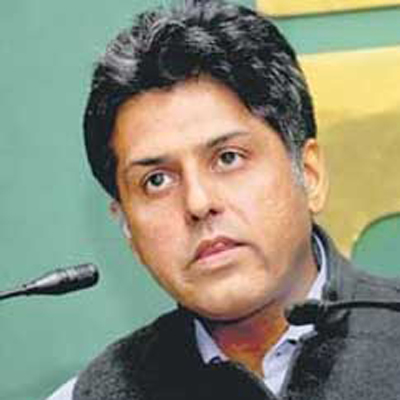
    “Developers in the highly lucrative OTT space can now bring new experiences to the big screen and control monetization goals within their tvOS apps.” added Pokkt co-founder and CTO Manish Tewari. He further added, “Our SDK will enable Developers to plan and condition how video ads play within their Apple TV app.” He confirmed with the launch, that Developers will be able to develop for the Apple TV just like they otherwise did for iOS, with minimal overhead effort.

    Pokkt’s tvOS SDK is now live and available for download on the their dashboard.

  • Pokkt launches Apple tvOS SDK

    Pokkt launches Apple tvOS SDK

    MUMBAI: Pokkt has announced the launch of its brand new SDK for Apple’s tvOS. With this, it plans to enable publishers in monetizing their Apple TV apps with premium video ads.

    Pokkt adds this new premium channel to its growing inventory bucket giving brand advertisers the ability to target quality audiences in India and South East Asia markets.

    “Brands can simply take advantage of the capacity and authority of big screen video combined with the advantages of digital. We know banners won’t work here. Video is the most logical form of advertising on the Apple TV platform, not just for it’s inherent impact but also the amount of brand lift, recall and storytelling capabilities,” said Pokkt co-founder and COO Vaibhav Odhekar.

    The tvOS SDK will be sold both direct and programmatically.

    “Developers in the highly lucrative OTT space can now bring new experiences to the big screen and control monetization goals within their tvOS apps.” added Pokkt co-founder and CTO Manish Tewari. He further added, “Our SDK will enable Developers to plan and condition how video ads play within their Apple TV app.” He confirmed with the launch, that Developers will be able to develop for the Apple TV just like they otherwise did for iOS, with minimal overhead effort.

    Pokkt’s tvOS SDK is now live and available for download on the their dashboard.

  • POKKT announces the launch of a first-of-its kind technology revolutionizing ad-viewing for brands and consumers

    POKKT announces the launch of a first-of-its kind technology revolutionizing ad-viewing for brands and consumers

    Mumbai: POKKT, Asia’s leading rewarded video ad network co-founded by Rohit Sharma, Manish Tewari and Vaibhav Odhekar, is creating and setting industry benchmarks again with the launch of their cutting edge technology that promises to transform the functioning of the ad-tech industry. With this in-house technology, a first of its kind in the region, brands will be able to pay only for viewable impressions through tracking sensors in real time that will observe if the user is watching the video or not, thereby negating misleading or fraud traffic numbers.

    Launched in 2012, POKKT enables over 500 global and local game publishers and developers to monetize their apps through branded video ads by integrating their Software Development Kits (SDKs) and has a reach of over 100 million unique users in the region.

    While ensuring 100% viewership of all in-app mobile video ad campaigns, POKKT’s new technology also aligns to the Media Rating Council’s* guidelines for measurement of in-app viewable impressions. It applies to all in-app video ads bought directly or via private programmatic deals.

    This technology aims to do away with the current ad-tech and mobile video advertising industry challenges related to ad blocking and fraud traffic. Ensuring 100% viewership is an important Key Performance Indicator (KPI) for POKKT to re-innovate mobile advertising by providing top notch ads and measurements that advertisers can understand.

    Speaking about their latest innovation, Manish Tewari, CTO & Co-Founder, POKKT said, “The ad tech and mobile industry had been facing a major roadblock in measuring effectiveness of their campaigns and its exact reach. To resolve this for all of our clients, we have developed this technology wherein the advertisers and we can measure whether the target is actually watching the video through tracking sensors which provides us with data such as if there is a change in the angle at which the video is being watched etc. If the sensors indicate that the person is not watching the video, we pause the ad, thereby reducing fraud traffic numbers.”

    POKKT’s new proprietary technology will give all campaigns and advertisers the most comprehensive viewership offering possible. Advertisers will only have to pay on viewable impressions that are calculated on a CPM-basis (Cost per thousand impressions) verified by an independent third party ad rating tools like Nielsen, Moat, Comscore.

  • POKKT announces the launch of a first-of-its kind technology revolutionizing ad-viewing for brands and consumers

    POKKT announces the launch of a first-of-its kind technology revolutionizing ad-viewing for brands and consumers

    Mumbai: POKKT, Asia’s leading rewarded video ad network co-founded by Rohit Sharma, Manish Tewari and Vaibhav Odhekar, is creating and setting industry benchmarks again with the launch of their cutting edge technology that promises to transform the functioning of the ad-tech industry. With this in-house technology, a first of its kind in the region, brands will be able to pay only for viewable impressions through tracking sensors in real time that will observe if the user is watching the video or not, thereby negating misleading or fraud traffic numbers.

    Launched in 2012, POKKT enables over 500 global and local game publishers and developers to monetize their apps through branded video ads by integrating their Software Development Kits (SDKs) and has a reach of over 100 million unique users in the region.

    While ensuring 100% viewership of all in-app mobile video ad campaigns, POKKT’s new technology also aligns to the Media Rating Council’s* guidelines for measurement of in-app viewable impressions. It applies to all in-app video ads bought directly or via private programmatic deals.

    This technology aims to do away with the current ad-tech and mobile video advertising industry challenges related to ad blocking and fraud traffic. Ensuring 100% viewership is an important Key Performance Indicator (KPI) for POKKT to re-innovate mobile advertising by providing top notch ads and measurements that advertisers can understand.

    Speaking about their latest innovation, Manish Tewari, CTO & Co-Founder, POKKT said, “The ad tech and mobile industry had been facing a major roadblock in measuring effectiveness of their campaigns and its exact reach. To resolve this for all of our clients, we have developed this technology wherein the advertisers and we can measure whether the target is actually watching the video through tracking sensors which provides us with data such as if there is a change in the angle at which the video is being watched etc. If the sensors indicate that the person is not watching the video, we pause the ad, thereby reducing fraud traffic numbers.”

    POKKT’s new proprietary technology will give all campaigns and advertisers the most comprehensive viewership offering possible. Advertisers will only have to pay on viewable impressions that are calculated on a CPM-basis (Cost per thousand impressions) verified by an independent third party ad rating tools like Nielsen, Moat, Comscore.

  • Prakash Javadekar takes oath as Rajya Sabha member from Madhya Pradesh

    Prakash Javadekar takes oath as Rajya Sabha member from Madhya Pradesh

    NEW DELHI: Prakash Javadekar, who has been made Minister of State with independent charge of the Information and Broadcasting Ministry, today took oath as a member of the Rajya Sabha from Madhya Pradesh. 


    Javadekar, who had filed only a single nomination form, was elected unopposed.


    The Minister’s term as a Rajya Sabha member came to an end on 2 April this year. He had been a member of the Upper House since 3 April 2008.


    The by-poll was necessitated as the sitting BJP member and former Union Minister Faggan Singh Kulaste got elected to the Lok Sabha from Mandla (ST) seat following which he resigned from his membership of the upper house. 


    Like his immediate predecessor Manish Tewari, he has also been the spokesperson of the party he represents. (He has also been given charge of Environment and Parliamentary Affairs.)


    Javedekar has also been one of the nominated members from Parliament to the Press Council of India and hence has dealt with media issues such as paid news.  


    A member of the Rajya Sabha from Maharashtra, Javadekar was born in Pune on 30 January 1951 and became associated with the Akhil Bharatiya Vidyarthi Parishad in his young days.


    He commenced his professional life as an employee in the Bank of Maharashtra for 10 years from 1971 to 1981 and also worked in the Rural Development Department. Sick Unit Cell, Employment Promotion Programme of the Bank.


    His father Keshav Krishna Javadekar was a senior leader of Hindu Maha Sabha who worked as joint editor of Marathi Daily started by Lokmanya Tilak – Kesari before having stints with some other newspapers like Tarun Bharat and Kaal as journalist. He still occasionally writes his thoughts in some newspapers.


    Javadekar has been president of GLOBE India (Global Legislators Organisation for Balanced Environment; In-Charge, BJP Economic Forum and Cells related to Economy; President, NOINO (National Organisation of Insurance Officers); and president, KCKU (Khadi Commission Karmachari Union).


    As a member of the Parliament, he has served as member of the Press Council of India; the Public Accounts Committee; Standing Committee on Human Resources and Development; Consultative Committee for Ministry of Power; Committee on Subordinate Legislation and Committee on Wakf.


    He has earlier served as executive president of the State Planning Board in Maharashtra (1995–1999); been a  Member of the Maharashtra Legislative Council from Pune Division Graduate Constituency for 12 years from 1990; chairman of the Task Force on IT in Maharashtra (1977–1999) and chairman of the Working Group on “IT for Masses” of the Central Government.


    He has also led a delegation to Boston to Negotiate Media Lab Asia Project in 2000.


  • Arasu should be given DAS licence, Jayalalithaa tells Modi

    Arasu should be given DAS licence, Jayalalithaa tells Modi

    NEW DELHI: Tamil Nadu Chief Minister J Jayalalithaa has once again raised the issue of granting a digital addressable system licence to Arasu Cable TV Corporation, which is owned by the state government.


    While the demand was raised before Prime Minister Narendra Modi when she called on him yesterday, it is expected that this matter would be referred to Information and Broadcasting Minister Prakash Javadekar for consideration.


    However, the Telecom Regulatory Authority of India (TRAI) has in two different consultation papers in 2008 and December 2012 given its opinion against state-owned multi-system operators or broadcasters getting licences.


    Ministry sources told indiantelevision.com that licences have not been issued to any state-owned organisation for running cable TV networks as TRAI had recommended that neither state-owned, local bodies nor religious organisations should be permitted to own TV channels.


    Earlier this year, then I&B Minister Manish Tewari had told Parliament that Arasu Cable TV Corporation had applied on 26 November 2007 for grant of MSO registration in CAS notified area of Chennai and had been granted provisional permission on 2 April 2008, subject to the report of TRAI on the issue of whether to allow state governments/PSUs and other entities to enter into broadcasting activities.


    Thus, Arasu had been given permission on the ground that it would automatically lapse if the Ministry decides against allowing state governments/PSUs and other entities into broadcasting activities, including MSO/Cable operations.


    In April last year, the Madras High Court had been informed by TRAI that Central and  State government ministries, departments, companies and undertakings should not be allowed to enter into the business of broadcasting or distribution of television channels. 


    Justice S. Rajeswaran was hearing writ petitions filed by the Tamil Nadu Arasu Cable TV Corporation seeking Digital Addressable System (DAS) licence to it for Chennai Metro and for the other parts of the State.

  • Information and Broadcasting: An uphill journey all the way

    Information and Broadcasting: An uphill journey all the way

    NEW DELHI:  For any person who takes over the mantle of the information & broadcasting ministry (MIB), the handling of the portfolio will be full of potholes created by his or her predecessors, primarily because of the failure to take strong decisions.


    By some mischance or deliberate choice, the MIB has remained without a working head since Priya Ranjan Dasmunshi was forced to leave because of sickness. While Ambika Soni did her best to put into operation plans worked out by the ministry’s bureaucrats or the Telecom Regulatory Authority of India (TRAI), both she and her successor Manish Tewari remained primarily spokespersons of the ruling party.


    Perhaps this was not entirely their fault, but that of the party which failed to realise that the ‘Information’ portfolio does not imply giving party inputs or the media which insisted on only raising party issues whenever these two met the members of the fourth estate.


    There is also no gainsaying that the lower priority given to the MIB – from a full-fledged minister with assisting ministers of state to a single minister of state with independent charge – also contributed to this.     


    With the new government in place, the speculation about who the new minister will be and what expectations can be had will be of considerable interest.


    If the government decides to hand over the portfolio to someone who takes interest in the information and broadcasting sector, then the choice zeroes down to a handful of names. But it is clear that politicians of the standing of Sushma Swaraj or Arun Jaitley who have held this portfolio earlier will not go back to it, and Shatrughan Sinha who has earlier served in the government as minister in-charge of two ministries will agree only if made a full-fledged minister and the chances are that he will want a more important portfolio than the MIB.


    Consequently, the choice falls upon someone like Smriti Irani, unless the Bharatiya Janata Party picks on someone from its allies.


    I&B MINISTRY


    It would help the government if the decisions being taken by the MIB are transparent, and the concerned officials are easily accessible to the media which represents the aspirations of the people.


    While it is true that senior ministry officials are generally reluctant to speak during a session of Parliament, there is no reason for their not doing so at other times.


    Perhaps the secretary of the ministry should designate certain officers to be available to the media at certain hours every day, on phone, if not in person.


    PRASAR BHARATI


    Notwithstanding who will hold the portfolio, it is clear that it will be no less than being at the edge of the twin-edged sword. Interestingly, one of these two edges was conceived by the erstwhile Jana Sangh (now BJP) which was then part of Janata Party and L K Advani at the head of this MIB.


    Even as B S Lalli was removed from the post of CEO of Prasar Bharati under a cloud of corruption and mismanagement, his successor Jawhar Sircar has taken up cudgels against the ministry on the ground that the public service broadcaster is an autonomous body.


    On the other hand, the government feels that since it pays the salaries, has waived spectrum fee and given other concessions, and has initiated the laying down of rules and regulations regarding employees, it cannot be wished away and has to have a say in the working of the pubcaster.


    The new incumbent in the ministry will therefore have to work out certain ground rules within the ambit of the Prasar Bharati Act 1990 drawing clear lines about its role. Clearly, autonomy does not mean freedom to do anything, but at the same time lays certain constitutional norms or reasonable restrictions.


    In the light of Article 19(1)(a) about freedom of speech and expression, it becomes abundantly clear that the government should not have any control over the content broadcast by All India Radio or telecast by Doordarshan unless this violates the Reasonable Restrictions laid in the Constitution or the Codes under the Prasar Bharati Act or the Cable Television Networks (Regulation) Act 1995. But it may be difficult to stop the government being the financing agency from interfering in the management of the pubcaster.


    In view of this, it is also clear that the spending of the budget laid aside by the ministry for content creation should be left to DD and AIR without day-to-day monitoring by the ministry.


    Furthermore, there has to be greater transparency and quicker decision-making both by the government and by AIR and more particularly Doordarshan about the programmes it wants to commission or broadcast. It is understood that some proposals from independent producers have been pending in DD for almost a decade.   


    The Sam Pitroda Committee on Prasar Bharati is generally repetitive of the provisions of the Prasar Bharati Act, but may help to speed up some processes. The new Minister will therefore have to immediately hold wide-ranging consultations with all stakeholders and take action on the report.


    There is little doubt that DD and AIR are today broadcasting programmes that no private operator dares to do because of the loss of eyeballs (TRPs).


    DOORDARSHAN


    While Doordarshan has made appreciable progress in terms of popularity in semi-urban or urban areas even as it holds the top spot in rural India, there is urgent need to take steps to market the channel even better. While its programmes have become entertaining even as they serve the public by sending out direct or indirect messages, the general perception is to the contrary.


    DD also needs to bring certain channels that are only known in certain regions to the national level. These include DD Bharati, DD Urdu, DD Kashir, and the DD channels in the north east. Greater facility for dubbing popular serials in Hindi would help in this effort.


    AIR


    The audio wing of Prasar Bharati has been treated in a somewhat step-motherly fashion since DD began to grow. There is urgent need to reverse that by getting more people to tune in to radio just the way they tune in to DD.


    This can clearly be done by bringing All India Radio’s National channel and the popular Vividh Bharati channel onto the FM networks so that it is heard in the same way as private FM channels or FM Gold and FM Rainbow.


    AIR has already spent crores of rupees on creating the basic infrastructure for Digital Radio Mondiale, which can make medium-wave or short wave programmes accessible to listeners. The only lacunae appear to be the absence of reasonably priced receivers, and the reluctance of the present Prasar Bharati CEO to the growth of this medium.


    While manufacturers have come forward to produce reasonably priced receivers for use on mobiles, cars or at home, the Government is pushing ahead its programme for the third phase of FM Radio expansion and this is the right time to pursue as DRM sets are also FM compatible. 


    TELECOM REGULATORY AUTHORITY OF INDIA


    Of late, far too many cases have been going to the Telecom Disputes Settlement and Appellate Tribunal (TDSAT) with relation to broadcasting but the problem has been complicated further by the judgment of the Supreme Court that TRAI regulations should not be adjudicated upon by TDSAT.


    Clearly, there is need for TRAI to pay greater heed to its regulations relating to the broadcasting and cable sectors. But since its primary objective has always been telecom, the government will have to consider whether there is need for a separate Broadcast Regulatory Authority of India (BRAI), something which has been tossed around for the past 15 years.


    Allegations are that broadcasters tend to get the TRAI’s hearing more. But in recent times it has been reaching out to more and more cable TV operators when they come up with a logical discussion and argument flow. Perhaps a new BRAI – also provided for in the proposed Broadcast Services Bill – with clearer objectives may help overcome not only the prejudices that are alleged against TRAI.


    The new body could also look at the high taxation down the line – from that levied on manufacturers, broadcasters, cable and other service operators like DTH and HITS, and the consumers (viewers).


    BARC


    The Broadcast Audience Research Council aimed at replacing the outdated present TAM system needs to be expedited.  This may also help the broadcasting industry overcome the hurdles created by the 12-minute ad cap since it will bring in greater transparency.


    SELF-REGULATION


    Self-regulation is healthy as the TV channels will accept decisions of their own ilk more easily than those dictated by the government. It seems to be working well, and it’s best left like that. Content regulation is any way the MIB’s domain, and it can step in and bang its fist on the table if things get out of hand.

    One option being mentioned is that the Inter-Ministerial Committee of the Information and Broadcasting Ministry be vested with greater powers and also made more broad-based with representatives of more ministries, while permitting some civil society intellectuals apart from representatives of News Broadcasting Services Authority (NBSA), the Broadcasting Content Complaints Council (BCCC) or the Advertising Standards Council of India (ASCI) as ex-officio members.


    Furthermore, all the decisions taken by the NBSA, BCCC or ASCI should be finally whetted by the IMC before being made public. The primary purpose of this move would be to ensure that even channels that are not members of these bodies can be covered if the directive comes from the Ministry’s IMC.


    DIGITAL ACCESS SYSTEM


    There is little doubt that the experience of the first two phases of DAS has shown that around 30-40 per cent of the cities covered are still broadcasting on analogue mode. Clearly, there has to be re-think not only on whether the next two phases should be combined (as planned by the outgoing government) or relaxed into more phases with a greater time span, and on whether the regulations drawn up by TRAI in this regard need to be looked at again, since both the consumers and the cable operators appear unhappy.


    DAVP


    Presently, the DAVP gives advertisements to help small and medium newspapers or to propagandize the programmes of the government. It has also introduced short films for television channels or cinema houses, but the rates it pays to the media have remained almost static, since the increases are more symbolic than actual whenever a new advertising policy is announced. It may be worthwhile for the government to consult all stakeholders including the Press Council, ASCI, Indian Broadcasting Foundation, News Broadcasters Association, the Film Federation of India and other film bodies before bringing out the next advertising policy. The recent move by the Supreme Court of setting up a three-member panel to discuss what constitutes advertising and propaganda will be helpful.


    FM BROADCASTING


    The initiative to allow transmission of AIR news on private FM radio on a as-is-where-is basis is a welcome move, but guidelines can be drawn up to permit discussions on entertainment or sports etc. by the channels themselves.


    Even as the process of the third phase has begun, it should be ensured that while on the one hand it is expedited, and on the other it does not clash with the DRM programme since that would force viewers to buy two different receiver sets.


    Undoubtedly, the third phase will help cover almost the entire country, but it has to be ensured that once the auctions are over, the procedures for clearing the channels should not only be speedy, but the annual fee should be affordable.


    COMMUNITY RADIO


    While the pace of the growth of community radio has not been good, the new programmes to provide finance to prospective entrepreneurs may help.  The introduction of awards for Community Radio has been a welcome step.


    Similarly, All India Radio programmes can be made available either free of cost or on a barter basis to channels that make good programmes.


    FILM INDUSTRY


    Although the film industry was given the status of an industry, little else was done to follow this up with positive action. And although it is one of the highest taxed industries in the country, the government has paid little heed to help filmmakers come up with original work. For this reason, the studio system that ruled the industry till the late fifties appears to be coming back with large corporate producers funding and producing films and independent filmmakers still facing an uphill task to find funds.


    The National Film Development Corporation though led by a dynamic leader Nina Lath Gupta has been constrained by a crunch in funds from the MIB. Gupta totally restructure and reinvented NFDC a few years ago until some distrust from the MIB saw funds drying up last year. It needs to have more money at its disposal, and it should be allowed to live up to its mandate of encouraging independent film makers and build a pipeline of more films every year.


    To overcome Manish Tewari’s view that the Films Division (FD) has outlived its existence, it would be a good idea to convert the FD into both a production body for its own producers and a funding body for independent documentary, animation and short films.  The government has to implement the decision of the Apex Court given almost two decades earlier that film magazines of the FD have to be compulsorily exhibited in cinema houses.


    But perhaps the most important problem is the high taxation by the government which still treats cinema as a service industry under the Shops and Establishment Act which treats lotteries on the same footing. Lower taxes – and abolition of entertainment tax – will not only help filmmakers, but also bring in more entrepreneurs to build cinema houses which have depleted to just around 10,000 for a country which has a population that is much larger.  


    FILM CENSORSHIP


    The Film Certification Guidelines under the Cinematograph Act 1952 were last amended in December 1991. If films have become more lax in showing violence or sex-oriented scenes, it is because society all around has changed and so have the members of the Central Board of Film Certification. It is therefore necessary for the new Minister to ensure that the guidelines reflect the level of acceptance of certain norms in society that were a taboo two or three decades earlier.


    Phew! Undoubtedly, all this presents a daunting task for the government. But good governance is known by what it does, not by what it claims it will do.

  • Manish Tewari’s views on I&B appear to be thinking of a frustrated mind

    Manish Tewari’s views on I&B appear to be thinking of a frustrated mind

    NEW DELHI: It is a well known truism that the administrative arm of the government is not run by politicians but by bureaucrats. And while there have been many cases where a minister had to bow because the bureaucracy in his own ministry did not support him or her, it is only seldom that the politician allows himself to be cowed down.


    One therefore wonders whether the statement by outgoing Minister Manish Tewari that there is no relevance of Information and Broadcasting Ministry (I&B) and that it belongs to ‘an era that is past’ is something that comes out of his own wisdom or his frustration in dealing with an ex-bureaucrat who now heads the public service broadcaster.


    Coming as it does on the eve of the government going out of office, the statement is either way misplaced. It is now open to the new government to decide whether this ministry needs to remain or go.


    And clearly, ‘Broadcasting’ does not mean just Prasar Bharati in a scenario where not only has the radio and television industry grown by leaps and bounds, but needs controls and regulations that only a Ministry can handle.


    At the same time, ‘Information’ does not just mean giving information to the people through the media and goes much beyond to an administrative regulatory role over various media units of the government. If this Ministry has no relevance today, one winders who will monitor the working of these media units!


    Experience of the past decades has shown that the role of the I&B Minister has probably been totally misunderstood by the heads of government. Because the designation says ‘Information’, the government thinks that it has to be led by a person who is well versed with the policies of not only the government but also the ruling party.


    Tewari, therefore, often found himself answering questions about the ruling party rather than his Ministry whenever he was mobbed by the media, particularly electronic media looking for sensational bytes!


    Factually speaking, questions about government policies should have been tackled by the Director General (Media and Communication) in the Press Information Bureau and those about the party by the official party spokespersons speaking in the respective party offices.


    Clearly, the government took ‘Information’ to mean ‘Information and PR’, which is the kind of designation given to ministers holding this charge in the states.


    Actually, the debate over whether one needs an Information and Broadcasting Ministry is not new.


    The issue had also come up about a decade earlier when Sushma Swaraj was in charge of the Ministry.


    At that time, a Group of Ministers had been set up under the chairmanship of the then Finance Minister Yashwant Sinha on the possibility of setting a Convergence Commission and also piloting a convergence bill. This was being considered as it was felt that Broadcasting and Information Technology were gradually merging.


    The issue could not be resolved even after several meetings of the GoM, and the whole thing was put in cold storage because of the change of government in 2004.


    While the then Communication and Information Technology Minister Pramod Mahajan and the then Law Minister Arun Jaitley appeared to be in favour of the Commission, it is understood that it was vehemently opposed by Swaraj.


    The possible reason for this is not far to seek: if a Convergence Commission (which would have also made the Prasar Bharati Act redundant) had been indeed approved, then the chances were that broadcasting ministry would have gone to the IT Minister and Swaraj would have been left with only Information and thus a reduced portfolio in terms of power – something no senior politician can afford to let go.


    As far as the broadcasting side goes, surely Tewari knows there is more to broadcasting than dealing with a former bureaucrat who insists that the government has backed out after creating an autonomous Prasar Bharati, by still keeping most powers to itself.


    The view of Prasar Bharati CEO Jawhar Sircar, who has also chosen the current time to express them in writing in an article in a popular magazine, may have its own merit. And while one could always argue on whether a public service broadcaster almost totally dependent for its existence and funds on the government can expect full autonomy!


    But he has deliberately chosen to air his views about ‘covert control raj’ to coincide with the entry of a new government and as well as the interview of Narendra Modi on Doordarshan. Interestingly, even DD News Director General S M Khan has gone on record to say that the decision to make cuts in the interview had nothing to do with the Ministry and were done internally by DD News staff as they wanted the interview to be more balanced.


    As a matter of fact, one wonders whether Prasar Bharati which was conceived at a time when only Doordarshan and All India Radio existed has a place in a scenario dominated by private radio and TV channels!


    And one can hardly deny that there are very few countries in the world which do not have radio or television channels of their own, and many even own news agencies and newspapers.


    In a country as large in population as India and with a low literacy rate, surely no one can deny that the government needs to have a channel to disseminate information about its programmes, and help people learn about their powers. And there is little gain saying the fact that both Doordarshan and All India Radio are today airing programmes which private channels running after TRPs and advertisers cannot do.


    Tewari’s view therefore about the “inherent redundancy” of the Ministry itself appears redundant.


    Perhaps his views about the Films Division can be judged on the same footing. While the Division has undergone various changes from the weekly news reviews to magazines and now short films, it is also an institution that is doing things no private agency would do and this is also becoming clear from the increasing number of National awards its films have been winning, apart from the fact that it was chosen by the Ministry itself to manage the country’s only Museum on Indian Cinema.


    The fate of private television and film training schools is also well-known as they end up as shops that want to give quick training but charge high fees. In that scenario, both the Film and Television Institute of India and the Satyajit Ray FTII have to remain under the I&B Ministry, though there one can hardly deny that greater participation of the private sector – particularly the film industry and TV channels – would help.


    In fact, Tewari himself had said in November 2012 that ‘however archaic its structure might be, I&B over a period of time seems to have got the nuances fairly right. It is to a very large extent, hands-off. If you were to abolish the ministry, what would you replace it with?’


    Interestingly, Tewari had initiated steps to grant more autonomy to it by constituting the Sam Pitroda Committee.


    Irrespective of which party comes to power, I&B is a subjects that will remain with the central government if there has to be a continuity of policy as far as the media and even freedom of speech and expression is concerned, especially in a country where business houses are waiting to gobble up whatever freedom the media enjoys today.

  • Cinematic content should have desirable impact on social behaviour: Pranab Mukherjee

    Cinematic content should have desirable impact on social behaviour: Pranab Mukherjee

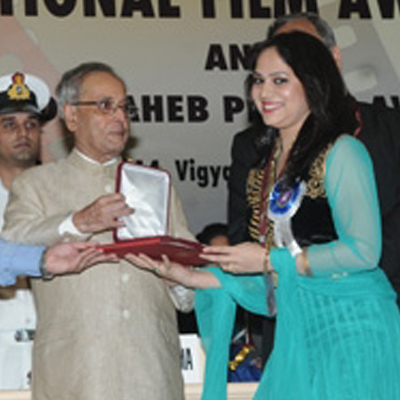
    NEW DELHI: President Pranab Mukherjee has said filmmakers should make a concerted effort to distinguish between what clearly is an art form and what is not and the cinematic content of films should have a desirable impact on the social behaviour of people, especially the new generation.


    He said, “I take this opportunity to reflect upon an important aspect of cinema. Besides being a strong medium of expression, cinema is a vehicle of influence and persuasion for the youth. When our children witness scenes depicting violence and bloodshed, it does affect their psyche.”


    Speaking after presenting the Dadasaheb Phalke award to poet-lyricist-filmmaker Gulzar and the 61st National Film Awards for 2013 over the weekend, Mukherjee said: “Faced with erosion of values in today’s context, cinema should play a catalytic role in resetting our moral compass. Our filmmakers should deploy their creative efforts to present and propagate core values such as patriotism, respect for women, compassion and tolerance, honesty and discipline. I am hopeful that everyone associated with the film industry will use their talent and artistic pursuits to create meaningful and socially relevant cinema.” 


    Cinema has played a critical role in highlighting social and political issues of concern as well as exposing the deficiencies in our political system. It is an industry which has provided opportunities for many to rise from rag to riches. He called upon the film industry to nurture and strengthen its openness, pluralism and inclusiveness and disseminate the same throughout the country.

    He added: “India’s media and entertainment industry is today at the cusp of a transformation. It is poised to leapfrog into a completely digital landscape. Indian cinema connects with millions of people – within the country and abroad, directly through theatres, close to 2,000 multiplexes and through TV as well as the internet. In 2013, the Indian Media and Entertainment (M&E) industry registered a growth of 11.8 per cent over 2012 and did a gross business of around Rs 92,000 crore. The industry is expected to register a compound annual growth rate of 14.2 per cent to touch Rs 1.8 lakh crore by 2018.”


    Earlier, Gulzar who is turning 80 later this year was given a standing ovation as he went up to the dais of the tastefully decorated Vigyan Bhavan to receive his award for outstanding contribution to the growth and development of Indian cinema. The presentation was preceded by a short showreel into his work, and included tributes paid to him by several cine artistes. The award consists of a Swarn Kamal (Golden Lotus), a cash prize of Rs 10 lakh and a shawl.


     Speaking after receiving the award, Gulzar paid a tribute when he described the film field as the only industry after the Armed Forces which was totally secular and welcomed all.


    He said his honour belonged to scores of film personalities like the late Bimal Roy and Sachin Dev Barman who had given him the right chances at the right times and even younger talent like Shankar Ehsaan Loy and A R Rahman. “Many like R D Burman, Madan Mohan, and Laxmikant are no more. But one could not always live in nostalgia had to move on,” he said.


    Information and Broadcasting Minister Manish Tewari agreed with Gulzar and said cinema was the great unifier. He said the National Film Awards were reflective of the heterogeneity of the film industry which was a confluence of many Indian languages. These awards were truly a tribute to the diversity of thought, and recognition of excellence.


    The report of the feature jury was presented by Manju Borah on behalf of chairman Saeed Akhtar Mirza, while the non-feature book jury were presented by chairpersons Reena Mohan and Sharad Dutt respectively.


    A total of 41 awards were given by the President in the non-feature film category while 40 were given for feature films. Three awards were given to Best Writing on Cinema, including one for the best film critic. 


    The winners of the Best Male playback singer – Rupankar – and Best Female Playback singer Bela Shende renderd their award winning songs ‘E Tumi Kemon Tumi’ from the film Jaatishwar (Bengali) and ‘Khura Khura’ from the film ‘Tuhya Dharma Koncha (Marathi)’ respectively.

    The award for the best feature film was conferred on Ship of Theseus (English-Hindi) produced by Recyclewala Films and directed by Anand Gandhi. In the non-feature film category, the award for the Best Film was conferred to Rangbhoomi (Hindi) produced by Films Division and directed by Kamal Swaroop. In the category of Best Writing on Cinema section, the book Cinema Ga Cinema (Telugu)written by Nandagopal and published by Praga India, Hyderabad bagged the top honour, while Alaka Sahani (English) was conferred the award for the Best film Critic. 


    Hindi films once again dominated the National Film Awards by getting as many as 15 awards among feature films. Marathi came next with 10 awards followed by Bengali with six and Tamil and Kannada with five each and Malayalam with four. 

  • “Cuts in Modi interview on DD made internally”

    “Cuts in Modi interview on DD made internally”

    NEW DELHI: The Information and Broadcasting ministry has denied any knowledge of the fate of the interview conducted by Doordarshan of Bharatiya Janata Party prime ministerial candidate Narendra Modi on the public broadcaster.


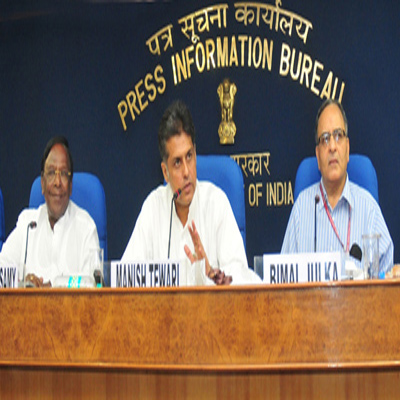
    I& B secretary Bimal Julka told indiantelevision.com that the matter was not raised before the ministry and therefore, there was no question of any cuts or changes to the interview conducted by DD.


    He said the ministry was not aware of the letter reported to have been written by Prasar Bharati CEO Jawhar Sircar to board members where he is reported to have written that failure to give autonomy to the public broadcaster was the main reason for this.


    In a letter to the board members, Sircar accepted that certain portions of the interview on DD were ‘apparently edited’. He wrote that he had received a large number of queries about this and blamed the entire episode on the ministry, saying the government can interfere in the form of transfer, appointment and punitive action against Prasar Bharati officials.


    DD News director general also told imdiantelevision.com that the decision to delete certain portions was taken internally and there was no interaction with the ministry in this regard. In fact, he said the ministry was not even aware of the interview until it was telecast.


    Sircar said in the letter: “It appears that while portions critical of Doordarshan were telecast, certain comments on other personalities were apparently edited in the Modi interview telecast on 27 April,” he said.


    He wrote that the board has taken several resolutions in the last two years, seeking more operational autonomy from the ministry, but without success. “In a way, therefore, the MIB lost the opportunity to convince a young minister (Manish Tewari) to break this long traditional linkage between the ministry and the News Division, which has continued unabated since PB was born and assigned its distinct role in 1997.”


    Sircar noted that after the DD team got the interview with Modi, there were concerns that they had not yet managed a counter-interview with Congress vice president Rahul Gandhi. “I gave DG News the strength to go ahead and telecast the interview, even though there were concerns that a balancing interview from the other side could not be procured, despite best attempts of DD News,” Sircar said.


    He said, “Another pertinent initiative of the PB Board to bring in external professionals met with some degree of success, but where the post of the director general of Doordarshan and AIR are concerned, it did not succeed.” 


    “The Recruitment Rules still ensure that only government and quasi-government persons can occupy the post, which is pegged at approximately Rs 22 lakh per annum against sharply higher market rates. I have tried my best to explain that these need to be reviewed because times are changing, but I have not succeeded. If there had been some degree of fresh thinking in these two proposals, we may not have faced the type of public criticism that a single interview has invited,” he added.


    Doordarshan had reportedly edited out some parts out of Modi’s interview where he had referred to Priyanka Gandhi Vadra and to Congress President Sonia Gandhi’s Political Advisor Ahmed Patel.