Tag: Manchester United

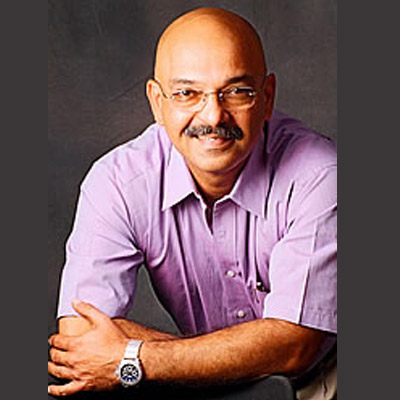
  • ‘Break-even year for first eight IPL teams” : GroupM ESP managing partner Hiren Pandit

    ‘Break-even year for first eight IPL teams” : GroupM ESP managing partner Hiren Pandit

    The Indian Premier League (IPL) has seen an erosion in brand value due to governance issues. Two franchises got termination notice from India‘s cricket board but are still alive in IPL 4.0 as the court has come to their rescue.

    In an interview with Indiantelevision.com‘s Ashwin Pinto, GroupM ESP managing partner Hiren Pandit talks about how the IPL can still be a revenue earner for the franchises as new advertisers take to the sport.

    Excerpts:

    Will there be revenue pressure for the IPL franchisees to break even now that two teams have been added?
    The first eight teams that came in have done well for themselves – and will continue to do so. They will operationally break-even this year.

    The two new franchises, however, will have to have a serious ace up their sleeves to achieve their numbers. It is a tight situation and will take at least eight to nine years for them to break-even.

    Is it a good time for a franchise to sell a stake?
    At any point in time, people will be in the market trying to find the value that they can get. The question is whether they need the money or if they can hang on. Now a lot of feelers have been in the market. Kings XI Punjab was nearly sold at one of time, but then issues came out.

    Deccan Chargers were in the market after the first year, but now they have Saina Nehwal with them. They seem to have a sports strategy in place. They are trying to have a play in sports by building sporting properties and icons.

    What about Sahara?
    Sahara picked up Pune and it could be related to Amby Valley. They might try to make each property feed of each other. Otherwise, they should have chosen Lucknow. Obviously, the play goes beyond owning a cricket team. It makes sense for them to leverage the IPL across other properties.

    Can Kochi run a smooth ship given that there are so many owners?
    My first take has been that the strength of a team is as good or bad as the strength of a franchise. If the people who are there cannot run and act like a team, then the players will not fare well. This could be an internal problem and if they have resolved it then good for them. Team owners buy a team and give to a professional body or a professional set of people to run.

    They are responsible to deliver for the team. In Kochi‘s case it is the team owners who are trying to run it. The scary part here is that the glamour element that is so huge and you can‘t hobnob with the team. If this is not managed properly, then it can become a problem. I have a feeling that Kochi still has to get its act together.

    They came into the market with serious sponsorship numbers which they are not getting. This is going to have an impact on their cash flows.

    How has off-the-field controversies impacted the IPL?
    The off-the-field activities affected the IPL itself. It impacted when the auction was held. All this is behind us. However, certain issues will have to be addressed after IPL 4 is over. It is not that the off-the-field issues have disappeared; it is just that they are on the backburner.

    With India lifting the World Cup, what viewership gains do you expect?
    IPL should get a boost from the World Cup. Viewers will want to see more of the Indian players. But I don‘t see a dramatic change in viewership. Keep in mind the fact that team compositions have changed drastically – except for Mumbai and Chennai.

    How is GroupM ESP involved with the IPL this time around?
    Maxus is the agency of IPL. In the first year, we did the deal with Citibank, which continues this year. GroupM ESP has got in Volkswagen as car partner for the IPL.

    We also went outside GroupM and did deals with outside clients who wanted to be associated with the IPL franchises. It could be awareness tracks, helping a client taking on competition or helping them form an association. We have also done licensing and merchandising deals that help the brand.
    ‘The Champions Twenty20 League is a great initiative that happened may be a little too early. It will become serious five years from now. But I am not so sure if it will be as big as the IPL‘

    What growth in revenue will franchises see this time around?
    Two new teams coming in means that the central kitty will be distributed among eight to 10 teams. The franchises will see growth from stadium income.

    Some franchises went to the market with high sponsorship price points. They then had to reduce their prices. Good marketing and good performances have helped.

    Mumbai and Chennai have done well and will see substantial revenue growth. Then you have Kolkata and Delhi in the middle. I have a feeling that Pune will pull through while Kerala will struggle.

    In terms of ticket revenues, the Wankhede Stadium will make a big difference to Mumbai. It is in the heart of the city. It is also possible that Mumbai will make more money on licensing and merchandising than any other team.

    The key to success is to reduce the heavy dependence on the central pool. Do you this happening this year?
    While some franchises may manage to up their local revenues, the Central pool may stay stagnant. But Chennai and Mumbai, and perhaps Kolkata, may manage to change the percentage ratio between central and local revenue in favour of the latter.

    The World Cup meant that franchises could not carry out activation with sponsors in the lead up to the IPL. What has been the impact?
    Every sponsor was aware of this problem. But if sponsors are smart enough, they will look at it from the longevity point of view so that they can build an association. Some companies like Luminous are doing activities. It is a tight situation, though, with players not being available. Sponsors will do such things during the IPL.

    Also, with the team structure changing, the task of building a fan base becomes that much more harder. Chennai and Mumbai are, of course, better positioned to strengthen their existing fan base.

    Rajasthan brought in Floriana which is a company that has never advertised in cricket. Are we going to see more of new advertisers taking to the sport?
    You will see a lot of newcomers as there is a churn happening. Some sponsors got in due to the glamour of the IPL without understanding what their objectives were; their relationship with the franchise owner may not have been good.

    In years four and five, you will see this settling down. Sponsors now have a clearer idea of what they want; franchises also realise that you cannot have a revolving door policy where you take money and not do anything.

    Which brands have done a good job?
    Nokia and Aircel are some of the companies that have stayed on with the franchise. Vodafone has benefited with the Zoozoos as its idea. Those sponsors who only looked at it as a piece of real estate for a logo are the ones who got screwed.
     

    Will we see more advertisers this year?
    The number of advertising opportunities on clothing will stay the same. This year, though, we will see advertisers coming in as partners and doing on-ground activation. An entrepreneur in a city like Hyderabad could decide to open two restaurants and bars named after the Deccan Chargers. The logo part is static, but the number of partners can increase.

    You will see more people moving in to the licensing and merchandising space. The franchises also have to look at this more seriously. At the same time, it is a slow burner.

    Wearing the team colour is the starting point; you will see clothes, watches, etc. But a pub or a shop like what Manchester United has is still a long way off. However, licensing and merchandising will still be a small part of a team‘s revenue.

    Two more teams mean more ad clutter. Is this going to be a major challenge for brands?
    Clutter was there with eight teams. Anybody who wants to break this, must do something different.

    Of all the brands that were associated with the ICC World Cup, the one that stands out is Pepsi. The whole creative concept that they did like the ‘helicopter shot‘ gave it a different flavour. The viewers saw something different, which stood out.
     

    Some feel that having two groups was the BCCI‘s way of trying to solve a problem of 10 teams. Do you agree?
    This is a format issue. You would have had 94 games. This is a lot of games. I remember traveling the first year with the Deccan Chargers. I wasn‘t even playing, but I was still tired. If you expect people to play so many games, it is unfair.

    The BCCI has tried to fit things in the best possible manner. They will review the current situation. But the window available is 45 days; this is not going to increase.
     

    What we have seen so far over three years is loyalty to the IPL and not so much for teams. Will this situation change this year?
    This has changed. In the Mumbai versus Chennai match, the yellow and blue colours were very dominant. People were talking about teams. This time it might get affected due to a new team structure. But over a period of time, the relationship will build. Team loyalty should grow for certain franchises.
     

    Some franchises were thinking of forming alliances with clubs globally. Will this concept work?
    It is great to have a relationship. The question is what is that relationship built on? Rajasthan went abroad to play matches in the first year. It cannot just be a piece of paper, though; both parties must benefit. How many franchises have built a school to develop cricket and build a base that will feed into their team? These things need to happen. Just tying up with a foreign club is not the solution. Not enough has been done during the ‘off season‘. At the same time, money must make money.
     

    Can the Champions Twenty20 League be declared a dud?
    It is a great initiative that happened may be a little too early. It will become serious five years from now. But I am not so sure if the Champions Twenty20 League will be as big as the IPL.

  • ‘IPL franchise ownership seems to be driven by celebrity rather than commercial reality’ : Intangible Businesses valuation director Richard Yoxon

    ‘IPL franchise ownership seems to be driven by celebrity rather than commercial reality’ : Intangible Businesses valuation director Richard Yoxon

    The Indian Premier League (IPL) defied financial gravity at a time when the world was struggling to fight the menace of recession. Even as capital became scarce, the world’s hottest cricket property managed to renegotiate a nine-year broadcast deal in 2009 for a whopping $1.6 billion. The earlier agreement, signed a year ago, had valued the TV rights for $1.03 billion over 10 years.


    The temporary refuge in South Africa was a welcome aberration, establishing the IPL as a global property. In 2010, the IPL became bigger and better as it attracted larger audiences, costlier sponsorship deals and fatter franchise bids, growing the cricket economy.


    Then came the Lalit Modi saga and charges of match-fixing, rigging of bids, financial irregularities and betting. The architect of the IPL is now suspended and a clean-up exercise has begun.


    A parallel has often been drawn between the IPL and the English Premiere League (EPL) that houses some of the world’s iconic soccer clubs including Manchester United.


    The IPL, however, has a big mountain to climb. Its TV rights, the main revenue supply for the entire structure including the teams, went for much less. Last year the EPL‘s TV rights bundles were acquired for $2.6 billion for 3 years. And it‘s not just a big difference in value. More importantly, the EPL‘s TV rights will be renegotiated twice before the IPL‘s current deal expires.


    But the IPL is just three years old and has seen a stupendous growth. It can learn important lessons from the EPL as it scales up, including doing shorter term TV deals in future as the property gets well established.


    The IPL team owners should also be cautious in not repeating the mistakes committed by their EPL counterparts. Some of the EPL club owners have funded their acquisitions through huge debt and have gone on to pay unrealistic amounts to purchase players. In fact, the EPL clubs are popularly known as the ‘rich boys‘ toys‘ that appeal to the owner‘s ego and vanity.


    In an interview with Indiantelevision.com‘s Sibabrata Das, Intangible Businesses valuation director Richard Yoxon talks about the challenges that sports properties face as they grow up to be run like big commercial businesses.


    Excerpts:
     
     
    Will it be right to compare the IPL as a potential sports property that can grow to the scale of the EPL in future?

    I think the IPL has more in common with the American franchise sports such as NBA and NFL than with the EPL. The success of English football was built on interest from local communities and commercialisation came a lot later. American sports and the IPL, on the other hand, were created and driven by commercial objectives.


    Football is the major sport in most countries. NBA, NFL and baseball are only major sports in the US while India is the only major economy where cricket is the number one sport.


    Can the IPL leapfrog?

    On the basis of global appeal, the IPL will never come close to the EPL. Commercially it‘s possible due to the size and growth of the Indian economy, but I think it‘s unlikely except in the very long-term as in a global context cricket is small beer compared to football.


    In a renegotiated deal in 2009, the IPL‘s TV rights went for $1.6 billion for 9 years. In contrast, last year the EPL‘s TV rights bundles were acquired for ?1.7 billion ($2.6 billion) for 3 years. A very big difference. More importantly, the EPL‘s TV rights will be renegotiated twice before the IPL‘s current deal expires.


    England has 3 professional leagues below the EPL and over 90 professional clubs!


    The Indian economy (2009 GDP $1,235 billion) will need to be multiple times bigger than the UK economy (2009 GDP $2,184 billion) for the IPL to leapfrog the EPL.


    Several EPL clubs are sunk in debt while the IPL has run into controversies very early in life. Do you see sports businesses being in trouble across the world?

     Not many football clubs currently or historically make a profit. It is often suggested that the clubs are ‘rich boys‘ toys‘ that appeal to the owner‘s ego and vanity. Football clubs are trophy assets rather than profit centres. This is a key similarity as I think IPL franchise ownership seems to be driven by celebrity rather than commercial reality.


    Are the allegations of match-fixing, rigging of bids and betting going to impact the IPL as a brand?

    The events are certainly not helpful but the impact will be minimal in the long-term if the BCCI acts promptly and transparently to address the problems. The Indian public loves Twenty20 cricket and the competition‘s format. This love affair with the game is not going to change as long as the game is cleaned up commercially. What‘s the alternative? I can‘t imagine the Indian public switching to football, hockey, kabaddi or even test cricket with equal fervour and enthusiasm.


    What is the IPL worth in value after 3 years of existence and how does it compare with the EPL?

    I think there is nothing wrong with the progress made to date by the IPL. I think the BCCI / IPL has done amazingly well in a short space of time.


    But we haven‘t valued either brand. Brand Finance valued the IPL brand at $4.13 billion, but I struggle to understand how the brand of a business whose main source of income is a 9-year TV deal for $1.63 billion can be worth so much.
     

    ‘IPL franchises certainly do need to scale up to justify the high franchise fees. The amount they need to scale up in the time available appears unrealistic‘


    But you have valued the IPL franchises and they are much below that of Brand Finance‘s estimates. Why?

    Brand Finance is, perhaps, more optimistic than us. Regarding the IPL, they have more ambitious growth rate projections and are less conservative in discounting.


    But if you look at our valuations, the top four teams are almost having similar values (Royal Challengers Bangalore at $37.7 million to Chennai Super Kings‘ $36.1 million). There can‘t be any particular team breaking too far ahead at this stage because there is no big difference among them. The difference is mainly due to the size and level of interest in the IPL franchise‘s catchment areas. Rajasthan Royals ($27.5 million) is distinctly disadvantaged compared to Royal Challengers Bangalore and Mumbai Indians (5th at $32.7 million).


    Do you see revenue streams a big problem with the IPL teams?

    They certainly do need to scale up to justify the high franchise fees. The amount they need to scale up in the time available appears unrealistic.


    As far as licensing and merchandising revenues go, the IPL franchises can tap their growing fan base. There will be a limitation, though, if you compare it with EPL clubs like the Manchester United where the shirts are even bought by the Japanese or the Chinese. The IPL team merchandise will find it difficult to cross the global boundaries and communities outside the Indian diaspora.


    What are the lessons the IPL needs to learn from the EPL?

    The IPL needs to negotiate shorter TV deals. I suspect that the IPL‘s 10-year deal (renegotiated deal after a year is for 9 years) was driven by necessity as the concept was unproven at the time of the negotiation. A longer deal was probably needed to get to potential franchise owners on-board by providing the assurance of guaranteed revenues and media coverage over a sufficient period to justify the initial franchise setup costs.


    The IPL is a closed shop. There‘s no promotion or relegation. Teams should earn the right to play in the IPL rather than buy their way in. The British public loves an underdog (hence I follow Rajasthan Royals in the IPL) and it is great for the sport when a small team gains promotion to the EPL on a shoestring budget and even beats one of the big names (Burnley won promotion to the EPL last year and beat Manchester United in their first home game).


    It is equally interesting when the big teams face the threat of relegation despite significant investment in players (Newcastle relegated last year). Relegation also maintains interest for longer; once teams are out of contention to win the IPL there‘s little to play for. It would be good to see the IPL develop feeder leagues to give smaller cities the opportunity to develop teams and aspire getting a sniff of the big time.


    When did the EPL commercialise?

    Football is a fabric of British society; it has been developed over 120 years. But the first big step towards commercialisation was when TV deals were renegotiated in 1992. Twenty top clubs separately negotiated for TV rights, which became the main driver for their increase in revenues. Previously, the TV rights were negotiated collectively for all the 90 clubs.


    Merchandising is a huge income for certain big clubs like the Manchester United. But for most of the clubs, the main income is from TV. Portsmouth, for instance, reported a total income of $60 million last season, out of which $40 million came from TV.


    Why has the enterprise value of the EPL come down recently?

    The same reason as any other market or business. Recession! Leisure and entertainment expenditure is cyclical. It‘s to be expected that consumers spend less on leisure and entertainment during recessionary times. In the medium and long-term, leisure and entertainment is a fast growing but highly competitive market.


    Why have the EPL clubs amassed huge debt?

    Two reasons. First, leveraged buyouts. Manchester United and Liverpool were bought by Americans using debt finance which was pushed onto the club‘s balance sheets. The clubs did not create these debts.


    The second reason is bad management – spending more than the club can afford in the hope that any resulting success will pay for the gamble.


    Is there a current crisis?

    What crises? The EPL is as popular as ever. Football clubs going bust is nothing new. The fans suffer in the short-term but the club survives.


    There are no major threats to the EPL. It‘s been going on since 1888 (rebranded in 1992); it‘s survived two world wars and hooliganism in the late 1970‘s / 1980‘s. The current exchange rate and increased income tax rates make playing in England less appealing financially for the world‘s top footballers. This has yet to have an effect but this summer I expect we‘ll see less big name players than usual moving the EPL in favour of Spanish, Italian and German leagues. This will not affect popularity in the UK but may have an impact on global interest in the medium term.


    Have foreign owners contributed to the financial mess?

    International investors have actually made the EPL economy much bigger. The problem has been with the buyouts being funded by debt and the purchase of players at a very high price. 
     

    Does the EPL need a restructuring?

    No. Some clubs need probably restructuring but the EPL is a profitable business. The supporters of several clubs would like new owners (Manchester United, Liverpool). Overtime, I suspect and hope that we will see more clubs owned by supporter‘s trusts, similar to the Barcelona model.

  • Live action from the English Premier League and Spanish Football League on ESPN Star Sports

    MUMBAI: ESPN Star Sports, Asia’s leading sports broadcaster, will telecast live and exclusive top soccer action from the English Premier League and the Spanish Football league this weekend. The leading sports network will showcase its proprietary properties Premiership Saturday and Super Sunday showcasing top class action from the world’s best football leagues.

    On Sunday, Manchester United host archrivals Newcastle United on what is being billed as the game of the week. Newcastle United has never recorded a Premier League victory at Old Trafford, but the fixture has by no means been a walk in the park for Manchester United over the years. In the past, out of three matches, the Red Devils have recorded two victories while drawing once.

    And, with Chelsea yet to find their best form, the signs are that Sir Alex Ferguson’s side will have to be in top gear all season if they are to end a three-year wait to win the league. At present, Chelsea leads the field with 15 points while Portsmouth and Man United have 13 each.

    In other matches, on Saturday, Liverpool takes on the Bolton Wanderers; Arsenal plays with Charlton Athletic while Chelsea is matched against Aston Villa. On Sunday, Portsmouth plays Tottenham Hotspur with the race heating up for the top spot in the League. The Gunners’s coach Wenger, who celebrated 10 years with the club last Thursday, will use all the tricks up his sleeve to improve Arsenal’s current standing of ninth in the table. After their 3-0 win over Sheffield United, all of a sudden Arsenal looked like world beaters again, in stark contrast to the languid displays they produced in their previous home games in the Premiership against Aston Villa and Middlesbrough.

    In the Primera Liga, reigning double Spanish champions Barcelona returned to the top of La Liga despite being held to a 1-1 draw at the Nou Camp by Valencia. They now play Athletic Club Bilbao on Sunday in what is expected to be a ‘walk in the park’ for them. Real Madrid will be looking to build on their midweek success and create some gap between title rivals Barcelona and Valencia.

    Catch all the action Live and exclusive on ESPN Star Sports this weekend

    English Premier League


    Date Fixture Time Channel
    30-Sep-06 Bolton Wanderers Vs Liverpool (L 17:10 ESPN
    30-Sep-06 Charlton Athletic Vs Arsenal (L) 19:25 ESPN
    30-Sep-06 Chelsea Vs Aston Villa (L) 19:25 STAR Sports
    30-Sep-06 Everton Vs Manchester City (S) 22:00 ESPN
    01-Oct-06 Manchester United Vs Newcastle United (L) 19:24 ESPN
    01-Oct-06 West Ham United Vs Reading (S) 23:30 STAR Sports

    Spanish Football League

    Date Fixture Time Channel
    01-Oct-06 Athletic Club Bilbao Vs Barcelona (L) 01:25 ESPN
    01-Oct-06 Real Madrid Vs Atletico Madrid (L) 21:25 STAR Sports
    02-Oct-06 Valencia Vs Gimnastic (L) 00:25 ESPN

    India Time. Schedule subject to change; L: LIVE. S: Same day delayed. T: Taped