Tag: Manav Kaul

  • A Rebel Theatre Production announces ‘PARK’

    A Rebel Theatre Production announces ‘PARK’

    Mumbai: A Rebel Theatre Production has announced the upcoming performance of “PARK”, a critically acclaimed play written by playwright Manav Kaul. This production will be brought to life by talented actors Ashutosh Kumar, Abhishek Hazari, and Mohit Attri.

    Performance Details:

    1 Date and Time: 13th July 2024 – 07:30 – 09:00 pm

    2 Venue: Creative Adda- 191, Aram Nagar Part 2, Machlimar, Versova, Andheri West, Mumbai, Maharashtra 400061

    3 Tickets: Rs 150/- (Only to cover cost)

    About the Play: “PARK” explores the intricacies of human relationships and the complexities of urban life through the metaphor of a public park. The play delves into themes of solitude, companionship, and the invisible boundaries that define our personal spaces.

    Cast:

    1 Ashutosh Kumar

    2 Abhishek Hazari

    3 Mohit Attri 

  • Let Vidya Balan charm you with her simplicity with the world television premiere of ‘Tumhari Sulu’ on Sony MAX

    Let Vidya Balan charm you with her simplicity with the world television premiere of ‘Tumhari Sulu’ on Sony MAX

    Sony MAX, the leading Hindi movies channel from Sony Pictures Networks is all set give you a sneak peek into the lives of middle-class suburban Indian households with the world television premiere of ‘Tumhari Sulu’ on 25th February at 12 noon. Vidya Balan and Manav Kaul’s portrayal of Sulochana and Manav will definitely strike chord in your heart while narrating the story of finding the extraordinary within the seemingly ordinary.

    Directed by Suresh Triveni, Tumhari Sulu is a slice of life story of a middle-aged housewife, Sulochana Dubey who lives happily ever after with her husband Ashok and a son in a middle-class locality in Mumbai. Sulu is an enthusiastic independent woman who is all ready to give up her freedom for the sake of her family. In amidst of her day-to-day life, she ends up at a radio station after which her life turns into a roller-coaster ride as she gets an offer to become a RJ. Her decision to take up the job brings a drastic change in her life as she has to balance between her overnight fame and her domestic demands towards family.

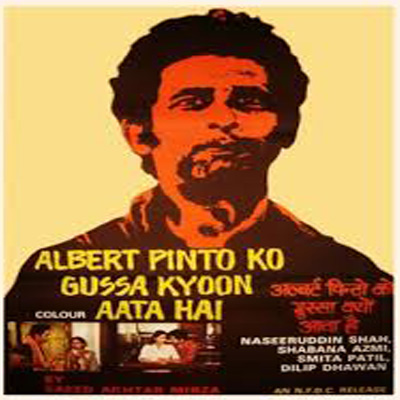
  • Actors give up fees to remake ‘Albert Pinto Ko Gussa Kyun Aata Hai’

    Actors give up fees to remake ‘Albert Pinto Ko Gussa Kyun Aata Hai’

    MUMBAI: In this age when most actors compete amongst each other in the number game, Nandita Das, Manav Kaul and Saurabh Shukla, who play the lead roles in the remake of the cult film Albert Pinto Ko Gussa Kyun Aata Hai, did not charge a penny as remuneration.

    The move was to support the independent film directed and produced by Soumitra Ranade that faced budget constraints.

    “Firstly I don’t equate money with work. There is a lot of work that I do without charging anything. Films of course, help me pay my bills and hence I don’t do them without any fees. But seldom do you get a project or a director where you know that they genuinely don’t have the money – and they just want to make a good film,” said Das, who is known for her critically acclaimed performances.

    Shukla too echoed the same thoughts as an artist. “Soumitra approached me and told me that there is no money but you be a partner. So all of us are partners in this project and I think it is great idea, because there are scripts in which the ‘mainstream market’ doesn’t believe in. But as artists we know that it has content and also has commercial possibilities. So what should we do? Should we be slaves to the market and not do these films? Or should we try it? So when we try it, we have to cut down costs,” he said.

    Touched by their gesture, Ranade has made them partners on the project and will be sharing the box office profit with the three actors once the film is released.

    “It was a very challenging film but I could pull it off only because of my supportive actors who worked for free,” said the director.


    The film is raising Rs 30 lakhs through a two-month long crowdfunding campaign on Wishberry, with 2 October, 2015 being the last date to contribute. The campaign started on 3 August to collect money for the post-production, animation and VFX of the film.
     

    The original film, directed by Saeed Akhtar Mirza, was released in 1980 and starred Naseeruddin Shah, Shabana Azmi, Smita Patil and Om Puri in the lead roles.

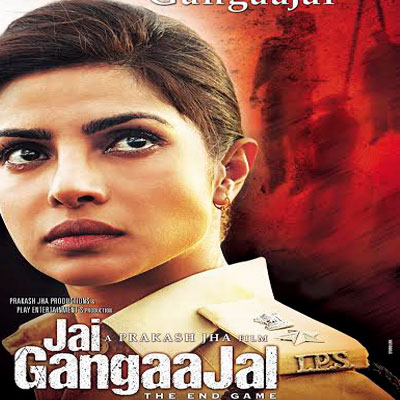
  • Prakash Jha’s ‘Jai Gangaajal’ to release on 4 March, 2016

    Prakash Jha’s ‘Jai Gangaajal’ to release on 4 March, 2016

    MUMBAI: Prakash Jha’s next film Jai Gangaajal, starring Priyanka Chopra in the lead is all set to release worldwide on 4 March, 2016.


    Jai Gangaajal is the sequel to Gangaajal, which featured Ajay Devgn as the police officer with a conscience. The movie told the story of how a society gets the police it deserves.


    Thirteen years later, with Jai Gangaajal, Jha revisits the dusty heartland of North India, and examines again the society-police relationship to tell us a new story.


    This time, Chopra will be playing Abha Mathur, the new SP in town, who will raise wrestle with her conscience. Mathur is posted in the district, because as a woman she will perhaps be pliable, easily manipulated and thus not disturb the entrenched nexus of the town.


    “Much has changed in the last 13 years. When I made Gangaajal 13 years ago, the dictum was that every society gets police that it deserves. But the scenario has changed since then. Today the cops follow the dictum of inaction is virtue and efficiency is crime,” said Jha.


    The movie also stars Manav Kaul, Rahul Bhat, Murli Sharma and Ninand Kamath.


    Written and directed by Jha, Jai Gangaajal has been produced by Prakash Jha Productions and Play Entertainment.

  • ‘Citylights’ …Dark and drab…

    ‘Citylights’ …Dark and drab…

    MUMBAI: Citylights is a pretentious film which attempts to depict the plight of a migrant family in a metropolis like Mumbai! The film is actually a crime story but is touted as a poor migrant’s travails in a major city.

    Rajkumar Rao is an ex-army man turned sari trader in Rajsthan’s Pali district. He fails to pay his liabilities and is thrown out of his shop by his creditors. After some deliberation, he decides to migrate to Mumbai with one contact number of a relative. He decides to do this with his wife and daughter, a move that you don’t see a sensible person make.

    In Mumbai, where a newcomer ceases to be so within minutes as the city takes him into its embrace, Rao’s start is not good. His contact is not traceable on the number he has, and with just a name and no address to go on, Rao doesn’t make much progress. Next, someone offers him a one-bedroom home against Rs 10,000 deposit and rent to be paid later. The house is actually in the hands of painters who are giving it a fresh coat of paint. Rao has been duped of his money. Finally he finds shelter in an under construction building for Rs 100 a night.

    From then on starts his struggle to find a job, which he lands eventually as a driver for a security company’s armoured car. These cars deliver sealed boxes to various clients and contain cash or stuff worth crores of rupees. Out of a horde of applicants, Manav Kaul, the supervisor, chooses Rao with a design in mind. Rao’s wife, Patralekha, meanwhile, finds a job with a dance bar.

    Producer: Mukesh Bhatt.

    Director: Hansal Mehta.

    Cast: Rajkumar Rao, Patralekha, Manav Kaul.

    Kaul gradually cultivates Rao and plots to involve him in an earlier foiled robbery. Kaul had managed to save the box from that robbery and now he needs Rao’s help to get the key lying in the security company’s locker room. The boxes can’t be forced open as doing that can detonate a bomb inside killing the one who attempts. Kaul shifts Rao to the house where he has hidden the box before telling him about his plan. Rao is livid but Kaul has trapped him from all sides. While on one assignment, the robbers catch up with Kaul and kill him. Rao is suspended for not saving him. He is now jobless and broke. Patralekha has kicked her job too. Exasperated, Rao decides to make a sacrifice for his family. He decides to execute the plan Kaul had made.

    The direction is fair. Music has no place yet is forced in. The original simple script has been complicated here. Performances by Rao and Patralekha are very good. Kaul makes an impact.

    A black film with no relief, Citylights is hard to take; all it can hope for is an award or two.

    ‘Kuku Mathur Ki Jhand Ho Gayi’…Same to you…

    This is one more film with Delhi flavour and locales. It is about a middle class locality of Delhi where two friends have grown up together. They are inseparable and the most clandestine thing they do is to indulge in fruit beer once in a while. And, lest the audience not believe it is truly a Delhi story, the inevitable statue of Bajrangbali of Jhandewalan/Karol Bagh does not fail to make its appearance like in all Delhi centric films! And, of course, the title, Kuku Mathur Ki Jhand Ho Gayi, is a local colloquial having little to do with rest of the country.

    Producers: Shobha Kapoor, Ekta Kapoor, Bejoy Nambiar.

    Director: Aman Sachdeva.

    Cast: Sidharth Gupta, Ashish Juneja, Simran Kaur Mundi.

    Siddharth Gupta (Kuku) is an average student who fails to get admission to a college after high school. He, like all boys of such age, has agendas they dare not open up about. Siddharth attends the English tuition class only because the girl living in the house opposite the class, Simran Kaur Mundi, has caught his fancy. He is motherless, responsible for looking after and cooking for his younger sister and father, a government servant. But cooking is something he relishes doing. His dream is to own a restaurant some day while his father wants him to become a NASA scientist.

    Kuku’s best friend, Ashish Juneja, is a little better off, hailing from a trading family. His family runs a sari shop and decides to set up a matching centre for him next to the sari shop so those who buy saris may go next door to his shop to buy matching falls and blouse pieces. While Ashish gets busy selling matching blouse pieces, Siddharth manages a job as a spot boy with a Haryanvi film unit. Here, at the shooting, just about everybody humiliates Siddharth. He snaps when his best friend too insults him.

    Siddharth is seething with anger when his cousin from Kanpur enters the scene. The cousin is as foxy as they come and, as a way of taking revenge on Ashish, suggests to Siddharth that they burn down the Sari godown owned by Ashish’s family after stealing all the goods which could be sold to another trader to finance Siddharth’s dream of starting a restaurant.

    Siddharth is now a successful eatery owner. Things change, he now has a car and, finally, also starts dating Simran who never noticed him in the seven years that he pined for her. But, the Kanpur cousin proves destructor for the family; his father gives up on his job while his sister is talked into leaking exam papers, both on the cousin’s advice.

    Siddharth’s conscience begins to bite him for his crime. He decides to meet Ashish and own up to his crime. Eventually, crime does not pay but friendship does.

    It is tough to understand the title of Kuku Mathur Ki Jhand Ho Gayi to care enough to watch it. It was explained to me by the director as the generally used term ‘Vaat lag gayi’ in Mumbai. That is the most likely fate of this film at the box office.

  • Kai Po Che: Newcomers put up an impressive performance

    Kai Po Che: Newcomers put up an impressive performance

    MUMBAI: Kai Po Che is an adaptation of the Chetan Bhagat novel, Three Mistakes Of My Life, about three friends living the Gujarat dream – to become entrepreneurs. This is Bhagat‘s third book to be made into a film after One Night @ The Call Centre (Hello) and, Five Point Someone (3 Idiots).

    Producers: Ronnie Screwvala, Siddharth Roy Kapoor.

    Director: Abhishek Kapoor.

    Cast: Sushant Singh Rajput, Raj Kumar Yadav, Amit Sadh, Amrita Puri, Digvijay Deshmukh, Manav Kaul.

    Raju Hirani‘s 3 Idiots turned Five Point Someone into a cinematic miracle which went on to become the highest Hindi grosser so far. Kai Po Che has the tough task of bettering it or, at least, living up to it. To start with a small correction with spellings, it is ‘Chhe‘ in Gujarati language and ‘Che‘ means nothing in Gujarati.

    A pol in Ahmedabad is a congested one-track settlement where households live as one family; the main doors are always open and you don‘t have to knock to enter. It is typically an old Ahmedabad phenomenon and Hindu and Muslim localities usually share demarcations by a lane or two.

    Govind (Raj Kumar Yadav), Ishaan (Sushant Singh Rajput) and Omi (Amit Sadh) have grown up together in one such pol and are more like brothers than friends. Still, all three are poles apart. Yadav is practical and ambitious with entrepreneurial instincts, Rajput is a cricket fanatic and Sadh is all brawn and no brains, just happy to belong. The centre point of this pol is a temple where Sadh‘s father is the chief priest while his mama, Manav Kaul, is the trustee and treasurer with heavy leanings towards a political party.

    Yadav gives tuitions to local kids and helps his mother with her home industry of delivering popular Gujarati snacks like khakhras and theplas. However, his entrepreneurial side won‘t let him rest with just so little. Since Rajput is a cricket enthusiast and spends time coaching the neighbourhood kids, and Sadh‘s family controls the temple, he suggests they set up a shop in the temple premises selling sports goods. Nobody is convinced initially with the idea but, Sadh being his only nephew for whom he has grand plans in politics, Kaul finances and encourages them to go ahead. The shop is quite a success and there are picnics and celebrations for the trio.

    The lives of three friends are soon destined to follow different tracks. Yadav carries on with his zeal to expand and is in search for a bigger outlet somewhere in the developing parts of the city, finally settling on a mall, Sadh is gradually drawn into politics by Kaul while Rajput has finally found his calling; he has met a young Muslim boy, Digvijay Deshmukh, in who he sees potential to be a cricket star some day. Rajput takes it upon himself to train the boy with all his time and resources. That is when the 26 January, 2001 earthquake hits Gujarat. Among others it has also destroyed the mall in which the three had invested Rs 500, 000 loaned by Kaul.

    No sooner has the calamity been forgotten, the infamous Sabarmati Express episode happens a year later, leading to communal riots. The three have different priorities: Yadav is worried he has impregnated Rajput‘s sister, Rajput wants to save Deshmukh and his family members while Sadh, who has lost his parents in the train disaster, wants to avenge them and is on the move with rioting mobs.

    The first half of the film is all about three friends, their carefree life and finding a cause while post interval, the perspective changes to wider issues, the riots and how they changed lives.

    The feel good film suddenly turns heavy, stuffing in too much. The story of three friends through various moments in their lives does not touch the viewer at anytime. Being a period-specific story, the director has not been very particular about the city he is dealing with. The pol in the story opens on the main road showing traffic, there are green and yellow CNG rickshaws in 2001, and many malls in the making. None of this is accurate. The interiors are shown to be dull and drab which don‘t make for pleasant viewing. There is extensive use of Gujarati language but it neither has Ahmedabadi twang nor is pronounced properly by non Gujarati artistes. The title Kai Po Che has no relevance to the story and the film has just one passing kite-flying scene while kite flying is a passion in the city climaxing on 14 January every year. Also, the title, which is a cry that goes when an opponent‘s kite is cut, it means little to those outside of Gujarat and Mumbai. The songs are soothing.

    The new faces in the film, Yadav, Sadh as well as Rajput do very well while Amrita Puri in her brief role is suitably apt alternating between a coy girl and a bold one romancing her brother‘s best friend on the sly. Deshmukh is impressive. Kaul lives up to his part.

    Kai Po Che has been much hyped yet falls short of expected opening response. While some improvement may be expected over next two days, it may not be enough. 

    Zila Ghaziabad: Of gangs, guns and gore

    Producer: Vinod Bachchan.

    Director: Anand Kumar.

    Cast: Sanjay Dutt, Arsad Warsi, Vivek Oberoi, Paresh Rawal, Ravi Kissen, Chandrachur Singh, Sunil Grover, Minissha Lamba, Charmy Kaur, Eijaz Khan, Ashutosh Rana.

    Zila Ghaziabad is one of those local stories from Ghaziabad, UP, and considering the region, it is about violence and gang wars blended with politics and police to complete the chowkdy (gathering of four).

    The film is supposed to be inspired from a real life war between two Gujjar community gangs of the town, only turned up many notches in violence. In fact, the film is all about violence with a few item/dance numbers thrown in while all other aspects like relations and emotions are mere props.

    Vivek Oberoi wears desi garb, teaches youngsters under a tree and quotes Mahatma Gandhi. That is not all. He is a multi-talented man: a lawyer by qualification, he romances the town head‘s daughter and can even take to arms if it comes to it. The headman, Paresh Rawal, usually engages muscleman Arshad Warsi but is convinced when Oberoi suggests a legal route to solve a land dispute with Ravi Kissen. The sarpanch being the judge and jury, Oberoi wins the day for Rawal whose brother in law, Sunil Grover, is not pleased with his proximity either with Rawal or with his daughter, Charmy Kaur. Thus a couple of enmity angles have opened up.

    Grover, playing the old-fashioned villain, creates a rift between Warsi and Oberoi. Blood flows getting the media attention and it is time for the super cop, Sanjay Dutt, to enter. He metes out instant justice. There are no arrests and no court cases in his law book. Dutt seems to plan his strategies on a chessboard. He studies it like a tarot card and decides to let Oberoi and Warsi loose on each other and for them to fight it out between themselves. Dead bodies drop like nine pins: Chandrachur Singh, Rawal, some women and a horde of henchmen. Nobody is counting.

    Being UP, the politics and gangster nexus is inevitable. It is election time and gangster Kissen, aided by Warsi, decides to throw in his hat, with Oberoi‘s brother, Eijaz Khan, opposing him. Kissen wins hands down giving him a licence to rule the district and eliminate anybody who crosses his path. But before that, he has to eliminate Warsi who has now become a nuisance for him. So there are going to be some more gun fights and some hand-to-hand combat as well. In fact, the film is all about fights except when it breaks for an item number.

    All the while when the gangs are shooting at each other, Dutt does support one of them from behind the scene. You can‘t have Dutt in the cast and not have him be part of the action. Finally, when all the baddies have gone down, Oberoi survives to resume spreading Gandhi‘s philosophies again. His is one case where Dutt has made an exception and got him his due punishment instead of giving justice on the spot, a bullet in the head.

    Zila Ghaziabad has a number of artistes in its roster and as a new one arrives on screen, an old one makes way. Dutt, Oberoi, Warsi, Rawal, Singh, Kissen are all apt. The one who stands out in the lot is Grover. The girls Kaur, Minissha Lamba, and Divya Dutta appear intermittently with nothing substantial to do. Direction is routine and the locations, except a couple of passing ones, have no identification with Ghaziabad or the district. Cinematography is below par while editing is slack. Except for one item number, Baap ka maal…, music has no appeal. The fights are repetitive and the kind seen in many South remakes recently.

    Zila Ghaziabad is a poor fare, the kind they stopped making by 1980. It has been received very well in Ghaziabad and neighbouring districts but is poor elsewhere.