Tag: Malayala Manorama

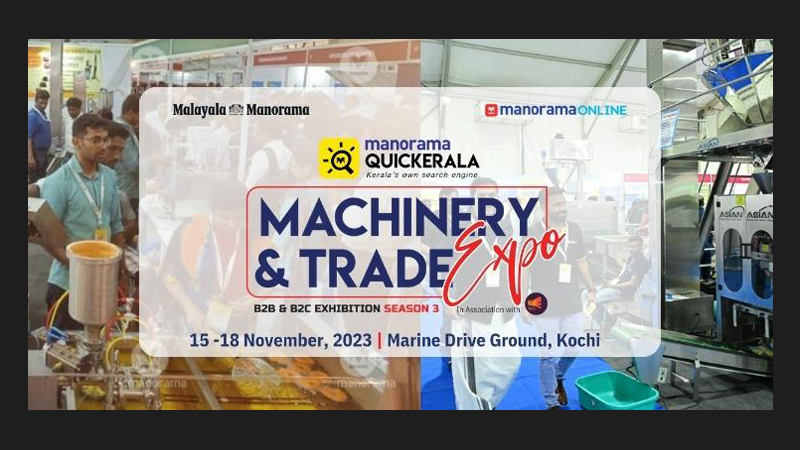
  • Manorama Quickerala Machinery & Trade Expo draws huge crowds, making Marine Drive a “Machinery Land”

    Manorama Quickerala Machinery & Trade Expo draws huge crowds, making Marine Drive a “Machinery Land”

    Mumbai: Events like Machinery and Trade Expos can help revive industries which collapsed during the Covid pandemic, Ernakulam MP Hibi Eden said here on Wednesday. He inaugurated the third edition of Malayala Manorama Quickerala Machinery and Trade Expo at Marine Drive Kochi. The expo featuring products by nearly 130 machine manufacturers and 31 products manufacturers with over 225 stalls was conducted from 15 to 18 November.

    Marketing Services & Solutions VP Joy Mathew, Malayala Manorama chaired the inaugural meet. General secretary P.J Jose, Kerala State Small Industries Association president Mujeebur Rahman, All  Kerala Distributors Association president Mujeebur Rahman, Bakers Association district president V P Abdul Salim, Small Industries Development Bank of India deputy general manager K V Karthikeyan and State Bank of India deputy general manager  Pradipta Kumar Pradhan spoke at the event.

    The exhibition featured a huge collection of small and big machineries from industry majors across the country. The items lined up for display include food packing and food processing machines, jalebi makers, laundry machines, waste incinerators, water purifiers, paper bag making machines, solar products, modern technology pumps, CNC cutting machines, bakery equipments and machines, ice cream making machines, different types of power tools, napkin vending machines, interlock manufacturing machines, chapathy making machines, copra machines, electric coconut graters, flour mill machines, diesel generators and oil cleansing machines. 
    A discount fair of household items was held as part of the event. Items such as furniture, coir products, fencing materials, massagers, mop and water tank cleaners, tower fans, chapati makers, popcorn making machines, power saving bulbs, optical lens and car wash machines were available at the fair.

    The event was organized by Kerala’s own search engine Manorama Quickerala.com in association with the Kerala State Small Industries Association , Cochin Chamber of Commerce and Industry , All Kerala Distributors, Association and Bakers Association. The expo’s banking partner State Bank Of India , Automative Partner Maruti Suzuki Nexa, MSME partner Small Industries Development Bank Of India and furniture partner Wood Look Furniture have arranged exclusive stalls at the event.

    Thousands of people thronged the Marine Drive ground to visit the Malayala Manorama Quickerala Machinery and Trade Expo featuring a wide array of small and large machinery by manufactures from across the country.

    The three day expo entered its second day on Thursday and the enthusiasm of the small and medium business community , and the public was evident from the crowd gathered.

    The third edition of Malayala Manorama Quickerala Machinery and Trade Expo features products from nearly 130 machine manufacturers in over 200 stalls.

    Two seminars aiming to help entrepreneurs were held as part of the expo on Thursday. In the first one, Najeeb P A , general manager, Department of Industries general manager (Ernakulam) Najeeb P A said, “The New Business Opportunities and Prospects in Kerala”. He explained the various government schemes introduced to help entrepreneurs in the state. On the first day , K V Karthikeyan , deputy general manager, the Small Industries Development Bank of India – Cochin branch , spoke on the schemes and financing for micro, small and medium enterprises. On the following days, various experts sessions were conducted by governments officials, among the sessions the most exclusive session was on Food Business in Kerala handled by Master Chef. Sri, Suresh Pillai (founder & chef and restaurateur). The changing market conditions and momentum has been building up a new culture which influences the future generation to build a business of their own to scale up their living standards. The expo has even marked more than 25 crores business bookings at an average for each and every participating company. The major categories participated were food packing machines, food processing machines, CNC cutting machines, industrial generators, printers, 3d printers, industrial refrigerators, bakery equipment,  ovens, laundry machines, power tools and trade and franchise stalls were are highlights of the event. State Bank of India (SBI), Small Industries Development Bank (SIDBI), Maruti Suzuki NEXA, Woodlook were the category partners for this year’s manorama quickerala machinery & trade expo. The event has maintained its standards to be retained as the Top Rated Machinery & Trade Expo. The expo will be hosted in various other parts of the State as well. The attendance growth started with 18,050 in the year 2019 with 73 stalls at Calicut thereafter it marked an attendance of 68,823 with 138 stalls and the above mentioned current year attendance brings an outlook that the interest towards the business development and establishment is increasing day by day. The expo was promoted targeting the audience from pan Kerala. The machines weighing tons with Live demonstrations were the major core highlights of the event. The entry was FREE for all participants to avail the entry pass online ticket portal was introduced. The massive crowd experience in the event days under intense heat conditions were the points to mark the need of Manorama Quickerala Machinery & Trade Expo in Kerala. The next edition will be announced soon. The feedback from the entire participating brands was at its peak, which is the key to mark the success. 

  • Manorama News Conclave 2023 – An Assembly of Influential Visionaries

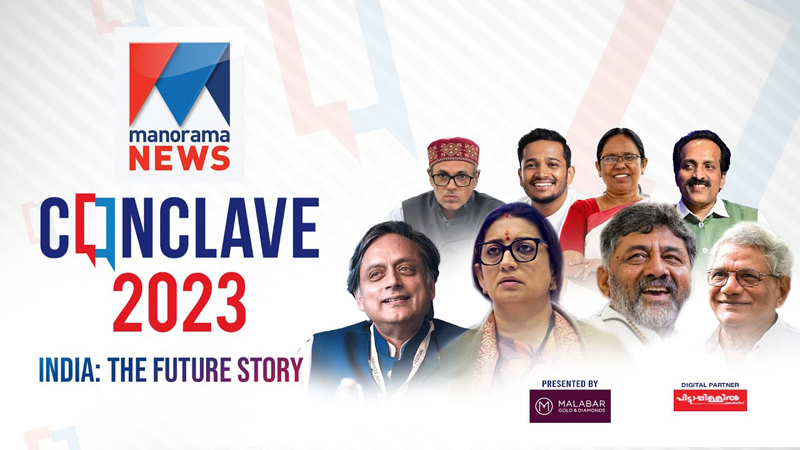
    Manorama News Conclave 2023 – An Assembly of Influential Visionaries

    Mumbai: Union Minister Smriti Irani inaugurated the Manorama News Conclave 2023, held at the Lulu Bolgatty International Convention Centre at 9.45 am. The central theme of this edition was “India: The Future Story,” and it featured a distinguished lineup of speakers who shared their insights on various facets of India’s future, ranging from politics and space exploration to cinema and artificial intelligence.

    The event commenced with a warm welcome address from Jayant Mammen Mathew, Executive Editor and Director of Malayala Manorama. He underscored the pivotal role that India’s future plays, especially with the general election on the horizon.

    Mammen Mathew, Chief Editor of Malayala Manorama, added a unique touch by presenting gold medals to the accomplished winners of the Hangzhou Asian Games. Notably, these athletes received recognition before their official government recognition, marking a significant milestone in their sporting achievements.

    In her keynote address, Smriti Irani highlighted the striking divisions among opposition parties, despite their formation of the Indian National Developmental Inclusive Alliance (INDIA) with the aim of challenging the BJP in the forthcoming 2024 Lok Sabha elections.

    The Conclave hosted a series of thought-provoking sessions:

    India in the Perspective of Kashmir: Former Jammu and Kashmir Chief Minister, Omar Abdullah, discussed the unique status of J&K and questioned the temporary nature of Article 370.

    Yechury on ‘India – The Future Story’: CPM General Secretary, Sitaram Yechury, outlined his party’s vision for the 2024 general elections, emphasizing the ‘INDIA’ alliance’s pivotal role.

    Kerala Politics in 2024: A spirited debate featuring Kerala’s Opposition Leader V. D. Satheesan and CPM state secretary M. V. Govindan delved into the intricacies of Kerala politics and their respective alliances.

    India’s Space Dreams: ISRO Chairman, S. Somnath, shared his optimism regarding Chandrayaan-3 and the remarkable scientific contributions it promises to deliver.

    Future of Cinemas & Theatres: A discussion on the challenges faced by the film industry was led by Malayalam film personalities, including Basil Joseph, Jude Anthany Joseph, and Nikhila Vimal.

    Widening Space for Women in Politics: Notable women leaders in politics, including K. K. Shailaja (CPM), K. K. Rema (RMP), and Shoba Surendran (BJP), explored the imperative of enhancing female representation in politics. They addressed diverse issues, including women’s entry at Sabarimala and the Israel-Palestine conflict.

    Possibilities of Artificial Intelligence: Google DeepMind research director, Dileep George, delved into the potential of AI and whether it could surpass human intelligence.

    Reverse Brain Drain: Ashok Mani and Vivek Venugopal discussed solutions to counteract the brain drain issue in Kerala, focusing on the identification of strengths and the enhancement of social and entertainment infrastructure.

    The Conclave incorporated unique and engaging activities, including a digital “hope wall,” where dignitaries like Smriti Irani, Omar Abdullah and Basil Joseph penned well-wishes for India’s future. In a unique pre-event activity, college students were invited to pose impactful questions about India’s future. These students were subsequently given the opportunity to ask their questions directly to the experts at the Conclave.

    Notable mentions at the Conclave included Congress MP Shashi Tharoor, who shared insights about the ‘INDIA’ front’s plans for the upcoming general elections. He noted the growing anti-incumbency sentiment, particularly in the Hindi belt, and emphasized the importance of a well-crafted manifesto for the Congress party.

    The Conclave concluded on a thoughtful note with a session featuring spiritual guru and orator Gaur Gopal Das, who explored “The yardstick of happiness in the era of Artificial Intelligence.” Gaur’s philosophy emphasized that happiness is unrelated to possessions, and the key lies in how one lives, not what one has.

    In the valedictory address, Deputy Chief Minister of Karnataka, D. K. Shivakumar, acknowledged the indispensable role that media plays in Indian democracy. He expressed appreciation for Malayala Manorama’s significant contributions to India’s progress over its 130-year history.

    The Manorama News Conclave 2023 offered a platform for enlightening discussions and unique activities, bringing together diverse voices and perspectives on the future of India.


  • CAMM Summit ’22: Adtech is a gamechanger for publishing industry, say experts

    CAMM Summit ’22: Adtech is a gamechanger for publishing industry, say experts

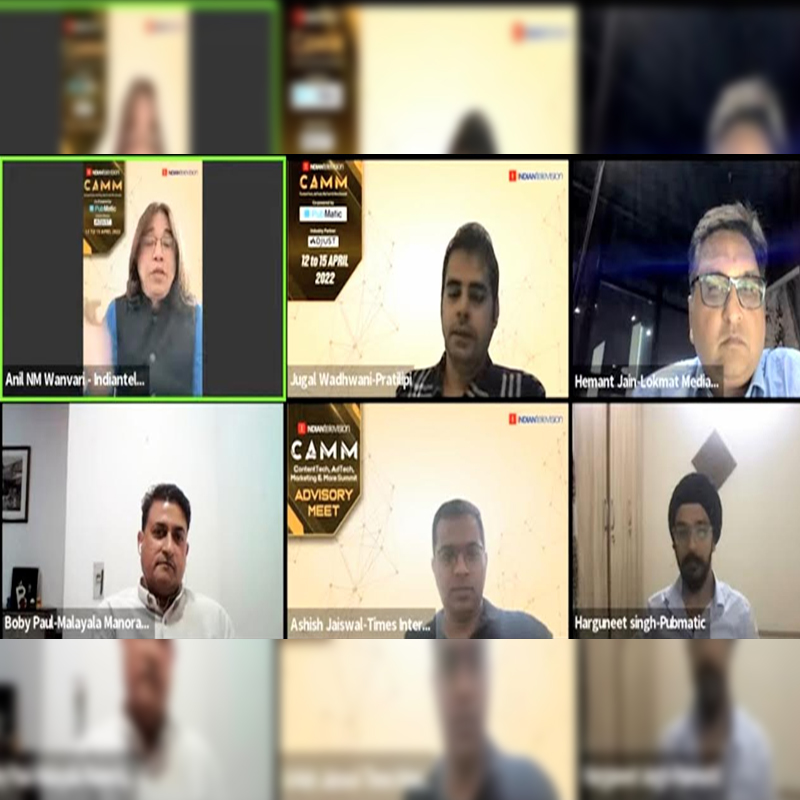
    Mumbai: Advertising and technology have undoubtedly made great strides over the last few years. And to discuss the various cutting-edge innovations in this dynamic space, IndianTelevision.com has organised ContentTech, Adtech, Martech and More (CAMM) Summit and Exhibition 2022. The virtual event took off on Tuesday with a panel discussion on ‘Adtech Landscape: A Gamechanger for Publishing Industry,’ which put the spotlight on how adtech is emerging as a niche that helps publishers efficiently maximise the value of their content or ad inventory.

    Moderated by IndianTelevision.com founder, CEO and editor-in-chief Anil Wanvari, the guests on the panel were Times Internet chief technology officer Ashish Jaiswal, Pratilipi business and content head Jugal Wadhwani, Malayala Manorama general manager – marketing Boby Paul, Lokmat Media senior executive vice president and head of digital business Hemant Jain, and PubMatic director Harguneet Singh.

    The CAMM Summit saw a conversation that is perhaps the most crucial in the age of changing advertising technologies.

    Challenges ahead of publishing industry and the possible ways to overcome

    Opening the discussion, Wanvari highlighted the increasing fragmentation of audiences between the own platforms of publishers as well as the third-party platforms is becoming a common phenomenon.

    “In terms of trying to drive advertising revenue, what are the challenges that publishers are facing?” he asked the panel.

    Agreeing with his thoughts, Times Internet’s Jaiswal said fragmentation is clearly happening and the same content being available across platforms is a major challenge for publishers. But being a publisher, he also shared how they are overcoming the challenge. 

    “What we are doing on our side to overcome these challenges is to stay connected with our audiences across all the platforms. We do not just publish and leave, we ensure that there’s a clear connection between us and our audiences across all platforms,” stated Jaiswal.

    Taking ahead the conversation, Lokmat Media’s Jain said, “What demonetisation couldn’t do to digital payments, Covid-19 did to digital media.”

    With this statement, he hinted at the enormous growth in terms of audience engagement that publishers have witnessed. Coming to the challenges, Jain said optimising content for small screens is another major challenge. 

    “It is quite difficult to give the right reading or viewing experience to customers while giving enough space to advertisers also,” Jain noted. “The struggle doesn’t end here. Lack of a large inventory, audience fragmentation and ensuring that the consumer ends up on your platform at the end are also making it difficult for publishers to maintain their growth.”

    However, Jain feels that while there are so many challenges, it also keeps you pushing to develop and looking for newer opportunities.

    Coming to the opportunities, he suggested that today focusing on one platform is not enough, publishers need to have an open mind and need to create a holistic approach to the business. “At the same time, it is important to have a highly optimised platform that meets users’ and advertisers’ expectations,” he remarked.

    He feels that publishers have to accept the fact that the audience who is consuming content on Facebook doesn’t necessarily come to your website too because the content we put on Facebook is already customised in a way that people would love to watch it on that platform only. “If you work hard, each of these platforms will help you revenues apart from your direct sales from the website.”

    However, Malayala Manorama’s Boby Paul feels audience fragmentation is a choice. “It happens because you want to put your content out to more and more people. So all you need to do is to keep a close eye on the aggregator platforms and understand which platform is providing you benefits and strategise accordingly,” Paul said. “When you have an audience coming to your aggregator platforms, you should design strategy in a way so that you can entice them to come to your own platform.” 

    Taking note of the challenges and the possible solutions suggested by the experts, Wanvari asked Paul to highlight the challenges of technology as far as marketing is concerned.

    Speaking about the marketing and monetisation part, Paul said that digital publishing platforms are facing major challenges because most of the digital platforms are free to air. “There’s no set framework. But as adtech is evolving, there seems a hope,” he asserted.


    Adtech and programmatic: The way forward for publishers


    While all the publishers highlighted the challenges and opportunities, PubMatic provides a solution to all these concerns. Harguneet Singh acknowledged the challenges highlighted by the panel and explained how adtech platform like PubMatic comes into the picture and helps the publishers.

    “While the challenges are quite evident, adtech platforms like PubMatic come in the picture as a savior to the publishers,” he affirmed.

    Suggesting some adtech based solutions, he said that publishers have provided a lot of control to the users in the name of free content which they need to take back immediately. He feels that adtech and programmatic are the key tools for this.

    “While adtech platforms enable advertisers, ad publishers, and advertising agencies to create, run, and optimize ad campaigns with minimal human involvement, programmatic advertising uses artificial intelligence and real-time bidding to automate and streamline the ad buying process,” Singh said, adding that, “With the right use of adtech and programmatic, publishers can significantly grow their business and increase CPMs.”

    What do users want?

    Amid the emergence of adtech and programmatic, it is crucial to understand what users want? Pratilipi’s business and content head Jugal Wadhwani, who closely works with individual publishers, explained that initially all people wanted was social recognition, the concept of revenue was not there really. “But presently, generating revenue is equally important for individual publishers too,” he added.

    However, Wadhwani feels that once the publishing platform becomes a hit, distribution is not that big of a challenge, it is the discovery that they are actually looking for and platforms like Pratilipi come into the picture to help individual publishers.

    On being asked how things are working on the audio side, Wadhwani said that audio advertising is very low right now in India. “The numbers are rising, but there is no significant development on the audio front so far.”

    Coming to the subscription models and how paywalls work, Wanvari asked how conventional news publishers ensure that users buy their subscription instead of just reading the free version. 

    Lokmat’s Jain explained that India is a ‘sachet-driven country,’ so they need to come up with small offerings. “If publishers really need to sell high valued subscriptions, they need to build high-quality unique content rather than a generic piece,” he remarked.

    “Over the last 10-years, journalism in India has evolved and produced unique content which helped the subscription model to become common. One of the most successful players in this field is The Hindu, which has built a very robust subscriber base,” noted Jain.

    How will the removal of cookies impact the publishers?

    Google announced it will not build alternate tracking identifiers with similar cross-site tracking abilities after phasing out third-party cookies. This change will be made by Google in late 2023. While this announcement may not have come as a surprise, many advertisers find themselves confused about how to manage the situation.

    “How will publishers collect user data without cookies which is crucial for audience profiling?” Wanvari asked.

    Jain thinks that with the removal of cookies, profiling or identifying customers, which is extremely important for running a digital publishing business, would become difficult. “With this, targeting customers offsite will become impossible.”

    Suggesting a way for publishers after the removal of cookies, Jain said that in such a situation, targeting users on-site seems one possible solution. “To target them on-site, publishers really need to come up with relevant content.”

    Times Internet’s Jaiswal thinks that in a cookie-less world, trust-building will become crucial. “Publishers will have to ask users to fill out forms to manually provide their data, maybe we can call this idea a ‘profiling paywall.’ But to ensure that they really fill out the form, provide their email address and mobile number, publishers need to work a lot on trust-building.”

    Jaiswal suggested that publishers can win trust with unique content.

    Adding to the conversation, PubMatic’s Singh said adtech will play a really important role here. “Right technology and the right technology partner who has good sense will have great opportunities to work with publishers,” he averred.

    Concluding the discussion, all panelists agreed that adtech provides tools for both publishers of content and advertisers to efficiently navigate the appropriate price points and trading techniques to connect inventory with digital ad buyers.

  • Print on recovery road, pin high hopes on festive season: Industry heads

    Print on recovery road, pin high hopes on festive season: Industry heads

    NEW DELHI: The Covid2019 pandemic threw the print publication industry into crisis. When the lockdown was imposed, circulation was severely impacted in major cities which caused newspapers to go into survival mode. Buffeted by declining readership, print companies resorted to cost-cutting, downscaled manpower, put investments on hold and channelled resources into the digital landscape. The industry took lessons from this experience, and kept the ball rolling.

    Now, six months later, the print industry is on the way back to normalcy, experimenting with new opportunities, and scaling the business for the future.

    At Pubnation, the virtual roundtable organised by Indiantelevision.com, industry heads and representatives from leading media houses – The Hindu chief revenue officer Suresh Balakrishna; Malayala Manorama VP marketing and ad sales Varghese Chandy; Punjab Kesari Group director Abhijay Chopra; Sakshi Media Group ED & CEO Vinay Maheshwari; HT Media Ltd executive director Rajeev Beotra; The Pioneer general manager Gurudatta Jha – discussed the new hopes the print business is looking forward to, what monetisation models can publishers’ experiment with, and expectations from the festive season. The session was moderated by indianielevision.com founder, CEO and editor-in-chief Anil Wanvari.

    With the economy gradually recovering from the aftershocks of the pandemic, newspaper publishers are witnessing an all-time high market consumption. According to Malayala Manorama’s Varghese Chandy, there is no drop in circulation, and the business for them is growing month-on-month in terms of getting advertisements.

    HT Media Ltd executive director Rajeev Beotra echoed the same thought, saying: “Each month is better than the previous one. The language dailies did not see any disruption in distribution, they were pretty much stable. The disruption was confined to large metros and big cities. English publication got a little impacted, but from a revenue standpoint we are doing well. We are on a good track, and the focus is to drive the growth engine.”

    The Hindu chief revenue officer Suresh Balakrishna acknowledged that the company took some cost-cutting measures during the lockdown period, when advertising was a complete washout. He also noted a curious anomaly in circulation figures amid the pandemic. “We had a sort of mix reaction during the time – Kerala, Andhra Pradesh, and Telangana were reasonably unaffected in terms of circulation but in states like Karnataka and Tamil Nadu circulation numbers went down in April, May, and June and then we had to bring them back gradually in the unlock phase.”

    In terms of advertising, the publication registered a month-on-month progress of the graph, and August and September were particularly good for the business, with things looking up ahead of the festive season, Balakrishna added.

    Sakshi Media Group ED & CEO Vinay Maheshwari agreed that the market is opening up a little, and it did not encounter many challenges in Andhra and Telangana on the circulation front, but the Hyderabad market was a stumbling block. “The impact has been more on English dailies in contrast to regional and Hindi dailies, but now we are doing fairly well and advertisers are showing interest again which is a good sign for the business and the overall industry.”

    Declaring that the worst is over, The Pioneer general manager Gurudatta Jha also pointed out some unexpected setbacks. “Education and real estate were counted as big properties in terms of advertisement but the business is not coming from that side. But then there are new opportunities which are helping the business. We will do better as time progresses.”

    Festive demand

    Most of the newspaper houses are hopeful that the festive season will bring a little cheer for the industry, and advertisers will leverage the print medium, as they do every year.

    “Diwali is the biggest money-maker for us, followed by the wedding season. We might not see a rush in the market but segments like paints, edtech, electronic goods are doing very well due to demand across various products. The use of technology adoption is leading to a new wave of consumption. That is going to translate into advertisements,” said Punjab Kesari Group director Abhijay Chopra.

    Besides edtech companies, advertising from the auto sector, especially during the auspicious Navratri-Diwali period, is also on the rise, said Balakrishna.

    “I was not expecting car sales to go up so fast but it is growing, 2-wheelers have also become very important. These are the pocket of opportunities that have come up for us. In the Diwali seasons, we expect categories like edtech, automobile, e-commerce participating big this time, and the season will offer more opportunities. However, we need to learn to handle this new ecosystem better,” added Balakrishna. 

    Chandy held the view that people were reluctant and advertisers were apprehensive about putting money in Onam, but those who have invested money are reaping the benefits. “Advertisers should utilise this opportunity as there is a pent-up demand now, and people are buying across categories.”

    Beotra, too, is keen to make hay while the sun shines. “In this year’s IPL, we have seen very different forms of advertisers. While some traditional advertisers may be conspicuous by their absence, several other edtech players are becoming a huge category. This will continue to be a disruptive, volatile world for a long time to come. We will have to be vigilant and look for opportunities.” 

  • Comment: DNPA formation raises key questions & upsets independent publishers

    Comment: DNPA formation raises key questions & upsets independent publishers

    “When it comes to rain making, not all followers are equally valuable. Some people have a lot more influence than others,” said Areva Martin, author and autism expert, in `Make It Rain!: How to Use the Media to Revolutionize Your Business & Brand’.

    A hurriedly called press conference, which was delayed because of last-minute deliberations in the India Today office on the outskirts of New Delhi on 21 September 2018, made public a development that resulted in more gasps on social media and WhatsApp groups than surprise from the attendant journalists at the conference to cover the event.

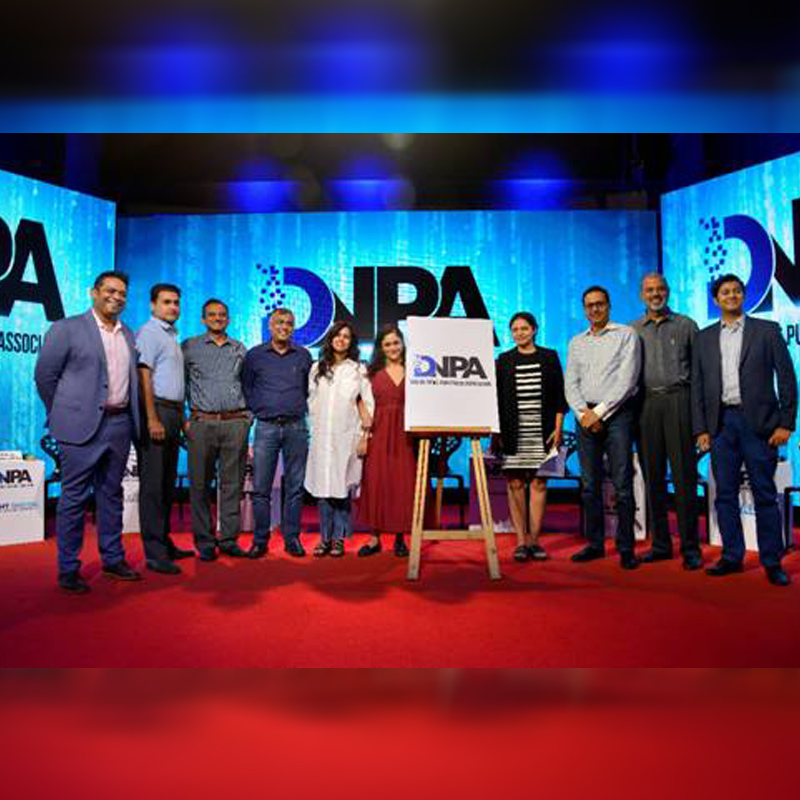
    And since then, the announcement of the formation of a Digital News Publishers Association (DNPA) has continued to keep various WhatsApp groups and social media users busy discussing the pros and cons of the newest entrant in the field of media industry advocacy in India. Especially because DNPA claims to be one more voice of the stakeholders amidst a plethora of already-existing industry bodies and sectoral alliances in the approximate Rs 1.5 trillion Indian media and entertainment sector.

    According to the most updated data from the India Brand Equity Foundation (IBEF), an organisation established by India’s Ministry of Commerce and Industry, the Indian digital advertising industry is expected to grow at a CAGR of 32 per cent to reach Rs 18,986 crore or $ 2.93 billion by 2020, backed by affordable data and rising smartphone penetration. FICCI-E&Y 2018 report on India’s media and entertainment sector stated 84 per cent of India's total digital population consumed news digitally in April 2017.

    Juxtaposed against the present political set-up in the country, the aforementioned data gets perspective, which was visible in the press release issued. “Ten of India’s biggest media companies who collectively serve 70 per cent of India’s online audience have today announced a new collective, Digital News Publishers Association,” the official statement read. Upfront it has been made clear that the 10 founding members of the new organisation hold sway over online audience. What was left unsaid was that such high coverage of online population also makes them important influencers.    

    The official statement also leaves another clue behind its formation: “The organisation is committed to…self-regulation and to promoting the business and editorial interests of all members.” The 10 founding members are Dainik Bhaskar, India Today Group, NDTV, Hindustan Times, Indian Express, Times of India, Amar Ujala, Dainik Jagran, Eenadu and Malayala Manorama — all traditional media houses with digital extensions to keep pace with the march of technology. Many of these organisations also own several other media ventures like TV and FM radio channels.

    With the India government, still grappling with ways to rein in rampant fake news being spread more via social media platforms and dodgy websites, has also come up with a framework for regulations — self or government mandated — for digital and online publishers of content, formation of DNPA, consisting of legacy media houses, raises important questions and has the potential of opening up of a can of worms leading to further making the country a regulatory challenge. Add to the fact that the government has mandated a committee to explore regulations for all genres of online content and that, reportedly, the committee is finding it difficult to suggest solutions that are a win-win for both stakeholders and the government making the regulatory landscape very tricky.

    Now, DNPA’s formations raises three crucial questions.

    Question No. 1: Why form another industry advocacy group when several such bodies already exist?

    For the overall development of the digital news segment and the publishers, is the official explanation. Does that mean organisations like the Indian Broadcasting Foundation, News Broadcasters Association (both these bodies have self-regulatory set-up for its members), Internet & Mobile Association of India (IMAI), Broadband India Forum (BIF), Editors’ Guild of India, Producers Guild of India, which consists of digital players too, and a host of smaller versions of these organisations are unable to deliver for the founding members of DNPA?

    It’s imperative to remember a majority of the DNPA’s 10 present members are also members of various other bodies too like the IBF, NBA and IMAI. NBA itself was formed several years back when the TV news players thought the IBF was not representing their viewpoints properly.

    An independent observer quipped after DNPA came into existence: “If the industry body is serious about its avowed goals, the members should stop giving free content to the likes of Facebook and Twitter.”

    Question No. 2: Though DNPA has admitted it’s open to other digital companies as members, why weren’t the independent and other comparatively smaller publishers of digital news initially contacted?

    Technology certainly has made innovations and entrepreneurship in digital publishing more competitive. And, this initial cold-shouldering of smaller competitors has made them question the claimed goals of the Big 10, as the DNPA founders are being labelled as.

    “Yet another big daddies club. Formed by big media companies discreetly, without the ones who spent blood & sweat to create independent internet news publishing platforms without a muscle. Despicable. I would call upon all the independent digital news publishing platforms with sizable reach to express their protest and tweet about it to I&B Minister. This [Digital News Publishers] Association should not be recognised,” rued Alok Verma in a two-part tweet last Friday. A veteran journalist who has worked in senior positions in both the print and electronic news media segments earlier, Verma is founder and chief editor of NYOOOZ.com, an online video-first platform delivering news from over 62 small and medium scale cities.

    Question No. 3: Will DNPA’s birth lead to the formation of another organisation comprising the independent digital news players?

    This is a very possible scenario and, if such an advocacy group or alliance does come into effect, it should get off the block like Usain Bolt. If it manages the inherent content and business contradictions of its members efficiently, it also has the potential to be a strong industry voice having good fire (and leveraging) power. But it’s a big IF.

    However, some of the `bigger’ independent digital publishers of news have not articulated their views — at least publicly. Owners and managers of The Wire, BloombergQuint, VICE India, Scroll.in, HuffPost India, The Print, etc. who otherwise opine on almost all industry and regulatory issues, apart from being very active on social media, have been quiet. Industry gossip says — though to be taken with a pinch of salt — feelers sent by some independent players to the likes of The Print, The Wire, BOOM, which is a part of Ping Digital Network, have elicited lukewarm response on the issue of an independent digital publishers alliance so that DNPA and its legacy members cannot start influencing the regulatory environment.

    With general elections in India lurking around the corner, the hordes of independent digital news venture gain importance as providers of news and being influencers of the hoi-polloi that may not be so exposed to the national media.

    Trying to summarise the DNPA development and its possible fallouts, Pankaj Pachauri founder and editor of mobile app based and online GoNews rued the fact that legacy players kept the DNPA formation hush-hush despite some of them being members of NBA too, just like his venture. Incidentally, NBA’s annual meeting was held earlier last week.

    “Why did India become a powerhouse in technology and software? Because at a time when the sector was in its infancy and growing, there was just one organisation, Nasscom, that championed the sector’s cause with policy-makers and did it effectively. In the media industry, especially so in the fledgeling digital space, all the players must remember that unless we present a united front, regulators can try hemming us in with restrictive legislations,” said Pachauri, who was also a media advisor to former Indian PM Manmohan Singh.

  • Malayala Manorama revamps news and entertainment channel with brightcove

    Malayala Manorama revamps news and entertainment channel with brightcove

    MUMBAI: Brightcove Inc. (NASDAQ: BCOV), the leading provider of cloud services for video, today announced Malayala Manorama selected Brightcove Video Platform to power Manorama Online, the online news vertical of Malayala Manorama. As the leading Malayalam-language publications in India, Malayala Manorama serves news and entertainment content to local and Malayalee diaspora audiences worldwide.

    Established in 1888, Malayala Manorama Group is one of India’s largest publishing companies, with more than 40 publications in circulation. ManoramaOnline is the digital arm of Malayala Manorama seeing traffic from 200 countries and 16 million unique visitors per month.

    ManoramaOnline launched its video offering using Brightcove Video Platform in October 2017 with an exclusive video on-demand streaming of a beauty pageant titled ‘Miss Millennial’. Malayala Manorama is also using the Brightcove Video Platform to power the on-demand video content on five of its online properties comprising ManoramaOnline, Manorama News TV, Mazhavil Manorama TV, The Week, and Vanitha.

    “Over the past few years Manorama Online has been hosting video content on third-party DSPs to monetise the videos. We soon realised that the prospects of monetisation on such platforms was limited. As news content consumption continues to shift towards to video, we needed to revamp our video platform to a platform that would give us more control our video inventory and help us to achieve sustainable ad funded revenue model,” Mariam Mammen Mathew, chief operating officer at Manorama Online said.

    “Any buying decision at Manorama is a complex process which involves many stages of testing and feasibility checks. After evaluating close to 12 different video platforms, we decided on Brightcove. When it came to features like quality of service, ease of ingestion, player performance, real-time reports and streamlined workflows, the Brightcove platform met all of our stringent requirements. Our decision was put to test during Manorama’s recent web streaming of ‘Miss Millennial’. Brightcove clocked half a million video plays and more than 2 million minutes of stream consumption for the Miss Millennial event over a week. It is interesting to note how a simple adjustment to our video experience can make a big difference to our viewership rate,” Mariam Mammen Mathew said.

    “Publishers like Malayala Manorama are going all in on video and placing an imperative on monetising video as part of their revenue stream. Brightcove is right there to partner with them to help scale their business as they adapt to the shift in how news and entertainment content is being served and monetised,” Ben Morrell, General Manager, Asia, Brightcove, said.

    Malayala Manorama is one of the first publishers to use the latest in video compression technology called Context-Aware Encoding (CAE). CAE is Brightcove’s patent-pending encoding method designed to deliver quality video at the lowest size possible, reducing video operations and delivery costs by up to 50%.

  • Malayala Manorama bags  Asian, World Digital Media awards

    Malayala Manorama bags Asian, World Digital Media awards

    NEW DELHI: Malayala Manorama has won top awards for best news website both in the south Asian and the World Digital Media awards.

    Organised by the World Association of Newspapers (WAN-IFRA) with Google, the South Asian awards were presented in Kolkata recently, and the World Digital Media Awards in Vienna earlier this week.

    In the World Digital Media awards, there was only one Indian winner – Malayala Manorama of Kottayam in Kerala http://www.manoramaonline.com/

    Malayala Manorama is a large regional media house with operations in print, TV, radio, online, mobile & 50+ publications. The company has a journalism legacy that stretches back more than 125 years. 

    NDTV Convergence Ltd. won a record 10 awards.

    The winners of the inaugural edition of South Asian Digital Media Awards were announced and the winners were presented with trophies at the glittering awards ceremony at the WAN-IFRA in Kolkata. This year, the winners of South Asian Digital Media Awards were chosen from nine categories.

    The categories and the winners are:


    a) Best News Website      
    Gold: www.manoramaonline.com
    Silver: www.ndtv.com
    Bronze: www.onmanorama.com
    Bronze: www.indianexpress.com
    Bronze: www.amarujala.com


    b) Best New Product
    Gold: Gadgets 360, from Red Pixles Ventures
    Silver: News Beeps, from NDTV Convergence
    Bronze: Vixty app, from NDTV Convergence


    c) Best New Mobile Service
    Gold: News Republic App
    Silver: www.indianexpress.com
    Bronze: The Quint


    d) Best Digital Advertising Campaign
    Gold: The Quint – IAmShatterProof for Motorola
    Silver: NDTV Convergence – L’Oreal Paris Women of worth 2016


    e) Best Use of Online Video
    Gold: The Quint – The Wild West of Utter Pradesh
    Silver: NDTV Convergence – Shiksha Ki Ore Campaign
    Bronze: NDTV Convergence – L’Oreal Paris Women of worth 2016


    f) Best Entertainment & Lifestyle Mobile Service
    Silver: NDTV Convergence – Nirmal MyFit100Days


    g) Best Entertainment & Lifestyle Website Service
    Gold: NDTV Convergence – Nirmal MyFit100Days
    Silver: Times Internet – Happytrips.com


    h) Best Data Visualisation Project
    Bronze: NDTV Convergence – Dettol Banega Swachh India


    i) Best Reader Engagement
    Gold: The Quint
    Silver: The Hindu – sportstarlive.com – Ask Ashwin Contest
    Bronze: The Hindu.com – Tamil Nadu Election Campaign 2016`

  • Malayala Manorama bags  Asian, World Digital Media awards

    Malayala Manorama bags Asian, World Digital Media awards

    NEW DELHI: Malayala Manorama has won top awards for best news website both in the south Asian and the World Digital Media awards.

    Organised by the World Association of Newspapers (WAN-IFRA) with Google, the South Asian awards were presented in Kolkata recently, and the World Digital Media Awards in Vienna earlier this week.

    In the World Digital Media awards, there was only one Indian winner – Malayala Manorama of Kottayam in Kerala http://www.manoramaonline.com/

    Malayala Manorama is a large regional media house with operations in print, TV, radio, online, mobile & 50+ publications. The company has a journalism legacy that stretches back more than 125 years. 

    NDTV Convergence Ltd. won a record 10 awards.

    The winners of the inaugural edition of South Asian Digital Media Awards were announced and the winners were presented with trophies at the glittering awards ceremony at the WAN-IFRA in Kolkata. This year, the winners of South Asian Digital Media Awards were chosen from nine categories.

    The categories and the winners are:


    a) Best News Website      
    Gold: www.manoramaonline.com
    Silver: www.ndtv.com
    Bronze: www.onmanorama.com
    Bronze: www.indianexpress.com
    Bronze: www.amarujala.com


    b) Best New Product
    Gold: Gadgets 360, from Red Pixles Ventures
    Silver: News Beeps, from NDTV Convergence
    Bronze: Vixty app, from NDTV Convergence


    c) Best New Mobile Service
    Gold: News Republic App
    Silver: www.indianexpress.com
    Bronze: The Quint


    d) Best Digital Advertising Campaign
    Gold: The Quint – IAmShatterProof for Motorola
    Silver: NDTV Convergence – L’Oreal Paris Women of worth 2016


    e) Best Use of Online Video
    Gold: The Quint – The Wild West of Utter Pradesh
    Silver: NDTV Convergence – Shiksha Ki Ore Campaign
    Bronze: NDTV Convergence – L’Oreal Paris Women of worth 2016


    f) Best Entertainment & Lifestyle Mobile Service
    Silver: NDTV Convergence – Nirmal MyFit100Days


    g) Best Entertainment & Lifestyle Website Service
    Gold: NDTV Convergence – Nirmal MyFit100Days
    Silver: Times Internet – Happytrips.com


    h) Best Data Visualisation Project
    Bronze: NDTV Convergence – Dettol Banega Swachh India


    i) Best Reader Engagement
    Gold: The Quint
    Silver: The Hindu – sportstarlive.com – Ask Ashwin Contest
    Bronze: The Hindu.com – Tamil Nadu Election Campaign 2016`

  • Mazhavil Manorama to launch D4Dance season 3 on 28 March

    Mazhavil Manorama to launch D4Dance season 3 on 28 March

    BENGALURU: Malayalam entertainment channel Mazhavil Manorama is set to launch season 3 of its non-fiction dance reality show D4 Dance. The 120 episode show will be telecast from 28 March 2016, Monday – Thursday at 8:30 pm.

    The channel  says that it is likely to dominate the non-fiction space with two mega launches, the Malayalam version of the world famous game show ‘Minute to Win It’ and Dancing Talent show D4 Dance.

    Mazhavil Manorama has roped in Eastern Group as the title sponsor and Kalyan Silks is the powered by sponsor. The co-presenting sponsors are Oppo Camera Phone and Nestle Munch, while the first prize sponsor is Lazza Ice cream.

    The show will be hosted by Pearly Mane and Actor – RJ Adil Ibrahim. D4Dance has been given the acronym D3. According to channel sources D3 will be three times bigger, better and larger than the previous seasons.

    D3 will have three different types of dance competitions namely Solo, Pair and Group performance and it will have three title winners with three teams and team leaders. The contestants of D3 will have the patronage of three well known masters, namely choreographer Prasanna Master, award winning actress Priya Mani and professional bollywood dancer and trainer Neerav Bavlecha from the team of Terrance Lewis. Further, the channel says that D3 will glitter and simmer with the horde of celebrities walking-in with their special performances.

    D4 Dance season 3 on Mazhavil Manorama will see promotional activities to ensure maximum visibility. Among the activities are included an OOH campaign in all prime locations across Kerala followed by print campaign in Malayala Manorama daily. On digital, the channel is doing a Facebook campaign and also a PR campaign. It also has a viewer contest on manoramaonline.com.

  • Mazhavil Manorama to launch D4Dance season 3 on 28 March

    Mazhavil Manorama to launch D4Dance season 3 on 28 March

    BENGALURU: Malayalam entertainment channel Mazhavil Manorama is set to launch season 3 of its non-fiction dance reality show D4 Dance. The 120 episode show will be telecast from 28 March 2016, Monday – Thursday at 8:30 pm.

    The channel  says that it is likely to dominate the non-fiction space with two mega launches, the Malayalam version of the world famous game show ‘Minute to Win It’ and Dancing Talent show D4 Dance.

    Mazhavil Manorama has roped in Eastern Group as the title sponsor and Kalyan Silks is the powered by sponsor. The co-presenting sponsors are Oppo Camera Phone and Nestle Munch, while the first prize sponsor is Lazza Ice cream.

    The show will be hosted by Pearly Mane and Actor – RJ Adil Ibrahim. D4Dance has been given the acronym D3. According to channel sources D3 will be three times bigger, better and larger than the previous seasons.

    D3 will have three different types of dance competitions namely Solo, Pair and Group performance and it will have three title winners with three teams and team leaders. The contestants of D3 will have the patronage of three well known masters, namely choreographer Prasanna Master, award winning actress Priya Mani and professional bollywood dancer and trainer Neerav Bavlecha from the team of Terrance Lewis. Further, the channel says that D3 will glitter and simmer with the horde of celebrities walking-in with their special performances.

    D4 Dance season 3 on Mazhavil Manorama will see promotional activities to ensure maximum visibility. Among the activities are included an OOH campaign in all prime locations across Kerala followed by print campaign in Malayala Manorama daily. On digital, the channel is doing a Facebook campaign and also a PR campaign. It also has a viewer contest on manoramaonline.com.