Tag: Make In India

  • Local manufacturers of electronic goods to benefit from new CBEC directive

    Local manufacturers of electronic goods to benefit from new CBEC directive

    NEW DELHI: The Central Board of Excise and Customs (CBEC) has said manufacturers of goods in India can enjoy a concessional two per cent duty regime without availing of tax credit on inputs.

    In an aim to boost the Make in India initiative, the CBEC said importers will have to pay 12.5 per cent countervailing duty.

    Manufacturers of electronic items like domestic mobile phones, laptops and tablets manufacturers are expected to reap the benefit of this.

    Earlier, this advantage to local manufacturers was taken away by the Supreme Court judgment. In a case related to SRF Ltd, the top court had directed that importers could avail of lower duty regime if they did not take tax credits.

    According to a report in a financial daily, India shipped in almost $37 billion worth of telecom instruments, computer hardware and peripherals, electronic instruments and components, and consumer electronics goods in FY15, a 14 per cent rise over the previous year.

  • ‘Make in India’ initiative ups FDI equity inflows to 48% in a year

    ‘Make in India’ initiative ups FDI equity inflows to 48% in a year

    MUMBAI: The growth in Foreign Direct Investment (FDI) has been significant after the launch of ‘Make in India’ initiative in September 2014. The country has seen 48 per cent increase in FDI equity inflows during October 2014 to April 2015 over the corresponding period last year.


    In 2014-15, the country witnessed unprecedented growth of 717 per cent to $40.92 billion of investment by Foreign Institutional Investors (FIIs). The FDI inflow under the approval route saw a growth of 87 per cent during 2014-15 with inflow of $2.22 billion despite more sectors having been liberalized during this period and with more than 90 per cent of FDI being on automatic route. These indicators showcase remarkable pace of approval being accorded by the government and confidence of investors in the resurgent India. 

    The increased inflow of FDI in India, especially in a climate of contracting worldwide investments, indicates the faith that overseas investors have imposed in the country’s economy and the reforms initiated by the Government towards ease of doing business. The Make in India initiatives of the Government and its outreach to all investors have made a positive investment climate for India which is evidenced in the results for the last financial year especially the second half. 

    The FDI inflow during the financial year 2014-15 was spread across the sectors evidencing the fact of positive eco-system of investment opportunities, which India is now providing- Services Sector, Telecommunication, Trading, Automobile Industry, Computer Software & Hardware, Drugs & Pharmaceuticals  and Construction activities. 

    The FDI policy was amended to further enable a positive investment climate and sync it with the vision and focus areas of the present Government such as affordable housing, smart cities, financial inclusion and reforms in railway infrastructure. The Construction Development sector was allowed easy exit norms with rationalized area restrictions and due emphasis on affordable housing. The FDI cap in insurance and pension sector has been raised to 49 per cent. 


    100 per cent FDI has been allowed in railway infrastructure, excluding operations and also in the medical devices sector. 


    Further the definition of NRI was expanded to include Overseas Citizen of India (OCI) cardholders as well as Persons of Indian Origin (PIO) cardholders. NRIs investment under Schedule 4 of Foreign Exchange Management Act, 1999 (FEMA), Regulations will be deemed to be domestic investment made by residents, thereby giving flexibility to NRIs to invest in India.

  • “I dream of digital India where 1.2 billion connected Indians drive innovation:”NaMo

    “I dream of digital India where 1.2 billion connected Indians drive innovation:”NaMo

    MUMBAI: Prime Minister Narendra Modi’s vision of ‘Digital India’ took a step forward on 1 July as the PM launched ‘Digital India Week’ in New Delhi. Modi, who foresees an impending “bloodless” cyber war as a global risk has called upon the nation’s IT community to become world leaders in providing credible cyber-security systems to the entire world. “Can’t India innovate in providing cyber security to the world and be a world leader in it?” he questioned.


    The Prime Minister encouraged the leaders in IT manufacturing to boost production of electronic services and goods in the country as part of the ‘Make in India’ initiative. “We need to manufacture qualitatively globally competitive electronic goods in India and reduce our enormous dependency on imports,” he added.


    Modi noted that there is a risk of digitization creating a barrier between the ‘haves’ and ‘have not’s and result in a digital divide. To avoid that, he outlined his vision of e-governance and mobile governance, where all important government services will be available on the mobile phone and digital platforms.


    “I dream of a digital India where high-speed digital highways unite the nation; 1.2 billion connected Indians drive innovation; technology ensures the citizen-government interface is incorruptible, where government proactively engages on social media platforms, quality education reaches inaccessible places of country, quality healthcare comes to remotest places through e health care,” he said.


    He stressed on making India as paperless as possible, especially in terms of government documentations, banking and other bureaucratic services. A key aspect of this is ‘Digital India’s’ eLocker initiative which enables citizens to store their important documents in an online database and access it using a digital signature that will be unique to every citizen and used with their AADHAAR number. “With eLocker, one doesn’t need to carry all their paperwork to government offices when they are applying for any government or other services. It makes official work easier, economic and secure,” said Modi, who is rightly addressed as a ‘digital native man’ by industry leaders.


    Apart from this, ‘Digital India’ aspires to spread its reach to the remotest parts of the country and enable citizens from all walks of society to enjoy its services like eHealth, eEducation, eScholarship, eSignature, ‘Digital India’ apps and weather reports for farmers among others.


    To achieve that, the mammoth-size challenge lies in infrastructure and availability of high speed broadband throughout the country. “There was a time when highways were in demand and were crucial to settlements and industries. Today a developed city can only be built where fiber optics pass through,” he opined, enlisting Broadband Highway as a top priority in his ‘Digital India’ plan.


    The Prime Minister cleverly tweaked his definition of IT and devised the formula ‘IT +IT =IT’ which breaks down to Indian Talent plus Information Technology which will give ‘India Tomorrow.’ He assured full support to young entrepreneurs who wished to launch start-ups and called upon the youth to innovate.


    “In a few years we will be second globally in startups after America, and the government is willing to invest in entrepreneurs. We need to make products and technology based on the target age group, its utility in our Indian society and thus ‘Design in India’ is as important as ‘Make in India’,” he concluded.

  • Make In India: Mitsubishi to invest Rs 1.8 bn to set up factory in Bangalore

    Make In India: Mitsubishi to invest Rs 1.8 bn to set up factory in Bangalore

    MUMBAI: Prime Minister Narendra Modi’s vision for ‘Make In India’ is slowly but steadily gaining momentum.


    With an aim to strengthen local competitiveness and expand business in India, Mitsubishi Electric Corporation’s Indian arm Mitsubishi Elevator India will build a factory in Bangalore.


    The company is looking at investing close to Rs 1.83 billion (approx. 3.45 billion Japanese yen) to set up the factory, which will be in operation by July 2016. The factory will have production capacity of 5,000 units annually.


    India’s elevator and escalator market, which has grown in step with the country’s rapid economic development, is now the world’s second largest, next to China. Annual demand rose to 47,000 units in 2014 and is expected to continue growing. In 1995, Mitsubishi Electric began selling elevators through local distributors. In August 2012, it established a company in Chennai to reinforce sales, installations and maintenance, and in April 2014, Mitsubishi Electric launched the NEXIEZ-LITE elevator model for low- to mid-rise buildings in the India’s market.


    Bangalore has seen an increasing number of enterprises in fields including the IT industry setting up operations. By producing locally, Mitsubishi Electric expects to strengthen product competitiveness in terms of price and delivery time, focusing especially on its NEXIEZ-LITE model. A special emphasis will be placed on the efficient integration of sales, manufacturing, installation and maintenance.


    The site area of the factory is 89,000 square meters, with floor space of 25,400 square meters.

  • Relativity Media upbeat on Make In India; could shoot ‘Immortals’ in India

    Relativity Media upbeat on Make In India; could shoot ‘Immortals’ in India

    MUMBAI: Prime Minister’s Narendra Modi’s ‘Make In India’ dream has made a headway in the entertainment space. Relativity Media in association with B4U is looking at the possibility to shoot the sequel of the blockbuster movie Immortals in India. The entire movie will be shot across the country and will be distributed globally. The association will back the initiative by offering significant roles to Indian actors to attract Indian audience in theatres.


    The Relativity – B4U joint venture, which was inked last year, is also set to remake global hits like The Best of Me3 Days To Kill,Masterminds, and horror thriller Oculus in India for the Indian market, which also complements the ‘Make In India’ campaign and Make For India concept of RBI governor Raghuram Rajan. The Best of Me is already in the production stage and overseen by Balaji Telefilms, where as Zahak the Bollywood version of Oculus has been already shot featuring Huma Qureshi and Hawa Hawai star Saquib Saleem and is in the post production stage. 


    While delivering a keynote on FICCI Frames 2015 Relativity CEO Ryan Kavanaugh said, “We associated with B4U in order to understand the Indian market, which is one of the biggest in the world. We have 120 partnerships with B4U where they educate us about India and we use our distributing muscles to promote Indian movies. Content plays the biggest role in success, but the content has to be created after detailed research, which includes segmentation, targetting and positioning.”


    B4U CEO Ishan Saksena added, “The association with Relativity is huge as it breaks many barriers and opens up new possibilities for us. B4U with the help of the distribution muscle of Relativity took Queen to areas where Indian movies have never reached before and that’s the beauty of this partnership. We will, in future, ensure that Indian content is distributed abroad and Hollywood movies reach Indian theatre with ease. As a result of this association, soon we will see Indian actors working in Hollywood movies and American superstars featuring in Bollywood films.”


    The association will also launch a new online content platform B4U online. “The number of hits Hotstar got in recent time shows us how digital is going to be the next big thing in India and that brings us to our new venture. Unlike other American companies, I don’t want to change the culture. I want to suit myself in it and hence I think Relativity has a future,” concludes Kavanaugh.


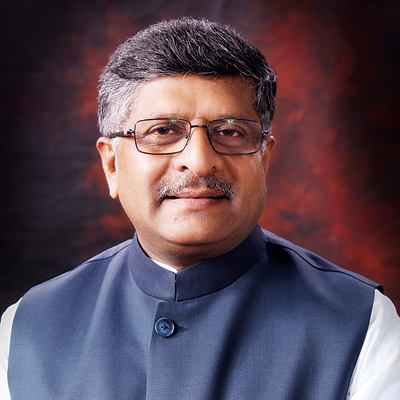
  • Digital India will bridge gaps between haves & have-nots: Ravi Shankar Prasad

    Digital India will bridge gaps between haves & have-nots: Ravi Shankar Prasad

    NEW DELHI: Digital India is a tool to bridge the divide between the haves and have-nots, according to Communications and Information Technology Minister Ravi Shankar Prasad.


    In his address at the Times Networks Digital India meet, Prasad said that a floodgate of opportunities are going to open in India. “I welcome concrete suggestions from all for making Digital India a grand success – we have to work together. Wherever it is possible digging will be done, cables will be laid, if we can supplement by satellite or balloon or drones, we will consider that,” he said. 


    Prasad added that a ‘skilled India’ is one of the three priority areas for the government that would complement the ongoing ambitious Digital India and Make in India programmes. “The three pillars of digital India that our government will focus on is digital infrastructure, digital service delivery and digital empowerment,” Prasad said. 


    According to him, Digital India is an enabling platform for change and will not be fulfilled without the Make in India initiative.


    Times Television Network, part of the Times of India Group, hosted the ‘Digital India Summit 2015’ on the theme – ‘Digital India: Bits & Bytes of a Billion Dreams’. The summit brought key policy makers, digital leaders and influential thinkers face-to-face to deliberate suggestions to prepare India to face technological challenges and devise solutions to contribute towards realizing the implementation objectives of Digital India.


    The two-day conclave saw discussions on vital subjects including Broadband Highways, Universal Access to Mobile Connectivity, Public Internet Access Programme; E-governance: Reforming the Government through Technology; Net Neutrality; Digital Wallet, E-Kranti: Electronic Delivery of Services; Information for all; Electronic manufacturing; IT for jobs and Early Harvest Programme.

  • Govt. offers incentives under ‘Make in India’ programme to electronics manufacturers

    Govt. offers incentives under ‘Make in India’ programme to electronics manufacturers

    NEW DELHI: More than 50 multi-national companies as well as Indian business houses had come forward with proposals to set up manufacturing units for electronic goods including set top boxes after the government announced relaxations to promote the ‘Make in India’ policy. 


    Taking part in the section on Electronic Manufacturing at the Times Television’s Digital Summit here, Communications and Information Technology joint secretary Ajay Kumar said that the whole process will mean recreating the IT industry and changing the eco-system as Indians had got used to importing cheap equipment from overseas.


    However, he said that the IT industry was on the verge of ‘explosive growth’ because it had huge brain power, demographic profile, and a government determined to promote the ‘Make in India’ and ‘Digital India’ programmes.


    Kumar claimed that the government was giving several incentives including a 25 per cent incentive in the manufacturing sector for electronic goods. Training programmes had been created for in-house human resources and there was focus on innovation and research and development.


    However, Manufacturers’ Association for Information Technology (MAIT) vice president Nitin Kunkdienker said, “The government’s policies are still not helpful to the growth of the sector. A mere announcement of a national policy is not enough if states do not encourage to collaborate on various issues.”


    He said even the central ministries did not talk to each other, referring specifically to the IT Ministry, the Information and Broadcasting Ministry, the Home Ministry, the Finance Ministry and the External Affairs Ministry.


    In many states, the Chief Ministers had no control over the affairs relating to the industry. There was also need for process improvement such as customs etc. and the government should be able to optimize its advantages. It should also bring in the educational institutions on the programmes to create a system that sets standards.


    Amar Babu R K of Lenovo referred to a general mistrust between the government and the industry.


  • Modi’s ‘Make In India’ effect: Xperio Labs mulling Indian manufacturing unit

    Modi’s ‘Make In India’ effect: Xperio Labs mulling Indian manufacturing unit

    MUMBAI: Prime Minister Narendra Modi’s ‘Make In India’ initiative, which is designed to transform India into a global manufacturing hub, has started attracting various companies.


    Xperio Labs, an emerging market focused ‘Devices and Services’ company, is now evaluating the prospects of setting up a manufacturing unit in India.


    The company will be showcasing its products at the upcoming 23rd Convergence India 2015, which is being held in Delhi from 21-23 January. Speaking to Indiantelevision.com, Xperio Labs VP sales Paul Avery said, “We have both sales and support staff in Mumbai, Delhi and Bengaluru. We have also set the ball rolling for a small development team in Chennai. We look at India as our ‘hub’ for software and services and China for our manufacturing. We are also evaluating the prospects of manufacturing in India given the call for ‘Make in India’ by the Prime Minister Narendra Modi.”


    According to Avery, India is not only a significant contributor to the company’s revenue, but is a high growth market for them.


    Talking about the products that the company will showcase at Convergence 2015, Avery said, “At Convergence 2015, we will be exhibiting our range of devices namely MPEG 2 and MPEG 4 Set Top Boxes (STB), Docsis-2 and Docsis-3 wired and wi-fi modems. We also plan to run live demonstrations of our Platform as a Service (PaaS) that allows service providers to offer OTT/TV Everywhere services on a pay as you go basis.”


    Xperio Labs has worked together as a team under different brands like Scientific Atlanta/Cisco and has contributed to the transformation of the Indian cable industry since 2003. “We have seen this industry grow by leaps and bounds. We have also learnt over the years that Indian Service Providers are value conscious (not price conscious) and cable has offered stiff competition to DTH and has been able to provide a credible alternative to DTH,” he added.  


    The service company, which currently has offices in Hong Kong, Atlanta, Bengaluru, Delhi, Dubai, Mumbai, Surrey and Shanghai is initially focusing on markets in south Asia, south east Asia and middle east regions. “In the very near term, we would like to do deeper, rather than wider coverage in these markets and then look at other emerging markets such as Africa, Eastern Europe and Latin America,” said Avery.


    According to him, in the broadcast space, service providers have now started moving their focus from just offering video services to more data and voice globally and very soon next generation services, such as home security and automation services will also begin. “We plan to offer these services as part of our PaaS platform,” he informed.


    Elaborating further on PaaS, Xperio Labs CTO Ajith Nair said, “This platform allows service providers to quickly launch OTT/TV Everywhere services with minimum capex and mostly on an opex model i.e pay as you go. It also helps reduce service providers’ Time To Market (TTM) and focus on customer acquisition and retention, without being concerned about the technology and its management. Service providers can offer services like broadcast TV, on demand TV, internet radio and concierge services to name a few.”


    Xperio Labs, which has been involved with service providers for more than two decades, has seen the international service providers evolve from single service companies to triple pay, and in some cases quad play. “During this transition they have had to undergo several operational challenges and we anticipate that in the emerging market service providers will face similar challenges, and there is a broad dearth of technology companies that can help them with such challenges,” Nair opined.


    The company, according to Nair, can provide a Tier-1 engagement model at an Asia Inc price. “We also believe we can provide close-in product and operational support with an India based support team. In this way service providers can take advantage of the best of both the worlds,” he said.


    Since its inception in September 2013, Xperio Labs has been successful with a number of Tier-1 and 2 service providers in several markets like India, Nepal, Maldives, Vietnam and Philippines.


    The company has been working on providing OTT/TV Everywhere service. When asked about the progress, Nair said, “It is still in its infancy in emerging markets, it is similar to what Digital TV was 8-10 years ago, but slowly and surely we have seen a huge upswing in consumers purchasing more mobile devices namely smartphones, tablets and Phablets and hence their need to consume content on the move, or consume content on multiple screens in the home.”


    “We have made considerable progress with the technology and we are currently in the midst of launching a tier-1 MSO go TV Everywhere. Our target group is tier-1/2 MSO’s who appreciate the need to launch such services but don’t want to make a capex investment and also don’t want to build and manage the OTT infrastructure,” informed Nair.


    Xperio Labs, in order to meet the requirements of its growth plans in India is always on a lookout for strategic partners, who can, not only help them grow their reach in the market but also invest/co-develop in some of its services and technologies.


    Avery is confident about the products the company makes. “Our devices and services are built not just keeping a consumer, but also the service provider in mind, a B2B2C (Business to Business to Consumer) approach to the market. The industrial design, user interface, along with the software design and architecture of our products reflect our understanding that technology is only as good as it is useful to the people using it. In short it is an experience that we provide our customers,” he informed.


    According to Nair, digital STBs may soon cease to exist in its current form. “In the years to come, it would just be an application residing on a mobile device or television, or it would have to transform into a set of devices; a  gateway for home entertainment, communication, security, automation and health care with one or many display devices,” concluded Nair.


    Organised by Exhibitions India Group (EIG), the 23rd edition of Convergence India 2015 is themed around ‘Connecting India.’ The event is set to bring together the best minds in the ICT ecosystem under one roof to create an interactive platform for the companies to showcase their technical prowess, and tap into new business opportunities. The expo which will focus on growth opportunities, future trends and upcoming technologies for the ICT ecosystem stakeholders, will feature a wide spectrum of ICT verticals including telecom, mobility, broadcast, cable, satellite, entertainment, IT and information security etc.

  • ‘Make in India’ charts manufacturing-led growth, says Chaitanya Prasad

    ‘Make in India’ charts manufacturing-led growth, says Chaitanya Prasad

    KOLKATA: The ‘Make in India’ campaign initiated by Prime Minister Narendra Modi means Indian economy will shift from services-led growth to labour-intensive manufacturing-led growth, said Patents, Designs and Trademarks controller general Chaitanya Prasad at the Confederation of Indian Industries (CII) seminar.

    Urging the industry to opt for the intellectual property rights (IPR), Prasad said that the Indian industries get their products patented.

    “It is the IPR that will determine the country’s progress and the Indian industry should move towards the Madrid System as it is used widely,” Prasad

    Highlighting that the biggest concern was lack of awareness, Prasad said that India could not reap the benefits of registering and protecting trademarks (TM), globally. “While there are 11,000 TM designations from abroad, the number of Indian applications was about 185,” he said.

    Hoping that India would catch up with the rest of the world, Prasad said the patent filing system had been made online and available 24×7.