Tag: Make In India

  • Governmenent of India joins hands with NDTV Ethnic Retail

    Governmenent of India joins hands with NDTV Ethnic Retail

    MUMBAI: The Development Commissioner (Handlooms), Ministry of Textiles, Government of India and NDTV Ethnic Retail Ltd. has signed a memorandum of understanding for popularizing India Handloom textiles as a fashionable product for youth. The three-year long agreement has been signed on 10 May at Udyog Bhawan. 

    With this joint endeavour, they will endorse and launch a project by NDTV. Titled as Indianroots Fashion Accelerator (IFA) the project will support fresh talent and to support new and innovative ventures in fashion industry. The government will support the project with incubation and production support. 

    The brand will also provide an interface for fashion professionals will be able to accesses facilities such as weavers service centres and handloom clusters. The initiative will connect fashion designers with handloom sector in an organized manner.

     “We see this partnership as a welcome move, it will collaboratively take forward the vision of India Handloom and the “Make In India” vision of Honourable Prime Minister Shri Narendra Modi. The initiative would help us in our objective of promoting traditional handwoven products of India. Our vision is to touch every Indian with the cultural legacy of India. This will also help us engage with youngsters and designers who will take our handloom legacy forward”, said Handlooms development commissioner Alok Kumar NDTV Ethnic Retail Limited chief innovation officer Aneesh Nair was also present on the occasion.

  • Govt admits low production of STBs, urges more players to manufacture under Make in India Initiative

    Govt admits low production of STBs, urges more players to manufacture under Make in India Initiative

    MUMBAI: The government today admitted that less than 10 per cent set top boxes being used in India were Indian made. However, Information and Broadcasting Secretary Sunil Arora said the government and his ministry were completely committed to the digitization programme.

    Arora said, “We want the industry to look at this opportunity under the Make In India initiative and produce more STBs in India under the Electronics Manufacturing scheme”.

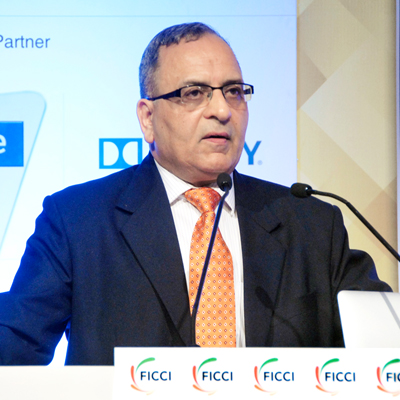
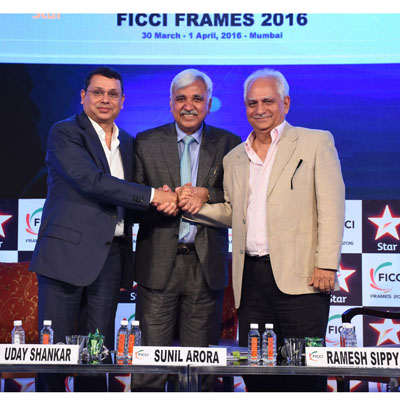
    The ministry remained committed to promoting ease of doing business in the media and entertainment sector, Arora said in a dialogue with Star India CEO Uday Shankar and veteran filmmaker Ramesh Sippy at FICCI Frames 2016.

    He said the Ministry was also guided by the ‘minimum government, maximum governance’ philosophy. “One of our primary objectives is to bring down the number of visitors to Shastri Bhavan to a trickle. We want to move towards less regulation and facilitate India to become the hub of media and entertainment industry.”

    Arora claimed that clearance for new TV channels had been expedited over the last six months under a liberalized regime. He said the home ministry had agreed to most of the suggestions made by the I&B ministry about liberalizing several conditions. Arora stressed that the ministry intends to play a role of a facilitator for the media and entertainment industry to flourish in the country.

    He said a decision had been taken to set up the National Centre of Excellence in Animation, Gaming and Visual Effects in Mumbai.  The Maharashtra Government is providing a 25 acre land near the Film City in Goregaon for the institute.

    The secretary also said the government had approved the Rs 598 crore National Film Heritage Mission to preserve and promote India’s rich film and cultural heritage. He also referred to the National Museum of Indian Cinema coming up in Films Division Complex on Peddar Road in Mumbai with several interactive exhibits. “Prime Minister Narendra Modi has taken a keen interest in this museum which is being curated by the National Council of Science Museums, Kolkata.”

    Focusing on ease of doing business, Arora said a Film Facilitation Office had opened in the National Film Development Corporation to function as a single window service for film related clearances. The secretary said an award had been instituted as part of the National Film Awards from this year to honour the states that are most film friendly. In 2016, Gujarat has been adjudged the most film friendly state, followed by UP and Kerala.

    Participating in the discussion, Shankar, who is also FICCI Entertainment Panel Chairman expressed concern over the viability of stand-alone news channels. He also said the entry of fringe elements in the news broadcasting field for ‘ancillary facilities’ was affecting credibility. Sippy expressed concern over low theatre density in India.


  • Govt admits low production of STBs, urges more players to manufacture under Make in India Initiative

    Govt admits low production of STBs, urges more players to manufacture under Make in India Initiative

    MUMBAI: The government today admitted that less than 10 per cent set top boxes being used in India were Indian made. However, Information and Broadcasting Secretary Sunil Arora said the government and his ministry were completely committed to the digitization programme.

    Arora said, “We want the industry to look at this opportunity under the Make In India initiative and produce more STBs in India under the Electronics Manufacturing scheme”.

    The ministry remained committed to promoting ease of doing business in the media and entertainment sector, Arora said in a dialogue with Star India CEO Uday Shankar and veteran filmmaker Ramesh Sippy at FICCI Frames 2016.

    He said the Ministry was also guided by the ‘minimum government, maximum governance’ philosophy. “One of our primary objectives is to bring down the number of visitors to Shastri Bhavan to a trickle. We want to move towards less regulation and facilitate India to become the hub of media and entertainment industry.”

    Arora claimed that clearance for new TV channels had been expedited over the last six months under a liberalized regime. He said the home ministry had agreed to most of the suggestions made by the I&B ministry about liberalizing several conditions. Arora stressed that the ministry intends to play a role of a facilitator for the media and entertainment industry to flourish in the country.

    He said a decision had been taken to set up the National Centre of Excellence in Animation, Gaming and Visual Effects in Mumbai.  The Maharashtra Government is providing a 25 acre land near the Film City in Goregaon for the institute.

    The secretary also said the government had approved the Rs 598 crore National Film Heritage Mission to preserve and promote India’s rich film and cultural heritage. He also referred to the National Museum of Indian Cinema coming up in Films Division Complex on Peddar Road in Mumbai with several interactive exhibits. “Prime Minister Narendra Modi has taken a keen interest in this museum which is being curated by the National Council of Science Museums, Kolkata.”

    Focusing on ease of doing business, Arora said a Film Facilitation Office had opened in the National Film Development Corporation to function as a single window service for film related clearances. The secretary said an award had been instituted as part of the National Film Awards from this year to honour the states that are most film friendly. In 2016, Gujarat has been adjudged the most film friendly state, followed by UP and Kerala.

    Participating in the discussion, Shankar, who is also FICCI Entertainment Panel Chairman expressed concern over the viability of stand-alone news channels. He also said the entry of fringe elements in the news broadcasting field for ‘ancillary facilities’ was affecting credibility. Sippy expressed concern over low theatre density in India.


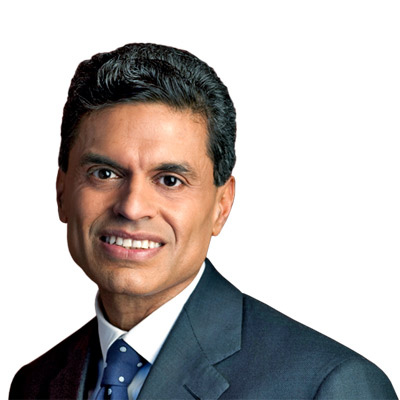
  • “Media should hold the government’s feet to the fire to realise Make In India:” CNN’s Fareed Zakaria

    “Media should hold the government’s feet to the fire to realise Make In India:” CNN’s Fareed Zakaria

    MUMBAI: The Make In India week inaugurated by Prime Minister Narendra Modi on 13 February has made Mumbai a site of several activities. All for a united cause — to spearhead a thriving environment of manufacturing industries in India and invite foreign direct investment (FDI) in several industry sectors.

    While the vision of Make In India has gone from being a popular Twitter hashtag to actual substantial talk about the real issues that need to be addressed about manufacturing in India, there is a long way to go before India establishes credibility among global investors as a nation of producers and innovators. As the pressure on the government to deliver on the already established brand of ‘Make In India’ increases, one can’t go without wondering the role of media in the scheme of things.

    Make In India week has given media, especially Indian media, enough fodder to make several headlines. From broadcasters allotting dedicated programming on the topic, to publications releasing special editions on the same; it seems media has had a field day since the ‘week’ was launched. And rightly so, thinks popular CNN news anchor Fareed Rafiq Zakaria of the Fareed Zakaria GPS fame.

    “I think that if there are more efforts like this, it does help the media play a more substantial role. What the Indian government is realising is that they have a serious image and brand problem. I have noticed that in Indonesia; the finance minister and trade ministers are much more attentive towards the communication of their reform policies than their Indian counterparts,” Zakaria shares while attending the CNN – Asia Business Forum 2016, which was part of the day two activities at Make In India week in Mumbai.

    He later had a one-on-one with Finance Minister Arun Jaitley to expand on the government’s executive strategy when it comes to reforms aimed at manufacturing.

    “But that is changing now,” Zakaria says adding on the significance of media in propagating the government’s brand building campaign for Make In India. “People are realising they have to sell, and to sell they need to build credibility for which presentation is essential and that is where Indian media will play a role.”

    On the flip side however, one has to ask if Make In India is a marketing effort or a reform effort? Even if there is a marketing element to it, the next question is if it will only scratch the surface with the campaigns, or will Make In India really address the issues that are at the grass root of manufacturing in India? Wherein comes the crucial role of media in connecting the two realities instead of being swept away by the hype.

    Expressing his take on it Zakaria adds, “The problem with manufacturing is that you have significant regulatory, tax and infrastructure problems. Those are the reason that you don’t get manufacturing booming in India. Now, could that change? Yes, but I haven’t seen the big bang reforms. I have noticed some good improvement reforms that the government is undertaking but it still needs that big push. For that the Indian media has to step in and be the mouthpiece of the people who are part of the manufacturing industry. They have to keep putting pressure on the government to see the deliverance of such reforms.”

    Expanding on the role of media in making Make In India successful, Zakaria says, “India has a lot of natural constituencies for natural reforms. There are many who still want the old system because they get patronage from it like subsidies, employment for families. Those are the people you hear from… who you don’t hear from are the unemployed youth, the under employed people in agriculture. We hear a lot from the voices of the past but we need to hear more from the country’s future.  Media can be the voice of the future for India’s aspirations and hopes. They should hold the government’s feet to the fire and keep them there. Right now, frankly the government isn’t facing a serious opposition so the media has to play that role,” Zakaria signs off.

  • “Media should hold the government’s feet to the fire to realise Make In India:” CNN’s Fareed Zakaria

    “Media should hold the government’s feet to the fire to realise Make In India:” CNN’s Fareed Zakaria

    MUMBAI: The Make In India week inaugurated by Prime Minister Narendra Modi on 13 February has made Mumbai a site of several activities. All for a united cause — to spearhead a thriving environment of manufacturing industries in India and invite foreign direct investment (FDI) in several industry sectors.

    While the vision of Make In India has gone from being a popular Twitter hashtag to actual substantial talk about the real issues that need to be addressed about manufacturing in India, there is a long way to go before India establishes credibility among global investors as a nation of producers and innovators. As the pressure on the government to deliver on the already established brand of ‘Make In India’ increases, one can’t go without wondering the role of media in the scheme of things.

    Make In India week has given media, especially Indian media, enough fodder to make several headlines. From broadcasters allotting dedicated programming on the topic, to publications releasing special editions on the same; it seems media has had a field day since the ‘week’ was launched. And rightly so, thinks popular CNN news anchor Fareed Rafiq Zakaria of the Fareed Zakaria GPS fame.

    “I think that if there are more efforts like this, it does help the media play a more substantial role. What the Indian government is realising is that they have a serious image and brand problem. I have noticed that in Indonesia; the finance minister and trade ministers are much more attentive towards the communication of their reform policies than their Indian counterparts,” Zakaria shares while attending the CNN – Asia Business Forum 2016, which was part of the day two activities at Make In India week in Mumbai.

    He later had a one-on-one with Finance Minister Arun Jaitley to expand on the government’s executive strategy when it comes to reforms aimed at manufacturing.

    “But that is changing now,” Zakaria says adding on the significance of media in propagating the government’s brand building campaign for Make In India. “People are realising they have to sell, and to sell they need to build credibility for which presentation is essential and that is where Indian media will play a role.”

    On the flip side however, one has to ask if Make In India is a marketing effort or a reform effort? Even if there is a marketing element to it, the next question is if it will only scratch the surface with the campaigns, or will Make In India really address the issues that are at the grass root of manufacturing in India? Wherein comes the crucial role of media in connecting the two realities instead of being swept away by the hype.

    Expressing his take on it Zakaria adds, “The problem with manufacturing is that you have significant regulatory, tax and infrastructure problems. Those are the reason that you don’t get manufacturing booming in India. Now, could that change? Yes, but I haven’t seen the big bang reforms. I have noticed some good improvement reforms that the government is undertaking but it still needs that big push. For that the Indian media has to step in and be the mouthpiece of the people who are part of the manufacturing industry. They have to keep putting pressure on the government to see the deliverance of such reforms.”

    Expanding on the role of media in making Make In India successful, Zakaria says, “India has a lot of natural constituencies for natural reforms. There are many who still want the old system because they get patronage from it like subsidies, employment for families. Those are the people you hear from… who you don’t hear from are the unemployed youth, the under employed people in agriculture. We hear a lot from the voices of the past but we need to hear more from the country’s future.  Media can be the voice of the future for India’s aspirations and hopes. They should hold the government’s feet to the fire and keep them there. Right now, frankly the government isn’t facing a serious opposition so the media has to play that role,” Zakaria signs off.

  • Manufacturing slows in Q3-2016 despite Digital India & Make in India campaigns

    Manufacturing slows in Q3-2016 despite Digital India & Make in India campaigns

    NEW DELHI: Despite the emphasis on Digital India and Make In India campaigns and perhaps largely due to expectations of the Goods and Service Tax (GST) that never came through, manufacturing of electrical and electronic goods failed to pick up much during 2015.

    What’s more, the outlook the third quarter of 2015-16 predicts a slowdown due to various factors, according to the quarterly Manufacturing Survey conducted by FICCI.

    Considering that the Digital Addressable System (DAS) Phase III becomes a reality from New Year’s Day and the countdown begins for the final phase, and with auction for FM Radio Phase III having commenced, the slowdown in manufacture of electronic goods is not good news for the electronic media industry, which depends largely on set top boxes (STBs) and other electronic equipment.

    The FICCI survey says the outlook for Indian manufacturing sector in Q3 of 2015-16 looks to be weakening, as lesser percentage of respondents expect high growth to continue in Q-3 (October-December 2015-16). The percentage of respondents expecting higher growth in Q3 has gone down to 55 per cent as compared to 63 per cent for Q2 (July-September 2015-16), according to the survey.

    The survey had earlier indicated revival in the manufacturing activity in Q2 of 2015-16, which seems to be slowing down a little bit in Q3 now. The outlook on the basis of FICCI Manufacturing Survey for Q2 of 2015-16 was more optimistic than in the current quarter. Exports are primarily responsible for this less optimistic outlook besides domestic factors like poor demand conditions, high interest cost etc.

    The quarterly survey gauges the expectations of manufacturers for Q3 2015-16 for 12 major sectors namely textiles, capital goods, metals, chemicals, cement and ceramics, electronics, auto, leather & footwear, machine tools, food, tyre, and textiles machinery. Responses have been drawn from 336 manufacturing units from both large and SME segments with a combined annual turnover of over Rs 3.94 trillion.

    The survey had earlier indicated revival in the manufacturing activity in Q2 2015-16, which seems to be slowing down little bit in Q3 now. The percentage of respondents expecting higher growth in Q3 has gone down to 55 per cent as compared to 63 per cent for Q2 2015-16.

    Exports are primarily responsible for this less optimistic outlook besides domestic factors like poor demand conditions, high interest cost etc.

    In terms of investment, for Q3 2015-16, 68 per cent respondents as against 73-75 per cent respondents in earlier quarters reported that they don’t have any plans for capacity additions for the next six months implying slack in the private sector investments in manufacturing to continue, even though there is a fall in the percentage of respondents not looking at fresh investments. Poor demand conditions, high cost of borrowing, delayed clearances and cost escalation are some of the major constraints, which are affecting the expansion plans of the respondents.

    In Electronics and Electrical, the survey shows that average capacity utilisation in the second quarter was 65 per cent, which was only higher than one (textiles) of the 12 sectors surveyed. In fact, it had fallen by five per cent over the same period last fiscal.

    At a glance, the quarterly outlook for the sector shows moderate outlook for production, no capacity addition expected in the next six months, and a bleak outlook for both hiring and exports.

    Implementation of GST and keeping the sector at the lowest tax slab; imposing anti-dumping duty on imports of Dry Batteries; support of the tier 2 supplier by schemes (reward, recognition or subsidies), which can encourage them to improve their product quality; and reduction of interest rate are some of the suggestions from the respondents.

    The Electronics and Electrical sector for the October-December 2015 quarter witnessed 63 per cent respondents reporting higher levels of production on year-on-year basis though the level of growth itself may not be high.

    On the other hand, only 30 per cent of the respondents reported a higher level of orders for the October-December quarter as compared to the previous quarter while 50 per cent reported no improvement in their order books.

    Current capacity utilisation in the industry is around 65 per cent. Primarily owing to the lower current utilisation, 81 per cent respondents reportedly don’t have any plans to add any fresh capacity in next few months.

    A third of the respondents reported negative growth in exports in the October-December 2015 quarter as compared to the same quarter of last year. Also, 56 per cent reported no change in exports during the same period.

    Sixty per cent respondents maintained average inventory levels during October-December 2015 whereas only about a third maintained a higher inventory level. Almost all respondents were reluctant when asked about their plans of hiring additional work force in next three months.

    The Electronics industry respondents are availing credit at an average rate of 12 per cent. Around 40 per cent respondents in the sector expect the manufacturing sector to revive in the next six months while another 40 per cent expect no significant growth.

    About 30 per cent respondents reported that their production cost has increased than that of last year while costs remained same for 40 per cent respondents. Rising labour wages and rupee devaluation have been cited as the key reasons towards this end. Prices of raw materials, uncertainty of economic environment, lack of domestic and export demand, deficiency of power and competition faced from imports are significantly affecting the growth of this sector.

  • BARC India wins the ‘Make In India Award for Excellence – 2015’

    BARC India wins the ‘Make In India Award for Excellence – 2015’

    MUMBAI: At a function in Ahmedabad today, Team Make In India conferred the ‘Make In India Award for Excellence -2015’ to BARC India.


    A JIB, launched in April 2015, BARC India is extremely happy to be the recipient of this prestigious award in its year of launch itself and that too in the first year of the Award’s institution. Attended and inaugurated by Kalraj Mishra (Cabinet Minister) and Chief Guest and Shri. Govindbhai Patel, MOS for Science and Technology, the event took place at Mahatma Mandir, Gandhinagar, Gujarat (Venue for Vibrant Gujarat).


    In its pursuit of measuring “What India Watches”, this early recognition and first Award – is inspiration for Team BARC India which is focusing on its ‘Make In India’ belief through its locally manufactured ‘BAR-O-meter’ at 1/6th cost of globally available meters thus providing scalability in future for robust and accurate data for generations to come.


    Team BARC India, thanks all its stakeholders, associates and executives along with members of its Technical Committee, Board of Directors, the apex bodies of IBF, AAAI, ISA and the Government of India and Prasar Bharti for their combined support and help in building the World’s largest television audience measurement system.

  • I&B secy Bimal Julka stresses value of social media in reaching out to people

    I&B secy Bimal Julka stresses value of social media in reaching out to people

    NEW DELHI: Information and Broadcasting Ministry Secretary Bimal Julka has said social media initiatives of the government had provided people a platform to communicate directly with the government through methods such as Crowdsourcing, which encouraged such innovations.


    He stressed the need for qualitative information flow and interface of citizens with the communication strategy of the government. “This has led to people centric communication and facilitated enhanced outreach and visibility of government communication across platforms,” he said.


    Julka said this in discussions with Queensland University of Technology, Australia vice chancellor Professor Peter Coaldrake, here today.

    “The communication paradigm has undergone a shift with a 360 degree approach being adopted to address the communication needs and challenges,” he said.


    He also referred to flagship schemes of the government namely Digital India, Skill India, Make In India, which had provided an opportunity to media units to reach out to defined target audiences. 


    He specifically highlighted the use and effectiveness of initiating Talkathons, which provided a direct interface with the people leading to effective citizen centric communication. “Such initiatives would encourage a culture of inclusive and participative decision making,” he said.
     

    During the meeting, Julka and Professor Coaldrake reviewed the current training mechanism between the Ministry and QUT with regard to in-service training of Indian Information Service officers. Both agreed that the future training agenda should include contemporary issues related to media and communication studies. They emphasized that Skill Development was critical for in-service training of officers handling government communication.

  • ABS Seven Star launches hybrid STBs; targets 2 lakh consumers in Mumbai by Dec 2015

    ABS Seven Star launches hybrid STBs; targets 2 lakh consumers in Mumbai by Dec 2015

    MUMBAI: Innovation is the key to a successful business and realizing this is Mumbai based multi system operator (MSO) ABS Seven Star. 


    As reported earlier by Indiantelevision.com, ABS Seven Star, which so far had been operating MPEG 2 headend, has now launched its MPEG 4 headend with as many as 500 national and international channels. Additionally, the MSO has started rolling out MPEG 4 set top boxes (STBs) as well. 


    In keeping with Prime Minister Narendra Modi’s ‘Make in India’ initiative, these indigenous STBs manufactured by ABS Productions are hybrid boxes with both Ethernet and cable. The STBs have been loaded with facilities like YouTube, web TV, video on demand (VOD), internet browsing, TV Everywhere and cloud computing among others.


    “Our offering will convert your television set to a smart TV. The box will have 75 HD and 3D channels. We are also creating content, apart from the ones we have taken the rights for. The box will have 75 of our own channels, which includes education channel among others,” informs ABS Seven Star CMD Atul Saraf.


    Priced at Rs 3500, the hybrid box also comes with 5GB online space. “This allows consumers to use their TV set as a computer and save data as well,” he adds. The company has also come up with a HD only box loaded with VOD and internet, which is priced at Rs 2500. 


    While 10,000 hybrid boxes have so far been manufactured, ABS Productions has rolled out 30,000 HD boxes and is looking at manufacturing 30,000 boxes every month. 


    In order to give a fillip to VAS, ABS Seven Star will provide the services to consumers at a fixed fee of Rs 30 per month. “Consumers will then have to pay for the content they choose to watch,” he says. 


    ABS Seven Star has also tied up with content distribution network (CDN) to have a multi screen presence. 


    The MSO through these services is looking at an average revenue per user (ARPU) of Rs 1200. “Today, consumers are anyways paying separately for cable and internet. With our new offering, we will be giving them both the services with just one equipment,” informs Saraf. 


    ABS Seven Star is connecting through national long distance (NLD) players to have a presence in Rajasthan, UP, Haryana, Bihar and Orissa. “We are looking at acquiring 200,000 consumers in Mumbai by December 2015,” points out Saraf.

  • Make In India: DataWind completes first month of production; ships 80,000 tablets

    Make In India: DataWind completes first month of production; ships 80,000 tablets

    NEW DELHI: India-based low cost Internet connectivity and wireless web access products manufacturer DataWind Inc. has shipped the first 80,000 Internet-enabled tablets and smartphones from its new production facility that opened last month in Amritsar.


    After establishing India’s first and only manufacturing facility for touch panels in 2013 and now by producing the majority of its products in India, DataWind has taken a major step in the direction of realizing Prime Minister Narendra Modi’s ‘Make in India’ vision.


    “By producing state-of-the-art and most affordable devices in India, we not only wish to supply products that would make Indians proud, but boost skills in India by generating highly skilled employment locally,” said DataWind president & CEO Suneet Singh Tuli. 


    The company expects to continue expanding its position in the Tablet PC market by increasing the range of products manufactured at the Amritsar facility.


    “The economics of this move to India are also supported by the growing demand for our products – all of which come bundled with one year of pre-paid Internet access in India on the Reliance network. By providing the most affordable Internet access solution in the country, we expect to take the Digital India initiative to the next stage by insuring every citizen has access to education, commerce and government services,” said Tuli.


    DataWind’s patented technology allows for the wireless delivery of a basic Internet experience across existing network infrastructure at a fraction of the typical cost and bandwidth.


    The company’s Internet-enabled smartphones and tablets are affordably priced by the millions of people in emerging markets who do not have Internet access.