Tag: Make In India

  • Explurger steps up to PM Modi’s call for homegrown tech

    Explurger steps up to PM Modi’s call for homegrown tech

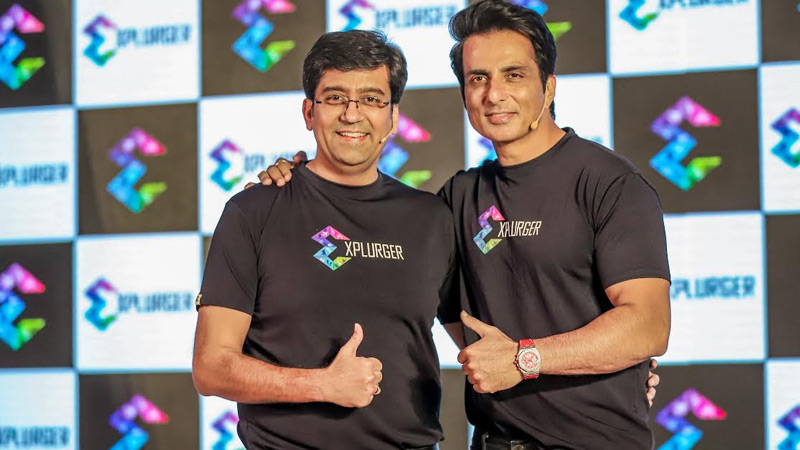
    MUMBAI: Time to log off and step out! Responding to prime minister Narendra Modi’s call for indigenous innovation, Explurger, a proudly made-in-India social media app, is reimagining how we connect online, and offline.

    Launched with the mantra “Get out – get social,” Explurger encourages users to explore the world, meet people in real life, and share authentic travel and lifestyle experiences. Every journey, check-in, or post automatically creates a digital travelogue, making social media as much about living life as sharing it.

    “The prime minister’s call underscores India’s growing confidence in building its own tech frameworks,” said Explurger founder and CEO Jitin Bhatia. “Our app is entirely developed in India, powered by Indian talent, and designed to resonate globally. Explurger shows that Indian technology can inspire, innovate, and compete on the world stage.”

    Rooted in the Make in India and Digital India missions, Explurger reflects the spirit of self-reliance. With over 17 million users, it signals a new era of homegrown digital innovation, one where technology doesn’t just connect, it empowers and enriches real-world experiences.
     

  • Deadline extended for Pmvision2art creative contest

    Deadline extended for Pmvision2art creative contest

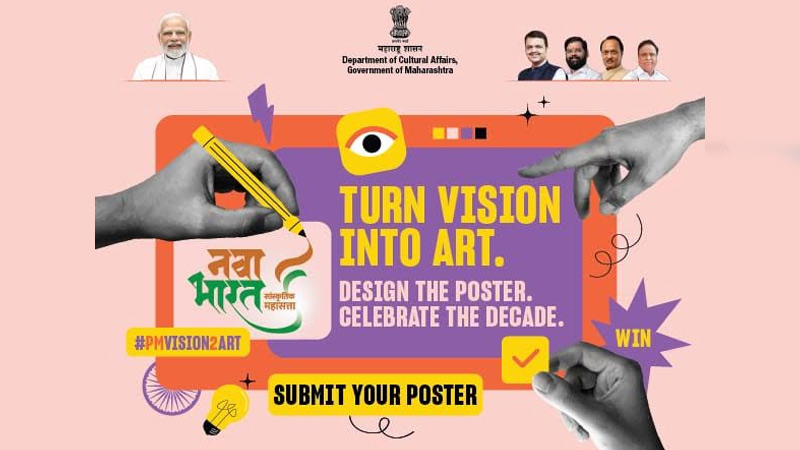
    MUMBAI: Brush up your creativity. The government of Maharashtra’s department of cultural afairs, in collaboration with the Advertising Agencies Association of India, has extended the deadline for the Turn Vision into Art: Pmvision2art campaign to 15th October 2025.

    The nationwide initiative invites designers, agencies, and creators to craft iconic posters celebrating India’s transformative programmes over the past decade, from Make in India and Digital India to Swachh Bharat AbhiyanAtmanirbhar Bharat, Beti Bachao Beti Padhao, Skill India, and the International Day of Yoga.

    Seventy-five winning entries will be showcased at major art galleries, featured in a commemorative coffee-table book, and highlighted on national platforms to inspire millions. Poster submissions should be A2 size and entries can be made via www.pmvision2art.com.

    Minister of cultural affairs Ashish Shelar said, “Creativity has the power to shape how we remember history and imagine the future. Turn Vision into Art is our invitation to the nation’s creative minds to capture the essence of India’s progress through art.”

    With this extension, the campaign offers artists a golden opportunity to make their mark while celebrating a decade of India’s visionary initiatives.

  • KDM wins Zee Bharat Ki Udaan Award for powering faith with 1080 charging points at Maha Kumbh

    KDM wins Zee Bharat Ki Udaan Award for powering faith with 1080 charging points at Maha Kumbh

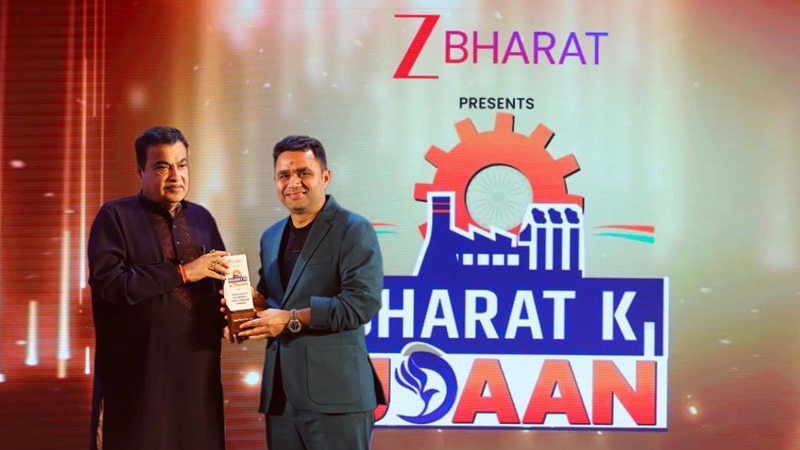
    MUMBAI: In a country where missing a Whatsapp call from family during a spiritual pilgrimage could cause panic, KDM made sure that devotion met innovation. The lifestyle and mobile accessories brand has been conferred with the Zee Bharat Ki Udaan Award for its Bharat Ka Charger Maha Kumbh initiative—recognised for powering up millions of mobile phones at the world’s largest spiritual gathering.

    KDM was felicitated by Union minister of Road Transport and Highways Nitin Gadkari during Zee Bharat’s flagship programme ‘Bharat Ki Udaan’. The award highlighted KDM’s unique contribution at Maha Kumbh 2025, where it installed 1,080 mobile charging stations equipped with its indigenous KDM-T Technology. These stations helped over 23 lakh pilgrims keep their phones and connections alive through the 45-day religious congregation.

    The initiative seamlessly plugged into the government’s vision for a ‘divya and digital’ Maha Kumbh and aligned with the broader Digital India narrative. Beyond the buzzwords, KDM’s solution addressed a pressing need—connectivity for devotees, many from rural areas, who relied on their phones to stay in touch with their loved ones amid the chaos and crowds.

    ‘KDM Bharat Ka Charger’ employs Kinetic Dynamic Mobile Charging Testing Technology (KDM-T Technology), a fully Made-in-India solution designed to prevent overheating, overcharging, and voltage issues—ensuring safety alongside service.

    Acknowledging the honour, KDM founder N D Mali said, “Extremely honoured and privileged to receive the ’Zee Bharat Ki Udaan Award’ from the hands of Shri. Nitin Gadkari ji which is making me feel charged, inspired and motivated to take Bharat Ka Charger campaign ahead… This award motivates us to continue our efforts to charge both mobile and the economy with KDM Bharat Ka Charger”.

    Mali added that the company’s vision—“Har Ghar KDM” by 2030—targets reaching 10 crore households while creating direct and indirect employment for 50,000 women.

  • Schaeffler India shifts gears with fifth manufacturing plant in Tamil Nadu

    Schaeffler India shifts gears with fifth manufacturing plant in Tamil Nadu

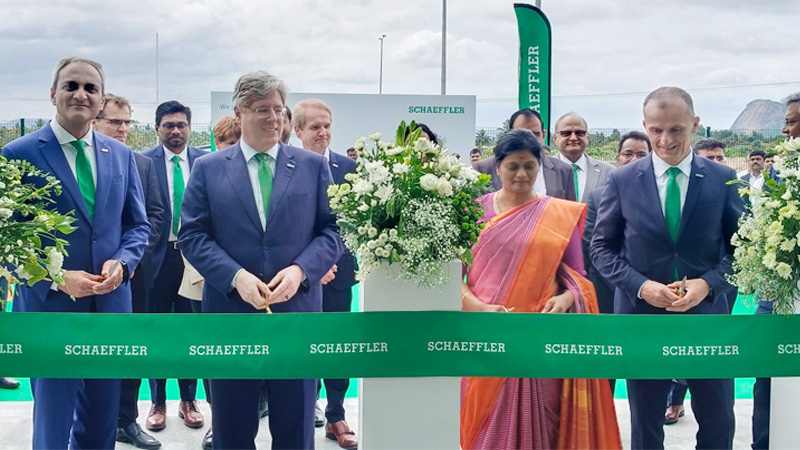
    MUMBAI: Schaeffler India has added another cog to its Indian manufacturing playbook with the inauguration of its fifth production facility, this time in Shoolagiri, Tamil Nadu. Spread across 108,000 square metres, the first phase covers 16,500 sqm and is projected to reach full production by Q4 of calendar year 2025. The new facility will manufacture powertrain and chassis components for both conventional and hybrid vehicles, with a strong nod to emerging e-mobility demand.

    The ribbon-cutting was led by top brass from Germany and India, including Georg F. W Schaeffler, Matthias Zink, Eranti Sumithasri, and Harsha Kadam. The move underscores the company’s bullishness on India’s auto sector and aligns with its long-term localisation and growth strategy.

    Powertrain CEO & Schaeffler AG chassis, Matthias Zink called the Indian market “a key growth engine”, adding, “The new facility is a significant step in our efforts to expand our global manufacturing footprint and further localisation in the region”.

    The Shoolagiri unit will roll out key systems like planetary gears and hybrid transmission components. According to Schaeffler India MD & CEO Harsha Kadam, “This expansion enables us to cater not just to today’s local markets but also to future needs as we transition towards E-mobility”. He noted that the plant will play a critical role in the company’s ‘Make in India’ commitment and sustainable operations model.

    Over the past three years (2022–2024), Schaeffler India has invested Rs 1,700 crore—exceeding its original commitment of Rs 1,500 crore—to scale local operations. This includes manufacturing capabilities for e-mobility and large bearings for industrial use. The new facility joins four existing plants and three R&D centres in India.

    Schaeffler has also made inroads into the digital aftermarket. In 2023, it acquired KRSV Innovative Auto Solutions Pvt Ltd (Koovers), a B2B e-commerce platform, strengthening its digital footprint in automotive parts.

    Sustainability has been baked into the factory’s design. The Shoolagiri plant features rainwater harvesting, zero liquid discharge, natural lighting, battery-powered equipment, and LED lighting. It also integrates ergonomic workspaces and aims to foster a diverse workforce under a broader green manufacturing vision.

    Kadam added, “We remain committed to strengthening capabilities in India with our ever-evolving motion technology portfolio to seize emerging opportunities and retain our competitive edge”.

  • Vandana Singh takes the helm of FAII’s Aviation Cargo Wing

    Vandana Singh takes the helm of FAII’s Aviation Cargo Wing

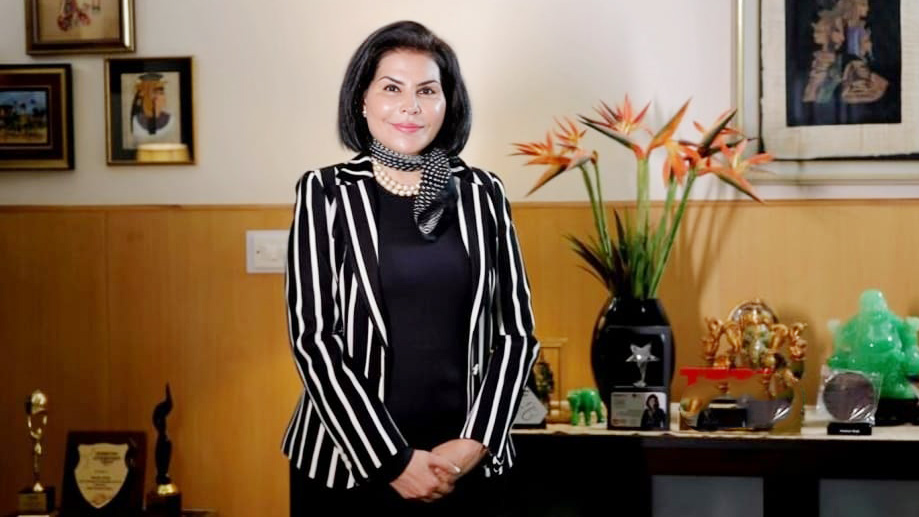
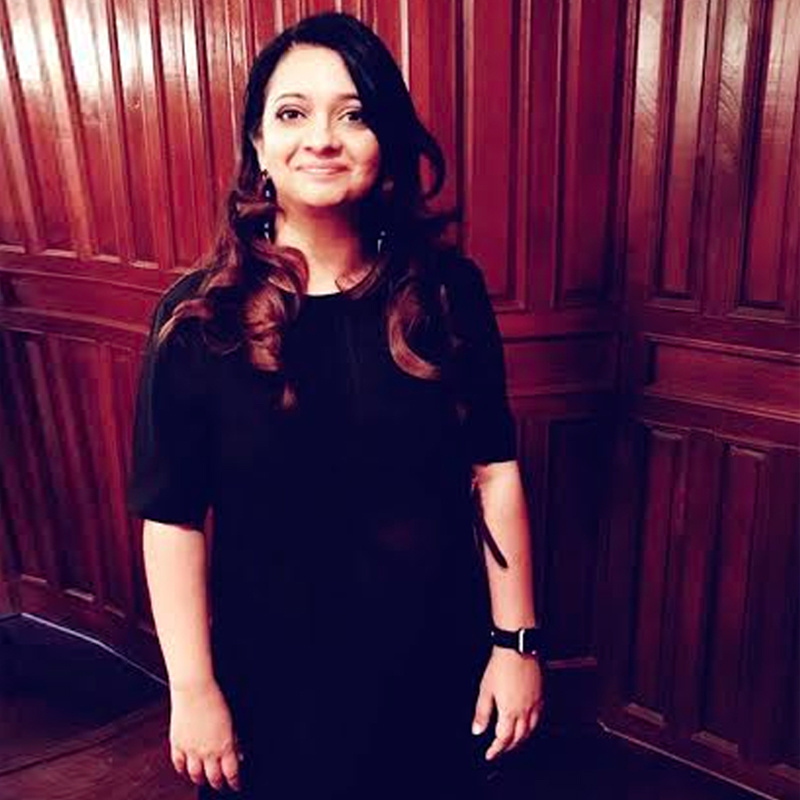
    MUMBAI: India’s aviation cargo just got a major lift-off! Vandana Singh, with over 28 years of experience in aviation and logistics, has been appointed as the new chairperson of the Aviation Cargo Wing at the Federation of Aviation Industry in India (FAII). With her at the helm, the sector is set to soar to new heights.

    Speaking about Singh’s appointment FAII director general Arun Kumar Sharma remarked, “Her expertise in aviation cargo will be pivotal in driving innovation, boosting global collaboration, and positioning India as a leader in the sector.”

    Singh, added, “This is an incredible opportunity to shape the future of India’s aviation sector and enhance its global standing. Together, we will build a robust ecosystem that’s ready for the future.”

    Known for her innovative approach and strategic leadership, Singh aims to revolutionise India’s aviation cargo sector, driving efficiency and sustainability while aligning with the national objectives of ‘Make in India’ and ‘Atmanirbhar Bharat.’ Her appointment signals FAII’s deep commitment to advancing India’s aviation industry in sync with the nation’s growth trajectory.
     

  • Addverb unleashes Trakr 2.0 & more for India’s robotics future

    Addverb unleashes Trakr 2.0 & more for India’s robotics future

    MUMBAI: The future of robotics has just landed, and it’s not tiptoeing—it’s striding in on four mechanical legs. The global robotics and automation powerhouse, Addverb, has pulled back the curtain on three groundbreaking solutions at LogiMAT India 2025, held from 13–15 February at the Bombay Exhibition Centre, Mumbai. These game-changing innovations—Trakr 2.0, Hoca, and Brisk—are set to revolutionise warehouses, logistics, and automation, making them smarter, faster, and undeniably more efficient.

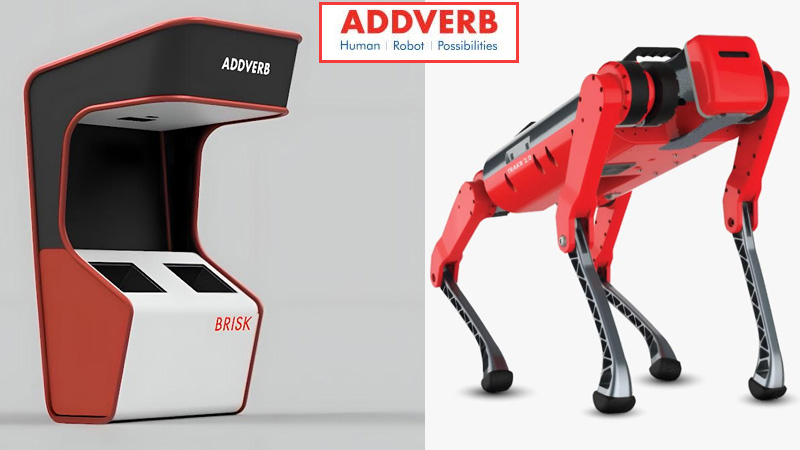
    With a flair for innovation and a knack for disrupting the norm, Addverb introduced India’s largest quadruped robot, Trakr 2.0, along with Hoca, a high-speed order consolidation and automation system, and Brisk, an intuitive user interface designed to streamline warehouse operations. These futuristic creations aren’t just about efficiency; they’re about making warehouses function with precision, safety, and adaptability like never before.

    Addverb’s Trakr 2.0 is India’s largest assistive quadruped. This powerhouse of a machine carries payloads of up to 20 kg, boasts a battery endurance of 90 minutes, and uses stereo cameras for enhanced vision. It also responds to gesture-based commands—because who needs buttons when you can command a robot with a wave of your hand?

    Addverb co-founder & CEO Sangeet Kumar couldn’t contain his excitement, “The debut of Trakr 2.0, Hoca, and Brisk at LogiMAT India 2025 represents a significant milestone in our journey of innovation. After the overwhelming response to Trakr last year, we were inspired to develop Trakr 2.0—an even more powerful version with enhanced vision and gesture-based controls.”

    Hoca is a high-speed order consolidation and automation system that takes batch picking to a whole new level, maximising space utilisation while delivering operational flexibility. With a modular design, a carousel spanning from 5,900 mm to 46,700 mm, and payload capacities reaching 900 kg, Hoca fits into existing warehouse setups effortlessly. The best part? It makes scaling up as smooth as a well-oiled machine—literally.

    Enter Brisk, Addverb’s user-friendly interface that makes warehouse operations as seamless as swiping on your phone. Using gesture-based technology and glove-based EAN scanning, Brisk adapts to different lighting conditions, ensuring smooth functionality across various warehouse environments.

    Addverb has its sights set firmly on the future. With these latest product launches, the company is charging ahead to introduce its first humanoid robot in 2025. Watch out, Musk! Beyond warehousing, Addverb is breaking new ground in logistics, defence security, and commercial robotics, ensuring its tech isn’t just cutting-edge but game-changing.

    The proof? Some of the biggest names in the industry—Reliance, HUL, PepsiCo, Maersk, Mondial Relay, DHL, and Landmark—are already on board, trusting Addverb to lead the automation revolution.

    Beyond its technological prowess, Addverb is championing India’s ‘Make in India, Make for the World’ and ‘Atmanirbhar Bharat’ initiatives, reinforcing the country’s position as a global leader in robotics and manufacturing. With a presence across the US, Europe, and Asia, the company is poised to take its automation empire worldwide, reshaping industries one robotic revolution at a time.


  • Hyundai powers ‘Atmanirbhar Bharat’ with localisation and EV breakthrough

    Hyundai powers ‘Atmanirbhar Bharat’ with localisation and EV breakthrough

    MUMBAI: Hyundai Motor India Limited (HMIL) isn’t just making cars; it’s making waves. With a roaring 92 per cent localisation in manufacturing and a game-changing battery-pack assembly plant in Chennai, Hyundai is taking its ‘Make-in-India’ commitment to full throttle. If this isn’t a rev-up moment for India’s automotive landscape, we don’t know what is.

    Let’s talk numbers—1,238 indigenised parts, 194 vendors, and a whopping $672 million in forex savings (over Rs 5,678 crore) since 2019. Hyundai’s localisation journey is no leisurely Sunday drive; it’s a turbocharged race to leverage India’s resources and engineering talent.

    Hyundai’s whole-time director & chief manufacturing officer, Gopalakrishnan Chathapuram Sivaramakrishnan, put it perfectly, “Our indigenisation aligns seamlessly with India’s ‘Atmanirbhar Bharat’ vision. The launch of the battery-pack assembly plant is not just a milestone; it’s a testament to our commitment to delivering world-class technology made in India.”

    Oh, and did we mention that Hyundai’s Creta Electric now boasts locally assembled battery packs? Talk about an electrifying debut!

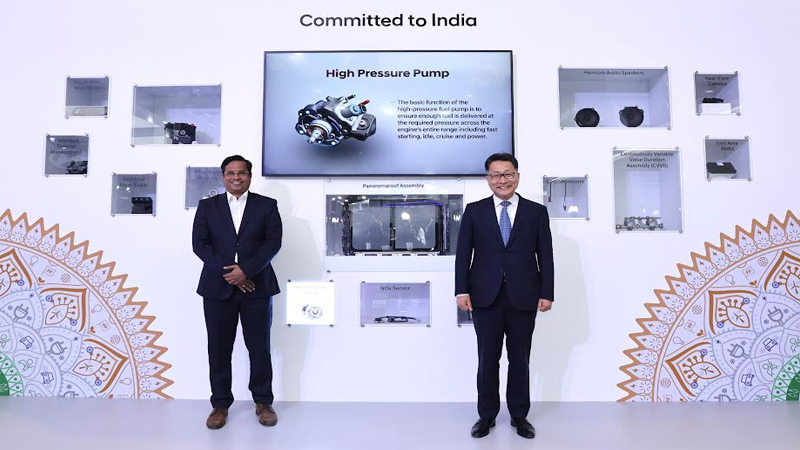
    Why is everyone talking about Chennai? Because Hyundai and Mobis India have launched a state-of-the-art battery-pack assembly plant, complete with an annual capacity of 75,000 packs in phase one. Whether it’s NMC (Nickel-Manganese-Cobalt Oxide) or LFP (Lithium-Iron-Phosphate) batteries, this facility has it all.

    Hyundai isn’t just building cars; it’s building them with 100 per cent locally sourced components like alternators, alloy wheels, catalytic converters, and shark fin antennas. Fancy tech like tyre pressure monitoring systems and panoramic sunroofs? Yep, localised too.

    The company is also looking ahead with plans to replicate this success at its Talegaon manufacturing plant in Maharashtra. Can we hear a round of applause for the future?

    In its localisation journey, Hyundai isn’t just saving forex; it’s creating jobs—1,400 direct employment opportunities, to be exact. The company’s engineering prowess and strategic partnerships are redefining what it means to be ‘Atmanirbhar’.

    In a world racing toward electric and sustainable solutions, Hyundai’s efforts are more than just industry milestones—they’re a blueprint for automotive evolution. The localisation strategy isn’t just a business move; it’s a bold statement. And with the Creta Electric leading the charge, Hyundai is proving that Indian manufacturing isn’t just capable; it’s competitive.

  • Lights, Camera, AI: A new era in video content creation has arrived!

    Lights, Camera, AI: A new era in video content creation has arrived!

    MUMBAI: The future of video content is here, and it’s wearing an AI cape.

    AiVanta, a leader in AI-powered enterprise video solutions, has teamed up with UnScript, an AI video platform specialising in content automation and avatar technology, to revolutionise how businesses create and manage video content.

    Together, these companies are unleashing cutting-edge, scalable solutions designed to make video creation faster, smarter, and, dare we say, much cooler. Think professional-grade social media ads and corporate videos—without a single camera in sight.

    What’s the big idea?

    The AiVanta-UnScript partnership is set to address the growing demand for innovative video communication in enterprises. By merging UnScript’s revolutionary AI tech—which lets businesses generate video content from text—with AiVanta’s scalable solutions, they’re unlocking endless possibilities. From employee training to customer engagement and marketing campaigns, the duo promises to make video creation as easy as writing an email (minus the typos).

    In case you missed it, the AI video solutions market is booming. With a 20 per cent annual growth rate projected through 2030, sectors like BFSI, healthcare, retail, and education are leading the charge. For businesses racing to keep up with digital transformation, having tools that save time and money while delivering professional results isn’t just a luxury—it’s a necessity.

    What makes this partnership even more exciting is its “Make in India” ethos. Both AiVanta and UnScript are deeply rooted in India, offering locally developed, high-quality solutions that are also globally competitive. From multilingual videos to budget-friendly automation, they’re catering to enterprises of all shapes and sizes.

    AiVanta co-founder & CEO, Karan Ahuja sums it up perfectly, “This partnership represents a game-changer for enterprise video content creation. Together, we are empowering organisations to create hyper-personalised, immersive content that drives deeper connections and global impact.”

    Meanwhile, UnScript founder & CEO Ritwika Chowdhury is all about scalability, “Our revolutionary platform eliminates traditional video shoots, enabling businesses to scale video production effortlessly. Partnering with AiVanta allows us to deliver a complete transformation in enterprise video strategies.”

    These aren’t just words. AiVanta has worked with heavyweights like ICICI Bank, Bajaj Allianz, and Aster Healthcare, while UnScript counts Naukri, Tata Mutual Fund, and RadioCity among its clients. Clearly, this partnership isn’t playing in the minor leagues.

    With the market poised for exponential growth, AiVanta and UnScript are ready to lead the charge in transforming enterprise video content. Whether it’s hyper-personalised campaigns, AI-driven avatars, or solutions that help businesses reach global audiences, this duo is setting new benchmarks.

    So, what’s the takeaway? If your business hasn’t embraced AI for video yet, now’s the time. Why spend weeks (and budgets) on traditional shoots when AI can do the job better, faster, and cheaper?

    So, ready to join the revolution?


  • JICA and Kampai celebrate launch of Japan’s first locally made soy sauce in India

    JICA and Kampai celebrate launch of Japan’s first locally made soy sauce in India

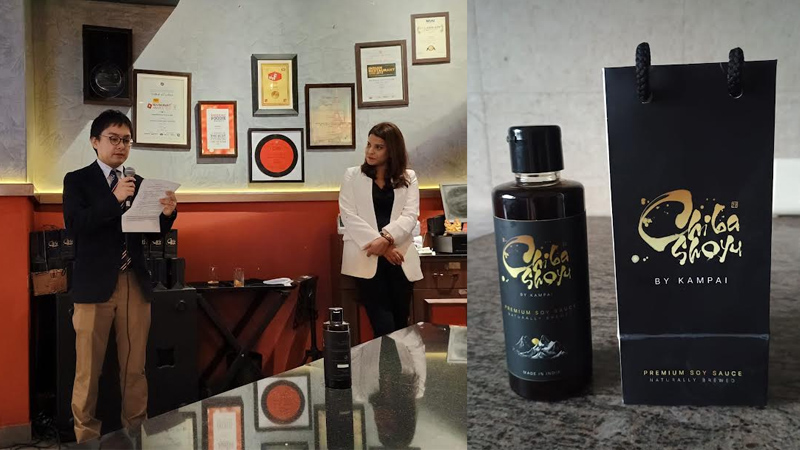
    Mumbai: Chiba Shoyu Co. Ltd., a Japanese soy sauce manufacturer with over 170 years of heritage, and Kampai, a renowned Japanese restaurant in India, have made culinary history by unveiling India’s first locally produced authentic Japanese soy sauce. Supported by the Japan International Cooperation Agency (JICA), this initiative marks a significant step in the ‘Development of the Soybeans Industry through Japanese Traditional Koji in India’, promoting sustainable practices and local enterprise growth.  

    The launch event at Kampai saw key figures like Kampai, founder & MD Avantika Sinha Bahl,  Ankur Chawla Kampai, Chiba Shoyu, president, Kyosuke Iida, JICA India, senior representative, Tomohiro Arima and representatives from the Japanese Embassy. Guests savored the soy sauce through a curated menu, showcasing its potential to elevate the Indian culinary scene.  

    Commenting on the initiative, Arima said, “It is an immense pleasure to be part of this collaboration, which is not just about introducing a Japanese product to the Indian market but also represents a deeper cultural exchange between Japan and India. The partnership between Chiba Shoyu, known for its expertise in authentic soy sauce production, and Kampai, recognised for its commitment to bringing true Japanese flavors to the Indian culinary scene, sets a new benchmark for quality and taste. Through this initiative, we aim to empower local industries by sharing Japanese expertise and contribute to the ‘Make In India’ initiative in line with the Indian government’s goals.”  

    The collaboration began with a pilot project in November 2023 at Kampai’s facility in Gurgaon, where soy sauce production was initiated using locally sourced materials and Indian workers, with guidance from Chiba Shoyu’s technical experts. After a meticulous 10-month fermentation process, the first batch was ready by September 2024. Chiba Shoyu’s team conducted quality control checks throughout, ensuring that traditional koji fermentation methods were upheld.  

    Looking ahead, Chiba Shoyu and Kampai are planning to establish a full-scale manufacturing facility in Gurgaon or Haryana to expand production for both domestic and international markets, including the Middle East and Europe. The facility is set to begin commercial production within a year, promising to generate local employment and foster sustainable processing practices.  

    JICA remains dedicated to supporting ventures that drive sustainable development, boost local industry, and reinforce cultural connections between India and Japan. The success of this project serves as a model for future collaborations in the food processing sector and beyond, aligning with JICA’s mission to create enduring value for communities in both nations.  

  • BJP Vs Congress, PM Modi’s campaign sets new benchmark for political PR and communications

    BJP Vs Congress, PM Modi’s campaign sets new benchmark for political PR and communications

    Mumbai: The campaigning for Lok Sabha elections is in full swing across the length and breadth of India. Political parties are flexing their muscles to engage in the poll battle of power and politics. They are somersaulting to prove themselves to be self-righteous and infallible while accusing others. In the dance of democracy, where we, the people of India, are innocently mute spectators as if their voices are getting drowned out, a “Chunavi” rhetoric slogan storm is brewing, with the air thickening with mudslinging and whataboutery. This phenomenon is not happening only with the current election cycle; rather, the political slanging match of the election gung-ho is becoming hotter and shriller day by day, surpassing the feverish excitement surrounding IPL cricket matches.

    Amidst the no-holds-barred electoral campaign, two incidents grabbed the headlines: first, Kangana Ranaut Vs Supriya Shreinate’s queen-sized row over remarks and counter-remarks; and secondly, PM Modi slamming the Opposition (Congress and INDIA bloc) for allegedly eating Mutton during the holy month of Sawan, referring to Rahul Gandhi and RJD supremo Lalu Yadav cooking Bihar’s special “Champaran Mutton”. Both political incidents followed punches and counter-punches. In the rat race of “first to break the news”, the reputation and image of political personalities get badly battered when the rumbling media beam such news stories. Political parties compete in their mission to condemn their respective adversaries, making election time, which is deemed as the festival of democracy, a season of allegations.

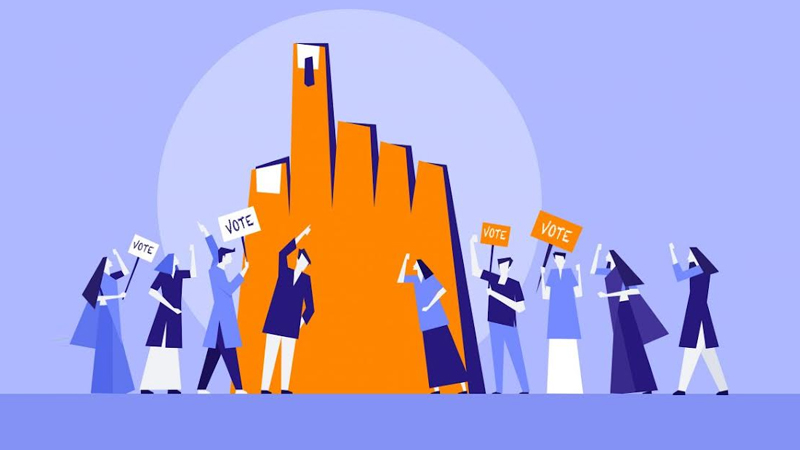
    In a democratic country like India, where 97 crore people are eligible to cast their votes and shape the destiny of the battle of the ballot, proper dialogue and strategic communications play a pivotal role in swaying the minds of the 140-crore populace of this socially and culturally diverse nation, which stands tall as the world’s largest democracy. Connecting with voters, shaping narratives, drumming up electoral manifestos to match the mood of the voters, and managing crises in real-time in this digital AI-driven world are highly significant to win elections. Here comes the role of PR and effective communication strategies, which could be key determinants in influencing public opinion on the poll pitch of the Lok Sabha elections in 2024. Managing perception as well as meaningful connections between politics and people entails strategic communications. This General Election holds distinctive significance for the country and the Public Relations industry.

    Slogans wield a significant impact, setting the tone for the big battle of elections. These taglines encapsulate the essence of the vision of political parties and represent strategic communication moves to leave an indelible mark on people’s mindscape. Whether it’s “Sabka Saath, Sabka Vikas,” “Achhe Din,” “Pradhan Sevak,” “Beti Bachao, Beti Padhao,” “Vocal for Local,” “Make in India,” “Double Engine Ki Sarkar,” “Teesri Baar Modi Sarkar, Abki Baar 400 Paar,” or “Modi Ki Guarantee,” PM Modi’s electoral campaign taglines have reverberated widely across the country. Crafting such narratives to sway the poll mood of the nation is a herculean task, highlighting the critical need for strong PR and communication strategies in election campaigns. The 2014 Lok Sabha elections, which saw the BJP register a landslide victory under Narendra Modi, marked a watershed moment in communication strategies and political marketing. The innovative campaign tactics and masterful use of social media have set a new benchmark for PR and political communications in India.

    Notably, the business of PR and political consultancy has undergone exponential growth in India. During election time, the importance of the backroom system of ‘Chunavi Rajniti’ grows tremendously. From geographical boundaries to different political hues at the micro level of constituencies, managing the diversity of Indian voters demands well-crafted PR and communication strategies involving a wide gamut of functions. Political consultancy and PR firms bring together a wide pool of talent, including from IIMs, IITs, and top-notch B-schools, to leverage AI-enabled technology tools to hammer out effective campaign strategies, helping parties strike chords with their voters and appeal to mass demographics. Prashant Kishor-led I-PAC, a political consultancy firm, has earned many accolades for revolutionizing the course of electoral campaigns.

    Gone are the days of favouring one’s own people or bending to political heavyweights during ticket distributions. Today, the selection of candidates for election fights is guided by robust surveys and data analysis conducted by political consultancy and PR companies. With the wide network of the internet crisscrossing India, elections have become a digital battleground, which has thrown new challenges for election candidates and political parties. Winning and losing elections now hinge on the skill of engaging voters through effective messaging and impactful narrative. The ever-growing footprint of political consultancy and PR communications on the poll pitch undeniably reflects this shift. The convergence of strategic communications, data analytics, and AI-driven technology has reshaped the dynamics of PR and electioneering in India.

    As the Lok Sabha Election 2024 is billed to be the launching pad for making India a Viksit Bharat, the PR industry would play its king-size role in building trustworthy and reliable communications. On the occasion of National PR Day, celebrated every year on April 21, the Public Relations and Communications industry underlines the warm sentiment of one proverbial saying: “A good PR story is infinitely more effective than a front-page ad.”