Tag: Maitreyi Mangrati

  • Ipsos India bags two key awards at the MRSI-organised Golden Key Awards 2023

    Ipsos India bags two key awards at the MRSI-organised Golden Key Awards 2023

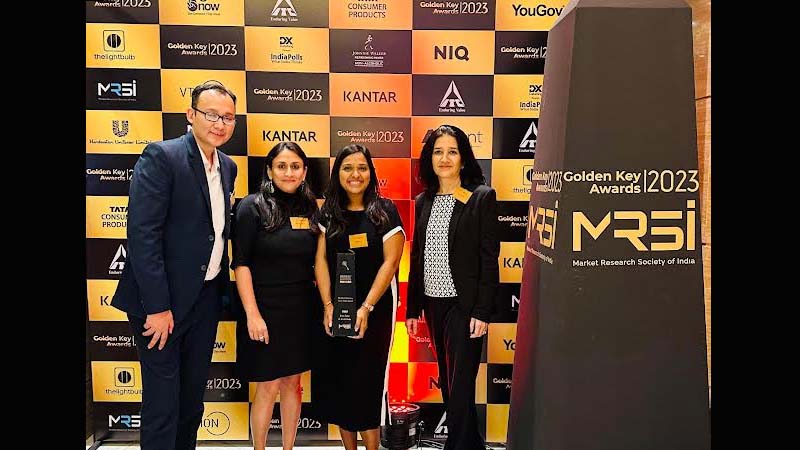
    Mumbai: Ipsos India has bagged two prestigious awards at the Market Research Society of India (MRSI) organized, the Golden Key Awards 2023 (GKA 2023). The awards won were in the categories of the Most Effective Storyteller (won jointly with Nestlé and the Best Operations Team of the Year. The awards were held on February 21st, 2024 at The Leela Ambience Hotel, Gurugram.  

    The Most Effective Storyteller award was for the acclaimed recognition of the paper produced in collaboration with Nestlé, that underscored the significance of fundamental storytelling elements in conveying meaningful insights. As the the widely accepted adage goes: Insights are delivered, stories are heard, and movies leave a lasting impact – this encapsulated the distinctive aspect of the winning paper.

    It adopted a novel approach of movie-based storytelling, to vividly illustrate the experiences of Generation Z. The team of Ipsos, Shelly Jain (research director, Ipsos UU), Maitreyi Mangrati (executive director, service line leader, Synthesio), and Ashwini Sirsikar (group service line leader, Ipsos UU and Synthesio), confabulated and conceptualized this innovative approach. And complemented by key inputs from client partner, Nestlé and Abhinav Goel (lead consumer insights, Nestlé). Ergo, the collective effort redefined the power of storytelling, delivering impactful insights.

    “Generation Z is a not only a very important target set for Nestlé but also reflects on the new employees entering the workforce. To understand them in reality, Ipsos conducted an important research, understanding the cohort in detail and more importantly bringing  them alive in a unique way that aroused the curiosity of all the stakeholders,” said Nestlé director strategy and marketing communication, South Asia region Chandan Mukherji.

    “Ipsos India is a strong advocate for using the storytelling principles for delivering insights. We realised that we needed to do something different for the insights to be impactful and memorable since there was already so much that was known about Gen Z. Short, engaging and well woven, data-led business narratives are the need of the hour and what better way to deliver insights than using the magic of cinema! We used the classical story arc to build and deliver the narrative in the form of a short movie, complete with a trailer to create excitement, expert speak and a meet with the cast on the big day,” stated Ipsos UU and Synthesio group service line leader Ashwini Sirsikar.

    In case of the 2nd win, for the Best Operations Team of the Year Award, public affairs executive director Mridula Mishra elaborated, “Pey Jal Survekshan was done in 485 major cities in India where views of citizens were captured for the water supply related services provided by the Urban Local Bodies. We reached out to 5 lac plus citizens in this process and provided meaningful insights to the client for planning the next course of action.”

    Ipsos India operations director Meghana Kelkar said, “The Ipsos Operations team was honoured with the Best Operations Team of the Year award at the MRSI Golden Key Awards, 2023. We also had the distinction of shortlisting of two finalists in the same category. We demonstrated operational excellence as we successfully conducted the world’s largest sanitation & cleanliness survey, the Swachh Bharat Survekshan Urban & Swachh Bharat Survekshan Grameen, and the Pey Jal survey, India’s first unique urban water quality survey. It’s a matter of immense pride to win one and for the other project to be a finalist in this prestigious category. Our work was on full display at the great GKA 2023 platform.”

    Apart from the research team led by Mridula Mishra and her team. The Operations team comprised of Meghana S Kelkar (operations director), Surojit Podder (associate director-field), Sonia Marwah, (associate director-field), Dilip Mishra (associate director- field) and Jaspreet Singh (senior manager-field).

    Ipsos in India CEO Amit Adarkar expressed his joy with the stellar performance by his teams. He said, “It is a matter of great pride and honour for everyone in Ipsos, that our two teams have picked up these much coveted awards. While it is our constant  endeavour to provide clients with the best in class solutions and deliver impactful work to provide them with the market leading position, awards validate our work. For us, the total of 8 finalists on the GKA 2023 is in itself a significant achievement. We keep the tempo going.”    

    Golden Key Awards

    MRSI Golden Key Awards recognize and celebrate Research and Researchers contributing to growth in their clients’ business. Research is a critical foundation for business success, albeit the work done by researchers can be a ‘behind the doors’ activity supporting the more visible brand, marketing and business strategy.

    MRSI instituted the Golden Key Awards in 2019 to recognize the contribution of insights for the growth of the business.

    MRSI Golden Key Awards 2023 continue to be a beacon of recognition and celebration, honoring the vital role of research & insights and researchers in driving business growth. In a world where research often operates behind the scenes, supporting the more visible facets of branding, marketing, and business strategy, these awards serve as a platform to shine a well-deserved spotlight on the dedicated professionals in the field.

    The 2023 edition is set to take place at The Leela Ambiance, Gurgaon on 21 February 2024.

  • Ipsos India busts popular myths about Gen Z & Gen X

    Ipsos India busts popular myths about Gen Z & Gen X

    Mumbai: Ipsos India showcased new thinking on Generations busting myths about Generation Z and Gen X, providing a true understanding of the two key cohorts, exhorting marketers to fine tune their targeting with precise messaging. The views were shared at the Ipsos After Hours, client event.  

    Generation Z, those born between 1997 to 2012 and Generation X (born between 1965 to 1980) have been the fastest growing cohorts. Ipsos highlighted some of the misconceptions around these two groups of dynamic people.

    Ipsos India group service line leader, UU and Synthesio Ashwini Sirsikar said, “We all know that India is a young country, with 65% of its population belonging to Gen Z or Y. What may be news to some of us is that it is actually Gen X which is the faster growing population for India. While much is written, spoken and known about Gen Z, there is very little which is known about Gen X. However, what is common to both segments is the abundance of myths which exist around each of these segments. Our attempt is to bust some of these myths and leave some food for thought for marketers.”

    Generation Z

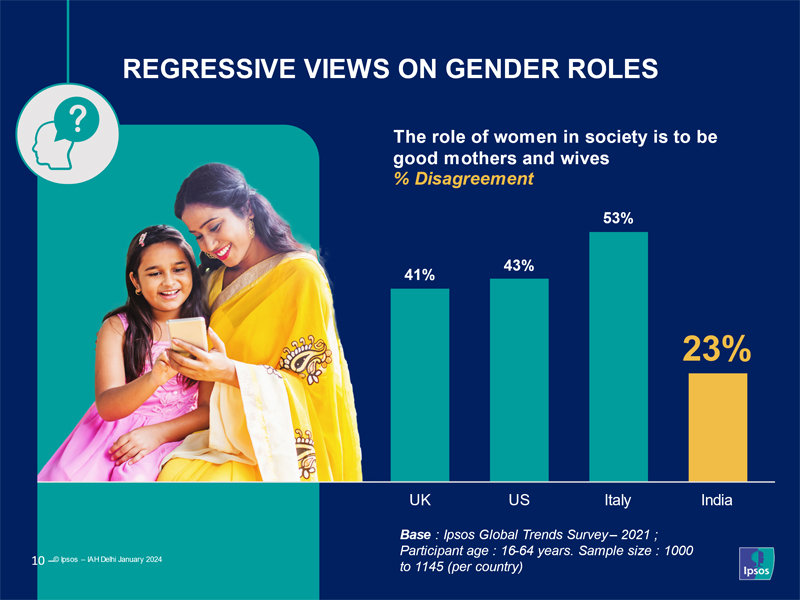
    Myth one – We all tend to have this stereotypical Gen Z image shaped by the popular media and our own exposure to various western influences. But the reality is different as shown by the data on this slide – the difference between Gen Z in India as compared to other countries.

    IPSOS

    Generation Z has regressive views on gender roles.

    Myth two – One would expect Gen Z as a cohort to be a happy bunch and someone who would lead a very carefree life where they are able to navigate the complexities of life very easily.

    In reality, Gen Z was seen to be largely bored, lonely and frustrated. And constantly under stress.

    Myth – GenZ often seen as digital natives are not just social butterflies in the virtual world but also adept at forming meaningful connections in the physical world.

    Not only were they bored and lonely, but they were also finding it more difficult to make friends after the pandemic. They are comfortable interacting with people online but that itself could be a stressor for them – as it becomes difficult for them to form true human and personal connect in the non-online world.​

    ​They find the thought of talking to strangers difficult and struggle to open conversations.

    Myth: Gen Z is self absorbed, entitled and privileged.

    Interestingly, what we saw was a heightened sense of awareness about financial responsibilities – they did not feel as secure financially (some of them would have just started working) and worry the most about being a financial burden on the family.  ​

    ​To combat this, they were seen to often start to earn early and supplement their income through side jobs.

    Gen Z was seen to be different from how it is perceived in money matters.

    Generation X

    Myth 1: Gen X is often caught between the responsibilities of caring for parents and raising their own families coupled with the pressures of maintaining their careers, mental and physical wellbeing.

    Contrary to the popular notion, Gen X-ers actually felt way better physically and mentally when compared to Gen Z.

    Myth 2: Significant global events, economic fluctuation have resulted in Gen X being pessimistic

    We know that the Gen X has seen considerable financial fluctuation as well as big global events that have impacted their lives – which leads us to think that they are a naturally pessimistic generation.

    However, they are feeling a lot more optimistic about life in general – more well prepared, excited and optimistic and less lonely, bored and frustrated.

    Myth 3: Generation X with multiple financial responsibilities find themselves cash strapped and need to dip into savings.  

    We already know that as a Generation, they have a huge spending power. ​

    ​Despite this, it was interesting to note both Gen X and Gen Z feel similarly when it came to buying things they need. However, Gen X-ers also try to keep their life simple as far as possessions are concerned. They in fact believe in leading a simple life.

    While Gen Xers believe in simple living, it does not translate to frugal. They are in fact enthusiastic about making purchases across a very wide range of categories.

    These categories span a broad range – these not just include the obvious ones like grocery, financial services, health care etc. but also others like fashion, home décor, consumer durables, personal care, automobiles etc.

    Myth 4: Generation X often considered financially pragmatic, is known for saving for very specific goals.  

    Interestingly, Gen X was seen to be self-sufficient when it comes to money. They have a savings mindset but were not saving for anything in particular.

    Popular culture Vs reality. Does Gen X’s portrayal match up?

    Portrayal of Gen X in popular culture to see if this representation matched the reality or just carried forward the existing stereotypes showed, Gen X was a forgotten generation or a sandwiched generation. Every generation had its stereotype — millennials were seen to be whiny, Gen Z weird, and boomers were seen to be selfish. Gen X’s nobody remembered them.​

    41 per cent of them felt that their generation is not at all well-represented in the advertisements today.

    Look at some salient TV commercials – Most categories focus on either the youth or the boomers, youth – because everyone runs after them, boomers – as everyone listens when granny speaks. ​

    What was clearly evident that there were very few meaningful portrayals of Gen X or any meaningful relationships shown between Gen X and Gen Z.

    Even when Gen X were represented in ads, the depiction was stereotypical and it was in categories like health, insurance etc. – portrayed as the ignorant, tech unsavvy folks, just as provider who need to be educated either by their smarter kids or an expert.​

    Also shown as being at logger heads with Gen Z – having extreme and traditional views. And the portrayal of one generation teaching the other.

    Gen Xers also felt very under-represented in specific categories like fashion, beauty, durables, automobiles etc. – and unfortunately, these were the very categories that they were looking forward to buying in the very near future.

    A few brave attempts made to unstereotype this generation – but not enough.

    ​There was some glimmer of hope seen when it came to OTT – Many Gen X centric shows with lead actors in their  50s of late, have been coming through. Playing their age, breaking the stereotypes.

    Need for more authentic representation of both generations to avoid alienation.

    What will it take to engage them meaningfully and tap into their buying power?

    At what age do we cap survey participation?

    “The narrative of Generation X is marked by satisfaction, wealth accumulation, and unfortunately, disregard. This rapidly growing, affluent generation is often overlooked, both in terms of dedicated research and representation in studies and targeted marketing – a situation that requires introspection and change,” stated Ipsos India executive director and country service line leader, Synthesio Maitreyi Mangrati.

    While there are many misperceptions and differences between these two generations, one thing on which their views converge is the impact of climate change on the planet and the need to take necessary action.