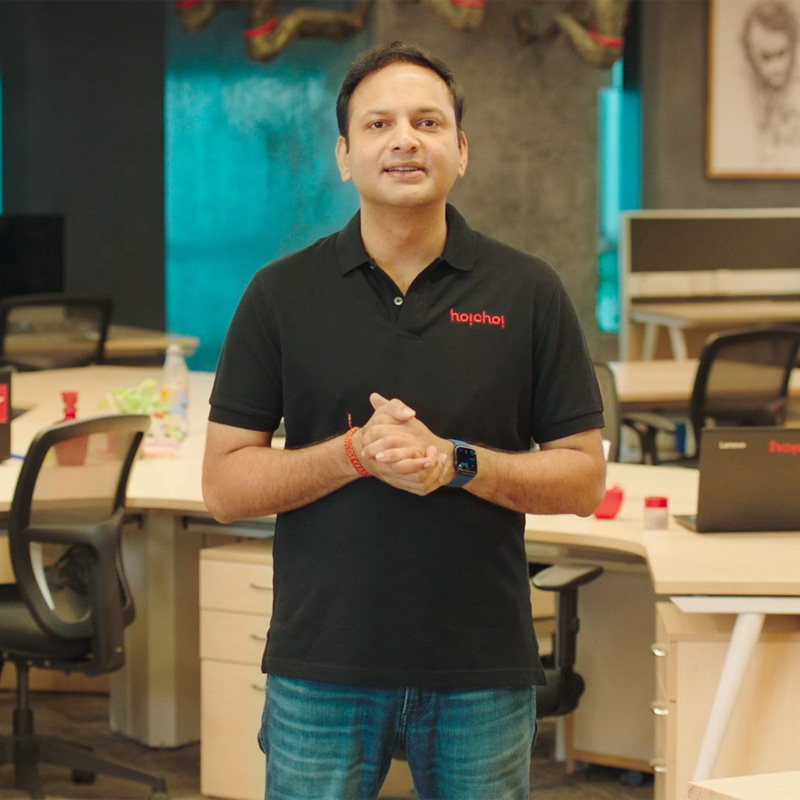
Tag: Mahendra Soni

  • hoichoi to double spending on content, announces 20 new shows

    hoichoi to double spending on content, announces 20 new shows

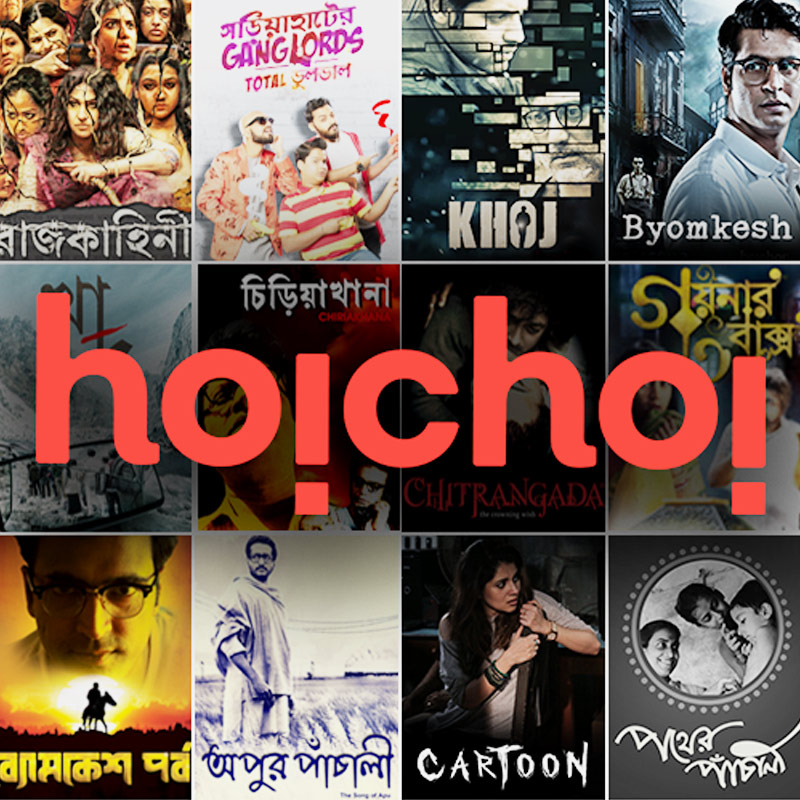
    Mumbai: The Bengali OTT platform hoichoi has bolstered its content library with as many as 20 new shows as it marked its fifth year in the streaming space. The streaming service brand recorded 2x growth in active monthly subscribers and now planning to double its investment in content to power the next phase of growth, it shared during the virtual event #HoichoiSeason5 held on Friday.

    The go-to-market strategy will now rest on the pillars of content, tech and distribution, and expansion. “Since we only have a yearly subscription, it is very important for us to have high engagement on the platform. At (minimum) Rs 600 and Rs 900, it’s no way cheap to be on hoichoi, and hence we must continue to offer a great catalogue of films and shows on a regular basis for our premium users in order to drive subscription and engagement,” said hoichoi co-founder Vishnu Mohta.

    hoichoi currently has over 80 originals and is eyeing to reach the target of 100 shows by the end of 2022. Going forward, the main focus will be to drive subscriptions by bolstering its content offering and expand in both Bengali and non-Bengali markets in India and globally, said the platform.

    Content – Bengali/Dubbed Regional and Branded

    Of the 12 world premiere films planned for next year, five titles will be led by noted directors such as Srijit Mukherji and Anjan Dutt, which will add to the existing catalogue of 600+ films.

    Some of the originals revealed at Friday’s event include “Srikanto,” “Byomkesh 7,” “Mahabharat Murders,” “Eken Babu 5,” “Troilokkyo,” “Mandaar,” “Rudrabinar Obhishaap,” “Montu Pilot 2,” “Khyapar Shohor,” “Gora,” “Tiktiki,” “Swapan Kumar Obolomboney Bottolar Goyenda,” “Uttaran,” “Indu,” “Boli” (Bangladesh), “Karagar” (Bangladesh), “Sabrina” (Bangladesh), “Kaiser” (Bangladesh), and “Bodh” (Bangladesh).

    The platform also announced that it has witnessed a 2X growth in its overall watch-time and monthly active streaming users as well as a 4X growth in viewership, not only in India but in Bangladesh as well. It has recorded 60 minutes of average daily watch-time among subscribers, with each user visiting the platform thrice every day on an average.

    “We are overwhelmed with the response we have received for hoichoi in both the regional and as well as national OTT space in the span of past four years,” said co-founder Mahendra Soni. “hoichoi’s relevant and dynamic content has made it possible for us to build a diverse audience base, and as we step into the fifth year, the goal is to curate more remarkable content in collaboration with the best creators and talents of the industry.”

    The platform’s monthly subscription numbers in Bangladesh have also doubled every month since last year. Buoyed by the success in the neighbouring country, it intends to produce at least seven to nine originals for the Bangladesh market in association with local talent.

    While the pandemic-induced lockdown catapulted OTT platforms into accelerated growth, co-founder Vishnu Mohta believes the OTT culture began setting in among people for a few years now, and the pandemic only amplified it. “Since the pandemic surfaced, generally, people started getting accustomed to direct-to-digital releases along with the wide array of web series presented by the platforms. Post the lockdowns, OTT platforms have hardened their space in society. Therefore, this trend is here to stay. It will continue even in the post-pandemic world,” he said while talking to Indiantelevision.com ahead of the event.

    For hoichoi, the growth was also led by its Hindi dubbed content, which has been very well-received on partner platforms, said Mohta. “In order to replicate this success across regional markets and establish a connect with Indian and global non-Bengali audience, the platform is now planning to dub its content in other languages like Tamil, Telugu, and Malayalam,” he added.

    Running into its fifth year, hoichoi has also stepped up its branded content and launched a ‘Freemium’ service that allows users to watch ad-free shows without having to pay. So far, two shows have been released in collaboration with jewellery brands – Turu Love with Senco Gold & Diamonds and Subharambha with PC Chandra Jewellers. “While we stick to our strategy of offering ad-free content, we believe that branded content does not interrupt the viewing experience. Freemium section is primarily intended to cater to different brand needs while ensuring the content remains engaging and high-quality,” he added.

    Expansion, distribution, and partnership

    Running into its fifth year, one of the main focuses for hoichoi now is to drive more subscriptions on its platform through both direct subscription and subscription bundling partners. In India, besides its existing partnership with Jio Fibre for broadband subscription bundling, it has now partnered with Airtel as its preferred partner for mobility, broadband, and DTH bundling. There are other collaborations with ISP players like Alliance, Wishnet, Meghbela in India, and Link3 and Grameenphone and Sohoj in Malaysia.

    In 2022, the brand aims to have more such subscription bundling partners across telecom, ISPs, e-commerce, and DTH services.

    In order to reach out to tier 2 and 3 towns, hoichoi has also recently entered the retail vertical to enable subscription through offline payment mode where users can simply visit a local partner store and purchase a subscription by paying in cash. Sohoj and Paynearby are some of the current retail partners. Tie-ups with over 500 retail stores in both India and Bangladesh are planned for the next six months.

    At present, at least 40 per cent of hoichoi’s direct subscription revenue is contributed by the international market. With an aim to deepen its presence among the large Bengali population in South-Asian countries like Malaysia and Singapore and the middle-east, hoichoi is looking to partner with key telecom operators in the region. The launch of sachet pricing for both these markets is also on the anvil.

    Additionally, it will be launching digital gift cards offering special pricing plans for this Durga Puja across many countries like the US, UK, Australia, Singapore, and the Middle East. Mohta shares that as part of the recurring payment ecosystem that exists in most international markets, hoichoi subscription charges hover at nine dollars per month.

    Technology

    On the tech front, hoichoi will soon be available with a new interface displaying added features such as content description, trailer auto-play feature on the content details page, new and improved search layout functionality, Hamburger Menu Navigation, and new signup, streaming player, and login page.

  • It’s back to the movies in West Bengal from 1 October

    It’s back to the movies in West Bengal from 1 October

    MUMBAI: Cinema owners in west Bengal are heaving a sigh of relief. West Bengal chief minister Mamta Banerjee today announced that cinema halls can start screening films for the public come 1 October.  In the process, it has become the first state government to give the green signal to the beleaguered cinema exhibition sector which has been shut since March 2020 and has run up huge losses.

    However, screenings will be limited to 50 participants and cinema halls will have to follow strict safety protocols such as masks, sanitisation, physical distancing and other precautionary procedures. Along with film screenings, jatras, plays, open-air theatres, and shows related to music, dance and magic shows will also open from 1 October. Banerjee said the decision was taken as another step to take living to near normalcy.

    Bengali actors, the Eastern India Motion Pictures Association and the Multiplex Association of India  (MAI) – have repeatedly beseeched the state government to  give the sector the go ahead to start operating again. The state has reported 4,700-odd Covid related deaths with 244,000 getting infected and 214,000 recovering. Around 3,200 new cases are being recorded daily.

    Producers and distributors have been releasing films direct to OTT over the past few months in order to cut their losses. It’s quite probable that some of them will start looking at the big screen again.

    Commenting on the development, SVF co-founder and director Mahendra Soni said: “We are happy and welcome Didi’s announcement. This is a huge relief for the exhibition industry. Having said that to restart the actual business the re-opening has to happen at a national level otherwise there would difficulty running the theatre operations without new film releases. I am hoping to get some kind of announcement from central government too. "

    "As far as SVF Cinemas is concerned we are waiting for detailed guidelines and safety protocols before we decide on the opening date. We will open as soon as possible once we have the official notification along-with do’s and don’ts," he added.

    With West Bengal opening up movie theatres, will other state governments follow? The MAI, for one, is hoping they will, sooner than later.  

  • This is not the time to think of loss or profit: SVF’s Mahendra Soni

    This is not the time to think of loss or profit: SVF’s Mahendra Soni

    MUMBAI: The unprecedented COVID-19 crisis has thrown a spanner in the works of both large companies as well as small and medium enterprises. SVF, one of the biggest production houses in East India, is also not an exception. Although its over-the-top platform Hoichoi has fared well, its massive film and TV production business, which had seven daily soaps going on, has come to a halt. SVF co-founder and director Mahendra Soni acknowledges the crisis but he thinks it is a time to support the fraternity, rather than overdoing the loss count.

    In an interaction with Indiantelevision.com, Soni spoke on wide-ranging topics including the impact of the crisis in the Bengali market, on SVF and the way forward.

    Edited excerpts:

    What will be the overall impact of the crisis on the Bengali industry?

    If we take the financial year 2020-2021, I think there will be at least 30-40 per cent drop than the last year for sure, if it opens before May end or around that period. So, I think August will be a very important time period in the Bengali market because by that time people should start coming back to theatres and we can have a few footfalls by Durga Puja. But if we continue beyond that (May end), then it becomes difficult because the whole cycle is stuck. At this moment all I can say is that it’s not about loss or profit, it is about at least looking after the people that work there, daily wage workers, etc. Honestly, we are not also thinking beyond that.

    How does this crisis impact SVF's overall finances as well?

    No one was prepared for it. It’s not the time to be thinking about balance sheets. I am not listed on the share market so I am not worried about that. We know that we have a pool of great creative talent and whenever it opens, we will bounce back stronger. At this moment our priority is to be safe and make sure that everybody stays in their home and also reach out to everyone who can help in any way. In fact, I would like to appeal to others in the industry to be strong, support your people, stand by them and not think of losses.

    How many projects of yours are stuck and how many were in the initial stage?

    We were working on almost seven new films. Six were already shot or in the production/post-production stage. Apart from that, there are six-seven films that we were planning from April to December, all those films got stuck.

    How much impact are you seeing on TV production?

    To be honest, TV is a daily loss. As it has stopped, we are not making any money or any content. So that’s revenue-wise more impactful and the team size is also bigger there.

    Since you have a robust movie library and you have worked along with Bengali Star Jalsha, Zee Bangla, are you planning to offer some of your movies to the channels?

    So we spoke about that but almost 80 per cent of my library is already with Jalsha.  I also feel that TV broadcasters are a little reluctant to invest in new content. At least, I can say from the regional perspective because the advertising revenue has definitely gone down. I had some discussions about monetising that content with a couple of channels but I feel that also has been stuck because of their budget issues and cash flow issues because they also have to look after so many people they have already employed.

    How are you focusing on the development part of the projects currently?

    We have divided the teams into two-three groups. Everybody is working from home and we use Microsoft Teams to connect. One team speaks to directors. A lot of creative things are happening because the scenario would change a lot after this even when we come back; how people feel, how people see things, how we're going to change ourselves so that’s also going to create a lot of content that we create every day. So those discussions are happening. We are going back to also thinking what all we have done and what has gone wrong so we should not be doing those mistakes again.

    So, we do one meeting every week to figure out what they have watched and from there we would pick up at least seven-eight ideas that can be developed or looked into.

    Once things resume, how much time will it take for you to go back to normalcy for your production?

    I don’t think we will take even half a minute to go back to normalcy. We are paying our dues, we are supporting our people, we don’t see any reason for a delay of anything.

    Are you expecting any support from the government?

    Again it's not the time to ask that. It is the time to get past through it. I am sure the government also would be supportive but at this moment we should support our government to just make sure that the poor people, the homeless people, the medical fraternity should be looked after well and whatever we can do for them is more important than doing for our business.

  • A Tale of a Bengali Dracula

    A Tale of a Bengali Dracula

    MUMBAI: SVF and director Debaloy Bhattacharya released the teaser of their upcoming film Dracula Sir – a much-awaited experimental genre-based drama – dealing with the popular Westernised concept of Vampires and Dracula. This is the first time a film based on the concept of Vampires has been conceptualised with a flavourof bangaliana for the Bengali audience.

    The teaser starts off with Anirban Bhattacharya voicing the famous lines written by renowned revolutionary writer Nabarun Bhattacharya that says:

    “Ei Mrityu Upattaka Amar Desh Noye” (This valley of death is not mine)

    Ei Bistirno Shoshan Amar Desh Noye (This wide graveyard is not mine)

    Thereby, hinting at a revolutionary touch to this film. This is followed by a man, a schoolteacher by his appearance (essayed by Anirban Bhattacharya) who enters a classroom in the present day, to be greeted with a blackboard that is inscribed with the words Dracula Sir, thereby introducing us to the protagonist of the film Raktim ( Anirban Bhattacharya), a simpleton with a protruding pair of canine teeth, bullied for his vampire appearance.

    But he has a story to tell from 1971 that makes his journey a tale of finding love and seeking revenge. The teaser then shows us a glimpse of the past with Manjari (played by Mimi Chakraborty) telling Amal (Anirban Bhattacharya) that their fight is for freedom and finally the teaser ends with Amal screaming in pain after his canines get brutally pulled out while he is being tortured inside a prison…r

    Director Debaloy Bhattacharya says: “The story is about a primary school teacher who has a protruding pair of canine teeth earns his nickname Dracula Sir. As destiny pushes him towards becoming the vampire he has always been referred to..This is my search for the Bangali Dracula without the castle, who is out to create his own myth. A man turns into a vampire and with that a whole lost world unleashes around him.'

    Co-founder and Director of SVF, Mahendra Soni says: “This is the first time the Bengali audience will get to experience, cherish and talk about their own vampire in the form of a simple Bangali man, through this unique film. Anirban surpasses himself as an actor and Mimi will be in a never-seen –before avatar.

    Mimi Chakraborty who makes a comeback into film after a political hiatus said: “It’s always a pleasure working with SVF and I’m happy that I’m working with them on such a unique project. My character Manjari is very different from all the characters I’ve played over the years. This is also my first film with Debaloy and second film with Anirban so I’m looking forward to the release of this film!”

    Directed by Debaloy Bhattacharya, the film also stars Rudranil Ghosh, Bidipta Chakraborty, Kanchan Mullick and Samuel Alam in pivotal roles. The film is scheduled to release on 1st May 2020.

  • Media Worldwide launches Bangla Talkies

    Media Worldwide launches Bangla Talkies

    MUMBAI: Music channel network, Media Worldwide Ltd has announced the launch of an all new channel Bangla Talkies.

    The music channel network launched with Sangeet Bangla in the year 2005, a Bengali music television channel. Since its inception, Media Worldwide has grown to a 5-channel network with Music India, Sangeet Bangla, Sangeet Bhojpuri, Sangeet Marathi and now Bangla Talkies added to the portfolio.

    Bangla Talkies will be a back to back Bengali music channel with 100 per cent exclusive content available on no other channel. It will be airing all time bangla hits with a collection never ever seen on any Bengali music channel.

    Media Worldwide Ltd co-founder Mahendra Soni said, “I am delighted to announce the launch of our latest channel in the Media Worldwide network called Bangla Talkies. It is with immense pleasure that I speak of the growth story of Media Worldwide from its inception to having 5 channels under its brand name today. Media Worldwide envisions providing wholesome entertainment of the vibrant music and film industry to a country of over a billion people in the language, ethos and culture which we all celebrate and are proud of.”

  • SVF boss Mahendra Soni on Bengali TV biz

    SVF boss Mahendra Soni on Bengali TV biz

    MUMBAI: From film to television to digital, the Bengali entertainment industry has been one of the strong bastions in the country over the years. But it hasn’t been a hunky dory ride always. SVF, eastern India’s undeniable entertainment king, has played the role of a game changer for the entire industry. While its digital arm Hoichoi has completed its one year anniversary and the film and distribution business is creating new records, the television business still counts as highly important.
    Though the “Yashraj Films of the East” holds more fame for its film business, its television business has also fared well in the last decade. The big shot production house started its television content production in 2008. Since then it has produced many Bengali TV shows and worked with all three big broadcasters, directors and co-founders of SVF, director Mahendra Soni said in an interaction with Indiantelevision.com.
    Soni said that as TV works in a cycle, the number of shows on-air changes from time to time. While SVF started with two shows Bandhan and Durga, it reached up to eight shows at a point of time. However, the focus isn’t on quantity. Currently, they there are three shows on air, two with Star Jalsha, one with Zee Bangla.
    “We do television only when we have some exciting stories because our shows have been very different than the usual shows you would see on GECs,” Soni said. He cites the example of Potol Kumar Ganwala, one of its top shows, released a couple of years ago, which is being remade in Hindi now. Other than that, the production house has a number of shows which have crossed into other languages. Speaking about the future, he said there are five shows in the pipeline – two with Colors Bangla, one with Zee Bangla, two with Star Jalsha.
    The experienced executive of the Bengali TV industry said good stories prevail over everything and that there cannot be a particular genre which works better than others. However, he mentioned the entry of BARC into TV measurement has impacted TV content making in the last three years. Mythological shows and fantasy drama are being made in large numbers.
    “Television is very important because you can reach out to so many people at a time. It is a very different kind of storytelling and lot of pressure and competition which you love as a producer and storyteller,” Soni said.
    However, the production house is a little sceptical about reality or non-fiction shows. “Lot of great properties (in non-fiction space) have already been created by international companies. So, until and unless we get something exciting, we are not going to do non-fiction at the moment,” he commented.

  • Hoichoi to introduce pay-per-view, offline payment method

    Hoichoi to introduce pay-per-view, offline payment method

    MUMBAI: SVF, the big name in Bengali entertainment industry, last year launched its Bengali OTT platform Hoichoi riding the wave of digital growth.  In the second season of its journey, it is expanding its footprint into Bangladesh and UAE market. Though dependent on the SVOD model since birth, it will now introduce pay per view model as well. Moreover, in a first of its kind move in the industry, it has launched Hoichoi Top Up card which will be available in nearest retailers or upcoming Hoichoi kiosks. Given the preference for cash payment, this is an offline payment method.

    Along with a new payment method and business plans, it has the ambition to add more than 100 hours of original content in the upcoming year. The new content pipeline includes 30 original shows, some of which are second seasons of popular web series already aired on the platform. While SVF, the parent company has a rich history in the Bengali film industry, the digital venture aims to add 12 original films.

    Hoichoi co-founder Vishnu Mohta mentioned the high user engagement of the app though kept mum on subscriber numbers. He claims the average time spent in-app is one hour per day. It is not certain how the company has been able to get its return but the awareness of Hoichoi has been created.

    Like other OTT platforms, Hoichoi is also seeing traffic from tier-II and III cities. In addition to that, almost 40 per cent of the audience comes from non-urban areas and Hoichoi director and co-founder Mahendra Soni mentions this as the rationale behind introducing offline payment method.

    While Bengali industry makes many good films, the natives living outside Bengal don’t get the chance to watch them in theatres often. The plan of digital premiere is aimed to bridge this gap. “In yet another first in the Bengali entertainment space, we are now introducing the ‘pay per view’ feature as part of the TVoD model. We will be releasing movies on Hoichoi very soon after their theatrical release and the viewers will have the option to pay for the content on an a-la-carte basis,” Hoichoi director and co-founder Shrikant Mohta said.

    A partnership with Airtel TV in India, Robi in Bangladesh and Etisalat and du in UAE have also been struck.

    There is also a plan for a Bengali app and website interface making it more comfortable for users. Simultaneously, Hoichoi wants to dub the shows into other languages like Hindi, Tamil and Telugu. To position it more strongly as a brand, the platform also start merchandising.

  • SVF earmarks Rs 100 crore for 25 big-ticket movies

    SVF earmarks Rs 100 crore for 25 big-ticket movies

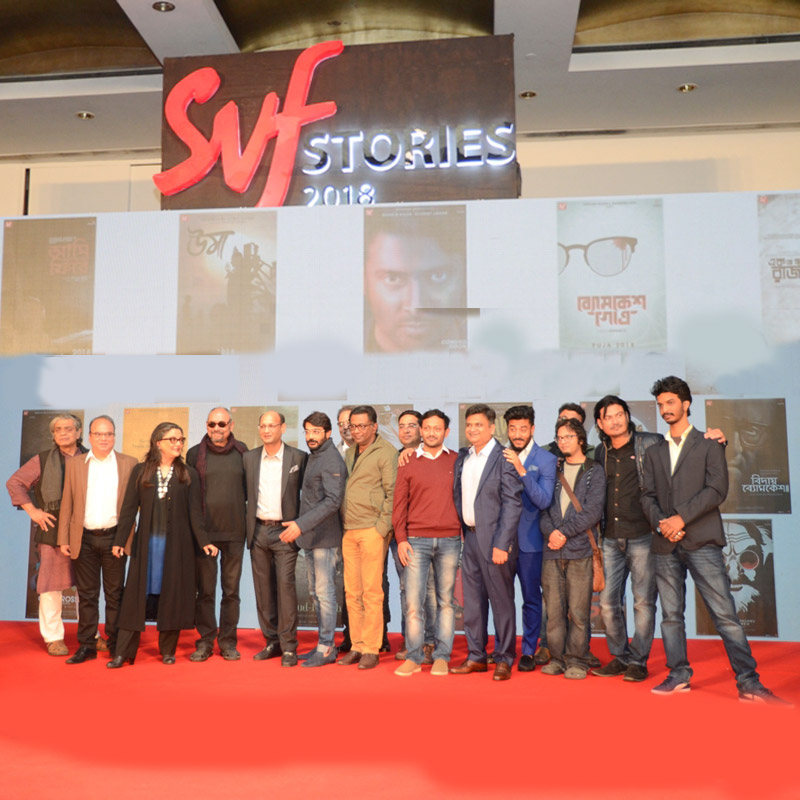
    MUMBAI: At a glittering ceremony held in West Bengal, the co-founders of SVF Entertainment Shrikant Mohta and Mahendra Soni made an ambitious declaration of producing 25 big-ticket films over the next three years (until 2020), allocating Rs 100 crore for the same–a figure unheard of in Tollywood so far.

    The announcement was made at SVF Stories, which aims at becoming an annual gathering bringing notable personalities from the industry under one roof.

    SVF co-founder & director Shrikant Mohta said, “At SVF, we have always tried to do our bit to raise the bar for Bengali cinema. Our commitment will not only aim at taking Tollywood to the next level but also serve as a platform to harness fresh young talent in the industry. In fact, with the super success of Amazon Obhijaan, we are excited and motivated to make the third part of the franchise even bigger.”

    The three-year journey will also see SVF’s first film with the brilliant filmmaker Mainak Bhowmik titled Generation Aami – a ‘coming of age’ story. Birsa Dasgupta will return with a bang with Crisscross – based on Smaran-jit Chakraborty’s best seller novel as well as Bibhaho Obhijaan– an emotional saga. And Debaloy Bhattacharya will be directing his next with a new take on Byomkesh titled Bidaay Byomkesh.

    SVF co-founder & director Mahendra Soni said “We are coming up with movies with diverse genre and themes for old and young alike. The next three years will also see many firsts – we will be expanding into Bangladesh with the release of the first film starring the Bangladeshi superstar Shakib Khan. Siraj-Ud-Daulah will be the first ever war film of Bengal, will also see the debut of new talents and there is plenty in store for the audience to look forward to.”The first edition saw leading celebrities like National Award winning directors Aparna Sen, Srijit Mukherjee and Bengali superstars like Prosenjit Chatterjee, Dev, Abir Chattopadhyay and others attending the event.

    The exhaustive list of 25 films are as follows:-

    Film (Director)

    AscheAbarShabor  (Arindam Sil)

    Finally Bhalobasha (Anjan Dutt)

    Total Dadgiiri (Pathikrit Basu)

    Generation Ami (Mainak Bhowmick)

    Ami AsboPhire (Anjan Dutt)

    KakababurProtyaborton (Srijit Mukherjee)

    Uma (Srijit Mukherjee)

    Two Untitled movies – starring Ankush

    Untitled starring Shakib Khan &Nusrat Jahan  (Rajib)

    Two Untitled movies – starring Yash

    Byomkesh Gotro (Arindam Sil)

    Siraj – ud – Daulah – (Raj Chakraborty)

    Ek Je Chilo Raja (Srijit Mukherjee)

    Feluda – (Sandip Ray)

    Professor Shonku O El Dorado (Sandip Ray)

    Tong Ling – (Raj Chakraborty)

    Untitled starring Bonny & Rittika (Rajib)

    Bidaye Byomkesh – starring Abir & Sohini – (Debaloy Bhattacharya)

    GuptodhanerSandhane (Dhrubo Banerjee)

    Ghare O Baire -(Aparna Sen)

    Crisscross (Birsa Dasgupta)

    BibahoObhijaan – (Birsa Dasgupta)

    Shankar’s New Adventure – starring Dev – ( Kamaleswar Mukherjee)

    Also Read: 1000 hours of original content a year is our target: Hoichoi’s Vishnu Mohta

    #hoyejak: We used all SVF properties to promote Hoichoi, says Vishnu Mohta

    Bengali film Posto to premiere on Hoichoi before satellite TV


  • ETV Bangla recreates ‘Balika Vadhu’ in Bengali

    ETV Bangla recreates ‘Balika Vadhu’ in Bengali

    KOLKATA: Come 15 April and ETV Bangla will have a host of original content for its audience. The channel which has created an afternoon time band, ‘Duronto Dupur’ is set to launch four new shows to keep its viewers hooked on to the channel and carve out a space in the regional general entertainment genre.


    Of the four new soaps, one is Gouri Daan, which is inspired by the popular Colors show Balika Vadhu. Starting 15 April at 1:00 pm, the programme aims at creating a niche for itself in the Bengali market which has had several progressive shows.


    So why remake a popular Hindi show into Bengali? Answers ETV Bangla programming head Ritika Roy, “ As per our research, in 2013, West Bengal emerged as the fourth largest state in the country, which competed in the category of child marriage and 55 per cent of the girls who were married were far younger than the marriageable age.” Also the channel in order to hook its afternoon band audience wanted to take up a strong issue-based story. The West Bengal government also launched a campaign last year called ‘Kanyashree Prakalpa’ for curbing child marriage in the state.


    While one can argue that Gouri Daan was not a replica of Balika Vadhu, the essence is the same. It is also leant that the storyline has been changed in keeping with the Bengali sentiments.


    The show which is being produced under the umbrella of Shree Venkatesh Films, will initially create 300 episodes for the series. “We have created a bank of 11 episodes, which will be aired in the course of two weeks,” informs Shree Venkatesh Films director Mahendra Soni.


    Those starring in the series are: Soumik Chattopadhaya, Torsha, an eight year old newcomer, who will play the lead character of Gauri and Sumanto Mukherjee, who will be seen in the role of a grandfather.


    The show will be shot not only in Shantiniketan, but also at Varanasi and Murshidabad. “This apart from the 10,000 square feet set created for the series,” says Soni.


    Elaborating on the plot of Gauri Daan, Roy says, “The series kicks off with Lord Shiva appearing in the dream of Sumanto Mukherjee (the grandfather), asking him to marry off his youngest granddaughter.  We have depicted child marriage to raise awareness about this menace in our society.”  


    While not revealing any details on the cost of each episode, Roy says, “It will be at par with other players in the Bangla regional channel space.”


    According to city-based media experts, on a fiction show a regional GEC can spend anywhere between Rs 1 to Rs 2 lakh per episode. 


    “Till date, the noon slot had re-runs of the evening shows. By airing original content, we are also looking at some share in this monopoly market,” says Viacom 18 executive vice president and business head – regional channels, ETV Kannada, ETV Bangla and ETV Odiya, Ravish Kumar.

    So who would be the sponsors for the afternoon band? Answers Kumar, “Talks are on with several advertisers. Nothing has been finalised as yet.”


    The network will do all that is needed to promote the new shows. “We will put up 300 hoardings across the state, apart from spending on radio spots and print advertisements,” he informs.


    When quizzed about the ratings the channel was expecting to garner through the new show, Kumar says, “We are not expecting anything. All I can say is that Balika Vadhu is quite popular even after running for so many years.”