Tag: Maharashtra

  • Idea expands 4G service across 39 Karnataka towns

    Idea expands 4G service across 39 Karnataka towns

    MUMBAI: Idea Cellular has expanded its high speed 4G LTE services across 39 towns in Karnataka.


    What’s more, by March 2016, the company will extend its services to three more key markets namely, Maharashtra & Goa, North East and Orissa, and by June 2016, Idea’s 4G footprints will cover 750 cities across 10 telecom circles.


    Within a month, the company has expanded its 4G LTE service footprint to 24 districts, including major towns of Bangalore, Mysore, Madikeri, Karwar, Chikmagalur, Belgaum and Chitradurga; covering 20 per cent of the state’s total population.


    In addition to Bangalore metro, Idea has launched its 4G services in other towns of Channarayapatna, Udyavara (CT), Harihar, Kunigal, Mulbagal, and Toranagal. Additionally, Idea is planning to launch its 4G services in Mangalore, Udupi-Manipal, Bijapur, Bellary and 18 more towns by end of this financial year, taking the total tally to 61.


    It can be recalled that last year in December, Idea Cellular had launched 4G LTE services in all four telecom circles (five states) of South India, namely Kerala, Tamil Nadu, Andhra Pradesh & Telangana, and Karnataka. Earlier this month, the company launched services across three more circles (four Indian states) – Madhya Pradesh, Chhattisgarh, Haryana and Punjab, expanding its 4G LTE service footprint to 7 telecom service areas.


    Idea Cellular deputy managing director Ambrish Jain said, “Since last week of December 2015, Idea has rapidly rolled out its high-speed 4G LTE network to cover seven major markets in India.”


    Idea Cellular currently holds 1800 MHz 4G spectrum in these 10 telecom circles, which cover 50 per cent of telecom market but over 60 per cent of Idea’s gross revenue. Additionally, Idea has recently signed an agreement with Videocon Telecommunications for acquiring ‘Right to Use’ 1800 MHz spectrum under Spectrum Trading Agreement in two of its key telecom leadership markets of Gujarat and Uttar Pradesh (West). Post completion of this transaction, 4G services will be extended to 12 service areas, covering 75 per cent of Idea’s revenue base in the country.


    Idea Cellular chief marketing officer Sashi Shankar added, “Idea customers with 4G devices in these 183 towns can now start experiencing super fast speeds by simply upgrading their existing SIM cards to new 4G SIM cards. The company is also offering attractive subscription plans to digital content including a wide range of the latest music, movies and games. Idea has also partnered with leading handset manufacturers and e-commerce retailers for special data bundling offers on new 4G smartphones.”

     
    Idea’s 4G Prepaid & Postpaid tariff plans are priced at par with existing 3G plans. The company is also offering ‘4G Packs’ starting as low as Rs 21.


    Digital Content for 4G consumers 


    Idea, marking its first foray in the digital space, is launching an assortment of digital content in partnership with content aggregators.


    For music, it has tied-up with Hungama Digital, wherein it will offer content at a monthly subscription price of Rs 99 for all its consumers. For movies and videos, Idea has partnered with Eros International, wherein content will be offered at a monthly subscription price of Rs 49 for all its consumers. Idea will also be launching ‘Idea Games Club’ powered by Opera for all its consumers from 1 February, 2016, at a monthly subscription price of Rs 150. However, as an incentive for new 4G customers, a special offer for subscription at just Rs 29 per month till 31 March, 2016 is available for these packs.


    Idea will also unveil ‘Ultimate Plans,’ which provide a Bundleof 4G Data, Unlimited Voice calls and Content subscription, which is powered by Hungama.


    Wide Portfolio of 4G Smartphones & Devices

    Currently, 2.7 million 4G devices across these seven circles are registered on Idea’s network and growing at an exponential rate. To facilitate 4G device upgrade, Idea has launched branded 4G devices namely Idea 4G Dongles, 4G Mi-Fi (connects 10 users) and Home Wi-Fi (connects 32 users), which are now available at Rs 2,599 onwards with 4G Data offers.


    Idea has partnered with Samsung for special offers on its 4G Smartphones, wherein the two companies will launch a variety of programmes to offer differentiated and significant value to customers.


    The TSP has also tied up with smartphone manufacturers including Intex Technologies, Lava, Lenovo and Xolo to offer bundled 4G data plans on smartphones.


    A tie up is also in place with e-commerce retailer Snapdeal for providing bundled data offers on 4G devices.


    Launch of 4G website

    The company has also launched its responsive 4G website -www.ideacellular.com/4G, wherein consumers can log on to get more information about 4G services, tariff plans and recharges, locate the nearest Idea stores offering 4G SIMs and much more. Idea is also rolling out a smartphone e-store on its website. Consumers can now buy 4G smartphone brands, Mi-Fi and Dongles. 


    The company has also rolled out its FDD platform enabled 4G LTE services on the 1800 MHz frequency band, which is the most preferred spectrum band for deployment of 4G services globally, and is supported by the majority of 4G handsets available in the market.


    Idea Cellular’s 4G LTE Network will be equipped with the enhanced ‘Fast Return’ feature enabling seamless and quick toggle for consumers across Idea’s 4G, 3G and 2G networks, offering superior experience for both mobile data and voice services. While the company possesses the capability to introduce VoLTE feature, existing customers’ current 4G devices do not support this feature. Accordingly, the deployment of VoLTE will be evaluated at a later stage.


    Idea is deploying state-of-the-art, ‘Single RAN’ equipment, which supports multiple technologies in a given frequency band. For every 4G site on 1800 MHz, this equipment also provides additional 2G voice capacity on GSM spectrum.


    For FY16, Idea Cellular’s capex guidance is Rs 6,500 crore, significantly higher than earlier years’ annual capex spends. In this fiscal year, Idea plans to add 40,000 – 45,000 sites on 2G, 3G and 4G technology platforms, complete a cumulative roll out of 111,000 kms of Fibre, and add an incremental 175-200 million population to the mobile broadband (3G & 4G) population coverage. The 4G launch in Southern India is part of the capex guidance by Idea.


    The roll out of Idea’s 4G services will be financed through internal accruals. The company recorded an EBITDA of Rs 5,739 crore in H1-FY16, a growth of 27.6 per cent  over H1-FY15 and cash profits of Rs 5,085 crore, a robust growth of 32.5 per cent over H1FY15.
  • DTH to benefit, Reliance Jio to intensify competition in DAS Phase III: Edelweiss

    DTH to benefit, Reliance Jio to intensify competition in DAS Phase III: Edelweiss

    NEW DELHI: Broadcasters are obviously clear winners, but the direct to home (DTH) platforms may ultimately become the greatest beneficiaries of Phase III of digital addressable system (DAS) by garnering incremental market share of more than 50 per cent.

     
    According to Edelweiss Securities Ltd, broadcasters will be one of the safest and most attractive plays on the digitisation theme, irrespective of higher subscriber additions by DTH or MSOs. “We expect a one-year lag for subscription revenue to flow (starting FY18) from the newly digitised subscribers,” Edelweiss said in its analysis of DAS Phase III.   

     
    “In our view, analogue signals will gradually switch off and substantial roll out of Phase III digitisation will take at least three to four quarters driven by mass media ads and proactive steps by DTH players, national MSOs & the regulator,” the firm said.


    However, this view is contrary to the Chrome Data Analytics’ claim of 70 per cent digitisation in Phase III. 

     
    With six states (Assam, Telangana, Andhra Pradesh, Maharashtra and Odisha and Tamil Nadu) stalling Phase III digitisation by eight weeks or more with High Court orders, Edelweiss says, “Uncertainty persists; we expect many more states to follow suit.” In Tamil Nadu, the stand-off between Arasu and the Information & Broadcasting Ministry will delay digitisation, as was the case with Chennai earlier. 

     
    Moreover, Edelweiss believes Reliance Jio’s entry in cable TV will intensify competition in the space. “Overall, we expect Zee, Sun TV, TV18 and Dish TV to be bigger beneficiaries of Phase III digitisation over the long term.”   

     
    In Phase I and II cities, MSOs were able to retain around 75 per cent of incremental market share, while DTH players managed to garner only 25 per cent.

     
    However in Phase III markets, Edelweiss says regional MSOs will have to incur substantial capex to make the cable infrastructure digital ready. “We believe DTH players will enjoy natural advantage over regional MSOs in Phase III markets.”

    Further, voluntary digitisation by national MSOs in Phase III markets, learnings from Phase I & II digitisation and parts of Phase III areas being contiguous with Phase I & II markets put national MSOs in better position than regional MSOs. 

     
    With the rollout of Reliance Jio, Edelweiss expects “competition to intensify in cable TV business. Cashing in on its strong balance sheet, RJio will fuel further competition in cable TV (free STBs, bundled services) in Phase I and II markets. We expect RJio’s entry to change the industry dynamics led by introduction of packaging and prepaid billing.”

  • MIB burning midnight oil to find ways to counter battery of High Court orders staying DAS

    MIB burning midnight oil to find ways to counter battery of High Court orders staying DAS

    NEW DELHI: Considering the odds it is facing from various High Courts all over the country for extending the deadline for implementing Phase III of Digital Addressable System (DAS), the Ministry of Information and Broadcasting (MIB) has to find a way to get even justice for the ultimate stakeholder — the consumer.


    Perhaps because of that, the last few days have been very busy in the corridors of fifth and sixth floors of Shastri Bhavan in the capital, which houses the MIB, with officials holding several meetings to find a way to stop the snowballing of the orders that commenced from Hyderabad and found a boost in the arguments in the Bombay High Court based on the Kusum Ingots case of 2004, which encouraged multi system operators (MSOs) and local cable operators (LCOs) in other states.


    At present, the implementation remains stayed for varying periods in the states of Andhra Pradesh, Assam, Maharashtra, Orissa, Sikkim, and Telangana, apart from Tamil Nadu where prolonged legal cases have been pending since Phase I. A petition has already been filed in the Karnataka High Court and is listed for 8 January.


    Ministry sources confirmed to Indiantelevision.com that meetings had been held with legal experts and particularly with Government counsel.


    There was also general consensus on filing a petition by the Government in the Supreme Court, particularly as the apex court had on an earlier occasion relating to the Cable Television Networks (Regulation) Act 1995 and orders issued thereunder that High Courts have to be cautious when giving orders on matters relating to policy.  


    Government legal experts advised that an appeal could be filed against any of the High Court orders in the Supreme Court and the apex court could be asked to transfer all linked matters to Delhi to be heard together.


    However, it needs to be seen whether this will be in the form of a writ petition or an appeal against the various High Courts – a decision left to a battery of legal experts.


    MSOs said, however, that this would impose a lot of financial burden on them as they could ill-afford to hire counsel in the Supreme Court. 


    Even as the Ministry would obey the directives of the various High Courts, which had extended the DAS deadline by various periods ranging between eight to 12 weeks, it would prepare to oppose the decisions.


    A senior Ministry official said that even as the Ministry was waiting to see all the High Court orders, it was working on how plans to thwart the implementation of Phase III could be prevented – if necessary through legislative processes.


    The official also expressed the view that the cases would in fact benefit the direct to home (DTH) and Headend In The Sky (HITS) players and would affect the last mile operator (LMO).


    The sources said they had evidence to show seeding of set top boxes (STBs) to the extent of 76 per cent as revealed in the 13th Task Force meeting on 30 December. 


    Meanwhile, legal opinion is divided on whether the Kusum Ingots case, which was referred to in the Bombay High Court could be used by a High Court to direct a pan-India stay.


    The broadcasters and channel distributors are united on one view: the government should not give any extension on its own, as that would lead to a further delay in not just the Phase III and Phase IV (slated for December 2016) but also pockets of Phase I and Phase II, which have still not implemented digital addressable systems.


    It is also learnt that both broadcasters on the one hand and the channel distributors and major MSOs on the other, are pressing the government to move the apex court to get a single ruling instead of different High Court orders.


    However, it was admitted by the stakeholders that there was very little progress as far as indigenous STBs are concerned with just one or two players making local boxes despite the ‘Make in India’ campaign, and the government had to be proactive in this regard.


    The attempt would be to prevent the High Courts from staying implementation of Phase III under which analogue signals were to be switched off after midnight on 31 December, 2015.


    One representative of a broadcaster said switching back to analogue on getting a High Court stay did not cause any technical difficulty, but it raised problems relating to accounts and agreements already agreed upon.


    Be that as it may, the consumer who has already spent money on acquiring STBs hopes his efforts will not go waste in haste.

  • DAS Phase III: MIB’s big dilemma

    DAS Phase III: MIB’s big dilemma

    MUMBAI: The past fortnight has seen High Court directives in five different states make a mockery of the 31 December, 2015 deadline set by the government for the Phase III roll out of digital addressable system (DAS).


    The courts have urged the Ministry of Information and Broadcasting (MIB) to not act against multi system operators (MSOs) and cable operators who have not been able to place set top boxes (STBs) in homes for two months. In essence, the DAS sunset date has been extended in Andhra Pradesh, Telangana, Sikkim, Maharashtra, Odhisa, Tamil Nadu and now Guwahati.


    The Bombay High Court specifically cited a Supreme Court judgment and noted that a stay granted by a high court on a central notification in one state would be applicable in other states as well. That was the case of Kusum Ingots vs the Union of India, in 2004. (http://indiankanoon.org/doc/1876565/)


    The question on everyone’s mind is: would other petitioners in other states under the DAS Phase III ambit also approach their respective High Courts for relief? Hence, did it make sense for broadcast networks to continue with digitally encrypted signals, which they had resorted to once the clock struck midnight of the new year?


    Most of them including Viacom18, Star India, Zee and Sony thought it did not. Hence, they have all switched on their analog signals a day or so after switching them off.


    Now that has put the MIB in a bit of a quandary. The team lead by MIB secretary Sunil Arora – and including special secretary JS Mathur, and joint secretary RS Jaya apart from other members – have been driving DAS III digitisation and were quite clear that no extension should be given. 


    Sources indicate that one line of action being considered by the MIB is to approach the Supreme Court for relief against the restraint orders granted by the various courts. Experts such as Supreme Court advocate KV Dhananjay have argued against the stance taken in the Kusum Ingots case by the courts. (http://www.legallyindia.com/Blogs/some-hc-judges-are-becoming-terribly-ignorant-of-our-constitution)


    Whether the MIB will go ahead and approach the Supreme Court or not is a moot point, but the industry is putting its might behind it. Most of the industry associations like the Indian Broadcasting Foundation, the DTH Operators Association and the MSO Alliance have all reportedly urged the ministry to move the apex court.


    Industry believes that the extension is unlikely to serve any purpose, as cable operators knew of the phased rollout of DAS as much as for the past three to four years and hence they could have prepared for it. Complaining about a shortage of STBs or interconnect agreements or capital post the sunset date is simply facile, professionals state. 


    “The analog switch off is mandatory,” says an industry observer. “Digitally encrypted signals need to be the only mode of television delivery via satellite in India in Phase III areas. Private DTH operators and the government owned FreeDish can deliver television wherever there are signal dark areas courtesy cable TV’s unpreparedness. The government needs to approach the courts to ensure that DAS Phase III proceeds as soon as possible.”


    We will have to wait and watch if it does.

  • DAS Phase III stayed in 5 states including Maharashtra as Bombay HC issues restraining order

    DAS Phase III stayed in 5 states including Maharashtra as Bombay HC issues restraining order

    NEW DELHI: Maharashtra has become the fifth state to join the group of states, which have obtained a High Court restraint on the implementation of digital addressable system (DAS) Phase III.


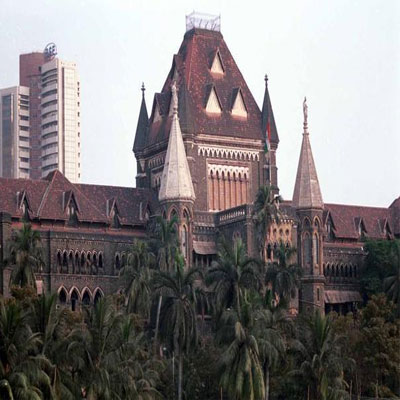
    The Bombay High Court cited a Supreme Court judgment and noted that a stay granted by a high court on a central notification in one state would be applicable in other states as well.


    The Hyderabad High Court and the Sikkim High Court have already granted stay on implementation of DAS Phase III primarily on the ground of shortage of set top boxes (STBs). In addition, the implementation of DAS in Tamil Nadu remains stayed after a bunch of petitions were admitted from Phase I onwards by the Madras High Court.


    The Hyderabad stay is for eight weeks in both Andhra Pradesh and Telangana, and the Sikkim stay is till 28 March, which is the next date of hearing. 


    Justice R D Dhanuka of the Bombay High Court said the Court will hear the matter on 1 February and gave the Government time to file its reply.


    Citing shortage of seeding of STBs as well as problems in interconnect agreements (ICA), petitioner Nashik Zilla Cable Operator Association (NZCOA) presented copies of the stay orders by other High Courts. Other petitioners were City Cable Operator Association of Nashik and Sai Big Star Welfare Association of Jogeshwari, Mumbai.


    Legal experts told Indiantelevision.com that while the Bombay High Court could use the precedent of other courts and direct a stay, this would only apply to areas under its jurisdiction and not pan-India. 


    Earlier on 23 December, 2015 a bench of the same Court had refused to extend the deadline and held that interim agreements could be entered into until the Telecom Regulatory Authority of India (TRAI) comes out with a model ICA. 


    TRAI has already issued a Consultation Paper on the subject and hopes to finalise a model ICA by mid-January, TRAI sources told this website.


    The extension of DAS does not augur well for the Information and Broadcasting Ministry, which may see a catapulting of such cases as reports pour of just over 50 per cent of seeding of STBs. 


    In most cases, the Courts turned down a plea by TRAI to be impleaded though it was permitted to file applications for this purpose. 


    The directive by the Hyderabad High Court was notable in that Justice Vilas V Afzalpurkar went against an order given by a division bench of which he was a member in the same court relating to Phase III on 20 August, 2013.


    As reported earlier, the Maharashtra Cable Operators Federation had also expressed difficulties in the 13th Task Force meeting held on the eve of the switch-off and had in fact said that seeding pan-India was less than 50 per cent even as the government claimed 76 per cent seeding and said the percentage achievement was 86.25 if Tamil Nadu that has some legal and other issues is excluded. The meeting was told there were only 405 zero seeding areas till the last report.


    The first phase of digitisation covered four metro, Mumbai, New Delhi, Kolkata and Chennai. In the second phase 38 cities were covered with population more than one million. About 630 districts and 7709 urban areas will be covered in DAS Phase III aimed at all urban areas while the fourth phase by 31 December, 2016, this year will cover the rest of the country.

  • Rajkot IPL team roars at season 9 auction; pockets Raina, Jadeja

    Rajkot IPL team roars at season 9 auction; pockets Raina, Jadeja

    MUMBAI: The newly formed Rajkot based Indian Premier League (IPL) team owned by Intex Mobiles has unveiled its first set of players for the upcoming IPL season 9.


    In the auction held for the two newly formed teams, Intex managed to win some of the brightest stars of the game. The bid for this season was held at NCA Grounds in Mumbai, Maharashtra today.


    At the auction, the team successfully bid for Suresh Raina (Rs 12.5 crore), Ravindra Jadeja (Rs 9.5 crore), James Faulkner (Rs 5.5 crore) and Brendon McCullum (Rs 7.5 crore). With this, the Rajkot IPL team has set the ball rolling for a star-studded line-up to represent the team in the ninth season of the cash rich tourney, starting 9 April, 2016.


    “Our intent is to put together a really strong team to ensure a thrilling tournament for the fans. I am very happy with the players that we have been able to fix today as they are amongst the best talents in the sports. Being a new team we will inject new ideas and hopefully add lots of excitement to the upcoming season,” stated Rajkot IPL team owner and Intex Technologies director Keshav Bansal.


    “Intex is the leading domestic mobile handset brand in Gujarat and have a huge connect with the people of the state. We are absolutely delighted and it is an honour for us to bring the IPL to the vibrant and cricket loving state of Gujarat. I am confident of getting the love and support of our fans in Rajkot and all across the state,” he added.

  • Only 188 community radio stations operational even after a decade of this sector

    Only 188 community radio stations operational even after a decade of this sector

    New Delhi, 25 November: Even as 235 entities have signed the grant of permission agreement (GOPA) for setting up community radio stations in the country, the actual number of operational CRS is only 188 after more than a decade of launch of this sector.


    This shows an increase of only eight community radio stations since the last list issued in May this year.


    A total of 960 applications for CRS had been either rejected or withdrawn as on 15 November.


    However, another 323 applications are still under the consideration of the government from educational institutions, non-governmental organizations, Krishi Viguan Kendras and State Agriclture Universities. Some of these date back to 2011.


    The operational stations include 105 by universities and private and government educational institutions, seven by NGOs, seven by Krishi Vigyan Kendras, and five by State Agricultural Universities.


    State-wise, Tamil Nadu has the hghest number of CRS with 27, followed by Uttar Pradesh with 23. Maharashtra has 17, Madhya Pradesh has 15, and Karnataka has 14 stations. Uttarakhand, Haryana and Odisha have nine each; Kerala and Rajasthan have eight each; Delhi and Gujarat have six each; Andhra Pradesh, Bihar, and Telangana have five each; Assam, Chandigarh, Chattisgarh, Puducherry, Punjab, and West Bengal have three each; Himachal Pradesh has two and Jammu and Kashmir and Jharkhand have one each.


    Thus, there are only three CRS in the northeast, and only one in J and K.    


    Though the scheme was launched around a decade earlier, the outreach of the Community Radio Stations was enhanced in 2006 to include non Governmental and Community based organizations with at least three years of legal existence.

  • Zee Talkies’ visual identity takes new avatar

    Zee Talkies’ visual identity takes new avatar

    MUMBAI: Zee Talkies is set to launch a brand new visual identity that reinforces its positioning as a film entertainment channel. The ideology behind the fresh look and feel is to urge audiences to live and experience Zee Talkies, rather than just watch with the tagline – ‘Baghna Navhe… Jagna’.


    The new look aims at adding a flavor of briskness to the visual identity. The channel sheds its ‘sedate’ color for a bright orange color that symbolises vibrancy and festivity. Orange, in its many forms, stands for positivity, energy & richness while representing the essence of Maharashtra to create an affinity for the brand, Zee Talkies.


    The repackaging activity is a part of Zee Talkies’ strategy to provide a wholesome viewing experience to the audiences of Maharashtra.


    With its new identity, the channel will be premiering Double Seat and will also launch a new show called Talkies Lighthouse, which will showcase a collection of acclaimed short films, packaged in an entertaining format. 

  • IBN Lokmat and MIDC launch the second edition of ‘Agenda Maharashtra’

    IBN Lokmat and MIDC launch the second edition of ‘Agenda Maharashtra’

    MUMBAI: Tying back to the Vision for India of tomorrow, ‘Agenda Maharashtra 2015’ is a unique initiative that will aim to track the growth trajectory of the Maharashtra government across different sectors. The 2nd leg of the initiative by IBN-Lokmat will bring top leaders, visionaries and authorities of various sectors on a common platform to share their thoughts on the government’s current initiatives, their impact, and future plan of action.


    The discussion will encapsulate all the sectors that have potential to bring the state on the forefront, revive the economy, boost job growth and deliver good governance to the citizens.


    IBN Lokmat deputy managing editors Mahesh Mhatre & Mandar Phanse said, “We at IBN Network firmly believe that journalism has to be truly inclusive. As part of this commitment, we are back with Agenda Maharashtra 2015 in association with MIDC.


    Agenda Maharashtra 2015 will bring the key stakeholders of the state on one platform to see a recap of the initiatives taken; record the achievements, challenges and opportunities that lie ahead for the government amidst influential personalities, ranging from politicians, bureaucrats to industrialists, among others.” 


    Speaking about the initiative, Maharashtra chief minister Devendra Fadanvis in an interview with IBN Lokmat said, “The Maharashtra Government believes in sustainable growth, and that is the reason foreign investors have shown interest in the Public Private Partnerships model, as a part of the Make in India policy. Agenda Maharashtra 2015, is an initiative that hopes to discuss the dream of development right from Agriculture sector to IT sector, and Infrastructure to social development”

  • PVR opens three screen multiplex in Kolhapur

    PVR opens three screen multiplex in Kolhapur

    MUMBAI: Multiplex player PVR has opened a new multiplex at DYP City Mall in Kolhapur, Maharashtra. 


    The three screens multiplex with a seating capacity of 726, enabled with state of art technology and 3D technology with 7.1, became operational from 22 October.


    With the opening of this multiplex at Kolhapur, PVR’s screen count in Maharashtra has touched 138 across 34 properties. Pan India, the multiple chain now operates 477 screens at 107 locations across 44 cities in 15 states and 1 Union Territory.


    PVR joint managing director Sanjeev Kumar Bijli said, “Our debut in Kolhapur is an earnest attempt to bring in the multiplex culture to the city. We want to make sure that the best in class cinematic experience is accessible to all our patrons, not only metros but to tier 2, tier 3 cities.”


    “Kolhapur is a film city for the cinema lovers and we see tremendous scope and potential in this market to launch our property. I would like to extend my gratitude to the mall developers, Mr Sanjay Dnyan Deo Patil of DYP Group, who has provided us the most suitable location – in the heart of the town, which is easily accessible to our patrons not only in Kolhapur, but also in adjoining cities like Belgaum, Bhiwandi, Ichalkarangi etc,” he added.


    PVR Cinemas CEO Gautam Dutta said, “From being an industrial hub for the entrepreneurs, to a favourite tourist destination for the explorers; Kolhapur breeds a population with varied interests. But one thing, which binds everyone is cinema; no wonder that the city plays a host to so many important film festivals. This is PVR’s debut project in Kolhapur.”


    The opening of this cinema is a part of PVR’s organic growth strategy of PAN India expansion and increasing its presence in major cities.