Tag: Maharashtra

  • Airtel to take ownership of Telenor’s India operations

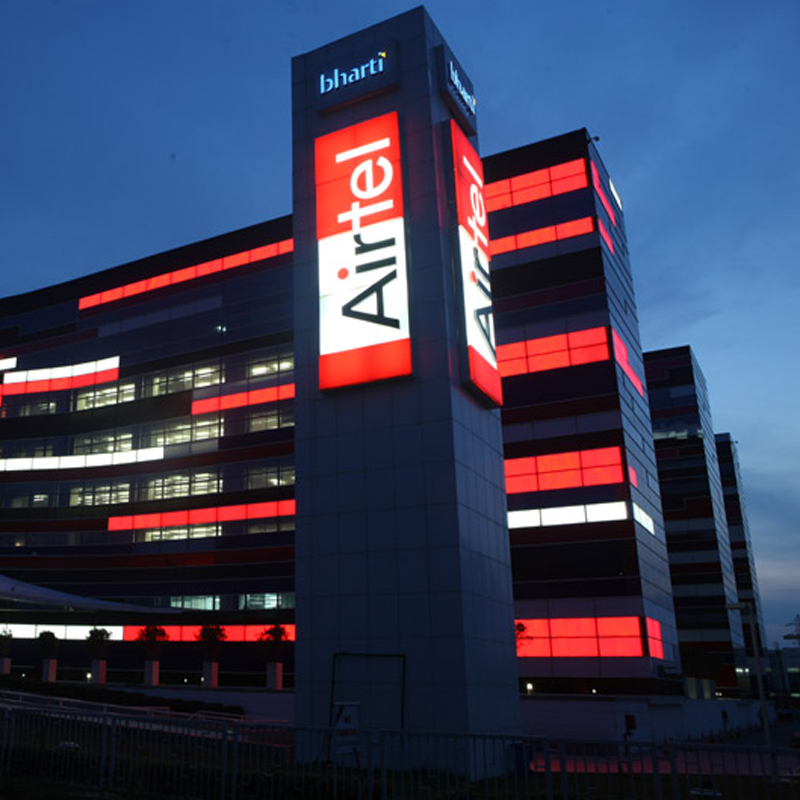
    MUMBAI: Telenor ASA, on 23 February, entered into a definitive agreement with Bharti Airtel Limited (Airtel), whereby Airtel will take full ownership of Telenor India, subject to regulatory approvals.

    Airtel is India’s largest wireless operator with over 269 million subscribers and a revenue market share of over 33 per cent. As the new owner, Airtel will take over Telenor India’s spectrum, licenses and operations, including its employees and customer base of 44 million. Telenor’s operations and services will continue as normal until the completion of the transaction.

    “We believe today’s agreement is in the best interest of our customers, employees and Telenor Group. Finding a long term solution to our India business has been a priority for us, and we are pleased with our agreement with Airtel. The decision to exit India has not been taken lightly. After thorough consideration, it is our view that the significant investments needed to secure Telenor India’s future business on a standalone basis would not have given an acceptable level of return,” says Telenor Group CEO Sigve Brekke.

    Bharti Airtel MD and CEO (India and south Asia) Gopal Vittal says, “The agreement underlines our commitment to lead India’s digital revolution by offering world-class and affordable telecom services through a robust spectrum portfolio spread across multiple bands. On completion, the proposed acquisition will undergo seamless integration, both on the customer as well as the network side, and further strengthen our market position considerably in several key circles. The customers of Telenor India will be able to enjoy India’s widest and fastest voice & data network, and a range of Airtel’s world-class products and services.”

    The transaction will not trigger any impairment. As of fourth quarter 2016, the remaining value of tangible and intangible assets in Telenor India amounted to NOK 0.3 billion (Rs 2.4 billion).

    According to the agreement, Airtel and Telenor India will merge and Airtel will take over Telenor India as soon as all necessary approvals are received. As part of the agreement, Airtel will take over outstanding spectrum payments and other operational contracts, including tower lease.

    The transaction is subject to requisite regulatory approvals, including approvals from the Department of Telecommunications in India (DoT) and the Competition Commission of India. The exposure to claims related to the period Telenor owned the business, will remain with Telenor.

    The transaction is expected to close within 12 months. With effect from first quarter 2017, Telenor India will be treated as an asset held for sale and discontinued operations in Telenor Group’s financial reporting.

    Telenor announced its entry into India in 2008. In 2016, Telenor India’s revenues were NOK 6.0 billion and the operating cash flow was NOK -0.4 billion. Telenor services are commercially available in six telecom circles in India (Andhra Pradesh, Bihar & Jharkhand, Gujarat, Maharashtra, UP East and UP West), and the company also has spectrum in Assam.

    Telenor Group is one of the world’s major mobile operators, with reported revenues of NOK 131 billion in 2016. Bharti Airtel is a leading global telecommunications company with operations in 17 countries across Asia and Africa.
  • Airtel 4G to reach nine circles via US$ 230-mn deal with Nokia as latter expands global PON

    Airtel 4G to reach nine circles via US$ 230-mn deal with Nokia as latter expands global PON

    MUMBAI: Finnish telecommunication network company and gear maker Nokia has pocketed a 4G network deal from Bharti Airtel in nine telecom service areas. Nokia meantime is also extending its fiber solution for universal next-gen passive optical networks (PON) to help operators more effectively scale, deploy and automate their networks as the demand for data grows.

    Nokia will deploy its available 4G technologies across Airtel regions of Madhya Pradesh, Gujarat, Bihar, Rest of Bengal, Mumbai, Maharashtra, Odisha, Kerala and UP East. The coverage expansion will include major cities such as Lucknow, Ahmedabad, Patna and Siliguri.

    According to sources cited by Financial Express, the deal between the two telecoms is estimated to be worth around US$ 230 million.

    Nokia’s head of India market Sanjay Malik said, with the latest agreement, they had become the largest supplier of 4G for Airtel. The network expansion would provide the speed, capacity, coverage Airtel needs to meet the next wave of data demand in India, he added.

    The new agreement with Nokia will see Airtel expand the deployment of 4G technology in three new circles in addition to six circles it already serves, enabling launch of new services that started in September.

    Agreement between Nokia and Bharti Airtel will enhance coverage and access in urban, suburban and rural areas within nine circles in India, it added.

    Nokia’s universal PON solution launched in 2015 leverages existing fiber platforms and infrastructure to help operators evolve networks in a gradual way, adding wavelengths in line with demand.

    The solution offers various next generation PON technologies including XGS-PON and TWDM-PON on a single platform and line card. Operators can connect subscribers with any type of optical network terminal (ONTs) regardless of whether it’s XGPON1, XGS-PON or TWDM-PON, eliminating the risk of technology and platform lock-in, the New Indian Express reported.

    Now, Nokia is enhancing its universal solution to provide operators with a higher density option that can reduce costs. Increasing deployment flexibility, the enhancements include new SDN/NFV-based capabilities that automate and simplify the deployment, maintenance and evolution of traditional fiber networks. This provides a smooth evolution path to 10G symmetrical or asymmetrical speeds with cost-efficient non-tunable XGS-PON optics and to TWDM-PON with tunable optics.

  • Airtel 4G to reach nine circles via US$ 230-mn deal with Nokia as latter expands global PON

    Airtel 4G to reach nine circles via US$ 230-mn deal with Nokia as latter expands global PON

    MUMBAI: Finnish telecommunication network company and gear maker Nokia has pocketed a 4G network deal from Bharti Airtel in nine telecom service areas. Nokia meantime is also extending its fiber solution for universal next-gen passive optical networks (PON) to help operators more effectively scale, deploy and automate their networks as the demand for data grows.

    Nokia will deploy its available 4G technologies across Airtel regions of Madhya Pradesh, Gujarat, Bihar, Rest of Bengal, Mumbai, Maharashtra, Odisha, Kerala and UP East. The coverage expansion will include major cities such as Lucknow, Ahmedabad, Patna and Siliguri.

    According to sources cited by Financial Express, the deal between the two telecoms is estimated to be worth around US$ 230 million.

    Nokia’s head of India market Sanjay Malik said, with the latest agreement, they had become the largest supplier of 4G for Airtel. The network expansion would provide the speed, capacity, coverage Airtel needs to meet the next wave of data demand in India, he added.

    The new agreement with Nokia will see Airtel expand the deployment of 4G technology in three new circles in addition to six circles it already serves, enabling launch of new services that started in September.

    Agreement between Nokia and Bharti Airtel will enhance coverage and access in urban, suburban and rural areas within nine circles in India, it added.

    Nokia’s universal PON solution launched in 2015 leverages existing fiber platforms and infrastructure to help operators evolve networks in a gradual way, adding wavelengths in line with demand.

    The solution offers various next generation PON technologies including XGS-PON and TWDM-PON on a single platform and line card. Operators can connect subscribers with any type of optical network terminal (ONTs) regardless of whether it’s XGPON1, XGS-PON or TWDM-PON, eliminating the risk of technology and platform lock-in, the New Indian Express reported.

    Now, Nokia is enhancing its universal solution to provide operators with a higher density option that can reduce costs. Increasing deployment flexibility, the enhancements include new SDN/NFV-based capabilities that automate and simplify the deployment, maintenance and evolution of traditional fiber networks. This provides a smooth evolution path to 10G symmetrical or asymmetrical speeds with cost-efficient non-tunable XGS-PON optics and to TWDM-PON with tunable optics.

  • Total 1,315 solar empanelled Wi-Fi towers built in Red Corridor

    Total 1,315 solar empanelled Wi-Fi towers built in Red Corridor

    NEW DELHI: Following a call by the government to increase the reach of communications in the Red Corridor, around 1,315 solar empanelled towers have been set up in the Left Wing Exteremists region in record time

    The work was undertaken by Vihaan Networks Limited (VNL), a pioneer in designing, developing and manufacturing of Telecommunications network solutions.

    The Home Ministry along with Department of Telecom (DoT) had decided to build a mobile phone network in the most-affected regions across ten Indian States, recognizing that combating insurgency in India’s Red Corridor must include the provision of a robust communication network as an important element of its strategy. These include some of the most hostile terrain in the country, with practically no roads, power or security.

    Around 2199 solar-powered mobile communication towers have been set up in a record time of less than a year, altering the geographical and social landscape of the area.

    On 20 August 2014, the Union Cabinet approved the extension of mobile telephonic services to 2,199 locations affected by Left Wing Extremism (LWE) in the States of Andhra Pradesh, Bihar, Chhattisgarh, Jharkhand, Maharashtra, Madhya Pradesh, Odisha, Telangana, Uttar Pradesh and West Bengal. There are 106 districts across 10 states which have been identified by the government as LWE-affected districts.

    The project was executed by Bharat Sanchar Nigam Limited (BSNL). BSNL has successfully installed towers at these locations giving network coverage to many villages as well as security forces camps and important locations with the help of domestic vendors Vihaan Networks Ltd and HFCL.

    India’s cell phone revolution has helped shape the economic development and improved governance for its citizens, leading to game-changing reforms such as better targeting of subsidies.

    Vihaan Network Chairman Rajiv Mehrotra said “It is a proud moment for us as we been able to connect millions of rural consumers, through our efficient infrastructure and expertise in Solar enabled telecom equipments. When we talk of integrated socio-economic development, it takes into account many areas that can benefit from faster access and enhanced productivities by using voice & data connectivity be it security, surveillance, connectivity and information access. In areas which are bereft of basic infrastructure, mobile connectivity underlines the solution to many.”

    VNL has accomplished connectivity in 10 states, 90 districts, 12,700 villages, 39, 00,000 mobile connections, 110 million crore connected citizens connected and enabled security forces.

    The project is funded by the Dot arm USOF, the total project cost was Rs 3567.58 crores this includes CAPEX as well as O&M for a period of 5 years.

  • Total 1,315 solar empanelled Wi-Fi towers built in Red Corridor

    Total 1,315 solar empanelled Wi-Fi towers built in Red Corridor

    NEW DELHI: Following a call by the government to increase the reach of communications in the Red Corridor, around 1,315 solar empanelled towers have been set up in the Left Wing Exteremists region in record time

    The work was undertaken by Vihaan Networks Limited (VNL), a pioneer in designing, developing and manufacturing of Telecommunications network solutions.

    The Home Ministry along with Department of Telecom (DoT) had decided to build a mobile phone network in the most-affected regions across ten Indian States, recognizing that combating insurgency in India’s Red Corridor must include the provision of a robust communication network as an important element of its strategy. These include some of the most hostile terrain in the country, with practically no roads, power or security.

    Around 2199 solar-powered mobile communication towers have been set up in a record time of less than a year, altering the geographical and social landscape of the area.

    On 20 August 2014, the Union Cabinet approved the extension of mobile telephonic services to 2,199 locations affected by Left Wing Extremism (LWE) in the States of Andhra Pradesh, Bihar, Chhattisgarh, Jharkhand, Maharashtra, Madhya Pradesh, Odisha, Telangana, Uttar Pradesh and West Bengal. There are 106 districts across 10 states which have been identified by the government as LWE-affected districts.

    The project was executed by Bharat Sanchar Nigam Limited (BSNL). BSNL has successfully installed towers at these locations giving network coverage to many villages as well as security forces camps and important locations with the help of domestic vendors Vihaan Networks Ltd and HFCL.

    India’s cell phone revolution has helped shape the economic development and improved governance for its citizens, leading to game-changing reforms such as better targeting of subsidies.

    Vihaan Network Chairman Rajiv Mehrotra said “It is a proud moment for us as we been able to connect millions of rural consumers, through our efficient infrastructure and expertise in Solar enabled telecom equipments. When we talk of integrated socio-economic development, it takes into account many areas that can benefit from faster access and enhanced productivities by using voice & data connectivity be it security, surveillance, connectivity and information access. In areas which are bereft of basic infrastructure, mobile connectivity underlines the solution to many.”

    VNL has accomplished connectivity in 10 states, 90 districts, 12,700 villages, 39, 00,000 mobile connections, 110 million crore connected citizens connected and enabled security forces.

    The project is funded by the Dot arm USOF, the total project cost was Rs 3567.58 crores this includes CAPEX as well as O&M for a period of 5 years.

  • CNN-News18 to look back at Modi Government’s Two Years through Exclusive Programming

    CNN-News18 to look back at Modi Government’s Two Years through Exclusive Programming

    MUMBAI: As the Modi-led government completes two yearsin power, CNN-News18, through its special array of programming, focus on and analyse all aspects of key decisions and initiatives the government has taken. The special programming will happen from 23 May to 26 May.

    The channel’s programming plan will include documentaries, discussions, surveys and interviews including:

    Special Stories:

    Stories and shows on Jan Dhan Yojana, Swachh Bharat and Toilet Projectsfeaturing how families and cities have benefited from these

    Ground reports from the villages adopted by MPs and a special report from Prime Minister Modi’s constituency

    The channel will assess the situation of Indian Railways by taking train rides in Delhi and Bengaluru

    PM Modi’s Journey: A half-hour show chronicling Prime Minister Modi’s journey over the last two years, from kissing the Parliament steps after winning the General Election, and the big wins in Maharashtra and Haryana to the elections in Delhi and Bihar.

    Editors’ Roundtable: CNN-News18’s Executive Editor Bhupendra Chaubey will conduct a roundtable with Swapan Dasgupta, Ajoy Bose, Vir Sanghvi along with CNN-News18’s Deputy Bureau Chief Pallavi Ghosh and Political Editor Sumit Pande. The show will take stock of government’s key policies

    The National Poll:The channel will conduct an exclusive poll that will measure the government’s performance in the past one year across various parameters.

    Special Interviews: The channel will also air special interviews of various Union Ministers on the last two years of Government.


  • CNN-News18 to look back at Modi Government’s Two Years through Exclusive Programming

    CNN-News18 to look back at Modi Government’s Two Years through Exclusive Programming

    MUMBAI: As the Modi-led government completes two yearsin power, CNN-News18, through its special array of programming, focus on and analyse all aspects of key decisions and initiatives the government has taken. The special programming will happen from 23 May to 26 May.

    The channel’s programming plan will include documentaries, discussions, surveys and interviews including:

    Special Stories:

    Stories and shows on Jan Dhan Yojana, Swachh Bharat and Toilet Projectsfeaturing how families and cities have benefited from these

    Ground reports from the villages adopted by MPs and a special report from Prime Minister Modi’s constituency

    The channel will assess the situation of Indian Railways by taking train rides in Delhi and Bengaluru

    PM Modi’s Journey: A half-hour show chronicling Prime Minister Modi’s journey over the last two years, from kissing the Parliament steps after winning the General Election, and the big wins in Maharashtra and Haryana to the elections in Delhi and Bihar.

    Editors’ Roundtable: CNN-News18’s Executive Editor Bhupendra Chaubey will conduct a roundtable with Swapan Dasgupta, Ajoy Bose, Vir Sanghvi along with CNN-News18’s Deputy Bureau Chief Pallavi Ghosh and Political Editor Sumit Pande. The show will take stock of government’s key policies

    The National Poll:The channel will conduct an exclusive poll that will measure the government’s performance in the past one year across various parameters.

    Special Interviews: The channel will also air special interviews of various Union Ministers on the last two years of Government.


  • Negligible rise in MSOs to 840 with 609 provisional licencees

    Negligible rise in MSOs to 840 with 609 provisional licencees

    NEW DELHI: With the second quarter of the last year of implementation of the final phase of the digital addressable system having begun, the government is attempting to speed up the process of clearing licences for multi-system operators and the number has now gone up to 840 including the 231 which have permanent (ten-year) licences.

    The latest list as on 29 April shows that thirteen more MSOs have been given provisional licences in the week after 21 April and the total of provisional licencees has now risen above 600 to number 609 as against 596.

    By 12 January, the Information and Broadcasting Ministry had cancelled the licences of 26 MSOs and closed their cases.

    According to the latest list, the area of operation of one MSO has been revised after 21 April. Unlike the last list, none of the new MSOs have been given pan-India licences. The new registrations are for the states of, or specific disctricts in, Gujarat, Uttar Pradesh, Kerala, Harayana, Madhya Pradesh, Maharashtra, Chhatisgarh, Telangana, and Andhra Pradesh.

    With the Home ministry directive about doing away with security clearances for MSOs not being communicated in writing to the MIB, the pace remains slow.

    The permanent licence issued to Kal Cable of Chennai had been cancelled on 20 August 2014, but this cancellation was set aside by Madras High Court on 5 September the same year. However, Kal Cable’s name continues to be in the cancelled list – presumably because the cases are still pending. 

    Sources denied that denial of security clearance was the reason for provisional licences and said many MSOs holding provisional licences had not completed certain formalities relating to shareholders and so on.

  • Negligible rise in MSOs to 840 with 609 provisional licencees

    Negligible rise in MSOs to 840 with 609 provisional licencees

    NEW DELHI: With the second quarter of the last year of implementation of the final phase of the digital addressable system having begun, the government is attempting to speed up the process of clearing licences for multi-system operators and the number has now gone up to 840 including the 231 which have permanent (ten-year) licences.

    The latest list as on 29 April shows that thirteen more MSOs have been given provisional licences in the week after 21 April and the total of provisional licencees has now risen above 600 to number 609 as against 596.

    By 12 January, the Information and Broadcasting Ministry had cancelled the licences of 26 MSOs and closed their cases.

    According to the latest list, the area of operation of one MSO has been revised after 21 April. Unlike the last list, none of the new MSOs have been given pan-India licences. The new registrations are for the states of, or specific disctricts in, Gujarat, Uttar Pradesh, Kerala, Harayana, Madhya Pradesh, Maharashtra, Chhatisgarh, Telangana, and Andhra Pradesh.

    With the Home ministry directive about doing away with security clearances for MSOs not being communicated in writing to the MIB, the pace remains slow.

    The permanent licence issued to Kal Cable of Chennai had been cancelled on 20 August 2014, but this cancellation was set aside by Madras High Court on 5 September the same year. However, Kal Cable’s name continues to be in the cancelled list – presumably because the cases are still pending. 

    Sources denied that denial of security clearance was the reason for provisional licences and said many MSOs holding provisional licences had not completed certain formalities relating to shareholders and so on.

  • Jivi Mobiles marketing budget 5 per cent

    Jivi Mobiles marketing budget 5 per cent

    NEW DELHI: Jivi Mobiles, a division of Magicon Impex Pvt Ltd, proposes to spend five per cent of its total investment into marketing of its mobiles.

    Jivi Head Marketing Harsh Vardhan told indiantelevision.com that the company is only advertising on FM and in newspapers at present in view of its target to reach rural audiences as the mobiles launched by it are not smart phones. However, it will ultimately go 360 degrees in its campaign at a later date. At present, Jivi already has the Jivi Shoppe channel on Dish TV (209) and Reliance (313).

    Jivi Mobiles CEO Pankaj Anand said that seventy to seventy-five per cent of the parts of its mobiles are still imported from China, but was quick to add that the country had the potential to produce all the parts if the government gave the right incentive, including increasing the duties on imported parts.

    Earlier, Jivi announced the launch of seven feature mobiles ranging between Rs 699 and Rs 1199. Anand said this had become possible because of the encouragement given under the Make in India scheme.

    Demonstrating style combined with advanced technology, the devices aspire to be the ideal companion for people who are looking for offering seamless and enhanced user experience at an affordable price.

    Anand said “We are one of the very few companies in the country to offer such a wide range of feature phones at these price points. All our devices and chargers are Bureau of Indian Standards (BIS) approved. The products would be ‘Made in India’, in our newly opened facility in Delhi. ”  

    JIVI Mobiles is setting up two new facilities with an investment of Rs 200 crores. JIVI Mobile first factory is in Mahipalpur, New Delhi, built up on an area of 15000 sq. ft. which would cater to the north and east India demand of JIVI Mobile phones. The facility in Mahipalpur will have  a capacity to roll out 700,000 phones per month and it employs some 350 employees in the first phase.

    The second facility of JIVI Mobiles is located in Lonavla, Maharashtra, to cater to the south and western parts of the country and would be operational in the coming months.

    “This investment of Rs 200 crore in our manufacturing units would be made in phases and would have a capacity to generate employment for nearly 1000 skilled workers over a period of time. The purpose of setting up these manufacturing facilities is to save on the imports duties and hence cut on the manufacturing cost by 10 to 15 per cent. We would pass on the benefit to our customers.”  He said there were over 550 service centres all over the country with eighty per cent of them being in rural areas.

    The company proposes to tap the huge potential for feature phones in the country and manufacture all its devices in India in the days to come. Jivi Mobiles would be manufacturing battery, chargers and handsfree in India to cut the cost of duty which is 29.5 per cent currently.  The benefits would be passed on to the customers.

    Answering a question, he said the phones at present only had the option of Hindi and English but would soon have other languages as well. Every feature phones comes with a scheme of ‘Dugni Bachat Dugna Fayada’ – free LED bulb – 9W.