|
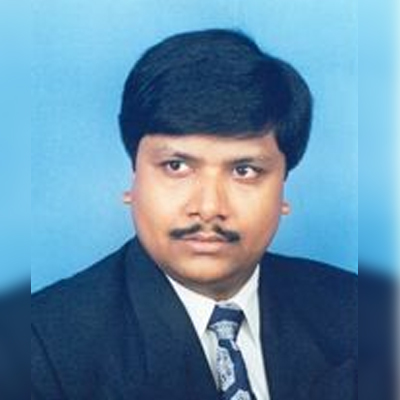
MUMBAI: After six years at the helm, Malayalam language network Asianet’s COO Mohan Nair is moving on. Nair, who put in his papers last week, is joining Sri Lanka’s Maharaja Television Channel Pvt Ltd (MTVC) as chief executive from 3 October. |
|
At MTVC, Nair will have overall charge of the three entertainment channels that constitute the network. MTVC runs three terrestrial television channels — MTV, Sirasa and Shakthi — in Sri Lanka. While Sirasa is a Sinhalese channel, Shakthi targets the Tamil segment. |
|
Confirming the development to indiantelevision.com, Nair said, “I have achieved what I set out to do in Asianet. I now look forward to the fresh challenges that heading a terrestrial network in Sri Lanka offers me.” It was on Nair’s watch that Asianet went from being a single channel network to a three channel one.
Before moving to Asianet as COO in mid-1999, Nair was senior editor and chief of bureau of leading pink paper The Economic Times. |
Tag: Maharaja Television
-
Asianet COO Mohan Nair quits, joining Maharaja Television as CEO
-
Zee’s Mahesh Krishnan moves to Maharaja Television
MUMBAI: Zee Network’s Mahesh Krishnan, who has been handling ad sales of Zee Punjabi in the capacity of assistant vice president West, South and East, is moving to Sri Lanka’s Maharaja Televison Channel Pvt. Ltd. (MTVC).
In MTVC, Krishnan will be heading the ad sales division for the network’s infotainment channel MTV and radio channel. He will be based out of Colombo.
Confirming the development to indiantelevision.com, Krishnan said he would be joining MTC on 15 September. “I am currently serving my notice period in Zee. My last day in Zee will be 5 September,” he said.
MTVC runs three terrestrial television channels — MTV, Sirasa and Shakthi — in Sri Lanka. While Sirasa is a Sinhalese channel, Shakthi targets the Tamil segment.
-

Indian soaps help Sri Lankan channel top charts
MUMBAI: The Kyunki’s and Kasautii’s of Indian television are not just helping Indian channels stay on top of the ratings charts, they seem to be helping Sri Lankan broadcasters too.
Sinhalese Sirasa channel run by Maharaja Television in the island country, seem to have benefited from the dubbed versions of Kyunki Saas Bhi Kabhi Bahu Thi, which runs as Maha Gedara and Kasautii Zindagi Kay, which is Praveena in its Sinhalese avataar on Sirasa.
The dubbed Kasautii, in fact, launched in February 2005 on Sirasa, on a prime time slot that already had tough competition for the ratings. The competition’s ratings hovered around 11-12 vis-à-vis Sirasa’s 2-3 before launching Praveena at that slot. Praveena, according to Maharaja Television CEO Aditya Ray, started off with a TVR of 11.3 on its launch day and has in the latest data available, settled to an average of 8.0.
While big Tamil hits like Chiththi that completed its successful run on Maharaja’s Tamil Channel Shakthi some months ago, have now been adapted for Maharaja’s Sinhala channel Sirasa, it is the Hindi soaps that are being lapped up by the Sinhala viewers for their cultural similarity, believes Ray.
It isn’t just the soaps, but even SABTNL’s Office Office, that runs as Samawenna Sir on Sirasa on the weekends that has caught viewers’ fancy, says Ray. The revamped Sirasa, after Ray took charge in June 2004, has also been running a branded block called HIT TV, comprising sub-titled Hindi films, on afternoons since almost its inception about seven years back.
The strategy to get in the dubbed soaps has apparently paid off. According to Ray, Maha Gedara and Praveena have already helped Sirasa climb to the number one position at prime time from its earlier third or fourth rank. It is also the No. 1 Channel on weekdays, although in overall channel share it remains at a strong number two position, behind the established state-owned Rupavahini channel.
Quoting Lanka Market Research Bureau (IMRB’s Lankan operation) data, Ray says that Sirasa’s average prime time channel share has climbed to 26.9 as per the latest data from its earlier level of 18.7 during the time he took charge of this Sri Lankan TV station and shifted its programming focus more towards the Hindi soaps, while Rupavahini’s share declined marginally from 26.8 to 24.2.
Sirasa’s all day channel share too has grown from 17.1 to 23.6, but it still needs to match up to Rupavahini’s 24.5. Ray says an increased focus on weekends, by bringing in big budget talent shows on the lines of Indian Idol, as well as game shows on the lines of Sahara’s Dial One or Jeeto, will be employed to boost channel share further.
The channel is also scouting the Indian scene for some shows that can be imported for adaptation or dubbing. SABTNL, says Ray, is a ‘friendly organisation’ which has been collaborating with Maharajas for some of its productions, while the Sri Lankan broadcaster is also keenly pursuing Star and Zee for acquiring software.
(This report was filed by the reporter before she flew off to France to get for us a complete lowdown on the MIPDOC proceedings)
-
Aditya Ray takes over as CEO, Maharaja Television
MUMBAI: Zee Network’s head of operations, (eastern region) and business head of Alpha Bangla, Aditya Ray, has quit the organisation after a stint spanning seven years.
Ray joined Sri Lanka-based Maharaja Television Corporation that runs a network of three terrestrial television channels in Sri Lanka, as CEO from 1 June 2004.
Ray, who spent five years as head of marketing services at Zee Network before moving to the eastern region in 2002, was also responsible for turning around Alpha Bangla’s fortunes and making it a profit making venture in the first year that he took charge.
One of the few Bangla channels that is in the black, Alpha Bangla was also the first among the regional Alpha channels from the Zee stable to run up profits.
The IIT Mumbai and IIM-A alumnus will now be heading the television business of the 65-year old Maharaja Corporation, which also has a separate broadcast division that runs four radio stations in the country.
Ray’s charge includes the Sinhalese Sirasa channel, the Tamil Shakti channel and the English language Channel 1 MTV. His priorities would include establishing Sirasa as the leader among existing Sinhalese channels and exploring different distribution modes and markets for the three channels.
During his tenure at Zee, Ray looked after its marketing as well as for the other channels in the bouquet. He was part of the core team instrumental in the relaunch exercise undertaken in 2001, before he headed east in January 2002 to look after Zee Network’s operations there.