Tag: Mahadev Srivatsa

  • IBS 2024: The future of marketing in a technology driven world

    IBS 2024: The future of marketing in a technology driven world

    Mumbai: The second edition of the Indian Brand Summit 2024, held in Mumbai, witnessed insightful discussions on how addressable advertising is transforming personalised marketing, the role of data in driving success, and the evolving landscape of OTT platforms and sports marketing. The event also explored the complexities of CTV and highlighted the rise of local brands to national prominence.

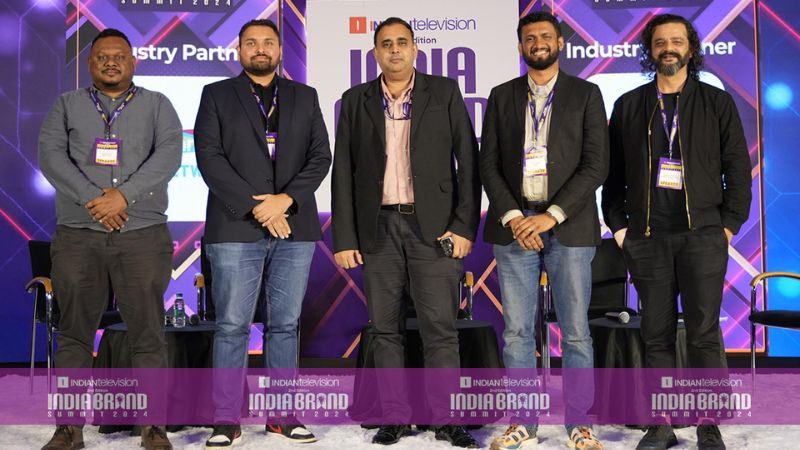
    The session titled “The future of marketing in a technology driven world” delved into how marketing is evolving to become more dynamic, personalised, and data-centric. As technology advances, marketers are rethinking their strategies and tools to better connect with consumers. Chaired by Publicis Groupe India’s CEO of digital technology business, Amaresh Godbole, the panel featured HDFC Bank’s SVP – growth marketing & martech, Deepak Oram; Pharmeasy’s Sr VP – growth, Akash Valia; Aditya Birla Capital’s brand head, Mahadev Srivatsa; and MIQ’s head of growth & revenue, Varun Mohan.

    Srivatsa emphasised the real-time capabilities of AI and its disruptive nature, stating, “The effectiveness of AI has shifted from mere delivery to creation, allowing us to better target consumers based on their evolving needs.” He highlighted the increasing availability of AI tools that streamline both the creation and delivery of marketing content, thus enhancing the consumer experience.

    Oram pointed out the critical importance of bridging gaps in customer service through technology. He noted that “consumers today research online before visiting retail stores,” underlining how digital footprints have transformed consumer behavior and marketing strategies. This shift, he explained, requires a more integrated approach, where customer behavior can inform service delivery in real time.

    Valia added a regulatory perspective, acknowledging the balance between technological advancements and compliance in healthcare. He noted that while AI can streamline processes, “the consumer experience must remain efficient,” stressing the importance of adhering to regulations while leveraging technology to enhance service delivery. He elaborated on Pharmeasy’s commitment to improving operational efficiencies, emphasizing the role of technology in expediting the prescription process.

    Mohan discussed the complexities of interpreting data across diverse consumer markets, saying, “Understanding user behavior is critical for effective campaign execution.” He highlighted MIQ’s approach to leveraging data for pre-campaign insights and continuous optimisation during campaign flights, illustrating the need for a data-driven mindset in marketing.

    The session illustrated that as technology continues to evolve, so must the strategies marketers employ to engage consumers effectively. Each panellist highlighted the necessity of adapting to changing consumer behaviors and leveraging innovative solutions to enhance the overall marketing experience.

  • Edtech newbie Practically sets 1 million users as next milestone

    Edtech newbie Practically sets 1 million users as next milestone

    KOLKATA: 2020 has broken all the barriers for edtech players in India, especially the start-ups. With educational institutes being shut for most of the year, a number of new players have gained momentum in their growth journey. Investment by venture capital (VC) in e-learning firms has quadrupled between January and November reaching $1.8 billion.

    Practically is one such edtech platform that has come up by leaps and bounds in the last one year to tap into the growing segment. The learning app, which has crossed 330,000 users, raised $4 million in a pre-Series B round this January. With a pan India expansion plan in the works, it aims to surpass one million users within the next year, revealed Practically marketing & brand strategy vice president Mahadev Srivatsa. After reaching this goal, it might take a shot at five million users in the next financial year.

    The platform started operations during the pandemic with its b2b solution in the Andhra Pradesh and Telangana market. Under this initial line of business, the product was sampled to schools and institutions across the two southern states. However, the brand later realised the need for a b2c model given the geographical limitations of b2b expansion.

    “We are a unique solution. We are working under the b2b2c model,” quipped Srivatsa.

    Both the formats are important from a business point of view, added he, but the b2c push will drive Practically going forward. Under the blended model, b2b solution can be accessed by students without any cost as it will be directly provided by their schools. If users want to access content beyond what has been offered by schools, then they will have to pay, he detailed.

    For the direct-to-consumer segment, the app works under a subscription model. The app consists of a universal curriculum targeting grades six through 12. Users also get access to free 30 minutes of content every month – a freebie that helps drive engagement, said Srivatsa, terming the app as a one-stop shop as it has live classes, doubt resolution and even assigns mentors to students.

    One of the growth accelerators for the brand has been the marketing campaign it did in December last year. It had a two-pronged strategy: ATL was focused on the home market while the digital campaign drove pan-India expansion. The former was targeted to generate more awareness and more conversion. Through the digital campaign, it wanted to test responses from 40 cities identified as potential regions for the future.

    ATL activations included a two-week associate sponsorship on Big Boss Telugu alongside a couple of rounds of print ads. Social media messaging had company, features and campaign-led communication amplified throughout the campaign period of December 2020 to February 2021.

    The campaign has set a lot of milestones for the app like sparking 3X growth, and improvement in social media metrics. As Practically plans to make inroads into more markets, Srivatsa added that they want to make the platform a household name; the latest advertising blitz gave confidence in that direction.

    “At this juncture, considering the learning from the digital campaign and looking at the way business is expanding, the south and western region of India would be our initial foray. You will find us immediately entering this market. We have an eventual entire year plan for further expansion,” he commented. The app may even get into vernacular content and K-5 curriculum in the future.

    With so many players eyeing the booming market, experts have already predicted a spurt in mergers and acquisitions, and consolidation in the sector in the next three to four years. Srivatsa said the similarities between telecom at its early growth phase and ed-tech is significant. It is evident that 3,000-4,000 players will not be able to survive, with media spend being the biggest differentiator. There are certain players who are dominating media spend, brands that have been here for close to a decade and aggressively expanded in the last few years. In this space of cut-throat competition, investment in branding is critical for ed-tech players. It's necessary to communicate the USP of the platform and what it is as a brand, he explained.