Tag: Mahabharat

  • For DD, it’s time to introspect not celebrate

    For DD, it’s time to introspect not celebrate

    NEW DELHI: There were evenings in the 1960s to mid ’70s when India, at least those homes fortunate to have TV sets, set their alarm clock in the evening to around 6 pm. It was that time the TV sets came alive with a signature tune and colour bands heralding something exciting.

    Those were the days when Indian pubcaster Doordarshan brought the world and entertainment — in a rationed manner typical of those pre-liberalization days — to Indian homes via production values that would be considered shoddy by today’s standards.

    Cut to circa 2016. TV sets today beam audio and video round the clock by DD, as Doordarshan came to be popularly known as, and a swathe of private sector TV channels.

    However, at a time when DD celebrated its Foundation Day (or birthday) on September 15, a question that rankles everybody is: Why does Doordarshan not function like some other pubcasters — the BBC, NHK, DW, PBS, etc —- in terms of functioning and quality of programming?

    Clearly, it is linked to another question: was Doordarshan doing better off when it was a direct wing of the Ministry of Information and Broadcasting (MIB), or has it benefitted by become ‘autonomous’ under Prasar Bharati?

    Doordarshan since 1959 beamed for half an hour educational programmes three days a week. However, as its programming timing grew, so did the control by the government, which found in DD a perfect tool for propaganda.

    Whether the Emergency days during Prime Minister Indira Gandhi or other governments, the government of the day realized the importance of DD’s widening networks and its role in pushing the government agenda.

    The Prasar Bharati Bill, paving the way for an autonomous DD and sibling All India Radio, was only notified and formalized in 1997.

    Interestingly, DD saw its hey days in the eighties with programmes like ‘Hum Log’; ‘Buniyaad’, ‘Ramayana’, ‘Mahabharat’, ‘Tamas’ and ‘Nukkad’, among many others, which not only highlighted India’s cultural traditions but also the ongoing societal changes. In fact, one wonders, whether a serial like `Tamas’, based on India’s partition, could be made today without somebody’s sentiments getting hurt and, in the bargain, getting canned.

    Though DD (and AIR) are modeled on the BBC — as famously described the then MIB Minister Jaipal Reddy in 1997 — DD’s case is different. Despite being dependent on government funding, it is running low on financial resources with each successive government insisting that Prasar Bharati start generating its own resources, but not letting go of the control. But this is difficult when the network has to compete against more than 800 private channels that are not impeded in terms of programming and other initiatives like DD is.

    No wonder the present Prasar Bharati CEO Jawhar Sircar said on DD’s birthday, “We need to look forward…renew our tryst with destiny.”

    Lines by a Canadian author, who penned ‘Morningstar’, aptly sum up the confused state of Prasar Bharati: “If you think you know what your purpose is, but can never seem to gain satisfaction from it, then it’s probably not the purpose you’re destined for.”

  • ‘Television has great competition coming from digital:’ Siddharth Kumar Tewary

    ‘Television has great competition coming from digital:’ Siddharth Kumar Tewary

    The man who has taken the mythological and historical concepts on television a notch higher with his creative innovation, Siddharth Kumar Tewary is known for shows like MahabharatRazia Sultan and Suryaputra Karn. With exquisite images and content creation Tewary has given a new dimension to shows catering to these popular genres on Hindi general entertainment channels (GECs). Tewary’s production house Swastik Production launched its first show Amber Dhara in 2007 and since then there has been no looking back. 


    The production house’s founder and creative director Tewary believes that in the coming times, digital is going to give tough competition to the television broadcast industry.


    In conversation with Indiantelevision’s Sonam Saini, Tewary talks about how 2015 has been for Swastik Production, the mythological genre, OTT platforms and more.


    Read on… 


    How has the year 2015 been for you and your production house?

    It’s been a decent year for us if not a great one. We have done a variety of shows from historical shows like Razia Sultan to dramas like Manmarziyaan. We stretched ourselves to keep us out of the comfort zone. So it’s been a good year for Swastik Production. 


    A few things were appreciated by the masses, some have been appreciated by critics, while some others have been liked by the people from the industry as well. As a company, we have always believed in doing something different.


    What’s your take on the mythological and historical fare on TV this year?

    I genuinely believe that the mythological and historical genre is really cool. It’s time that such legendary stories with today’s technology and superior presentation take off on television. This is premium content, which is being made on a large scale.


    We are making these shows relevant for today’s viewers and it’s really interesting to do mythology. In period dramas, so much needs to be created and you need to transport viewers into that era. And that’s the reason why I am more than happy to do these kinds of shows. 


    In the last two years you have taken mythological and historical concepts on TV to a different level with exquisite images and creative innovations. What drives you to experiment in these genres?

    Thanks to Mahabharat, my belief has always been that I need to better myself with everything I do. From whatever work I have done so far, luckily with mythology I got a chance to recreate a world that has not been seen on Indian television. 


    I also did the same kind of thing with Agle Janam Mohe Bitiya Hi Kijo. People have not seen the village that we created with the story line in the show, which was a different concept altogether. The same goes with Bandhan, which  again had a different concept. So something, which is really interesting and comes with a lot of challenges to recreate is what excites me. 


    I don’t do things for the sake of being different. I do it differently with all my creative efforts. The shows we do should appeal to the masses. 


    Mythological and historical shows almost cost double of a normal fiction show. Is it a profitable proposition for you?

    Of course, it is. I don’t think we can survive without profit in the industry but yes the cost of making these is much higher than normal fiction shows because we spend so much on everything from set decoration to costume to jewellery to locations. So since the production costs are much higher, it takes longer time to recover unlike regular daily soaps.


    Also with such shows the revenue is already fixed in a way, so one needs to keep an eye on expenses, which doesn’t happen initially. Expenses tend to go higher than anticipated and hence it takes time to recover costs.


    With your success in this genre, a firm perception is building that Swastik is for mytho and historical content? Do you see that as a challenge because the fact is that you do create content, which does not belong to this genre?

    As a company we do all kinds of shows. If we have done mythological shows, then we have also done shows likeBegusarai and Manmarziyaan. Though we don’t do typical saas bahu dramas but yes we do differentiated content. So our company is perceived for doing different content. I don’t see that as a problem. We believe in doing creative things and right now people are thinking that we do more of mythological shows but the moment we do something different, this perception will change. 


    OTT is making a lot of noise. What’s your take on the platform.

    I think it’s good and it is a great time for production houses and people who create content. As a production house, we are conceptualisers and we started this company to create content. We will stick to doing that for every platform.


    Netflix is about to set foot in India soon and they have already started talking to production houses. Have you been approached? 

    I don’t want to comment on that. There certain things that makes the digital space very exciting and from a creative point of view, it gives us a platform where we can tell different kind of stories. Initially, the medium will remain niche and by niche I mean it will only cater to the audience, who are online.


    In TV, the IP belongs to channel commissioning the content. If you start creating content for OTT, will you follow the same formula or will you keep the IP with you? 

    We have already started working in that direction. So whether it’s television or digital, we need to create value for the company and I think that is the space content creators should move into. And for creating that value, we need to lessen the number of projects we take on. We have to focus more on the limited content that we create, so the industry needs to change to create that value.


    If bandwidth issues get sorted and digital advertising takes off in a big way, do you think digital can be a good medium or is 20 minutes of content on mobile devices a little too much?

    Mobile devices are the platform to consume content through internet only. The ecosystem is constantly evolving. Earlier we used to have three-hour movies, now they’ve been cut down to two hours. 


    As storytellers and creators, we need to know who we’re talking to. The most important thing is that we are talking to the younger generation today, who want instant gratification. Hence your content cannot be 20 minutes long. Sometimes if your content is that strong and it can hold your viewers’ attention, then it’s absolutely up to the creators.


    Recently the TV industry has seen some negativity and the editors strike was one such example. Do you think it’s getting more and more difficult in Mumbai? Shouldn’t there be more collaboration?

    I will be diplomatic if I say that there is no problem. We are facing some issues. We are currently shooting one of our shows in Gujarat. What’s more, during Mahabharat we were shooting half our shows there because of good infrastructure. So we don’t face any issues on the shows that we are shooting out of Bombay. 


    In Bombay, the issues that are raised by others are not always one sided. From cable and satellite point of view the Indian television industry is 25 years old now. I think very soon things will fall into place. 


    Do you see the quality of content on television getting better?

    It’s already getting better but it needs to raise the bar yet again. I am happy in the way that other channels and producers are investing in content these days. As a team, we need to push the quality of content more. We have great competition coming from digital. Therefore, we need to push more before someone else asks us to improve.


    Indian television content is getting somewhat bold. Don’t you think it can kill the family viewing factor, which has been its strength?

    Television is self regulated currently. It depends on the time in which the bold content is being aired. If makers feel that their audience need that kind of content, they put it because the objective is to keep the audience hooked and not let them go away. People are sensible enough to choose what that want to see and what they don’t want. The choice is always in the hands of viewers.


    Has BARC rural data impacted the dynamics of content creation?

    My understanding is still limited because everybody is still figuring out the trend. It will need a couple of more months to find out the actual trends. At least now we know that what the whole country is watching. The best part is that in rural India, Zee Anmol is doing well. Till now we didn’t know what was happening. Our show Bandhan is the number three show on an all India basis!


    I believe it will have a great impact on content because now we clearly know who we are talking to. So we need sharper content now.


    Where is Swastik going from here? And where would you like to see it by the end of 2016?

    I wish I knew but I can say that Swastik will always be around. If there’s one thing that we always knew, it’s that we have to deliver the best quality of work. Our aim is not to always play safe but to try and do something different. Taking on challenges and not being in our comfort zone is what we do.


    In 2016, we would like to mix two famous television series together, which will be loved by all.
  • &TV to experiment with socio-mytho genre with ‘Santoshi Maa’

    &TV to experiment with socio-mytho genre with ‘Santoshi Maa’

    MUMBAI: Spreading its wings across genres, the newest Hindi general entertainment channel (GEC) from the Zee Entertainment Enterprises stable – &TV is all set to experiment with the socio-mythological genre. The channel will soon be launching its first series in the genre titled Santoshi Maa.

    According to information available with Indiantelevision.com, the show is being produced by Rashmi Sharma Telefilms, which is known for popular fictions series like Bhagyalakshmi (&TV), Swaragini and Sasuraal Simar Ka (Colors) and Saath Nibhaana Saathiya (Star Plus).

    The channel has roped in veteran actress Aruna Irani, a popular face on &TV, for the show’s promo, which aired on prime time on 28 September.

    The promo features Irani as a successful superstar who has achieved fame, luxury and wealth, but is still seeking inner fulfillment and peace. The promo sees her delivering the line, “I have achieved everything in life but not satisfaction.”

    In recent years, Indian television has seen many mythological series dominating the prime time on Hindi GECs. Shows like Mahabharat, Santakmochan Mahabali Hanuman, Devo Ke Dev Mahadev and Surya Putra Karn are some of the shows that have managed to grab eyeballs on the small screen. What’s more, given the popularity of the genre in India, last year also witnessed the launch of a separate channel – The Epic Channel, which airs original content in the Indian history, folklore and mythology space.

    Santoshi Maa’s launch date on &TV has not yet been revealed by the channel.

  • “It took five years to put ‘Mahabharat’ on air:” Siddharth Kumar Tewary

    “It took five years to put ‘Mahabharat’ on air:” Siddharth Kumar Tewary

    MUMBAI: Known for shows on Hindi general entertainment channels (GECs) like MahabharatRazia Sultan, Yam Hai Hum andManmarziya amongst others, Swastik Productions has completed eight years in the television industry and in its journey so far, the company has managed to create differentiated content as well as maintained its position as one of the top show churners.


    Since the launch of its first show – Amber Dhara in 2007, Swastik Productions founder and creative director Siddharth Kumar Tewary has left no stone unturned in making it a successful journey.


    Launched with the vision to create and tell stories in a way that no one had done before, Swastik Productions’ journey has been sprinkled with huge amount of learning. 


    In an exclusive chat with Indiantelevision.com, Tewary said, “I realized a month back that we are completing eight years. It’s been a very exciting journey. I always wanted to tell stories to the world and the only way I could do that was by opening my own production house. That’s how Swastik came into existence.”


    The production house took up the challenge to deliver unique content from day one in the form of Amber Dhara, which was a story about conjoined twins. 


    While coming up with a subject like Amber Dhara eight years back was progressive in thought, it was difficult to portray on screen. “The outcome is not in our hands but as long as you try, you will be rewarded sooner or later,” Tewary said.


    It was while he was working with Sony that Multi Screen Media CEO NP Singh advised Tewary to open his own production house if he wanted to do something on his own. “Singh has been a very important person in my life. He assured me that I would get an opportunity if I did well. At the time of Amber Dhara, we were very raw and didn’t have any experience. We used to shoot without a set and it was tough to shoot at different locations on a daily basis. Sleeping on the road or in a car was normal for me at that time. I was moving like a zombie but it was an amazing experience,” Tewary recalled.


    A major breakthrough for the production house came in the form of Mahabharat, which did really well on the small screen. Star Plus approached Swastik Productions to give the epic a different identity without changing its history. And Tewary was quick to rise up to the challenge. Talking about the show, he said, “When Star Plus asked me to make the show, I had no clue whether I would be able to do it or not. Uday Shankar (CEO Star India) is the most visionary person I have ever met. He asked me to make Mahabharat in a way that nobody else could make it in the country. He was instrumental in upping the scale of the show and that in itself was a big challenge for us. The idea was to put the show on air in eight or nine months but when we actually started working on it, we realised that it was not something that could happen overnight. We needed to go deeper into the subject in order to interpret it and give the show a new take.”


    Making the show from a different perspective was no cakewalk. “It wasn’t a remake, rather it was a reinterpretation of the epic. It took us five years to put the series on air. In hindsight, it was much more difficult and than even starting Swastik Productions. Doing a show on a large scale isn’t an easy task. It took us five years to complete the show. We wanted our work to be remembered and Mahabharat was an effort in that direction,” Tewary asserted.


    Mahabharat became the talking point because of the story, cast as well as costumes and was much appreciated by the audience. Tewary’s research and studying of every character closely worked. From costume to casting, everything was done under his observation. After trying out numerable people from the industry to give a different look to each character, he zeroed in on Oscar winning costume designer Bhanu Athaiya to design costume for the cast of Mahabharat.


    While Mahabharat rakes in the praises, the production house’s other show Manmarziyaan failed to generate sustainable ratings despite being appreciated for its content and production quality. “We made an experimental show and an effort in telling a story in a different style, which connected with the younger audiences but not with the older ones. While we didn’t get the desired number, we are happy and proud that we made an attempt to do something new.” 


    After the success of Mahabharat, Tewary was keen to come up with a comedy and it came in the form of Swastik Production’s next show – Yam Hai Hum, which airs on Sab. “We were keen to explore other genres and I really wanted to produce a comedy show. I met Anooj Kapoor (Sab business head) and discussed the concept with him. He loved the idea and that’s how Yum Hai Hum happened,” he informed.


    While television remains the mainstay of entertainment, its digital counterparts like OTT and VOD platforms are fast catching up. More and more entertainment content is consumed on the go today. Tewary is of the opinion that in the coming years, digital will be the way to go and there will be no other option left. “Indeed the market is growing and digital will appeal more to metro centric audiences, whereas television will cater to the masses. There is huge market out there for digital, which is needs to be explored,” he said.


    Swastik Productions currently has three shows on air namely Yam Hai Hum on Sab TV, Razia Sultan on &TV and Suryaputra Karn on Sony. “Primarily at the core, we are a content company and that is core purpose of Swastik Productions. We are happy with our work. There are some projects in the pipeline and we will make the announcement when the time is right,” he concluded.

  • Prasar Bharati CEO Jawhar Sircar pooh-poohs ‘budget hike’ reports

    Prasar Bharati CEO Jawhar Sircar pooh-poohs ‘budget hike’ reports

    NEW DELHI: The Indian pubcaster has been a soft target since time immemorial. In the light of media articles citing ratings data by the Broadcast Audience Research Council (BARC) India, which say that Doordarshan’s viewership has been poor despite a hike in budget and hiring of expert consultants, Prasar Bharati CEO Jawhar Sircar pooh-poohs it all. 


    In an exclusive interaction with Indiantelevision.com, Sircar informs that the pubcaster has not even received full reimbursement of government salaries for employees recruited prior to October 2007.


    Sircar goes on to point out that as per a decision by the then Group of Ministers (GoM), which was looking into the financial status of Prasar Bharati, it had been decided during the tenure of the previous government that the Central Government will bear the salaries and other allowances of all employees in service as on 5 October, 2007.


    Sircar says, “As a result, our own revenue funds that are meant for ‘Content’ have gone to meet this salary gap.” He said that Prasar Bharati had been stressing this fact for the past three years. However, it seems like its voice fell on deaf ears.


    At the outset, Sircar says, “I still cannot understand why some people are always raising this question of “hike in budget”? What budget? All the money we get is for paying salaries of 29,000 government servants, who were recruited by the Information and Broadcasting Ministry some 30 to 35 years ago. The government has to pay their salaries as long as they are in service and Prasar Bharati is mainly their administering body and the Ministry passes this salary bill on to Prasar Bharati, who had to engage these persons to disburse their government-scale salaries, without any leeway or choice.”


    He added that while the Ministry used to set aside a sum of approximately Rs 80 – 100 crore for several years for creating content for “special areas,” this funding had also stopped, leaving behind several liabilities. 


    With the choked fund pipeline for content, Sircar asks, “How does content improve? One way out is to offer our ‘time bands’ to external producers provided they cover our costs.” 


    “We are waiting patiently for our funds to be returned. Since these issues are coming out publicly through vague terms like ‘an I&B Ministry official said,’ I would welcome an open debate on this question though we prefer to discuss these matters across the table. But after all, DD is a public institution and it is ready to face any public scrutiny,” Sircar opines.


    No longer in a mood to take things lying down, Sircar posed a few pertinent questions:


    1) Can we cut down costs on the huge infrastructure, some of which appears to be meaningless?


    2) Do we really need to have analogue TV transmission in this satellite age?


    3) Why do we spend so much to strengthen short wave and medium wave radio, when it is FM that is in demand?


    “I have raised these questions as no one was raising them and many in this organization are not happy at all,” he adds.


    Specifically referring to the media reports, he says, “If the programmes that DD has paid for (‘Commissioned’ or ‘SFC’ in DD’s language) do not appear to be attracting enough eyeballs, then we have to reach out to better producers like we used to do for MahabharatRamayan and Buniyaad, etc. DD did not produce its own programmes then or did not decide to pay or commission producers to make programmes for DD. We are seriously thinking about it. But we will have to go over this option very carefully.”


    Drawing a comparison between the British Broadcasting Corporation (BBC) and the Indian pubcaster, Sircar says, “There is a box in the news that advises DD to stay out of the numbers game and become a popular brand distinction like BBC. Do you have any idea of what this means? Every British citizen pays Rs 15,000 per year for the BBC’s quality programmes. But in India, Prasar Bharati struggles to earn its ‘content funds’ through content generated revenue against fierce competition.”


    According to Sircar, as per calculations done by the Sam Pitroda Committee, in India the cost per person works out to a mere 31 cents or approximately Rs 20 by way of support to Doordarshan and All India Radio (AIR). “BBC gets Rs 35,000 crore per year from the exchequer,” he adds. 


    Signing off, Sircar says, “So why do we make such meaningless comparisons and indulge in wishful thinking?”

  • Govt. backs Gajendra Chauhan’s appointment as FTII chairman

    Govt. backs Gajendra Chauhan’s appointment as FTII chairman

    NEW DELHI: The Government has backed the appointment of Mahabharat star Gajendra Chauhan as chairman of the Film and Television Institute of India (FTII), saying that the appointment was in accordance with the prescribed guidelines.


    “The appointment in the FTII is made as per the prescribed guidelines incorporated in FTII rules,” Minister of State for Information and Broadcasting Rajyavardhan Rathore said in the Lok Sabha.


    Rathore said he is in touch with the representatives of the students and the alumni, who are on an agitation to protest the appointment of Chauhan.


    “The Government had held talks on 3 July with representatives of FTII students and alumni wherein they were told that the appointment of Chauhan was made in accordance with the prescribed rules.” He also said that they were asked to resume their academic activities.


    Rathore said the appointment of FTII is governed by the set of provisions of FTII rules. “As per section 3 (1) of the FTII rules, president of the institute is nominated by the Central government. Further, under section 22 of the Rules, president of the institute acts as chairman of the Governing Council,” he added.


    FTII students have been agitating for over six weeks to protest the appointment of Chauhan as FTII chairman. 

  • Zindagi appoints Star Plus’ Bharti Sharma as programming head

    Zindagi appoints Star Plus’ Bharti Sharma as programming head

    MUMBAI: It was in June 2014, when Zee Entertainment Enterprises Limited (Zeel) launched a channel nationally, christened Zindagi, for progressive mindset and people who do not have a language barrier. With the best of content from across the border, the network had appointed a separate team for the channel.


    The first change in the team happened with the exit of the network’s marketing head for national channels Akash Chawla quitting and moving to Essel Vision Productions as business head. The team is further set for a change.


    Now it is learnt from a highly placed source that Vanita Jain, who wears the hat of the programming head, has already resigned from the post and relinquished her position last week. The channel has roped in former Star Plus associate creative producer Bharti Sharma in place of Jain.


    Sources tell Indiantelevision.com that Sharma has already joined Zindagi on 9 February, 2015 and will report to the channel’s business head Priyanka Datta.


    Sharma was part of the programming fiction team at Star and used to report to Star Plus’ fiction programming head Danish Khan. She was involved creatively in projects like Mahabharat. Her last day at Star was on 6 February, 2015.

  • Big Magic: Carving a niche for itself

    Big Magic: Carving a niche for itself

    MUMBAI: From comical line up to festive specials and blockbuster films, it is a channel which tags itself as the one stop destination for humour. Big Magic, initially launched in Uttar Pradesh in 2011 but spread its wings as it gained popularity in the Hindi speaking belt, boasts of creating clutter breaking and fresh content for the viewers in the humour space.


    In the general entertainment channel (GEC) space, it might be a new entrant but has been able to make inroads through its popular shows like Har Mushkil ka Hal and Akbar Birbal. So much so, that in week 45 of TAM TV ratings, the channel recorded a growth of 22 per cent.


    So what has helped the channel achieve these heights? It is its wide variety of three hours of original programming. From India’s first historical comedy Akbar Birbal to Uff! Yeh Naadaniyaan, from Ajab Gajab Ghar Jamai to Mahi Sagar and Raavi, it fulfils the entertainment needs of the entire family.


    And to further strengthen its primetime band, the channel is set to launch Bal Gopal Kare Dhamaal, pegged on the unique equation between a common man and God in modern settings. It is slated to go on-air from 22 December, five days a week at 8.30 pm.


    The new show aims at re-creating the Arjun and Krishna equation from the Mahabharat. Says the channel’s creative director Uditanshu Mehta, “The HSM is skewed towards religion, devotion and festivities and with this show, we will cover all these, along with a dash of humour in it. It will offer audiences a truly engaging watch.”


    Mehta reveals that the channel does an extensive research on a regular basis as it is very critical in every business.  Two months ago, the channel head met to discuss the research insights on what the audience is thinking.  The research is either done by the channel itself or by the creative agency, Grey Worldwide India, and the media agency MEC.


    “Faith is a sure shot way of attracting audiences like festivals are. We research through CHV’s, focused group discussions and extensive market visits to understand the pulse of the audience and their entertainment preferences,” elaborates Mehta.


    With Baal Gopal… the channel feels its entire primetime band will be complete. Mehta states that the story is based in Allahabad and teaches life’s simple lessons like karma. The show will be marketed through a 360 degree multi-media engagement plan, which will cover television, print, radio, cinemas, retail touch-points, outdoor and digital. Also extensive on-ground connect in the HSM will be made. “We will focus spends in our core markets of UP, MP, Rajasthan and Punjab,” says Mehta.


    Mehta feels that comedy as a genre has really picked up in the recent past because of various innovations across channels. “Overall contribution to GRP’s is coming from genres beyond soaps and reality. Comedy is an opportunity, which sees lesser clutter and hence an opportunity in this segment is challenging. For us, we want to offer audiences a destination for rejuvenation,” he says.


    In recent months, the channel has fortified its position across the HSM spreading laughter to over 85 million Indian households. It delivers a 10 per cent unduplicated incremental reach across the market, when compared to the top six Hindi GECs.


    Moreover, the channel has demonstrated a 122 per cent viewership growth over the past six months.  The channel’s Time Spent per Viewing (TSV) averages at around 70 minutes. Mehta says, “We want to take this up gradually. We are growing block by block and looking at increasing our original content too.”


    He recalls the moment when the channel went to comedy from generic in April, this year. The challenge according to Mehta was to turn the existing shows also into comedy. The other challenge was putting up shows and making sure that they are successful.


    It is slowly concentrating and building its weekend slot. With ‘Shahi Shanivar’ of Akbar Birbal specials every Saturday from 9pm to 10 pm, plus one-hour special on Mahisagar and one-hour story-of-the-week on Raavi, it aims to achieve it soon.


    The channel plans to add original hours of programming in the coming year. At present, the prime time starts at 7 pm and ends at 10 pm and it plans to extend it beyond 10 pm. It already has two-three shows in the ideation stage. Along with growth in terms of viewership, Mehta reveals that the channel has made great progress on the distribution front. “Initially, there were a couple of distributors, who were not carrying the channel. But now it’s sorted and we should be on Tata Sky, soon.”


    It is available across all major distribution platforms including Reliance Digital, Videocon d2h, Airtel Digital TV, DEN, Hathway, Siti Cable and InCable. To ensure wider reach into the HSM, it is also available on DD Freedish.


    He believes digitisation has clearly made distribution democratised and while placement is still expensive, distribution is not. “If the content is differentiated then placement is not a key challenge. In fact, we have had a reduction in our carriage fees dramatically over the years,” he reveals.

  • Star Vijay to strengthen primetime band

    Star Vijay to strengthen primetime band

    MUMBAI: Star India’s Tamil general entertainment channel (GEC) has decided to spruce up its fiction offering by making changes to its primetime daily shows.


    The newest addition to its primetime band is the Tamil version of the hit Star Plus’ ongoing show Ye Hai Mohabbatein, called Kalyanam Mudal Kadal Varai (KMKV). Similar to what the Hindi GEC has done, KMKV was introduced on 3 November at two slots 7 pm and 9 pm. The Hindi version is being aired at 7:30 pm and 11 pm. The remake is directed by Thai Selvam.


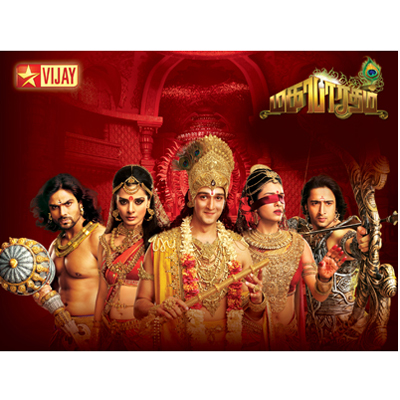
    The reason for introducing it at 7 pm was to fill in the slot left empty by the dubbed version of Star Plus’ Mahabharat. The 9 pm slot, on the other hand, was chosen to push the other shows, in order to extend primetime from 6 pm to 11 pm.


    The other big change will be the re-introduction of the dubbed version of Mahabharat which was aired from late last year, in a primetime slot which is yet undecided. “There has been a cult following of the show and we are very confident that the repeat will also give us minimum 4 TVRs,” says Star Vijay GM K Sriram. After the last airing, the channel took a feedback of people and found out that the earlier several episodes had been missed by viewers, who wanted to see it again.


    The channel plans to air Mahabharatham from second week of December. “The success of the first airing has made us take it up again. Purvika Mobile has already shown keen interest to be on board as an advertiser,” adds Sriram. This will follow a mega marketing campaign to the tune of Rs 1 crore.


    Additionally, its nonfiction show Super Singer has been shifted from 9 pm to 9:30 pm to make space for KMKV while Office has been shifted from 10 pm to 10:30 pm.


    Sriram points out that the shows at 8 pm and 8:30 pm are its blockbuster ones- Deivam Thandha Veedu and Saravanan Meenatchi and they wish to build the 9 pm band along with it. Unlike Hindi where 9pm is the supreme primetime slot, in southern GECs it is 8pm.

  • World TV Day: From ‘we’ to ‘me’

    World TV Day: From ‘we’ to ‘me’

    In today’s fast-paced world where everything is available at the click of a button, does one remember the good old days when wanting and waiting went hand-in-hand?

    The longing to watch Chitrahaar or Mahabharat is something the millennials will never know. With umpteen number of music channels and general entertainment channels (GECs), where shows go on for eons even if the storyline died its natural death hundreds of episodes before, showing whatever the viewer wants to watch 24/7.

    Want to watch a drama, choose from the GECs. If music, click on one of the music channels; animation, there are enough and more channels kids can choose from. Unlike the ones who saw the rise of the Indian television.

    For the ones who were born and grew up with television, shows like Hum log, Nukad,  Shaktiman, Rangoli and many others still holds a special place. And the clumsily-dressed characters made summer holidays even more special.

    The characters were simple yet with a progressive mindset. Today it is quite the opposite; heavy makeup and regressive thinking. The connection build over the years made Lalitaji a household name and owning a TV set was really a ‘Neighbour’s Envy, Owner’s Pride’ and Mile sur mera tumhara was not less than the national anthem. The half-an-hour news capsules covered many stories as there was less noise and more news. Although, there are certain anchors, which make primetime news more entertaining than the melodrama, today.

    Not only this, in the 80s and 90s, before the private television boomed, the entire family finished their chores before the favourite show or movie started.  Children finished their homework without being reminded, mothers prepared the meal and fathers left early from offices. The ‘we’ time was cherished.

    With the onset of DD Metro, Zee and Star Plus, the audiences got the first taste of life beyond the international shows as well as shows with high production value. Sa Re Ga Ma Pa, Hip Hip Hurray and Tara brought with them the modern touch to family television viewing.  

    And then came many more channels showcasing different genres from national to international markets giving a preference to one over the other.

    Today, it’s all about me, me and me. Children watch what they want to watch while parents are busy with their favourite channels. Segmentation is the need of the hour is what the broadcasters say, giving birth to 813 channels (as per the 15 September 2014 list on MIB), but in filling the 24 hours in the day, the quantity has taken over the quality.

    Today, how many of us eagerly wait for a show to begin or even alter our plans? Thanks to the long and sometimes dragging storylines as well as digital medium where on the command of a mouse everything will replay at our convenience, TV viewing has surely changed.

    Nonetheless, till entertainment is there the mundane and monotonous lifestyle will be saved by the flipping of numerous channels. LOL!