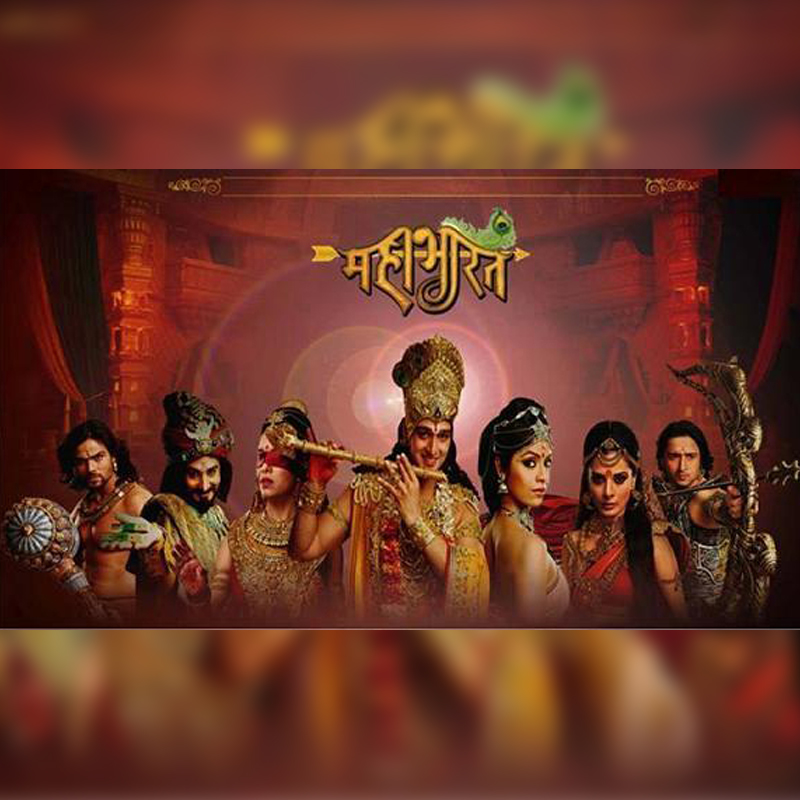
Tag: Mahabharat

  • Colors bets on nostalgia for successful ‘Mahabharat’ run

    Colors bets on nostalgia for successful ‘Mahabharat’ run

    MUMBAI: Mythological shows have come to the rescue of GECs struggling with a dearth in original content caused by the ongoing lockdown restrictions. And it has been a gala time for epic shows like Mahabharat. After a successful run on DD Bharati, the 1980’s epic by BR Chopra Mahabharat has made its way to Colors from 4 May.

    Viacom18 Hindi mass entertainment chief content officer Manisha Sharma says that during this pandemic, when people are seeking relief and hope, the epics are proving to be a perfect reminder of the golden times and a guiding light for how we wish to lead life from here on. The combination of purpose, nostalgia and the great narrative keeps bringing people back to watch these shows and take away something meaningful from it every time. Despite being produced almost three decades ago, the shows are backed by a strong storyline and impressive character outlines that make for a great entertainment proposition, regardless of the generation gap.

    Is it a good business call to air the show right after its conclusion on DD? Sharma says that demographically the audience of Colors is different. “For the ones who have not seen the show or the episodes before, it’s like watching a new show or catching up on the missed episodes. Secondly, it is also liked by viewers who have watched the show before and want to relive the charm as it evokes a sense of nostalgia. Both these sets of viewers cut across NCCS, age, gender, and geography,” she says.

    While DD aired the show at 9 pm, Colors chose to go with the 7 pm timeslot. The reason? Some of its best properties such as Balika Vadhu have performed well in the 6-8 pm slot.

    Sharma says: “Keeping the viewer's interest in mind and without disturbing the FPC, we decided to air Mahabharat in the 7-9 pm slot.

    With regard to the reach, there are a considerable number of consumers in the GEC universe who have not watched Mahabharat. That leaves us with enough scope to gain eyeballs.”

    Sharma further highlights that mythological shows such as Mahabharat help to bolster television audiences and attract advertisers. Time spent on such shows has consistently been increasing and brands that are relevant in today’s context should use it as an opportunity to create awareness and salience. She says that products with huge demand and ample supply, such as FMCG and retailers, are the revenue generators and contributing largely to the ad inventory.

    Digitalkites SVP Amit Lall says that mythological shows have been resonating with audiences for ages. It is only the distribution that has become robust now. “DD connects strongly with people from rural or tier II and III cities. On the satellite TV side, channels like Colors top your mind. Advertisers choose these channels because they have rural and urban audiences. Though 70 per cent of rural India viewers are DD-oriented, the other 30 per cent from these satellite channels play a big role. So, Colors is trying to capitalise that section of the society.”

    For promoting the show, Sharma says they have been closely mapping consumer sentiments and media consumption habits to ensure effective and collaborative engagement. “Looking at the audience’s strong penchant for mythological shows, we have gone all out on digital and TV to promote the show. We are also doing programmatic buying on digital and tapping the platforms to target viewers,” she adds.

    According to Lall, channels need to cater to their loyal audiences’ taste or else they may shift to other channels.  Sharma says: “We are closely monitoring the trends and looking at offering an ideal balance of the kind of content, thus staying true to our DNA of offering the best variety content for our loyal viewers.”

    Colors has also acquired the rights to air it in the Middle East. Colors ME has been telecasting Mahabharat from 6 May in a two-hour slot from 8-10 pm along with English subtitles. Back in India, Mahabharat will be aired only on Colors and won’t be seen on any other regional channels.

    The channel also holds some strong mythological and historical properties such as Karamphal Data Shani and Chakravartin Ashoka Samrat. The channel is monitoring viewership trends and may take a call for an appropriate time to re-run these.

  • The accidental producer: Siddharth Kumar Tewary gets candid on his journey

    The accidental producer: Siddharth Kumar Tewary gets candid on his journey

    MUMBAI: Most popularly known for creating magnum-opus shows like Mahabharat, Karmaphal Daata Shani, Porus, Ram Siya Ke Luv Kush and RadhaKrishn Swastik Productions has successfully managed to win our hearts over the years.  In a virtual fireside chat with Indian Television Group founder, CEO and editor in chief Anil Wanvari, on ‘The evolution of a creator – The maker of the new Mahabharat,’, Swastik Productions and One Life Studios founder and chief creative officer Siddharth Kumar Tewary gets candid about his journey and much more.

    Tewary, who was born and raised in Kolkata, always had a dream of making it big in the city of dreams Mumbai. After quitting his job in advertising, he started working in the marketing department of Sony Entertainment Television. His sheer love for storytelling and writing unique stories inspired him to make Amber Dhara for Sony Entertainment Television. 

    About the idea behind creating Amber Dhara, Tewary said: “A news article about two conjoined twins gave me the idea to speak to Sony Entertainment who I thought believed in unique and progressive shows rather than daily soap operas. Amber means sky and Dhara means earth so they are two distinct characters. The story was about how they are the same but still think differently.”

    Tewary says that he never thought of becoming a producer. The initial idea was to create a story that will be backed by a production house. But later, after figuring out different ways, he and his previous partner Vikas Seth decided to do it themselves, and that gave birth to Swastik Productions in 2007.

    Amber Dhara was a show with a beautiful concept but failed to make money. So, after this show, Tewary went on to make Mata ki Chowki which was aired on Sahara One. The show became a huge success and created new avenues for Tewary. He didn’t have to look back after that; he created another show named Agle Janam Mohe Bitiya Hi Kijo, a story that showcased the issues prevailing in rural India. The show was quite successful. Since then, he has created more than 30 shows.

    On his most favourite television shows Amber Dhara and Mahabharat, Tewary says: “Amber Dhara will always remain close to my heart. We have not even created a set. Because I wanted to write a series where just like human lives you are not stuck in one place. It is a story of two characters that kept moving. My second most favourite will be Mahabharat. In 2009 Vivek Behl from Star Plus called me and said he liked my show Agle Janam Mohe Bitiya Hi Kijo and he wanted me to make a Mahabharat. It took me five years to make that show. Mahabharat has taught me a lot and it has changed me as a person. Porus was the first Indian show that was showcased on the digital platform Hulu in Japan. It taught me to invest more in what you are creating and going around the world to sell your content. We have sold it in more than 14 countries now.”

    Tewary is ecstatic about re-running his show Mahabharat which was made seven years back.

    On parting ways with long-time friend and Swastik Productions managing partner Vikas Seth, he said it was a difficult time. Due to Mahabharat they were in huge debt. But after Mahabharat was launched it did well. “Initially we decided to make 128 episodes, but I was unable to tell the story in those particular episodes so we decided to extend it. Because of the extension Mahabharat did well for us on all fronts. It helped us get back on our feet,” he explained.

    According to Tewary, the formula for being a successful production house is going ahead with your team who share similar ideology. “The sheer passion of the entire team at Swastik Productions kept us going despite the challenges. Me and my elder brother Rahul always dreamt of creating a set, how we will provide shooting facilities. So, slowly we started acquiring land, building set on our own properties. Today we have more than 25 shooting floors which are spread across 25 acres. We have a huge mythological setup in western India. One thing led to the other and we started on investing in infrastructure while we were doing a lot of work on the visual effect front. Where we can have control over the delivery of our own product. That is how One Life VFX came into existence.”

    Elaborating more on One Life, Tewary said that Swastik Productions is a parent company and One Life Studios is a subsidiary of that where they do most of the digital work, syndication, distribution and visual effect work.

    Tewary is currently working on the animation front, where he is busy making a few promos and developing some animation stories. In the near future he wishes to create characters that sustain for much more time. He is also focussing on syndication and distribution where he is taking Indian content overseas and similarly wishes to bring international content in India.

    He adds, “We have acquired some international series that we will be distributing to OTT platforms in India for them to stream. I am also working on an original series called Escape Life for Hostar. I finished the writing; we were about to begin the shoot but due to lockdown things are at halt.”

    He revealed that he has no plans to lay off workers in the wake of the Covid2019 pandemic. "We have deducted salary from April onwards. But there are no plans of furlough or layoffs. Infact, we are taking care of 250 people who are staying at our Umbergaon set in Gujarat," he said. 


  • COLORS acquires rights to air epic Mahabharat

    COLORS acquires rights to air epic Mahabharat

    Mumbai: Iconic mythological show Mahabharat is set to air on COLORS starting Monday, 4 May 2020, every day from 7-9 pm.

    Starring Nitish Bharadwaj, Mukesh Khanna, Rupa Ganguly, Gajendra Chauhan, and Puneet Issar, Mahabharat is directed by Ravi Chopra. Mahabharat was first aired between 1988-90. Back in time, watching the show used to be a morning ritual and the streets would go silent as the entire nation would tune in to watch the episodes with their families. Decades later, the show is still deemed cult for its rich storyline, grandeur, and fine performances and holds a memorable place in our lives.

    Manisha Sharma, chief content officer, Hindi Mass Entertainment, Viacom18, says: “Due to the nationwide lockdown, the television landscape is changing quite significantly. The popular classics and erstwhile shows have found a renewed interest amongst the audience as they provide relief and induce nostalgia. We, at COLORS, are constantly and very closely evaluating the viewership trends and designing our programming to give our audience the best content. In a similar move, we are elated to air Mahabharat on television to give our viewers another opportunity to relive the golden times.” 

  • Prasar Bharati CEO Shashi Shekhar Vempati on the fairytale rise of Doordarshan

    Prasar Bharati CEO Shashi Shekhar Vempati on the fairytale rise of Doordarshan

    For long, there were many who sang the eternal dirges of state-owned broadcaster Doordarshan. Rightfully so. For almost a decade, the broadcaster seemed to be frozen in time, in total confusion about its raison d’etre, even as private broadcasters gave it a walloping in the viewership sweepstakes.  And also laughed all the way to the bank.

    Circa 2020 and it has made an unbelievable comeback, sitting atop the BARC ratings charts. Just like in the nineties when it launched DD Metro, giving private broadcasters a run for their money under the leadership of director-general Rathikant Basu and I&B secretary Bhaskar Ghose.

    This time, it is Prasar Bharati CEO Shashi Shekhar Vempati who has done the magic rope trick for the pubcaster by launching a gaggle of old shows which made it tick  in the eighties and nineties. The prominent among them are: Ramayan, Mahabharat, Shaktiman, Buniyaad, Dekh Bhai dekh, Sai Baba, Alif Laila, and Chanakya.

    Indian audiences who have been forcibly locked down in their homes courtesy Covid-19 have been lapping up the retro fare. In week 14 of BARC India ratings, DD National's rating has moved up from 376 GRPs to 451 GRPs in 15+ HSM urban markets, beating even the top Hindi GECs, riding on the back of iconic re-runs.

    DD National and DD Bharati became the most watched channels in week three of lockdown. While Ramayan on DD National garnered 545.8 million weekly impressions in week 13, Mahabharat on DD Bharati garnered 145.8 million impressions. The re-telecast of Ramayan series garnered the highest ever rating for a Hindi GEC show since 2015. The show was highest rated in the urban market and mega cities. According to BARC India data, the first four episodes of Ramayan garnered an average of 28.7 million impressions. Numbers which have not been reached by even private broadcasters in the past half a decade.

    An IIT alumnus, who worked at Infosys for 16 years, and later became the CEO of NitiCentral.com, Vempati then worked closely on prime minister Narendra Modi’s Mission 272+ during the 2014 general elections. He then worked on several Prasar Bharati committees before taking up the job of leading it in 2017.  (Prasar Bharati as we all know is the holding company of both Doordarshan and All India Radio.)

    Vempati has been in the driver’s seat at DD since September 2019 when the then-director general Supriya Sahu moved on to another posting. Indiantelevision.com's editorial lead Firos B reached out to Vempati  for an interaction on the success of his charge. 

    Excerpts from the interview:

    Doordarshan seems to be shining bright now as compared to the private channels. What are the things you have been doing right? How have you defined the role of DD and its slate of channels?

    The nation is experiencing extraordinary circumstances unforeseen in recent memory and not experienced perhaps in over a century. The citizens see in Doordarshan both nostalgia and a reassurance. The prime minister invoked the metaphorical lakshman rekha when he called for a nationwide lockdown. The citizens in response to that clarion call made Doordarshan their home resulting in these audience figures. I am thankful to the rights holders who responded to our requests and helped us bring back iconic DD content. The appeal of this iconic content is universals across all target groups and we are not looking at any kind of segmentation-based targeting. For a long time audiences have been fragmented by the industry. TV which was once the glue that brought families together ended up on split screens. I am happy that the public broadcaster has once again brought back wholesome family viewing to television screens thus turning the calculus of segmentation on its head. 

    How did the programming of Ramayana and Mahabharata come about? What did it take to bring it on air? Who assisted you in it?

    Every one of the rights holders played their part despite the constraints of the lockdown to work overnight with our teams in Mumbai and Delhi on a war footing. The biggest challenge was incompatibility of archival media formats and transporting the content from Mumbai to Delhi. Several firms and individuals helped us out in solving these problems despite the constraints of the lockdown. It was as if it was a national duty that everyone came together to make it happen. 

    Are you happy with the ratings to all the old new shows? And are they paying good old DD ad rates when it was in its heyday or is it lower rates?

    Ratings were secondary to us. The primary purpose was to ensure the prime minister's call for a total lockdown was successful and effective. I am happy that DD played its part in ensuring the same. Advertising demand naturally followed but our priority was the social messaging which we have not compromised on despite the tremendous pressure from the market. COVID-19 infomercials continued to air on priority. I would not like to comment on rates and revenues at this time. 

    What is the road ahead for Doordarshan? 

    It is too early to speak about the road ahead as India is still grappling with the pandemic. We will, however, continue to build further on this momentum around nostalgia and work with the various rights holders to air as many iconic DD shows as possible during the period. 

    What are the efforts to produce relevant and relatable programmes to engage the audience, especially the youngsters who grew up watching satellite channels and are now on OTTs like Netflix?

    We will pursue fresh content creation once the situation normalises. Until then our priority is news and information dissemination related to the pandemic as well as enabling mass education through broadcasting till schools and colleges can reopen. 

    What is the strategy to sustain the advertiser interest?

    We have developed a sizeable pipeline of iconic DD shows which should continue to engage audiences and sustain advertiser interest. 

    You have brought in professionals from the private sector to help you in your efforts. How has this been received?

    We have cross-functional teams from both the public and private who are working together closely to deliver during this crisis. It would not be right to overstate anyone's role. 

    Will regional Kendras receive make-over in the days to come as part of the revival?

    Priority is education as DD/AIR team up with state education departments. A lot of iconic and archival content is also being aired. 

    Apart from DD Retro, are there plans to launch any genre-specific channels?

    Not at this time.  

    You have launched the Prasar Bharati News on Air app. How is it faring?

    Over the last two months since the crisis began, NewsOnAir App has since had a 125 per cent growth in traffic from India with nearly 1.5 million listeners tuning in. International traffic which accounts around 10 per cent of overall traffic has also doubled during the same period. Nearly 20 million visits during the same period for the audio content on the App across both live streaming and on-demand audio content of All India Radio. 

    DD Free Dish: Is that a lifeline during the COVID-19 crisis? How is it faring?  How many channels are on board the DD Freedish platform?

    India is lucky and unique as we are the only public broadcaster the world over to have our own DTH platform which is free to air with no monthly fees and reaching into 35-40 million households. Free Dish has become a lifeline for mass education through broadcasting during the pandemic. At this time more than 80 channels (public and private) are part of Free Dish. Since several public education channels of HRD and NIOS are also beamed on the same satellite, they can also be accessed using Free Dish set top boxes. This is a game changer for India in ensuring mass education on such a scale through broadcasting unlike any other country.

  • DD National, Sun TV & Zee Biskope see viewership growth across genres

    DD National, Sun TV & Zee Biskope see viewership growth across genres

    BENGALURU: Week 13 of 2020 was a peak week in terms of television viewership which had climbed to an all-time high. Viewership fell in week 14 of 2020, but seems to have recovered a bit in week 15 of 2020 (Saturday, 11 April 2020 to Friday, 17 April 2020, week under review). Towards the mid-end of Week 12 of 2020 was when the Indian COVID-19 lockdown happened (25 March 2020), but events such as the Janta curfew happened at the start of week 12. Hence, week 12 can be considered the first week of the Indian COVID-19 lockdown. Television viewing habits and viewership have changed completely during the lockdown period in the country.

    Broadcast Audience Research Council of India (BARC) data for week 15 of 2020 reveals that only one of the nine channels that were present in BARC’s weekly list of Top 10 Channels Across Genres on All Platforms, on pay platform and free platform in weeks 13, 14 and 15 of 2020 have seen viewership growth in week on week (w-o-w) to week 15 as compared to the peak week. Pubcaster network Doordarshan’s (DD) flagship channel DD National saw viewership grow 21.4 per cent in week 14 of 2020 as compared to week 13 and saw it grow further in week 15 by 38.2 per cent vis-à-vis week 14 in BARC’s weekly across genres lists on all platforms. The most widely available terrestrial channel in the country saw viewership grow 68 per cent in week 15 as compared to week 13 in BARC’s weekly across genres lists on all platforms. The rerun of the mythology shows Ramayan and Mahabharat and a number of classics from the 80’s and 90’s of the previous century have helped two channels of DD grow viewership tremendously.

    Top 10 channels across genres on all platforms

    Nine channels have appeared in BARC’s weekly across genres lists on all platforms during all the three weeks under consideration here. The only exception was the Sun Network’s Tamil movies channel KTV, which exited in BARC’s weekly across genres lists on all platforms in week 14 of 2020, to be replaced by Viacom18’s Kids channel Nick.

    Sun TV Network’s flagship Tamil channel Sun TV saw viewership decline in week 14 by19.4 per cent as compared to week 13 of 2020, but then climb again strongly in week 15 by 48 per cent as compared to week 13.

    Two channels, each from DD, Sony Pictures Network India (SPN) and Zee Entertainment Enterprises Limited (Zeel) and one channel each from Enterr 10 Television, Star India, Sun Tv Network and Viacom18, were present in BARC’s weekly list of Top 10 Channels Across Genres on All Platforms in week 25 of 2020.  Five of the channels were Hindi GECs; there were two Hindi movie channels and there was one channel each from the kids, Tamil and Telugu genres present in the list in week 15 of 2020.

    Please refer to the chart below

    Top 10 Pay Channels Across Genres

    In BARC’s weekly lists of Top 10 Pay Channels Across Genres for weeks 13, 14 and 15 of 2020, DD National was the only channel that saw w-o-w growth in weeks 14 and 15 as compared to week 13 of 2020.

    Nine of the channels in BARC’s weekly list of Top 10 Pay Channels Across Genres have been the same in weeks 13, 14 and 15 of 2020 with a shuffling of ranks. The only change was when KTV exited the list in week 15 of 2020 to be replaced by its network’s sibling Telugu GEC Gemini TV. 

    Three channels each from the Hindi movies and Telugu genres, two channels from the Hindi GEC genre and one channel each from the kids and Tamil
    genre made up BARC’s weekly list of Top 10 Pay Channels Across Genres in week 15 of 2020. Two channels each from SPN, Star, Sun and Viacom 18 (one from Viacom18 and one from Eenadu TV group in which Viacom18’s majority owner Network18 has a stake) and one channel each from DD and Zee were present in BARC’s weekly list of Top 10 Pay Channels Across Genres.

    Please refer to the charts below:

    Top 10 Free-to-Air Channels Across Genres

    In the case of BARC’s weekly lists of Top 10 Free-to-Air Channels Across Genres, it was again DD National that maintained its w-o-w growth in weeks 14 and 15 as compared to week 13 of 2020. Further, Zeel’sBhohpuri cinema channel Zee Biskope also showed growth during week 15 vis-à-vis week 13, but it had seen a viewership drop in week 14 as compared to week 13 of 2020.

    Four Hindi GECs’, three channels from the Hindi Movies, two channels from the Bhojpuri genre and one channel from the Youth genre comprised BARC’s weekly list  of Top 10 Free-to-Air Channels Across Genres in week 15 of 2020. There were three channels each from Enterr 10 Television and Zeel and two channels each from B4U and DD networks in BARC’s weekly list of Top 10 Free-to-Air Channels Across Genres during the week under review. 

    Here also, nine of the channels were present during the three weeks under consideration in this paper, but again with some shuffling of ranks. The India Today group’s Hindi News channel AajTakexited the list in week 14 to be replaced by DD’s Hindi GEC DD Bharati.

    Please refer to the charts below:


  • Television viewership peters down slightly in Week 14

    Television viewership peters down slightly in Week 14

    BENGALURU: The first three weeks of Indian COVID-19 lockdown have expanded television viewership in India to an extent that was probably never imagined earlier. As many average Indian citizens, bound by the lockdown within the confines of their homes, sought to comfort their minds with news of what was happening within the country and the world and with the pseudo realism that Movies provide, their television viewership habits changed week-on-week. Here’s how.

    Viewership

    In the third week of the Indian COVID-19 lockdown (week 14 of 2020, Saturday, 4 April 2020 to 11 April 2020), television viewership at 1.223 trillion minutes was 37.9 per cent higher when compared to the average of Weeks 2 to 4 of 2020, or the pre-COVID-19 period according to joint Broadcast Audience Research Council of India (BARC) Nielsen reports. But then, this was 3.4 per cent lower than the 1.266 trillion minutes of the previous week, despite the same average daily reach of 627 million television viewers. Hence, the average time spent was obviously lower at 4 hours 38 minutes in Week 14 of 2020 as compared to the 4 hours and 48 minutes that television viewers spent in Week13.

    As is obvious from the chart below, TV viewership has grown like never before during the lockdown week, but week 14 data shows that week-on-week, viewership in Week 14 of 2020 is slightly lower than the previous week, which has so far seen numbers peak at high levels. Please refer to the chart below:

    Effect on genres

    News, which until the COVID-19 period had seven per cent share of viewership, saw it triple to 21per cent in Week 12, or the first week of the Covid-19 Lockdown in India. Though news is still the leader in terms of growth in viewership, the growth of the genre in relation to the Pre-Covid-19 period has been lower in Weeks 13 and 14 as compared to Week 12 of 2020. Business news also seemed to be following the trends of its larger sibling, news. The other seven genres have seen growth in Weeks 13 and 14 vis-à-vis the Pre-Covid-19 Period averages.

    Since no fresh content was being produced, GECs’ saw the smallest growth during the first three weeks of the Covid-19 lockdown. It must be noted that GECs’ are the largest genre in terms of viewership, so the 9per cent and 7per cent growth in Weeks 13 and 14 respectively versus the Pre-Covid-19 are good numbers.

    In the Pre-Covid-19 Period, Hindi GECs’ had a 32per cent share of viewership of the Hindi speaking market of HSM. Hindi GEC’s in the urban Hindi speaking market or HSM (U) which reduced to 29per cent in Week 14. Despite this Hindi GECs’ in HSM (U) attained an all-time high of 4 billion impressions. HSM (U) viewership grew by 26per cent in Week 14 in relation to the average of the Pre-Covid-19 Period. This growth could be attributed mainly to GECs’ resorting to airing old classics. The major growth drivers of the genre were pubcasterDoordarshan’s GECs’ DD National and DD Bharti which saw the return of programmes such as Ramanand Sagar’s Ramayan and B R Chopra’s Mahabharat, as well as soaps like Dekh Bhai Dekh, Byomkesh Bakshi, Shaktimaan, ShrimanShrimati, Buniyaad and Circus. The other GECs’ generally saw flat growth according to BARC.

    Please refer to the figure below:

    GECs’ in South India continued to lead viewership in Week 14 of 2020, but with a lower share as compared to the pre-COVID-19 period. The movies and news genres saw higher viewership in Week 14 as compared to the Pre-Covid-19 Period. Please refer to the chart below:

    Who was watching television when?

    Growth in viewership continued to be led by the younger generation –the 2-14-years age groups followed by the 15-21 and the 31-40-years age groups as well as in the week preceding (Week 11) the lockdown and during the three weeks of the lockdown (Weeks 12, 13 and 14 of 2020). However, growth was lower amongst all age groups in Week 14 of 2020 as compared to Week 13 with respect to the Pre-Covid-19 Period.

    Please refer to the figure below:

    Since people spent time at home, growth in time spent in minutes for watching television was higher among males. The change was slightly lower in Week 14 of 2020 as compared to Week 13 for males and females with viewership of both the weeks in relation to the Average of the Pre-Covid-19 Period. Please refer to the chart below:

    A BARC Nielsen Report dated 16 April 2020 said that BARC’s NCCS A saw the highest growth during the three weeks of the lockdown as well as Week 11 of 2020 as compared to the average of the Pre-Covid-19 Period.  NCCS A has seen the highest growth in Weeks 12, 13 and 14, with growth peaking in Week 13 of 2020 and then petering slightly in Week 14 of 2020. Please refer to the chart below.

    Non-primetime continued to be a growth driver of Television viewership in Week 14. While Full Day All India Television viewership grew 38per cent in Week 14 as compared to the Pre-Covid-19 Period, Rural India viewership growth was driven by non-Primetime viewership. Primetime viewership grew 10per cent in Urban India, while it remained stable in Rural India.

    News is event driven. Week 15 of 2020 has seen the Covid-19 lockdown in India being extended to 3 May 2020. Prime Minister Narendra Modi’s speech on 14 April 2020 announcing the extension of the lockdown which was aired on 199 channels garnered the highest ratings at 3,937.3 million viewing minutes as compared to his previous 3 addresses to the nation on the Covid-19 crisis.

  • Discovery Kids to showcase mythological movies during Diwali

    Discovery Kids to showcase mythological movies during Diwali

    MUMBAI: Discovery Kids will celebrate Diwali with a line-up of animated classics like Ramayan, Mahabharat, Hanuman Immortal 2, Pandavas, Little Krishna and Krishna aur Kans starting 19 October 2017. All the animated movies are being showcased as a part of Diwali celebration campaign called Diwali Dhamaka.

    Discovery Communications India’s Discovery Kids head Uttam Pal Singh said, “We have put together a line-up of timeless classics with an aim to ensure that kids enjoy India’s rich mythological heritage along with their parents on the auspicious occasion of Diwali.”

    Discovery Kids will witness the victory of good over evil with shows such as Ramayan (11:00 am, 19th October) Hanuman Immortal 2 (19th October at 1.30 pm), and Pandavas (20th October at 1:30 pm). Mahabharata, India’s biggest multi starrer animation film, will air on Friday, 20th October at 11 am. The voice-over in this mythological epic have been given by renowned Bollywood celebrities including Amitabh Bachchan (Bheeshma), Vidya Balan (Draupadi), Ajay Devgn (Arjun), Sunny Deol (Bheem), Anil Kapoor (Karna) and Jackie Shroff (Duryodhan).

    Krishna aur Kans, a stereoscopic animated feature film, will air on Saturday, 21 October 2017 at 11 am. Bollywood celebrities such as Manoj Bajpayee, Juhi Chawla, Mukesh Khanna and Anupam Kher and Om Puri have given their voice for various characters in this movie.

  • DD may seek mythological serial producers at ‘premium,’ plan to revive epic dramas under way

    MUMBAI: With the direction of the ministry of information and broadcasting ministry for concentrating on quality programmes as reconfirmed by the union minister Venkaiah Naidu in Chennai, Prasar Bharati seems to have fastened its belt.

    Pubcaster Doordarshan, with the aim increasing its TRPs (television rating points), has decided to telecast golden oldies — Mahabharat and Ramayan kind of mega serials. These mega-serials were not telecast in the past several years.

    By airing mega serials based on Indian mythology, Prasar Bharati hopes that Doordarshan will gain significant revenue as there is a ready market for such serials which had been money-spinners for Doordarshan. Although a number of private television channels had been trying to follow the Doordarshan formula of telecasting serials based on Indian mythology, they had been unable to generate the kind of following that the pubcaster had had.

    The national broadcaster may to seek proposals for production of serials based on “Indian mythological” themes, sources said. The Prasar Bharati board meanwhile is planning to increase the commissioning fees of serials. Because, sources said, under the prevailing rates, attracting big production houses for developing content for mega serials is remote.

    Owing to the tremendous popularity of the mega serials on Doordarshan, a number of actors such as Arvind Trivedi, Deepika Chikliya and Nitish Bharadwaj were voted to power by the electorate.

    Also Read :

    Chennai DD upgrade under way, Rs 15-cr HD studio to be operational in ’17-18

    Arasu licence for ‘affordability’, pvt MSOs concern to be studied, says Naidu

    DD FreeDish auction next week, reserve price is Rs 80 million

    DTH & cable gap being tapped by FTAs like FreeDish, DTT to reach 60 cities: Naidu


  • ‘Mahabharat,’ ‘Devon Ke Dev Mahadev’ &’Naagin’ successful in China, audience longing for more

    MUMBAI: Life is stranger than fiction. Dreams sometimes are more real than reality. Political tiffs between India and China notwithstanding, it’s business as usual and more for the media and entertainment industry. The Indian mythological television dramas like ‘Mahabharat’, ‘Nagin’ and ‘Devon Ke Dev Mahadev’ are turning out to be highly successful with the Chinese audience.

    The Chinese audience is however no stranger to imported content in terms of dramas, especially from countries including the US, South Korea, Japan and the UK. Indian stories are new to them, but they are gaining popularity.

    Yang Buhui, who works in the gaming industry, said that Indian mythology was fascinating. Its philosophy and worldview, which were exotic and had been a wonderful new world to him, PTI quoted the state-run Global Times as reporting. Yang has also been running a volunteer group that provides Chinese subtitles for Indian tele-series.

    She started the group because of her most favourite Indian TV series ‘Devon Ke Dev Mahadev’ (DKDM), which premiered in 2011 and ran a total of 820 episodes. It narrates the stories of Lord Shiva, who is also known as Mahadev.

    Yang said she loved the drama because it’s a key to the world of Indian mythology. Besides, the actors were not only gorgeous, but their acting skills were good.

    Qing Qing, who works in education industry, said she loved the actors so much that she would watch the “raw” episodes – that is, in Hindi language, and not translated or subbed in Chinese yet.

    There was not much translation work done earlier for Indian dramas, and Qing said she had to wait for a long time for the Chinese subtitles. Qing has also enjoyed several Japanese and South Korean dramas in the past, as well as comics and anime, but now she mostly enjoyed Indian dramas the.

    Everybody knew that both India and China are among the greatest ancient civilizations. However, compared to what they know about the countries from the West or other Asian countries such as Japan, what many Chinese know about India is still limited to the simple introductions in textbooks, Qing said and hoped that there would be a huge import of Indian films and dramas in the future.

  • For DD, it’s time to introspect not celebrate

    For DD, it’s time to introspect not celebrate

    NEW DELHI: There were evenings in the 1960s to mid ’70s when India, at least those homes fortunate to have TV sets, set their alarm clock in the evening to around 6 pm. It was that time the TV sets came alive with a signature tune and colour bands heralding something exciting.

    Those were the days when Indian pubcaster Doordarshan brought the world and entertainment — in a rationed manner typical of those pre-liberalization days — to Indian homes via production values that would be considered shoddy by today’s standards.

    Cut to circa 2016. TV sets today beam audio and video round the clock by DD, as Doordarshan came to be popularly known as, and a swathe of private sector TV channels.

    However, at a time when DD celebrated its Foundation Day (or birthday) on September 15, a question that rankles everybody is: Why does Doordarshan not function like some other pubcasters — the BBC, NHK, DW, PBS, etc —- in terms of functioning and quality of programming?

    Clearly, it is linked to another question: was Doordarshan doing better off when it was a direct wing of the Ministry of Information and Broadcasting (MIB), or has it benefitted by become ‘autonomous’ under Prasar Bharati?

    Doordarshan since 1959 beamed for half an hour educational programmes three days a week. However, as its programming timing grew, so did the control by the government, which found in DD a perfect tool for propaganda.

    Whether the Emergency days during Prime Minister Indira Gandhi or other governments, the government of the day realized the importance of DD’s widening networks and its role in pushing the government agenda.

    The Prasar Bharati Bill, paving the way for an autonomous DD and sibling All India Radio, was only notified and formalized in 1997.

    Interestingly, DD saw its hey days in the eighties with programmes like ‘Hum Log’; ‘Buniyaad’, ‘Ramayana’, ‘Mahabharat’, ‘Tamas’ and ‘Nukkad’, among many others, which not only highlighted India’s cultural traditions but also the ongoing societal changes. In fact, one wonders, whether a serial like `Tamas’, based on India’s partition, could be made today without somebody’s sentiments getting hurt and, in the bargain, getting canned.

    Though DD (and AIR) are modeled on the BBC — as famously described the then MIB Minister Jaipal Reddy in 1997 — DD’s case is different. Despite being dependent on government funding, it is running low on financial resources with each successive government insisting that Prasar Bharati start generating its own resources, but not letting go of the control. But this is difficult when the network has to compete against more than 800 private channels that are not impeded in terms of programming and other initiatives like DD is.

    No wonder the present Prasar Bharati CEO Jawhar Sircar said on DD’s birthday, “We need to look forward…renew our tryst with destiny.”

    Lines by a Canadian author, who penned ‘Morningstar’, aptly sum up the confused state of Prasar Bharati: “If you think you know what your purpose is, but can never seem to gain satisfaction from it, then it’s probably not the purpose you’re destined for.”