Tag: Madras high court

  • Madras HC gives relief to New Generation Media employees

    Madras HC gives relief to New Generation Media employees

    MUMBAI: 29 employees – including both journalists and non-journalists – of the SRM group’s New Generation Media Corp – which runs the successful Tamil news channel Puthiya Thalaimurai and recently launched GEC Pudhu Yugam – have got a lifeline with the Madras High Court admitting a petition and issuing an ad interim injunction against the former from cutting or restructuring their salaries or terminating their employment. The order was passed by Justice KBK Vasuki on 30 December 2013.


    The company had hired the employees for its proposed English channel, the launch of which it had aborted, following “financial difficulties.” In a letter dated 26 December it had indicated that they could stay on with a 50 per cent pay cut and work with the group’s website or opt out by taking up a three month gross salary severance package.The employees had then approached the Madras High Court for relief.


    The SRM group’s New Media Generation Corp CEO RBU Shyam Kumar had in October 2012 announced that it would launch an English news channel in 2013. It went ahead and hired 50 employees for the same over the next few months. But in August 2013 the company’s editorial head S. Srinivasan announced that there would be a delay, following which around 10 staff departed. Later in end November 2013, he, according to media reports, announced that the management had dropped the idea of the English news channel totally. And in early December 2013, once again according to media reports, Shyam Kumar verbally indicated to the 40-odd employees nationally that the group had failed to secure a loan for the news channel and hence plans for the same had been jettisoned. He also made a salary restructuring or severance package offer. An official letter disclosing the terms was sent to them on 26 December, following which the employees approached the Madras High Court.


    Their contention was that the decision to close the channel without seeking government permission was illegal and void, contrary to Section 25-O of the Industrial Disputes Act. Section 25-O of the act states that: “An employer who intends to close down an undertaking of an industrial establishment shall, in the prescribed manner, apply to the appropriate Government for prior permission 90 days before the intended closure is to become effective, stating the reasons for the intended closure. A copy of such application shall also be served on the representative of the workmen in the prescribed manner (Sub Sec. (1 )).”


    The employees’ petition also highlighted that the decision to cut salaries was illegal as per section 25-M of the Industrial Disputes Act. Hence, they had approached the court to restrain the channel from laying off employees or from cutting salaries. Section 25 M states that “No workman (other than a ‘bad Ii’ workman or a casual workman) whose name is borne on the muster rolls of an industrial establishment to which this Chapter V-B applies shall be laid off by employer except with the prior permission of the appropriate Government or such authority as may be specified by the Government by notification in official gazette (Sub.Sec.1).”


    Advocate R. Vaigai who appeared for the petitioners in court told Business Standard yesterday that notices had also been issued to the company and the Government of Tamil Nadu, considering that labour is a State subject. As per the rules, a company cannot terminate a large number of employees, like in this case, without the prior permission of the State Government, she told the financial daily.


    While the 40-odd (including the 29 who filed the petition) employees could well be celebrating as 2013 ends, New Media Generation management – which has won kudos for its Tamil news reportage and invested close to Rs 150-200 crore in its two channels – will have to do some serious thinking on how to see this current imbroglio through.

  • Arasu cable threatens Star Sports to switch off

    Arasu cable threatens Star Sports to switch off

    MUMBAI: Tamil Nadu’s giant multi system operator (MSO) Arasu cable is flexing its muscles again. Last week, it issued a public notice against aggregator MediaPro for breach of letter of acceptance and non conclusion of price negotiation. Now it has gone ahead and issued a notice against Star Sports citing the same reason.


    The notice dated 28 December warns subscribers that after 21 days they won’t be able to view Star Sports channels on their Arasu cable connections but instead will be shown substitute channels.


    Issued under section 4.2 of the Telecom Regulatory Authority of India’s (TRAI) Telecommunications (Broadcasting and Cable Services) Interconnection Regulations 2004, the notice says that Star Sports 1, 2, 3 and 4 might be disconnected.


    A few days ago, the Madras High Court warned the TRAI not to take any coercive action against the MSO that has about six million subscribers in the state. The rumours doing the rounds are that Arasu has been arm twisting pay channels to pay high carriage fees in order to fill in the gap between revenue and payouts to pay channels of about 40 per cent.

  • Madras High Court declines to restrain MSOs, LCOs from transmitting analogue signals

    Madras High Court declines to restrain MSOs, LCOs from transmitting analogue signals

    New Delhi: Even as a petition by Chennai Metro Cable Operators Association (CMCOA) seeking extension of implementation of the digital access system is pending hearing, the Madras High Court has refused to grant interim injunction restraining local cable operators from transmitting the cable TV signals in analogue mode.

    However, Justice Vinod K Sharma said: “It is admitted that the cable operators including Arasu cable are providing only analogue system and therefore violating law for which they can be prosecuted under section 11 and section 16 of the Cable Television Networks (Regulations) 1995.”

    But he said this did not mean he was accepting the petition by T Saikrishnan seeking to restrain LCOs and multi-system operators like Arasu from transmitting or operating analogue head end or importing cable TV signals from Non-DAS area or rolling out cable TV signals without DAS licence to the consumers within Chennai Metropolitan area.

    Justice Sharma said: “It cannot be said that the applicant has prima facie case to seek injunction nor the balance of convenience is in favour of him is not likely to suffer any irreparable loss.”

    In the suit, the plaintiff claimed that he is in cable business for last several years after getting valid licence from the postal department. He is operating in and around Virugambakkam in Chennai. Other local cable operators including Arasu cable in the cable business were transmitting signals in and around the area and other areas of city without obtaining necessary licence.

    Arasu Cable Television got itself impleaded as party and filed the counter. It submitted that the applicant had not come to the court with clean hands and filed the application at the instigation of some vested interest who did not want the government to operate the cable TV business.

    P H Arvindh Pandian, Additional Advocate General, contended that the Union government already issued MSO licence to Arasu cable in April 2008 which was valid up to 2013 and it had also applied for DAS licence with the Information and Broadcasting Ministry and the application was still pending. Arasu Cable was running cable TV network in public interest to provide transmission.

    The Judge viewed that under the Act, the aggrieved person could file an appeal for taking action against persons or authority. “The remedy for violation is provided under the Act under section 11 and 16 whereas civil suit is barred in view of law laid down by the Supreme Court”, added Mr. Justice Sharma.

    Meanwhile, the petition by (CMCOA) through its General Secretary M R Srinivasan for extension of DAS pending before Justice N Paul Vasanthakumar is expected to come up for hearing in the last week of this month.

  • Viswaroopam case adjourned to tomorrow; Judge wants Haasan to work out an amicable solution

    Viswaroopam case adjourned to tomorrow; Judge wants Haasan to work out an amicable solution

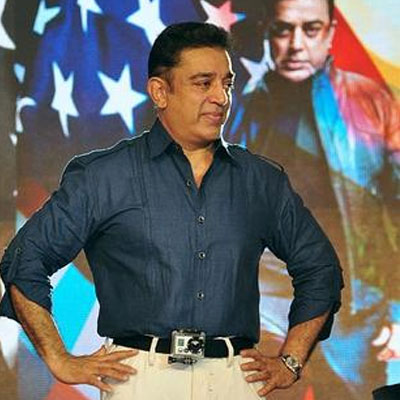
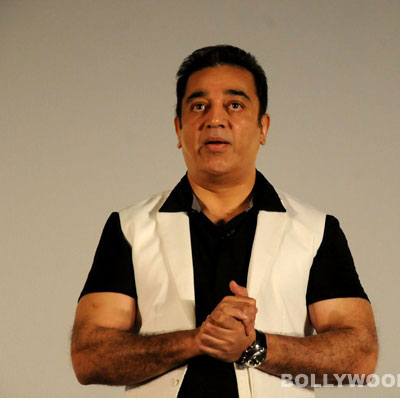
    NEW DELHI: Actor and filmmaker Kamal Haasan failed to get any relief from the Madras High Court over the ban on the release of his film ‘Viswaroopam‘ in Tamil Nadu, as Justice K Venkataraman on Monday advised Haasan to work out an amicable solution with the state government.

    The High Court‘s advice followed a special screening of the film for the judge on Saturday, 26 January.

    While adjourning the case to Tuesday, Justice Venkataraman said the court had to take into account the state government‘s law and order concerns, communal amity in the state and also the actor‘s investment in the movie. “Why don‘t you negotiate the matter and settle the issue amicably?” asked the judge.

    Responding to the advice, Haasan‘s senior counsel P S Raman said, “The hero and director of the movie had returned to Chennai only this morning, and I will discuss the matter with him.”

    Raman said they had filed petitions separately challenging the district collector‘s individual prohibitory orders restraining theatres in the respective districts from screening the film.

    Justice Venkataraman said the main matter, along with the new petitions, could be heard together on Tuesday.

  • A State Govt. cannot ban a film cleared by the Censors, says Tewari even as Court extends stay on Vishwaroopam

    A State Govt. cannot ban a film cleared by the Censors, says Tewari even as Court extends stay on Vishwaroopam

    NEW DELHI: The ban on Kamal Haasan‘s Vishwaroopam by the Tamil Nadu Government may turn out to be a major issue of the powers of the state vis-?-vis the Central Board of Film Certification which functions under the Union Information and Broadcasting Ministry.

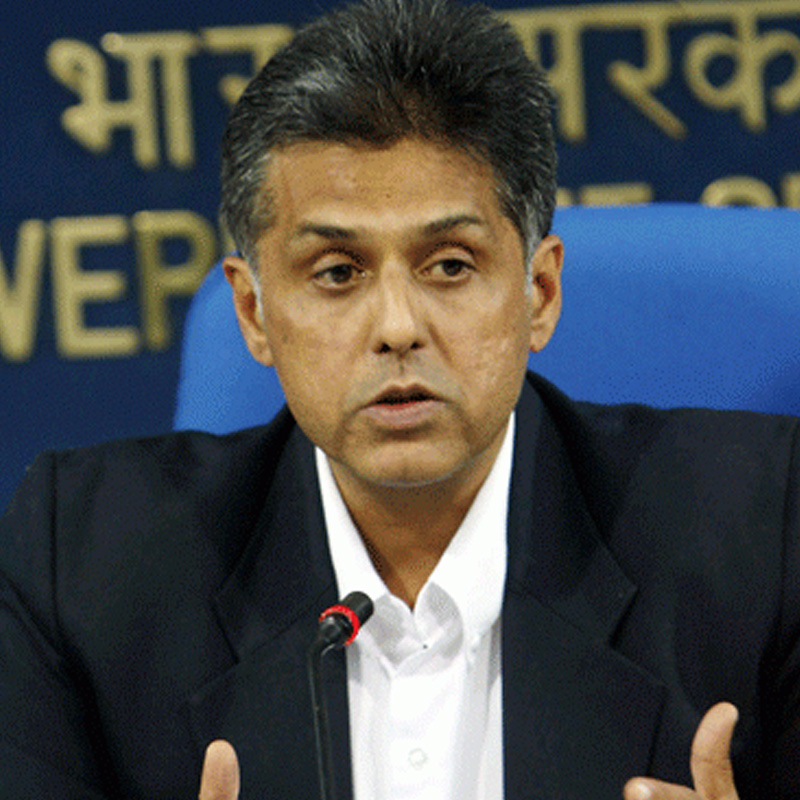
    Even as I and B Minister Manish Tewari asked the Tamil Nadu government to reconsider its decision to ban the film, the Madras High Court stayed the release of the film till 28 January with the judge saying he would see the film for himself on 26 January before a final decision.

    Tewari said, “The Supreme Court of India in Prakash Jha‘s matter (relating to Aarakshan) had the occasion of considering the various provisions of the Cinematograph Act and juxtaposing them against the law and order powers which the state government has under the Constitution.”

    “And the Supreme Court was very categorical that Article 246, seventh schedule, list one, entry sixty gives the central government the powers to certify films for exhibition and once the Central Board for Film Certification has taken a particular view, it binds all the other instrumentalities of the state.”

    “I suggest that Tamil Nadu government peruse that judgment of the Supreme Court in Prakash Jha‘s case before coming to any conclusion which may fall foul of the very clear directive which the court has given,” he said.

    Haasan had approached the Court following protests from Muslim groups asking to impose a ban on the film. The film was slated for release this Friday.

    Earlier reacting to the demand for a ban, Haasan had written in a letter: “While I am touched by the voices in support for me and my film, I am appalled at how my film is construed to be against my Muslim brothers.”

    “I have been ruthlessly used as a vehicle by small groups who seek political profile. Icon bashing is a great way to be noticed when you are not one yourself. It is happening again and again. Any neutral and patriotic Muslim will surely feel pride on seeing my film. It was designed for that purpose,” Haasan‘s said.

  • DEN doubles borrowing cap to Rs 20 bn; Q3 consolidated up 10% QoQ

    DEN doubles borrowing cap to Rs 20 bn; Q3 consolidated up 10% QoQ

    MUMBAI: With digitisation firm on the government‘s agenda, DEN Networks Ltd, a leading multi-system operator (MSO), has got the board approval to double its borrowing power from existing Rs 10 billion to Rs 20 billion.

    The company also said on Tuesday that its consolidated net profit for the third quarter ended 31 December rose 10 per cent to Rs 171.7 million from Rs 155.9 million in the previous quarter, in line with revenue growth.

    Incidentally, this quarter saw the rollout of the first phase of digitisation in the four metros. The government stuck to the deadline of 1 November, though digitisation got disrupted in Chennai due to a Madras High Court order.

    DEN’s consolidated Ebidta for the three-month period beginning 1 September jumped 22 per cent to Rs 603.9 million from Rs 308.4 million in the trailing quarter.

    The company’s consolidated net revenue grew 12 per cent to Rs 2.41 billion from Rs 2.16 billion in the previous quarter. Its expenditure during the quarter increased to Rs 1.81 billion from Rs 1.66 billion due to rise in operation expenses.

    DEN’s net profit from cable business was up 19 per cent to Rs 159.5 million from Rs 133.9 million in the previous quarter. Its operating profit rose 26 per cent to Rs 585.3 million from Rs 463 million.

    Its revenues from the cable business grew 13 per cent to Rs 2.29 billion from Rs 2.02 billion in the previous quarter.

    DEN’s net profit from distribution business was Rs 12.4 million on income of Rs 123.3 million and expenditure of Rs 104.7 million.

    On the first phase of digitisation, the MSO said it along with its affiliates seeded over 1.8 million set-top boxes (STBs) in Delhi, Mumbai and Kolkata. About half of these STBs were deployed in the third quarter.

    DEN has presence in 23 of the 38 cities where digitisation will happen in phase 2, including all the seven cities of Uttar Pradeh, five towns in Maharashtra, 3 in Gujarat, two each in Rajasthan and Karnataka, and 1 each in Bihar, Jharkhand, West Bengal and Haryana. Den said it has already seeded over 600,000 STBs in these markets.

    The company said it was also gearing to build a high speed broadband internet service and offer bundled double play and triple play services to consumers in fully digitised markets over the next few quarters.

  • Govt expects smooth digitisation in 38 cities in Phase II

    Govt expects smooth digitisation in 38 cities in Phase II

    MUMBAI: The government expects a smooth transition to digital delivery of cable television in 38 cities by 31 March in the second phase, after achieving near total digitisation in the metros of Mumbai, Delhi and Kolkata.

    Information and Broadcasting (I&B) Minister Manish Tewari informed Parliament that he did not anticipate any hurdles in the implementation of digital addressable system in phase II where 38 cities having more than one million population will switchover from analogue transmission from 31 March 2013.

    Digitisation in the southern metro of Chennai, where cable television was to switch over to digital from1 November along with the other three metros, has hit a hurdle as cable operators have sought more time.

    Tewari said the matter was sub-judice in the case of Chennai, where a petition challenging digitisation is pending in the Madras High Court.

    He said the ministry was in constant touch with the multi-system operators (MSOs) to assess and monitor the availability and seeding of set-top boxes (STBs), which were required for delivery of digital signals on to television sets.

    He clarified that the entire cost of digitisation would be borne by the industry. According to an estimate by the Telecom Regulatory Authority of India (Trai) in June 2010, the fund requirement for DAS at all India level was of the order of Rs 200 to Rs 500 billion.

    There is no scheme for providing any economic relief to consumers in the implementation of DAS, he added.

    On the phase I of digitisation, Tewari said a total of 8.10 million set-top boxes (STBs) were installed in the four metros as on 4 December.

  • Jayalalithaa steps in as Arasu fails to get licence

    Jayalalithaa steps in as Arasu fails to get licence

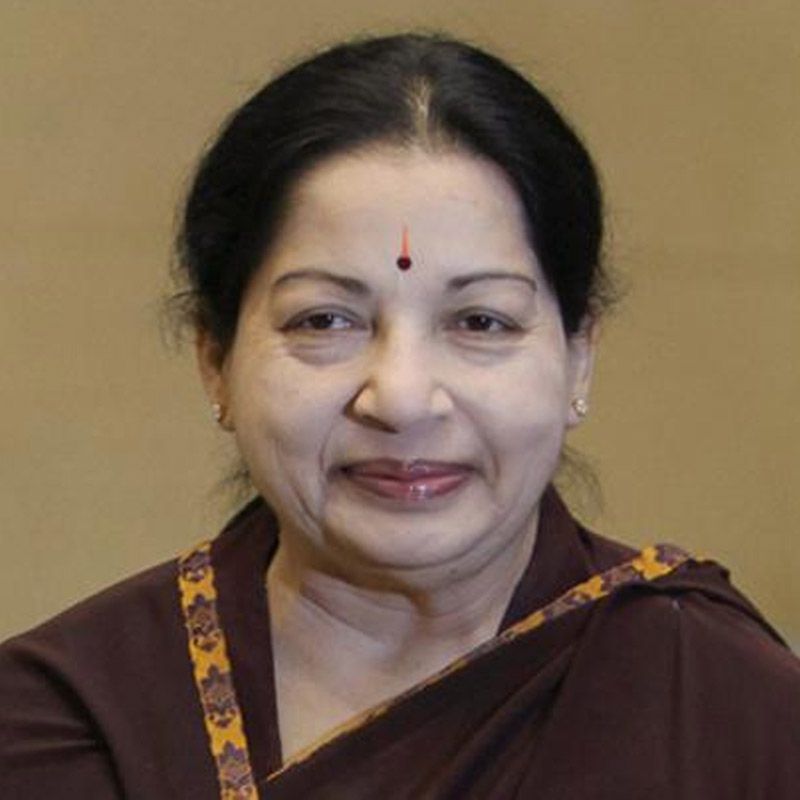
    MUMBAI: Tamil Nadu Chief Minister J Jayalalitha has urged Prime Minister Dr Manmohan Singh to expedite the matter of giving Digital Addressable System (DAS) licence to Tamil Nadu government-owned Arasu Cable TV Corporation for operating in the Chennai metropolitan region.

    In the letter dated 16 December, Jayalalitha said that the issue of DAS licence to Arasu Cable has been hanging fire for than five months now despite taking up the issue with Information & Broadcasting ministry several times.

    AIADMK MPs had called on the PM on 29 November to look into the matter. However Arasu is yet to receive a DAS licence even as the Madras High Court has refused to grant further extension on digitisation deadline.

    Arasu, which is Tamil Nadu’s biggest multi system operator (MSO), had applied for DAS licence on 5 July. The government has so far given licence to nine MSOs in Chennai.

    “The Tamil Nadu Arasu Cable TV Corporation Ltd. had applied for the Digital Addressable System licence to the Ministry of Information and Broadcasting on 5.7.2012. The issue of the licence is still pending,” Jayalalitha said in her letter to the PM.

    “It is learnt that the Ministry of Information and Broadcasting has issued the Digital Addressable System licence to nine other multi system operators in Tamil Nadu, including those who applied after the Tamil Nadu Arasu Cable TV Corporation Ltd.”

    Jayalalitha said that a delegation led by her party MP Dr M. Thambidurai had taken up the issue with former I&B minister Ambika Soni and her successor Manish Tewari but Arasu failed to get a DAS licence despite assurances.

    “A delegation led by Dr. M. Thambidurai, M.P., met Smt. Ambika Soni, the then Union Minister for Information and Broadcasting on 26.10.2012, who promised to issue the licence immediately. Afterwards, senior officials of the Government of Tamil Nadu also met the Secretary to the Government of India, Ministry of Information and Broadcasting, several times,” she alleged.

    “As the issue of licence was further delayed, on my direction a delegation led by Dr. M. Thambidurai, M.P. met Shri. Manish Tewari, Union Minister of State for Information and Broadcasting, on 27.11.2012, and requested him to expeditiously issue the Digital Addressable System licence as digitalization has to be completed within a time frame.”

    She said that the Corporation has placed orders for the supply of Set Top Boxes, Conditional Access System and Subscriber Management System and erection of Head End at a cost of about Rs 500 million.

    “Hence, I urge you to intervene in the matter and direct the Ministry of Information and Broadcasting to issue the Digital Addressable System licence to the Tamil Nadu Arasu Cable TV Corporation Ltd immediately,” Jayalalitha averred.

    The Madurai Bench of the Madras High Court, she said, had passed orders on 6 December that “the process of issue of licence to Tamil Nadu Arasu Cable TV Corporation may go on and the licence may also be issued."

    The Arasu, which was lying defunct under the DMK regime, was revived by AIADMK government after it stormed to power in April last year.

    It commenced cable TV services in all the 31 Districts of Tamil Nadu on 2 September, 2011 barring Chennai, which was a conditional access system area.

    Arasu Cable is providing 100 channels to the subscribers at a cost of Rs 70 per month per subscriber. It has 23,000 local cable operators with a subscriber base of six million availing of the services of this corporation.

  • Dish TV gets shareholder nod to raise $200 mn

    Dish TV gets shareholder nod to raise $200 mn

    MUMBAI: Subhash Chandra-owned Dish TV, the leading direct-to-home (DTH) television services provider, has received approval of its shareholders to raise $200 million through issue of equity to fund expansion and growth of the highly capital intensive business.

    Dish TV will consider raising the amount through issue of equity or convertible bonds in the domestic or overseas market. If it decides to raise the money through a qualified institutional placement (QIP), the company may consider offering a discount of up to 5 per cent of the price to QIP investors.

    The requirement for capital investments is also high now considering the shift to digital delivery of television channels across the country by December 2014. The government has implemented the first phase of digitisation effective 1 November in Mumbai, Delhi and Kolkata and in Chennai, a decision is expected soon by the Madras High Court. The second phase of digitisation covering 38 cities is effective 31 March.

    Dish TV, in the notice to the shareholders, said DTH business is highly capital intensive, requiring huge financial resources from time to time. The company has been meeting these requirements through borrowings from banks, financial institutions, rights issue proceeds, issue of global depositary receipts (GDRs) and requisite funding from the promoter group from time to time.

    The equity or convertible issue has been proposed considering the funding requirements and current market conditions, the company has said.

    The consent of the shareholders was obtained through a postal ballot.

    For the purpose of raising further equity, Dish TV has also obtained the approval of the shareholders to increase the company‘s authorised equity capital to Rs 1.5 billion from Rs 1.35 billion.

    The promoter holding in Dish TV stands at 64.7 per cent. In 2009, US-based private equity firm Apollo Management had bought an 11 per cent stake in the company for $100 million.

  • Justice Janarthanaraja recuses himself from Chennai digitisation case

    Justice Janarthanaraja recuses himself from Chennai digitisation case

    MUMBAI: The Madras High Court has adjourned the hearing of Chennai cable operators petition for extension of digitisation deadline to Wednesday due to recusal of Justice P.P.S. Janarthanaraja from the case.

    Justice Janarthanaraja recused himself from the case citing possible conflict of interest since his son works for Sun TV, whose lawyer is representing one of the respondents in the case.

    Janarthanaraja along with Justice Paul Vasanthakumar formed the two-member bench that would have decided the fate of the petition filed by cable operators.
    The case was expected to come up for hearing today after it got adjourned on Monday.

    The court had on 9 November extended the stay on digitisation in Chennai till 19 November seeking details of the number of digital set top boxes available and seeded.

    The petition by Chennai Metro Cable Operators Association (CMCOA) through its general secretary M R Srinivasan is seeking extension of digitisation deadline by three months.

    Justice N Paul Vasanthakumar, who was hearing the petition filed by CMCOA, said the matter should be heard by a division bench since it involved a larger public interest.

    The Information and Broadcasting (I&B) Ministry had told the Madras High Court that it was prepared to give an extension for implementation of digitisation in Chennai till 31 December provided the stakeholders gave affidavits that they will implement it by then and not seek further extension.