Tag: Madras high court

  • Madras HC TRAI-Star case: All parties keep options open

    Madras HC TRAI-Star case: All parties keep options open

    MUMBAI: Even as till late evening yesterday all those connected with the case filed by Star India and Vijay TV against regulator TRAI in Madras High Court kept waiting for the full text of the court order, options for future course of action were kept open, including whether the high court should be asked to clarify on some observations.

    As the high court, by keeping its final verdict on hold, has given two weeks time to petitioners to consider appealing in the Supreme Court, which is already in summer vacation mode with just the vacation bench active, TRAI also cannot go ahead and get its tariff order implemented immediately.

    Justice MM Sundresh, who was assigned to hear the Star TV and Vijay TV vs. TRAI case after another bench had given a split verdict, concurred with the view of Madras HC chief justice Indira Banerjee who, through an order dated 3 March 2018, had held that the TRAI Act confers upon the regulator sufficient jurisdiction to notify the said tariff order and interconnection regulation.

    However, the judge also, reportedly, struck down some other aspects of the tariff order, including an important part that capped at 15 per cent the discounts that could be offered by TV channels.  

    That all stakeholders in this court drama are keeping their cards close to the chest can be gauged from the fact the only organisation to come out with an official statement welcoming the Madras HC order, AIDCF (All India Digital Cable Federation), too had nothing to offer on a time frame for implementation of TRAI tariff order. Efforts made to elicit responses from Star India, TRAI, Indian Broadcasting Foundation or even individual media industry players drew a blank. The common refrain was: we haven’t read the actual order, so can’t comment.

    Still, after talking to various people in the industry a possible scenario that emerges hinges around petitioners going back to the Madras HC seeking clarifications on some of the observations of the court, which may take some time. After those clarifications come through, it would be decided whether to exercise the option of appealing in the Supreme Court, especially because a major pivot of the case is the copyright of TV channels over the content it generates and whether TRAI has any jurisdiction over such copyright issues.

    With the present TRAI Chairman RS Sharma’s tenure ending in a few months time, he would ideally like to see the tariff order, issued during his tenure, implemented before his superannuation.

    Also Read:

    Third Madras high court judge gives TRAI tariff order thumbs up

    Madras HC gives split verdict in Star India versus TRAI case

    MSOs move Madras HC seeking relief on inter-connect pacts

    Orders reserved by Madras HC on TRAI jurisdiction case

  • Third Madras high court judge gives TRAI tariff order thumbs up

    Third Madras high court judge gives TRAI tariff order thumbs up

    MUMBAI: The long-awaited judgment of the Madras High Court on the TRAI tariff order has been pronounced.

    Sources indicate that almost all the proposals mentioned in the order have being given the go- ahead –  the only exception being the capping of discounts to 15 per cent.

    The decision was announced by the third judge in the Madras High Court earlier today – an order is supposed to come later this evening.

    Reacting to the judgement, AIDCF hailed it as “significant for the cable TV broadcasting and distribution sector’. AIDCF president Rajan Gupta said, “We are elated to note that Honorable Mr. Justice M.M. Sundresh has concurred that TRAI is within its jurisdiction in notifying the tariff order and interconnection regulations of 2017. This new regulatory framework will benefit the entire sector and especially the consumers by improving transparency, enhancing subscriber choice and removing discrimination in provision of content.”

    He further added: “We hope that this present judgment, combined with the earlier view of Honorable Ms. Chief Justice Indira Banerjee, is taken in the right spirit by the stakeholders and any further unnecessary litigation is avoided so that the TRAI can move forward and continue working towards its vision of creating a transparent and non-discriminatory regulatory framework governing the sector.”

    Earlier in March 2018,  a two member bench of the Madras High Court had delivered a split verdict in Star Vijay’s litigation against its passage as content pricing should be left to the discretion of the broadcasting.

    While chief justice Indira Banerjee, heading the first bench, had ruled in favour of TRAI, the second judge — justice M Sundar – had ruled otherwise. The matter was then referred to a third judge who had been given a month to give his directive. The third judge’s decision came earlier today.

    Sources indicate that the third judge has also suspended the decision for the next two weeks, giving Star India a  chance to appeal against it in the Supreme Court.

    The TRAI order had the following highlights…

    The role of the broadcaster

    Under this, broadcasters will have to first declare their channels as a pay channel or a free to air channel, on an a  la carte basis, and in one of the following seven genres: devotional, general entertainment, infotainment, kids, movies, news and current affairs and sports. The TRAI has defined a ceiling on the maximum retail price (MRP) for each of the genres: devotional (Rs 3), general entertainment (Rs 12), infotainment (Rs 9), kids (Rs 7), movies (Rs 10), news and current affairs (Rs 5) and sports (Rs 19).

    Each pay channel has to have a MRP  that can vary depending on the region, but which cannot be changed before the expiry of six months of it being declared. These rates will be platform agnostic – that is, uniform across the platforms (cable TV, DTH, HITS and IPTV) across a relevant geographical market, and will have to be declared on each broadcaster’s website and be transparently available to the TRAI, TV distributors and consumers.

    The pay channels of a network or its subsidiary or holding company or subsidiary of the holding company can be packaged into a bouquet. This can be done while taking the precaution that the bouquet’s MRP is not less than 85 per cent of the sum of the MRPs of the a la carte pay channels forming a part of the bouquet. Similar conditions of holding prices for six months and in geographical areas also apply to bouquets.

    The TRAI has introduced a category called a premium channel. Broadcasters are free to notify any channel as premium channel in their reference interconnect order (RIO). There shall be no price cap on maximum retail price notified by broadcasters for customers. For HD channels, the regulatory authority has, however, stated the price cannot be more than three times the MRP of the corresponding channel transmitted in SD. For those HD channels that do not have a corresponding SD channel, the benchmark will be the ceiling on the MRP of the genre it is in. These independent HD channels will have a price ceiling of three times the ceiling of the MRP of the genre.

    The television distributor’s role

    On the television distributor side, the TRAI has made them responsible to provide all channels on a la carte basis and it has also  proposed to formalize  a minimum subscription fee of Rs 130 per month per set top box from a subscriber for 100 SD channels.  Now if an HD channel is included in this, it will be equal to 2 SD channels.

    The TRAI has stated that TV distributors cannot change the bouquets formed by broadcasters or its price, but they can form bouquets themselves of pay channels of different broadcasters provided that their price is not less than 85 per cent of the sum of the MRPs of the pay channels forming part of the bouquet. Free to air, HD and SD variants of the same channel and premium channels are not permitted to be included in these bouquets.

    The authority says that the composition of the 100 channel basic tier should be left to the subscriber’s volition. It can consist of FTA, pay, premium channels, broadcast bouquets or even television distributor package bouquets. But it has to have the government mandated channels and at least five channels of each of the seven genres. If the subscriber opts for pay TV or premium or HD channels or broadcast or TV distributor bouquets, he will have to pay the retail price for these separately.

    Subscribers wanting channels beyond the basic tier can opt for other channels by paying the TV distributor Rs 20 – excluding taxes-  for each slab of 25 channels and the broadcaster the MRP of each channel.

    The TV distributors also have another responsibility. The electronic programming guide on the network must display the details of all channels and their MRP genre wise for easy navigation. Broadcasters who are relying on TV distributors to collect and remit the pay channel revenues will provide a 20 per cent distribution fee to them, which the latter can share with the LCOs who are actually doing the collection. Additionally, TV channels can also offer a maximum 15 per cent MRP discount to TV distributors to encourage them. Parameters for discounts will be disclosed by broadcasters in the RIOs that will be transparent and uniform for all distributors of television channels.

    More to follow…Keep reading Indiantelevision.com

    Also Read:

    Madras HC gives split verdict in Star India versus TRAI case

    TRAI-Star case back to Madras HC with SC rider

    SC could take up TRAI-Star case on tariff regulations

  • TRAI-Star case back to Madras HC with SC rider

    TRAI-Star case back to Madras HC with SC rider

    NEW DELHI: The Supreme Court (SC) today referred the case relating to the Telecom Regulatory Authority of India (TRAI) and Star India involving the proposed tariff regulations back to the Madras high court (HC) with a rider that the judgement should be delivered within a month.

    TRAI had filed a review petition in the SC after the Madras HC delivered a split verdict on the case on 2 March 2018.

    The Madras HC judges, while agreeing that various tariff-related points (such as capping the discount offered by broadcasters and maximum retail price [MRP]) in the TRAI’s proposed tariff regulations were arbitrary, could not arrive at a consensus whether the regulator had overstepped to regulate business models related to copyrights over content.

    The Madras HC had further said that another judge would hear the issues. It was hearing the case as petitioners Star India and Vijay TV had filed a case against the 2016 tariff regulations and the SC had directed the HC to dispose of the case within a certain time frame. While striking down certain aspects of the tariff guidelines (MRP and discounting limits), issued by the TRAI late in 2016 and upholding the petitioners’ plea, the two-judge bench of the high court referred to another yet-to-be-decided judge the issue of jurisdiction of the TRAI on matters such as copyright over content.

    “The reason for putting a cap of 15 per cent to the discount on the MRP of a bouquet disclosed in to the impugned tariff order is that, as per data available with the TRAI, some bouquets are being offered by the distributors of television channels at a discount of up to 80-90 per cent of the sum of a-la-carte rates of pay channels constituting those bouquets. Such high discounts force the subscribers to take bouquets only and thus reduce subscriber choice. This, in my view, cannot be a reason to restrict the discount,” the judgement observed at one point.

    The lengthy verdict (over 140 pages) of the two-judge bench of the HC, which had been hearing a case filed by Star TV and associate Vijay TV challenging the TRAI’s tariff guidelines on various grounds of copyright and whether the regulator had the jurisdiction to make regulatory guidelines, was delivered after the hearings got over several months back and the verdict was kept in abeyance.

    Also Read:

    SC could take up TRAI-Star case on tariff regulations

    Madras HC gives split verdict in Star India versus TRAI case

  • Madras HC gives split verdict in Star India versus TRAI case

    Madras HC gives split verdict in Star India versus TRAI case

    NEW DELHI: While parts of the country took a break on a moderately warm day after playing Holi, the Madras High Court delivered a split verdict in a case involving Star India and the Telecom Regulatory Authority of India (TRAI), apart from several other private and government organisations. This effectively means that the Supreme Court will again have to take a stand on whether the regulator’s proposed tariff order relating to broadcast and cable sectors could be implemented or remains in suspended animation.

    While striking down certain aspects of the tariff guidelines (maximum retail price and discounting limits), issued by TRAI late 2016, and upholding the petitioner’s plea, the two-judge bench of the high court referred to another yet-to-be-decided judge the issue of jurisdiction of TRAI on matters such as copyright over content.

    Now that the high court has delivered a fractured verdict, raising fears of a status quo and non-implementation of the TRAI tariff guidelines in certain sections of the cable distribution industry, the Supreme Court could likely early next week take a view whether TRAI can go ahead and implement the regulations or further judicial clarity is needed.

    “The reason for putting cap of 15 per cent to the discount on the MRP of a bouquet disclosed in to the impugned Tariff Order is that, as per data available with TRAI, some bouquets are being offered by the distributors of television channels at a discount of up to 80-90 per cent of the sum of a-la-carte rates of pay channels constituting those bouquets. Such high discounts force the subscribers to take bouquets only and thus reduce subscriber choice. This, in my view, cannot be a reason to restrict the discount,” the judgement observed at one point.

    The lengthy verdict (over 140 pages) of the two-judge bench of the high court, which had been hearing a case filed by Star TV and associate Vijay TV challenging tariff guidelines of TRAI on various grounds of copyright and whether the regulator has the jurisdiction to make regulatory guidelines, was delivered after the hearings got over several months back and the verdict was kept in abeyance.

    While stakeholders refused to comment on the verdict officially, saying the fine prints of the lengthy order need to be studied over the weekend, TRAI could not be reached for its version on the Madras HC verdict.

    However, an industry observer opined that considering the high court’s observations on MRP and discounts relating to TV channels, implementing the remaining part of TRAI’s proposed tariff and inter-connect guidelines would make less sense as both the issues frowned down upon by the high court form an integral part of the overall regulations.

    The tariff issue has been in the courts since late 2016. The Delhi High Court too is hearing a similar matter involving TRAI’s proposed tariff guidelines. In this case the petitioners are DTH operators Tata Sky and Airtel Digital.

    ALSO READ:

    MSOs move Madras HC seeking relief on inter-connect pacts

    Orders reserved by Madras HC on TRAI jurisdiction case

    SC stays new TRAI tariff, asks Madras HC to complete hearing in four weeks


  • 2017 was a regulatory roller coaster and the ride continues

    2017 was a regulatory roller coaster and the ride continues

    NEW DELHI: The year 2017 for the media industry certainly couldn’t be called easy from the point of doing business despite efforts and claims by the federal government that significant progress had been made in the regard.

    The downside of demonetisation of high-value currency notes not only continued to be felt well into 2017, but the introduction of the GST (goods and services tax) in July and its compliance added to the woes as it increased paperwork and investment in human resources for the entire media sector. The cascading effect of the tax and monetary policies on the general economy of the country had a telling effect on the media and entertainment industry as companies, big and small, struggled to keep up with compliance (and sliding revenue) and changing guidelines owing to teething problems.

    2017 began with broadcast and telecoms regulator TRAI’s new set of guidelines relating to tariff, QoS and inter-connection, issued in the second half of 2016, being challenged by one of the biggest broadcasting companies (in terms of reach and revenue), Star India, and its ally Vijay TV in a Chennai court. Separately, two other DTH companies filed a similar challenge in a Delhi court.

    Over a year later, the regulator’s guidelines-touted to be an effort in creating fair ground rules for all stakeholders leaving them free to take commercial decisions-remain in suspended animation as the Chennai court is yet to deliver its final verdict till the time of writing this piece though the arguments and other legal processes have been completed.

    And, then Ministry of Information and Broadcasting (MIB) got in Smriti Irani as minister, a person with a background in the media and TV industry and as someone with strong views on issues. The sudden cancellation of a programming contract to Balaji Telefilms, awarded by pubcaster Doordarshan after a tendering process, could be cited as Irani’s aggressive stand on matters relating to her ministry and the media sector. Ditto for Doordarshan’s parent company Prasar Bharati deciding suddenly during the year not to renew contracts of some private sector TV channels that rode piggyback on DD’s free-to-air DTH platform Free Dish. The latter case is now being debated at the disputes tribunal.

    Over the 12 months in 2017, the MIB came out with a series of regulations, ranging from advisories on condom ads (the flip-flop was surprising) to a sharp hike in processing fees for clearances without clear definitions on some matters to the dos and don’ts of covering sensitive developments, all of which have left most industry players uneasy.

    A section of the industry also feels that the government has cleverly fired the gun, at times, keeping it on the shoulder of TRAI. Even while the regulator is in the process of wrapping up a consultation on various points of ease of doing business in the broadcast and cable sector, towards the fag end of the year, the MIB requested the regulator to examine whether TV channel permissions to beam into the 183-odd million TV homes in the country could be auctioned and the entry-level threshold increased-all aimed at arresting the spiralling number of applications seeking permissions to start a new channel. If legislated, it would be a sort of first where TV channel permissions, and not spectrum, would be auctioned.

    Another directive causing concerns for broadcasters is an MIB order making provision for processing fees on account of change of satellite, channel name/logo, language of channel, category of channel, mode of transmission, teleport, teleport location and change in the category of a channel from a GEC to a news channel for temporary uplink of a live event. The regulation stipulates that a processing fee of Rs 100,000 would have to be paid by a TV channel if seeking temporary uplink permission for, say, a cricket match. Nothing wrong in putting an amount to undertake processing.

    But what is troubling the TV channels is that the fee of Rs 100,000 is for each channel. So, for example, if a broadcaster having four sports channels proposes to telecast live a test cricket match for five days, then the amount for processing of temporary uplink permission by MIB would be Rs 100,000 each for five days for each of the four sports channels (100,000x5x4). That, stakeholders point out, is quite a large sum of money for a five-day match telecast in different languages over several TV channels.

    The MIB also, for the first time, introduced new categories of channels, namely regional and national. As per the extant uplinking and downlinking guidelines of 2011, however, all the licences, whether it is an Assamese or a Tamil language channel, are for pan-India channels and can be distributed throughout India. In fact, many broadcasters obtain multi-language permission for their channels to be able to run in multiple language feeds. The ministry later had to come out with clarifications defining what constitutes a national channel and what is a regional channel, which makes things a bit more complicated in sharp contrast to the federal government’s claim of having created a more conducive business environment in India, a senior executive of a broadcast company opined. What’s more, some experts pointed out, it was surprising that the MIB took the decision on re-classification of TV channels because such policy decisions would ideally need to be ratified by the federal cabinet of ministers.

    The TRAI, however, was banking on its ground rules for the broadcast and cable sectors to herald a new era that is not to be–not at least in 2017. But the regulator’s earnestness to hold a dialogue with stakeholders cannot be faulted despite questions being raised on some of its consultation papers; the one on STB inter-operability, for example. The TRAI should be lauded for upholding principles of net neutrality, in general, and giving thumbs down to content availability in a walled-garden environment, while in the US the FCC is preparing ground to dismantle net neutrality regulations that claimed to be protecting consumer interest.

    What comes out quite clearly in the year of disruptions and a clear change in the ways media, especially TV news, functions is that the thin line blurred between ethics and the dance-on-the-unethical-side-while-remaining- technically-correct.

    The all’s-fair-in-love-and-war thinking was written all over the audience measurement controversy that broke out involving a new news channel that debuted with a bang and the incumbents of the news genre in 2017. Accused by a section of news channels of using dual LCN or frequency strategy to increase sampling and snacking to up audience ratings, the new news channel hit back saying all other players too had sometime used the same strategy. Subesequently, the regulator had to step in directing stakeholders to desist from using practices that were not allowed in the TRAI’s books.

    Such instances-apart from the now-contested TRAI directive barring use of the `landing page’ by TV channels-highlight one thing: if the industry craves for a light-touch regulatory regime, restraint and maturity is needed from the industry, too. For example, despite the TRAI cracking the whip on dual LCNs, many TV channels, including the not-so-new-news-channel-on-the-block, were repeatedly accused by competition of continuing to use the dual LCN strategy throughout 2017.

    If the TRAI-and the government-hoped its guidelines and advisories would reduce litigation in the broadcast and cable sectors, the dream is yet to be fulfilled. The website of broadcast and telecoms disputes tribunal TDSAT states there are approximately 800 cases (in both sectors) still pending till 22 December 2017 if statistics from January 2017 were considered. The high pendency was despite the fact that TDSAT disposed of hundreds of other cases in 2017.

    The broadcast and cable industry would hope that 2018 would be less challenging, at least from the point of view of regulations. Some issues (like the consultation paper on uplink/downlink of TV channels, online video piracy and lack of any guideline for M&As for the media sector), however, continue to rankle even as we all enter 2018, not to mention that a proposal to review DTH guidelines, involving issues like rationalising revenue sharing with the government and renewing of licenses have been seemingly put in the cold storage by the government.

  • MSOs move Madras HC seeking relief on inter-connect pacts

    MSOs move Madras HC seeking relief on inter-connect pacts

    MUMBAI: The All India Digital Cable Federation (AIDCF) had filed a petition in the Madras High Court few days back pleading a directive to broadcasters to maintain a status quo on renegotiating agreements between TV channels and MSOs till a final judicial call was taken on TRAI’s new tariff regime announced in 2016.

    The tariff order, along with guidelines on quality of services, was stayed by the Supreme Court pending a final directive from the Madras High Court.

    Pleading that renegotiating inter-connect agreements on expiry at this point of time could lead to losses to the MSOs and subscribers, in general, the apex body of digital MSOs in India has sought judicial relief.

    Telecoms and broadcast regulator TRAI, Star India and its affiliate Vijay TV have been made respondents in the case that, according to industry sources, has not yet been listed for an initial hearing at Tamil Nadu’s top court.

    Madras HC, which was hearing a case pertaining to TRAI’s validity to have jurisdiction over matters relating to copyrights, is yet to announce its final verdict. The petition was filed by Star India and Vijay TV in late 2016, which effectively put a stop to the implementation of a new tariff regime announced by TRAI in October 2016 for the broadcast sector and distribution platforms.

    Apart from the tariff order, originally issued on 10 October 2016, the regulator had also issued the DAS interconnect regulations and the standards of quality of service and consumer protection regulations. These guidelines, after being debated and allowed by Chennai and Delhi courts initially were finally stayed by the Supreme Court earlier this year till Madras High Court disposed off the Star India-Vijay TV case questioning TRAI’s jurisdiction over certain matters relating to copyrights and freedom to carry on business.

    ALSO READ:

    http://www.indiantelevision.com/regulators/high-court/orders-reserved-by-madras-hc-on-trai-jurisdiction-case-170731

    http://www.indiantelevision.com/regulators/trai/star-vijay-tv-amend-plea-trai-asked-by-madras-hc-to-file-response-170317

    http://www.indiantelevision.com/regulators/trai/trai-qos-implementation-stayed-by-delhi-hc-awaiting-madras-hc-verdict-170830

    http://www.indiantelevision.com/regulators/trai/star-trai-case-hearing-in-madras-high-court-starts-170627

  • TV content: Madras HC seeks Centre’s clarification on regulatory mechanism

    TV content: Madras HC seeks Centre’s clarification on regulatory mechanism

    NEW DELHI: Joining issues with a petition presently being heard by the Supreme Court on a similar matter, the Madras High Court yesterday directed the federal government to clarify on the existing regulatory setup governing contents aired by television channels in India.

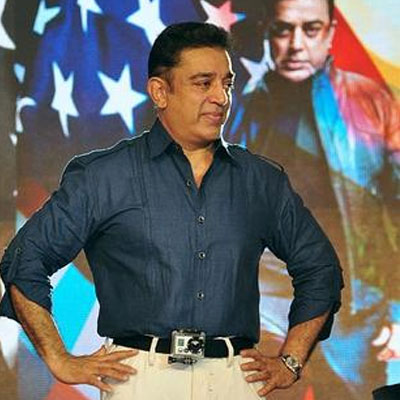
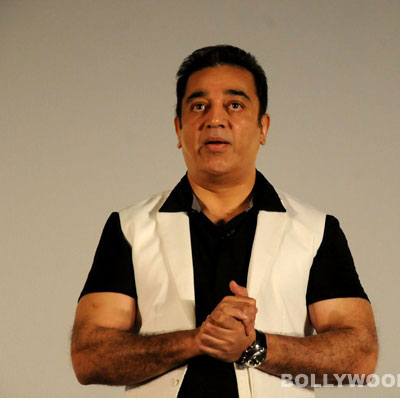
    The first bench comprising Chief Justice Indira Banerjee and Justice M Sunder gave this direction to assistant solicitor general Su Srinivasan, who appeared for the central government, during the hearing of a public interest litigation (PIL) to stop telecast of Tamil reality show ‘Bigg Boss’, hosted by actor Kamal Haasan on Vijay TV, part of Star India, according to a report filed by PTI from Chennai.

    The matter has been posted for further hearing on August 18, 2017.

    Earlier, senior counsel P S Raman, who appeared on behalf of the actor and anchor of the TV show, submitted that there were two bodies to regulate the channels. One was the Broadcasting Content Complaints Council (BCCC), a self-regulatory body headed by a retired Supreme Court judge and the other was ministry of information and broadcasting (MIB), the PTI report quoted Raman as telling the local high court.

    BCCC is a self-regulatory body set up by the Indian Broadcasting Foundation, an industry organisation that has a large number of TV channels as its members. Though there’s no formal content regulatory body in India on the lines of American FCC or the UK’s Ofcom or Singapore’s MDA, IBF’s self regulatory body takes up complaints relating to TV content. Separately, the content code, part of India’s Cable TV Act (enforced by MIB) outlines broad guidelines for TV content.

    The PTI report stated that petitioner Saravanan has alleged that in the reality show Haasan played with emotions and behaviour of female contestants, which he termed vulgar and obscene. He further submitted that to protect Tamil culture and tradition and in the interest and welfare of the general public, the telecast of the show must be stalled immediately.

    “The dress code and behaviour of female contestants on the show are very vulgar and obscene making my family members and me uncomfortable in watching the programme. Also, the reference to ‘cheri’ (slum) behavior, made by a participant to describe the behaviour of another contestant, greatly hurt downtrodden people,” the petitioner said.

    Meanwhile, the Supreme Court is hearing a similar case and has enquired from the central government whether it has a proper mechanism in place to regulate TV content.

    Outgoing film certification (CBFC) chief Pahlaj Nihalani, dubbed nationalist and ultra-conservative by a section of content producers and audience alike, in a media interview had urged the government to extend CBFC’s jurisdiction to oversee television shows too.

    ALSO READ:

    Govt formalising TV & radio complaints’ redressal mechanism

    SC to MIB: Get mechanism to deal with complaints on TV, radio shows

    Awarded adman Prasoon Joshi is new CBFC chief, Pahlaj Nihalani exits

  • Kal Cables can continue analogue transmission, says Madras High Court

    Kal Cables can continue analogue transmission, says Madras High Court

    NEW DELHI: In a clear set-back to the ministry of information and broadcasting, digitization has once again been pushed back in Tamil Nadu where it had been put on hold from Phase I of Digital Addressable System following a court order.

    Kal Cables, a subsidiary of the Sun TV Network, got a reprieve from going digital following an interim injunction by the Madras High Court against a Central government order directing all multi-system operators (MSOs) to switch to digital mode.

    Kal Cables was allowed to transmit signals using analogue mode by Justice M Duraiswamy after its counsel and senior advocate A R L Sundaresan argued that state-run Tamil Nadu Arasu Cable TV Corporation Ltd had been granted an extension.

    Arasu was granted three months to switch over to the DAS and has since been granted another extension till 17 August 2017.

    All MSOs were supposed to switch to digital transmission by March 31.

    Kal Cables said preferential treatment extended to Arasu by the ministry was arbitrary.

    The matter was put off for further hearing for a week as Additional Solicitor General G. Rajagopalan requested time.

  • Orders reserved by Madras HC on TRAI jurisdiction case

    Orders reserved by Madras HC on TRAI jurisdiction case

    NEW DELHI: The Madras High Court today reserved orders on the Star India-Vijay TV challenge to the jurisdiction of the Telecom Regulatory Authority of India to issue tariff orders.

    The court received a compliance report from its registry that all parties had filed their written submissions.

    Earlier last week, the Authority had said it would file its written submissions only after scrutinizing those of the broadcasters, after which the broadcasters had been directed to serve their submissions to TRAI the same day (27 July) .

    Thus submissions have been filed by the petitioners Star India and Vijay TV, respondent TRAI, and intervenors All India Digital Cable Federation (AIDCF) and Videocon d2h.

    Arguments on the hearing which commenced late last month had concluded on 19 July and all parties had been asked to file written submissions.

    Star India and Vijay TV’s challenge to the jurisdiction of TRAI to issue tariff orders is on the ground that content comes under the Copyright Act.

    In the hearing on 19 July 2017, the Court had refused to accept an affidavit by the Indian Broadcasting Foundation  (IBF).

    Although the Supreme Court had in early May while staying the tariff order directed the Madras High Court to complete hearing within four weeks, the High Court had commenced hearing only in the last week of June.

    Meanwhile, TRAI TV reference interconnect offer (RIO) and Quality of service order (QoS) came into effect from 2 May following the order of the High Court. (However, the Tariff order comes into effect only from 2 September 2017.)

    Apart from the Tariff order which had originally been issued on 10 October last year, the regulator also issued the DAS Interconnect Regulations which had been issued on 14 October last year, and the Standards of Quality of Service and Consumer Protection (Digital Addressable Systems) Regulations which had been issued on 10 October last year.

    The orders can be seen at:

    http://trai.gov.in/sites/default/files/Tariff_Order_English_3%20March_2017.pdf
    http://www.trai.gov.in/sites/default/files/QOS_Regulation_03_03_2017.pdf
    http://www.trai.gov.in/sites/default/files/Interconnection_Regulation_03_mar_2917.pdf 

    Also Read:

    Decks cleared for TRAI tariff order implementation as HC declines stay (updated)

    TRAI jurisdiction case listed for 31 July to peruse compliance report

  • TRAI can only regulate transmission, not broadcast material: Star tells Mds HC

    NEW DELHI: The Telecom Regulatory Authority of India can only regulate the means of transmission and not take any decisions like pricing about the content, Star India contended today.

    In his rejoinder in the petition by Star India and Vijay TV challenging the jurisdiction of TRAI to issue tariff orders on the ground that content came under the Copyright Act, Star India counsel P Chidambaram said TRAI was free to regulate the carriage side of broadcasting right up to the consumer.

    Chidambaram was speaking after the arguments by TRAI counsel Saket Singh, and intervenors All India Digital Cable Federation counsel A R L Sundaresan and Videocon d2h counsel Vijay Raman.

    Chidambaram said that in theory, TRAI could not price even the movie channels.

    He said that the petitioners were not licencees under Section 2(1)(e) if the TRAI Act.

    Responding to points made by TRAI, he said the reliance to the 2004 judgment pf the Delhi High Court in the Star India vs TRAI case was misplaced. This was because the principles of res judicata estoppel and acquiescence do not apply to the present case since the present petition is challenging the jurisdiction of TRAI itself. Even that judgement had only directed TRAI to freeze and not to fix prices, he contended.  

    He also said that TRAI was fixing prices genre-wise in the new tariff order and not channel wise.

    While Chidambaram referred to the tariff orders of 2004 and 2007, he refrained from speaking about the tariff orders of 2012 and 2014.

    He contended that once uplinked, broadcasting was complete and TRAI did not come into the picture in broadcast re-production rights.

    Following the completion of his rejoinder, senior counsel Abhishek Manu Singhvi will present his rejoinder on behalf of Vijay TV. It is expected that the judges may reserve orders tomorrow.

    Although the Supreme Court had in early May while staying the tariff order directed the Madras High Court to complete hearing within four weeks, the High Court had commenced the in the last week of June.

    Meanwhile, TRAI TV reference interconnect offer (RIO) and Quality of service order (QoS) came into effect from 2 May following the order of the High Court.

    Apart from the Tariff order which had originally been issued on 10 October last year, the regulator also issued the DAS Interconnect Regulations which had been issued on 14 October last year, and the Standards of Quality of Service and Consumer Protection (Digital Addressable Systems) Regulations which had been issued on 10 October last year.

    The orders can be seen at:

    http://trai.gov.in/sites/default/files/Tariff_Order_English_3%20March_20…

    http://www.trai.gov.in/sites/default/files/QOS_Regulation_03_03_2017.pdf

    http://www.trai.gov.in/sites/default/files/Interconnection_Regulation_03…

    Also Read: Decks cleared for TRAI tariff order implementation as HC declines stay (updated)

    Star India case questioning TRAI jurisdiction over content postponed