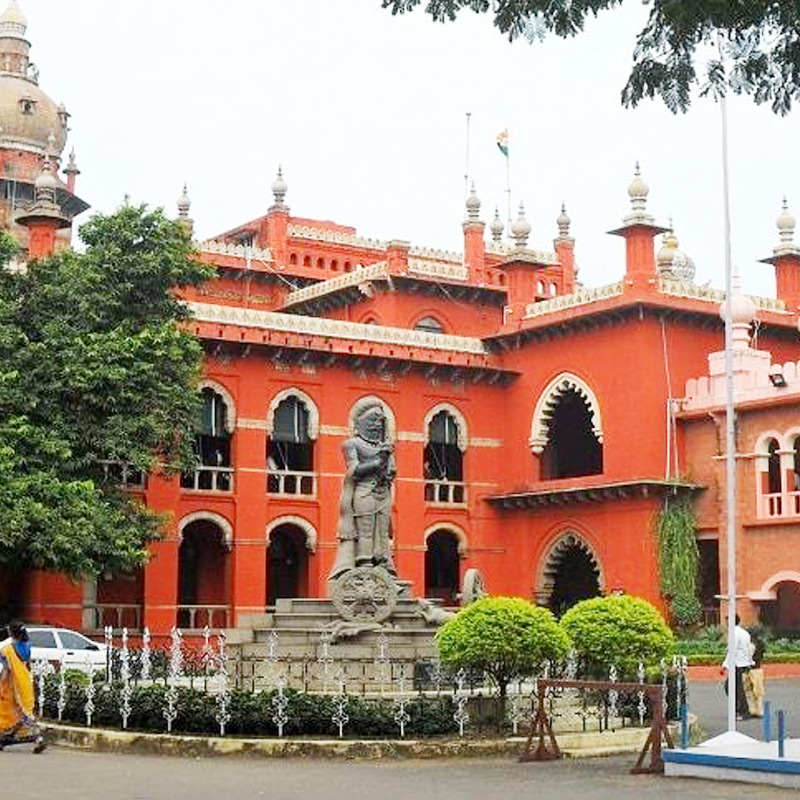
Tag: Madras HC

  • SC stays new TRAI tariff, asks Madras HC to complete hearing in four weeks

    MUMBAI: The Supreme Court of India has granted a stay on TRAI’s new tariff orders. A division bench of the court comprising Justice Rohinton Fali Nariman and Justice Pinaki Chandra Ghose agreed to the demand of Star India, thus staying the new tariff order and interconnect regulations. 

    Industry sources told www.indiantelevision.com, “The apex court has asked the Madras High Court to complete the hearing within four weeks.” “The case will be heard on a day-to-day basis from 12 June — the date of the next hearing scheduled by the Madras High Court,” the sources added.

    The Supreme Court today (Monday, 8 May) heard the appeal by Star India and Vijay TV challenging the order of the Madras High Court which refused to stay the DAS tariff order of the Telecom Regulatory Authority of India. TRAI TV reference interconnect offer (RIO) and Quality of service order (QoS) had formally come into effect on 2 May following the order of the High Court.

    High Court Chief Justice Indira Banerjee and Justice M Sundar had directed the main petition of the broadcasters to be heard on 12 June. However, the court had said Section 3 of the Tariff order and all other consequences of such implementation/enforcement would be subject to the outcome of the main petition. The broadcasters had challenged the order of TRAI on the grounds that it had no jurisdiction over content, and that it actually came under the Copyright Act, which is not administered by TRAI, but by the Department of Industrial Policy and Promotion, as of last year.

    Apart from the tariff order which had originally been issued on 10 October last year, the regulator also issued the DAS Interconnect Regulations on 14 October, and the Standards of Quality of Service and Consumer Protection (Digital Addressable Systems) Regulations issued the same day (10 October).

    Also Read:

    Hearing of Star – TRAI case begins before MHC chief justice

    Decks cleared for TRAI tariff order implementation as HC declines stay (updated)
  • Star-TRAI case suffers as another judge withdraws in Madras HC

    MUMBAI: The TRAI tariff standoff with Star India, which is pending before the Madras High Court, seems to have hit another roadblock.

    It has been learnt that another judge — Justice Govind Rajan — on Monday recused himself from the case. Star India SVP – legal and regulatory Pulak Bagchi confirmed while speaking to www.indiantelevision.com that he has withdrawn citing personal reasons. To a question, Bagchi said that the case may be referred to another bench in 2-3 days.

    In the first week of April, the case by Star India and Vijay TV challenging the jurisdiction of TRAI in the matter of tariff orders took a surprising turn when Justice S Nagamuthu and Justice Anita Sumanth recused themselves.

    Though it was not clear, it appeared that the two judges had received a letter which prompted them to withdraw from the case. The petition had been filed by Star India and Vijay TV under the Copyright Act on the ground that TRAI could not give any directive that will affect the content since that did not fall in its purview.

    Meanwhile, counsel opined that, as the pleadings were completed, the new bench will get down to hearing the arguments. Arguments had commenced on behalf of the Union Government until lunch that day and the matter was thereafter adjourned.

    Star India and Vijay TV had decided not to press for their pleas for extension of the tariff order following TRAI’s announcement that its tariff regulations which were slated to come into effect on 2 April were being deferred to 2 May 2017. 

    Now, it is up to the chief justice of the Madras High Court to nominate another bench to hear the case as the recusing judge had written to the CJI that the matter was important and a new bench should be identified on an urgent basis to dispose of the case.

    Also Read :

    Star – TRAI copyright case: In dramatic turn, Madras HC judges withdraw

    Coordinate with registry for mentioning TV tariff matter, says Madras HC CJ

    TRAI extends tariff regulations execution date, Madras High court arguments to continue

  • Coordinate with registry for mentioning TV tariff matter, says Madras HC CJ

    NEW DELHI: The case by Star India and Vijay TV challenging the jurisdiction of the Telecom Regulatory Authority of India in the matter of tariff orders, in which two judges of Madras High Court withdrew from the case, will be listed before newly appointed Chief Justice Indira Banerjee soon for being referred to an appropriate bench.

    The Chief Justice turned down the oral mention of the matter by Star India counsel saying this was an administrative matter which should be coordinated with the registry for listing before her.  

    Though it was not clear, it appeared that the two judges Justice S Nagamuthu and Justice Anita Sumanth had received a letter which prompted them to withdraw from the case. The petition had been filed by Star India and Vijay TV under the Copyright Act on the ground that TRAI could not give any directive that will affect the content since that did not fall in its purview.

    Meanwhile, counsel opined that, as the pleadings were completed, the new bench will get down to hearing the arguments. Arguments had commenced on behalf of the Union Government until lunch yesterday and the matter was thereafter adjourned to today.

    Earlier, Star India and Vijay TV decided not to press for their pleas for extension of the tariff order following TRAI’s announcement that its tariff regulations which were slated to come into effect on 2 April were being deferred to 2 May 2017. The court had fixed the matter for further hearing on 3 April even as TRAI counsel commenced his arguments following the conclusion of the arguments by the broadcasters.

    The court will also hear counsel of All India Digital Cable Federation which was allowed to intervene in the matter. Earlier on 3 March, the regulator had issued three regulations after getting a directive from the Supreme Court on its appeal against a stay granted by the Madras High Court. While granting the appeal, the apex court also asked the high court to conclude hearing in 60 days.

    Apart from the Tariff order which had originally been issued on 10 October last year, the regulator also issued the DAS Interconnect Regulations which had been issued on 14 October last year, and the Standards of Quality of Service and Consumer Protection (Digital Addressable Systems) Regulations which had been issued on 10 October last year. The orders can be seen at:

    http://trai.gov.in/sites/default/files/Tariff_Order_English_3%20March_20…

    http://www.trai.gov.in/sites/default/files/QOS_Regulation_03_03_2017.pdf

    http://www.trai.gov.in/sites/default/files/Interconnection_Regulation_03…

    Follwing these regulations, the broadcasters had filed an amended petition and TRAI had also replied to the same last week.

    Also read:

    TRAI extends tariff regulations execution date, Madras High court arguments to continue

  • Star – TRAI copyright case: In dramatic turn, Madras HC judges withdraw

    NEW DELHI: The case by Star India and Vijay TV challenging the jurisdiction of the Telecom Regulatory Authority of India in the matter of tariff orders took a surprising turn when the two judges — Justice S Nagamuthu and Justice Anita Sumanth recused themselves from the case and referred it to the chief justice for being referred to another bench.

    Though it was not clear, it appeared that the two judges had received a letter which prompted them to withdraw from the case. The petition had been filed by Star India and Vijay TV under the Copyright Act on the ground that TRAI could not give any directive that will affect the content since that did not fall in its purview.

    Meanwhile, counsel opined that, as the pleadings were completed, the new bench will get down to hearing the arguments. Arguments had commenced on behalf of the Union Government until lunch yesterday and the matter was thereafter adjourned to today.

    Last week, Star India and Vijay TV decided not to press for their pleas for extension of the tariff order following TRAI’s announcement that its tariff regulations which were slated to come into effect on 2 April were being deferred to 2 May 2017. The court had fixed the matter for further hearing on 3 April even as TRAI counsel commenced his arguments following the conclusion of the arguments by the broadcasters over two days commencing last Friday.

    After TRAI counsel concludes his argument, the court will hear the counsel of All India Digital Cable Federation which was allowed to intervene in the matter. Earlier, on 3 March, the regulator had issued three regulations after getting a directive from the Supreme Court on its appeal against a stay granted by the Madras High Court. While granting the appeal, the apex court also asked the high court to conclude hearing in 60 days.

    Apart from the Tariff order which had originally been issued on 10 October last year, the regulator also issued the DAS Interconnect Regulations which had been issued on 14 October last year, and the Standards of Quality of Service and Consumer Protection (Digital Addressable Systems) Regulations which had been issued on 10 October last year. The orders can be seen at:

    http://trai.gov.in/sites/default/files/Tariff_Order_English_3%20March_20…

    http://www.trai.gov.in/sites/default/files/QOS_Regulation_03_03_2017.pdf

    http://www.trai.gov.in/sites/default/files/Interconnection_Regulation_03…

    Follwing these regulations, the broadcasters had filed an amended petition and TRAI had also replied to the same last week. Concluding his arguments for the broadcasters, senior counsel P Chidambaram argued that TRAI’s action of fixing tariff for TV content was in violation of the Copyright Act. He also submitted that TRAI did not have the jurisdiction to fix tariff since the exploitation of IPR was part of the Copyright Act.

    Also read:

    TRAI extends tariff regulations execution date, Madras High court arguments to continue

  • TRAI awaits call from Madras High Court for Arasu hearing

    TRAI awaits call from Madras High Court for Arasu hearing

    MUMBAI: More than four weeks have passed since the Madras High Court gave the interim order restraining the Telecom Regulatory Authority of India (TRAI) from taking any coercive steps against the Tamil Nadu state government-owned MSO Arasu Cable TV Corp for giving analogue signals in Chennai.


    However, there has been no follow up by the Madras HC on what it intends to do following the stay. 


    Anticipating a date soon, TRAI lawyers are already up on their toes and are compiling their response so that it can be submitted to the court. “We are still waiting for a date of the hearing. We haven’t heard anything from the court,” says a senior TRAI official.


    The case filed against two parties – the Ministry of Information and Broadcasting (MIB) and the TRAI will hopefully be  heard soon where the respondents from both the parties will get a chance to present their individual viewpoints. 


    The entire issue cropped up because Arasu has not been granted a digital addressable system (DAS) licence to run its business in the state even after continuous efforts to secure it. The MSO is still giving out analogue signals, thus keeping Chennai as the only city from Phase I to not go the whole hog on digitisation. 


    In its order which it passed late December 2013, the court states that the Inter-ministerial Committee (IMC) formed to decide the fate of Arasu has to move quickly on it. The order also mentions that Arasu abided by the rules and applied for a licence even after the Cable TV Networks (Regulation) Act, 1995 was amended in 2012.


    “It is not known to this Court as to why the first respondent (MIB) has not taken any decision so far on the application of the petitioner,” states the order. 


    The TRAI view on this is quite clear. Says a senior official at the regulator: “The decision on granting the licence lies with the MIB. In our recommendation we said that state governments should not be given the licence. The IMC is working on it but we haven’t yet got any response from them.” 


    The HC also states that since Arasu had followed the rules for applying for a licence, the MIB is not justified in keeping the matter pending and not arriving at a conclusion. It has also directed the Ministry to come out with a decision at the earliest.


    If MIB follows the TRAI’s cue and bars Arasu from securing a licence, the regulator  can take action against the MSO, according to the official. “If the MIB disqualifies Arasu from getting a licence, it cannot operate and if they do, they will be in violation of the law,” he says.


    As of now, nothing can be done against Arasu due to the interim order given by the Madras HC. But which direction this case moves is extremely crucial as the country is soon entering phase III and IV of digitisation. And it will decide whether the city of Chennai remains an analogue island in a sea of digitised India. 

  • Madras HC to hear petition of cable ops on Tuesday

    Madras HC to hear petition of cable ops on Tuesday

    MUMBAI: The Madras High Court has pushed the hearing of Chennai cable operators petition challenging the government‘s digitisation notification to Tuesday.

    The petition filed by Chennai Metro Cable Operators Association (CMCOA) seeks to postpone the implementation of digitisation in Chennai.

    Counsels appearing on behalf of the petitioner as well as the respondents requested the court for time before the case came up for hearing.

    Following the request, the two-member bench of Justice Elipe Dharma Rao and Aruna Jagadeesan adjourned the matter till Tuesday.
    There are 18 respondents in the petition which includes the Information and Broadcasting (I&B) Ministry, Telecom Regulatory Authority of India (Trai) besides the Multi System Operators (MSOs) from Chennai.

    The CMCOA had earlier filed a petition seeking postponement of cable digitisation in Chennai by at least three months following which the DAS implementation was stayed by the Court.

    The deadline for the first phase of digitisation in the four metro cities was 31 October.

    The Madras High Court had on 31 October stayed the digitisation in Chennai till 5 November. The Court again extended the deadline till 9 November following which it was put off till 19 November.

    The matter is still pending before the court which had told the CMCOA to challenge the centre‘s digitisation notification rather than seeking extension.

  • Madras HC admits PIL against minister Dayanidhi Maran

    Madras HC admits PIL against minister Dayanidhi Maran

    MUMBAI: The Madras HC has admitted a Public Interest Litigation (PIL), which accuses the Union minister of communications and information technology Dayanidhi Maran for releasing advertisements worth Rs 100 million to the family-owned Sun TV Network.

    According to a Times of India report, justices M Karpagavinayagam and A R Ramalingam on 9 March admitted a writ petition on the case that would come up for hearing before the chief justice on 13 March. The PIL, filed by J Veparasu, accuses Maran of abusing the office of the Union minister.

    Veparasu, in the PIL, has sought an HC direction for a CBI investigation into all transactions since May 2004, when Maran assumed the office as Union minister. He has also sought an interim injunction restraining Maran’s ministry from releasing any advertisement to Sun TV Group channels and publications till his PIL is disposed.

    The Chennai-headquartered Sun TV group, which has 15 television channels, four print publications and two radio channels, is owned by Maran’s elder brother Kalanithi Maran.

    The crux of the petition is that, though there are many private producers who telecast their programmes on the Sun group channels, Maran has not released even a single advertisement to their programmes. The petitioner alleges that the advertisements went exclusively to programmes telecast and produced by Kalanithi Maran.

    Maran, now under fire for committing breach of oath under Schedule III of the Constitution, has also been accused of neglecting government-owned channels when it came to advertisement support.