|
Engineering and management degrees are quite common for professionals working in automobiles. But it is a surprise to find folks who have chosen to get educated in these two disciplines before plunging into advertising. Take CVL Srinivas for instance who has an engineering degree from BITs Pilani and a management degree from XLRI, Jamshedpur.
Today, Srini, as he is called, serves as the chairman of the Publicis-owned Starcom MediaVest Group India and also as the managing director of LiquidThread, one of its divisions.
He has 14 years of exposure to the media business, having scored numerous successes for leading media agencies such as Madison, Fulcrum and Maxus over the period as a senior manager or head. Srini is wont to do what he wants to do, like taking a four year break from media and advertising, and at a time when his career was roaring. In 2007, he gave up a plush job as CEO, Maxus Asia Pacific to become a consultant with Surewaves, a company that specialises in media convergence solutions. He then went to consult a private equity (PE) fund in the media sector and also worked with BCCL‘s Private Treaties as director for two years.
SMG was his media comeback vehicle earlier this year. And it has been on fire under his and his colleague Mallikarjundas CR‘s stewardship. It has focused on three pillars of insights and research, digital and branded content. In the process, it has not only managed to retain old businesses but also gained some new accounts. Among the 15 brands it pocketed include: Yahoo, Biba, Sab, Pix and Aircel.
Indiantelevision.com‘s Prachi Srivastava spoke to Srinivas about his charge, its performance and the way forward.
Excerpts: |
|
|
How has the performance of the company been in this year, as it comes to an end? |
|
|
What was your focus this year? |
|
|
You have been with multiple agencies. What difference do you see in the work culture? |
|
|
There were different specialist units earlier. Why were they merged in Vivaki? |
|
|
|
|
Are clients showing an inclination towards the new media (digital, internet, mobile, retail) or they continue to be comfortable with traditional form? |
|
|
How is LiquidThread doing since its launch in India? |
|
|
How do you see the economic slowdown affecting Starcom or the advertisers‘ spend? |
|
|
Is it as bad as the slowdown in 2008? What have been the learnings from 2008 slowdown that you apply now? |
|
|
Television today has the efficacy for advertisers. How does it affect the other mediums? |
|
|
Is reallocation of resources happening from client‘s side across different media? |
|
|
Has the concept of return of investments (RoI) changed with the clients? What is the measurement metrics followed now?
SMG is pioneering lot of work in this area which I hope will benefit our clients in the coming years. |
|
|
Have the dynamics for communication to rural market changed? How are you helping your clients communicate to their rural consumers? |
|
|
How will Starcom MediaVest‘s business be split in Print/ TV/ FM/ outdoor/ Internet etc? |
|
|
As a media planner, how do you view the emerging radio and digital scenario?
|
|
|
But we still see a dominant readership in print… For a majority of the population, Print is still the first choice for daily news. For advertisers, Print is still the first choice for announcement value and immediacy. According to TAM, Print has grown at 7 per cent in Nov 2011 v/s Nov 2010, led by Services and Banking. The reason why print is still a dominant media in India is that every few years, new categories come into the market and most new categories start with print and only then they come onto TV and then other mediums, whether its education, insurance or healthcare. As and when digital penetration increases, Print could start feeling the pinch. Print needs to learn how to co-exist with digital if it has to remain relevant.
|
|
|
What is your strategy to integrate media plan across different verticals? How do you make that more effective? |
|
|
What do you have to say about the cut throat competition in the media industry? |
|
|
Over the past five years what changes have you seen in media business, planning and buying? Three things that are worth mentioning – a lot more focus on digital media, advertisers willing to invest in impact and a change in the profile of a media agency, especially with the influx of insights, digital and content talent. |
|
|
Is youth still the hardest segment to capture? |
|
|
When it comes to television, how do you stack up the genres as per the deliveries? |
|
|
What kind of research you conduct before deploying digital media for any purpose? |
|
|
What are your plans for 2012? |
Tag: Madison
-
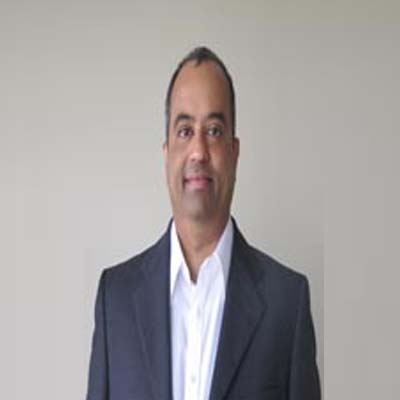
‘Challenge is to harness the future focused SMG culture to build a differentiated product’ : SMG India chairman and LiquidThread MD CVL Srinivas
-

Akhil Saxena joins Saints & Warriors as executive creative director
MUMBAI: Akhil Saxena has taken over the responsibility of executive creative director at Saints & Warriors. He will report in to senior VP and branch head Mumbai Sartaj Jaffri.
In his new role, Saxena will be in charge of monitoring and supervising the creative wheels of the agency.
Saxena brings with him 23 years of experience to the table. He was previously employed with Percept H for close to six and a half years as creative director. He started his career as consultant copywriter with Lintas India and has had stints with Ogilvy, Madison, Everest, and Triton Communications.
Jaffri said, “As an agency we look for professionals who can understand the Indian-ness in our audience. Language plays an important role in reaching out to the masses and Akhil has a firm grip over Hindi, which is still the language for emoting in the country.”
-

Spatial Access appoints Harsha Joshi as CEO
MUMBAI: Spatial Access Solutions has appointed Harsha Joshi as its chief executive officer.
Joshi moves in from Madison where she was the COO, media buying and content.
With 15 years of experience in media buying, Joshi will be responsible for growing the international business at Spatial. She will report to Meenakshi Menon (Madhvani), founder and managing partner.Commenting on Joshi‘s appointment, Menon says, “Harsha has vast experience in media buying and buying audits. Her knowledge and experience will be of use to expand the business to other nations. She will be responsible for buying for all Indian clients and developing international business.”
Joshi started her career in 1991 at Mudra‘s media department after which she worked with Trikaya Grey, Rediffusion-Y&R and JWT.
-

Madison appoints Mani as COO of Madison Media Infinity, Bangalore
MUMBAI: Madison Media has appointed V S Mani as COO of Madison Media Infinity, Bangalore.
Mani‘s previous assignment was with ZenithOptimedia, where he was the head of the Reckitt Benckiser account.
Mani will head Madison Media‘s Bangalore office which handles clients such as Britannia, TVS, Tata Tea, Levi‘s and Acer.
In his 18 years of work experience, Mani has worked with advertising and media agencies such as Enterprise Nexus, FCB Ulka, TBWA, ZenithOptimedia and Lintas Media Group.
Mani has worked on brands like Reckitt Benckiser, Maruti Suzuki, Sony, Whirlpool, Hewitt Packard and General Motors.
Madison Media CEO Punitha Arumugam said, “I am happy to have Mani join Madison and am sure that he will bring a fresh perspective to our clients‘ businesses and guide and motivate our team for continued excellence.”Mani added, “I am delighted to be a part of the Madison family and am looking forward to this new chapter in my career.”
Madison Media Group handles media planning and buying for blue chip clients including Airtel, Godrej, Cadbury, ITC, General Motors, Marico, McDonald‘s TVS, Britannia, Procter & Gamble and Asian Paints.
-
IAA World Congress: Go digital, focus on new media
 The much talked about 42nd IAA World Congress has come and gone and given many an opportunity to visit Russia, which is generally not on anybody’s tourist map. I am sure all delegates are reasonably happy that they made it to the Congress, whether it was for the Congress speaker presentations or the venue Russia or the opportunity to meet with advertising big wigs from around the world.
India, made its presence felt at this Congress with 47 delegates, three speakers – Vinita Bali of Britannia, K Srinivas of Bharti Airtel and Sam Balsara of Madison World; and bagging the 2010 IAA Chapter Excellence Award.
When one visits a new country, in your flight, you replay the impressions you have about the country – so images of the biting cold, vodka and a language that you can‘t understand a word of came to my mind. But on stepping out of the Moscow airport, the heat and the sun gave us a not so pleasant surprise. Since the Conference was in the Kremlin, I was kind of expecting to bump into Putin, but that was another disappointment.
But, let’s talk about advertising first. The Congress’s 38 speakers were to talk to over a thousand delegates from all over the world about the Consequences of Change taking place all around us.
If I have to sum up what industry stalwarts like Sir Martin Sorrell, Mark Pritchard, Maurice Levy and other prominent speakers had to say, I would say I have four broad take aways that all speakers touched upon in their presentations:
Go Digital and focus on new media
Add value to consumers
Increase consumer base and compete against non consumption
Use CSR as a business tool
Now going into details of what some of the speakers said, Sir Martin Sorrell gave a good overview of the advertising and marketing industry at large. He seemed upbeat about the emerging climate as reflected in WPP figures that he had seen days before the conference.
He spoke about WPP’s strategy of focusing on BRIC markets, new media and digital, and consumer insights. He highlighted eight trends that he had observed or prophesised about and said because of this the advertising and marketing industry was poised to play a more critical role in the near future:
Shift in economic power from West to East and North to South.
Overcapacity in the world and therefore a need for differentiation.
Growth and importance of digital companies. He cited the example of Google being the biggest media owner in the UK.
Growth in retail.
Internal communication and the challenge of getting people to work together.
Shift in coordination from global to local.
Importance of CSR and the use of CSR not for a social cause but more to meet a business purpose or goal.
The Government in all markets is becoming extremely important and influential and a huge spender on advertising.

India‘s Kaushik Roy at the Congress in Moscow Mark Pritchard, the global marketing and brand building officer at Procter and Gamble made a pitch for brands to move from marketing to serving a purpose. He also touched upon why a brand exists (what is its purpose or soul); what does the brand stand for (its benefits or its heart); and how is the brand expressed (its execution or body). To make his point come alive, Mark shared some examples of the work they did on Pampers in Russia, based on the insight that when babies sleep well at night,they are active and grow up healthier; PUR, a campaign for clean water in Africa and from our very own India, the famous Gillette – Shave or Not to Shave campaign. No international conference can now be complete without the mention of this campaign! Divya, please take a bow. He also emphasized on the fact that when an organization does all these things, it boosts employee morale.
Eric Joachimsthaler, spoke very passionately on Challenger Brands. He emphasized that organisations should forget about Disruption and focus on Deep Dive. The key difference between Disruption and Deep Dive being, in Disruption companies would focus on optimizing their own value chain, focus on market sharing and competing against the next competitor. While in Deep Dive the focus is on optimizing your consumer’s value chain, focus on market creation and competing against non consumption.
He made his viewpoint come alive by giving the example of Flip, a video camera that could upload photos immediately on Facebook in six seconds and achieved 34 per cent market share in US in three years, because of understanding and capitalising on the need gap in the market. He also emphasized on the need for 365 day Communication and not 360 degree communication and the need to create social currency. Whilst Sir Martin spoke about the need for differentiation because of overcapacity, Eric felt it was no longer possible to differentiate your product in today’s fully wired and instant world.
Vinita Bali was eloquent and said that challenger brands usually have less resources, so they employ sharper strategies, act faster and make better use of scarce resources and these are the qualities necessary for challenger brands to survive.
The panel discussion on Media Opportunities in the BRIC markets, had Sam Balsara, representing India and the Panel spoke about how the only way to make the advertising business grow was to make the client’s business grow and aggressive use of new media and a better understanding of new media by agencies would help the cause.
Microsoft and 20th Century Fox made a joint presentation on how they promoted and marketed the biggest animated film of the year Avaatar, highlighting that when two giants tango together you can get delightfully surprising results.
Day 2 had Maurice Levy open the Congress and he spoke about companies‘ need to take their responsibility to society seriously and that they will be rewarded for doing that.
Rich Riley from Yahoo spoke about taking the online platform to the next level and how Creative and Media agencies could use digital to engage with consumers in a meaningful way.
Another interesting panel discussion was on The Advertising Agency Model which had representation from Group M, Publicis Groupe and Joanne Davis Consulting. The panel highlighted the lack of communication between clients and agencies, and groaned about the growing influence and power of procurement managers in agency-client relationships.
Nikesh Arora from Google, highlighted that 26 per cent of the world’s population is online and 24 hours of video is uploaded every minute on YouTube. He also said that the internet provides instant feedback, interactivity with advertisers, a borderless world and gives a notion of mass personalisation. He emphasised that the last 10 global brands have all been built online – Google, Facebook, YouTube, etc.
Another interesting presentation was from K Srinivas of Airtel, where he took the audience through the miraculous Airtel story of how it became the No. 1 telecom service provider in India through an innovative business model, focussing on outsourcing of core functions to overcome shortage of resources, but investing heavily on the brand.
IAA also had a special package for their Young Professional Members, which gave them an opportunity to be part of the Congress at a fraction of the regular delegate fee. 16 youngsters from around the world, including me took advantage of this offer, including five from India.
The evening entertainment organised by the IAA World Congress organisers gave the delegates a good flavour of Russian customs, from a gala dinner at The Kremlin Palace Congress Centre Rooftop Ballroom, to the Bolshoi Ballet. After the gala dinner, there was an after party on the roof top of the Ritz Carlton, at a Lounge called O2. Reminded me of our AER Bar at Four Seasons; O2 lounge gave an aerial view of the Kremlin and the Moscow skyline by night.
Moscow as a city is similar to Delhi in winter in some ways – very wide roads, majestic buildings and flowers (tulips no less). But despite the wide road, the traffic and the traffic jams make you wonder if you are still in Bombay! With the onset of spring, the lush green gardens and flowers were in full bloom, the warm weather also got most of Moscowites out on the streets, enjoying the warmth, making walking on the streets, a delight.
Quite a lot of Indian delegates were fortunate to bump into Indian taxi drivers from South India, most of whom came to Moscow 10 – 12 years ago to study medicine and because of circumstance landed up doing all sorts of businesses except medicine. They proved to be good tourist guides for us for both Moscow and St Petersburg city to show its historic sights. St Petersburg is another must see city, a one-hour flight from Moscow. The city again is very historic with many parts in the city looking a lot like Rome, but on a bigger scale.
Russia as we all know is famous for its vodka, but what many don’t know is how a Russian has his vodka. Chilled vodka is poured into a short glass and right next to it comes another glass of orange or tomato juice. Instead of mixing the two together, like many of us do, they first take a gulp of the vodka followed by the juice. And by the way Russian girls don’t drink vodka.
So on the whole, the 42nd IAA World Congress provided delegates a good overview of the state of advertising in the world today and gave me an opportunity to tick off Russia from the 100-places-to see-before-you-die list.
(The author is Madison World Business Development & Diversification Manager)