Tag: Madison

  • The psychology behind the making of TV ads vs digital

    The psychology behind the making of TV ads vs digital

    MUMBAI: There was a time not so long ago when TV was the main medium to consume content. All that one had to do was create a TV commercial and voila! It was watched by millions. But recently, more and more youth and millenials are gravitating toward platforms like from Facebook to YouTube to Twitter to Whatsapp to Tiktok to Instagram to OTT, to consume video. How are brands engaging with them? What format of video ads are they creating to communicate their brand message?  And have TV commercials evolved in their journey from TV to OTT and digital?

    However, according to some industry experts, there is just a shift in the trend and format of advertising. In earlier days TVCs were the only content that was created but today it is much beyond that. Today it is more about creating ads for different platforms and of different durations rather than creating one single commercial.  Experts also believe that the slump in the economy has resulted in the decline of creating long format advertisements.

    Says Jigsaw Pictures founder and creative producer Rajnish Lall:  “I think there is a bit of similarity in creating both a TV and digital commercial. The difference is not about reach. Both are catering to a product or a brand and are done keeping in mind the brand proposition. People usually make a brand film which is 59 seconds so that it could also be put on Instagram. Content that we make is usually three and five minutes, depending upon client requirements.  Television costs a lot more. And to run on Facebook, WhatsApp or Instagram or any other digital platform it’s much more reasonable and people go for the longer version of it. Having said that, both the platforms are representing a brand and have more seriousness about it. When it comes to making a TVC the client is more precise about the output. The production quality cannot be down it has to be good, very good or great. However, in digital, people could make content in all sorts of budgets.”

    According to Havas Media Group CEO India and South East Asia Anita Nayyar, TVCs shot for television are normally for 30 seconds to 60 seconds and when they want to make an edit to run on television 60 sec is pretty long. Generally, ads are shot for 60 seconds so that it could run on cinema. When they run the campaign for other platforms they have the adaptation of 30 seconds to 20 seconds to 10 seconds depending upon the storyline.

    She adds: “There are two ways of putting a commercial on YouTube where you can do a long edit of a commercial that runs for one or half a minute but whereas when you look at advertising on digital media the ads are pretty short because according to reports the average attention span is three to five seconds. The creativity and the thinking in digital are done on that basis.”

    "Unlike a TVC which is based on a traditional story arc – beginning middle and end; the making of digital ads involves adapting to the media platform format and context,” points out Madison Media Sigma CEO Vanita Keswani. “The digital video creatives span from five to six seconds short format videos as well as long format 60-120 seconds storytelling ones. Tech innovative creatives on digital have a two-way communication with consumers" She adds.

    The advertising costs related to producing content for TV is expensive as compared to digital format. In fact, as per the reports of Magna, the research arm of  IPG Mediabrands, digital ad spending in 2017 reached $209 billion worldwide that is  41 per cent of the overall market. While television brought in $178 billion which tots up to 35 percent of the total market.

    If one were to estimate about 9 per cent of that going towards buying space and inventory on the different media platforms, that leaves us with digital ad production totting up to around $20 billion worldwide, whereas TV commercials production spend would be around $17 billion. The figures would be much lower for India, though as spends on creative and TV are much lower here compared to more developed markets in Europe, the US and Latin America.

    Says an ad industry veteran:  “A large part of the production budget is kept aside for paying celebrities as endorsers (even as high as 25 per cent sometimes) as lazy creative’s from advertising agencies and not savvy enough marketing executives look for short cuts to create their communication. My estimate is that almost 30 per cent of TVCs are relying on celebrity endorsements. What this means is that the quantum of TVCs being made by a brand is falling each year or if they want to produce the same number, they have to slash the production side of the budget,” says an industry expert. And this is being felt even more in these tough economic times where brands have slashed their spending. There is a huge squeeze on TV commercial makers.”

    Lall echoes this. “Before the digital era, they used to make two to three films in that budget. Now what is happening, the budget hasn’t gone up because economically we are a little down as a country so things are not taking off. The client has limited money, his expectation is not to make two or three films but to make eight films. So, the money you invested in making a television ad has gone low.”

    He also points out to another problem. According to him, advertisers are anyway even today more inclined towards putting aside higher budgets for making TV and cinema spots as compared to digital, though he would like this to change.“Normally you will not see a good quality digital film because of the lower budgets. Digital spots can be shot on any kind of camera, it could be on their phones as well. So basically it can be done at a very basic budget. So the output is not great. However, very established brands don’t mess around it because they are conscious and particular about every piece of communication they are providing to the brand. It should match the brand's personality, image and aura in the market and in the mind of the consumer also which the upcoming brands are not paying much attention to.”

    Says Nayyar:  “If you have a long format TVC they are normally done on a high budget which is done for Rs 1 crore to Rs 3 crore and Rs 5 crore. Whereas, in digital ad creation they usually don’t look for a long life piece of communication. While for television you produce one commercial for a longer period of time and for a digital you make multiple commercials. I don’t think so for digital money spend is as much as spent on creating TV or cinema commercials they are long format. TV spots also get adapted to suit digital. In digital you have to look at short duration, collaborations, what will grab the attention of audiences within the span three to five seconds as they have been provided with the option of skipping ads.”

    Keswani’s view is that brands and agency creatives should reduce their dependence on celebrities in TVCs. Says she: “Celebrity mass advertising is not as authentic, relevant and relatable today. The authenticity is being questioned. What works better is turning the spotlight on consumers in TVCs. Ad agency creative’s and brand managers could consider having real and relatable faces in TVCs, which will help the masses connect with the brand and its messaging.”

    “What it will also do is free up budgets towards creating a greater number of TVCs or putting in more VFX, animation, or a greater number of locations or better sets or bringing in better directors and videographers so that more impactful ads can be created for both digital and TV,” says the anonymous executive quoted earlier.

  • Industry hopes pinned on a better 2020 for mainline advertising

    Industry hopes pinned on a better 2020 for mainline advertising

    DELHI: 2019 was a mixed bag of opportunities and challenges for the advertising industry. Television primarily witnessed a great drop in its growth with an ambiguous first quarter because of the new tariff order and a slow final quarter because of the economic slowdown. While the second quarter gave some hope with IPL, cricket world cup and general elections holding the trends up, the overall performance of the industry was disappointing. The growth, as shared by GroupM in its report, was in single digit numbers, at 9.4 per cent, less than half of what it recorded in 2018 and much lesser than the estimates of 12-14 per cent predicted during the beginning of the year.

    Madison Media Ultra CEO and head investments Amol Dighe shared, “As we all know, categories like FMCG, Telecom, Ecommerce, BFSI, Auto, etc. have a significant share in all Mainline Mediums. Most of these categories were affected by the economic slowdown resulting in the slowdown of advertising spends as well. We had to revise the Madison Pitch estimates in terms of growth across mediums. The growth forecast for leading mediums like TV was revised downward.”

    However, mainline agencies are positive that the growth trends will change for positive in 2020, as they are pinning their hopes towards seeing a revival in the economy.

    Havas Media Group managing director Mohit Joshi said that the wrapping year was a bit challenging for the industry and firm and he is expecting it to improve in 2020. “2019 was a tough year but we managed to reach our aggressive targets. Economic slowdown did have an impact on the advertising spends especially on our auto and white good clients. For 2020, I see a slow Q1, however, I am hopeful that it will balance out in the next three quarters,” he shared with his fingers crossed.

    Dighe is expecting more product launches with a revival in the economy in 2020. He said, “We are all hoping for a better 2020. We expect that consumer demand will pick up in 2020 as the government is taking steps to revive the economy, which will lead to higher spends on advertising. 2020 might see more product launches which were postponed due to the weak consumer demand in 2019.”

    GroupM has predicted the growth for television to be 11.1 per cent in 2020, stating that the global economy will remain soft during the year. It has predicted that India will remain the world leader in advertising across media and ad spends will continue to grow at 12-13 per cent each year from 2020 to 2024.

    The industry seems quite positive about the growth in the sector however economic uncertainty within the country and the ongoing situation of unrest will surely impact the overall performance, which will be interesting to see through the year. 

  • Trends to look out for in digital marketing

    Trends to look out for in digital marketing

    We, as an industry, are witnessing the upsurge of digital trends and newer technologies YOY. Experiments are being conducted simultaneously to test their effectiveness too, like when the search engine giant Google tested out new approaches (like shopping tab) to enhance customer experience and leverage their buying intent. Even e-commerce players like Amazon have increased priority to the marketplace. PayTM mall and Flipkart also gaining focus on e-commerce marketplace and the trends only seem to be getting better.

    The reason behind this: as per reports, digital media spend that stands to be at 12 per cent of complete ad share will inflate to 24 per cent by 2020. And these statistics will be influenced further by the rising smartphone penetration expected to go up to 800 million over the next 10 years. Other involved factors include expansion of artificial intelligence and robotics, customised targeting and a gradual shift from man-made towards automated mediums. The report even suggested that digital advertising would grow to 32 per cent CAGR reaching roughly approximately Rs 19,000 crore by 2020. 

    So here are the top trends to incorporate into your digital marketing plan in order to make your brand ubiquitous. Before that, one thing more –

    Fact: In 2020, the visitor’s patience will decrease further on. 25 per cent of them will most likely abandon their search on your site if it fails to load within a meagre time span of 4 seconds. Therefore, the first and foremost priority for you would be improving the site’s performance for tapping on the below given top trends. 

    Interacting with individual customers:

    Personalisation: The current customer goes to the extent of paying OOT media and music streaming services extra in order to avoid ads. They don’t want to waste even 1 second of their precious time on a generic ad. The solution to this problem is personalised advertising. 90 per cent of target audience has admitted that personalisation held an appeal for them. Even personalised email blasts are found to perform 3X better than their generic counterparts. 2020 will be mostly about getting up close and personal with the target audience.

    Private & Customised Messaging: Brands will steadily shift towards the private messaging app. WhatsApp advertising will be one evolution in this direction and similar to WhatsApp other private messaging apps will gain attention too. Even customers are taking their feedback, complaints, queries and appreciations to the DMs of Facebook messenger and Instagram app. 

    2. Going LIVE & engaging through videos: 2019 was all about videos in the digital marketing arena. So would be 2020. They dominated Facebook, Instagram and YouTube. Even a social media video app Tik Tok took the Indian youth segment of Tier 2 & 3 cities by its fascination. 

    All a testimony to how our audience loves consuming content on video. Seeing this, brands have been increasing their share on digital marketing spends too. Because videos also increase 53X likelihood of getting your website on the first page of search results. And as an improvement on them, the Facebook Live and Instagram Live are where these visitors are spending more of their time. These live videos are watched 3X longer than the videos on the feed because they give the audience an option to ask for information and give feedback in real time. 

    3. Voice search slowly taking precedence over text search: In 2018, around 28 per cent search queries were being done by voice in India and in the same year, Google revealed that the nation was seeing 270 per cent YOY rise in voice searches. 

    With Siri, Google Assistant and Alexa already becoming the favourites amongst millennials, digital marketers will need to attune (optimize) their brands’ site for the voice search. The most important change would be involving long-tail keywords to the sites. 

    4. AR in Social Media: For a long time, VR had hogged all the attention but it is being predicted that soon VR will give way to AR. Digital marketers are already devising strategies around this technology to transform the way brand searches happen and the way a customer experiences these brands. 

    Even Facebook is heavily invested in AR believing it to be the wave of the future. By feeling truly present, the target audience can interact with the product offerings and make purchases based on this experience. Facebook has started rolling out augmented reality feed ads in order to give advertisers an option to show off their products in new ways. This, as a result, has made online shopping an even more interactive experience for the customers and assisted advertisers in better conversions.

    5. AI Everywhere: Several AI features already work in the background of social media platforms. From auto recommendation to image recognition, AI will only work on empowering these social media platforms further. 

    Whereas on websites, AI & machine learning-powered chatbots have been found making it more comfortable for the visitors to communicate with them. In 2020, smoothening customer service through AI would become a priority.

    6. Apps losing the limelight: App bloat, frequent updates, uninstall rates, & increasing app installs fraud on phones might force more consumers & companies to choose PWA options. Services/Products that pass the ‘Toothbrush Test’ (“Must be used at least twice a day”) will be preferred as apps while the rest will stand on shaky ground. 

    7. ‘Amazon’ the Marketing Channel: Owing to its being the product search starting point and rich customer data, Amazon is only estimated to grow further as a marketing channel of its own. It’s estimated that Google will be putting huge efforts into servicing & increasing the share of its product searches. 

    8. Catching them on the go: As the audience gets busier and their attention span decreases, more content would be consumed in transit. The omnichannel approach across video sites, social media, OTT players and Digital OOH placements in transit – OLA Play etc will increase. This also spells rapid growth in hyper-locally relevant Digital OOH like at restaurants, malls, railway stations and bus stands.

    9. Strong on Social Media: Majority of the marketers think that social media is going to be big as compared to apps or web. It is especially going to be vital for the sake of brand awareness and brand connectivity. And to help the brands achieve these goals, social media channels keep undergoing evolution. New features are constantly added to Instagram, Youtube etc. 

    One such trend is of shoppable posts, which is becoming a big part of online marketing. Approximately 60 per cent of the Instagram audience says that they discover products of new brands on Instagram. Something to tap in the upcoming year.

    (The author is founder & CEO of Hiveminds. The views expressed are their own and Indiantelevision.com may not subscribe to them.)

  • Madison Media launches data-driven marketing and insights platform Datask

    Madison Media launches data-driven marketing and insights platform Datask

    MUMBA: India’s foremost media agency, Madison Media today unveiled Datask, its proprietary consumer-based targeted marketing and insights platform, designed to identify and define personalised experiences at scale across creative, media and CRM. Datask drives customer-forward mar-tech capabilities to a higher level with the confluence of data and technology.

    Datask will help brands understand information about customer demographics and psychographics, including what draws customers in and persuades them to make purchases by bringing all the data together on one single platform, giving brands a cohesive view of customers. It will give brands the ability to centralise and manage their databases, analyse their marketing efforts, inform content management systems, power advertising platforms and thus improve overall marketing outcomes.

    Datask is designed to plan consumer insights, audience segmentation, channel planning, creative development and message distribution, with continuous optimization and measurement with attribution tied to brand performance at every step of the consumer journey. Datask can be integrated with marketing cloud, allowing clients to get the most from their first-party data and Mar-tech investments.

    Madison Media & OOH partner and group CEO Vikram Sakhuja said, “We are committed using insights, data, technology and MarTech capabilities to increase our clients' profits in a sustainable way. Until now, the idea of mass personalisation was more of an aspiration than a reality, Datask changes that. This is targeted marketing at scale and in action and the new platform can be leveraged by all Madison Media clients across multiple disciplines.”

    Madison Media chief digital officer Vishal Chinchankar said, “With Datask, we have created a unified technology platform that intakes disparate datasets, provides normalisation and segmentation on that data, and thus will allow Madison clients to define specific audience segments to which they can provide distinct marketing experiences.”

    Madison Media Group is India’s foremost media agency handling media planning and buying for blue chip clients including Godrej, Marico, Titan, Asian Paints, Viacom18, UBER, BJP, TVS, Raymond, Pidilite, Ceat, Blue Star, Piramal Healthcare, Domino’s, McDonald’s, Gaana.com, Timesjobs.com, Tata Chemicals, Crompton, Indian Oil, Snapdeal, Gowardhan Dairy and many others.  Madison Media is a part of Madison World which through its 11 companies served last year as many as 500 advertisers.

  • Madison revises ad forecast following dip in TV AdEx

    Madison revises ad forecast following dip in TV AdEx

    MUMBAI: The Pitch Madison Advertising Outlook Report 2019 has revised its forecast for ADEX 2019 downwards, mainly due to a drop in TV Adex in Quarter1, 2019. According to the Original Report, released in February 2019 Adex was forecast to grow by 16. 4 per cent, but the agency has revised it downwards now to 13.4 per cent. By medium, the revised forecast stands as follows:


    Original

    Revised

    Medium

    Original Growth Forecast 2019 (%)

    Original Share of Media

    (%)

    Revised Growth Forecast 2019 (%)

    Revised Share of Media

    (%)

    Television

    18.0

    39.0

    11.2

    38.0

    Print

    5.0

    29.0

    5.0

    30.0

    Digital

    33.4

    22.0

    33.4

    23.0

    Radio

    12.0

    3.0

    12.0

    3.5

    Outdoor

    11.4

    5.0

    5.0

    5.0

    Cinema

    30.0

    1.5

    30.0

    1.5

    TOTAL

    16.4

    100.0

    13.4

    100.0

    Whilst there is no change in the growth forecast for digital, radio and cinema, there is a downward revision for television and outdoor, which has led to an overall downward forecast of Adex for 2019.

    The major reason for the drop in television Adex is the drop faced in the first quarter (January – March 2019), because of the NTO order, which caused chaos in the television market and led BARC to issue an advisory, not to use Ratings because of major changes in availability of channels.

    Another major reason that resulted in the drop in television Adex was the ill-fated decision of major networks to remove their free-to-air (FTA) channels from DD Free Dish. This led to a loss of 275 GRPs per week in the Hindi GEC + movies market. New FTA channels that emerged could not make up the viewership enjoyed by the established FTA channels like Zee Anmol, Star Utsav, Star Bharat, Sony Pal, Colors Rishtey, etc. A few new FTA channels did emerge like Dangal, Enter 10, etc. but these could not make up the GRP loss.

    As a result, for the first time in many years the first quarter of 2019 saw a de-growth of -5 per cent in television Adex. In quarter 2, TV Adex recovered on the back of Parliamentary Elections, IPL and World Cup. We expect quarter 3 also to be reasonably strong on the back of the festive season, but we expect a softening in quarter 4.

    The Pitch Madison Advertising Outlook Revised Forecast by Media is as follows:

    Rs in Crores

    Medium

    Original Forecast 2019

    Revised Forecast 2019

    Television

    27649

    26050

    Print

    20429

    20429

    Digital

    15612

    15612

    Radio

    2401

    2401

    Outdoor

    3750

    3533

    Cinema

    1047

    1047

    TOTAL

    70888

    69073


    Madison World chairman Sam Balsara says, “It appears that the Consumer is looking for reasons to not spend or delay his spending. At a time like this Advertisers should not lose faith in Advertising, and use it aggressively but effectively to protect their Share.”

  • Gaurang Menon appointed NCD for Madison Digital

    Gaurang Menon appointed NCD for Madison Digital

    MUMBAI: Madison Digital has appointed Gaurang Menon as its national creative director.
    Gaurang will report to Vishal Chinchankar, chief digital officer and will be based in Mumbai.
    Gaurang comes with a wealth of experience in digital communication across agencies such as iContract, Quasar (GroupM), Leo Burnett, BC Webwise and Mediaturf and has worked on a wide range of brands such as Kellogs, Sunsilk GangofGirls, Jet Airways, Cleartrip, Microsoft, Reliance Communications, Honda Motors, Nestle, Twinings, Dettol, Durex, UTI MF, HSBC, Garnier India, Kissan, Pureit and Vaseline.
    Madison Chief Digital Officer Vishal Chinchankar says, “We are very happy to have Gaurang on board. Our aim is to be a significant player in the creative tech and content ecosystem of India. His experience in the area of content and smart creative tech solutions will add to our existing proficiency in media performance and we will be able to offer holistic solutions to our clients. I am confident that Gaurang, with his experience and expertise, will help us take this ambition forward.”
    Says Gaurang Menon on his appointment, “It’s a pleasure and honour to be a part of Madison – a name most of us first heard of when we entered advertising. Madison’s collaborative work environment, exciting list of brands, and a digital creative first approach is very exciting to be in at the moment. I’ve known Vishal since my first job in digital advertising and am pleased to partner with him in his future growth plan for Madison Digital.”

  • Madison Media appoints Shan Jain as chief strategy officer

    Madison Media appoints Shan Jain as chief strategy officer

    MUMBAI: Madison Media has appointed Shan Jain as its chief strategy officer. She will handle national responsibilities based in New Delhi.

    Madison Media & OOH partner & group CEO Vikram Sakhuja said, “We are excited to have Shan join us as CSO. She is just the right person to help clients navigate their way through a complex media environment that straddles legacy media with digital and manage the realm of data and technology.”

    A Mathematics (Hons) graduate with a Masters in Operations Research from St Stephens College, Jain comes with more than 25 years of rich and diverse experience across media, account planning, strategy and account management and has worked with Mindshare, RK Swamy BBDO, The Media Edge, FCB Ulka, Lowe, McCann and Ogilvy.  Her last stint was with Publicis as managing partner – business transformation practice. Some of the key clients she has led and contributed to are Unilever Personal Care, Unilever Foods and Beverage, GSK, Nestle, Sun Pharma, ITC, Maruti and Gillette.

    Jain’s strength lies in capturing consumer insights, converting them to action, which are data driven and human centric. She has to her credit multiple awards including Festival of Media Global, Festival of Media Asia and Spikes.

    Says she: “We are in the beginning of the 4th revolution. Industry 4.0 is altering the way in which people live, work, and connect with one another unlike any other revolution before it. It is the times of exponential change, fuelled by the way people are connected almost 24×7. Change is occurring in every industry and this is creating a seismic shift in the lives of consumers and businesses alike. Marketers need a new model for success. My endeavour will be to craft frameworks and processes that enable short and long term strategies for change and transformation to cater to this connected- consumer times.”

  • Uber India launches new campaign with Virat Kohli

    Uber India launches new campaign with Virat Kohli

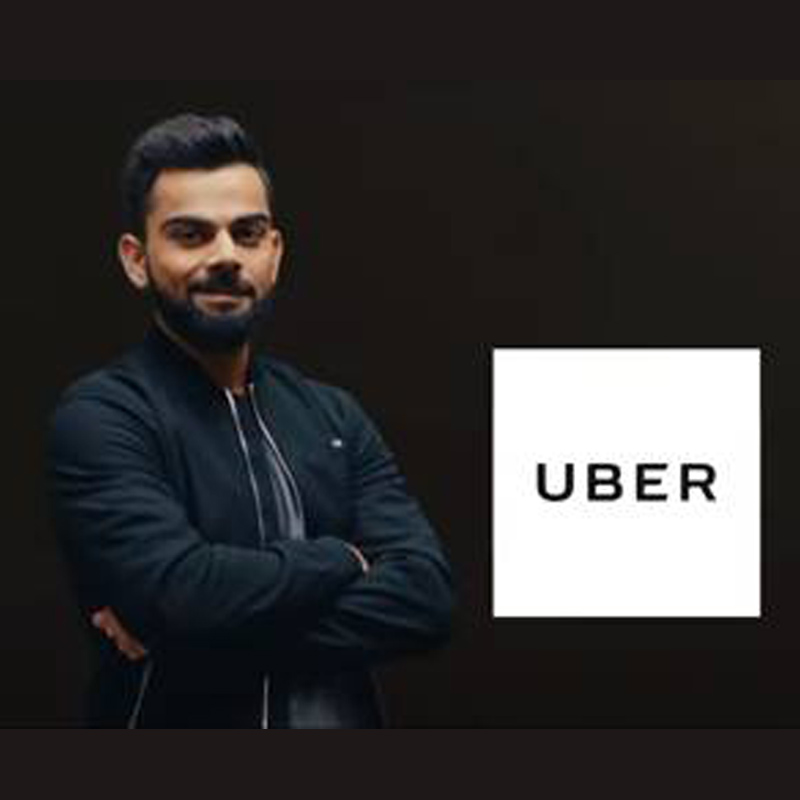
    MUMBAI: Uber, the ride-sharing app that is redefining urban mobility across the world, has unveiled its new brand campaign, with brand ambassador Virat Kohli. The baseline, ‘Badhte Chalein’, is built around the brand’s new positioning that is intended to build Uber as an enabler of movement, that is culturally progressive.

    Uber India head of marketing Sanjay Gupta says, “This is not just a brand idea – it’s happening on the ground, across India, everyday. This brand position is as intrinsically human as the millions of people who ride with us each week, and each of their pursuits. The communication has been designed to be progressive in thought, aspirational in spirit, widely-relatable in manner. And with Virat – perhaps India’s most inspiring model of personal progress. The breadth of communication built around this idea across ATL, digital and owned media, will cement our positioning and bring it to life.”

    In this campaign, Virat plays the role of the brand’s voice to help build Uber’s narrative in India. Set against Virat’s narrative, the commercial showcases four real life inspired examples of riders using Uber in different contexts, to pursue what gives them purpose. The ad features a visually impaired rider, an expectant couple rushing to the hospital, a young female doctor commuting to work and an independent mother taking her daughter to an early morning judo class.

    Uber’s brand ambassador and cricketer Virat Kohli mentions, “I am looking forward to be a part of Uber’s campaign, and moreover being a partner to a company, that in all its capacity, is committed to empowering cities and its people. I appreciate the service that Uber provides to its riders to travel comfortably anytime, anywhere. Being part of this campaign also gave me the opportunity to interact with the driver partners at a personal level and understand how the company has helped them to chase their dreams.”

    The campaign conceptualised by Ogilvy, aims to reiterate its effort to make Uber an everyday, aspirational brand for millions of riders and drivers in India. It positions Uber as a brand that is beyond transportation from point A to point B, reinforcing Uber’s role as an enabler of opportunities for hundreds of thousands of driver partners and riders in India.

    Uber’s relationship with Madison continues through to 2018, to build and execute the media strategy for this intervention. A six month multi-platform campaign, will span ATL (TV, Radio, OOH, Print) as well as Digital (Youtube, Facebook, Twitter and Content publishers) as well as Uber owned CRM Channels and locations. Given the scale and geographic footprint that the business has achieved, the TVC and radio campaigns will be aired in six languages Hindi, Kannada, Marathi, Telegu, Tamil and Bengali.