Tag: Madison Media

  • Missing brands must restart marketing to catch rising demand across categories

    Missing brands must restart marketing to catch rising demand across categories

    NEW DELHI: After a lull of more than two months, businesses in India are slowly getting back on track as lockdown restrictions ease. There is a positive sentiment among most brands and agencies that things will only get better from here on and there seems to be a plethora of opportunities waiting.

    According to FCB India group chairman and CEO Rohit Ohri and Havas Group India CEO Rana Barua, a lot of their clients have started getting positive responses from consumers in areas that fall under the green zone.

    Barua had told us in an earlier interview that one of its major clients, Hyundai, recorded 500 bookings in just two days of opening up of a limited number of showrooms. Ohri said that brands functioning in the essentials category, like food and hygiene, are getting a splendid rise in demand.

    Recently, Siyaram’s, one of the most prominent players in the Indian textile industry, said that the retailers in the green zones have started recording two-thirds of normal daily sales number already, indicating a positive sentiment amongst consumers. McDonald’s, too, had talked to Indiantelevision.com about an impending pent-up demand across industries.

    With a further change in lockdown rules, the industry is taking cognisance of several other possible trends. Barua now added, “I think (do not have data to back this) a lot of urgent categories would have opened up as many consumers would require change/service/repair of electronics, white goods, mobile accessories, home/kitchen accessories and appliances, etc. I say this because, with a, close to, 60-day lockdown and everyone at home using all the mentioned above more than ever, I am quite sure that this will be the need of the hour.”

    Madison Media chief analytics officer Nagaraj Krishnamurthy shared Bain & Company’s survey results that show demand for staples, household hygiene, food ordering-in, toys and even beauty products are improving in green zones.

    He said, “I do not foresee any issues concerning the demand for essentials. There is a lot of talk about revenge shopping of consumer discretionary items. My personal feeling is revenge shopping at best will provide a blip in the first week after easing is announced. On a medium-term basis, there will be demand contraction for luxury and discretionary products.”

    Dentsu One president Harjot Singh Narang elaborated that while essentials will surely be growing in sales; the fate of products and services like the purchase of automobiles and personal transport, new food experiences, travel and tourism will depend largely on consumer sentiment depending on how fast a vaccine is found and distributed, amongst other factors.

    He said, “There can be two broad scenarios on this. As we come out of it the sentiment could be of “fear and worry” which would lead to safety behaviour, putting off any non-essential expenditure, more investments in insurance products etc., or the sentiment could be that of “we dodged a bullet” leading to more of the YOLO (you only live once) behaviour of spending and enjoyment of experiences to celebrate the survival and resilience that led us out.”

    Whatever the case may be from the demand-side, advertisers suggest that it is high time that brands, which were missing from the public glare for the past two months or so, restart their advertising activities.

    Wunderman Thompson South Asia chairman and group CEO Tarun Rai shared, “The crisis took everyone by surprise. It is unprecedented and without any playbook. Some brands, sensibly, have been present through this crisis – whether in terms of communication or by actually doing positive things to help mitigate the crisis. The brands that have missed out should start getting visible now.”

    Krishnamurthy added, “Marketing and more specifically advertising is an investment. The golden rule to maximise return is to invest when costs are low. Marketers who did not invest in previous phases of lockdown missed a great opportunity to build brand love on a very cost-effective basis. I would urge all brands, especially those in FMCG business, where the top-of-the-funnel activation is critical to invest more. You rarely see an increase in media consumption that is accompanied by lower media cost.”

    About what should be the approach of brands to restart marketing, Rai said, “They still have to be empathetic and recognise that the crisis is not over. But after two months they can open up their marketing budgets as there are definite signs of consumers getting back to spending in many parts of the country. This could be a very important phase as there has to be a lot of pent-up demand. Marketers don’t want to miss out on it.”

    Barua highlighted that authenticity should be a key factor in brand communication today. “Brands and businesses have a huge and potentially vital role to play. But they must do so with authenticity because it is the right thing to do, not for themselves, not even just for their customers, but for society as a whole. In line with this, getting back to relevance and creating a compelling, engaging story to fit back into the consumer’s life is integral. Be meaningful for the consumer so that they clearly understand the void and reach out to buy the brand.”

    Narang further elaborated on a suitable strategy for brands to make a comeback in the marketing world through a two-pronged approach: first from the marketing impact on business perspective and second from the brand’s relationship with its consumers’ perspective.

    From an impact on the business perspective, he shared, “Teams would need to track sentiments very closely and pivot quickly to the changed needs of their consumers given these abnormal times. Responses could be different for different individual businesses and categories – from a changed product design perspective, a pricing/ SKU need matching perspective or even a new approach to distribution channel dynamics etc,., or a combination of such elements.”

    He insisted that brands go “deeply human” to address the situation from the relationship with consumers perspective. “Adapt as a brand to the new paradigm exactly like human relationships adapt and grow in uncertain times. This is the time that separates the wheat from the chaff for people at large and consumer segments in particular and relationships and brands that do not have a deep enough link will be left behind or even forgotten. Just see the personal relationships that will survive and even grow for your consumer segment and evolve your brand to be in sync with those patterns. At the very base level – out of sight and out of mind would be a big factor for people in what relationships survive and which ones fall behind as unimportant – the same will play out with brands.”

  • Limited workforce in office, copy fatigue: Immediate challenges facing ad industry

    Limited workforce in office, copy fatigue: Immediate challenges facing ad industry

    NEW DELHI: The past two months have been nothing short of a rollercoaster for industries across categories and nationalities. With most of the world under a strict lockdown, production halted, supply-chains blocked, and consumer demand shifting to only essentials, the economy went through a whirlwind of issues. Also greatly impacted was the marketing and advertising industry, as a result of the dwindling cash liquidity and many brands going silent in the time of crisis.

    However, things seem to be moving towards the better now. Lockdown restrictions have been eased greatly, green zones are already attracting consumers, and there is a lot of supposed pent-up demand to address. As brands start moving and earning, a lot of benefits will slowly be transferred to the advertising industry.

    Wunderman Thompson South Asia chairman and group CEO Tarun Rai said, “While the crisis in India is still far from over, the relaxation is a sign of hope. It is also a reflection on the strikingly varied impact the crisis has had on different regions of the country. While there are still issues regarding both production and distribution, the clients I have spoken to are finding innovative ways of getting around them. For many categories, this is the time to dust off their marketing campaigns and start getting ready for the beginnings of positive consumer sentiment. Like the crisis came upon us suddenly the rebound may surprise us too. Marketers and brands should be ready.”

    Dentsu One president Harjot Singh Narang added, “Investments in brand and marketing are sadly the first to go in a downturn but luckily come back really fast as soon as the businesses start seeing growth potential coming back. The relaxations are the first steps to inching back for now and so would be welcome by everyone. The real question would be how long before this inching ahead gathers some speed and opportunity to use brand and marketing as business drivers returns.”

     There, however, are still some impending challenges that await the industry. Havas Group CEO Rana Barua argues that the next few months will be more testing. “There will be numerous challenges going forward; going back to work poses more challenges than working from home. We cannot jump the gun and start behaving as normal. We need to collectively behave and act responsibly which will ensure compliance while we are planning to go back to work, safety for all employees, managing both offices and also working from home, balancing client needs and expectations.”

    Madison Media chief analytics officer Nagraj Krishnamurthy noted, “The industry is continuing to find it difficult to ensure supply chain continuity between the designated red, orange and green zones. Latest relaxation has eased the problem but not eliminated it.  It will be at least a quarter before the last mile link to the consumer becomes operational pan India.”

    Putting emphasis on the issues that the advertising industry will have to cater to, he added, “Usually, new copies are rolled out in the first quarter. However, this year, there are no new copies that are ready. Some clients are in a dilemma as to whether they can invest behind older copies. My suggestion to them is that they should unless the message is no more relevant. Analytics has proved that copy fatigue is a very rare phenomenon.”

    “Secondly, the situation on the ground is not uniform across the country. Marketers are wondering whether they should go on mass media like television. If the campaign is to activate top-funnel metrics, they should advertise on TV. However, brands advertising to activate lower-funnel metrics like retail or auto can look at geo-targeted digital approaches.”

    Rai highlighted that the safety and health of the agency’s employees are going to be of paramount importance. “We want to get back to our physical offices but want to be very sure that all the health protocols are in place. We are working effectively  from home but getting back to work will give everyone a sense of normalcy. We will start slow, in one city first, with around 30 per cent of our staff and move forward from there. The other important aspect is going to be when video production is permitted. We are managing even now but it is difficult.”

    Narang added, “Extended work from home, deeper thinking on brand relationships, strategies to navigate the months/full year of acute slowdown, strategies to tackle the adverse P&L impacts, and so many more immediate challenges face all of us in the industry. If change is the only constant then evolution and adaptation are the only necessities. Going ahead relaxations and new rules and ways will affect even more – how things change for the industry. However, the key will be to see how the industry and individual players in it evolve and adapt. In the next 18 months, leadership and thinking that enables pivoting to adapt to new realities will be the biggest need of this industry.”

  • Industry hails eased lockdown restrictions, wants more from economic stimulus

    Industry hails eased lockdown restrictions, wants more from economic stimulus

    NEW DELHI: We are close to completing two months of the ongoing nationwide lockdown, instigated by the fatal global pandemic COVID2019, living through extraordinary times, adjusting to newer ways of working, and dealing with newer ways of living. Many businesses have faced unimaginable loss, with giants like Ola, Uber, Swiggy, amongst others, laying off employees in mass numbers, and brands like Cream Bell shutting down. Small-scale businesses, be it brands running the shop on Instagram, or independent agencies, everyone has faced dire consequences.

    Amidst all this, the Indian government announced the fourth phase of the lockdown a few days back, with a lot of relaxations (depending on a state-to-state basis), and also introduced an economic stimulus package to help the businesses, especially the MSMEs, getting back on their feet, laying a foundation for ‘Aatmnirbhar Bharat’ (self-reliant India).

    The advertising industry’s reaction to these announcements has been lukewarm. While most of them seem to be content with the new lockdown guidelines, they had higher expectations with the economic stimulus than served.

    Reacting to the new lockdown guidelines, Havas Group CEO Rana Barua noted that it is very early to comment “as there are way too many mixed reactions from the industry. So, we will have to wait for a few more weeks to understand the implications.”

    FCB India group chairman and CEO Rohit Ohri said, “India is a densely populated country and it is wiser to remove the lockdown in a phased manner. The government, I feel, is doing a great job at it.”

    Madison Media chief analytics officer Nagaraj Krishnamurthy also lauded the government intervention in the matter. “The new lockdown guidelines try to balance life and livelihood. State governments have been given more power to decide on implementation.  This is a welcome step as local government will be a lot more informed on the ground reality. Ideally, we may have wanted all restrictions removed so that crowd immunity gets developed. However, such a broad stroke easing of restrictions may not be practically possible.”

    Dentsu One president Harjot Singh Narang feels that the current situation is much like watching a cricket match as things are happening in real-time and everyone is reacting according to the evolving situations in ways they think is the best.

    He said, “(The steps) are being subjected to a billion viewers with multibillion views on what is being done and what more could be done differently. I strongly feel that at times of crisis like this, we need to let the frontline response team do its work and do our best to help them in any way possible. There will always be views (personal and public) on what more could be done for the economy, the migrant, the underprivileged, etc…. but for now I feel we are clearly looking to open up slowly and cautiously. Is it “too cautious” or “too early”, that only time will tell.”

    The new economic stimulus, while great for the businesses, doesn’t hold much ground when it comes to helping to deal with the demand-side problems that India has been facing.

    While Barua preferred to reserve his comments on the economic package for the time being, Krishnamurthy noted, “There have been very good announcements with regard to reforms. The government has used a crisis to unleash difficult reforms in holy cow sectors like agriculture and defence. Rural demand which was subdued will now improve. This will lead to lagged uplift in demand. However, in the strict meaning of stimulus which is a capital infusion, it is a tad disappointing. There is no sector-specific monetary stimulus for very badly hit sectors like retail, media, hospitality etc.”

    He added that it is very much possible that the government will come up with one more round of monetary stimulus once the lockdown ends and people get back to work. “A true picture of demand will then emerge and the government can intervene to ease the pain faced by badly impacted sectors.”

    Narang agreed to Krishnamurthy that the stimulus will help the business but there is a 50:50 chance of demands improving early. “If I try to put myself in the decision maker’s shoes – as of now the thinking behind the stimulus package seems to be – over-index and create more liquidity for businesses so they can pass it on to people as wages, profits etc, and that should increase demand overall. Additionally, push in big-ticket reforms to oil the business machinery and enable it to run faster and better thereby attracting large foreign businesses to set up production facilities in our country and keep the wheels of growth turning.”

    “Sounds good in theory but the problem is that any thinking on supply-led growth is bound to take a long time as the economic multiplier kicks in and gets demand grows. Given the suffering around us and the sentiment that has fallen sharply ever since 2019 and now the complete nosedive of 2020, this time span could be even longer. This situation could jeopardise the whole theoretical possibility of it working. However, if the reforms kick in quickly and we do get to become a producer-led economy for large business investments, then even though we will go through a painful period for some time the recovery could be more robust and sustainable than a simple consumption-led growth model that we seem to have until 2018.” he added.

    Both Narang and Ohri said that it would have been better if the government had put money directly in consumer’s hands.

    Ohri suggested relief in taxes to support the dwindling spending power. Narang said, “I would look to put money in people’s hands directly as much as possible through tax reductions and direct transfers to the underprivileged but am not sure on how much the current coffers of the government could support this and how much of it could become just a short-term measure to alleviate pain without a mid- to long-term strategy to kick in long-term restructuring and growth that truly reduces inequality all around.”

  • Archive re-runs help sports channels gain 21% viewership

    Archive re-runs help sports channels gain 21% viewership

    MUMBAI: Be it domestic or international, almost all sporting events have either been scrapped or postponed amid the COVID-19 pandemic. The cancellation of events has forced sports broadcasters to run dry with no live sporting tournaments and resort to showing archived re-runs.

    Star India group and Sony Pictures Networks (SPN) own a majority of sporting rights in India. Star India has all the International Cricket Council World Cup tournaments rights along with all team India matches played in India, and of course, Indian Premier League rights, too. SPN has a range of international sports properties such as wrestling, NBA, badminton, tennis and some marquee events such as Olympics 2020 and Euro Cup 2020.

    Cricket being the most-watched sports in the country, Star Sports, this week, lined-up all the historical India vs Pakistan world cup matches from 1992 to the recent 2019 on its channels. With the branding of ‘Mauka Mania’, it says: “A week-long opportunity to relive several cricketing battles between India and Pakistan including nail-biting matches from the World Cups and the Asia Cup.”

    Not just that, the sports broadcaster has also indulged in producing a non-live talk show content, Cricket Connected, wherein cricket veterans will be connected digitally and speak about the gentlemen’s game. Each episode will have segments called ‘#AskStar’ & ‘Cricket Recreated’ that encourage fans to engage and interact with the cricketing legends through social media platforms.

    Sports channels thrive on live content from different sporting events. And, this unprecedented COVID19 situation has torpedoed the plans of sports channels. Citing the example of mythological show Ramayan on DD National, Madison Media chief executive officer Vanita Keswani says: “Re-run is a good move that the sports broadcasters are doing as people need entertainment. Sentiments are positive for re-runs in sports as well. It will certainly help sports broadcasters to gain the attention of brands and advertisers. Categories which are already spending in the current environment will, of course, try to take advantage of the re-runs of sporting events televised by the sports broadcasters.”

    SPN will show ‘great centuries’ in the history of cricket for two weeks, starting 6 April.

    SPN is the official broadcaster for important international non-cricket sporting tournaments, too. For World Wrestling Entertainment, the most-watched sport in India after cricket, the broadcaster has announced the launch of a new primetime programming slot, ‘WWE Blockbusters @ 8 pm’, which will be aired every day of the week.

    “WWE Blockbusters will celebrate some of the most iconic matches in WWE history, honouring WWE Legends and showcasing the current WWE Superstars representing flagship brands – RAW, SmackDown and NXT,” Sony Pictures Network said in its official statement.

    The sports genre has surged by 21 per cent in week 13 over the previous week on the back of telecasts of classic India cricket matches and World Wrestling Entertainment, as per a joint report released by Broadcast Audience Research Council (BARC) India and Nielsen India.

    Despite all their efforts, Dentsu Aegis Network India chief executive officer Anand Bhadkamkar feels that given the current COVID-19 situation, brands do not want to be on advertising platforms for now. “We are likely to see a reduction in the core advertising spends and it is expected that these spends will be slowed down substantially. Re-runs will definitely cheer up sports enthusiasts and certainly have the viewership go up. But whether that will convert into something concrete is quite doubtful,” he says. 

    Joining the race of re-runs, the government-owned free-to-air sports channel DD Sports will broadcast the highlights of India’s cricket matches from the early 2000s from 7 April onwards. At least 20 archived match highlights will be shown for a week on the platform including Tri-series India, Australia, New Zealand 2003, South Africa tour of India 2000, Australia tour of India 2001, West Indies tour of India 2002 and Sri Lanka tour of India (full matches).

    “Re-runs will certainly help long-term advertisers and somehow enable them to gain visibility associated with channels,” believes DigitalKites senior vice-president Amit Lall. “Advertisers have not paid for the re-runs but for the live tournaments. Considering the unforeseen situation of live matches not being played, broadcasters will certainly try to convince them, make them happy by at least getting some eyeballs through historical archived sporting events.”

    The International Cricket Council’s 2011 India-Pakistan world cup semi-final match saw a growth of 87 per cent and the final between India and Sri Lanka match gained viewership by 52 per cent. The semi-final was broadcasted on Monday – 30 March, whereas the final on Thursday – 2 April. These matches were televised on Star India’s sports channels at a time when there was no live sport happening.

  • Corona impact on IPL: Brands take a wait-and-watch approach

    Corona impact on IPL: Brands take a wait-and-watch approach

    MUMBAI: Three weeks into India’s biggest cricketing event, Indian Premier League, brands and sponsors are re-looking their strategy amid the outbreak of coronavirus.

    The virus that first appeared in the Wuhan city of China has spread to over 46 countries and entered India earlier this month. Around 50 positive cases have been confirmed in India as of Tuesday, as per the union health ministry.

    Amid the pandemic, the global trade has taken a toll and affected countries have shut their borders. “From a brand perspective, the market has slowed down a bit. Everybody is putting things on hold and is on wait-and-watch mode”, says Havas Media’s chief executive officer Anita Nayyar.

    She believes that as the League approaches, everybody will take a call on the impact of the virus on IPL. “Since money is involved in this event, the virus scare will absolutely impact the overall business. The impact will be there, but to what extent? It’s something we will get to know as we approach the sporting event,” says Nayyar.

    Nayyar adds, “Change in on-ground viewership will open up the box of re-negotiation amid the virus outbreak. Except for broadcasters, events, stadia-ads, event-ticketing will get impacted as on-ground viewership leads to different hue and add tinge to the entertainment-sporting event.”  

    Sharing the same view, Madison Media’s senior general manager Chirag Shah believes there will be a deep impact on on-ground revenue as the turnaround on stadiums could be lower, especially in regions like Delhi and Kerala where the virus spread is huge.

    “Though the co-sponsors and title sponsors may have been sold as the event nears there are inventories and spot-buys to be sold that will be impacted. Brands are somehow reluctant and discussions are happening within them and they definitely have doubts about it,” says Shah.

    Explaining as to why spot-buys will see an impact, Shah says, “Consumer durables are the major advertisers that buy inventories during IPL and are heavily dependent on the south-eastern countries like China, Japan and South Korea for the components or parts. And, as these countries are majorly being hit by the virus, there’s an impact on supply, and eventually, ad spends on such expensive property will be re-looked.”

    The virus being most contagious and its spread phenomenal, chances are that the stadium may see less number of turnout as people are worried about their lives.

    Trust Research Advisory CEO and brand expert N Chandramouli says, “Such sporting events draw the attention of large crowd gathering. Amid the virus outbreak, the crowd coming together is a big no-no. IPL not being that sacrosanct as Olympics can be held later. There would be viewership challenge if there’s no stadium crowd as they are the one who add drama, excitement, and passion to the tournament.”

    Says Chandramouli, “The virus’ impact is huge on the economy and all the other sectors. Similarly, don’t believe that IPL will be spared. The only thing is people are not sure about the intensity of that impact.”

    “Brands are re-looking their strategy very closely”, says Mouli, echoing Nayyar’s view. “Even brands themselves should pull back from the event and urge government for the postponement.” According to him, down the line if the situation worsens, the union government may step in and probably come up with the alternative of postponement or time cancellation of the event.

    On the other hand, Dentsu Aegis Network India’s chief executive officer Anand Bhadkamkar says, “At this point, nobody knows what will happen and postponement of the event won’t impact the brand value; however, there definitely will be a loss of viewership, and eventually revenue.” IPL during summer vacations garners maximum eyeballs.

    Adding further, the DAN India CEO says, “Every brand is going back to their drawing board and re-looking the strategy planned for the IPL. They are evaluating the options and scenarios considering a lot of money, manpower involved in the process.” How long this will go on? That is something we need to see, he adds.

    He says, “Anything that is changed or moved from the original format will certainly have ramifications; the only difference is that we are unaware of the impact and too early to predict loss. But the impact of the virus outspread will definitely be seen.”  

    Is the virus scare hyped?

    All the four industry experts are of the view that there is no hype regarding the outbreak, but people, of course, are overcautious and don’t wish to take risk as the virus is pandemic.

    Amid the concerns, the Maharashtra health minister Rajesh Tope had said the state government is thinking of postponing the 13 edition of IPL. The Board of Cricket Council of India president Sourav Ganguly has said the game will happen as planned and that the board will take as many precautions and measures as possible.

  • Dealing with the slowdown: Madison Media’s recommendations

    Dealing with the slowdown: Madison Media’s recommendations

    MUMBAI: How do marketers deal with the inexplicable slowdown the Indian market is going through? Run for cover? Hide behind a door? Well, Madison Media has come out with some 10 recommendations for marketers to deal with the slowdown which it has put out in a playbook, it released earlier this month.

    Temper expectations from rural market: Nielsen figures show the brakes have been felt less on the urban market with it showing a growth of eight per cent in Q3 2019 as against five per cent for the rural areas. InQ3 2018, rural had clocked 20 per cent growth as against 14 per cent for urban. Hence, marketers need to focus their energies on urban India until farm incomes rise and rural gets back into higher gear.

    Pick your markets: Much like the current politics, the growth in consumption will not be secular across the country. As per a Bain and Company’s report, consumption will be led by 10 “breakthrough” states — Kerala, Karnataka, Andhra Pradesh, Telangana, Tamil Nadu, Delhi, Haryana, Punjab, Maharashtra, and Gujarat. Therefore, marketers will have to repolarise their traditional market prioritisation methodology. Focus on TV investments should be on regional languages channels rather than Hindi GECs.     

    Go for premiumisation: Industry estimates indicate that India will be an economy led by the middle class by 2030. The middle class will be driving 75 per cent of the consumer spending, plus 10 years from now. Therefore, premiumisation and category addition can drive a significant share of incremental spent on categories including F&B, dining out, personal care, and cellphones, etc. 

    Focus on modern trade and e-commerce: The Indian heartland is embracing modern trade with open arms. As per property management company, JLL, 50-60 per cent of the new modern trade outlets are coming up in tier II and tier Ill cities. Brands and marketers should also drive the wave by shifting substantial trade promotion monies to e-commerce portals and managing categories with modern trade. 

    Invest in brand love: During slowdown, brands have a temptation of running promotions rather than building the "Brand Love”, which can prove to be a fatal exercise. A study conducted by the Institute of Practitioners in Advertising [IPA] suggests that emotional campaigns work nearly twice as hard as rational campaigns. It would be wise to synchronise and invest in "bottom funnel" campaign probably using digital media. Such an approach will ensure Share of Mind is translated to Share of Market.

    Manage brand portfolio: To maximise the ROI, marketers should devise and adopt a brand portfolio management approach. Brand portfolio management is all about developing and maximizing halos (cross brand elasticity). Rigorous analytics can help to identify the donors and recipients of "Halos" and thus develop a portfolio strategy that adds to the marketing ROI.  

    Do not under-invest: As widely known, advertising has an ‘S-shaped’ response graph on a plane. If marketers invest below the threshold point– determined by brand size, category, and advertising copy, the entire advertising budget gets wasted. Hence, it is very important to invest in analytics to identify the threshold point and plan advertising spends accordingly. And if a brand is unable to invest at threshold levels, it would be a better strategy to remain silent and mount a BTL campaign. Thus, a proportional slashing of budgets in the wake of slowdown induced budget cuts is not recommended.

    Play ESOV game: It is very common for marketers to slash advertising budgets during slowdown but data suggests that the opposite should be done. Excess SOV (ESOV = SOV – SOM) metric developed by Neilsen indicates that ESOV had a definitive correlation with share growth. On average, a 10 point difference between SOV and SOM led to 0.5 per cent of extra market share growth. However, ESOV was found to be working harder for brands with greater emotional appeal and those who had a higher share of market. For every brand, analytics can help calculate the required Excess SOV for the target market share gain. Downturn is the best time to mount a share gain exercise with ESOV as category heat is expected to be moderate. 

    Milk Existing Assets: To maximise Rol of marketing monies, advertisers could resist the need to change creative assets and instead find ways to extract more out of existing assets. It is only a promotion led campaign that has definitive shelflife. Millward Brown had conducted a global study and articulated that true "wear out" of a TV ad is rare, and many TV ads could have a longer useful life than advertisers realise.

    TV and Digital to be go-to media: Recent study by Accenture titled "Cross-channel advertising attribution report" has quantified the halo impact of TV on digital performance campaigns. Without TV, standalone ROI of digital campaigns comes down by 18 per cent. For a branding campaign, digital adds to the incremental reach of TV at higher frequency at a lower cost, thus increasing the campaign ROI. 

  • Economic slowdown impacted ad spend in H2 2019

    Economic slowdown impacted ad spend in H2 2019

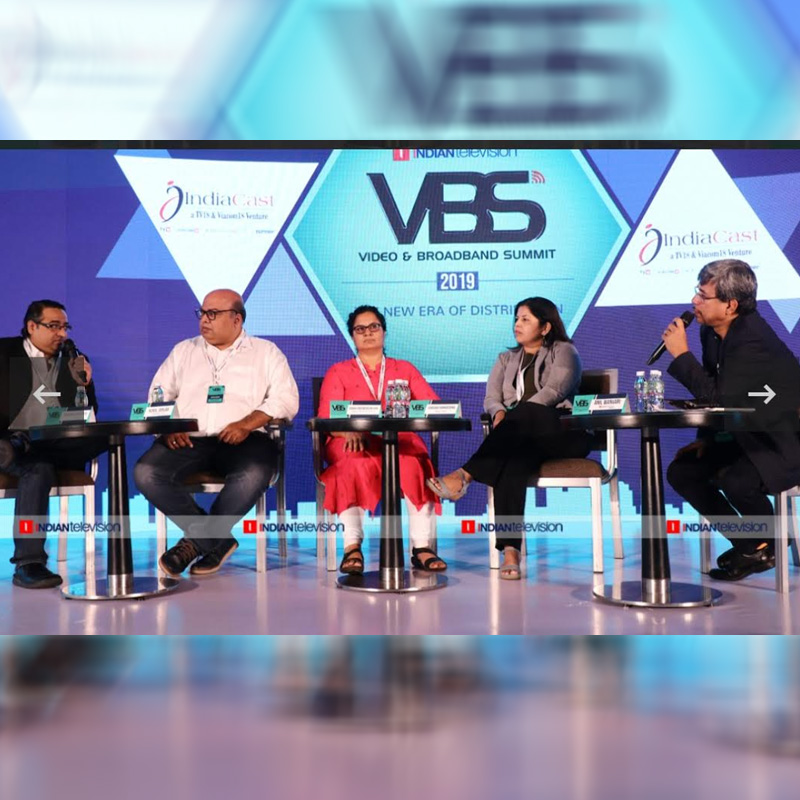
    MUMBAI: Economic slowdown in 2019 brought the country, as well as the media industry, to a standstill. It visibly impacted advertising spends. This view was shared by advertisers present during the sixteenth edition of the Video and Broadband Summit 2019 that took place on 11 December in Mumbai.

    The panel was moderated by indiantelevision.com founder, CEO and editor-in-chief Anil Wanvari, with panellists ITC Ltd head media and PR Jaikishin Chhaproo, Havas Media Group managing partner west and south Kunal Jamuar, Godrej Consumers Pvt Ltd VP and head of media services Subha Sreenivasan Iyer and Madison Media vice president Vandana Ramkrishna.

    Chhaproo, in his opening statement, said, “There has been a yo-yo syndrome since January 2019 and the only two media-mela events (Indian Premier League and World Cup) in the first half of the financial year saw some advertisement growth.”

    He further added that since June people have been quite cautious about advertisement spend.

    Agreeing to Chhaproo’s perspective, Jamuar said, “2019 has been something like that of 2008 double dip. And, with respect to advertisement spend on television is as similar as of last year.” Many of Havas Media Group’s clients are from the auto and finance sectors.

    All of the four panellists were of the view that along with other sectors, the advertisement spends on television has also been slow and has hardly seen any growth this year.

    Accepting the slowdown in the market, Iyer said, “This year had made us re-look at all our advertising plans due to lack of resources and we have been far more prudent in terms of evaluating the need for further spend with quantifiable ROI."

    Meanwhile, Ramkrishna believes that one of the reasons for the slowdown could be because of the poor performance of world economies.

    According to Ramkrishna, her agency being associated with retail brands, the festive season has not turned up to be a happening one. Adding further, she said people are very cautious on spends and there’s a fear that the economy is going to crash.

    However, despite facing a slowdown, Iyer said that in terms of volume, the company’s growth is very strong, which is a positive sign. This goes with competitors as well, especially, in the FMCG sector.

    She added, “Consumers are not completely cutting down on their basic essentials, especially in segments where value for money is core.”

    In the same context, ITC’s PR head said, “Consumers seek value for money and this is what is happening in the current economic situation. Moreover, there have been steady volumes all over.”

    Ramkrishna, talking about NTO’s impact on advertising spend, said, “GEC and movie channels continue to be there and the new order has hardly affected the brands' television spends.” However, she pointed out that the smaller set of channels will certainly have an adverse effect.

    GPCL’s media head said there has been a vast difference between DTH and cable networks in data capturing granularity and that helps brands to decide on advertising spends on television.

    Havas Media’s managing partner questioned the importance of a proper measurement of audiences’ rating that has seen improvement after DTH’s existence. He said, “Today, niche channels are offering niche content, making the existing eco-system a bit difficult.”

    Iyer said that companies are ready to test any medium, just that accurate third party data is needed.

  • Madison Media Group elevates Vinay Hegde as chief buying officer

    Madison Media Group elevates Vinay Hegde as chief buying officer

    MUMBAI: Madison Media has announced the promotion of Vinay Hegde as chief buying officer. He will report to Amol Dighe, CEO, Madison Media Ultra and head of investments. Madison Media’s buying teams across offices will now report to Hegde. Hegde takes over from Neelkamal Sharma, who has decided to pursue opportunities outside Madison Media. 

    Hegde has been with Madison Media for three years as senior VP buying and is a part of Madison’s central buying team since 2016, and worked across agency’s clients. Hegde has over 25 years of experience, having worked at Mindshare Fulcrum for over 10 years, where he handled buying for the Unilever business. He has also worked with Disney as director, revenue strategy, in addition to having worked at Starcom, HTA and Percept.

    Madison Media & OOH Group CEO Vikram Sakhuja says, “I am delighted to have Vinay head our buying. He brings analytic and strategic strength to our buying function, and is ideally suited to discover new buying and trading models in this highly dynamic media environment. I would also like to thank Neel for his contribution to Madison over the years.”

    Commenting on this development, Dighe says, "I am confident that Vinay will enhance and strengthen Madison’s buying and deliver more value to clients through his strong negotiation skills and market Madison Media Group is a part of Madison World which also has specialist units in advertising, business analytics, out-of-home, PR, mobile, retail, sports and entertainment; employing over 1,000 communication professionals across India, Sri Lanka, Thailand and Bangladesh. He has an excellent rapport with Media Partners and his understanding of the Indian television environment is second to none. Always goes for a win-win.”

    Madison Media has had a great run this awards season having won, Marketing Team of the Year for Asian Paints, at Indian Marketing Awards; Agency of the Year at Digies Digital Awards; Brand of the Year for Viacom 18 at DMA Echo Asia Awards; Mobile Agency of the Year at IDMA Digital Awards; in addition to winning over 150 awards since January 2019.
     

  • Madison World helps Tata Salt bring alive Mahatma Gandhi’s principles of clean India

    Madison World helps Tata Salt bring alive Mahatma Gandhi’s principles of clean India

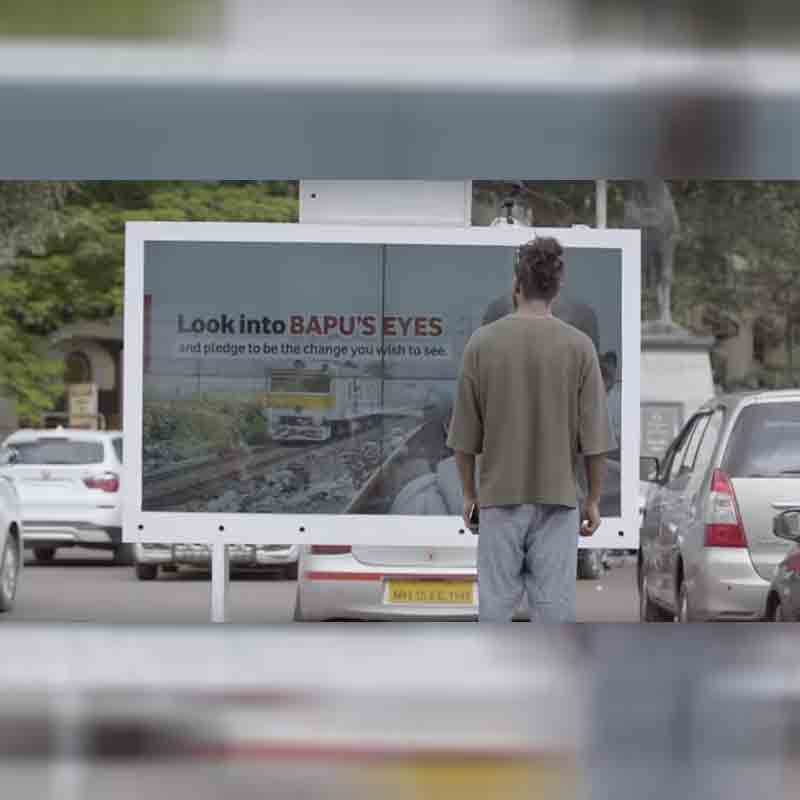
    MUMBAI: Madison World units, Platinum Outdoor and Madison Media for their client Tata Salt, helped bring alive Mahatma Gandhi’s vision of a clean India on his 150th birth anniversary. An interactive installation with an inbuilt video with Mahatma Gandhi’s voice was displayed on MG Road in Mumbai asking an important question – We walk on Mahatma Gandhi Road every day, but do we really walk on Bappu’s path?

    With the brand’s position of ‘Desh Ki Sehat, Desh ka Namak’ being closely woven with Gandhi’s Salt Satyagraha, Tata Salt had set up an interactive installation that reminded people of Gandhi’s saying ‘Be the change you wish to see’. The campaign also builds on government’s ‘Swachata Hi Seva 2019’ campaign initiated as part of the ‘Swach Bharat Abhiyan’ initiative.  

    The innovation was further amplified on TV news media.

    Tata Chemicals Ltd head – marketing, consumer product business Sagar Boke said, “Tata Salt has always stayed true to its credo of ‘Desh ki Sehat, Desh Ka Namak’ and this initiative is our homage to the Father of the Nation. As the nation progresses to fulfil Mahatma Gandhi’s dream of cleanliness, this unique installation will bring alive the Mahatma’s thoughts and words on cleanliness and sanitation. People will be able to interact with images and sounds to truly understand the Mahatma’s dream of total sanitation for all and the importance of not just personal but also public hygiene. Just as nutrients like iodine are important to good health, good hygiene and sanitation are just as critical, and we hope the #BapuReminder initiative will instill in each one the aspiration to be a torchbearer for Swach Bharat Abhiyan.”

    Madison Media & OOH partner & group CEO Vikram Sakhuja said, “Tata Salt is a brand that has always stood for a larger purpose and a better future. We couldn’t be happier that we’re associated with a brand that is making a difference through household items and contributing to improve the environment.”