Tag: Madison Group

  • HiveMinds welcomes Pradeep Saluja as chief operating officer

    HiveMinds welcomes Pradeep Saluja as chief operating officer

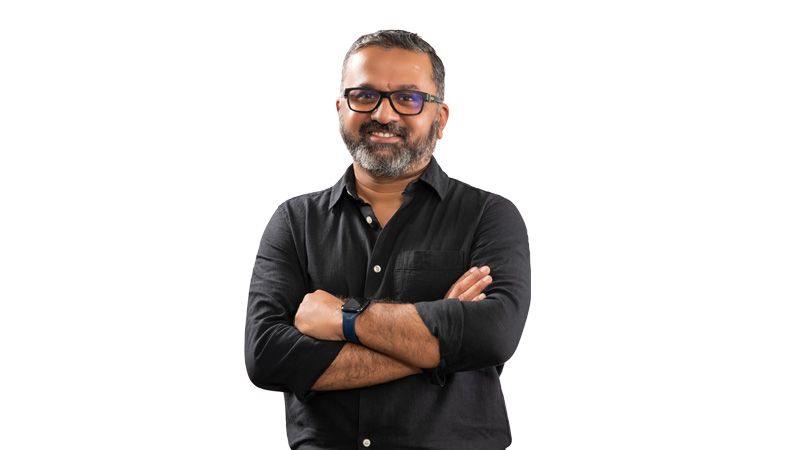
    Mumbai: HiveMinds, a digital marketing company and part of the Madison Group, is delighted to announce the appointment of Pradeep Saluja as chief operating officer. Pradeep is a seasoned professional with over two decades of experience leading business strategy, operations management, and consulting across multiple industries. As the COO, he will oversee the P&L and growth of the business and be responsible for the organisation’s overall operations.

    Pradeep has held senior positions in several leading firms, from one of the founding members of the India business at Encore Capital Group to leading firms where he has delivered sustainable growth for clients worldwide. Prior to joining HiveMinds, he served as vice president at Sprinklr, where he successfully led customer success for key accounts globally. Before this, Pradeep was with Mu-Sigma, managing the P&L of a business unit with a portfolio of Fortune 500 companies. His career began at Caterpillar, where he led West and South East India’s dealer development and customer success teams. He was also part of the management consulting practice at KPMG. Pradeep graduated from the National Institute of Technology Allahabad and is an alumnus of the Indian Institute of Management Bangalore.

    HiveMinds COO Pradeep Saluja shared, “HiveMinds has established itself as a leading player in the Digital Marketing space. The leadership’s unwavering focus on delivering value to clients and fostering an employee-centric culture echoed well with my values. I am excited to join HiveMinds and look forward to working closely with our highly energetic and capable teams to deliver sustainable growth and impact to our clients.”

    HiveMinds CEO and founder Jyothirmayee JT commented, “We are delighted to welcome Pradeep to HiveMinds. His extensive experience and proven leadership, especially in digital transformation and operations, align perfectly with our vision for the future as we expand and evolve in the digital marketing landscape. His appointment marks a significant milestone in our journey, and I eagerly anticipate the innovative solutions and lasting partnerships that will undoubtedly flourish under his leadership.”

  • HiveMinds appoints Srinath Kotamaraju as regional director-South

    HiveMinds appoints Srinath Kotamaraju as regional director-South

    Mumbai: HiveMinds, India’s premier digital marketing agency, part of Madison group, is pleased to announce the appointment of Srinath Kotamaraju as Regional Director, South. An accomplished professional with over two decades of experience driving growth and digital transformation, Srinath brings a wealth of expertise in brand marketing, leadership, client management, and process optimization. Srinath will lead delivery excellence and existing business growth for the south-based clients.

    Before joining HiveMinds, Srinath was the managing director at Reprise Digital, Indonesia. Before that, he served at Interactive Avenues for nearly a decade, steering large clients and building teams. He has also held business roles at Mindshare, Yahoo India, De Beers and Times of India.

    What further drew Srinath to the company was HiveMinds’ unwavering commitment to both people and performance. He states, “HiveMinds’ dedication to fostering a culture where excellence thrives alongside employee well-being resonated deeply with my values. This synergy was the driving force behind my decision to join this dynamic team at HiveMinds. I am eager to start my journey with talented teams to deliver impactful solutions for our clients.”

    HiveMinds CEO and founder Jyothirmayee JT comments, “Srinath’s experience in handling integrated accounts and his passion for organisation building make him a valuable addition to our leadership team. His interest in delivering business impact with a deep understanding of the medley across content, communication and media will contribute to HiveMinds’ continued upward trajectory.”

    Madison World chairman Sam Balsara commented, “HiveMinds is growing both in size and stature with clients. In this stage of our journey, we need leaders like Srinath to enhance delivery excellence further. With his experience in client management and business growth, I am sure he will add much value to our clients in South India”. 

  • HiveMinds appoints Neha Pandey as VP-growth

    HiveMinds appoints Neha Pandey as VP-growth

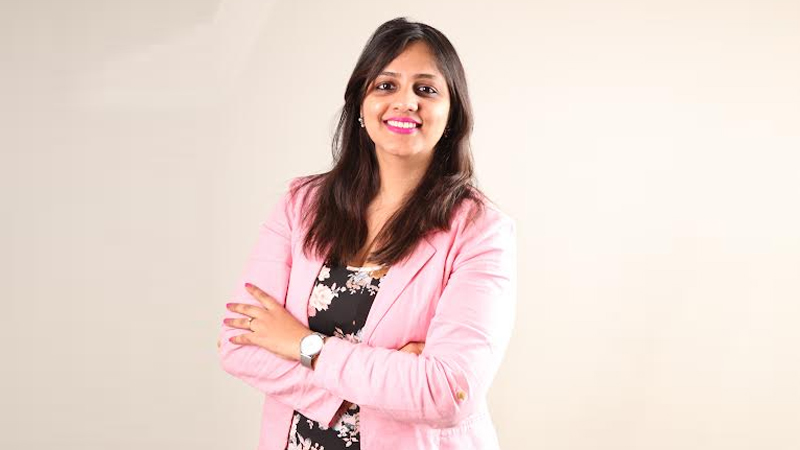
    Mumbai: HiveMinds, a forefront digital marketing agency, part of the Madison Group, announces the appointment of Neha Pandey as vice president – growth. Neha, a seasoned strategist in media and telecom, arrives with an impressive résumé of over a decade in nurturing strategic partnerships and scripting success narratives. Her role at HiveMinds is set to be the business expansion in India, UAE, and the USA.

    With a professional journey spanning 13 years across pivotal sectors like mobile, e-commerce, telecom, and the internet, Neha Pandey is a veteran in strategic alliances, business development, marketing, account management, and team leadership. Her tenure as business head at AdLift India and business partner – corporate at BIG FM is marked by significant achievements in client consultancy, sales strategy, and business planning.

    Expressing her vision on joining HiveMinds, Neha remarked, “HiveMinds’ swift ascent as one of the top digital marketing agencies in India along with its visionary leadership drew me to this role. I am happy to be part of this vibrant team. I think I have joined at a great time when my expertise and aspirations are in line with the HiveMinds growth plans and I look forward to delivering robust growth in the years to come”.

    HiveMinds chief strategy officer Deepti Bhadauria commented, “Neha Pandey’s inclusion in our leadership cadre is an important initiative towards our growth. We have added some of the most prestigious brands in India to our client list, in the past few years. Now is the time to consolidate our position and focus on delivering the same expertise to international clients. We are sure Neha will lead this charter with aplomb and add to Hivemind’s success”.

  • WPP acquires remaining stake in MediaCom India from Sam Balsara & Lara Balsara Vajifdar

    WPP acquires remaining stake in MediaCom India from Sam Balsara & Lara Balsara Vajifdar

    Mumbai: WPP announced that it has purchased the remaining 26 per cent stake in MediaCom Communications in India from Sam Balsara and Lara Balsara Vajifdar. 

    According to the deal signed, Sam Balsara and Lara Balsara Vajifdar entered into a discussion with the network agreeing to exit MediaCom in the interest of its clients to enable the merger.

    Sam Balsara and his family first entered into a contract with WPP in 2008 under which the Balsara family held 51 per cent. The Madison promoters sold 25 per cent of the business in 2017.

    Speaking on the agreement, Sam Balsara said, “This innovative partnership we invested in nearly 15 years ago has been a great success for all parties. It has established MediaCom in India as a fast-growing and highly respected agency by advertisers.”

    MediaCom Global CEO Nick Lawson commented, “It has been a pleasure working with Sam Balsara and Lara Balsara as we grew this successful business in India. We will build on that legacy to deliver the agency model our clients want for the future – founded on brilliant strategy and brand-building capabilities, with pioneering digital expertise running throughout.”

    This acquisition is a part of WPP’s strategy of investing in fast growth markets, new media and digital. On 26 April 2022, WPP announced that global agencies MediaCom and Essence would merge to form EssenceMedia.com. 

  • Madison Digital bags social media mandate for Glide Invest

    Madison Digital bags social media mandate for Glide Invest

    Mumbai: Madison World’s digital arm, Madison Digital, has won the social media mandate for Glide Invest, an online financial planning platform backed by Motilal Oswal Group. 

    The account was won after a multi-agency pitch involving several rounds of presentations. 

    Speaking about this association, Glide Invest founder and CEO Pratik Oswal commented, “We are impressed by Madison’s depth and expertise in the space and are excited to partner with them.”

    Madison Digital vice president Kosal Malladi commented, “We are delighted to partner with Glide Invest and be a part of their digital growth journey. We are looking forward to doing some ground-breaking work together.”

    Madison Digital has grown 10x in terms of billing in the last three years, to become a 200+ employees strong outfit with capabilities in Branding, Performance & Creative solutions.

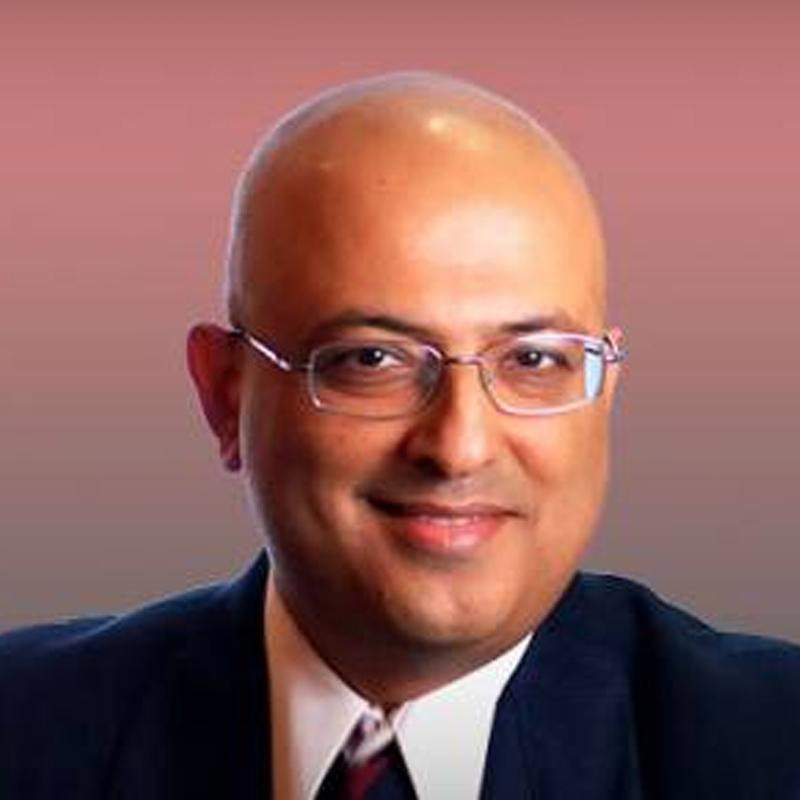
  • Madison Group CEO Vikram Sakhuja on TRAI tariff order, Ekam & media landscape

    Madison Group CEO Vikram Sakhuja on TRAI tariff order, Ekam & media landscape

    In a highly VUCA media world, over I’m going to attempt to answer the question of what’s in store for media in the near future. Today 11000 TV and radio advertisers, over two lakh print advertisers, 1500 OOH advertisers and 300 large – 2 lakh long tail online advertisers think long and hard about how to spend their marketing budgets.

    On one hand, it costs 30-40 crore to do a significant national launch, advertising on IPL can exceed a 100cr for some advertisers. A YouTube masthead or a TOI jacket costs excess of a crore, a 10-day OOH plan in Mumbai can cost over a crore. Yet an average advertiser spends under five crore a year on TV, two crore on OOH and lakhs on other mediums. At the top, there are only 12 advertisers with spends more than 500 cr. At a brand level, an equal number (12) spend more than 100 crore.

    For all of them, budget management boils down to making trade-offs between mediums and media objectives. By mediums I mean TV, print, radio, OOH, digital, cinema, and media objectives: reach, frequency, SOV, weeks on air, advertising size and “impact vs regular” inventory.

    How media shapes in the future will depend on how advertisers, agencies and media owners use different mediums across these fundamental media objectives.

    Reach: When it comes to reach we have close to 200 mn TV homes but only a handful of advertisers – large FMCG, political parties and telecom that reach both urban and rural. Even within urban most aggressive plans reach about 70% of TV homes once/month and about 45% three times.

    Byron Sharp amongst other media pundits says that reach is most important, yet at an India level we are reaching less than half. Question to ask is whether that 60% reach overall urban better or 95% reach among a particular market.

    Frequency: At a campaign level, TV typically operates at a 3-5 frequency, online at 7-8, print at 1 or 2. Yet paradoxically as consumers we often see the same ad perhaps three times in an hour while watching a movie or a game. Question to ask here is do we truly understand the concept of media frequency?

    SOV: Most advertisers track SOV/SOM closely as they find that competitive spends have a bearing on their business. Best way to get a client to spend is to tell them that their competitor is spending. Fact is media salience does drive brand choice but do we need to do it over a campaign or a financial year.

    ACD: TV copy length is coming under a microscope even as print sizes are increasing. Digital has expanded the ad range from 6” to long-form video. Rather than approach copy length by the medium question is one of optimizing the effectiveness and efficiency of creative length (typically using analytics).

    Impact vs. regular: Impact unquestionably helps cut clutter and build awareness. Used well it builds equity. However, it comes at a premium. New advertisers hoping to make a quick mark in the Indian market opt for an impact heavy strategy, while legacy marketers approach impact more judiciously. Question to my mind is do brands have an impact strategy?

    WOA: Often the variable that is traded off most. It is felt that it is better to have a campaign that is noticed over an always-on one. Indeed, we have only a few brands who are always-on on TV, display, social, search, performance; but most TV and all print, OOH, radio, cinema activity is typically sporadic and behind specific marketing initiatives. Why is WOA not given more importance?

    Current thinking has carved the pie across TV – 38%, print – 32%, digital – 19% (search 6%, display/video 7% and social 6%) OOH – 5.5% and radio – 3.5%.

    How will this media scenario change in the near future? If the future follows the past we will see the following:

    TV will be the base medium for building awareness and consideration. More TV channels will continue to launch, rate/10” will not increase and may even fall. Fragmentation will lead to an increase in CPRP. CPRPs within a genre will be competitive. Reach will be precious. Overall it will cost more to reach less. There will be the occasional super Premium Impact program that becomes a “tribal moment”.

    The power of others seeing the same thing as you, in the same room and across India at the same moment, cannot be overstated. If I see a Dominos RCB spot during IPL, and I discuss it with a friend who I can safely assume has seen it, a certain legitimacy is created that is called Cultural Imprinting.

    Digital Video will grow on the back of OTT, YouTube, Jio, MX Player, ShareIt and other video consumption and sharing platforms. Digital video has two roles: on advertising, the TV vs. digital video debate will net out at one complementing/supplementing, rather than replacing the other. On content, video will have an amazing run limited only by a brand’s ability to embrace content assets.

    Social will grow on the back of great psychographic targeting and delivery of outcomes and again grow proportionate to brand’s ability to create content based assets.

    Search will grow but more modestly as CPC’s go up and the ROI on search reduces

    Print will have a bumpy ride. It will remain a medium for a call to action and announcement of new news unless it reinvents itself. Categories will put it more under the scrutiny of effectiveness than any other medium. Comparisons will inevitably be with digital. Newspapers will struggle to balance yield with outlays.

    Digital display will grow but less than video. Here the contextual, performance oriented, rich media, tech-enhanced nature will lead to banners winning the battle versus print. Voice will emerge as a display medium

    Radio and cinema will grow as outlays remain modest and local marketing importance grows. OOH will gain from traffic count measurement that is now available at least in Madison and also grows. Put this way, if nothing changes, one could see similar trends in the next t years as we have seen in PMAR 2018. In 2021 we could well see digital being the second most dominant medium.

    But I think an alternative more exciting scenario is possible. This, however, is predicated on the occurrence of three disruptor events and two changes in how advertisers market their brands.

    · Disruptor events are TRAI channel pricing, digital data measurement, and data privacy

    · Marketing changes are true integrated marketing and increased localisation

    Disruptor events

    TRAI channel tariff order

    When TRAI channel tariff order is enforced, channel availability per home will reduce from approx. 350 Channels to 100+50. So, today most GEC channels have 90%+ distribution and about 35% weekly reach. After TRAI these channels could land up having 30% distribution and 30% reach.

    Reality is that an average home watches 16 channels. It is just that with so many more available there is surfing and some snacking and reach extension. Once these extraneous channels go out we will see individual channel reach reduce, ATS go up, and overall fragmentation will reduce. More channels will also go FTA, but carriage fees will also increase. There will be moreexperimentation with consumers opting in and out of channels on a monthly basis.

    Today there is a high degree of substitution possible between channels. In a post TRAI world, we will need a combination of channels to build reach and no two channels will be completely substitutable. Life will also be more dynamic. Using past four week data to predict the next four weeks will become challenging. It is a good time for a media planner to make a difference.

    Digital measurement

    The most accountable medium does not have a measurement currency. We don’t have a currency on digital AdEx, no currency that tells us about viewability and viewership/listenership. Sure, we are fed data by publishers, and we also have our own tags that we track, but there is no industry currency. Ekam was supposed to be one and huge amounts were spent to keep the infrastructure going, but for completely manmade reasons this has not emerged. If it comes we will get a currency on digital viewership and an official read on integrated reach between at least TV and digital video.

    This can redefine the 27000 cr video+ (23500+3500) industry.

    I believe TV and OTT have the common lean back consumer habit to viewing which will lead to a lot of crossover advertising between the two platforms. I also think the OTT content ecosystem will allow advertisers the deal structuring that we used to do with private producers in the DD era.

    This will also allow a narrowcast of a broadcast medium. We can choose markets and genders or ages and cut some wastage.

    Data Privacy

    As a consumer who owns my data will have a profound bearing on how the digital marketing evolves.This is not a current issue in India but is a simmering one in more developed digital economies.

    The detractors say that global digital media giants have the power and ability to manipulate our behaviour as well as profile us if they control our data. The supporters say having consumer data has led to contextual marketing, psychographic marketing and programmatic marketing that has made messaging to consumers more relevant. Indeed, these are powerful tools for any marketer that goes a long way in improving targeting and explaining how media works.

    As a marketer it would be a shame to lose this tool. But with great power comes great responsibility. It is obvious that data needs to be anonymised. That is a given. The crux of the issue lies in internalising the difference between targeting and profiling. It is ok to target me, but please don’t profile me. The difference is subtle but significant. If we cross the line, there is a danger of the entire digital media juggernaut crashing.

    Two marketing practices will impact the way we spend

    Act truly integrated

    We have talked integrated marketing plans for decades but we still act in silos. Sometimes an idea binds the media together, but is this integrated?

    There is a term called consumer journey or path to purchase that tracks a consumer from the time the trigger for the category happens to when purchase and post purchase happens. In this journey the potential media touchpoints are when the consumer is engaged in the activity of listening, viewing, reading, searching, shopping, socialising, learning or gaming. What brands can do with media at these touch points is the opportunity to get consumers to see us, think about us, experience us, buy us and share their views about us.

    Today over 90% of a brand’s marketing budget is involved in getting ads to be seen. As they move to other aspects of the marketing funnel, how the money is spent will change dramatically.

    Biggest catalyst to that will be CPT (or CPM). Today we evaluate a TV plan in CPRP, print in rate/sqcm, radio in rate/10”, OOH in rate/site, digital in CPT or CPO, etc. This needs to move to an apple to apple CPT. Over this we can add outcomes and measure CPO.

    Increased localisation

    We need to factor India’s heterogeneity much more into our marketing plans than we do currently. We approach plans as urban vs rural, 8 metro vs rest of India urban, HSM, 4 southern states, Maharashtra and West Bengal, and on socio economic basis through an increasingly NCCS AB skewed classification. Way forward is for brands to fine tune their battlegrounds. From spray and pray to seek and prey. We have several examples over the years like Ghadi, Santoor, Thums Up, etc that have built dominant regional positions.

    So, what’s in store for media in the near future is essentially harder working outcome based marketing. Brand budget growth follows an arithmetic progression while demands from marketing forces increase at a geometric progression. The following six forces will shape the advertising spend market.

    1. Expansion of marketing funnel: We used to make trade-offs between Mediums and Media Objectives (R/F/SOV/WOA/ACD/Impact). This was largely about getting consumers to see an Ad. Now we will additionally make trade-offs between getting them to see, explore, experience, buy and share across the journey. If that happens TV will lose relatively and all others will gain.

    2.Integrated Reach will continue to be critical: More media touchpoints will be required to get reach. Marketers will seek it in an integrated manner. Campaigns will maximize reach and optimize frequency across media. CPT will become the common currency that equates the cost of an impression across media.

    3. Greater Localisation: it will become increasingly impractical and inefficient to market to one India. Additionally, the trade-offs between markets will become sharper than our current P1, P2 classification. Greater digitisation and channel selection will lead to more localisation. TV will be used as a local medium more than it ever has. Digital, OOH, radio, the cinema will work in combination better than they work in a silo. Print will need to redefine its value to a local marketer and will find a huge role.

    4. Integrated Reach:, CPT, and greater localisation will lead to more intelligent media selling. All Mediums will have a role. From selling Media like onions and potatoes, there will be a need to find brand building solutions. In the near though not immediate future, media in India will get truly integrated as smart devices get connected in what we know as IOT.

    5.Data and technology will revolutionise targeting: We will increasingly target geographically, psychographically, contextually and behaviourally. We will increasingly retarget sequentially with customised messaging. Any medium with digital backbone leverage this capability.

    6.We will decode how media works: Increasingly through a combination of marketing analytics and real-time attribution, we will understand what sequence of Media drives consumer behaviour for each category

    (The author is Madison Group CEO Vikram Sakhuja. The views expressed here are his own and Indiantelevision.com may not subscribe to them)

  • Trust to be integral part of CEO strategy in 2019: brand-comm summit

    Trust to be integral part of CEO strategy in 2019: brand-comm summit

    MUMBAI: Integrated brand-comm, a Madison Group company, recently hosted the brand-comm Summit 'The Journey from Attention to Trust' in Bengaluru where it was inferred that trust is the most relevant theme and objective of communications in 2019.

    Accenture Solutions Pvt Ltd chairman and senior managing director Rekha Menon stated that there can be a significant impact on value to a company from any compromise of trust. This is proved by the impact of the loss of trust on the revenues of companies. “Of some 7,000 companies studied globally by Accenture, 54 per cent of these organisations experienced a drop in trust. This had led to a revenue loss of over USD 180 billion. Considering these, it is essential that trust be an integral part of the CEO strategy,” she said.

    Speaking on the subject of need to build trust among consumers is integral to the success of any brand at the summit, Mindworks CEO R Gopalakrishnan said that when crisis hits, there is panic within the company and its board. Under such adverse circumstances, the role of the leader becomes integral in decision-making. However, such decisions need to be taken in sync with the DNA of the company.

    But the idea of authenticity in communication did not hit mainstream till the end of the last millennium, said Madison World chairman and managing director Sam Balsara. He spoke on how his campaign to advocate the continuity of the Parsi community in India has actually led to an 18 per cent increase in the population of the community. While the role of advertising is to make the product look larger than what it is, it is essential that authenticity gain precedence in the messaging.

    Integrated brand-comm CEO and founder Ramanujam Sridhar said that consumers have become discerning, which have led to polarisation of views. He added that consumers will become increasingly selective about what they want to see and hear in 2019.

    Continuing with the theme of authenticity, AVTAR Group founder-president Soundarya Rajesh suggested that attention, consistency and authenticity are integral to each other. She added that inclusive communication is critical to the process of creating trust.

    Community disseminated messaging on the social media has built a greater trust among the millennials and other target audiences, hence there is a need to influence this narrative that would be in line with the communication that a business wishes to convey. So, brands need to influence creating content that would influence user,” said Saundarya Rajesh.

  • Kyoorius Awards sees 40% rise in entries for advertising & digital categories

    Kyoorius Awards sees 40% rise in entries for advertising & digital categories

    MUMBAI: The second edition of the Kyoorius Advertising & Digital Awards has received a whopping 1419 entries by Indian agencies and studios. This is a jump of over 40 per cent from last year’s total tally of 988 entries from Advertising & Digital Awards.


    Participating agencies include DDB Mudra, Ogilvy & Mather, Madison Group, Grey Worldwide, Contract Advertising, Creativeland Asia, Scarecrow Communication, Linen Advertising, Itsa Brand Solutions, Webchutney, Isobar, Rediffusion Y&R, Ideas@Work and BBH among others.


    Kyoorius founder CEO Rajesh Kejriwal said, “This number has been very encouraging and a sign of acceptance by the industry. Kyoorius thanks all the agencies for their support. We look forward to a packed jury session next week as these entries battle it out for Blue and Black Elephants.”


    The Kyoorius Awards recognise and award the most outstanding creative work in the Indian visual communications and digital sphere. To this end, Kyoorius, in association with D&AD, has endeavoured to create a neutral platform, complete with a jury composed of some of the top creative minds from around the world.


    All jury members for the Advertising & Digital Awards will gather in Mumbai to review, discuss and elect the best over a four-day period. To make the judging process as transparent and open as possible, members from the industry have been invited to see the jury in action at Nehru Centre from 29 April to 1 May. This is amongst the very few open to public jury sessions around the globe.


    Visitors can come in and watch the jury debate the entries, checkout some of the best in Indian creativity and attend four FYIdays conducted by the jury members.


    The FYIday sessions will be held at the Hall of Knowledge, Nehru Centre, Worli, Mumbai.


    29 April – 9 am: Isobar China chief creative officer Tim Doherty.

    29 April – 6 pm: Grey London deputy executive creative director Vicki Maguire

    1 May – 9 am: D&AD deputy president & Havas Work Club creative partner Andy Sandoz

    1 May – 6 pm: Made By Many co-founder Tim Malbon


    The Blue Elephant is recognised as a symbol of the very highest creative achievement. Kyoorius Awards have no winning tier structure – no gold, silver or bronze, and it is the jury’s prerogative to award one or multiple Blue Elephants in any one category, whereas none in another, if entries are not up to the mark.