Tag: Madison Communications

  • Media maven climbs the ladder at Essence Mediacom

    Media maven climbs the ladder at Essence Mediacom

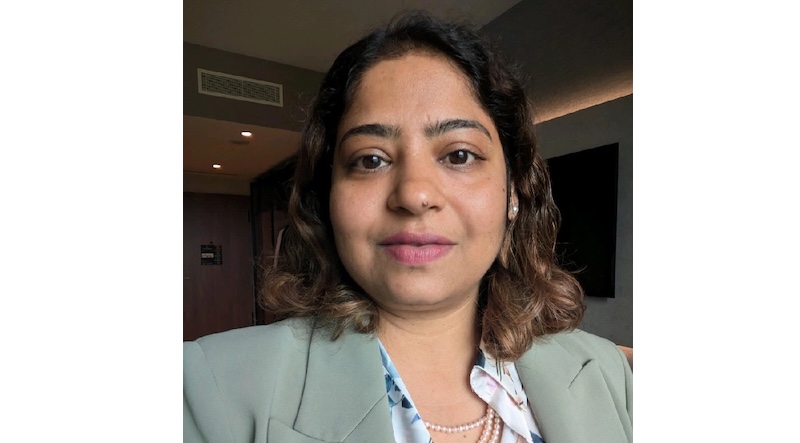
    MUMBAI: Averill Sequeira has landed the plum job of chief strategy officer at Essencemediacom, the WPP Media brand, marking another step up the corporate hierarchy for the seasoned media strategist. The appointment, which began in July, caps a career spanning over 20 years in India’s bustling advertising and media planning sector.

    Sequeira’s ascent through the ranks reads like a textbook case of steady professional progression. Her journey began modestly in 2004 as a media planner at Madison Communications, before moving to Lodestar Universal where she cut her teeth on communication planning and media tools development.

    The real acceleration came during her lengthy stint at Mindshare, GroupM’s media agency, where she spent nearly six years climbing from senior director of business planning to principal partner for strategy. Her remit there included managing strategic units, delivering marketing solutions, and shepherding blue-chip clients like PepsiCo through the digital transformation.

    A brief entrepreneurial detour saw her founding TranSkills India, a skills development venture, in 2013—though the appeal of agency life proved too strong to resist for long. She returned to the media fold at Cheil India as general manager of planning, before joining EssenceMediacom India in 2021.

    At EssenceMediacom, Sequeira has worn multiple hats, serving first as chief product officer and later as head of creative futures, before her latest promotion to the top strategy role. Her expertise spans customer insight, creative problem-solving, and marketing communications—skills that will prove essential as media agencies grapple with an increasingly fragmented advertising landscape.

    The appointment signals WPP Media’s confidence in homegrown talent, particularly as multinational agencies face pressure to localise their leadership teams across key markets like India.

  • Masala with a match twist as Saffola spices up snacking game

    Masala with a match twist as Saffola spices up snacking game

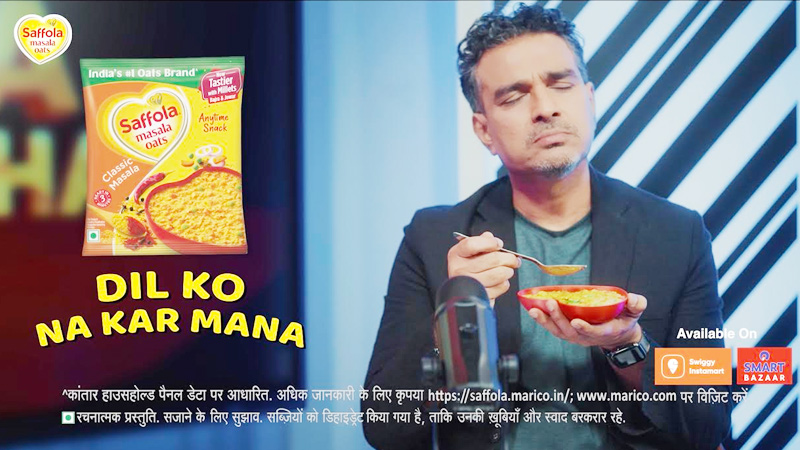
    MUMBAI: In a season when cricket commentary is as spicy as the snacks on our laps, Saffola Masala Oats has pitched a googly that’s clean bowled viewers with laughter and nostalgia. In a sizzling new campaign starring the ever-iconic Sanjay Manjrekar, the brand proves that oats can be masaledar enough to stand shoulder-to-shoulder with chaklis and chakhna without compromising on nutrition.

    Conceptualised by Mullen Lintas with support from Social Panga and Madison Communications, the campaign flips the script on traditional health food advertising. It begins in a podcast-style face-off where the host cheekily pulls up Manjrekar on his famously “brutal commentary.” As clips of his classic barbs, “bits and pieces player” and “not having the range” play out, Manjrekar, caught snacking on masala chakli, quips, “Eh… thoda masala toh chahiye na!” What follows is a swift on-screen swap with a steaming bowl of Saffola Masala Oats, served with a side of wit and wellness.

    Set against the backdrop of IPL frenzy, the campaign is a spicy sequel to last year’s viral “Behave” spot. This time around, Manjrekar serves up commentary and charisma with equal flavour, as the brand positions its oats as the go-to snack for India’s young, health-conscious crowd looking for a punch of taste in every spoonful.

    Speaking on the campaign, Marico Limited chief executive officer for India core business Ashish Goupal said, “Saffola has always stood for smart choices products that are nutritious, convenient, and great-tasting. Over the last year, we’ve evolved our brand storytelling to resonate more deeply with younger audiences. The cricket campaign is a significant step in this journey combining humour, nostalgia, and relatability with a message that snacking can be both nutritiously convenient and genuinely enjoyable. Sanjay Manjrekar brings the perfect blend of edge and familiarity to drive home this idea.”  He adds, “We are also seeing growing consumer acceptance of oats in India not just as a breakfast option, but increasingly as a savoury, anytime snack. As a category leader, we are committed to shaping this evolving snacking culture offering exciting formats and bold flavours that meet the expectations of today’s health-conscious yet taste-loving consumer.”

    Talking about the creative thought process behind the campaign, Mullen Lintas chief creative officer Ram Cobain said, “What’s cricket without a spicy take by Sanjay Manjrekar? Last year, we used Manjrekar’s famous (or rather infamous) ‘Behave’ remark as the central idea for the film. For this year’s IPL, we’ve used not one, but half a dozen of his ‘masaledar’ comments from the past, to cook up a fun banter between him and an interviewer. And smoothly slid a bowl of Saffola Masala Oats as a cheeky, socially-palatable alternative.”

    Sharing their experience of working on the campaign, Social Panga Mumbai creative head Ketki Karandikar shared, “When it comes to exciting and flavourful experiences, Sanjay Manjrekar’s unfiltered opinions on cricket find the perfect match in Saffola Masala Oats. We crafted bite-sized, snackable content tailored for social media platforms and paired it with sharp quick commerce collaborations. The result? A seamless journey from screen to spoon, ensuring the masala flavour wasn’t just talked about, but tasted in real-time.”

    Reflecting on the strategy of tapping into India’s cricket frenzy, Madison Media Ultra COO Jolene Fernandes Solanki shared “Consistency is key to brand building, two years in a row now, we’ve hit a six with cricket fans! Our continued partnership with cricket events and having associated with Sanjay Manjrekar has not only driven engagement but also reinforced Saffola Masala Oats as a anytime snacking meal”

    The innovation doesn’t stop at marketing. With new gourmet oat flavours and the easy-to-carry Cuppa format, Saffola is doubling down on snacking that’s both satisfying and smart.

    Because in India’s new snacking league, masala is the MVP and Saffola’s got it down to a fine oat.

  • Prasun Kumar elevated to chief marketing officer at Magicbricks

    Prasun Kumar elevated to chief marketing officer at Magicbricks

    Mumbai: Prasun Kumar, who was previously business head – New Revenue Verticals & Head – Operations, Digital Marketing & Quality Assurance at Magicbricks has been promoted to chief of marketing at the leading real estate portal.

    In this new capacity, Prasun will oversee the company’s entire marketing, research, and editorial functions. Additionally, he will also be Business Head for a few strategic revenue verticals.

    Before rejoining Magicbricks in 2023, Prasun held the position of chief marketing officer at Justdial. His professional journey, spanning over two decades, includes leadership roles at renowned organisations such as Reliance Communications, Sony Mobile Communications, MTS, Levi Strauss & Co., Madison Communications, and McCann Worldgroup.

  • Marico’s Saffola Masala Oats nudges Sanjay Manjrekar to ‘Behave’

    Marico’s Saffola Masala Oats nudges Sanjay Manjrekar to ‘Behave’

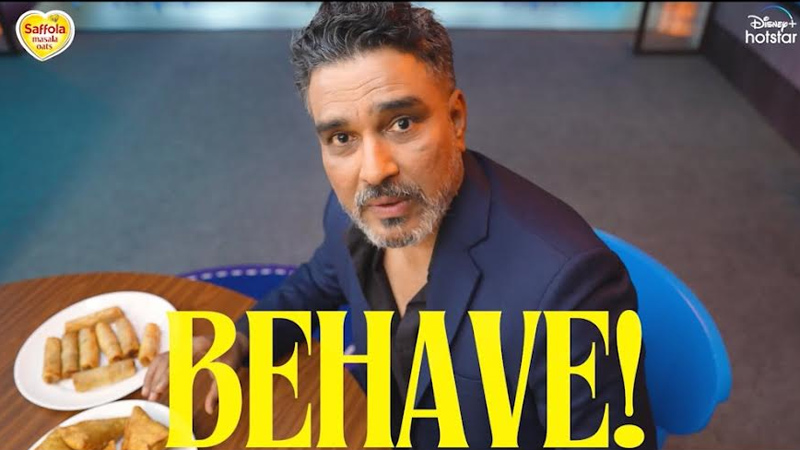
    Mumbai: In a witty new campaign for Marico’s Saffola Masala Oats, launched during the ICC Men’s T20 World Cup 2024, Manjrekar is being nudged to “Behave” in the face of his own snack cravings. The new campaign takes a light-hearted approach by capitalizing on Manjrekar’s iconic “Behave” moment during the recent Premier League 2024, in order to promote healthier snacking choices.

    The two commercials, conceptualized by Madison Communications, written by Mullen Lintas and executed by Disney+ Hotstar Creative Works, take viewers on a journey with Manjrekar as he prepares for a cricket match. Initially tempted by the familiar yet unhealthy snacks of samosas and spring rolls, Manjrekar is humorously reminded of his past advice to the crowd – “Behave!” – in a playful reference to a well-known incident. Caught between his desire for taste vs health consciousness, Manjrekar discovers a delightful solution – Saffola Masala Oats. The commercial not only showcases the product ingredients such as oats, veggies and desi spices in their full glory, but also highlights its quick and easy preparation, thus transforming from a pack into a delicious bowl of oats with a convenient three-minute timer.

    Expressing his excitement about the collaboration, Marico Ltd chief operating officer- India & foods business Vaibhav Bhanchawat said, “We’re thrilled to have Sanjay Manjrekar for this campaign. His playful and relatable personality perfectly complements the campaign’s light-hearted approach, highlighting the brand’s ability to satisfy cravings without compromising on health and taste. Cricket, especially with this ICC Men’s T20 World Cup, is synonymous with passion and energy, just like the emotions we experience around snacking. Sanjay’s presence brings that same kind of excitement to the campaign, reminding viewers that Saffola Masala Oats becomes their go-to choice for those who seek both health and taste in their snacks, especially during the high-octane environment of this tournament.”

    Madison Media Ultra COO Jolene Solanki said, “Snacking and sports go hand in hand, while many snacking brands take this opportunity to be present during the sport, we at Madison believe that just being present with the regular TVC will only build awareness. Brands spend a huge amount of money on sporting events but very few focus on blending both media and creative together and be relevant, that’s when you make your investments work harder. Conceptualizing the idea and creating a special creative with Sanjay Manjrekar and his famous, trendy line “Behave” along with Saffola Masala oats helped us be relevant during the ICC Men’s T20 World cup 2024.”

    This new ad cleverly addresses the consumer’s constant need for snacks that fulfill their emotional desires. However, when faced with unhealthy options, a moment of conscious decision-making becomes evident, leading to a preference for choices that seamlessly blend health and taste. The ad captures the brand’s core message: “Bindaas Saffola Masala Oats bana, Dil ko na kar mana’’

    The advertisement has been featured on Disney+ Hotstar during their exclusive first-of-its-kind live cricket show, ‘Caught & Bold’ and also during the innings break at the ICC Men’s T20 World Cup 2024. The campaign will also be amplified across social media platforms.

  • Industry unites to draw massive delegation for Goafest 2024

    Industry unites to draw massive delegation for Goafest 2024

    Mumbai: Goafest, South Asia’s premier festival celebrating creativity excellence, continues to drive industry growth and collaboration. This year, the festival has achieved remarkable success with a surge in delegate entries and unprecedented support from industry leaders. Scheduled to take place from 29 to 31 May at the Westin Mumbai, Powai Lake, this year’s event has drawn increased participation from agencies and clients of all scales, underscoring its expanding influence and reach.

    The 17th edition of Goafest boasts of an impressive line-up with delegation from media agencies including Havas Media, Publicis Media, Group M, Madison Communications, Initiative Media, OMD, and Zenith Optimedia, among others. Creative powerhouses TLG India, L&K Saatchi & Saatchi, Leo Burnett, FCB Group, Havas Worldwide are also on board, along with brands like Nestle, Tips Industries, Kotak General Insurance, and Airtel. Media giants Bennett Coleman, ABP Group, Zee Media, Navabharat Media Network, et al have also shown unwavering registration support. The festival’s appeal spans multinational agencies to smaller firms, showcasing its inclusive ethos.

    Goafest remains a pivotal industry event, driving innovation, creativity, and collaboration year after year. It’s a hub for professionals to share ideas, learn from experts, and showcase groundbreaking work. The festival’s impact resonates throughout the industry, inspiring creativity and enhancing professional networks.

    Goafest 2024 chairman of the delegates committee – Sam Balsara expressed his enthusiasm for the upcoming event, stating, “Goafest has always been a beacon of creativity and innovation in the advertising industry. This year’s entries have set a new benchmark for excellence. The support from the industry has been overwhelming, and the record number of registrations is a clear indicator of the vibrant and dynamic nature of advertising media and marketing industry.”

  • Originals are a big play for us, says Viacom 18’s Gaurav Gandhi

    Originals are a big play for us, says Viacom 18’s Gaurav Gandhi

    If you look at Gaurav Gandhi’s CV, you will see that this NMIMS graduate began as a strategic business media executive with the Sam Balsara-promoted Madison Communications way back in 1998. He then took the plunge into television, joining Turner as a researcher and planner, and then, Star India. He followed that up with a stint in NDTV Imagine. 

    But, for the past six years, he has been associated with the Viacom18 brand – first as the commercial head, then moving on to distribution of traditional television with various assignments in Sun18 and IndiaCast, before being given the responsibility of steering the company into the digital space in late 2015. 

    Burning the midnight oil for more than seven months, he and his team, rolled out their first offering – a VOD service called Voot in March 2016. Rivals such as Star India, and Zee TV had their versions – Hotstar and DittoTV — in play for a longer period. But, that did not faze Voot COO who is known to be a feisty fighter. He is quite clear of the direction that Voot is taking, and he spoke about its journey so far in a tete-a-tete with Indiantelevision.com’s Megha Parmar. Read on to get some Gandhi insights on the Indian OTT space.

    How has the response to Voot been so far?

    The response has been very good. We are happy where we are. To get to be the third largest streaming website in watch time in a short period that we have is very encouraging. It’s been a good journey. We know that, as a market, we have close to 100 million users now, which will go to 400 million. So, the 4x growth is happening in the market, and we are riding that well.  There are three things that really encourage us. First, 45 minutes per day per user on an average is a very good number, so the watchtime is there. We have a large user base now, which excites us. Second is the fantastic response to our content. Of our three properties (TV, kids and originals), specifically for television, there is so much to do around a reality show. Thirty per cent of the views come from the extra stuff that we do around it. We shoot a lot of things along with our TV counterparts. And having 50+ advertisers on board definitely gives us a sense that we are going in the right direction.

    What were the learnings in the past few months?

    There has been a lot of learning. With our kids, we know exactly what is going on.We have a publishing cycle in place and the way it works is to make sure that we refresh it thrice a day. Kids will come back from school by 4 pm, and we thought that we should put our best content there and market it. Reality happened to us at 9 pm as the kids were watching it at that point of time when their parents are busy with dinner. That was the learning, which came alongside. Actually, the father’s phones have been used far more on weekends.

    We initially were of the opinion that 500 cities are enough for us but, in the third month, we crossed 1000 cities. There are viewers in 1100 cities right now who regularly consume Voot.  It’s all been a great learning. We had originally thought that it was about currency or new shows, but the catalogue has been watched by people for new stuff.

    People repeatedly come to us for something they love such as the MTV show, Kaisi Yeh Yaariyan. We look at the data and have witnessed that a lot of people consume data when in office between 1:30 am and 3 pm. There is a big surge of content.

    The kids demo peaks at 9 pm, the GEC at 10 pm and youth escalates from 11 pm to 1 at night. Our traffic only goes down from 2:30 am to 5 am. That is the time when we have some time with us, say, to solve a technical problem. Those things are very different. This is a consumer business, B2C, as against the past. We have not been going to  the consumers directly. We are consumer brands now, and that is an interesting proposition.

    When you say that 75 per cent of video consumption is now happening through WiFi and it is expected to change after digitization, after which a majority of the consumption will happen through telcos. The telcos are also coming into play with their own offerings of VOD and aggregation OTT platforms such as Jio, Wynk, Idea TV. Are the VOD platforms going to be at a disadvantage?

     Let me be honest with you, there is no dearth of platforms, and there will be none going forward. It’s like we have approximately 600 to 800 channels right now technically, and it still has a demand because people are watching. We are ultimately providing content. Those are platforms wherein everything is available but ours is a video-on-demand platform where you can choose what you want to watch and at what time.

    If you are talking from the content front, if you have a clear direction on the partnerships, the consumers as well as the content creation that you are doing, I don’t see a threat. Second, telcos are building services out. How we work with them and tie up is yet to be seen. The fact that we are over the top, we are available to every single person. We are an OTT service and we are available to all.

    Telcos are only concerned about one thing: consumer data. We work very closely with Jio and many other players. I think, from a telecoms perspective, they want to give their users everything possible and encourage them to consume data. From our point of view, we are talking about the fact that we want maximum viewership and that converts to eyeballs, money, and so on. So it’s very much a complementary situation. We provide content, and they get the users to use that content on their network. We get our eyeballs they get their consumption.

    What type of growth do you see after 4G rolls out completely?

     I see currently 120 million digital video users overall to go to 400 million next year. That’s three and a half times growth. You are doubling the user base over digital video every year. Now, if that is the case, all the players will grow automatically. Obviously, there will be top three, four, five, naturally who will see more growth because of more content.

    The other part of India is an interesting challenge because top five or six companies control 80 per cent of the IP. They are investing on the IPs and they are building more and more. Naturally, they will have a bigger advantage. Telcos will build their interesting products. How you will work with the telcos and how they launch their products will be interesting to see.

    Currently, it’s an ad-supported market largely, and that leads to getting more eyeballs because you are making it available to a large set. We foresee growth to be fairly phenomenal in the next 36 months for everyone in the market. We want to grow at a faster pace — naturally.

    So, you think an ad supported model is faring well for you, and that is the way to go? Or, will you also experiment with other models?

    There are multiple models that you can play with. The reason that, today an ad supported model works, and is the right way is because of three main reasons. One, people are psychologically prepared to pay for content. You get 400 channels for Rs 300, and if you go back 10 years, the cable TV monthly subscription was around Rs 200. Channels have increased, it’s become digital, HD has arrived, etc., but the amount you are paying is the same. People think that this is our birthright, we will get it anyhow. So, there is a big mindset shift that needs to happen and it has to happen with the distribution industry. But, till then, the value of content in the mind is benchmarked to the amount you pay on TV, especially if it a subscription base. If it is event based, for eg, paying for a movie where you are paying for the experience of movie, you will not pay the same amount for watching a movie at home. You are paying for the outing, the experience, so there is a challenge.

     The second challenge is data prices, that are very high. To pay for data and to pay for content together for a consumer is very steep today.

    The third one is payment gateways. How do you pay for content? Not many people have credit cards, and people are not using it for recurring charge.

    I see this mindset changing in the next 36 months as well. The data prices will fundamentally come down, you will have data, bundled deals of content, you will have better speed connectivity, you will be offered premium services, HD service and various other services. Even the gateways will emerge. All these things will allow me to do a subscription model or a TVOD model as well. But, the large belly of the business is the ad-supported model.

    To run an advertising model you need humongous volumes. If you are a niche player, however good you might be, you can’t get business on advertising because the whole model of advertising is built on the number of eyeballs.

    It is a very expensive business. There are technology costs which are very high, there are content costs, there are costs of marketing and acquiring a customer, there are costs of streaming to the customer.

    The more content you watch on Voot or Hotstar or Youtube, there are two things which tend to happen. You are charged for data and it will also cost more to me as well as I have to pay the CDN (content delivery network) cost. So, the more you watch, the more I am paying. So I have to recover that cost. Unless you are a large volume player, you can’t do ad-supported. If you are a small player, you have to charge a sensible price to recover that cost. Netflix  – taking the sliver of the market at that price point, saying I only want these people – is one model. You are paying Netflix month on month.

    I think there will be more interesting models emerging in India going forward to break the psychological barrier in people’s mind. It’s not only an affordability barrier, but also a psychological barrier.

    We have to traverse the journey from ‘completely free’ to ‘completely pay.’ That journey has to pass through the consumer’s point of view, who is trying to pay for somethings. Once you are hooked on, then you tend to convert into a smaller package. The consumers will convert, but you can’t straight away give them a shock that tomorrow morning you will have to pay Rs 700. You will then get some, but a small portion.

    However, that’s not enough as in this country you have to build volumes. We are in the volume business. But, with some products, you can say that I want to play the international market game and play on the subscription part. It makes a lot of sense.

    But, one player has minimalised its rate to say the cost of a samosa. What do you have to say about that?

    We are not comparing with them. They only offer channels and not video on demand. I don’t know how are they doing it. Any strategy in my mind has to be sustainable. If they are able to offer all the channels in the world at Rs 20, then I think cable companies should talk to them and figure out why are they not charging that amount for the same channels.

    But, think of it logically. If you have all channels, everything for life at Rs 20 per month, then why would you pay the cable operators? You can choose to acquire customers from any route. You have a different way of acquiring customers and then you can hope them to stay hooked. I think it’s a marketing strategy from their point of view. People use different marketing strategies. But, I don’t think it makes business sense.

    I personally consume Voot content while it also is a ritual for me to catch up on Splitsvilla. But, there is a lag of around eight hours. Why?

    Splitsvilla has a humongous catch-up. There was a day where the Splitsvilla Sunday numbers were bigger than the next three days put together combined in a total value. I am a firm believer that consumers should have an ad model but you also need to understand that an ad supported model, you are getting this absolutely free as compared to me providing it to a cable or a DTH operator who is charging customers for it. There needs to be some gap. I could make this little pay and make it at the same time. But, if it is absolutely free here, you can play it, Chromecast it, share it, then personally I don’t feel that it is the right model. But, you can argue with me why it has to be eight hours? Why can’t it be six hours or a four hour lag? Those things are workable from my point of view but currently we have started with this strategy to put it up next morning. So, the way it works is TV airs it, we then process it, which takes about two to three hours. The team comes up here at 5am and publishes it on for the TV, tablet, mobile, website, etc. By 7:30 am, the content gets published most of the times.
    Is there scope of providing live content? How much, according to you, can the window be narrowed which also makes sense to your business?
    I am not going to comment on live, but, from case to case, we might have a much shorter window. I can narrow it down to zero also but, right now, I am not taking up that call because putting it up in the morning makes sense. You have to look at the larger thing. Currently, TV is measured on ratings and that’s how channels and advertisers are making money. TV has a large business there. This type of an emerging business has a separate sales, cost, structure, separate consumer base; we have to grow both businesses. It can’t be at the cost of the other. Definitely, it can’t be that you are actually working against the partners of yours especially on the distribution side by providing it free or live at the same time. I know some of my competitors have done it on the same time or even before, but as a stunt it is fine. But, if you do it continuously, I think it is should be made a free channel, which should be also free for the cable operators.

     I think giving it absolutely free at the same time is something I am not completely convinced right now. It is just a commercial business challenge to figure out whether it makes sense.

    We at the same time are also trying to increase the ARPU of the consumers. The business will grow but it also needs value. If I say that the same channel is available here for free and you stream it whereas there you are charging Rs 600 for it, then why will you pay? For what? The consumers will come and leave. We are just four months old, and this is an evolving space for us. At this time, we feel a six to eight hours lag is good. But, sometimes we reduce the lag.

    Do you plan to have Colors Infinity content on Voot?

    We do have it with us. The stage is there. We already have all the Indian productions of Infinity. At this time, it will only be home-grown content because the international content has two challenges, one is the third-party rights and the international players are a little more circumspect about putting content on ad-supported models. They want to put it on premium models. So, we are working with them to see what we can do. We have the format for ‘24’ with catch-up available. So, we get the stuff we create here. I think it is a journey. There are only two large ad-supported models in the world i.e China and India. They have never seen many big ad-supported models in the world.

    It’s a shift for us as well. If you talk to large players, they come to India and are amazed by the advertising growth here. Their mindset has changed. Netflix charges $8 in US which is like Rs 500 for us. But, that is their price point. I think as you are playing with the consumers in the market, you also have to adjust your prices and look at that.

    Some are B2B players who don’t talk to consumers directly. It takes sometime for them to figure out their life. So, I think it will take some time to convince the big studios to put their content on the ad-supported model in English.

    How are your originals doing onVoot?

    Very good. We only started with a few. There is a surge in catch-up audience or the ones who were more skewed towards TV content. ‘Chinese Bhasad’ has done well for us. ‘Badman’ has won awards India and internationally as well. ‘Shaadi Boys’ have seen a crazy demand and we have some episodes in place for the next season to come up shortly. The kind of traction we get for trailers is mind-blowing. I have got my competitors writing to us saying the content is phenomenal. Just now, someone from Star wrote that you are killing it with your shows. So, we are very happy with the response. I think the idea really is to create differentiated content that people don’t get on television but also have it relevant. We don’t want flaky things at all. We want to connect with the audience, and this is mature show. This is for everybody who is either married or is in relationship. It is not for a 15, 18 or 20 year old.

    Do you plan to package separately for your originals on Voot?

    As we speak, we have launched six shows. But, overtime, we will create a separate section of Voot Originals on the app. That is the way for us. Totally! Originals are a big play for us.

    Data is crucial for OTT and VOD. Are advertisers buying (agreeing with) the data you are giving them. What do they expect?

    Fifty advertisers on board, it’s not a small number. Everybody can see us as the third largest platform in the country in terms of size, in terms of minute data. You look how we have gotten million downloads. We are amongst the first guys who shared our data weekly dashboard to advertisers. Before us nobody used to do that. We are proud of what we have pursued in the first few months but it’s a long way to go. So advertisers are very keen. We have deals with several agencies, all the big clients are on board, we have long term deals as well.

    What is the sweet spot for advertising rates for OTT and VOD platforms? Let’s say for Voot?

    That is very hard, I can’t guesstimate. Let me tell you that we are on the higher end of the market. Because you know what you get here are the premium audiences – in the sense that they would not be buying Porsche and BMW but a loyal audience who can actually be fully measured and targeted.  You will be able to get a sponsorship opportunity, content, several integrations and lot more things surrounded. Sometimes, you are able to own the entire show as well.

    SonyLiv, Hotstar, Amazon Prime are going to be bidding for IPL rights? Where will that place platforms such as Voot as compared to the one who gets it?

    See, we don’t play in sports. Whether it comes on OTT or television, the reality of it is very simple. When there is cricket and when there is India playing, people are watching something. I do not buy the fact people are watching both things at the same time. The statement that you are watching TV and you are watching Voot or Hotstar or whatever it might be does not work.

    I actually believe that a sport, especially cricket, is something which you watch with a lot of people together. It’s an event-based thing. People watch it so numbers are there is no doubt about it. But, in my mind, it’s not as if those two hours or four hours or three hours of a match impacting my Voot journey too much. Contrary to that, I think we have a clear strategy on three big or four big types of content and I want to put my money behind that and that’s why what I am doing with kids, originals, reality. It is a clear indicator that I was actually putting my money before advertisers came on. I commissioned the shows in originals before they came on right. I am not waiting for the next guy to come who will give me money so that I can start.

  • Originals are a big play for us, says Viacom 18’s Gaurav Gandhi

    Originals are a big play for us, says Viacom 18’s Gaurav Gandhi

    If you look at Gaurav Gandhi’s CV, you will see that this NMIMS graduate began as a strategic business media executive with the Sam Balsara-promoted Madison Communications way back in 1998. He then took the plunge into television, joining Turner as a researcher and planner, and then, Star India. He followed that up with a stint in NDTV Imagine. 

    But, for the past six years, he has been associated with the Viacom18 brand – first as the commercial head, then moving on to distribution of traditional television with various assignments in Sun18 and IndiaCast, before being given the responsibility of steering the company into the digital space in late 2015. 

    Burning the midnight oil for more than seven months, he and his team, rolled out their first offering – a VOD service called Voot in March 2016. Rivals such as Star India, and Zee TV had their versions – Hotstar and DittoTV — in play for a longer period. But, that did not faze Voot COO who is known to be a feisty fighter. He is quite clear of the direction that Voot is taking, and he spoke about its journey so far in a tete-a-tete with Indiantelevision.com’s Megha Parmar. Read on to get some Gandhi insights on the Indian OTT space.

    How has the response to Voot been so far?

    The response has been very good. We are happy where we are. To get to be the third largest streaming website in watch time in a short period that we have is very encouraging. It’s been a good journey. We know that, as a market, we have close to 100 million users now, which will go to 400 million. So, the 4x growth is happening in the market, and we are riding that well.  There are three things that really encourage us. First, 45 minutes per day per user on an average is a very good number, so the watchtime is there. We have a large user base now, which excites us. Second is the fantastic response to our content. Of our three properties (TV, kids and originals), specifically for television, there is so much to do around a reality show. Thirty per cent of the views come from the extra stuff that we do around it. We shoot a lot of things along with our TV counterparts. And having 50+ advertisers on board definitely gives us a sense that we are going in the right direction.

    What were the learnings in the past few months?

    There has been a lot of learning. With our kids, we know exactly what is going on.We have a publishing cycle in place and the way it works is to make sure that we refresh it thrice a day. Kids will come back from school by 4 pm, and we thought that we should put our best content there and market it. Reality happened to us at 9 pm as the kids were watching it at that point of time when their parents are busy with dinner. That was the learning, which came alongside. Actually, the father’s phones have been used far more on weekends.

    We initially were of the opinion that 500 cities are enough for us but, in the third month, we crossed 1000 cities. There are viewers in 1100 cities right now who regularly consume Voot.  It’s all been a great learning. We had originally thought that it was about currency or new shows, but the catalogue has been watched by people for new stuff.

    People repeatedly come to us for something they love such as the MTV show, Kaisi Yeh Yaariyan. We look at the data and have witnessed that a lot of people consume data when in office between 1:30 am and 3 pm. There is a big surge of content.

    The kids demo peaks at 9 pm, the GEC at 10 pm and youth escalates from 11 pm to 1 at night. Our traffic only goes down from 2:30 am to 5 am. That is the time when we have some time with us, say, to solve a technical problem. Those things are very different. This is a consumer business, B2C, as against the past. We have not been going to  the consumers directly. We are consumer brands now, and that is an interesting proposition.

    When you say that 75 per cent of video consumption is now happening through WiFi and it is expected to change after digitization, after which a majority of the consumption will happen through telcos. The telcos are also coming into play with their own offerings of VOD and aggregation OTT platforms such as Jio, Wynk, Idea TV. Are the VOD platforms going to be at a disadvantage?

     Let me be honest with you, there is no dearth of platforms, and there will be none going forward. It’s like we have approximately 600 to 800 channels right now technically, and it still has a demand because people are watching. We are ultimately providing content. Those are platforms wherein everything is available but ours is a video-on-demand platform where you can choose what you want to watch and at what time.

    If you are talking from the content front, if you have a clear direction on the partnerships, the consumers as well as the content creation that you are doing, I don’t see a threat. Second, telcos are building services out. How we work with them and tie up is yet to be seen. The fact that we are over the top, we are available to every single person. We are an OTT service and we are available to all.

    Telcos are only concerned about one thing: consumer data. We work very closely with Jio and many other players. I think, from a telecoms perspective, they want to give their users everything possible and encourage them to consume data. From our point of view, we are talking about the fact that we want maximum viewership and that converts to eyeballs, money, and so on. So it’s very much a complementary situation. We provide content, and they get the users to use that content on their network. We get our eyeballs they get their consumption.

    What type of growth do you see after 4G rolls out completely?

     I see currently 120 million digital video users overall to go to 400 million next year. That’s three and a half times growth. You are doubling the user base over digital video every year. Now, if that is the case, all the players will grow automatically. Obviously, there will be top three, four, five, naturally who will see more growth because of more content.

    The other part of India is an interesting challenge because top five or six companies control 80 per cent of the IP. They are investing on the IPs and they are building more and more. Naturally, they will have a bigger advantage. Telcos will build their interesting products. How you will work with the telcos and how they launch their products will be interesting to see.

    Currently, it’s an ad-supported market largely, and that leads to getting more eyeballs because you are making it available to a large set. We foresee growth to be fairly phenomenal in the next 36 months for everyone in the market. We want to grow at a faster pace — naturally.

    So, you think an ad supported model is faring well for you, and that is the way to go? Or, will you also experiment with other models?

    There are multiple models that you can play with. The reason that, today an ad supported model works, and is the right way is because of three main reasons. One, people are psychologically prepared to pay for content. You get 400 channels for Rs 300, and if you go back 10 years, the cable TV monthly subscription was around Rs 200. Channels have increased, it’s become digital, HD has arrived, etc., but the amount you are paying is the same. People think that this is our birthright, we will get it anyhow. So, there is a big mindset shift that needs to happen and it has to happen with the distribution industry. But, till then, the value of content in the mind is benchmarked to the amount you pay on TV, especially if it a subscription base. If it is event based, for eg, paying for a movie where you are paying for the experience of movie, you will not pay the same amount for watching a movie at home. You are paying for the outing, the experience, so there is a challenge.

     The second challenge is data prices, that are very high. To pay for data and to pay for content together for a consumer is very steep today.

    The third one is payment gateways. How do you pay for content? Not many people have credit cards, and people are not using it for recurring charge.

    I see this mindset changing in the next 36 months as well. The data prices will fundamentally come down, you will have data, bundled deals of content, you will have better speed connectivity, you will be offered premium services, HD service and various other services. Even the gateways will emerge. All these things will allow me to do a subscription model or a TVOD model as well. But, the large belly of the business is the ad-supported model.

    To run an advertising model you need humongous volumes. If you are a niche player, however good you might be, you can’t get business on advertising because the whole model of advertising is built on the number of eyeballs.

    It is a very expensive business. There are technology costs which are very high, there are content costs, there are costs of marketing and acquiring a customer, there are costs of streaming to the customer.

    The more content you watch on Voot or Hotstar or Youtube, there are two things which tend to happen. You are charged for data and it will also cost more to me as well as I have to pay the CDN (content delivery network) cost. So, the more you watch, the more I am paying. So I have to recover that cost. Unless you are a large volume player, you can’t do ad-supported. If you are a small player, you have to charge a sensible price to recover that cost. Netflix  – taking the sliver of the market at that price point, saying I only want these people – is one model. You are paying Netflix month on month.

    I think there will be more interesting models emerging in India going forward to break the psychological barrier in people’s mind. It’s not only an affordability barrier, but also a psychological barrier.

    We have to traverse the journey from ‘completely free’ to ‘completely pay.’ That journey has to pass through the consumer’s point of view, who is trying to pay for somethings. Once you are hooked on, then you tend to convert into a smaller package. The consumers will convert, but you can’t straight away give them a shock that tomorrow morning you will have to pay Rs 700. You will then get some, but a small portion.

    However, that’s not enough as in this country you have to build volumes. We are in the volume business. But, with some products, you can say that I want to play the international market game and play on the subscription part. It makes a lot of sense.

    But, one player has minimalised its rate to say the cost of a samosa. What do you have to say about that?

    We are not comparing with them. They only offer channels and not video on demand. I don’t know how are they doing it. Any strategy in my mind has to be sustainable. If they are able to offer all the channels in the world at Rs 20, then I think cable companies should talk to them and figure out why are they not charging that amount for the same channels.

    But, think of it logically. If you have all channels, everything for life at Rs 20 per month, then why would you pay the cable operators? You can choose to acquire customers from any route. You have a different way of acquiring customers and then you can hope them to stay hooked. I think it’s a marketing strategy from their point of view. People use different marketing strategies. But, I don’t think it makes business sense.

    I personally consume Voot content while it also is a ritual for me to catch up on Splitsvilla. But, there is a lag of around eight hours. Why?

    Splitsvilla has a humongous catch-up. There was a day where the Splitsvilla Sunday numbers were bigger than the next three days put together combined in a total value. I am a firm believer that consumers should have an ad model but you also need to understand that an ad supported model, you are getting this absolutely free as compared to me providing it to a cable or a DTH operator who is charging customers for it. There needs to be some gap. I could make this little pay and make it at the same time. But, if it is absolutely free here, you can play it, Chromecast it, share it, then personally I don’t feel that it is the right model. But, you can argue with me why it has to be eight hours? Why can’t it be six hours or a four hour lag? Those things are workable from my point of view but currently we have started with this strategy to put it up next morning. So, the way it works is TV airs it, we then process it, which takes about two to three hours. The team comes up here at 5am and publishes it on for the TV, tablet, mobile, website, etc. By 7:30 am, the content gets published most of the times.
    Is there scope of providing live content? How much, according to you, can the window be narrowed which also makes sense to your business?
    I am not going to comment on live, but, from case to case, we might have a much shorter window. I can narrow it down to zero also but, right now, I am not taking up that call because putting it up in the morning makes sense. You have to look at the larger thing. Currently, TV is measured on ratings and that’s how channels and advertisers are making money. TV has a large business there. This type of an emerging business has a separate sales, cost, structure, separate consumer base; we have to grow both businesses. It can’t be at the cost of the other. Definitely, it can’t be that you are actually working against the partners of yours especially on the distribution side by providing it free or live at the same time. I know some of my competitors have done it on the same time or even before, but as a stunt it is fine. But, if you do it continuously, I think it is should be made a free channel, which should be also free for the cable operators.

     I think giving it absolutely free at the same time is something I am not completely convinced right now. It is just a commercial business challenge to figure out whether it makes sense.

    We at the same time are also trying to increase the ARPU of the consumers. The business will grow but it also needs value. If I say that the same channel is available here for free and you stream it whereas there you are charging Rs 600 for it, then why will you pay? For what? The consumers will come and leave. We are just four months old, and this is an evolving space for us. At this time, we feel a six to eight hours lag is good. But, sometimes we reduce the lag.

    Do you plan to have Colors Infinity content on Voot?

    We do have it with us. The stage is there. We already have all the Indian productions of Infinity. At this time, it will only be home-grown content because the international content has two challenges, one is the third-party rights and the international players are a little more circumspect about putting content on ad-supported models. They want to put it on premium models. So, we are working with them to see what we can do. We have the format for ‘24’ with catch-up available. So, we get the stuff we create here. I think it is a journey. There are only two large ad-supported models in the world i.e China and India. They have never seen many big ad-supported models in the world.

    It’s a shift for us as well. If you talk to large players, they come to India and are amazed by the advertising growth here. Their mindset has changed. Netflix charges $8 in US which is like Rs 500 for us. But, that is their price point. I think as you are playing with the consumers in the market, you also have to adjust your prices and look at that.

    Some are B2B players who don’t talk to consumers directly. It takes sometime for them to figure out their life. So, I think it will take some time to convince the big studios to put their content on the ad-supported model in English.

    How are your originals doing onVoot?

    Very good. We only started with a few. There is a surge in catch-up audience or the ones who were more skewed towards TV content. ‘Chinese Bhasad’ has done well for us. ‘Badman’ has won awards India and internationally as well. ‘Shaadi Boys’ have seen a crazy demand and we have some episodes in place for the next season to come up shortly. The kind of traction we get for trailers is mind-blowing. I have got my competitors writing to us saying the content is phenomenal. Just now, someone from Star wrote that you are killing it with your shows. So, we are very happy with the response. I think the idea really is to create differentiated content that people don’t get on television but also have it relevant. We don’t want flaky things at all. We want to connect with the audience, and this is mature show. This is for everybody who is either married or is in relationship. It is not for a 15, 18 or 20 year old.

    Do you plan to package separately for your originals on Voot?

    As we speak, we have launched six shows. But, overtime, we will create a separate section of Voot Originals on the app. That is the way for us. Totally! Originals are a big play for us.

    Data is crucial for OTT and VOD. Are advertisers buying (agreeing with) the data you are giving them. What do they expect?

    Fifty advertisers on board, it’s not a small number. Everybody can see us as the third largest platform in the country in terms of size, in terms of minute data. You look how we have gotten million downloads. We are amongst the first guys who shared our data weekly dashboard to advertisers. Before us nobody used to do that. We are proud of what we have pursued in the first few months but it’s a long way to go. So advertisers are very keen. We have deals with several agencies, all the big clients are on board, we have long term deals as well.

    What is the sweet spot for advertising rates for OTT and VOD platforms? Let’s say for Voot?

    That is very hard, I can’t guesstimate. Let me tell you that we are on the higher end of the market. Because you know what you get here are the premium audiences – in the sense that they would not be buying Porsche and BMW but a loyal audience who can actually be fully measured and targeted.  You will be able to get a sponsorship opportunity, content, several integrations and lot more things surrounded. Sometimes, you are able to own the entire show as well.

    SonyLiv, Hotstar, Amazon Prime are going to be bidding for IPL rights? Where will that place platforms such as Voot as compared to the one who gets it?

    See, we don’t play in sports. Whether it comes on OTT or television, the reality of it is very simple. When there is cricket and when there is India playing, people are watching something. I do not buy the fact people are watching both things at the same time. The statement that you are watching TV and you are watching Voot or Hotstar or whatever it might be does not work.

    I actually believe that a sport, especially cricket, is something which you watch with a lot of people together. It’s an event-based thing. People watch it so numbers are there is no doubt about it. But, in my mind, it’s not as if those two hours or four hours or three hours of a match impacting my Voot journey too much. Contrary to that, I think we have a clear strategy on three big or four big types of content and I want to put my money behind that and that’s why what I am doing with kids, originals, reality. It is a clear indicator that I was actually putting my money before advertisers came on. I commissioned the shows in originals before they came on right. I am not waiting for the next guy to come who will give me money so that I can start.

  • Ad Club new committee appointed

    Ad Club new committee appointed

    MUMBAI: At the recently concluded annual general meeting, The Advertising Club unanimously elected Colors CEO Raj Nayak as its President for the second consecutive term.

    The new managing committee is as follows:

    • President| Raj Nayak, CEO, Colors, Viacom18 Media Pvt. Ltd.

    • Vice President| Vikram Sakhuja, Group CEO, Media and OOH, Madison Communications Pvt. Ltd.

    • Secretary | Ajay Kakar, Chief Marketing Officer, Financial Services, Aditya Birla Group

    • Jt. Secretary | Bhaskar Das, Group CEO, Zee Media Corporation Ltd.

    • Treasurer| Shashi Sinha, CEO, IPG Mediabrands

    • Office Bearer | Ashish Sehgal, COO, Zee Unimedia Ltd.

    • Member |Mitrajit Bhattacharya, President and Publisher, Chitralekha Group

    • Member | Partha Sinha, Vice Chairman and Managing Director, McCann

    Worldgroup

    • Member | Pradeep Dwivedi, Chief Corporate Sales & Marketing Officer, Dainik Bhaskar Group | DB Corp Ltd.

    • Member | Ramesh Narayan, Managing Director, Canco Advertising Pvt. Ltd.

    • Member | Vikas Khanchandani, Chief Business Officer, Reliance Broadcast Network Limited

    • Member | Viral Jani, Head TV Partnerships, Twitter India

    • Co-opted Member | Partho Dasgupta, CEO, Broadcast Audience Research Council

    • Co-opted Member | Punitha Arumugam, Director, Agency Business, India and South East Asia, Google India Pvt. Ltd.

    • Co-opted Member | Ajay Chandwani, Director, Percept Limited

    • Immediate Past President | Pratap Bose, Founder, Social Street

    Expressing his pleasure at his re-election, Nayak said, “I am extremely honored & humbled at the love bestowed upon me by the industry. I hope to continue working even more vigorously to realize The Ad Club’s agenda of acting as a catalyst in developing our vibrant and dynamic industry.”

    Publicis Worldwide CEO South Asia and AAAI president Nakul Chopra welcomed the announcement saying, “I am delighted that Raj has been elected President Ad Club for another term. A dear friend, a respected colleague – Raj has always worked for the good of the industry via various forums. I look forward to working closely with him to further the already strong relationship between The Ad Club and AAAI.”

    Zee MD and CEO and IBF president Punit Goenka added, “I am most certain that with his rich experience, acumen and industry knowledge, Raj will continue to take ‘The Advertising Club’ to greater heights. The very fact that he is re-elected, speaks abundantly about his contribution made to the club and to the industry. Over the last year, the club has certainly been a catalyst in developing the industry and with its interactive platforms and properties, it has served as a brilliant platform for industry professionals to interact and exchange thoughts. I wish Raj all the success in this role.”

    Showing his excitement about the announcement, K Swamy BBDO Chairman,MD and IAA president India chapter, IAA Global Senior Vice President Srinivasan Swamy said, “I was delighted to hear that Raj was reelected to lead The Advertising Club. His passion and energy levels are infective. He has brought in many senior names‎ to join the committee and I eagerly look forward to next phase of accelerated growth for the Club under his stewardship.”

    Industry stalwart Madison world chairman Sam Balsara also expressed his pleasure by saying, “I am delighted that Raj has agreed to continue as The Ad Club President. This augurs well for the members of the advertising, media and marketing community in general and members of The Ad Club in particular. Raj is everybody’s favorite person and is uniquely positioned to discharge this onerous responsibility which he has kindly agreed to, despite his hectic and I am sure taxing work schedule”.

    Industry veteran GroupM South Asia CEO CVL Srinivas commented, “Its great news for the industry that Raj Nayak has been re-elected President of The Advertising Club. Raj brings a lot of style and substance to whatever he does. His boundless energy, passion and commitment is so amazing. I wish him the very best and look forward to another great year with him at the helm”.

  • Ad Club new committee appointed

    Ad Club new committee appointed

    MUMBAI: At the recently concluded annual general meeting, The Advertising Club unanimously elected Colors CEO Raj Nayak as its President for the second consecutive term.

    The new managing committee is as follows:

    • President| Raj Nayak, CEO, Colors, Viacom18 Media Pvt. Ltd.

    • Vice President| Vikram Sakhuja, Group CEO, Media and OOH, Madison Communications Pvt. Ltd.

    • Secretary | Ajay Kakar, Chief Marketing Officer, Financial Services, Aditya Birla Group

    • Jt. Secretary | Bhaskar Das, Group CEO, Zee Media Corporation Ltd.

    • Treasurer| Shashi Sinha, CEO, IPG Mediabrands

    • Office Bearer | Ashish Sehgal, COO, Zee Unimedia Ltd.

    • Member |Mitrajit Bhattacharya, President and Publisher, Chitralekha Group

    • Member | Partha Sinha, Vice Chairman and Managing Director, McCann

    Worldgroup

    • Member | Pradeep Dwivedi, Chief Corporate Sales & Marketing Officer, Dainik Bhaskar Group | DB Corp Ltd.

    • Member | Ramesh Narayan, Managing Director, Canco Advertising Pvt. Ltd.

    • Member | Vikas Khanchandani, Chief Business Officer, Reliance Broadcast Network Limited

    • Member | Viral Jani, Head TV Partnerships, Twitter India

    • Co-opted Member | Partho Dasgupta, CEO, Broadcast Audience Research Council

    • Co-opted Member | Punitha Arumugam, Director, Agency Business, India and South East Asia, Google India Pvt. Ltd.

    • Co-opted Member | Ajay Chandwani, Director, Percept Limited

    • Immediate Past President | Pratap Bose, Founder, Social Street

    Expressing his pleasure at his re-election, Nayak said, “I am extremely honored & humbled at the love bestowed upon me by the industry. I hope to continue working even more vigorously to realize The Ad Club’s agenda of acting as a catalyst in developing our vibrant and dynamic industry.”

    Publicis Worldwide CEO South Asia and AAAI president Nakul Chopra welcomed the announcement saying, “I am delighted that Raj has been elected President Ad Club for another term. A dear friend, a respected colleague – Raj has always worked for the good of the industry via various forums. I look forward to working closely with him to further the already strong relationship between The Ad Club and AAAI.”

    Zee MD and CEO and IBF president Punit Goenka added, “I am most certain that with his rich experience, acumen and industry knowledge, Raj will continue to take ‘The Advertising Club’ to greater heights. The very fact that he is re-elected, speaks abundantly about his contribution made to the club and to the industry. Over the last year, the club has certainly been a catalyst in developing the industry and with its interactive platforms and properties, it has served as a brilliant platform for industry professionals to interact and exchange thoughts. I wish Raj all the success in this role.”

    Showing his excitement about the announcement, K Swamy BBDO Chairman,MD and IAA president India chapter, IAA Global Senior Vice President Srinivasan Swamy said, “I was delighted to hear that Raj was reelected to lead The Advertising Club. His passion and energy levels are infective. He has brought in many senior names‎ to join the committee and I eagerly look forward to next phase of accelerated growth for the Club under his stewardship.”

    Industry stalwart Madison world chairman Sam Balsara also expressed his pleasure by saying, “I am delighted that Raj has agreed to continue as The Ad Club President. This augurs well for the members of the advertising, media and marketing community in general and members of The Ad Club in particular. Raj is everybody’s favorite person and is uniquely positioned to discharge this onerous responsibility which he has kindly agreed to, despite his hectic and I am sure taxing work schedule”.

    Industry veteran GroupM South Asia CEO CVL Srinivas commented, “Its great news for the industry that Raj Nayak has been re-elected President of The Advertising Club. Raj brings a lot of style and substance to whatever he does. His boundless energy, passion and commitment is so amazing. I wish him the very best and look forward to another great year with him at the helm”.

  • India Vs Pakistan: A match ‘Not to be missed’

    India Vs Pakistan: A match ‘Not to be missed’

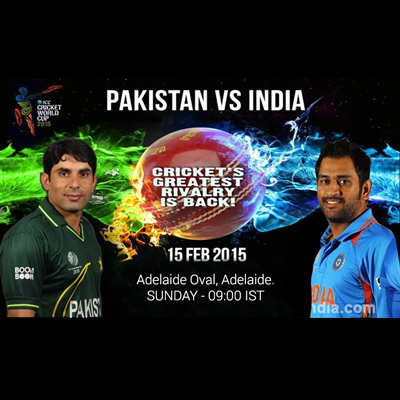
    MUMBAI: Whether it is Kashmir, Baluchistan, football, hockey or cricket; India vs Pakistan is always big news. This time the battlefield is the Adelaide Oval in Australia and war is ICC Cricket World Cup 2015.


    The war of bat and ball, of mental strength and temperament, will start at 9.00 am Indian Standard Time (IST) with the national anthems of the respective countries followed by 100 overs of nail biting cricketing action. It will be pride for some and agony for others, but whatever the result may be, it will end with handshakes and hugs. That’s what makes this battle so exciting and one of the most watched rivalries in sports history.  


    Commenting on the magnitude of India vs Pakistan match, Colors CEO Raj Nayak said, “It’s indeed a big match and I will obviously cheer for India. But we have to understand the fact that it’s just a match and the team that plays better cricket will win. The timing is very good and hence I will obviously watch the match.”


    Multi Screen Media president Rohit Gupta opined, “Though I don’t get to follow the 50 overs format, I will certainly try to watch the India – Pakistan bout. My support is always with India but may the best team win.”


    “India vs Pakistan is a big match and it’s great that India is starting their campaign against Pakistan. It will decide the tone of the tournament and build immense interest in the country,” added NDTV executive vice-chairperson K. V. L. Narayan Rao.


    Madison Communications COO Kartik Lakshminarayan said, “I am surely going to watch the match and have already made my plans. Around 150 of us will book a place and watch the match live. It is indeed a time to celebrate and obviously India’s victory is what we will be cheering for.”


    Maxus managing partner head of the north and east regions, Navin Khemka asserted, “It’s a big day for India, and I would say it’s a super Sunday. The match starts at 9.30 in the morning and it can’t be any better. And as an advertiser I must say this match is very important in context to the tournament. Fans and spectators in India will be looking forward to this match and a good start here can make the tournament a very special one.”


    Hats Off Productions founder J D Majhetia said, “India – Pakistan match is a never miss game for me, since the time I started understanding cricket I don’t think I have missed an Indo – Pak match. Last time I flew to Chandigarh with my family when the two teams met in the semifinal of 2011 edition. This time we are planning a mass gathering in one of the studios. I have already announced that there will be no shoots on 15 February because of the match.”


    The match is also big in terms of commercial aspect. If sources are to be believed then Star, the official broadcaster of World Cup in India, has hiked its ad rate by around 200 per cent for the India – Pakistan match. However, if an advertiser wants to buy a slot only for this particular match, then the hike is around 350 to 400 per cent. During a normal league match, the ad rate fluctuates between Rs 5 to 10 lakh for a 10 second spot depending on the magnitude of the match. For the India vs Pakistan match, Star is selling a slot for Rs 20 to 25 lakh.


    Any cricket lover would not like to miss a single minute of a match of such substance. And this season there are a number of options for a cricket fan to catch the action.


    Television: One can sit with a hot cup of tea and breakfast in front of the TV and enjoy every moment of the match. Star has already roped in a number of innovations to make the broadcasting a worthy treat. One can opt for high quality pictures by tuning to HD channels. Amitabh Bachchan will also be there as a commentator to entertain viewers in Hindi. Panel of experts and legends of the game will be in the commentary box to bring detailed analysis of the live action. Additionally, as a never before treat, Star gives viewer choices of opting for regional languages too. But what if one is not subscribed to Star? Not to worry, thank to the Supreme Court of India, DD will telecast the India vs Pakistan match and will be available on cable and DTH platforms.


    But what if one has to travel? Will he or she have to miss the match? That brings the digital platforms in the game.


    Starsports.com: Gone are the days when television was the only source of audio visual entertainment. One can log in to starsports.com and catch ball by ball action live. Star India’s sports VOD platform will stream all the World Cup matches live and India vs Pakistan is certainly one of them.


    But India is a country with a lot of VOD platforms and less bandwidth, 3G is expensive and can take a hefty chunk out of one’s pocket. In case a user does not have access to 3G services to stream the matches live, there are various apps available that can give updates about the match.


    Cricbuzz: Times Internet’s sports venture Cricbuzz gives the opportunity to relive the nostalgia. One can opt for audio commentary through that app and it works fine in 2G too. It is quite similar to how radio is, one can plug in earphones and enjoy the audio commentary.


    EspnCricinfo: The cricket dedicated app does ball by ball text commentary, updates scores and statistics. The app also enables the opportunity to tune into pre match and post match video analysis.


    ICC Cricket World Cup App: The Official ICC Cricket World Cup 2015 app for the first time one can access to live scores, in-match clips, fixtures, exclusive videos, real-time statistical updates and more – all in the palm of their hand.


    Besides these apps, one can also log in to any news website to know the score of the match.


    This world cup International Cricket Council (ICC) gives fans exclusive opportunity to connect with the marquee tournament. One can easily become a commentator or expert and share their views and opinions in the social media platforms through the following mediums:


    Facebook: www.facebook.com/ICC & www.facebook.com/CricketWorldCup 

    Twitter: www.twitter.com/ICC & www.twitter.com/CricketWorldCup 

    Instagram: www.instagram.com/ICC & www.instagram.com/CricketWorldCup 

    Google+: www.google.com/+ICC & www.google.com/+CricketWorldCup

    YouTube: www.youtube.com/ICC