Tag: Machinima

  • VICE to launch digital service with ToI Group 1Q 2017

    VICE to launch digital service with ToI Group 1Q 2017

    MACAO: VICE Media, the Canadian-American digital media and broadcasting company, will be launching its digital services in India, as part of a slew of other product offerings, in association with Times of India Group in the first quarter of 2017, while actively exploring the option of starting its pay TV service under Viceland brand sometime in the near future.

    “”We are working towards a launch of our digital offerings in Q1 of 2017 in India,” VICE Media Co-President James Schwab told indiantelevision in an exclusive interview.

    Schwab, who also went off to visit India to confabulate with his India partners this week, was in Macao to deliver a keynote at the CASBAA Convention 2016, which also saw a galaxy of other media industry stalwarts, including GroupM global boss Irwin Gotlieb; Bennett Pozil, Head of Corporate Banking & EVP, East West Bank; Chad Gutstein, CEO, Machinima; Avigail Gutman, Programme Director, Operational Security, Cisco; Nickhil Jakatdar, CEO & Founder, Vuclip; Basil Chua, CEO, AsiaMX; Dave Downey, CEO, INVIDI; Zaid Mohseni, COO, MOBY Group, apart from heads of Indian platform operators like Jagdish Kumar of Hathway and Tony D’Silva of the Hinduja Group.

    Schwab, who announced VICE’s launch in Indonesia at the CASBAA Convention, said that India was an exciting market in Asia and that he’s looking at bringing the whole suite of company products in India, of course in association with the Indian partner.

    Originally based in Montreal, Canada, VICE re-located to New York City in 2001. In 2014, VICE Media got injected by US$200 million investment (10 per cent equity) by American broadcasting company A&E Networks, a joint venture of The Walt Disney Company and Hearst Corporation. Disney made a second 10 per cent (US$200 million) investment in 2015. Known for some edgy content, VICE also has Rupert Murdoch’s 21st Century Fox as an investor.

    VICE Media, according to Wikipedia, after starting with a magazine expanded primarily into youth and young adult-focused digital media, including online content verticals and related web series. The news division VICE News, a film production studio, and a record label are among other properties. In February 2016, VICE launched a cable television network in Canada and the United States, Viceland, which is a millennial-targeted network that draws upon the resources of the lifestyle-oriented verticals of the company.

    Though India has foreign investment restriction in news ventures of a non-majority stake of 49 per cent, VICE Media feels that it would not hamper their news offerings in association with the Times of India Group. “VICE creates local content in various territories around the world, produced by local hosts, editors, and shooters. VICE looks at each market on an individual basis and makes sure that the content that airs in specific territories is content that young people in those territories care about,” Schwab said.

    The Indian market that is witnessing a slew of new product offerings to consumers on traditional and new technology platforms, including OTT, for VICE offers opportunities that could be monetised and exploited. And, as part of the strategy, the launch of pay TV service Viceland with local and foreign content too is in the pipeline.

    “As we would like to be on all platforms, including digital, at some point of time we would look at launching our pay TV service too in India. But the launch won’t be soon as we still are working on distribution strategies. We’d launch when we feel the product is right (for the Indian market). But we would like even Indian consumers to experience all our products,” Schwab said.

    While speaking at the CASBAA Convention, he admitted that TV was a “powerful tool to reach audience(s) and revenue from subscription TV preserved the “quality of good content.”

    With estimated revenues of US$ 915 million in 2015 and total assets worth about US$ 2.5 billion as on 2014, VICE Media is betting big on Asia-Pacific, including India. Partnership with the TOI Group in the form of two joint ventures is part of that strategy, which will witness creation of new local production studios with leading journalists and filmmakers hired for 24-hour local news and lifestyle programming.

    “We would like to bring all our capabilities to Asia. However, before we enter a market, we think through the local market economics as we would like our businesses to be self- sustaining. Indonesia and India are great examples (of such strategies) as the population of young people is huge as is growth in mobile usage,” Schwab explained.

    VICE also feels that the Indian market is economically viable for the company’s creative agency service despite presence of strong and existing global and domestic players. As VICE’s creative agency, Virtue, works closely with both brands and other media agencies to deliver for clients, Schwab said, “We believe there is interest (in India)…some of our global customers have evinced interest.

  • VICE to launch digital service with ToI Group 1Q 2017

    VICE to launch digital service with ToI Group 1Q 2017

    MACAO: VICE Media, the Canadian-American digital media and broadcasting company, will be launching its digital services in India, as part of a slew of other product offerings, in association with Times of India Group in the first quarter of 2017, while actively exploring the option of starting its pay TV service under Viceland brand sometime in the near future.

    “”We are working towards a launch of our digital offerings in Q1 of 2017 in India,” VICE Media Co-President James Schwab told indiantelevision in an exclusive interview.

    Schwab, who also went off to visit India to confabulate with his India partners this week, was in Macao to deliver a keynote at the CASBAA Convention 2016, which also saw a galaxy of other media industry stalwarts, including GroupM global boss Irwin Gotlieb; Bennett Pozil, Head of Corporate Banking & EVP, East West Bank; Chad Gutstein, CEO, Machinima; Avigail Gutman, Programme Director, Operational Security, Cisco; Nickhil Jakatdar, CEO & Founder, Vuclip; Basil Chua, CEO, AsiaMX; Dave Downey, CEO, INVIDI; Zaid Mohseni, COO, MOBY Group, apart from heads of Indian platform operators like Jagdish Kumar of Hathway and Tony D’Silva of the Hinduja Group.

    Schwab, who announced VICE’s launch in Indonesia at the CASBAA Convention, said that India was an exciting market in Asia and that he’s looking at bringing the whole suite of company products in India, of course in association with the Indian partner.

    Originally based in Montreal, Canada, VICE re-located to New York City in 2001. In 2014, VICE Media got injected by US$200 million investment (10 per cent equity) by American broadcasting company A&E Networks, a joint venture of The Walt Disney Company and Hearst Corporation. Disney made a second 10 per cent (US$200 million) investment in 2015. Known for some edgy content, VICE also has Rupert Murdoch’s 21st Century Fox as an investor.

    VICE Media, according to Wikipedia, after starting with a magazine expanded primarily into youth and young adult-focused digital media, including online content verticals and related web series. The news division VICE News, a film production studio, and a record label are among other properties. In February 2016, VICE launched a cable television network in Canada and the United States, Viceland, which is a millennial-targeted network that draws upon the resources of the lifestyle-oriented verticals of the company.

    Though India has foreign investment restriction in news ventures of a non-majority stake of 49 per cent, VICE Media feels that it would not hamper their news offerings in association with the Times of India Group. “VICE creates local content in various territories around the world, produced by local hosts, editors, and shooters. VICE looks at each market on an individual basis and makes sure that the content that airs in specific territories is content that young people in those territories care about,” Schwab said.

    The Indian market that is witnessing a slew of new product offerings to consumers on traditional and new technology platforms, including OTT, for VICE offers opportunities that could be monetised and exploited. And, as part of the strategy, the launch of pay TV service Viceland with local and foreign content too is in the pipeline.

    “As we would like to be on all platforms, including digital, at some point of time we would look at launching our pay TV service too in India. But the launch won’t be soon as we still are working on distribution strategies. We’d launch when we feel the product is right (for the Indian market). But we would like even Indian consumers to experience all our products,” Schwab said.

    While speaking at the CASBAA Convention, he admitted that TV was a “powerful tool to reach audience(s) and revenue from subscription TV preserved the “quality of good content.”

    With estimated revenues of US$ 915 million in 2015 and total assets worth about US$ 2.5 billion as on 2014, VICE Media is betting big on Asia-Pacific, including India. Partnership with the TOI Group in the form of two joint ventures is part of that strategy, which will witness creation of new local production studios with leading journalists and filmmakers hired for 24-hour local news and lifestyle programming.

    “We would like to bring all our capabilities to Asia. However, before we enter a market, we think through the local market economics as we would like our businesses to be self- sustaining. Indonesia and India are great examples (of such strategies) as the population of young people is huge as is growth in mobile usage,” Schwab explained.

    VICE also feels that the Indian market is economically viable for the company’s creative agency service despite presence of strong and existing global and domestic players. As VICE’s creative agency, Virtue, works closely with both brands and other media agencies to deliver for clients, Schwab said, “We believe there is interest (in India)…some of our global customers have evinced interest.

  • FB, Google’s biz approach that of a media content company: GroupM chief

    FB, Google’s biz approach that of a media content company: GroupM chief

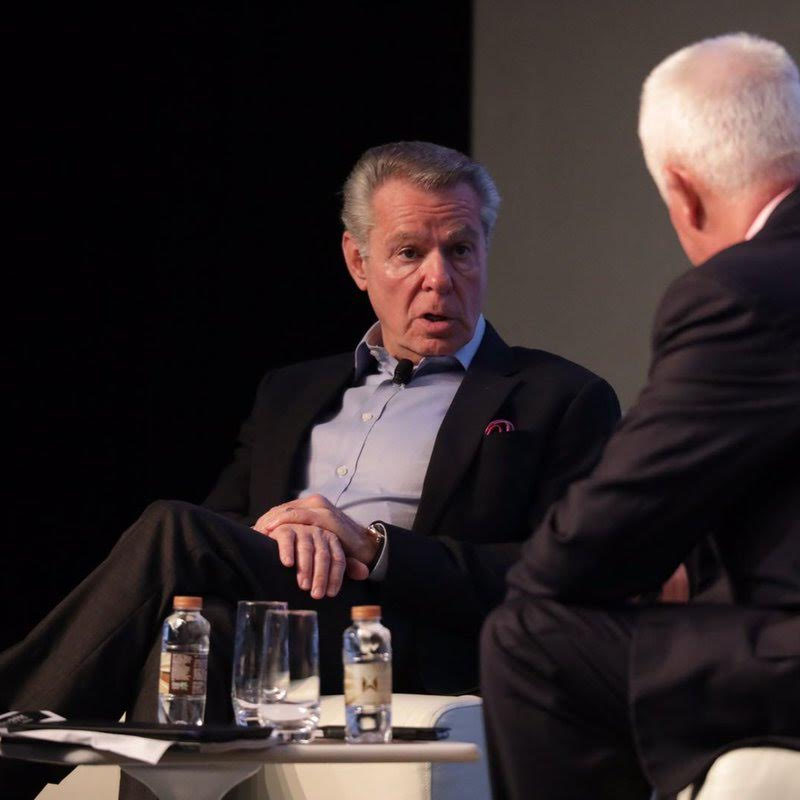
    MACAO: When the hundred billion dollar man, GroupM Global Chairman Irwin Gotlieb, says that the role of the media is to create content, it’s time to take notes. When he opines that Facebook and Google are tech companies whose “business approach is that of a media company” that relies on content, it’s more the reason that one should seriously relook at content creators and business strategies.

    It’s inevitable that Facebook and Google will get more seriously into content creation, Gotlieb said here, adding that it may not be a very healthy trend considering the power that such companies wield in the digital realm today.

    Speaking to former CASBAA Chairman Marcel Fenez during the Opening Keynote at CASBAA Convention 2016 here on Tuesday, Gotlieb held forth on varied media industry trends, including holding the view that the AT&T-Time Warner type of mergers (yet to be ratified by US regulator) are “just tip of the iceberg” in vertical integration, which can take interesting turn as FB and Google seriously get down to such M&A activities.

    To buttress his argument Gotlieb said that Google had already started a division to create content to target consumers, while it may be a matter of time before FB also follows the same path. It’s “kind of “inevitable” that both these companies move into content creation too, which may pose a challenge to other industry stakeholders, the GroupM chief said.

    Pointing out that both these tech giants were “walled gardens and very protective of the data they have”, Gotlieb, who as the GroupM chief is responsible for generating approximately US$ 100 billion in annual global ad sales, said it may not be a very healthy trend as people need to “see across them to target properly (consumers) to maximise client investments.”

    “In the absence of big ideas…it (data) allows us to reach and understand the consumer better,” Gotlieb said, adding, while replying to another question, the measurement of TV as “we understand today is understated as there are alternate devices (to consume media)” available with consumers.

    Holding forth on the changing nature and measurement of viewing behaviors, Gotlieb also touched upon how ways to reach audiences via the marketing funnel is the same but a granularity of data can help decision-making for each stage of the funnel.

    He underscored how media will continue to play a role and become more targetable, addressable and, eventually, part of the transaction process.

    Meanwhile, after Gotlieb had set the trend for the opening day of the CASBAA Convention here, Pricewaterhouse Coopers MD Oliver Wilkinson provided statistics to illustrate that pay TV was not dead despite what the headlines screamed and that it remained a primary form of entertainment.

    Still, with digital players increasingly encroaching on the turf of pay TV, content and channel providers should look to diverse their business models and offerings, Wilkinson said.

    Doing deals in China was the topic for Bennett Pozil, EVP of East West Bank. He discussed the migration of content both ways as well as some of the pros and cons of doing business in China.

    Vivek Couto, Executive Director at Singapore-based market research company Media Partners Asia, flagged the rise of digital players with the forecast that pay TV growth would slow to about 3 per cent as content providers were looking to establish more direct to consumer offerings. However, he admitted that in some markets in Asia like India players had invested heavily in traditional TV infrastructure.

    Reaching a vast audience through tailored video and gaming content was the topic for Chad Gutstein, CEO of Machinima, who highlighted that their most valued content was when viewers felt they had a connection to the creation of it.

    James Schwab, Co-President of VICE, discussed how their local content policy over digital channels has helped the company grow exponentially over the last few years. The recent move into TV was important for the company as it gave them the ability to invest more in content.

    Localized and Asian content was flagged by Henry Tan, COO of Astro, for being one of the main drivers that has seen the provider defy the trend of decline in time spent on TV and reporting healthy growth in this respect. A true understanding of the complexities of the Malaysian audience demographic was key to content that worked for Astro’s market, he said.

    Piracy, online or otherwise, cropped up in conversations throughout the day with opinions polarized on whether this would continue to be an issue.

    In a session devoted to the subject of content piracy, Avigail Gutman, Programme Director, Operational Security, Cisco, advised that the industry needed to “follow the money” in combating piracy. Lucia Rangel, VP Latin America, Asia Pacific & Worldwide, Game Strategy and Operations, Warner Bros. agreed the problem was global and that `ISD boxes’ formed a critical part of the problem as many consumers were not even aware of the illegality of these and other streaming mechanics. A global effort was needed to fight the pirates, Rangel commented.

    Desmond Chan, Deputy GM, Legal and International Operations, TVB, highlighted the tangible impact piracy had already made to their business, while Nickhil Jakatdar of Vuclip talked about how the content provider’s strategy was to provide a better experience than that available from pirate outfits.

  • FB, Google’s biz approach that of a media content company: GroupM chief

    FB, Google’s biz approach that of a media content company: GroupM chief

    MACAO: When the hundred billion dollar man, GroupM Global Chairman Irwin Gotlieb, says that the role of the media is to create content, it’s time to take notes. When he opines that Facebook and Google are tech companies whose “business approach is that of a media company” that relies on content, it’s more the reason that one should seriously relook at content creators and business strategies.

    It’s inevitable that Facebook and Google will get more seriously into content creation, Gotlieb said here, adding that it may not be a very healthy trend considering the power that such companies wield in the digital realm today.

    Speaking to former CASBAA Chairman Marcel Fenez during the Opening Keynote at CASBAA Convention 2016 here on Tuesday, Gotlieb held forth on varied media industry trends, including holding the view that the AT&T-Time Warner type of mergers (yet to be ratified by US regulator) are “just tip of the iceberg” in vertical integration, which can take interesting turn as FB and Google seriously get down to such M&A activities.

    To buttress his argument Gotlieb said that Google had already started a division to create content to target consumers, while it may be a matter of time before FB also follows the same path. It’s “kind of “inevitable” that both these companies move into content creation too, which may pose a challenge to other industry stakeholders, the GroupM chief said.

    Pointing out that both these tech giants were “walled gardens and very protective of the data they have”, Gotlieb, who as the GroupM chief is responsible for generating approximately US$ 100 billion in annual global ad sales, said it may not be a very healthy trend as people need to “see across them to target properly (consumers) to maximise client investments.”

    “In the absence of big ideas…it (data) allows us to reach and understand the consumer better,” Gotlieb said, adding, while replying to another question, the measurement of TV as “we understand today is understated as there are alternate devices (to consume media)” available with consumers.

    Holding forth on the changing nature and measurement of viewing behaviors, Gotlieb also touched upon how ways to reach audiences via the marketing funnel is the same but a granularity of data can help decision-making for each stage of the funnel.

    He underscored how media will continue to play a role and become more targetable, addressable and, eventually, part of the transaction process.

    Meanwhile, after Gotlieb had set the trend for the opening day of the CASBAA Convention here, Pricewaterhouse Coopers MD Oliver Wilkinson provided statistics to illustrate that pay TV was not dead despite what the headlines screamed and that it remained a primary form of entertainment.

    Still, with digital players increasingly encroaching on the turf of pay TV, content and channel providers should look to diverse their business models and offerings, Wilkinson said.

    Doing deals in China was the topic for Bennett Pozil, EVP of East West Bank. He discussed the migration of content both ways as well as some of the pros and cons of doing business in China.

    Vivek Couto, Executive Director at Singapore-based market research company Media Partners Asia, flagged the rise of digital players with the forecast that pay TV growth would slow to about 3 per cent as content providers were looking to establish more direct to consumer offerings. However, he admitted that in some markets in Asia like India players had invested heavily in traditional TV infrastructure.

    Reaching a vast audience through tailored video and gaming content was the topic for Chad Gutstein, CEO of Machinima, who highlighted that their most valued content was when viewers felt they had a connection to the creation of it.

    James Schwab, Co-President of VICE, discussed how their local content policy over digital channels has helped the company grow exponentially over the last few years. The recent move into TV was important for the company as it gave them the ability to invest more in content.

    Localized and Asian content was flagged by Henry Tan, COO of Astro, for being one of the main drivers that has seen the provider defy the trend of decline in time spent on TV and reporting healthy growth in this respect. A true understanding of the complexities of the Malaysian audience demographic was key to content that worked for Astro’s market, he said.

    Piracy, online or otherwise, cropped up in conversations throughout the day with opinions polarized on whether this would continue to be an issue.

    In a session devoted to the subject of content piracy, Avigail Gutman, Programme Director, Operational Security, Cisco, advised that the industry needed to “follow the money” in combating piracy. Lucia Rangel, VP Latin America, Asia Pacific & Worldwide, Game Strategy and Operations, Warner Bros. agreed the problem was global and that `ISD boxes’ formed a critical part of the problem as many consumers were not even aware of the illegality of these and other streaming mechanics. A global effort was needed to fight the pirates, Rangel commented.

    Desmond Chan, Deputy GM, Legal and International Operations, TVB, highlighted the tangible impact piracy had already made to their business, while Nickhil Jakatdar of Vuclip talked about how the content provider’s strategy was to provide a better experience than that available from pirate outfits.

  • Warner Bros leads $24 million investment into Machinima online video network

    Warner Bros leads $24 million investment into Machinima online video network

    MUMBAI: Warner Bros Entertainment has upped its investment in Machinima, leading a $24 million round of financing for the online video network.


    Machinima, the first global Many2Many programming service is focused on fandom and gamer culture.


    Other previous investors in Machinima, including Redpoint Ventures, MK Capital, Coffin Capital alongside Machinima chairman Allen DeBevoise.


    The investment builds on a year-long transformation at Machinima, during which monthly viewership is up over 70 per cent and US unique viewers have tripled. Overall, Machinima boasts a massive audience of more than 430 million subscribers worldwide, 170 million monthly unique viewers and 3.7 billion monthly video views.


    “In 2014, Machinima regained our leadership position in the global digital video marketplace by focusing on our Talent Network and transforming our brand into one that is reflective of our content, our audience and our community of creators. This additional funding will enable Machinima to accelerate our growth through increased investments in content and technology that better serves our audiences, advertisers, creators and distributors,” said Machinima CEO Chad Gutstein.


    “Under Chad’s leadership, Machinima continues to grow as a key entertainment destination for millennials. With its enormous fan base, Machinima is an important exhibition partner, providing content creators, including Warner Bros., multiple platforms for distributing and monetizing digital content and programming brands,” said Warner Bros. Television Group president, business and strategy Craig Hunegs.


    Warner Bros.’ participation in this funding continues the longstanding relationship between the two companies, which has resulted in live-action web series including two seasons of “Mortal Kombat: Legacy.” Later this year, Machinima will release “Justice League: Gods and Monsters Chronicles,” an animated limited series from DC Comics and Blue Ribbon Content, and executive produced by Bruce Timm and Alan Burnett.


    In 2014, the company revamped its executive team first with the hiring of former Ovation TV COO Chad Gutstein as CEO. Throughout the year, Gutstein unveiled key appointments to all areas of Machinima’s business, including most recently chief content officer Daniel Tibbets.


    The new team capped off 2014 by executing a comprehensive brand repositioning of the company. Placing a renewed focus on Machinima’s vast and gifted talent network, and original programming capabilities, the rebrand featured a new tagline “Heroes Rise” along with a completely revamped talent program, which was supported by the launch of Console, a state-of-the-art technology platform. Additionally, the Machinima.com website was overhauled into a valuable resource for creators and advertisers and the Machinima Legion viewer panel was unveiled.


    With more than 30 million monthly unique viewers, Machinima currently ranks ninth in total US audience for Online Video Entertainment Properties and fourth for US males 18-49. The company is making a concerted effort to supplement its explosive YouTube presence with additional distribution platforms. Recently, Machinima announced distribution partnerships with Samsung and Vessel.

  • Plans for MipCube unveiled

    Plans for MipCube unveiled

    MUMBAI: Creative platform MipCube will have a line-up of events and conferences which includes speakers from Twitter, Warner Bros. and Machinima, a new Brands and Content Masterclass and the inaugural Women in Tech and Media networking breakfast.

    MipCube 2013 will feature innovators in the digital content space. An integral part of MipTV, the world‘s content market, MipCube takes place in Cannes, France from 8-11 April.

    As part of a series of case studies, Twitter UK head of broadcast partnerships Dan Biddle will explore how the future of the micro-blogging site is linked to TV, thanks to its ability to cultivate audiences. MipCube participants will also get an insight into what tomorrow‘s media business will look like in the hands of the new media moguls.

    Content producers Warner Bros. director/producer Kevin Tancharoen and Warner Bros. Digital Distribution head of digital programming and development Lance Sloane will explain how they produced ‘Mortal Kombat: Legacy‘, a split-screen blockbuster which was the most-viewed web series in 2011.

    Experts in the interactive content space will describe how to attract, build, and scale audiences, with contributions from video entertainment network Machinima president, co-founder Philip Debevoise, and 22-year-old entrepreneur Jamal Edwards who is SB.TV Global founder, CEO.

    Cisneros‘ AdsMovil company COO Jorge Rincón will also be on hand to provide a focus on the mobile Hispanic population. Meanwhile branding agency Huge chief strategy officer Gene Liebel, who developed the strategy and built the HBO Go digital platform, will discuss the importance of intuitive design and user interface in encouraging audiences to consume more content.

    In a session on reinventing distribution in the ‘anywhere‘ age, digital media company Base79 founder Ashley MacKenzie, which is YouTube‘s biggest content partner in Europe, will discuss which distribution models exist for professional content creators, and how best to leverage them.

    Underlining the networking opportunities which MipCube offers, a string of matchmaking sessions will involve broadcasters, including Canal + Head of Digital, Fabienne Fourquet; Canada‘s CBC executive director, studio and unscripted content Julie Bristow; brand representatives such as Paolo Bonsignore from Illy Café; and branded content experts such as Victor Knaap of Media Monk.

    A new feature this year is the Brands and Content Masterclass, sponsored by Ogilvy and Mather and in partnership with Hyper Island. The Masterclass will bring together more than 80 executives working in branded entertainment from brands, agencies, production companies, TV networks, digital platforms and social networks. The objectives of this Masterclass are to learn how to create engaging branded entertainment, meet potential partners in this field, and to share best practices from a selection of some of the most successful branded entertainment campaigns.

    The Masterclass will be introduced by Hyper Island CEO Johanna Frelin, and will feature contributions from ITV MD Commercial, Online and Interactive Fru Hazlitt; McLaren Group Brand Director John Allert, and Framestore executive producer Simon Whalley. Other participating brands include Renault and Swarovski, while the Newcast (Publicis), MEC and Havas agencies will also take part. In the following lunch, the 2013 Brand of the Year award will be delivered (succeeding 2012 Heineken and 2011 Amex).

    Another new feature is the Women In Tech and Media Breakfast, during which the challenges women face as they shoot for greater influence in the industry will be discussed. The talents of tomorrow will be showcased in the Content 360 Pitch Competition for transmedia producers and creative agencies, this year sponsored by Russian independent broadcaster CTC Media and telco MTS; the MipCube Lab, an international competition for startups innovating in the TV field; and the TV Hack Day, featuring 15 selected developers and designers who have 48 hours to come up with what might be the next big app. All of the winners plus Brand of the Year will be showcased in the Innovation show.

    MipCube also provides hands-on opportunities through workshops like the YouTube Creators Masterclass for Content Producers, run by Head of YouTube Next Lab EMEA at Google David Ripert or the Social TV Bootcamp, which will provide a live consulting session on strategies to build social TV projects.

    On 7 April, as a preamble to the main event, MipCube Plus will offer a one-day think-tank dedicated to unlocking fresh business opportunities for new content creation, user engagement and monetisation models.