Tag: Machine Learning

  • GUEST COLUMN: The role of AI and ML in the media industry

    GUEST COLUMN: The role of AI and ML in the media industry

    Mumbai: There is truly no such thing as “show business!” We have seen the world of entertainment and media shape shift over the last few years, and more dramatically ever since the world around us changed in the wake of the pandemic. The entertainment industry showed a massive fillip during the lockdown years, but not in the way that was expected. The new age of media and social media platforms have transformed the way entertainment is consumed today, and the role of technology has become far more intrinsic along the way too. Everything from how we create, publish, and share textual, audio, and video content to the increasing accessibility of production technologies such as high-resolution cameras, content development software, and smartphones is changing. The landscape is burgeoning with tech-driven innovation both from the delivery and consumption ends of the spectrum.

    With revenue expected to exceed $9.5 billion in 2022 when video ad tech is taken into account, the importance of AI and ML in the media and entertainment sector can no longer be dismissed. While it may not have been an obvious use case earlier, today, harnessing AI and ML to better target homes with advertisements, automate more operations, and secure the operators’ content and services is only the tip of the iceberg. AI has already demonstrated its promise in the music business by producing beautiful tunes and in the world of art with a strong aesthetic influence. It will be interesting to see how AI in entertainment is likely going to have a marked influence on how people interact with movies, television shows, videos, sports, and games.

    Glimpses of this shift are already apparent today. Media firms realise the growing competition they face with new players in the market, right from OTT platforms to social media platforms, vying for the consumer’s attention. There is a swelling urgency to not only produce more content more rapidly but also ensure that the quality and intrigue of the content produced remains top-notch.

    Enter AI and ML.

    There are myriad applications for these two cutting edge technologies, to enable a massive uptick for media and entertainment businesses, right from beta testing of content to gauge interest to creating interactive content to even assessing the right platform for maximum success and viewership. There is a role for AI and ML to play the hero that saves the day at every juncture.

    Some of the emerging areas of application for AI and ML are:

    Knowing your audience: With increased choices comes the problem of plenty too. Audiences that were previously limited to a few platforms for satiating their entertainment appetite are inundated with a plethora of choices. In such a landscape, knowing audience preferences becomes business critical, and media companies that can harness the power of machine learning to understand their audiences more keenly are going to have a definite advantage as we move ahead by being able to provide relevant and engaging content to each individual every single time.

    Feel with your audiences: It’s not enough to just know who your audience is. A step up from the data intelligence that AI and ML provide is understanding how audiences feel each time they view content that is produced by you. Testing your audience’s emotions can help you dive deeper into how the content was consumed and perceived in order to make future bets that are likely to help you win viewer share and also ensure stickiness in an era when customer/viewer acquisition costs are only climbing up.

    Deliver to your audiences: How many times have you heard the phrase “right place, wrong time”? Marketing leaders understand the critical importance of timing in reaching out to customers. The same content that finds resonance at a particular time can have a diametrically opposite response when you catch the consumer at the wrong hour. Emotion AI can help you not only understand how much of the content delivered is falling on the right side of the scale to ensure better results for your targeted campaigns. Retiring the spray and pray approach could be very possible if advertisers and marketers can tap into the hidden potential that emotion AI helps unlock for all the video content that is being produced for their brands’ success currently.

    Engage your audience: If only we could read the minds of our users to know exactly what they have understood and where the gap remains, all our efforts to produce better content in any context would be multiplied. This function is offered by all major corporations, like YouTube, Netflix, Spotify, etc., to improve the dependability and usability of their services.

    AI is also capable of adjusting video quality for internet speed. AI can analyse the internet connections of various viewers in various regions to handle this issue, and it can compress videos without sacrificing their quality to provide a buffer-free streaming experience.

    Advertising and the media

    Advertising, design, and content promotion are just a few of the marketing and trade applications of artificial intelligence in the entertainment industry. The greatest AI algorithms to use when developing solutions for advertising and marketing that are results-driven. With the use of AI-driven marketing software apps, companies may address the needs and preferences of their audience, develop marketing plans, and create efficient customer-centric digital solutions. For instance, AI in the media sector may quickly produce hundreds of eye-catching graphic designs for advertising. Thanks to such cutting-edge and revolutionary technology, manual labour has been substantially reduced, and productivity has increased. Using emotion AI, the advertiser can understand the best demographic to pinpoint their campaign towards to get maximum output.

    For example, if the emotion AI indicates that a person gets the feelings of passion and attachment while watching a football match, it can help the sportswear company understand that this particular audience and this medium work best to reach them through their campaign. By checking the pre-launch creative intelligence output and post-launch creative intelligence output, the campaigns will become more focused.

    Development of AR/VR

    As we are already seeing with the usage of AR in advertising, it’s important to note that in addition to the fundamental use of AI in entertainment, AR and VR app development will also make this area more compelling and immersive. We will be able to watch events from all angles, enabling us to have experiences that are richer and better. AI will assist us in comprehending the sensation of the actual, live event. AI may, however, be used to produce interactive content for AR and VR. With a set of goggles and AI technology, the entertainment sector may work miracles and produce magnificent scenes.

    Consumer interest is naturally drawn to the creation of virtual reality content for cooking shows, reality shows, and live events and programmes based on artificial intelligence. Watching television and movies with true emotional effects won’t be a pipe dream with all these modern technological advancements; it will certainly become a reality. To make this a reality and to understand the concrete effect of the content, Emotion AI will be a tool that will be pathbreaking and extremely important for advancements in terms of what kind of content would be precise for different pieces and scenarios.

    Harnessing Emotion AI

    For any piece of content to succeed, gaining and sustaining the attention of the audience in question is key. If the audience isn’t engaged from the beginning, one has already lost the plot. It, therefore, becomes imperative that the industry puts its best foot forward by testing creatives before the final launch—it helps to gauge the potential. Pre-testing content using Emotion AI helps empower the creators to better understand how pre-launch video creative intelligence can help drive better business outcomes. Emotion AI testing with a pre-defined target audience helps content creators ascertain whether the content is evoking the right kind of reciprocal emotional response. It empowers the creators to understand zones of high and low engagement and modify content for maximum engagement. The organisations can have the emotional AI response outputs mapped to multiple variables of age, gender, geography, time of day, etc., ensuring that the content is never out of flavour.

    Subtitles and automatic transcription

    International media companies should provide material that is relevant to audiences in different locations. As a result, businesses must offer precise and appealing multilingual subtitles for their video content platforms. It may take thousands of hours and effort to hand write subtitles for several films and TV series in a variety of languages. Additionally, finding the ideal applicant to accurately translate text into several languages is challenging.

    Thus, to bridge this existing gap, the powers of AI-based technologies like deep learning and machine learning are harnessed for natural language processing to transcribe movies, music videos, and TV episodes into many languages. To reach a larger audience and foster user engagement, the voice of the movie is translated into several languages with subtitles and audio commentaries.

    For instance, YouTube’s artificial intelligence helps its publishers easily access their material by automatically generating closed captions for videos posted to the platform.

    Metadata tagging

    With the huge amount of content being created every minute, making this content visible to viewers can be an unnerving task for media and entertainment companies. Distributors and media producers like CBS Interactive are utilising artificial intelligence-based video intelligence technologies to thoroughly analyse the footage by detecting and framing things in order to add appropriate tags in order to carry out this task on a wide scale. As a result, any content held by media firms is easily discoverable, regardless of its bulk.

    Due to the intense rivalry and the changing nature of the market, the economic and business models needed to flourish in the digital world are difficult and call for a considerable change in mentality and approach. Customers are the core of the media industry because they are now more powerful than ever. Organisations all across the world are realising that the customer is really the king and cannot be disregarded. By unravelling and experimenting with AI and ML, media and entertainment houses are maximising their business performance and enhancing the user experience and entertainment value with greater efficiency.

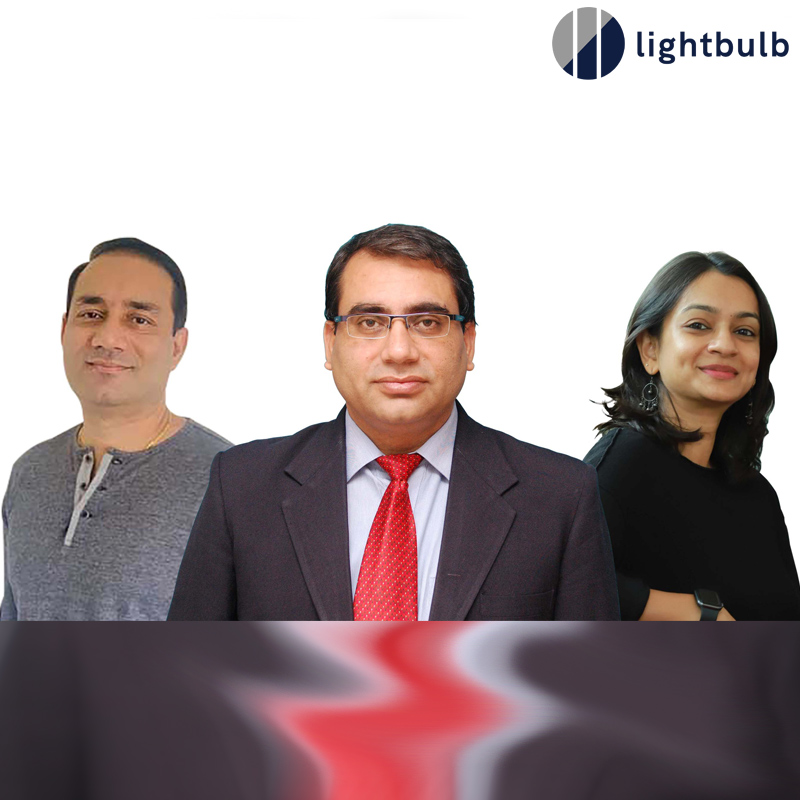
    The author of the article is Lightbulb.ai co-founder and CPO Vishal Soni.

  • Eros Investments collaborates with IIT Bombay to develop AI-based script generating tool Kurosawa

    Eros Investments collaborates with IIT Bombay to develop AI-based script generating tool Kurosawa

    Mumbai: Global media, entertainment and technology portfolio of ventures Eros Investments has announced a strategic collaboration with IIT Bombay to design and develop an AI-based tool for automatic script generation.

    Named Kurosawa, after the celebrated Japanese film director Akira Kurosawa, the software will assist film makers in developing the plot and script of movies by generating a full-length feature film script. IIT Bombay will also create a whitepaper on Kurosawa for academic and research purposes.

    The teams from IIT Bombay and Eros have been collaborating on Kurosawa for over a year. Kurosawa will help identify the right genre, output logline, and synopsis and deliver a potentially hit script that can be customized further as required. In the current phase, Kurosawa can generate multiple engaging plots and scenes basis single input. For example, it can create genre-specific movie plots, basic genre(s) and a short 2-3 sentence prompt. It can also create scenes in a standard screenplay format basis a brief description.

    Automatic Movie Script Generation is a subfield of Natural Language Generation (NLG). The machine can learn plot and scene generation from the pre-existing data with minimum human intervention.

    Eros Investments director Swaneet Singh said, ” This association between Eros Investments and IIT Bombay is an excellent example of the amalgamation of the left and right brain. Kurosawa is a pioneering and cutting-edge technology that will revolutionize the entertainment sector. The tool will enable scriptwriters to focus on creativity and quality while doing the groundwork for them. This innovation marks a new milestone for Eros Investments that will be used as a case study in the future.”

    IIT Bombay dean of research and development Prof. Milind Atrey, added, “Kurosawa will be a huge opportunity to transform the art of storytelling with proficiency and improve efficiency for content creators. We welcome collaboration with Eros investments, led by Prof. Pushpak Bhattacharyya from IIT Bombay, to provide automation to the process of scripting in the entertainment industry. As the outcome of the research, IIT Bombay will also be jointly launching a white paper on Kurosawa that will be used for academic and research purposes, further supporting the upcoming generation looking to make a mark in the industry.”

    Kurosawa is based on the latest deep learning and natural language processing technologies. It is led by Prof. Pushpak Bhattacharyya, known for his artificial intelligence and machine learning expertise, and an internationally renowned research group. He is a professor in the computer science and engineering department at IIT Bombay and is a Fellow of the National Academy of Engineering (2015) and Abdul Kalam National Fellow (2020). Prof. Bhattacharyya is supported in this project by the students from IIT Bombay who are a part of the curriculum.

  • Lightbulb.ai raises $1.5 mn in pre-seed funding round from investors

    Lightbulb.ai raises $1.5 mn in pre-seed funding round from investors

    MUMBAI: Lightbulb.ai, an emotion AI and engagement analytics platform has raised a pre-seed funding round of $1.5 million from investors Chiratae Ventures and 9Unicorns. The other investors participating include Anthill Ventures and AI-led video-editing company, VideoVerse. The funds raised by this early-stage start-up will be deployed to deepen the datasets for their machine-learning technology & expand the product offering of emotion and engagement insights gathered from a user’s video, audio and speech inputs for a variety of industries. 

    Lightbulb is the brainchild of second-time entrepreneurial trio – Ritu Srivastava, Yogesh Sachdeva and Vishal Soni – who have earlier built and exited Obino, a digital health & weight-loss coaching start-up, that offered health-management solutions across a variety of health conditions. Their successful exit to US-based health conglomerate Roundglass Partners in 2017, paved the way for their next venture. With a minimum viable product (MVP) launch in late 2021, Lightbulb has had an opportunity to validate its product and market hypotheses before zeroing in on its go-to-market (GTM) plans.

    With four patents already in the pipeline and datasets spanning millions of faces across geographies and ethnicities, Lightbulb aims to help businesses that offer remote user experiences, to solve for higher engagement by mapping user emotion & engagement in real-time! From analysing user engagement during live meetings/calls to researching the emotional impact of pre-recorded content and asynchronous user experiences on consumers, Lightbulb offers nuanced solutions that are relevant to industries such as online learning, sales enablement and consumer research. 

    With insights from early customers pouring in, Lightbulb is fast-tracking growth on its multi-modal product & this early-stage capital infusion will help accelerate Lightbulb.ai in building its product & engineering teams, particularly in the fields of data science, machine learning and consumer insights and prepare itself for an early launch in the US market. The company was exclusively advised on this transaction by PepperTree, an advisory firm run by ex-bankers Akshi Mehta & Ankur Goyal.

    Lightbulb.ai co-founder and CEO Ritu Srivastava said, “We are privileged to be supported by some of India’s most prestigious early-stage institutional investors, with vast experience in helping deep-tech B2B SAAS companies build & scale global products in international markets. And are deeply grateful for the trust that they have placed in us at this early stage!” 

    Co-founder & CPO Vishal Soni said, “Customer decisions are emotional & not rational! Since current feedback modes are post-facto, by the time actionable intelligence reaches decision makers, opportunities are lost. Lightbulb enables businesses to measure emotion data & transmit actionable insights to decision-makers in real-time, helping them acquire and retain better.”

    Co-founder & CTO Yogesh Sachdeva said, “Our focus is now on developing a powerful platform that can power significant value-adding emotion ai products with high accuracy levels across ethnicities and age groups & applicability across multiple industries.”

    “Leveraging an intelligent emotion recognition platform through video interaction, Lightbulb is leading the next wave of innovation in this space. We are excited to partner with the founding team at Lightbulb, as they disrupt leading industries like education, banking, mental wellness etc,” said Chiratae Ventures India Advisors founder & chairman Sudhir Sethi.

    9Unicorns Accelerator Fund co-founder & managing director Dr Apoorva Ranjan Sharma said, “While emotion ai is at a nascent stage, it is an exponentially growing technology with a wide variety of use-cases across multiple industries. Lightbubl.ai holds the potential to be relevant across multiple market verticals and that is a strong indicator of how valuable the company will be in the future. As the world becomes more chaotic, the importance of emotion AI will only grow. We are excited to support the team as they enhance the accessibility and utility of emotion AI.”

    “We are excited to support Lightbubl.ai at this stage of its growth trajectory. They have shown great promise so far and we are deeply interested in the solutions that they are building for media and consumer research markets. Media tech is an explosively growing field and we are sure that Lightbulb will be able to make a clear space for itself in this market and scale with speed!”, said Anthill ventures CEO Prasad Vanga.

    “As a company that also harnesses the power of AI, we recognise the potential that emotion AI has as a technology. We are thrilled to be a part of this journey and are confident the team will build a long-term product solution with strong fundamentals,” said Videoverse strategy lead Siddhant Bhandari.

  • ML & AI to play a key role for marketers in the third connected age: Rishad Tobaccowala

    ML & AI to play a key role for marketers in the third connected age: Rishad Tobaccowala

    MUMBAI: The world is now entering the third connected age and it is going to have a huge impact on various areas of advertising and marketing. Shifts are happening including data connecting to data, which is machine learning. Artificial Intelligence is fuelling everything including marketing, advertising services, and biotech.

    Advisor, speaker, and educator Rishad Tobaccowala who is also an author spoke at the MMA India seminar called ‘Impact India: The Future of Modern Marketing’ recently. While addressing at the event, he noted that the first shift going on in the third connected age is machine learning. The second shift going on in the third connected age besides machine learning is that there are much faster ways of connecting like Jio which has had a massive impact. “In the next few years, India will move faster and faster to 5G. It is very resilient and one can download a high definition movie in seven seconds or less. It will open up more things,” added Tobaccowala during his talks at the event.

    He also highlighted that mobility will not just be about the mobile device. It could be things like glasses, and headphones because the third shift will be about new ways of connecting. He gives the example of ‘Voice’ and this will continue as devices become smaller and more powerful. Also, augmented reality technology will become important. Virtual reality will also happen though it is in its early days. It will have a big impact on areas like gaming which is already bigger than movies and gambling. The fourth shift will be new trust currencies emerging and blockchain will be the key factor. This third connected age will build on the first and second connected ages and will change the way the world of marketing exists.

    He noted that 1993 was the first connected age with the world wide web where people connected to interact. That gave birth to businesses like search and e-commerce and to companies like Google and Amazon. In 2007 there was the second connected age which was about being connected all the time and it gave rise to mobile, and social media. Today, most traffic in the US comes from mobile and unlikely from the desktop. These three ages build on each other and they will not replace each other.

    He noted that Audience, Brands, Content, Data and Enterprise are now significantly shifting. Every marketer recognises that they do not just send messages to audiences. Increasingly, customers are becoming active rather than passive.

    He also spoke about the move towards re-aggregated rather than segmented marketing. In the latter, you take large audiences and make them smaller audiences like TV, newspapers including others. In the former, you are able to thrive in the digital age.  You start with an audience of one and re-aggregate him/her through things like decision engines.

    He mentioned three trends that will grow when one talks about brands. The first is that brands will increasingly become experiences. That is important as a great experience will result in people speaking about it and becoming loyal. Second, the brand’s purpose will become important. What does a company stand for? The third new trend is branding as employees. In the future, no company will survive without its employees and suppliers. “The most important advocate for brands even more than happy customers is happy employees,” he added.

    In terms of content, he noted that it is impossible to put content into a bucket. He gave the example of seeing an ad on Tiktok while travelling in a car resulting in him buying a product at a store. Is it ATL or BTL? Is it offline or online? Is it mobile e-commerce or social? Is it analogue or digital? It was all those. Content is morphing and so is marketing. Also, new content creators are changing pretty dramatically.

    He mentions the fact that more views and interactions are happening for Instagram, and Youtube creators than those who watch the Superbowl. New kinds of content will emerge. In terms of data, he said marketers must recognise that data alone is not the way brands are built. It is about how you extract meaning from data, and how you tell stories utilising data. The big mistake people make is thinking that data by itself is the differentiator. Connecting data to other things in a company is what will make the difference. Less than half a dozen companies have special data. So, it is how you use, and leverage data to tell stories. That is important because human beings choose with their hearts to make purchases. Then they use data to justify what they just did. That is what happens 7 out of 10 times.

    The future is about data-driven storytelling, not data-driven marketing. Marketers cannot be only driven by data numbers otherwise they will be out of a job, he warned.

    He stressed that marketing is about stories & insights and not just about data and algorithms. Pure numbers are not the answer.

    Enterprise, he said, is rethinking the way an organisation is set up for the future. The future, he cautions cannot fit into the containers of the past. The best marketing companies, he said, revolve around people speaking up freely and challenging each other. That is how ideas are born. Also, the best companies constantly reinvent themselves.

    So, how does one do this? First, constantly learn, he said and added that if marketers do not then they will fake it and will become irrelevant as individuals, marketers and businesspersons. Marketers must set aside an hour a day to learn new things.

    Also, marketers must build a case for the exact opposite of what they believe. That will strengthen an argument. Third, learn new technologies by doing things. “Learn, do, build the case for the opposite” he concluded.

  • ZEE ropes in Nitin Mittal as president – technology & data

    ZEE ropes in Nitin Mittal as president – technology & data

    Mumbai: Leading media conglomerate Zee Entertainment Enterprises Ltd. (ZEE) on Tuesday appointed Nitin Mittal as president – technology & data.

    Prior to joining ZEE, Mittal was the founder CEO & board member for SOLV, a company focused on creating an open platform for B2B commerce, credit, payment, logistics and skilled workforce for the SME segment in India. At Zee, he will lead strategic initiatives in Tech, Data, Artificial Intelligence (AI) & Machine Learning (ML) and Digital across the company to support the ZEE 4.0 transformation, said the company on Tuesday.

    The announcement is part of the media conglomerate’s strategic plans to support its digital pivot, drive exponential growth across digital platforms and fortify the broader transformation it has embarked on, in line with the ZEE 4.0 approach.

    “We have taken concerted efforts and reworked our digital strategy in order to build robust digital assets to enhance the user experience. We are taking concrete steps to further upgrade our technological capabilities, and I am sure with Nitin’s expertise, we will enhance the value proposition of our digital products to create consumer delight,” said ZEE Entertainment Enterprises Ltd, MD & CEO, Punit Goenka.

    The transformation process aims at creating a digitally adept, data first company that will be a leader, in all formats of content consumption, both linear and digital, across India and key international markets.

    Mittal will also lead the engineering team and work closely with president – digital businesses & platforms, Amit Goenka to enhance the customer experience across ZEE5 and support the growth plans of the OTT Platform in India and across the world.

    “The pace of technology-led innovation in the media and entertainment ecosystem is rapidly rising, and a strong blend of technology, data and talent are the critical determinants to succeed in this space. I am glad to welcome Nitin Mittal to our leadership team to drive the digital transformation journey of ZEE 4.0 forward,” said ZEE Entertainment Enterprises Ltd, president – digital businesses & platforms, Amit Goenka.

    Commenting on his new role, Mittal said, “My job at ZEE is to worry about technology in the future. If you want to have a great future you have to start thinking about it in the present, because when the future’s here, you won’t have the time. (Brockman 2003). I’m committed to helping our clients and various teams’ professional dreams come true. As an organization we aim to create an environment that sparks innovation. I will do my best to support and implement the great ideas the teams come up with.”

    Mittal has two decades of experience, during which he has worked with National Payments Corporation of India (NPCI) to build the Unified Payments Interface (UPI) framework for the country and with the Unique Identification Authority of India (UIDAI) on reframing the Aadhar platform to drive the exponential growth of its coverage in India. He was also associated with Standard Chartered, IBM, TESCO, BNY Mellon, Wipro and the Future Group in the past.

  • Dentsu’s content creation engine now leverages the power of GPT-3 model

    Dentsu’s content creation engine now leverages the power of GPT-3 model

    MUMBAI: Dentsu Asia Pacific’s Data Sciences division has unveiled a GPT-3 powered content generation engine. The engine is designed to produce several iterations of creative copy tied to historic and predictive performances of content and is embedded in dentsu Marketing Cloud (DMC) – the media-marketing giant’s proprietary consumer insight and intelligence platform for creative and performance marketers.

    Generative Pre-trained Transformer version 3 (GPT-3 or GPT 3) by OpenAI is, by far, the most powerful language model in history. By linking GPT-3 with performance data, this content generation engine puts the power of artificial intelligence-led copy-creation in the hands of every creative across dentsu.

    Dentsu Webchutney & dentsumcgarrybowen India chairman Sidharth Rao said, “While compelling storytelling is paramount to connecting brands with their audiences, data enables one to move beyond a single limiting thought to unlock the full potential of an idea. As a digital-first creative network, products such as the GPT-3 powered content engine will enable our teams to mitigate the pressure that content creation requires through the intelligent use of technology to drive efficient creative product and deliver better customer experiences.”

    Available in 15 languages and applicable globally, the product is extremely easy to use. The GPT-3 powered Creative Engine will be merged with dentsu international’s marquee data-driven marketing engine – the dentsu Marketing Cloud. Users simply feed the engine with a seed social media caption, theme or topic and the engine generates several iterations of the best predicted performing caption(s) or post copy within a few seconds. The underlying intelligence of the tool can apply quantitative analysis to both pre and post-live-testing cycles and uses AI & ML (machine learning) to predict how audiences will engage and react to any creative message in real-time.

    “AI & ML allow for the intelligent processing of information to deliver better efficiencies. With neuro-linguistic programming and deep learning coming to the forefront of data-driven creative messaging, enabled by GPT-3 and its applications, the link between effective creative messaging and content generation at scale is entering its golden era. The use of this new technology within our creative product is testament to intelligence augmentation at the driving seat of creative innovation and yielding better outcomes for clients and marketing practitioners the world over,” added dentsu Programmatic CEO & dentsu Asia Pacific chief data officer Gautam Mehra.

  • Airtel-AWS partner to offer cloud services to M&E firms

    Airtel-AWS partner to offer cloud services to M&E firms

    MUMBAI: It’s hoping to take Indian companies further into the cloud. Telco Bharati Airtel has signed a multi-year, strategic collaborateon agreement with Amazon Web Services (AWS.) to deliver a comprehensive set of innovative cloud solutions to large enterprise and small and medium enterprise (SME) customers in India. The duo will offer industry-specific solutions to customers across different sectors including banking and financial services, manufacturing, IT/ITeS, and media and entertainment.

    Airtel serves over 2500 large enterprises and more than a million emerging businesses and companies with an integrated product portfolio, including Airtel Cloud, a multi-cloud product and solutions business.

    Airtel Cloud will build an AWS Cloud Practice supported by AWS Professional Services, as well as develop differentiated Airtel Cloud products and capabilities leveraging AWS services, Airtel’s data center capabilities and its network and telecom offerings. Airtel customers will benefit from an integrated sales, consulting, and support approach from both companies and improved security, scalability, and cloud management capabilities.

    Airtel Cloud will offer customers a range of AWS services including Windows on AWS, SAP on AWS, VMware Cloud on AWS, database migration, and security and risk governance solutions. In addition, it  will leverage AWS’s innovation and transformation services across analytics, data warehousing, internet of things (IoT), and machine learning (ML) to help customers adopt new services and migrate to the cloud from legacy infrastructures.

    “At Airtel, our endeavour is to enable enterprise customers to stay focused on their core businesses while we drive end-to-end digital transformation for them. As part of their cloud adoption journey, enterprises are looking for agility, faster migration from legacy systems, and want to work with trusted partners who have the experience and depth in doing this. This collaboration brings AWS, the world’s leading cloud platform, together with Airtel’s deep reach and proven expertise in handling network, data centers, security, and cloud as an intergrated solution,” said Bharti Airtel CIO & head-cloud and security business Harmeen Mehta.

    Additionally, Airtel leverages AWS services for development of its digital applications. Airtel is also an AWS Direct Connect Delivery Partner. AWS Direct Connect is a cloud service solution that makes it easy to establish a dedicated network connection from a customer’s premises to AWS, providing customers with increased bandwidth throughput, consistent network performance, and private connectivity.

    “I am delighted with the expansion of our relationship with Airtel. Indian companies are using the cloud to innovate, and in order to operate at an increased scale and speed. Many need partners like irtel, with deep cloud expertise and an industry-focused approach to support them,” said Amazon Internet Services president commercial business, India & south Asia Puneet Chandok. “This collaboration gives customers a single point of contact when dealing with complex migrations or custom-built solutions. Airtel has demonstrated a strong commitment to our shared customers, and we look forward to continue working with them to bring innovative solutions to market.”

  • Idea promotes video calling feature in new ad

    Idea promotes video calling feature in new ad

    MUMBAI: Mindshare, India’s largest full-service media agency and part of GroupM, launched a unique interactive campaign with Mallika Dua – a renowned comedian and social media influencer, as part of Idea 4G #IndiaKaLiveNetwork initiative. The campaign is an attempt to bring alive the experience of video calling with a renowned celebrity in real time.

    Building on the brand’s tagline of ‘India Ka Live Network’, Idea 4G Live leveraged the power of video calls in an attempt to create awareness about common misdoings of people and encourage them to change their behaviour.

    Mindshare and Idea 4G unveiled a distinctive voice-enabled AI led interactive video chat bot ad campaign that enabled millions of users to interview Dua.  This has never been attempted before in the digital mobile ad-space and was co-created by mCanvas, the experiential storytelling ad platform for small screens. The tool allows users to interact with Dua, and ask her questions ranging from personal trivia to the benefits of Idea 4G network and the power of live videos by simply tapping on the mic icon. Trending questions are also prompted at the bottom of the screen which the user can scroll through and ask Dua. The innovation is done through live media banners placed on popular websites, which can be accessed through mobile phone browsers.

    The experience is designed to be seamless and resemble a live video call with the user's own face seen on the screen. This experience can last for as long as the user has questions to ask and also allows users to ‘Get Idea’ in just a few clicks.

    The innovation uses Artificial Intelligence (AI) where the ad creative listens to user questions in English & Hindi and uses Machine Learning (ML) to analyse all the questions asked by previous users and increase the accuracy of the responses. For example, if a user asks a question in Hinglish, the AI detects that it contains English and Hindi. Next, the ML helps accurately assign a relevant answer to that question.

    The campaign is live on several media and news websites and has already seen engagement from over 7.2 million users. The campaign is witnessing about eight times higher than the average mobile-banner click-through rate. Interactions with this creative have also been found to last for an average of 22 seconds, with some users spending over 10 minutes.

    Speaking about the launch of the campaign, Mindshare India national head – mobile Niraj Ruparel said, “We at Mindshare always look forward to crafting innovative and effective solutions for brands. Idea, as a brand, does not shy away from taking an unconventional path when it comes to communication. With the video-chat bot ad we have come together to create a first of its kind innovation on an effective platform. By leveraging on Mallika Dua’s popularity, and Idea’s 4G network, we are hopeful of bringing about a change in people’s behaviour, and habits, as well as encourage more people to go Live to highlight societal issues.”

    Vodafone Idea Ltd president marketing Sunita Bangard said, “Over the years, brand Idea has built a strong reputation for creating purposeful, conscientious campaigns that encourage change for the betterment of society. The Idea 4G #IndiaKaLiveNetwork campaign highlighted the power of streaming LIVE videos over Idea’s robust 4G network thereby driving a positive change in behaviour among citizens. In its endeavor to engage with the digital natives, Brand Idea has always tried digital-first initiatives for our ATL campaigns, many of which have been appreciated and rewarded at various digital forums. Our innovative AI-and ML-aided campaign has set new benchmarks in digital advertising.”

  • Guest Column: Impact of artificial intelligence on programmatic advertising

    Guest Column: Impact of artificial intelligence on programmatic advertising

    Programmatic advertising is a method of utilising software to buy digital ads. It is easier for media buyers to go through an auction-based process instead of manual negotiations for displaying their ads on digital platforms. It is one of the most innovative methods of advertising which facilitates the buying and selling of digital ad space.

    On the other hand, artificial intelligence (AI) is the concept of replicating human intelligence in machines the potential of which, in turn, is unlocked by human intelligence. AI undoubtedly adds immense value to marketers.

    Machine learning has revolutionised media trading & programmatic algorithms based on volumes of data. AI incorporation enhances the targeting capabilities as individuals can be targeted based on behaviour & preferences and other programmatic interactions. Ads can be personalised based on location, demographics, interactions etc. Precision targeting is required for global reach of programmatic advertising. AI is allowing advertisers to dramatically boost the efficiency of their campaigns. Programmatic uses AI technologies to make better budget decisions for advertisers. When AI is applied to programmatic advertising, it can navigate on its own, as well as provide minute insights thereby enhancing the effectiveness of the campaign exponentially.

    The basis of both programmatic advertising & AI is data analytics. With the effective amalgamation of AI in programmatic advertising one can dynamically score user, accurately differentiate, bid on valuable customers & drive efficient conversions. The brands need to embrace the power & opportunities that AI bots & digital assistants provide. The search has improved drastically with the inception of AI algorithms. As per a report, the AI market is predicted to grow more than 47 billion dollars by 2020 which is a massive rise. It can also enhance the look and feel of ad creatives which can be designed to catch the attention of the viewer.

    Real-time bidding can be facilitated with AI in programmatic advertising. Automation brings advertisers closer to the goals that are set by the brand. As per statistics by Zenith marketing forecasts, by 2019, 67 per cent of display advertising will be traded programmatically. Before the onset of programmatic, the process of digital ad-buying was slow & monotonous. The marketers had to negotiate for ad placement wherein they had to compromise upon cost, space or results. The need to sort this recurring issue paved way for programmatic advertising & to automate the process further, AI was incorporated with it. Thus, ad buying has now become more effective, efficient, cheaper & result-oriented. AI enables the option of whom to show the ad, when & where instead of simply negotiating the ad space. Many brands are banking upon programmatic advertising for lead generation across the globe. Right from FMCG to BFSI to real estate& tourism & hospitality, it has become a favourite of the brands.

    The future also looks promising for AI enabled programmatic advertising as in times to come, through the process of machine learning audience profiling will be finalised on its own. There would be no need to use programmatic tools for filtering audience, in fact, it will evaluate customers’ behaviour and display ads accordingly.

    (The author is CEO and founder, iCubesWire. The opinions expressed here are his own and Indiantelevision.com)

  • Tight deadlines holding Indian agencies back: Roopak Saluja, The 120 Media Collective

    Tight deadlines holding Indian agencies back: Roopak Saluja, The 120 Media Collective

    MUMBAI: Who can forget the catchy viral sensational song – Why This Kolaveri Di – from a few years ago? It might seem like just a song that went viral but the reality is far from that. The song has an interesting story.

    It was back in 2011 when Jack in the Box Worldwide, the digital agency brand of The 120 Media Collective, helmed by Roopak Saluja got a call from Sony Music to help them control the damage that was done when their upcoming movie, 3’s song had been leaked from the recording studio. That’s when a new viral marketing strategy was born.

    Soon enough, Jack in the Box Worldwide , Sony Music’s digital Agency of Record, decided to create an ‘official video’ of the song. Within 24 hours, the video was shot and humorously sub-titled, 12 hours after that the action began on social and 48 hours later, it was trending on Twitter.  The song to date has over 156 million views on YouTube.

    Why are we telling you this story though? Well, because it was Roopak Saluja and his team, who utilised the power of digital when Facebook and Twitter were still experiencing their nascent days in India.

    A former DJ, media businessman, an angel investor, owner of a record label in Europe, and an actor in few movies, Saluja has seen it all. While he originally wanted to become a writer, Saluja worked for six years in Y&R (Young and Rubicam) in Budapest and Ogilvy & Mather in Paris.

    Featured in Campaign India’s A-List of the Most Influential People in India’s advertising, media & marketing industry between 2010-2014, Saluja is founder and chief executive officer of The 120 Media Collective – a communications and content group comprising subsidiaries, Jack in the Box Worldwide, Sniper, Bang Bang Films and Sooperfly.

    Today, the agency handles digital and content marketing mandates for Unilever, PepsiCo, Reckitt Benckiser, Amazon, Novartis, Aditya Birla Group, Loreal, Indigo, Budweiser, IKEA and the Taj Group among others. It has been 12 years since he started his entrepreneurial journey in the advertising and media industry in India and a lot has changed ever since. While he was one of the earliest entrants in digital marketing, today we have over 150+ digital agencies in India. The challenges are shortcomings are more than ever before.

    Indiantelevision.com spoke to Saluja to understand the agency model, Indian creativity, use of technology by 2020 and more.

    You have always maintained that Jack In The Box is ‘premium priced’. Isn’t is hard for you to get clients in that scenario or are clients actually willing to spend that kind of an amount?

    Yes, we are premium in our pricing and that is because we know we deserve it for what we bring to the table. We do discuss the pricing before we start working for the client. And it is actually not about the size as not everyone has the appetite for it (big budget). It’s not always the big advertisers that spend a lot, there are also some smaller startups who are trying to build the brand and they will over invest.

    Larger clients today are reconsidering their investments and want to consolidate their spends in fewer agencies rather than having 10 different agencies on board doing 10 different things. Do you see that as a challenge?

    I think 10-15 years ago, getting marquee clients was considered good for an agency’s reputation and it was something everyone could brag about. Today, it has become hard for agencies to make money with large clients due to the rise of procurement. We had a large client that paid us well back in the day for the work we did for them but now they have changed their pricing value and pay us peanuts for the same kind of work.

    How do you view the work that comes out of India as compared to the rest of the world? Although we are getting there, so far we clearly aren’t winning a lot of awards at international film festivals.

    I think we definitely are getting there. The work that came out of India at Cannes this year was better than last year. What happens at Cannes usually is that you tend to support your home country’s work but when an Indian work comes up, the Indian jury is never happy with it. I don’t know if it’s the jealousy or what, but you won’t find Indians supporting a fellow Indian’s work.

    What is holding us back in terms of creativity?

    The biggest difference and what’s holding us back is not money and budget. Obviously, clients expect moon and stars for peanuts but it’s more importantly about time. What we Indian agencies get four weeks for, they (international agencies) get 14 weeks. In India, agencies are put under a lot of pressure to finish the creative under a tight deadline. When the pressure is put on agencies, that pressure is in turn put on the production team to finish off the final product soon. This results in a substandard quality of creative.

    Moving forward, do you think artificial intelligence, virtual reality and other technologies will become indispensable in ads, say 5 years from now?

    Use of technology will change the way we advertise now but the basics will still remain the same. Jack in the Box or digital agencies, in general, will no longer be called a ‘digital’ agency by 2020. Someone once said to me, “Digital marketing is dead, long live digital marketing!” Going forward, digital marketing will just be a way of advertising.

    What do you think will be the game changers for A&M in 2019?

    It will be a mix of technology and data. My brother has a PhD in AI and he laughs about what we call AI in our industry. I intend to deliver better business results with the technology. Content for business impact is really important for us. Everyone is looking at the effectiveness of budget and its accountability.

    Finally, what next for 120 Media Collective and what next for Roopak Saluja?

    I want 120 to be the most effective company in the marketing space. I want it to be effective, not the best, not most creative. When I say effective, I mean in terms of business results. I say company and not agency because the ability to do and deliver the results will not come only from agencies.  Who knows we may not even be an agency anymore as agency implies that you are a part of the advertising world. I don’t think this holy grail belongs to the advertising industry anymore. Accenture and other technology companies are going into play as marketing and technology start to converge and technology companies will have as much of a claim over those marketing budgets as agencies.