Tag: M Venkaiah Naidu

  • Press regulation not called for, says Modi

    Press regulation not called for, says Modi

    NEW DELHI: Prime Minister Narendra Modi has expressed concern over the recent killings of journalists in some parts of the country. He said journalists were losing their lives in the quest for telling the truth was an extremely serious development.

    Modi emphasised the importance of freedom of press, and said press should self-regulate, adding that any external interference or regulation on the press was not called for. Modi was speaking at a function organised by the Press Council of India yesterday on the occasion of National Press Day. The occasion also marks the golden jubilee of the Press Council of India.

    Speaking earlier, information and broadcasting minister M Venkaiah Naidu has said that self-regulation in the media space was the best practice which would uphold journalistic ethics and democratic ideals of the Nation.

    The government does not believe in imposing ban on any medium of communication, but necessary restraint has to be exercised keeping in mind the protection of sovereignty and integrity of India, security of the nation, and law & order situation in the country, he added.

    Naidu recalled that the electronic media coverage of Mumbai terrorist attacks had received a backlash from the Supreme Court, which said “any attempt to justify the conduct of the TV channels by citing the right to freedom of speech and expression would be totally wrong and unacceptable in such a terrorist situation.” He also mentioned the recent case of Pathankot coverage also highlighted how electronic media coverage while reporting could put civilians, armed personnel lives in danger.

    Speaking about the role of the regional media, the minister said the media assumed importance at the regional level due to its proximity with local communities and local language which enhances the participatory potential of citizens. The regional media played an important role in building participatory democracy by reaching out to all the sections of the society and also created an informed citizenry. In a federal polity, regional media with its reach could help align the interests of states with that of the nation thereby enabling the prime minister’s vision of cooperative federalism.

    Regarding the government’s new print media advertisement policy, Naidu said it promoted equity-based regional outreach by providing relaxation in empanelment procedure to provide special encouragement for regional language/dialects small and medium newspapers.

    On the opportunities offered by social media, the minister said that it was a new tool of communication which was spontaneous and interactive. Such a medium was both an opportunity and a challenge. This mode of communication should be used judiciously for larger national and individual good.

    Naidu said the media had a larger role to play in developmental agenda of the nation by proactively projecting flagship programmes of the government such as Swachh Bharat, Digital India, Jan Dhan Yojana, Skill India and Make in India as national programmes which have the potential to bring about change. The media needed to adorn the role of a stakeholder in the developmental process.

    Minister of state Rajyavardhan Rathore and Press Council of India chairman Justice C. K Prasad were also present.

    Eminent journalists and photo- journalists including Surendra Nihal Singh, Mrinal Pande, Raghu Rai, Renjith John, Arvind Kumar Singh, and Xavier Selva Kumar were awarded for excellence in Journalism.

  • Press regulation not called for, says Modi

    Press regulation not called for, says Modi

    NEW DELHI: Prime Minister Narendra Modi has expressed concern over the recent killings of journalists in some parts of the country. He said journalists were losing their lives in the quest for telling the truth was an extremely serious development.

    Modi emphasised the importance of freedom of press, and said press should self-regulate, adding that any external interference or regulation on the press was not called for. Modi was speaking at a function organised by the Press Council of India yesterday on the occasion of National Press Day. The occasion also marks the golden jubilee of the Press Council of India.

    Speaking earlier, information and broadcasting minister M Venkaiah Naidu has said that self-regulation in the media space was the best practice which would uphold journalistic ethics and democratic ideals of the Nation.

    The government does not believe in imposing ban on any medium of communication, but necessary restraint has to be exercised keeping in mind the protection of sovereignty and integrity of India, security of the nation, and law & order situation in the country, he added.

    Naidu recalled that the electronic media coverage of Mumbai terrorist attacks had received a backlash from the Supreme Court, which said “any attempt to justify the conduct of the TV channels by citing the right to freedom of speech and expression would be totally wrong and unacceptable in such a terrorist situation.” He also mentioned the recent case of Pathankot coverage also highlighted how electronic media coverage while reporting could put civilians, armed personnel lives in danger.

    Speaking about the role of the regional media, the minister said the media assumed importance at the regional level due to its proximity with local communities and local language which enhances the participatory potential of citizens. The regional media played an important role in building participatory democracy by reaching out to all the sections of the society and also created an informed citizenry. In a federal polity, regional media with its reach could help align the interests of states with that of the nation thereby enabling the prime minister’s vision of cooperative federalism.

    Regarding the government’s new print media advertisement policy, Naidu said it promoted equity-based regional outreach by providing relaxation in empanelment procedure to provide special encouragement for regional language/dialects small and medium newspapers.

    On the opportunities offered by social media, the minister said that it was a new tool of communication which was spontaneous and interactive. Such a medium was both an opportunity and a challenge. This mode of communication should be used judiciously for larger national and individual good.

    Naidu said the media had a larger role to play in developmental agenda of the nation by proactively projecting flagship programmes of the government such as Swachh Bharat, Digital India, Jan Dhan Yojana, Skill India and Make in India as national programmes which have the potential to bring about change. The media needed to adorn the role of a stakeholder in the developmental process.

    Minister of state Rajyavardhan Rathore and Press Council of India chairman Justice C. K Prasad were also present.

    Eminent journalists and photo- journalists including Surendra Nihal Singh, Mrinal Pande, Raghu Rai, Renjith John, Arvind Kumar Singh, and Xavier Selva Kumar were awarded for excellence in Journalism.

  • Penal provision remains as TV channel renewal abolition comes into immediate effect

    Penal provision remains as TV channel renewal abolition comes into immediate effect

    NEW DELHI: Even as Information and Broadcasting Minister M Venkaiah Naidu announced doing away with the annual renewal permission for television channels provided annual payment was made 60 days before the due date, the Ministry in a note in the evening said non-payment in time will be considered violation of the guidelines.

    The note on the Ministry website which said the order was coming into immediate effect also warned that violators would attract penal provisions under the Uplinking and Downlinking Guidelines.

    Meanwhile, Naidu announced that the 28th State Information Ministers Meet (SIMCON) would be held in the capital on 9 and 10 December.

    Critical issues pertaining to the films sector, community radio and social media are on the agenda.

    Speaking at a Consultative Committee of members of Parliament attached to the Ministry, Naidu also said the focus of the Ministry is to make the processes online,thereby promoting transparency and accountability.

    In the meeting that concentrated on the Registrar of Newspapers in India, Naidu said there was a need to update contemporaries and revise the legal mechanism in the print sector and to give statutory backing to Print Media Policy and various guidelines. In this context, the Minister apprised the members about the salient features of the proposed Press and Registration of Books and Publication (PRBP) Bill.

    Also read

    http://www.indiantelevision.com/regulators/ib-ministry/tv-channels-annual-renewal-abolished-963-companies-to-benefit-161111


  • Penal provision remains as TV channel renewal abolition comes into immediate effect

    Penal provision remains as TV channel renewal abolition comes into immediate effect

    NEW DELHI: Even as Information and Broadcasting Minister M Venkaiah Naidu announced doing away with the annual renewal permission for television channels provided annual payment was made 60 days before the due date, the Ministry in a note in the evening said non-payment in time will be considered violation of the guidelines.

    The note on the Ministry website which said the order was coming into immediate effect also warned that violators would attract penal provisions under the Uplinking and Downlinking Guidelines.

    Meanwhile, Naidu announced that the 28th State Information Ministers Meet (SIMCON) would be held in the capital on 9 and 10 December.

    Critical issues pertaining to the films sector, community radio and social media are on the agenda.

    Speaking at a Consultative Committee of members of Parliament attached to the Ministry, Naidu also said the focus of the Ministry is to make the processes online,thereby promoting transparency and accountability.

    In the meeting that concentrated on the Registrar of Newspapers in India, Naidu said there was a need to update contemporaries and revise the legal mechanism in the print sector and to give statutory backing to Print Media Policy and various guidelines. In this context, the Minister apprised the members about the salient features of the proposed Press and Registration of Books and Publication (PRBP) Bill.

    Also read

    http://www.indiantelevision.com/regulators/ib-ministry/tv-channels-annual-renewal-abolished-963-companies-to-benefit-161111


  • TV channels’ annual renewal abolished; 963 companies to benefit

    TV channels’ annual renewal abolished; 963 companies to benefit

    MUMBAI: The Indian Government has decided to ease the annual renewal norms for TV channels, Information and Broadcasting Minister M Venkaiah Naidu has said. About 963 channels, including teleports, are going to be benefitted by this decision.

    The government is committed to the vision of Prime Minister Narendra Modi to promote ease of doing business, PTI. reported. “As part of the government’s initiative of ease of doing business, the Ministry has completely done away with the process of obtaining an annual renewal for TV channels in the current form,” he said while addressing the Economic Editors’ Conference in New Delhi.

    The government has decided to ease the “annual renewal” norms for TV channels and existing broadcasters can continue operations by simply paying annual permission fee 60 days before the due date, Naidu said on Friday.

    Naidu said that “broadcasters who have been given the permission for uplinking or downlinking can continue their operations by simply paying the annual permission fee which by itself will be treated as permission for continuation of a channel for a further period of one year.”

    Naidu hailed Modi’s move to demonetise Rs 500 and Rs 1,000 notes saying that it was being appreciated by all excepted a few with “vested” interests. Terming the move as an “historic” step, Naidu said that it was fine for TV channels to show the inconvenience caused to the people after the announcement was made but was not fair to “dwell” on it.

  • TV channels’ annual renewal abolished; 963 companies to benefit

    TV channels’ annual renewal abolished; 963 companies to benefit

    MUMBAI: The Indian Government has decided to ease the annual renewal norms for TV channels, Information and Broadcasting Minister M Venkaiah Naidu has said. About 963 channels, including teleports, are going to be benefitted by this decision.

    The government is committed to the vision of Prime Minister Narendra Modi to promote ease of doing business, PTI. reported. “As part of the government’s initiative of ease of doing business, the Ministry has completely done away with the process of obtaining an annual renewal for TV channels in the current form,” he said while addressing the Economic Editors’ Conference in New Delhi.

    The government has decided to ease the “annual renewal” norms for TV channels and existing broadcasters can continue operations by simply paying annual permission fee 60 days before the due date, Naidu said on Friday.

    Naidu said that “broadcasters who have been given the permission for uplinking or downlinking can continue their operations by simply paying the annual permission fee which by itself will be treated as permission for continuation of a channel for a further period of one year.”

    Naidu hailed Modi’s move to demonetise Rs 500 and Rs 1,000 notes saying that it was being appreciated by all excepted a few with “vested” interests. Terming the move as an “historic” step, Naidu said that it was fine for TV channels to show the inconvenience caused to the people after the announcement was made but was not fair to “dwell” on it.

  • MIB favours self-regulation, TRAI says some regulation mandatory

    MIB favours self-regulation, TRAI says some regulation mandatory

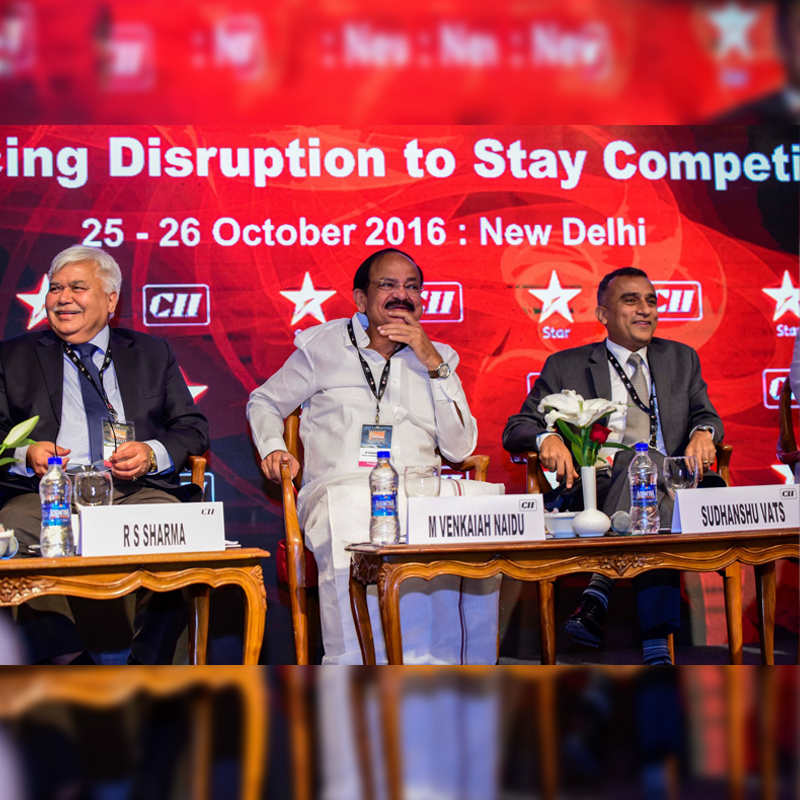
    NEW DELHI: Even as he favoured the idea of self-regulation in the media, Minister for Information and Broadcasting (MIB) M Venkaiah Naidu stressed that “regulation should not become strangulation” and added the government wants to be a facilitator for creating a good business environment for the media and entertainment (M&E) sector.

    Delivering the keynote address at the inaugural session of 5th edition of CII-organised `Big Picture Summit’ at New Delhi here yesterday Naidu said that digital and mobile tools have been leading to paradigm shifts in the M&E sector and the growth of varied platforms such as 4G, broadband, mobile technologies and digital media has enabled the sector to move towards “convergence across platforms and content”.

    According to the Minister, 500 million mobile phones were expected in India by 2020 and music streaming had grown from 49 per cent to 61 per cent in just one year with video on demand gaining popularity as number of internet connections had grown to 81 million of which 41 million used local languages. “The entertainment industry was today capable of creating five billion jobs a year,” he said.

    Referring to the broadcast segment, the MIB Minister said Indian television was very vibrant and exciting, which is exemplified in the over 800 TV channels licensed by the government.

    Dwelling on some initiatives taken by the government to boost the M&E sector, Naidu said that foreign direct investment norms had been liberalized further earlier in the year with an aim to help the industry grow. Similarly, the Minister said, the radio category too has shown impressive growth and the third Phase of auctions of Radio FM licenses was expected to bring in $390 million.

    While he was impressed with the growth achieved by cinema — India produced more films than any other country in the world — Naidu took note of a big problem of less number of screens in the country and that Indian cinema had a share of less than one per cent in world cinema.

    Expressing his concerns on the growth of the media, the Minister highlighted that there were some problems that had been inherited by this government and that those would take some time to be resolved as he plans to hold separate meetings with all stakeholders.

    TRAI Says Regulatory Framework Necessary For Big M&E Sector

    While MIB made a case for self-regulation, Telecom Regulatory Authority of India Chairman R S Sharma said some regulatory framework was necessary for such a large media sector, but regulations should be non-discriminatory, transparent, ensure quality and empower the consumer.

    Speaking at the inaugural session, along with the Minister and industry representatives, Sharma said India was a very cost-effective market where the average mobile recharge was just Rs 10. As connectivity had to be cost-effective and price-sensitive, cable television can be used to provide broadband connectivity as well.

    Holding forth on audience measurement, Sharma said there was still scope for better audience measurement systems as it was important to let the consumer decide what he wanted.
    As TRAI has a recommendatory role in the broadcast sector, except the carriage part where its recommendations can be implemented by it, Sharma also highlighted that several set of recommendations by the regulator on a variety of issues were pending at the Ministry concerned.

    Viacom18 Group CEO Sudhanshu Vats’ On Disruption & Competition

    Amongst the pantheon of Indian gods and goddesses, the Trinity of  Brahma, Vishnu and Shiv hold a special place as they ensure the world, as we know it, goes through a cycle of creation, preservation and destruction to continue growing and surviving. Is this also true for a business sector? Yes!

    Dwelling on the theme of the two-day media conference, ‘Embracing Disruption to Stay Competitive’, Sudhanshu Vats, Chairman of National Committee on Media & Entertainment, CII and Group CEO, Viacom18, said if the cycle, as highlighted in the Indian Trinity or to some extent in economist Schumpeter’s theory of creative destruction, is not followed by businesses (including those in the M&E sector), it’d be disrupted

    “Our systems discourage destruction. In our minds we have this notion that the word ‘destruction’ itself is wrong. But if you look back, our belief system has always emphasised on the need to destroy. If we don’t destroy, then we will be disrupted,” Vats said setting the tone for the Big Picture Summit and emphasizing the need for a well-balanced mix of all three — creators, preservers and destroyers.

    Vats went on to give some examples of the Big Picture Summit’s theme of disruption or reinvention to stay relevant and competitive, which are as follows:

    –    It’s a theme that explains how the sport of cricket reinvented itself 8 years ago to create a completely new avatar (called the IPL) that is arguably it’s most lucrative and successful one till date.

    –    It’s a theme that explains how a new Hindi GEC called Colors launched in 2008 and became number 1 in just 9 months of launch.

    –    It’s a theme that probably explains how a government owned distribution platform known as DD FreeDish revolutionized the world of Indian television so much so that it is a topic of conversation in the boardroom of every M&E organization.

    –    It’s a theme that explains how a show idea rejected by MTV, led to the creation of one of India’s most iconic YouTube channels: The Viral Fever.

    –    It’s also a theme that explains why a telco called AT&T is expected to close a deal to acquire a media conglomerate called Time Warner in what is amongst this year’s biggest acquisitions.  “Of course, I’d like to see this as ‘convergence in action’,” explained Vats.

    Dwelling on some industry vital stats — based on knowledge partner Boston Consulting Group’s yearly report for the event — Vats said the M&E industry’s size had been pegged at approximately Rs. 13, 000,00 million, almost one per cent of the Indian GDP with a direct employment base of half a million.

    “If we look at indirect employment, the number will multiply several times over. If we look at employment in sectors in which we have a multiplier effect, say telecom, tourism, sports and so on, and we are looking at a much larger base. If we have to, say, double in size (and this is not impossible)… then there are three fundamental truths that we need to prepare for. Bear in mind, that none of these can be leveraged if we fear ‘destruction’. Each of these truths has significant implications for us,” Vats elucidated.

    Vats also dwelt on several issues ranging from the need to develop direct-to-consumer offerings, importance of listening to suggestions and ideas, benefits of discovering new talents and embracing technology and data as a friend and not foe, apart from several other issues, including the need to put aside squabbles amongst stakeholders in the M&E sector.

    However, not the one to every shy away from making a factual statement, even though it may sound contentious, Vats aptly said the M&E sector was amongst the biggest stars of the PM Modi’s  `Make in India’ programme. “In the last two years, India has seen 35 new smart-phone factories, with a production capacity of 18 million devices per month and employment to 37,000 Indians. While the focus here – at least in the popular context- is on telecom handset manufacturing, think what is the use of the smart-phone with a 5-inch screen if you don’t have video content? I have no qualms in stating that our industry will play the biggest role in the 4G revolution that this country is about to witness,” he concluded.
     

  • MIB favours self-regulation, TRAI says some regulation mandatory

    MIB favours self-regulation, TRAI says some regulation mandatory

    NEW DELHI: Even as he favoured the idea of self-regulation in the media, Minister for Information and Broadcasting (MIB) M Venkaiah Naidu stressed that “regulation should not become strangulation” and added the government wants to be a facilitator for creating a good business environment for the media and entertainment (M&E) sector.

    Delivering the keynote address at the inaugural session of 5th edition of CII-organised `Big Picture Summit’ at New Delhi here yesterday Naidu said that digital and mobile tools have been leading to paradigm shifts in the M&E sector and the growth of varied platforms such as 4G, broadband, mobile technologies and digital media has enabled the sector to move towards “convergence across platforms and content”.

    According to the Minister, 500 million mobile phones were expected in India by 2020 and music streaming had grown from 49 per cent to 61 per cent in just one year with video on demand gaining popularity as number of internet connections had grown to 81 million of which 41 million used local languages. “The entertainment industry was today capable of creating five billion jobs a year,” he said.

    Referring to the broadcast segment, the MIB Minister said Indian television was very vibrant and exciting, which is exemplified in the over 800 TV channels licensed by the government.

    Dwelling on some initiatives taken by the government to boost the M&E sector, Naidu said that foreign direct investment norms had been liberalized further earlier in the year with an aim to help the industry grow. Similarly, the Minister said, the radio category too has shown impressive growth and the third Phase of auctions of Radio FM licenses was expected to bring in $390 million.

    While he was impressed with the growth achieved by cinema — India produced more films than any other country in the world — Naidu took note of a big problem of less number of screens in the country and that Indian cinema had a share of less than one per cent in world cinema.

    Expressing his concerns on the growth of the media, the Minister highlighted that there were some problems that had been inherited by this government and that those would take some time to be resolved as he plans to hold separate meetings with all stakeholders.

    TRAI Says Regulatory Framework Necessary For Big M&E Sector

    While MIB made a case for self-regulation, Telecom Regulatory Authority of India Chairman R S Sharma said some regulatory framework was necessary for such a large media sector, but regulations should be non-discriminatory, transparent, ensure quality and empower the consumer.

    Speaking at the inaugural session, along with the Minister and industry representatives, Sharma said India was a very cost-effective market where the average mobile recharge was just Rs 10. As connectivity had to be cost-effective and price-sensitive, cable television can be used to provide broadband connectivity as well.

    Holding forth on audience measurement, Sharma said there was still scope for better audience measurement systems as it was important to let the consumer decide what he wanted.
    As TRAI has a recommendatory role in the broadcast sector, except the carriage part where its recommendations can be implemented by it, Sharma also highlighted that several set of recommendations by the regulator on a variety of issues were pending at the Ministry concerned.

    Viacom18 Group CEO Sudhanshu Vats’ On Disruption & Competition

    Amongst the pantheon of Indian gods and goddesses, the Trinity of  Brahma, Vishnu and Shiv hold a special place as they ensure the world, as we know it, goes through a cycle of creation, preservation and destruction to continue growing and surviving. Is this also true for a business sector? Yes!

    Dwelling on the theme of the two-day media conference, ‘Embracing Disruption to Stay Competitive’, Sudhanshu Vats, Chairman of National Committee on Media & Entertainment, CII and Group CEO, Viacom18, said if the cycle, as highlighted in the Indian Trinity or to some extent in economist Schumpeter’s theory of creative destruction, is not followed by businesses (including those in the M&E sector), it’d be disrupted

    “Our systems discourage destruction. In our minds we have this notion that the word ‘destruction’ itself is wrong. But if you look back, our belief system has always emphasised on the need to destroy. If we don’t destroy, then we will be disrupted,” Vats said setting the tone for the Big Picture Summit and emphasizing the need for a well-balanced mix of all three — creators, preservers and destroyers.

    Vats went on to give some examples of the Big Picture Summit’s theme of disruption or reinvention to stay relevant and competitive, which are as follows:

    –    It’s a theme that explains how the sport of cricket reinvented itself 8 years ago to create a completely new avatar (called the IPL) that is arguably it’s most lucrative and successful one till date.

    –    It’s a theme that explains how a new Hindi GEC called Colors launched in 2008 and became number 1 in just 9 months of launch.

    –    It’s a theme that probably explains how a government owned distribution platform known as DD FreeDish revolutionized the world of Indian television so much so that it is a topic of conversation in the boardroom of every M&E organization.

    –    It’s a theme that explains how a show idea rejected by MTV, led to the creation of one of India’s most iconic YouTube channels: The Viral Fever.

    –    It’s also a theme that explains why a telco called AT&T is expected to close a deal to acquire a media conglomerate called Time Warner in what is amongst this year’s biggest acquisitions.  “Of course, I’d like to see this as ‘convergence in action’,” explained Vats.

    Dwelling on some industry vital stats — based on knowledge partner Boston Consulting Group’s yearly report for the event — Vats said the M&E industry’s size had been pegged at approximately Rs. 13, 000,00 million, almost one per cent of the Indian GDP with a direct employment base of half a million.

    “If we look at indirect employment, the number will multiply several times over. If we look at employment in sectors in which we have a multiplier effect, say telecom, tourism, sports and so on, and we are looking at a much larger base. If we have to, say, double in size (and this is not impossible)… then there are three fundamental truths that we need to prepare for. Bear in mind, that none of these can be leveraged if we fear ‘destruction’. Each of these truths has significant implications for us,” Vats elucidated.

    Vats also dwelt on several issues ranging from the need to develop direct-to-consumer offerings, importance of listening to suggestions and ideas, benefits of discovering new talents and embracing technology and data as a friend and not foe, apart from several other issues, including the need to put aside squabbles amongst stakeholders in the M&E sector.

    However, not the one to every shy away from making a factual statement, even though it may sound contentious, Vats aptly said the M&E sector was amongst the biggest stars of the PM Modi’s  `Make in India’ programme. “In the last two years, India has seen 35 new smart-phone factories, with a production capacity of 18 million devices per month and employment to 37,000 Indians. While the focus here – at least in the popular context- is on telecom handset manufacturing, think what is the use of the smart-phone with a 5-inch screen if you don’t have video content? I have no qualms in stating that our industry will play the biggest role in the 4G revolution that this country is about to witness,” he concluded.
     

  • ‘Murga’ gets ‘Swachh’ film prize; top producers to support campaign

    ‘Murga’ gets ‘Swachh’ film prize; top producers to support campaign

    NEW DELHI: Eminent filmmakers Madhur Bhandarkar, Radhakrishna Jagarlamudi, Prasoon Pandey, Ramesh Sippy and Shoojit Sircar will produce films on Swachh Bharat providing support and creative ideas to the movement.

    This was announced here on Sunday by the Information and Broadcasting minister M Venkaiah Naidu after presenting the awards at the first Swachh Bharat Short Film Festival here. Minister of State for I and B Rajyavardhan Rathore and secretary Ajay Mittal were present.

    Naidu said the festival was aimed at generating awareness, and motivating participants and citizens towards the Swachh Bharat mission through the most interactive medium of cinema.

    Complimenting the youngsters for the creativity and talent shown, Naidu said the future of India was safe in the hands of the young generation who understood the communication needs on issues such as Swachh Bharat which required mass mobilization.

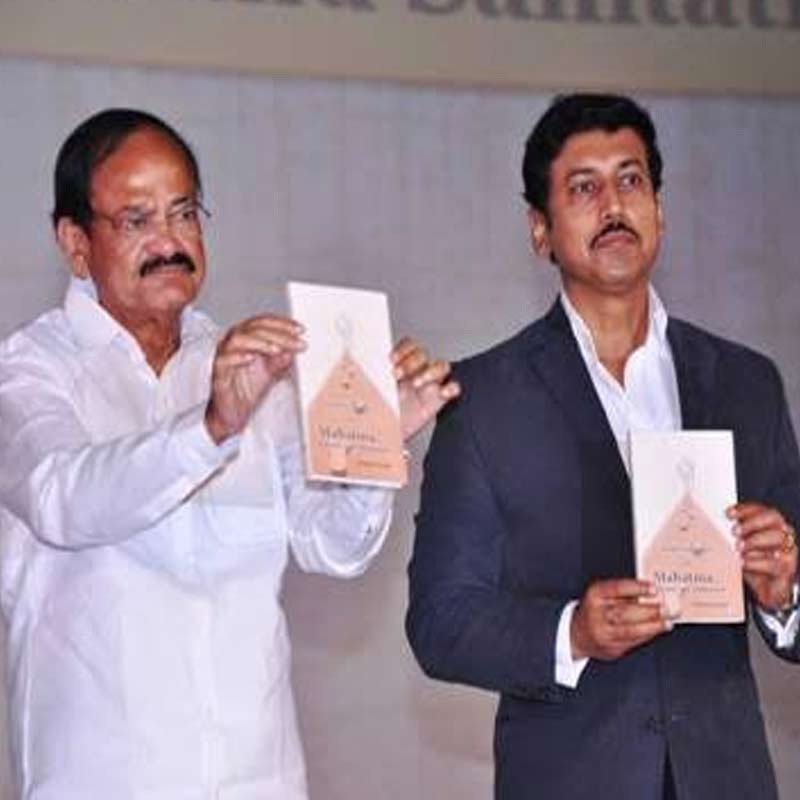
    Naidu along with Rathore released the book “In the Footsteps of Mahatma: Gandhi & Sanitation” published by Publications Division (I & B ministry) and written by the noted Gandhian Sudarshan Iyengar.

    Mittal said the festival had provided a platform to pool ideas and talent of the creative youngsters.

    The competitive short films festival was for films having duration of not more than three minutes each. A jury comprising eminent theatre and film actor–producer Vani Tripathi, award-winning filmmaker Gitanjali Rao, and celebrated advertising personality Prahlad Kakar selected 20 short films out of the 4346 entries.

    The first prize was pocketed by Katyanan Shivpuri from Maharashtra for the film Murga. The second prize was bagged by Sudhanshu Sharma, KVK Kumar and Akshay Danavale for their films Nahna Doot, Chembuku Moodindi (The Dying Vessel) and Sarkarmi Rati Wadho! respectively. The third prize was awarded to six entries.

    The directors of the top 10 films were rewarded with Rs 10 lakh (first film), Rs 500,000 (next three films) and Rs 200,000 respectively (last six films), while the next 10 were awarded certificates.

    The highlight was a performance by the Advait band and the rendition of Swachh Bharat theme song by the eminent singer Kailash Kher.

  • ‘Murga’ gets ‘Swachh’ film prize; top producers to support campaign

    ‘Murga’ gets ‘Swachh’ film prize; top producers to support campaign

    NEW DELHI: Eminent filmmakers Madhur Bhandarkar, Radhakrishna Jagarlamudi, Prasoon Pandey, Ramesh Sippy and Shoojit Sircar will produce films on Swachh Bharat providing support and creative ideas to the movement.

    This was announced here on Sunday by the Information and Broadcasting minister M Venkaiah Naidu after presenting the awards at the first Swachh Bharat Short Film Festival here. Minister of State for I and B Rajyavardhan Rathore and secretary Ajay Mittal were present.

    Naidu said the festival was aimed at generating awareness, and motivating participants and citizens towards the Swachh Bharat mission through the most interactive medium of cinema.

    Complimenting the youngsters for the creativity and talent shown, Naidu said the future of India was safe in the hands of the young generation who understood the communication needs on issues such as Swachh Bharat which required mass mobilization.

    Naidu along with Rathore released the book “In the Footsteps of Mahatma: Gandhi & Sanitation” published by Publications Division (I & B ministry) and written by the noted Gandhian Sudarshan Iyengar.

    Mittal said the festival had provided a platform to pool ideas and talent of the creative youngsters.

    The competitive short films festival was for films having duration of not more than three minutes each. A jury comprising eminent theatre and film actor–producer Vani Tripathi, award-winning filmmaker Gitanjali Rao, and celebrated advertising personality Prahlad Kakar selected 20 short films out of the 4346 entries.

    The first prize was pocketed by Katyanan Shivpuri from Maharashtra for the film Murga. The second prize was bagged by Sudhanshu Sharma, KVK Kumar and Akshay Danavale for their films Nahna Doot, Chembuku Moodindi (The Dying Vessel) and Sarkarmi Rati Wadho! respectively. The third prize was awarded to six entries.

    The directors of the top 10 films were rewarded with Rs 10 lakh (first film), Rs 500,000 (next three films) and Rs 200,000 respectively (last six films), while the next 10 were awarded certificates.

    The highlight was a performance by the Advait band and the rendition of Swachh Bharat theme song by the eminent singer Kailash Kher.