Tag: M Karunanidhi

  • Maran brothers’ feud ends with a Rs 800 crore handshake: media reports

    Maran brothers’ feud ends with a Rs 800 crore handshake: media reports

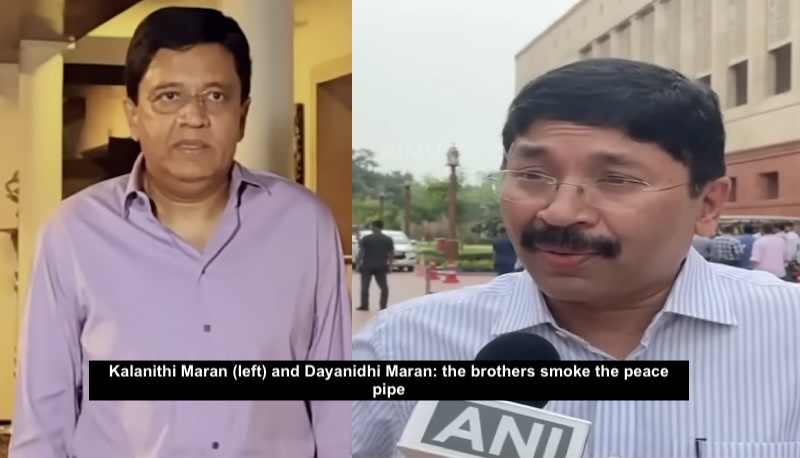
    MUMBAI: According to news daily Indian Express, a bitter family dispute between the Maran brothers, Kalanithi and Dayanidhi, has been resolved following the direct intervention of Tamil Nadu chief minister M K Stalin. The settlement, which saw DMK MP Dayanidhi Maran reportedly receive around Rs 800 crore in cash and nearly an acre of prime land in Chennai’s exclusive Boat Club area valued at an estimated Rs 100 crore, brings an end to a row that had rattled investor confidence and threatened the DMK’s image.

    The feud boiled over in early June when Dayanidhi issued a legal notice to his elder brother Kalanithi, alleging fraudulent share allotments and corporate misgovernance at Sun TV Network in the early 2000s. Dayanidhi had initially sought Rs 1,500 crore, while Kalanithi was only willing to offer Rs 500 crore.

    Stalin, who has previously mediated within the Maran family, initially attempted to resolve the matter himself. When this failed, he enlisted the help of Dravidar Kazhagam president K Veeramani and senior journalist N Ram, both of whom have close ties to the family. Sources indicate that three rounds of talks, including two in person and one via video conference, ultimately led to the agreement.

    Dayanidhi’s legal notice specifically claimed that in 2003, while their father Murasoli Maran was in a coma, Kalanithi allegedly allotted himself 1.2 million equity shares at a nominal Rs 10 per share, consolidating over 60 per cent of Sun TV. This, the notice alleged, diluted the stakes of the Maran and M Karunanidhi families from 50 per cent each to 20 per cent.

    Sun TV, in a stock exchange filing on June 20, vehemently denied the allegations, calling them “incorrect, misleading, speculative, defamatory and not supported by facts or law,” and stated that all transactions were legally vetted prior to the company’s public listing.

    Despite Sun TV’s rebuttal, the controversy sent tremors through the markets, causing its share price to drop over 5 per cent in intra-day trading, and an overall decline of about 8 per cent from recent highs, unsettling investors.

    A top source within the DMK first family confirmed that Stalin was visibly displeased by the public nature of the dispute, especially with assembly elections looming next year. His decision to bring in the 91-year-old Veeramani, an elder statesman of Tamil Nadu politics, was due to his respected stature and lack of financial interest in Sun TV.

    N Ram, a relative of the Maran family and former editor of The Hindu, also played a crucial role, lending credibility and balance to the mediation given his standing in the media world and ideological alignment with the DMK.

    “First, Veeramani phoned the Maran family. After that the others also joined, and three rounds of talks were held between the last week of June and the first week of July,” a source revealed, adding, “Both parties were asked to refrain from speaking to the media and were urged to settle and move on.”

    The talks underscored the potential damage to the DMK’s and Maran family’s reputation, as well as the high costs and protracted nature of continued litigation.

    The late Murasoli Maran, a nephew of Karunanidhi and cousin to Stalin, was instrumental in establishing the DMK’s presence in Delhi and served as a cabinet minister in multiple central governments. His presence as family patriarch had previously maintained peace between Kalanithi, who built the Sun TV empire, and Dayanidhi, who leveraged his father’s legacy to become the union minister for telecom.

    The first major rift, the Indian Express reported,  occurred in 2007 when the Maran family’s newspaper, Dinakaran, published a poll favouring Stalin as Karunanidhi’s political heir over M Alagiri, leading to violent reactions from Alagiri’s supporters. While tensions have simmered since, the financial dimension of this latest dispute made it one of the most severe.

    “This whole thing could have gone the other way,” a senior source commented. “But Stalin, Veeramani, and Ram made it clear: let this end now, before it weakens everyone.”

     Indian Express failed to get any comments from N. Ram, the Marans or the chief minister. 

  • FICCI MEBC south kicks off with star power

    FICCI MEBC south kicks off with star power

    MUMBAI: Tamil Nadu’s media and entertainment industry took centre stage as deputy chief minister Udhayanidhi Stalin and cinematic legend Kamal Haasan inaugurated the FICCI MEBC South Conclave in Chennai. The two-day event, aimed at exploring the evolution of films, television, OTT, gaming, and digital media, saw an array of industry stalwarts mapping out the future of India’s creative economy.

    Stalin unveiled plans for a state-of-the-art film city in Chennai spanning 152 acres. The ambitious project will feature cutting-edge post-production studios, animation and VFX facilities, virtual production tech, LED walls, and even a five-star hotel for industry professionals.

    Further honouring Kalaignar’s (M. Karunanidhi) vision, Stalin announced that 90 acres near Kelambakkam, previously allocated for industry housing, would now be reinstated for its original purpose following a revised government order.

    A highlight of the event was Haasan’s appointment as chairman of the FICCI Media and Entertainment Committee, south. Speaking at the conclave, Haasan emphasised the need for progressive regulations that integrate, rather than hinder, emerging technologies in cinema.

    “Indian cinema is our cultural ambassador, and we need a long-term vision for it. Both state and central governments must frame policies that encourage technology adoption without stifling existing markets,” said Haasan. He also urged the Tamil Nadu government to reform entertainment tax policies, ensuring greater ease of doing business for filmmakers.

    The conclave featured key insights from JioStar chairman of FICCI media and entertainment committee and CEO – entertainment Kevin Vaz, who celebrated south Indian cinema’s meteoric rise from regional to global prominence, thanks to blockbusters like RRR and KGF-2.

    “With digital media’s rapid expansion, India is an ‘AND’ market where TV and digital will continue to coexist. The industry is primed for a global breakthrough,” Vaz stated.

    The event will feature workshops, masterclasses, and exhibitions on key industry trends, including the global rise of Indian cinema, OTT and television’s transformation, and AI-driven innovations in broadcasting and music. With gaming, animation, and VFX booming, discussions will also focus on regulatory policies shaping the sector. PlayNext – Developer’s Day will spotlight India’s growing esports and interactive entertainment industry, reinforcing its leadership in AVGC-XR.  

    The inaugural session saw participation from Meta India’s Sandhya Devanathan, Warner Bros. Discovery’s Arjun Nohwar, FICCI Tamil Nadu State Council’s G.S.K. Velu, and a stellar line-up of media executives including Ashish Pherwani, Sanjay A. Wadhwa, Ankur Vaish, Krishnan Kutty, Ravikant Sabnavis, Munjal Shroff, Vaibhav Chavan, Jakes Bejoy, and Bejoy Arputharaj.

  • Tamil Nadu calls for review of Supreme Court judgment on government ads

    Tamil Nadu calls for review of Supreme Court judgment on government ads

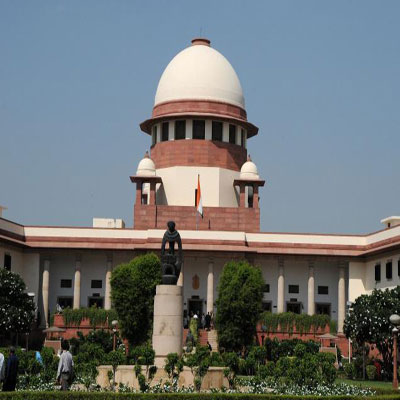
    NEW DELHI: The Tamil Nadu government has sought a review of the Supreme Court judgment restraining both Central and State government from publishing photographs of political leaders and ministers, except the President, Prime Minister and the Chief Justice of India.


    The apex Court had pronounced the judgment on 13 May on the basis of the recommendations of an expert panel set up by it last year following public interest litigations by two NGOs.


    As was reported earlier by Indiantelevision.com, DMK chief and former Tamil Nadu chief minister M Karunanidhi had lashed out at the Supreme Court’s ban on the photos of politicians in government ads.


    In its review petition, the State government said the judgment contradicts the federal structure based on grounds of “parity” between the Centre and States.


    It contends that Chief Ministers and State Governors are also constitutional authorities and by allowing publication of photographs of only the President, Prime Minister and Chief Justice of India, the apex Court has disregarded the equal share of powers enjoyed between the Centre and the States.


    The petition requests the apex court to set aside the judgment on the ground that it gives an impression that the judiciary is intruding into policy decisions of the executive.


    It said the party in power has the right to publish the Chief Minister’s photograph in a government advertisement regarding the achievements of the State government.


    The petition, filed by advocate Yogesh Kanna for the State, further contends that the Supreme Court overlooks the recommendations made by its own committee, which said that the photos of Chief Ministers and State Governors should be allowed along with the other constitutional authorities.


    The judgment had said that such photos tend to portray a government project as the achievement of a particular individual and thus pave the way for making of a “personality cult.” Such personal glorification and image-making on public expenses is a “direct antithesis of democratic functioning,” it held.


    However the court had said that the Prime Minister, the President and the Chief Justice of India have to decide themselves on whether their photographs should appear in a government advertisement or not. By this, the judgment, in a way, had made them personally accountable for the publication of their photographs.


    Drawing a distinction between “government messaging” and “politically motivated ads” in this context, the Supreme Court had said that such a curb is unnecessary on election eve provided the advertisement serves public interest and enables dissemination of information. 

  • Karunanidhi opposes SC rule against ban of politicians’ pictures in govt ads

    Karunanidhi opposes SC rule against ban of politicians’ pictures in govt ads

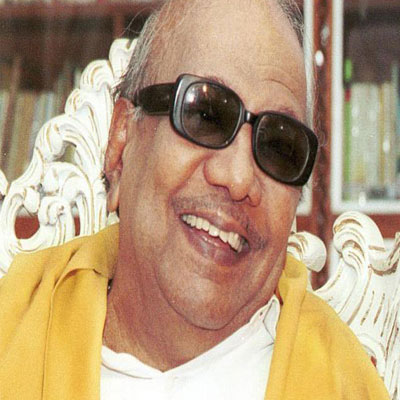
    NEW DELHI: DMK chief and former Tamil Nadu chief minister M Karunanidhi has lashed out at the Supreme Court’s ban on the photos of politicians in government ads.


    The veteran politician has said that this takes away the rights of the states.


    He was quoted in media reports as saying, “The PM and CMs are of same status in a federal set-up. In states, people give more importance to the CMs than the PM. A picture of a CM is inevitable in state govt advertisements. There are few educated people. The pictures help people understand ads better.”


    Holding that taxpayers’ money cannot be spent to build “personality cults” of political leaders, the Supreme Court restrained ruling parties from publishing photographs of political leaders or prominent persons in government-funded advertisements.


    The Court said such photos divert attention from the policies of the government, unnecessarily associate an individual with a government project, and pave the way for cultivating a “personality cult.”


    A bench of Justices Ranjan Gogoi and N.V. Ramana said the photos of only three constitutional authorities – the Prime Minister, the President and the Chief Justice of India – can be used in such ads. However, the personal approval of these three authorities will be necessary before publication.


    The observations of the Court were based on examination of the findings of a Committee led by Bangalore’s National Law University Director N.S. Madhava Menon set up in May last year, which had submitted its report in October. The Committee was set up by the Information and Broadcasting Ministry pursuant to an order of 23 April last year. Other members were former Lok Sabha secretary general T K Vishwanathan, and senior advocate Ranjit Kumar. Bimal Julka, secretary in the I&B Ministry, was the member secretary of the Committee.


    The court passed the order on a public interest litigation (PIL) filed by the NGOs Common Cause represented by counsel Meera Bhatia and the Centre for Public Interest Litigation (CPIL) represented by advocate Prashant Bhushan pleading it to frame guidelines.


    The petitions sought issuance of guidelines for curbing ruling parties from taking political mileage by projecting their leaders in official advertisements.


    The Menon panel had recommended a complete ban on publishing of photos in the ads. It had further said that no ads should be allowed on election eve.


    However, Justice Gogoi made changes in four cases. Instead of a complete ban on publishing of photos of all individuals, it said pictures of PM, President and CJI can be used provided they personally clear it – thus, in a way, making them also accountable for the publication.


    Secondly, the court improvised on the Menon committee recommendations to direct the government to appoint a three-member Ombudsman body of persons with “unimpeachable integrity.”


    The bench disagreed with the panel’s suggestion for a performance audit on such government ads.


    Holding that there had been “misuse and abuse” of public money on such advertisements, the three-member committee headed by eminent academician Professor Menon had framed guidelines to regulate expenditure and contents of such ads.


    The report had said only pictures and names of the President, the Prime Minister, Governor and Chief Ministers be published.


    The apex court bench had then said that the existing guidelines of the Directorate of Advertising and Visual Publicity (DAVP) do not cover such ads. There was therefore a need for substantive guidelines to be issued by the Court until the legislature enacts a law in this regard.


    The three members of the committee recommended that the governments must prepare a list of personalities whose birth or death anniversaries will be marked with ads in advance.


    The government must then specify which Ministry should release the ad to avoid different departments and state-run companies from paying tribute to the same leader with a multitude of ads. “There should be a single advertisement only,” the Committee said.


    The committee said that its recommendations are to prevent “the arbitrary use of public funds for advertising… to project particular personalities, parties or governments without any attendant public interest.”


    As was reported earlier by Indiantelevision.com, the move is likely to impact the revenues of some media groups as television channels will no longer be able to run TVCs by state governments featuring Chief Ministers and other local political leaders.

  • Sumangali Cable refused licence by MIB

    Sumangali Cable refused licence by MIB

    NEW DELHI: Kalanidhi Maran owned Sumangali Cable Vision has been asked to stop distributing signals in Chennai.


    The Information and Broadcasting Ministry has asked the multi system operator (MSO) which is part of Kal Media Services founded by the Maran family, to wind up its business in 15 days.


    A note on the Ministry website said Kal Media Services had been denied permission on 20 August due to denial of security clearance by the Home Ministry.


    Permanent licence had earlier been issued for 10 years on 19 June 2012 for Chennai Metropolitan area and provisional given on 7 March last year for phase II cites.


    It is learnt that the Ministry has asked Sumangali to run a scroll on its channels asking subscribers to switch to other MSOs.


    While the Ministry refused to comment on this development, a source from Sun TV which forms part of the group denied that this had anything to do with any familial dispute between the Maran brothers.


    The Ministry had last month announced that 16 MSOs which had provisional permissions had been denied permanent licences. These refused permission includes: Skynet Digital Services, Jai Maa Vaishno Entertainment, Intermedia Cable Communications, Supersonic Networks and Godfather Communications. Thus Sumangali run by Kal Media makes the seventeenth MSO denied permission.

  • Jayalalitha again seeks DAS licence for state-run Arasu

    Jayalalitha again seeks DAS licence for state-run Arasu

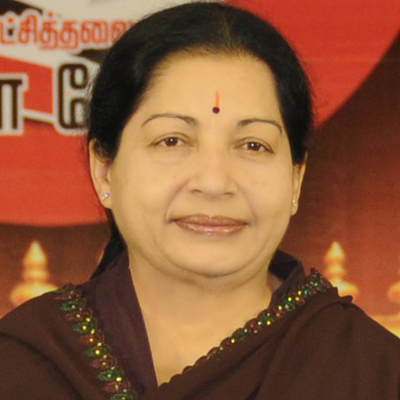
    NEW DELHI: After she failed to convince him through a memorandum presented last month, Tamil Nadu Chief Minister J Jayalalithaa has now written to the Prime Minister Narendra Modi to intervene to secure Digital Addressable System (DAS) licence for the state run TV Cable Corporation.


    The application has been pending with the state for three years but has not been cleared in view of the opinion by the Telecom Regulatory Authority of India (TRAI) that political party, state and centre-run TV channels or TV distribution networks should not be permitted in the country.


    The Regulator had given this opinion in 2008 and then reiterated it earlier this year after the Information and Broadcasting Ministry referred the matter to it for a second time.


     In her letter to Modi, Jayalalithaa said the previous United Progressive Alliance regime sanctioned licenses to nine Multi System Operators in Tamil Nadu but did not respond to the state’s plea. She claimed that her government had revived the ‘defunct’ Tamil Nadu Arasu Cable TV Corporation (TACTV), a state run TV Cable Corporation, after coming to power in 2011 to adhere to its commitment to provide inexpensive and quality Cable TV services.


    TACTV, an initiative of the previous DMK government at the height of family feud in the party’s first family involving M Karunanidhi and his grandnephews, Maran brothers, was however later put in cold storage after they patched up.


    TACTV was providing 100 channels for Rs 70 as against the Rs 150-250 charged by some other MSOs, she said in the letter. After the Cable Television Networks (Regulation) Act, 1995 was amended, paving way for DAS, TACTV took steps to commence operations in the digital mode in Chennai and applied to the Ministry for DAS license.


    Orders were also placed for the supply of Set Top Boxes, Conditional Access System and Subscriber Management System and installing of a headend at a cost of about Rs 50 crore, she told Modi.


    Jayalalithaa in her letter has asserted that as per the provisions of the Cable TV Network (Regulations) Act, 1995, and Rules thereof, TACTV is qualified for such a licence. She also alleged that she strongly suspects that the non-issuance of license by the previous UPA government was only to facilitate particular private business interests. 

  • ESS, SCV in talks as clock ticks for World Cup kick-off

    ESS, SCV in talks as clock ticks for World Cup kick-off

    MUMBAI / NEW DELHI: The countdown is well and truly on as the world awaits the greatest sporting spectacle on the globe – the Fifa World Cup 2006 – to get underway tomorrow in Munich, Germany. 

    In India a very different confrontation is on between ESPN STAR Sports, the exclusive telecast rights holder, and Sumangali Cable Vision (SCV), promoted by the Sun Network, which belongs to the Maran family that rules in the southern state of Tamil Nadu and owns cable networks in Chennai, a city where CAS has been implemented since 2003.
    The first ball in the fracas was kicked by SCV on Wednesday when it issued a statement that all World Cup matches would be telecast live on any free channel on the premium band enabling viewers without STB (set top boxes) to get all the action. 

    ESS in its response issued yesterday was quite categorical that “soccer lovers in the city can enjoy live telecast of Fifa World Cup 2006 only through set top boxes or through DTH services.” For Maran family patriarch and DMK leader M Karunanidhi, recently sworn in as chief minister after ousting bitter political rival Jayalalitha at the hustings, the prospect of Chennai’s citizens being deprived of the chance to see the soccer World Cup is unthinkable.

    While the buzz in Delhi is that Karunanidhi had called for a meeting with ESPN managing director RC Venkateish and his team might well be stretching things, that ESS and SCV executives were scheduled to meet to thrash out the matter today is true.

    It is worth noting here that one of Karunanidhi’s pre-election promises was for the supply of free colour TV sets to the state’s needy so all matters linked to the television are politically charged. 

    Till the time of writing this report, an update on the meeting between ESS executives and the Marans were not available.

    According to information available with Indiantelevision.com, the issue will get resolved if an agreement is reached between SCV and ESS on the payout Chennai’s dominant MSO will have to give to access the telecast.

    Once that happens, SCV’s assertion to its subscribers that the World Cup matches would go live on the free-to-air (FTA) band will be fulfilled. 

    The fact is though, that whether SCV and ESS reach an agreement or not, if the MSO were to show the World Cup matches on the FTA band it would be in breach of existing CAS laws. 

    Chennai after all is the only metro in the country where conditional access is operative and delivery of pay channels by any means other than through a set top box is illegal.

    A point of note is that SCV already appears to be in in violation of CAS laws in the matter of the Ten Sports telecast of the ongoing India-West Indies Test series being played out in the Caribbean. SCV has been airing the matches live on the FTA band. 

    However, since the SCV subscriber is not having to pay anything extra for getting the Ten Sports feed, for all practical purposes the Dubai-based sports channel is an FTA channel in the Chennai territory. That the Sony-Discovery One Alliance distribution bouquet (of which Ten Sports is a part) has chosen to look the other way about it is clearly linked to the fact that SCV is its distributor in Tamil Nadu.

    Sun TV Network promoter Kalanidhi Maran’s younger brother, Dayanidhi, is a minister in the federal coalition government in charge of telecommunications and infotech portfolios. 

    ESS warns cable ops against unlawful Fifa telecast 

    Rajesh Kaul, associate vice-president, affiliate sales, ESPN Software has in a statement said, “No other channel, whether pay, free to air or terrestrial is authorized to provide, show or distribute the Fifa World Cup Germany 2006 in the territory of India.”

    He added, “Also carriage, reception or distribution of the Fifa World Cup Germany 2006 by any MSO / cable operator / sub-operator without written authorization from ESPN Star Sports is a violation of copyrights and hence an illegal activity. If any person(s), entities are found to be resorting to such activities, legal action shall be initiated against such persons(s) / entities.”

    These assertions by ESS were necessitated as cable operators in various parts of the country were threatening to show the World Cup either through ESS signals or by accessing them from elsewhere.

    For example, Indiantelevision.com learns from ESPN India that a cable operator in Agartala in north-eastern part of the country had threatened to access the World Cup via Bangladesh TV, signals of which spill over to Indian border states also.

    Dish TV bullish on WC fuelling STB sales

    The cable controversy apart, Subhash Chandra’s Dish TV, country’s first DTH service, is bullish that the World Cup would fuel sale of boxes not only in Chennai, but in other parts of the country also.

    Dish TV business head and additional vice-chairman of Essel Industries Jawahar Goel said, “The off-take of our DTH boxes in Chennai is up almost 300 per cent these days.”

    While admitting that having ESPN and Star Sports on the DTH platform is an incentive for sale with the soccer fiesta just a day away, Goel, however, said that Dish TV would like to keep “away from the controversy” raging on in Chennai involving ESS and Sumangali.

    “We are businesspeople and would like to restrict our involvement to business deals,” Goel explained.

    An added advantage for Dish TV — present subscriber base in India close to 1 million — in pushing up its sale is that pubcaster Doordarshan will only be able to show the opening ceremony and match, plus the two semi finals and the final of the soccer World Cup.

    According to a report in The Hindu, taking advantage of the growing World Cup football fever, infotech major HCL will start distributing Dish TV products through Nokia outlets in Chennai. 

    HCL, itself a Nokia distributor, officially launched its DTH distributorship at a meeting for 120 dealers in Chennai on Wednesday. 

    Meanwhile, asked what would be Dish’s reaction if cable ops in football-crazy Kolkata in West Bengal re-transmit ESPN and Star Sports signals during the World Cup illegally to subscribers, Goel said action would be taken against errant cable ops.

    “Any cable operator trying to steal ESS signals from Dish TV (for football matches) would be hauled up and legal action will be initiated against him,” Goel said, pointing out that such subscribers would be switched off from the Dish control room.

    “We have launched a nationwide anti-piracy drive and will not tolerate piracy of signals from Dish TV,” Goel said.