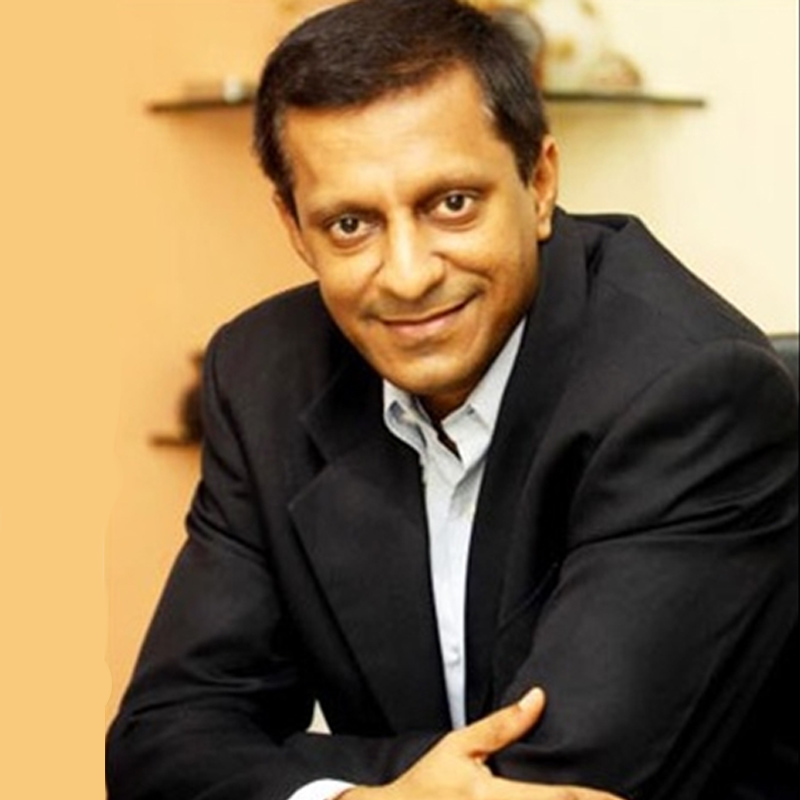
Tag: LV Krishnan

  • TAM Media offers possible solution to broadcasters’ ratings woes

    TAM Media offers possible solution to broadcasters’ ratings woes

    MUMBAI: Even as the broadcast community gets ready to put the lights out on India‘s TV ratings, TAM Media CEO LV Krishnan has suggested that he is open to another conversation with the industry. He says that he is open to pulling out the people meters from LC1 markets and deploying them elsewhere where they are needed.

    TAM Media CEO LV Krishnan would like to sort out any confusion about the ratings.

    Krishnan agrees that reportage of the LC1 markets is pulling down the average TV ratings for broadcasters, but the broadcasters should have seen that coming before the data started emerging. He, however, says TAM is open to stepping back even if it is a retrograde step.

    “Let us all come to the table and sort out any confusion that has arisen,” says Krishnan. “If everyone wants TAM to pull out of LC1 markets – that is the IBF, the ISA and the AAAI – we will do whatsoever is in the interests of the industry and ratings. But someone has to answer the government which has been insisting that we expand our footprint.”

    Will the IBF, ISA and AAAI take up his offer?

  • TAM hires Sr cop to increase security of its TV ratings panel

    TAM hires Sr cop to increase security of its TV ratings panel

    MUMBAI: TV ratings agency TAM Media has come under fire from time to time with the allegation that its ratings sample audience has been breached and that its ratings are not sacrosanct. It is taking steps to put those fears to rest. It today announced that it has set up a dedicated desk for vigilance, investigation and crime detection in a bid to further fortify its TV panel home security process.

    The desk is to be chaired by president‘s medal awardee and a crime investigation veteran (a former ACP, Maharashtra Police with 22 years experience) Ravi Ratanjankar as head, vigilance & corporate risk mitigation. Ravi‘s special role in TAM will be to help fortify the organisation against any potential vested interest parties trying to break into the TAM system. He was earlier with HDFC Bank. Handling pan-India vigilance functions and helping in the implementation of fraud management systems

    This move, probably, is a first of its kind, proactive initiative undertaken by any market research service provider to safe guard its operations, says a TAM Media release.

    Says TAM Media Research CEO LV Krishnan: “Our core service of television audience measurement (TAM) has played a silent, yet, central role in helping the Indian broadcast and advertising industry reach the size and stature we know of today. This has only happened because of our regular proactive measures, one of them being constant expansion and enhancement of our TV audience panel home. Today, our TV audience measurement panel covers over 225 towns & cities across urban and semi-rural markets covering all the key states of India.”

    “The key here is, and which a very few realise, that the complexity of such huge on-ground operations do run a risk of potential external threats. In our unrelenting focus towards quality and the need to protect the services from any types of external threats, TAM is taking further necessary steps that will ensure a deeper safeguard to the services via stronger walls of security and vigilance in the coming months and years. Ravi‘s appointment towards this is not the end but one of the many more initiatives that Industry will see. I am very pleased to have Ravi as part of my team. We are very sure that his role and involvement will further elevate TAM to new performance benchmarks,” adds Krishnan.

  • TAM to survey digital penetration in 4 metros in November

    TAM to survey digital penetration in 4 metros in November

    MUMBAI: TAM Media Research, the only television audience measurement service in India, will conduct a survey in November in the four metros to get an estimate of digital penetration after compulsory digitisation gets implemented on 1 November.

    TAM will also conduct a special survey called All India Digital Establishment Survey (DES) across the country in December to confirm the share of digital in total television households.

    The survey to be conducted in November is part of the DAS Establishment Survey it started in May in Mumbai, Delhi, Chennai and Kolkata to keep track of the progress in switchover to digital delivery of cable television.

    In a statement released by TAM Thursday evening, TAM CEO LV Krishnan said, “TAM has been long ready to measure Indian Television Homes’ transition to the Digital World since way back in 2007. We implemented the state of the art, platform neutral, TVM5 Peoplemeter system then and started reporting data in July 2008.”

    TAM said it has been able to reflect the change from analogue homes to digital in its panel homes till now. But this change has been gradual and thus, the agency has had breathing space to make the corrections required. Of the total 8,000 homes where TAM has installed its peoplemeters to gather viewership data, 1,500 are in the four metros.

    As 1 November inches closer, there is a possibility that there will be a significant spike in the conversion from analogue to digital which TAM would find difficult to accommodate and reflect in its sample over a short period of time, which would then lead to inconsistencies in data. Hence, it accepted the decision of industry bodies Indian Broadcasting Foundation (IBF), Advertising Agencies Association of India (AAAI) and Indian Society of Advertisers (ISA) to have the ratings suspended for nine weeks till week starting 8 December.

    Clarifying further, Krishnan told indiantelevision.com, “The main question is what universe do we project the (ratings) data to? There are going to be some homes that have not shifted to digital by 1 November. Of these, some might shift; some might not while some may even go the terrestrial way.”

    This change will take some time to take place. During the stabilisation period, the universe TAM is projecting to will be in a state of flux. There are many factors that may affect the conversion from analogue to digital. Apart from people waiting till the last moment, there is also the question of availability and deployment of digital set top boxes.

    Echoing his thoughts, Lodestar UM CEO Shashi Sinha says, “There are two issues. One is the panel (television homes where TAM has installed its peoplemeters). The second is the fluctuation (in data) and viewership. The panel is the basic data but what about the fluctuation in viewership that will happen because of the digital signals?”

  • Asci, TAM to monitor misleading ads

    Asci, TAM to monitor misleading ads

    MUMBAI: With the government pressing for a new set of guidelines to check misleading ads, Asci, India’s advertising industry watchdog, has swung into action.

    The Advertising Standards Council of India said Tuesday it is partnering with TAM Media Research to monitor misleading ads, a move aimed at improving the self-regulatory mechanism by speeding up the processes and compliance of its codes for advertising content.

    The newly created body, National Advertising Monitoring Service (NAMS), will come into effect from 1 May.

    TAM‘s division, AdEx, will check around 350 TV and 10860 newspaper ads per week.

    Set up in Baroda, NAMS will track and assess the ads for compliance with Asci‘s code related to unsubstantiated, misleading or false claims. The need arises even as the number of complaints received by Asci has increased to around 3,000 in 2011-‘12, up from 800 a year ago.

    Said Asci chairman I Venkat, “This initiative is a paradigm shift for self regulation in Indian advertising and probably a benchmark for other countries as something like this has never been attempted at this scale anywhere in the world. For such an important and industry central initiative, TAM’s AdEx India was the obvious option to handle such a large responsibility that brought in requisite infrastructure, neutrality, integrity and quality. NAMS will strengthen the ad self regulation Redressal process manifold, as we will be able to proactively monitor wider numbers of ads. This will be in the best interest of the Indian consumers as it will significantly reduce release of misleading advertising in India.”

    AdEx will identify ads which are in potential violation of Chapter 1 of Asci code which deals with the truthful and honest nature of ads. AdEx India will monitor ads in the auto, banking, financial services and insurance, FMCG (incl. F&B), consumer durables, educational institutions, health care products & services, telecom and real estate sectors.

    TAM Media Research CEO LV Krishnan said, “Our partnership with Asci is yet another reiteration of the neutral role we play within the Indian advertising landscape.”

    The scope of work will cover the tracking of more than 30 newspapers (all editions) which contribute to over 80 per cent of national newspaper readership and all TV Channels across the country in all Indian languages. Ads seen as those potentially violating Chapter 1 of Asci code will then be forwarded to Asci on a weekly basis. Asci will then process them as per its normal complaint procedure involving its Consumer Complaints Council (CCC) for adjudication.

    The CCC meetings will be held twice a month, moving away from its earlier practice of a monthly meeting.Venkat said, “This is another initiative to reduce the gap between the identification of an objectionable ad and when it is actually modified or taken off air.”

  • TAM Sports launches IPL 3 & 4 assessment book

    TAM Sports launches IPL 3 & 4 assessment book

    MUMBAI: TAM Sports, TAM Media Research‘s division that specialises in measuring the sports sponsorship RoI, has done an assessment on IPL 3 and 4 focusing on the dynamics of TV audience and sponsorships.

    This series of TAM Sports publishing aims at benefiting sports association, broadcasters, advertisers and sports marketing consultancies and help them understand the complexity involved in expecting RoI, TAM said in a statement. The initiative started with IPL season 1 and also has a book on IPL season 2.

    TAM Media Research CEO LV Krishnan said, “Based on the overwhelming response to our earlier book series of IPL 1 and 2, we at TAM Sports are glad to release the combined book volumes of IPL 3 and IPL 4. These two volume continues to highlight the insights on the sports sponsorship RoI on various Platforms – instadia, on-player and on-screen – to the industry along with throwing light on the tournament viewing analysis like audience profile, how various markets have responded to the event, impact of IPL on other genres with a special new section on franchisee advertising and print in-content placement. While cricket has been a big focus from TAM Sports due to its large audience and advertising base, we will also continue to provide more such insights on other sports like F1, Tennis and Football as well to serve the respective industry for its business requirements.”

    TAM Sports‘ IPL 3 and 4 books include an in-depth study on the event‘s viewership dynamics, commercial and non-commercial advertising (product placement) that brings out the nuances with respect to visibility of brands and branding units along with a comparison across seasons. It offers a detailed study on consumer impressions, brand placement, on-screen and instadia advertising along with a special section on the franchisee advertising done during IPL Season 3 and 4. One part of this offering also includes the analysis on PR exposure received by franchisees and various brands associated with it.

    According to TAM Sports‘ IPL study, IPL seasons were successful in reaching maximum audiences year on year. IPL Season 3 reached to 41+ million audiences whereas IPL 4 reached to 46+ million viewers. IPL 3 and 4 both garnered maximum contribution from CS 35+ age group whereas IPL Season 4 has seen increase in kids viewing. In comparison with IPL 3, IPL 4 witnessed 33 per cent growth in overall advertising while commercial, on-screen and instadia advertising witnessed a growth of 21 per cent, 50 per cent and 33 per cent respectively. Commercial advertising during IPL Season 4 increased by 21 per cent as compared to that of IPL Season 3. IPL 4 saw utilisation of 60+ instadia platforms. On player advertising has witnessed 37 per cent growth. 57 brands got exposure through 16 accessories platforms and contributed 2 per cent share of the total Instadia advertising.

  • Radio ads to get a boost as RAM expands footprint

    Radio ads to get a boost as RAM expands footprint

    MUMBAI: Radio Audience Measurement (RAM), launched by TAM Media Research in 2007 for the radio Industry, has expanded its footprint across nine additional Indian cities – Ahmedabad, Chennai, Hyderabad, Indore, Jaipur, Kanpur, Lucknow, Nagpur and Pune.


    RAM has also released its first set of findings in these cities based on respondent data collected during May-August 2011.


    In the last four years, RAM operated out of the four metros – Bangalore, Delhi, Kolkata and Mumbai.


    TAM CEO LV Krishnan said, “Our commitment to take RAM beyond the four metros has fructified. This time, the RAM roll out is much wider and deeper. These nine cities will throw light to advertisers the interaction radio is bringing to their consumers and also help broadcasters fine tune their basket of programming to these audiences. This will help propel higher commercial viability for the Industry at large. As always, we will work very closely with the ndustry to help them understand the dynamics of this very high potential communication and brand building medium from these markets as well. Like in four RAM metros earlier, we believe that in these nine metros too, RAM’s entry will boost the radio advertising investments.”
     
    RAM said that the study based on new cities offers some “very interesting trends” about radio listenership or consumption behaviour.


    Some highlights are:


    The universe size of the newly added nine markets is an impressive 50 per cent of the existing four RAM markets.


    Southern markets observe higher FM penetration as compared to northern markets.


    On an average, there is 95 per cent FM universe has been reached in a week across all the markets.


    Chennai and Jaipur observe 100 per cent weekly reach.


    Time spent listening among the nine new markets is comparatively more than the existing four metro markets.


    Markets like Nagpur and Jaipur observe 28.29 (hh:mm) and 24.05 (hh:mm) time spent on a weekly basis.


    While majority of the newly added nine markets observe heavy in home listening, OOH (out-of-home) listening in existing four metros market is higher compared to new markets.


    Indore and Lucknow observe least OOH listening among the new RAM markets.


    Majority of the new markets have heavy composition from male audiences whereas existing Mumbai and Kolkata market witness substantial composition from female audiences.


    Listenership in northern cities like Delhi and Jaipur are skewed towards higher SECs. Markets like Nagpur and Kanpur are skewed towards lower SECs.


    Morning time band observes highest listenership contribution across the day.


    Indore market observes highest listenership contribution from mid morning time band.


    Listenership contribution on Saturday and Sunday are higher for the new markets whereas in the existing markets Saturday observes least contribution.


    Radio ADEX data reflects a very positive change that RAM has brought about in the radio advertising scenario ever since its launch in 2007.


    “If one looks at 4 metros advertising numbers for the period of January-June 2011 and compare it with the same period in the year of RAM launch in 2007, ad duration volume grew by 87 per cent, new advertisers entered which resulted in an increase of 42 per cent in the advertiser base; and the number of brands participating in radio advertising grew by 45 per cent,” RAM said.


  • Contesting a monthly ratings system for news channels

    Contesting a monthly ratings system for news channels

    MUMBAI/NEW DELHI: Television news broadcasters are pressuring for a monthly ratings system that will free their content from being weighed on a weekly basis, but advertising agencies do not seem to be in agreement.

    News Broadcasters Association (NBA), an umbrella body of TV news channels, has decided that the weekly ratings for all national news and business channels in Hindi and English should be done on a monthly basis from next month.

    The NBA board feels that this will improve news broadcasting standards as “coverage and reportage of news and programmes cannot always be linked to popularity or audience measurement”.

    India’s ratings agency TAM, however, has not yielded yet. Though in dialogue with the NBA, TAM wants consensus from the other stakeholders like the IBF, AAAI and ISA who are also users of the same central TAM database.

    Said TAM Media Research CEO LV Krishnan, “It is imperative for NBA to first discuss their proposal with other industry bodies. Only after this should one arrive at an overall industry consensus on the frequency of TAM data reporting. TAM will require written approvals from each of the member’s industry bodies on the decision taken with respect to the change in frequency of data reporting. Till the time we receive a formal overall approval from all stakeholders of the TAM database, no decisions on the change in current frequency of reporting will be taken.”

    Building a consensus will not be easy. Leo Burnett Chairman of India Sub-Continent Arvind Sharma said, “Advertising agencies will oppose such a move. To make a more informed decision, an advertiser needs transparent, frequent and current data. Moving to a monthly ratings system will not allow us to read patterns. It is not a progressive move.”

    News broadcasters argue that their content is distinct from other genres as they have a responsibility to inform and empower their viewers with quality programming and dissemination of news rather than providing content merely for garnering viewership. News broadcasting standards can only improve with time spent on strategic planning and research rather than knee jerk reactions taken on a weekly basis.

    NBA wants TAM to introduce the monthly ratings system initially for a period of two years. Regional news channels could be brought under this system on a later date.

    Speaking to Indiantelevision.com, several senior executives said on condition of anonymity that agencies look at 4-13 week data when they make advertising deals for their clients. “There is no revision in rates done after a deal is inked. So there is no reason for them to be upset,” a top official said.

    The NBA also clarified in an official statement that the initiative taken by it would not in any way hamper the decision making of advertisers and advertising agencies.

    “In the new monthly dispensation, advertisers would continue to get access to data broken down to a minute or a day-part or a specific programme in a manner similar to how data points are currently accessed in the weekly format,” it said.

    Sharma, however, disagrees. “News channels are indirectly saying that more frequent information (weekly ratings data) makes their content worse. This seems to be built on an unsound premise,” he said.

    Added Madison Media Group CEO Punitha Arumugam, “The same data getting reported on a monthly basis instead only delays the decision making process.”

    Will a monthly ratings system clean up content? “This will certainly reduce pressure on the editors,” said Pankaj Pachauri, NDTV Managing Editor – Special Projects and VP of the Broadcast Editors Association. “Editors were often constrained to make last minute changes in the fixed point charts or the content of the various news programmes on the basis of weekly TAM reports.”

  • ‘You cannot build a sample on psychographics’ : LV Krishnan – TAM India CEO

    ‘You cannot build a sample on psychographics’ : LV Krishnan – TAM India CEO

    Media research agency Tam is in an expansion mode. Recently, it increased the number of peoplemeters from 4800 to 6917. And as direct-to-home (DTH) and conditional access system (Cas) took root, it also came out with the Elite Panel. The aim: to give broadCasters and media planners an idea of what the cr?me de la cr?me consume.


    Indiantelevision.com’s Ashwin Pinto caught up with Tam India CEO LV Krishnan to find out how the agency is gearing up to meet the challenges that new distribution technologies are throwing up.


    Excerpts:

    With conditional access system (Cas) and direct-to-home (DTH) taking root, what is Tam’s strategy going to be?

    We expected digitisation to happen sooner or later. We have been getting ready for it since a year. In April 2006 we released our first study under the Blinx series where we had the first DTH penetration data coming out. We also did a multi-city study on what was happening on Cas. We looked at the international availability of technology that could be used to measure these two platforms.


    We began work on the digital peoplemeter which we call the TVM5. Today all the six metros are completely aligned to the TVM5 digital peoplemeter. The peoplemeters are technologically hybrid. This was stage one done last year. We expanded the panel two weeks back and introduced the Elite Panel. After that, quite a large number of homes in the Elite Panel have moved onto DTH. In the regular panel a significant amount of homes are converted to Cas.


    This is clubbed with the C&S (cable & satellite) data and sent to the industry for usage. While this happens and the market moves from analogue to digital, there is growth in DTH and Cas for both panels. To validate this we are doing a regular penetration study. The data for this month will be out shortly. We will do studies in February and March to find out DTH and Cas penetration in the notified areas. It will be matched with our Elite Panel penetration also to see if it matches with those kinds of homes. Then data will go out to the user.

    Will Cas or DTH prevail and why?

    It is difficult to say which one will succeed. Each has advantages. Finally it is the service ability that counts. The demand is there. Pricing is important.


    Then there is the marketing activities done. Feedback is that demand for set top boxes is rising dramatically. But the service ability is the need of the hour. This is preventing more penetration.

    Tam has also increased the number of Peoplemeters and coverage area. Could you talk about this?

    We have been working with the joint industry body (JIB) for the last year and a half to look at the next step. Hence the decision to go to 7000 peoplemeters.


    Three things prompted the expansion. Firstly the universe has changed since the last expansion that happened in 2002 – 2003. The number of C&S homes has increased. New towns have been added on different strata of the population. The second reason is the sheer amount of fragmentation that is happening. With the number of channels available, TV viewing has become more fragmented. To look at data from specific segments of the population you need to go deeper. The Hindi speaking markets which is the North and West is where the bulk of the new metering has been done.


    In the South, the time spent on viewing is higher in proportion to the number of TV homes present. More samples have been added there. Then we wanted to plan for the future with new platforms coming in. You will see further fragmentation with DTH and Cas arriving. IPTV is also soon to launch. We wanted to be ready for this change.

    How much has Tam invested and what have the challenges been?

    The expansion has taken 10 months of work. We started last February. We moved from 73 towns to 151. We brought in the digital peoplemeters. At the same time we needed to ensure that the homes are counseled to deliver quality research. It has been great working along with the industry. Over Rs 250 million has gone into the expansion.

    Why did it take it so much time to expand?

    We touched 4800 in 2003. In 2004 there was no establishment study. We had to wait for 2005 to see the kind of growth rates that have happened. When we got NRS 2005 there was also census data for 2001 which came out in 2005. That data came to us in the second half of 2005.

    We are examining the possibility of expanding the Elite Panel to other markets like Bangalore, Chennai and Kolkata

    How do you choose the homes and how is user compliance ensured?

    The homes are chosen on the basis of key control variables divided into primary and secondary variables. The former are socio economic classes, the ability to watch C&S or terrestrial television. Number of home members is another variable. Apart from that, secondary variables include ratio of colour to black and white TV sets. In 2007 we have added a new variable, which is the presence of kids. A metric is used to gauge the compliance of a home to the peoplemeter which is button pushing. So we do surprise checks with these homes. Once we are sure that they are stable we add them to the reporting data.

    Rival ratings service aMap talks about the importance of pyschographic profiling and that 25+ SEC A is not enough if you want to know what for instance an executive consumes. Your views on this?

    You can include additional variables. However a panel needs to be put on strong foundation stones. They have to be stable over a period of time. Then you look at SEC, cable and satellite or terrestrial. Pyschographic variables are ever changing in nature. You cannot build a sample on psychographics. If you list pyschographic variables, which could be 100, you diminish your sample to miniature levels.


    You cannot have attitudinal factors being linked to viewing behaviour patterns. Attitudinal factors can be included in one off studies. But to expect a panel to give you solutions for every little thing will not be possible. A panel is supposed to give continuous behaviour changes so that you can do projections for the future based on past behaviour.


    In a dynamic market you have a cable operator changing the channel line-up, marketing etc. If you can pick up these changes and tie it to the numbers you can make better sense of the data rather than try to report things based on things that are affected by changing attitudes. It is important to have data that gives a clear picture of the changing marketplace rather than have a variable that is there for the sake of it.

    How has the channel standings been affected by the expansion of the panel?

    In general the expanded panel has come in with Cas implementation. Pay channels have taken a hit in Mumbai, Delhi and Kolkata. But the figures will improve as homes move to Cas or DTH. Distribution is key in the towns. Also when you geographically expand your ratings presence you see a difference in terms of power cuts. This environmental factor also affects channel shares. A strong distribution of channels in smaller towns will mean that share is not affected.


    Regional channels share has gone up. So has news. The free to air channels are also faring better. The mainline channels continue to stay strong. Certainly there is more fragmentation. Music and the English entertainment channels are stagnating. This has to do with content along with marketing. Colour TV sets have jumped to 70 per cent in the C&S homes. Remote control penetration has also grown. There is faster surfing and more sampling. The ad rate viewership is slipping vis-?-vis programme viewership. There is a 20 per cent difference. News has eaten into the share of GEC.

    What findings has the Elite Panel thrown up?

    The elite segment spends a limited amount of time on television. It is around an hour and a half each day compared to two hours and 10 minutes for the general panel. For those who own a DVD player it goes down further to around an hour and 10 minutes. The more the leisure opportunities present, the less he/she watches television. They are extremely choosy. What is interesting is that although the main language of 45 per cent of the Elite Panel is English, the time spent on watching Hindi content is more watched. English entertainment needs to touch the heart of the consumer better.


    It is clear that the members of the Elite Panel do not approve of the quality of content on the English entertainment channels, which is one reason why they are not spending much time watching television. They are basically surfing through the English channels and then going back to the Hindi shows. The English channels need to understand what the viewer requires. The elite segment represents an opportunity.

    Can you highlight any other findings that emerged from the Elite Panel?

    Firstly we need to segment general entertainment into two parts. One is soaps and the other is reality shows. The former is consumed by the housewife while the latter is consumed by the youth. On a national scale you have one TV set homes mostly. But in the Elite Panel there are multiple TV set homes. So while the overall numbers are the same when you break it down into soaps and reality shows the viewing is split evenly in the Elite Panel. This means that the second TV set is being used to watch reality shows by the younger members. This gives channels an idea of the kind of shows that can be created for the Elite versus what is being done for the rest of the country.


    The Elite segment has nuclear families with bigger homes. There are two kinds of homes. One is executive which has lesser kid’s, while some of them are Dink (double income no kid’s) homes. The business family is larger. The day parts both watch are different as also is the content.


    Another difference is the behaviour of this audience towards weekends. In a national panel time spent declines. Here it goes up. News is watched a lot. Sports viewing depends on the significance of an event. It needs to be interesting. They will watch an event whether it is cricket or tennis or Formula one if the match is interesting. Schumacher’s last Grand Prix touched a rating of over three in the Elite Panel while in the national panel it was 0.22. Viewing of sports depends more on the quality of the match rather than on the tournament per se. Kids and movies fare better on the Elite Panel.

    What has the media feedback been like for this service?

    It has been good. We are examining the possibility of expanding it to other markets like Bangalore, Chennai and Kolkata. It has been two years since we started work on the panel. The challenge was to keep the panel intact. We have 125 homes in Delhi and 125 homes in Mumbai.


    Technologically we had to make sure that data could be downloaded which is not easy given that the telecom infrastructure is already overloaded. We did special techniques to recruit homes. We spoke to them in terms of what we are trying to do. We had trained people visiting the homes with laptops.

    Can sports viewing for non-cricket grow?

    There are some learnings from cricket. Firstly you need star appeal. Would you watch cricket without Sachin, Saurav, Dravid and Dhoni?


    Secondly media coverage is crucial. The reason why the soccer World Cup last year fared so well was due to the enormous coverage and hype in the media particularly in newspapers. Then there needs to be drama. Cricket has controversy, which creates aura. For instance Saurav coming back sparked debate.

    What is your outlook for radio this year?

    We have expanded our measuring to 32 stations now for AdEx. Earlier it was 13 stations. We are seeing radio ad expenditure growing.

  • Tam increases number of peoplemeters to 6917

    Tam increases number of peoplemeters to 6917

    MUMBAI: Ratings measurement service Tam is in expansion mode. Earlier this month it came out with an Elite Panel for Mumbai and Delhi. The aim is to measure what the creme de la creme consume.

    Now it has increased the number of peoplemeters in the country. The number of meters have been increased from 4800 to 6917, a 44 per cent rise. The aim is to deepen the coverage to more towns.

    This Peoplemeter Update marks the second stage of the TAM expansion project. The first stage was executed to broaden the coverage from 5 states to 12 states but within the existing reporting stratum (0.1 Mn+ population stratum). The second stage is to deepen the coverage to more towns within the less than 0.1Mn+ stratum for all markets covered in stage 1.

    This expansion marks the conclusion of the second step of the entire expansion plan.

    In addition, improvements have been made in the design to take into account the changing demographic and media landscape that results in a higher precision of the viewership estimates.

    The number of cities Tam covers has grown from 73 to 151. In terms of expansion in the Metros are as follows: while earlier there were 450 homes measured in Mumbai now there are 495; in Kolkata the number has risen to 330 from 265. In Delhi it has risen from 425 to 470; in Chennai, Bangalore and Hyderabad it has grown from 255 homes in each of them to 280.

    In terms of how the sample sizes across markets were determined, Tam India CEO LV Krishnan says, “A range of factors influence the sample size allocation of the overall sample across markets. These include the desired depth of analysis, availability of sufficient sample sizes for commonly analysed target groups and a desired level of statistical precision.

    “While markets are analysed by two strata (1 million+ and 0.1 – 1 million) for sampling purposes the 0.1-1 million is broken into 0.1-0.5 mn and 0.5 mn – 1 mn. For the expansion, the 0.1-0.5 mn was broken up further into 0.1-0.2 mn and 0.2-0.5 mn.”

    In terms of the SEC distribution, 33 per cent of the sample homes measured in Delhi are SEC A. In Mumbai, Kolkata and Chennai it is 25 per cent. The representation of SEC D and E is highest in Mumbai and Kolkata at 32 per cent. At an all India level it is 28 per cent for SEC D and E. SEC A and B have a 25 per cent representation each. SEC C has a 21 per cent representation.

    The presence of children was included as a new control parameter for the expansion. This paramater, Tam says, ensures that the proportion of homes in the sample with kids 4-9 years and 10-14 years matches that of the universe. In terms of new markets being introduced in the new Tam panel data, two changes have been seen at a market level.

    Firstly West Bengal 1mn+ is a new market strata that has emerged due to towns moving up to the 1mn+ population bracket. Then Rajasthan, which was earlier reported as Rajasthan 0.1mn+, has now split into a two market strata i.e. Rajasthan 1mn+ and Rajasthan 0.1-1 mn.

  • In pursuit of what in 2007?

    In pursuit of what in 2007?

    The CAS word gets TAM India CEO LV Krishnan thinking about what this brave new world could mean for the likes of the airtime sales exec and media planner.

    In the shifting sands of time the mind does seek for a grip; In the solitude of space constant change is unnerving; only the whiff of victory
    propel one to destination

    As the sun set on 2006, the glow of the last rays had fired the embers left behind by the changes initiated in the arena of TV channel ground distribution during the last few months. The beginning of 2007 itself is seeing a market place oscillating between the old fashioned Analog Technology to a new era of Digital Technology unleashed on the unsuspecting TV viewers by the Government, Multi System Cable operators, Broadcast Satellite owners as well as Telecom companies. With technology gizmos flying all around as well as the jargons attached to it, one is left wondering, what is going on in the simple minds of a Media Planner and Air time Sales member of our industry? Does large industry issues we debate about, top their concern? Take a guess…

    As one mingled with many of them, the concerns or issues were the same… What are we pursuing at the end of the chase?

    A perspective from the Media Planner’s diary

    March 2006: I read in today’s Media website that the Delhi High court has given a ruling to the effect that Conditional Access System is mandatory in South of Mumbai, Delhi & Calcutta for receiving pay TV. This was going to happen in the next few weeks…

    …Whoosh!

    June 2006: It didn’t happen…does it ever happen as proclaimed?

    …Zip…Zap!

    December2006: Will it happen this month? Will await Dec 31st to know…

    January 2007: It happened!

    As I walked into my office the very next day…the first day of the New Year, I wondered…

    Gosh, what will happen to my life? My Brands – Media Plans & Buys are ready to be executed, but now, will I have to put everything on hold? What will I answer my client? Will plan deliveries fall down in the 3 Metros? By how much? What is TAM data indicating?

    In a confused state of mind, I decided to get out of office to take a walk along the Worli sea-line hoping for some fresh breath from a magic genie.

    Yes, the winter air was filled with a new whiff. No doubt it was energizing my legs as I broke into a steady walk. As I took a sample of the freshness of 2007, the mind cleared to open up new possibilities staring at us… potential of ensuing change began to dawn on me. The revolution was just beginning and I was determined to ride the wave of change.

    With a renewed vigour, I walked back to my desk to put a call to my client. He was pretty surprised to hear me say that I will be coming down to meet him the same evening to explain to him the consequences of changes happening in the TV media.

    Next, I started with some desk work. I wanted to understand the magnitude of the change expected to be brought about by the CAS notification on Zone 1. A simple analysis from NRS 2006 as well as the TAM CAS document circulated earlier indicated to me that 1.6 million C&S homes across the 3 metros of Mumbai, Delhi & Calcutta will come under the purview. This meant one-fifth (20%) of C&S homes in the 3 metros or just one-twentieth (5%) of C&S homes represented by TAM All India Class I town panel.

    Hence if all the homes in the notified areas for CAS in the 3 metros did not go for set top boxes, the maximum impact in reach of my media plan due to of loss of viewing of pay channels on a National level is going to be less than 5%. In other words, the planned reach of 60% on a National scale could come down to 57%. This could only be the worst scenario. But things are already looking better with demand for set top boxes on the rise with each day passing…

    I then looked at my media plan composition – list of Pay TV channels & Free-to-Air TV (FTA) channels used to deliver the reach. On comparing this with the Free-to-Air channels available, I decided to make a few minor adjustments whereby by making minor spot changes between Free-to-Air & Pay TV channels, I was easily able to hike up the planned reach to 58% on a National level!

    As I started receiving the news that the demand for CAS set top boxes are increasing, I decided to stretch the brand campaign by a few days. This could help me leverage any additional homes that moved into using a set top box for accessing/viewing Pay TV content.

    What made me feel even more confident about achieving the media plan goal was the news that almost all the homes acquiring a CAS set top box will receive all the Pay & FTA TV channels he used to get before Dec 31st. This meant that, while in theory CAS set top box was supposed to act like a filter by providing the viewer with the choice to subscribe, at present it is only used as an enabler to watch all Pay & FTA TV channels which was available to the viewer earlier as a simple cable TV home. Thus, viewer behaviour in terms of channels watched post CAS set top box acquisition couldn’t have changed, thereby helping me to deliver my planned reach goals too.

    I am awaiting with bated breath the first TAM CAS penetration study later this month, more to understand the length of time it is going to take for viewers to start experiencing a shift to the world of digital content. I for one will be looking for the profiles of the CAS homes to try and plan execution of the new brand creative my marketing manager has promised. I have lots of ideas up my sleeve, waiting to explode in the digital space!

    A perspective from the Airtime Sales member’s diary

    January 2007: I looked up my watch and exclaimed “Damn it, going to be late again.” It was all because of this silly traffic…

    2007 had started with a sense of purpose. Yes, there were changes happening around. Positive, I could say. I was heading to meet a very important Up-market personal product marketing head. I was pleased that I could get the appointment after struggling for some many months to get it…only because I was going to show him something different!

    From the telephonic chat I had with him yesterday, I could sense his voice perk up when he heard about my channel’s new programming, showing promise among his set of exclusive consumers.

    I got out of the cab and rushed across the street clutching hard to my presentation papers. I approached the front office of the organization gasping for breath. The receptionist looked at her watch, acknowledged my presence on the intercom and then, silently led me to the massive board room. As I sat, wrapped around by the chilly air sent out by the humming air-conditioner, my mind whirred with excitement. At the same time, I had a sense of apprehension as it was for the first time I was going to present the findings about my channel from the Elite panel and I was not sure, how the marketing head could react.

    Suddenly, a booming voice saying “Hello” came in from behind. As I turned around, I came in contact with the marketing head, who was by then extending his arm to welcome me. Pleasantries were exchanged and we got quickly to the brass tracks.

    I opened my small presentation folder displaying the sheets about his products and target consumers. I could see him nodding to my opening statements. I was feeling relieved that I was bang-on in guessing his product’s consumer profile. This led me to draw up the next few sheets that explained the profile of viewers my channel catered on a daily basis. I could see him show inquisitiveness to my reports. Soon we got drawn into the discussion about my channel’s performance and the question I was waiting for all along got popped out. “How do you say that my consumers watch TV and therefore content related to your channel?”

    My best was yet to come. I opened up the data from the Elite panel to reveal to him the new, latest finding…

    His Up-scale consumers did spent time watching TV (unlike his thinking), but they spent less time watching it vis-?-vis the average TV viewer and even an SEC A TV viewer on the TAM National panel.

    The other important observation that impressed him was that the TV viewership of the Elite viewers was far more fragmented as compared to an average viewer and also the SEC A viewer in the National panel.

    While 26 channels accounted for 80% of viewership for the SEC A viewers, it took 35 channels that made up 80% share of viewing for the Elite viewers, a testimony to the wider content preference for the Elite! This invariably means that, in order to reach to the Elite viewers, the marketing head had to consume air-time across more channels of distinct content appealing to his Up-market consumers.

    As I progressed with my charts and comments, the final one hit the bulls-eye. Certain genres like English Movie channels, Business news, English news & English Entertainment channels had a visible skew towards the Elite audience as compared to even the SEC A viewers in the National panel. This made the marketing head look up. I could see a huge smile on his face as he made the comment “I always knew this and keep saying so to all my team members.” I just smiled back at him with the hope that I could have finally bagged the campaign, I thought, that deserved to run on my channel.

    It did happen as I visualized the very next moment. The marketing head picked up the nearby intercom, spoke a few words to the person on the other end, and then turned around to me to say the final words, the most precious words I have been waiting to hear “…the campaign will include your channel too.”

    That evening, I was certainly heady. We celebrated the win back in the office with a champagne pop up. 2007 indeed has begun for me in a new way I couldn’t have imagined a few days back. A real nice kick start and I hope to keep riding that way!