Tag: lust stories

  • “You Better Do A Good Job Because He’s Our Best Man” Indian Army’s advice to Vicky Kaushal ahead of Sam Bahadur

    “You Better Do A Good Job Because He’s Our Best Man” Indian Army’s advice to Vicky Kaushal ahead of Sam Bahadur

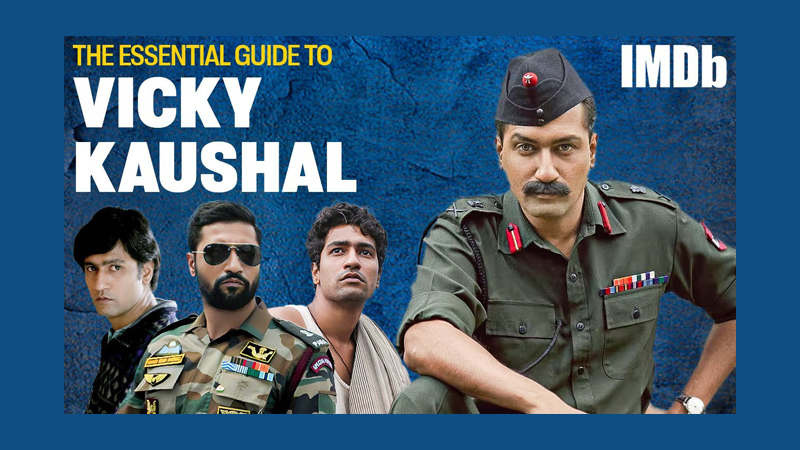
    Mumbai: Vicky Kaushal made his debut over eight years ago in the Neeraj Ghaywan directorial Masaan. Since then, he has established himself as one of the prominent actors in the country with notable performances across films including Raazi, Sanju, and Lust Stories, amongst others. In early stages of his career, Vicky won the National Award for Best Actor for his performance in Uri: The Surgical Strike. He will next be seen in the upcoming biographical war drama film Sam Bahadur which has been directed by Meghna Gulzar. Ahead of its release, Vicky appeared on the IMDb exclusive segment ‘Essential Guide to Vicky Kaushal’ where he spoke about his journey so far in Bollywood while sharing personal anecdotes of his upcoming film.

    Find out more below:

    Sharing his experience of shooting for Sam Bahadur, Kaushal mentioned, “Every time I would interact with the Indian Army, every time they would be like, ‘we are very happy you’re getting to play this role, but you better do a good job because he’s our best man and you’re playing our best man’. Most of the dialogues in the film, which sound like these filmy dialogues, are actually said by him, quote, unquote. And I’m just praying that when the film comes out, people feel the tribute that we wish to give to the man, to the legend.”

    Revealing the moment he knew he wanted to be an actor, Kaushal said, “During my engineering college days, we were taken to a multinational company. They showed us the work culture post completion of college. That day I knew what I didn’t want to do in life. So, I started asking myself what’s going to make me happy. That’s where I got the answer that once I finish graduation, I am going to become an actor.”

    Speaking of Masaan, the first film where he played a protagonist, Kaushal said, “I didn’t know that it was going to affect me so much. We shot in Banaras where there was magical magnetic energy, which just pulled me in. With this movie, I saw myself for the first time on the big screen at the Cannes Film Festival. One year prior to that, I was looking for opportunities, for a job, knocking doors.”

    Speaking of when he assisted Anurag Kashyap on Gangs of Wasseypur, Kaushal said,  “I consider it to be my film school  where I got the opportunity to assist Anurag Kashyap on Gangs of Wasseypur. It was a bunch of fantastic actors coming together to do this film. And it was also a film made with very limited resources. It did not have the vanity of a big-scale Bollywood film. I still carry those learnings with me, it still helps me when I’m performing.”

    Sharing his experience of working on Sanju, Kaushal said, “I got the opportunity to work with one of the best directors in the country, Rajkumar Hirani. Kamli was a beautiful character I got to play with some beautiful writing done for the film. I got to work with Ranbir. I had heard other actors say that it is a great feeling to be called by your character’s name. I got to experience that with Kamli. I got to live that moment with Sanju.”

    Speaking of the turning point of his career, Kaushal shared, “Uri: The Surgical Strike has to be my biggest turning point as an actor in terms of the success of the film, in terms of how well this film was received, celebrated. It was a tribute to the Indian army. For four months, there was a proper boot camp training which I had to undergo. I was trained by the Indian army. I got to win the National Award for this film, which is probably one of the happiest days of my life because it’s a huge honour.”

  • Netflix CEO Reed Hastings on competition and content creation in India

    Netflix CEO Reed Hastings on competition and content creation in India

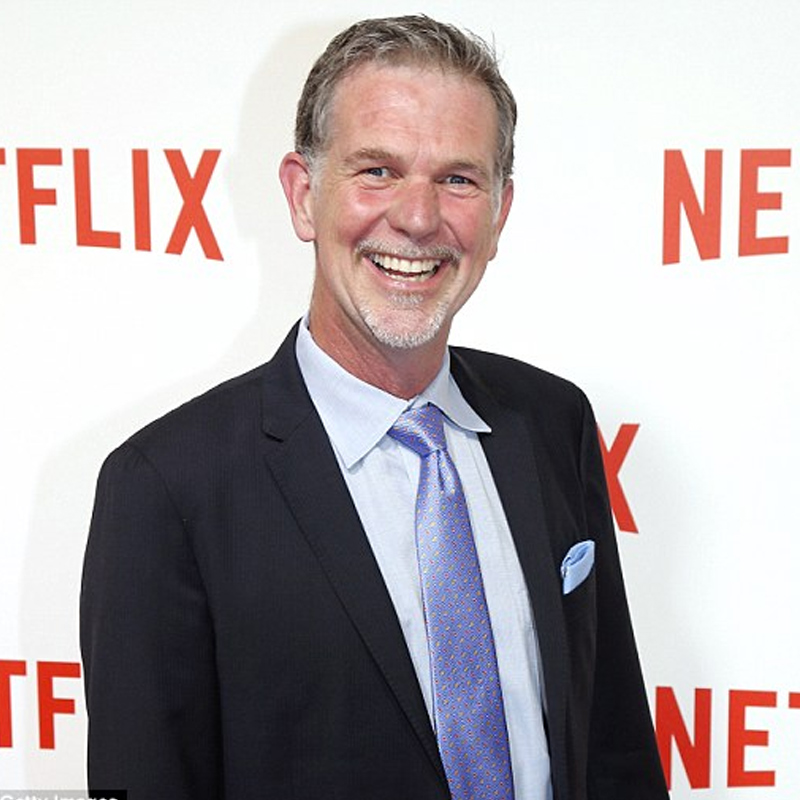
    MUMBAI: With Amazon flexing its muscle and soon to be Disney-owned Hotstar in the fray, the Indian OTT market is super competitive and exciting, feels Netflix CEO Reed Hastings. "There is also lots happening on Amazon, and on Hotstar, which is now going to be owned by Disney… It's a super competitive, exciting market,” he was quoted as saying by news agency IANS.

    One of the hallmarks of the Indian market, Hastings highlighted, is the ongoing telecom revolution triggered by Mukesh Ambani’s Reliance Jio. According to him, there is "nothing more impressive in the world than what Reliance Jio has done in the past four years in India" to democratise internet accessibility.

    The streaming giant’s boss is of the opinion that these are good times for Indian content creators.

    "If you were an Indian content creator (earlier), there were very few places to go, and now there are many places to go. So, people are pouring in. There are amazing amounts of stories that are coming up,” he said.

    The 58-year-old is pleased with his company’s performance in India.

    "There has been tremendous traction… Everyone has been talking about Lust Stories and Sacred Games. We have Delhi Crime coming out this week. So, there's lots that's happening on the original front,” he added.

    Hastings pointed out that the Indian market has room to do different kinds of stories.

    "We try to tell the best stories we can. Sometimes they are ready, sometimes they take longer. It really varies by that. There are so many streaming services, but if you think about how many networks there are on cable in India, there are way more than 34. I think there's a lot of room to do different kinds of stories," he stated.

    Hastings also commented on the self-regulatory Code of Best Practices that Netflix and others have signed.

    "None of us want strict government regulation on content. We can be flexible and can protect creative freedom a little better if we are a little bit proactive," he explained.

    On the online censorship front, there is not much activity, Hastings noted.

    "It's just before the elections. We are hoping the talk moves on because it's a challenging time to talk about anything like that. So in general, people around the world…and I am talking about adults, not children, want to watch what they want to watch, and the Internet represents that freedom,” he said.