Tag: Lupin

  • Netflix extends multilingual  content viewing to TVs

    Netflix extends multilingual content viewing to TVs

    MUMBAI: Netflix has at long last unleashed its full linguistic arsenal on television screens worldwide, allowing subscribers to frolic through its catalogue in whichever of its 30-plus languages tickles their fancy. The streaming behemoth, which had previously restricted this multilingual delight to mobile devices and web browsers, has finally capitulated from 2 April to the thousands of monthly pleas from linguistically frustrated viewers.

    The timing could hardly be more apt. Nearly a third of all viewing on the platform now involves non-English content—a figure that explains why Korean survival drama Squid Game had British grandmothers attempting to pronounce Ojingeo Geim and why Spanish heist caper Berlin has viewers worldwide practicing their ¡Vamos! with varying degrees of success.

    “This much-anticipated feature carries over the experience members already enjoy on mobile devices and web browsers,” Netflix announced. 

    The streaming giant has also cottoned on to another delicious trend: subscribers have been using the service as a language-learning tool. With customisable subtitle options and a “Browse by Language” feature, Netflix has become an accidental competitor to Duolingo—albeit one with considerably more drama, bloodshed and royal intrigue.

    For the truly adventurous linguistic daredevils—those peculiar souls who might fancy watching Mexican telenovelas with Korean dubbing and English subtitles—Netflix has now made such exotic combinations possible on the biggest screen in the house.

    Global sensations like France’s Lupin, Mexico’s Who Killed Sara?, Norway’s Troll and Germany’s Oscar-winning All Quiet on the Western Front have demonstrated that language barriers in entertainment are crumbling fast. What’s driving this babel of content consumption? Perhaps viewers are finally discovering what continental Europeans have known for decades: that Hollywood doesn’t have a monopoly on compelling storytelling.

    As streaming wars intensify and competitors scramble for global market share, Netflix’s linguistic flexibility may prove its secret weapon. After all, in the battle for worldwide domination, speaking the local lingo is more than half the battle—it’s the whole war.

  • Hrithik Roshan challenges himself to do better in Lupin’s Be One campaign

    Hrithik Roshan challenges himself to do better in Lupin’s Be One campaign

    Mumbai: Contract Advertising, a part of the Wunderman Thompson Group and member of the WPP network, has created the #BanoKhudSeBehetar campaign, featuring Hrithik Roshan, for Lupin’s Be One 100 per cent Ayurvedic Energy supplements.

    In the recently launched brand campaign, the Bollywood star challenges his other self to not give up and be better in every task. “We used elements of Hrithik the celebrity to tell the story of Hrithik the everyman. It was a challenge at the beginning. But Hrithik being the amazing performer that he is, the process was fun and exciting as we got deeper into it,” shared Contract Mumbai SVP & ECD Rahul Ghosh.

    “In today’s highly demanding times, a product like Be One is only increasing in relevance. The consumer today is looking to constantly better themselves and this is where Be One comes in as a motivator to ensure they have the energy and health needed in this journey,” said Lupin’s head of OTC business Anil Kaushal.

    A film poster was unveiled on social media to announce that something exciting is coming soon ahead of the campaign launch.

    EMBED: https://www.facebook.com/beone.lupin/photos/a.105780064885147/325905626205922/

    Soon after this, a motion poster was launched, triggering some more excitement.

    Social media started buzzing with comments and guesses on what kind of movie it would be and #BanoKhudSeBehetar became the trending hashtag on Twitter on 30 December 2021, said the brand.

    The film was launched on 21 January across social media channels and TV channels. “It was an opportunity to be different in a category which talks only about non-stop energy or vitality,” commented Contract Mumbai EVP and general manager Ayan Chakraborty. “Being better than yourself or ‘Bano Khud Se Behetar’ is something refreshing and new and we made sure that we leveraged the celebrity even in terms of executing the launch like a movie launch.”

    EMBED: https://youtu.be/Cklpc2PsXk4

    “The creative challenge was to tell a story of someone trying to better himself, especially when that someone happened to be Hrithik Roshan. So, we tried to magnify the conflicts that reside within us every day. That was the creative jump-off,” said Contract Advertising CCO Sagar Mahabaleshwarkar on the creative process of the campaign.

    “This campaign was born out of the consumer desire of constant improvement by competing with one’s own self as opposed to others,” commented Lupin’s head of marketing (consumer healthcare) Supratik Sengupta. “The film acts as a nudge to the audience to challenge themselves and go beyond their comfort zone, while the product plays the role of the dependable partner.”

  • News channels data blackout could devalue TV ratings as a currency

    News channels data blackout could devalue TV ratings as a currency

    Mumbai: The news genre relies more heavily on TV ratings than others, argued industry stakeholders during a virtual webinar organised by Indiantelevision.com on Tuesday, highlighting that a major part of their revenues comes from advertising and discontinuation of TV ratings has impacted their ability to customise content, distribution and negotiate fair rates with advertisers.

    The virtual panel discussion – ‘The Need for News TV Ratings’ organised by Indiantelevision.com was powered by Megaphone TV, and joined by stakeholders in the news broadcast and advertising industry. The session was moderated by Indiantelevision.com group’s founder CEO and editor-in-chief Anil Wanwari.

    News broadcasters, agencies and advertisers highlighted that they are keen to understand how market dynamics have changed in terms of reach and viewership for the news channels after more than 15 months of ratings blackout by Broadcast Audience Research Council (Barc) India. The ministry of information and broadcasting has mandated that ratings for news channels be resumed immediately, however, Barc India is yet to share the ratings for news channels.

    TV ratings are a currency

    TV ratings are a currency for selling advertising and are important for news channels. In a populous and diverse country such as India, these ratings are intended to be a statistical representation that intends to show the trend of ‘What India Watches’ and relies on certain methodologies to arrive at these conclusions. In October 2020, Barc suspended reporting data for individual news channels though it continued to report the viewership trend for the entire news genre.

    “We are a midsized advertiser and we have a news-forward plan because we cater to a strong male audience,” said Lupin head of marketing consumer healthcare Supratik Sengupta. “During the blackout, at an AdEx level, we did not implement a news forward plan because we didn’t have the data. We shifted a certain amount of spends to digital and took gut calls on certain leading news channels in the absence of data. Without granular ratings, we started rotating our spends among the top four to five channels.”

    He added, “Week 39’2020 was the last time data was reported for news channels. We’ve had a data dark situation for almost 60 weeks. It is criminal that a genre is not reported for such a long time, whatever the reason. Today, I don’t know the changes, if any, in news channels’ ratings compared to last time data was reported.”

    “In absence of rating, we have been making justified recommendations to clients based on past data and other performance indicators such as views on digital assets,” stated Omnicom Media Group India managing partner and head of investment Yatin Balyan. “The advertisers’ sales team reviews on particular channels, in certain geographies also enabled us to make a more justified recommendation.”

    Patanjali Ayurved COO – media and communications Anita Nayyar highlighted that there was a lot of volatility of viewership in the news space due to factors like recent events such as elections or budget, therefore regular reporting of ratings is important. “A news channel that stood on top in one week may drop dramatically in the next week because they do not have decent content. As a currency accepted by the industry, TV ratings told us whether to stop investing in a news channel because we all know where to invest based on historical data. Unlike the GEC genre, there is no reason why a newcomer cannot top the charts in the news genre because it is completely dependent on the content and the pulse of the audience the channel touches upon,” she added.

    Impact on news channels

    The suspension of news channels had come at a time when relatively new channels were also garnering a significant share of viewership among news channels and advertisers were believed to be closely observing to see if this growth in ratings was a one-off or a long-term trend.

    “The new entrants in the news industry have broken many glass ceilings of content and distribution to go to the top,” said Republic Media Network owner founder and editor-in-chief Arnab Goswami. “Nobody studies TV ratings more than news channels, so we may respond with better quality content, deeper discussion and ways to make the content more interactive. I spend over Rs 100 crore in distribution every year and have a right to know which markets are contributing to my viewership and plan accordingly.”

    He further added, “Barc is supposed to make its decisions based on a consultative process but were media agencies, news channels and advertisers consulted before the decision to suspend ratings was taken? The process of determining ratings is the same for news genre and GECs yet only news channel ratings have been stopped.”

    “The Hindi news genre which commands the largest share of revenues in the news genre saw a distinct change in the pecking order just before TV ratings were stopped,” said TV9 Network CEO Barun Das. “Even today there is ambiguity on why only news channel ratings have been suspended. The Technical Committee at Barc has approved a fresh way of calculating the data for the news genre but it continues to report other genres as usual.”

    “There’s certainly going to be a spike in ratings during the elections,” noted Das alluding to the upcoming state elections. “Media buyers and advertisers would feel more confident spending their money and leveraging the news genre if the ratings are made available. The entire genre would benefit, especially the smaller regional channels whose dependence on advertiser confidence is greater than ours.”

    “A period of 15 months is too much time for any industry to go without measurement,” remarked independent media consultant and industry observer Paritosh Joshi. “Any industry that does not measure itself sees a drop in revenue. A currency is a store of value, medium of exchange and basis of accounting, and all of these things are relevant as far as broadcasting is concerned. If you don’t have a basis of accounting or a medium of exchange for a significant period of time then it devalues the currency.”  

    Monthly ratings for news genre

    The ministry of information and broadcasting has recommended that Barc release news channels data based on a four-week average rolling concept. It has also instituted a committee to look into return path data (RPD) and its applications to strengthen TV measurement. Right off the bat, Paritosh Joshi noted, “RPD is not a substitute for a statistically sound sample.”

    “In my mind, metrics such as TVR/TRP data tell you about the market share of a channel and as an advertiser I would like to have that data as quickly and frequently as possible,” said Sengupta. “While a four-week rolling basis for reporting data will not be a challenge at the planning level because we look at anywhere between four, six and 13-weeks average data for planning, it will be a problem at the post-evaluation level when I have to determine my campaign’s performance. That’s because we will only get an average and not exact data for the week that my ad spot ran.”

    “Secondly, I am not aware of what measures Barc has taken to protect my data,” he added.

    “While we take a long view of a four-week, eight-week or 13-week average basis, weekly ratings are important,” stated Balyan. “That’s because not every event, property or programme that we buy has a longer format. Take an election or any special programming on a news channel, we need to understand how our investments on that particular programme or channel have performed. We need to have a learning base to make a futuristic recommendation and thereby our approach to a particular partner.”

    Paritosh Joshi shared an example of best practice followed by the UK’s TV measurement council BARB. He said, “If a particular broadcast platform’s previous three or six-months’ share of voice in the entire raw panel has come down by a certain percentage (let’s say one per cent), it is no longer qualified for weekly ratings. Depending on how low the ratings have fallen, the frequency of that channels’ ratings may be changed to month, quarterly or even half yearly.”

    He elaborated, “This is not necessarily bad nor does it discredit the platform. Just because the India Readership Survey does a quarterly reporting of data or longer, doesn’t mean that has stopped anyone from buying print. In fact, in some cases it works very well, giving fairly decent forensics to show how viewers are behaving. So, the frequency of data reporting should not depend on the genre, but rather on an objective determinant that says what the share of voice was in the previously leading period. There is really no need to put out all the data in the same way. While we may choose to go with a one size fits all approach in India, this is not the best practice.”

  • Lupin appoints Shweta Munjal as VP – communications

    Lupin appoints Shweta Munjal as VP – communications

    NEW DELHI: Global pharmaceutical brand Lupin has appointed Shweta Munjal as vice president and head of corporate communications.

    Prior to this, she was with Nayara Energy as VP – brand and corporate communications. She worked at the crude oil company for close to two years. She also had a five-year-long stint at Thomson Reuters, where she served as communications head for the Asia Pacific region.

    In her career spanning nearly two decades, Munjal has been associated with top-rung corporations like Cadbury India, Yahoo!, NASSCOM and Teso, to name a few. 

    With vast experience in the fields of media, marketing and corporate communications, she has held leadership roles in almost every facet of the industry – from thought leadership, PR, CSR, crisis and issue management, media relations, rebranding etc.

  • Lupin urges women to talk about vaginal hygiene with latest campaign #SahiBaat

    MUMBAI: Wavemaker, the media, content and technology agency of GroupM has created a quirky digital campaign for pharma major Lupin Ltd’s (Lupin) OTC arm Lupin Life featuring its new woman-care product, V-Bath. The campaign named #SahiBaat aims to build awareness among women around the usage of intimate hygiene wash and encourages them to openly discuss their concerns rather than being ‘shusssh’ about it.

    Featuring vivacious Richa Chadha, the campaign video builds on the storyline of how even confident women avoid talking about intimate hygiene, do not give the issue any priority and end up compromising their own health.

    Talking about the launch of V-Bath on digital media,Lupin Life head Anil Kaushal said, “We have reinvented V-Bath by making changes in the product based on new research and customer feedback, and are looking forward to re-introduce it in the market. It was imperative for us to get our first communication right and Wavemaker helped us develop this campaign based on an integrated content solution approach. The #SahiBaat campaign delivers our message and represents our product philosophy in the best possible way.”

    Talking about the campaign conceptualisation, Wavemaker India chief content officer Karthik Nagarajan said, “When Lupin wanted to launch V-Bath, we did not look at it as just a product launch but a new category altogether. We recommended a digital-only launch as we thought it was the best way to generate buzz around an issue that has largely been taboo, while generating consideration for the brand. Extremely proud of our ‘Originals’ team which conceptualised the film and our partners. However, none of this would have been possible without a progressive client who was willing to walk the talk!”

  • Paytm is Forbes India’s ‘Outstanding Startup for the Year’

    Paytm is Forbes India’s ‘Outstanding Startup for the Year’

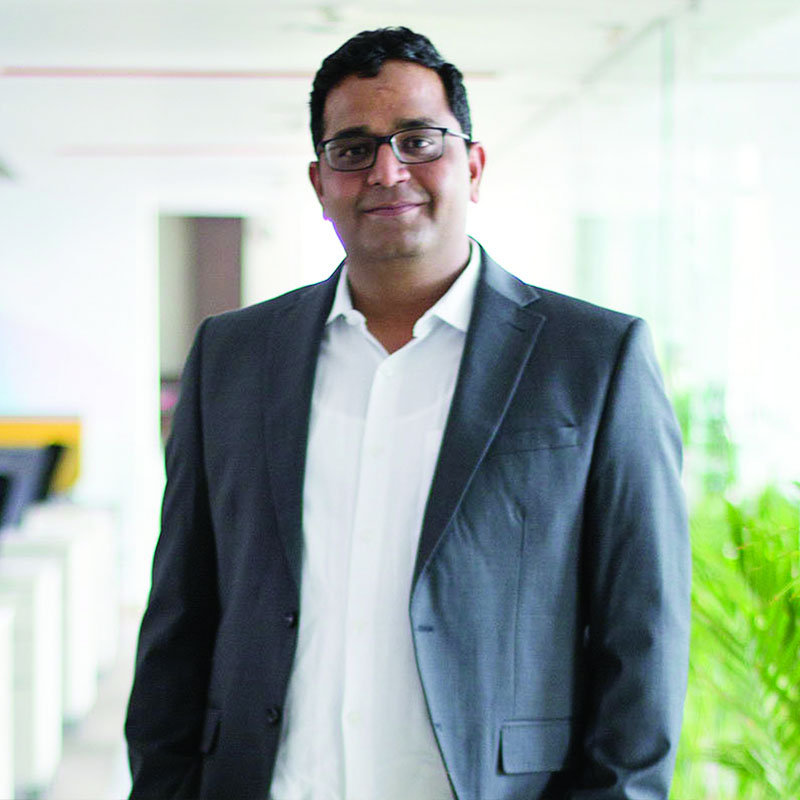
    MUMBAI: Paytm, the Noida-based e-commerce platform which would be the biggest gainers of the government decision to scrap Rs 500 and Rs 1000 notes, has pocketed the ‘Outstanding Startup for the Year’ award at the Forbes India Leadership Awards (FILA) here yesterday. India Inc’s brightest, biggest and bravest entrepreneurs were honoured at FILA.

    Lupin’s Vinita & Nilesh Gupta won Forbes India ‘Entrepreneur for the Year 2016’ award and YK Hamied was conferred the Lifetime Achievement award.

    The awards across nine categories acknowledged the outstanding contributions of CEOs, entrepreneurs and business leaders who have built enterprises that have had a deep and enduring impact on the economy and the wider society.

    “As chroniclers of entrepreneurial capitalism, Forbes India has been celebrating leadership for years. FILA is a one important way we do this where we honour a set of such inspirational business leaders. Now in its sixth year, the awards celebrate those who, by their actions, have made a difference to their organisations, their employees and also to the business segments in which they operate,” said Forbes India editor Sourav Majumdar.

    The achievements of this year’s winners assume significance since many of the business leaders felicitated have braved difficult local and global economic conditions to steer their organisations towards operational excellence.

    Winners of the FILA 2016:

    Outstanding Startup for the Year
    Vijay Shekhar Sharma – Paytm

    Nextgen Entrepreneur for the Year
    Pranav Amin & Shaunak Amin – Alembic Pharmaceuticals

    Entrepreneur with Social Impact
    P Namperumalsamy – Aravind Eye Care System

    Conscious Capitalist Company for the year
    Mahindra Finance

    Best CEO – Multinational Company
    Kenichi Ayukawa – Maruti Suzuki India

    Best CEO – Public Sector
    Sutirtha Bhattacharya – Coal India

    Best CEO – Private Sector
    KBS Anand – Asian Paints

    Lifetime Achievement Award
    Yusuf K Hamied – Cipla

    Entrepreneur for the Year
    Vinita Gupta & Nilesh Gupta – Lupin

    The selection process started with an extensive research along qualitative and quantitative parameters. The long list of nominees for each category was narrowed down to a strong set of three to five nominees per category. A jury headed by Harsh Mariwala, chairman of Marico Ltd, examined the nominations and selected the winners.

    Other members of the jury were — AZB & Partners founder and senior partner Zia Mody, TeamLease Services co-founder and chairman Manish Sabharwal, McKinsey India managing director Noshir Kaka, KKR India managing director Sanjay Nayar, and Omidyar Network partner and Omidyar Network India Advisors managing director Roopa Kudva.

    KPMG, Forbes India’s knowledge partners for the event, helped with the
    nomination process.

    Transformational leadership, which the 2016 edition of the Forbes India Leadership Awards seeks to honour, includes individuals and organisations who have achieved success through their vision, foresight, and business ethics.

  • Paytm is Forbes India’s ‘Outstanding Startup for the Year’

    Paytm is Forbes India’s ‘Outstanding Startup for the Year’

    MUMBAI: Paytm, the Noida-based e-commerce platform which would be the biggest gainers of the government decision to scrap Rs 500 and Rs 1000 notes, has pocketed the ‘Outstanding Startup for the Year’ award at the Forbes India Leadership Awards (FILA) here yesterday. India Inc’s brightest, biggest and bravest entrepreneurs were honoured at FILA.

    Lupin’s Vinita & Nilesh Gupta won Forbes India ‘Entrepreneur for the Year 2016’ award and YK Hamied was conferred the Lifetime Achievement award.

    The awards across nine categories acknowledged the outstanding contributions of CEOs, entrepreneurs and business leaders who have built enterprises that have had a deep and enduring impact on the economy and the wider society.

    “As chroniclers of entrepreneurial capitalism, Forbes India has been celebrating leadership for years. FILA is a one important way we do this where we honour a set of such inspirational business leaders. Now in its sixth year, the awards celebrate those who, by their actions, have made a difference to their organisations, their employees and also to the business segments in which they operate,” said Forbes India editor Sourav Majumdar.

    The achievements of this year’s winners assume significance since many of the business leaders felicitated have braved difficult local and global economic conditions to steer their organisations towards operational excellence.

    Winners of the FILA 2016:

    Outstanding Startup for the Year
    Vijay Shekhar Sharma – Paytm

    Nextgen Entrepreneur for the Year
    Pranav Amin & Shaunak Amin – Alembic Pharmaceuticals

    Entrepreneur with Social Impact
    P Namperumalsamy – Aravind Eye Care System

    Conscious Capitalist Company for the year
    Mahindra Finance

    Best CEO – Multinational Company
    Kenichi Ayukawa – Maruti Suzuki India

    Best CEO – Public Sector
    Sutirtha Bhattacharya – Coal India

    Best CEO – Private Sector
    KBS Anand – Asian Paints

    Lifetime Achievement Award
    Yusuf K Hamied – Cipla

    Entrepreneur for the Year
    Vinita Gupta & Nilesh Gupta – Lupin

    The selection process started with an extensive research along qualitative and quantitative parameters. The long list of nominees for each category was narrowed down to a strong set of three to five nominees per category. A jury headed by Harsh Mariwala, chairman of Marico Ltd, examined the nominations and selected the winners.

    Other members of the jury were — AZB & Partners founder and senior partner Zia Mody, TeamLease Services co-founder and chairman Manish Sabharwal, McKinsey India managing director Noshir Kaka, KKR India managing director Sanjay Nayar, and Omidyar Network partner and Omidyar Network India Advisors managing director Roopa Kudva.

    KPMG, Forbes India’s knowledge partners for the event, helped with the
    nomination process.

    Transformational leadership, which the 2016 edition of the Forbes India Leadership Awards seeks to honour, includes individuals and organisations who have achieved success through their vision, foresight, and business ethics.