Tag: LucasFilm

  • Bob Chapek exits Disney; Bob Iger returns as CEO for two more years

    Bob Chapek exits Disney; Bob Iger returns as CEO for two more years

    Mumbai: US and global media conglomerate Disney has announced that Robert A. Iger is returning to lead Disney as CEO, effective immediately. Iger, who spent more than four decades at the company, including 15 years from 2005-2020 as its CEO, has agreed to serve as Disney’s CEO for two years, with a mandate from the board to set the strategic direction for renewed growth and to work closely with the board in developing a successor to lead the company at the completion of his term. Iger succeeds Bob Chapek, who has stepped down from his position. Chapek spent less than three years as CEO. Chapek’s contract had been extended in June 2022 for three years. The earlier contract had been scheduled to expire in February 2023.

    “We thank Bob Chapek for his service to Disney over his long career, including navigating the company through the unprecedented challenges of the pandemic. The board has concluded that as Disney embarks on an increasingly complex period of industry transformation, Bob Iger is uniquely situated to lead the company through this pivotal period,” said The Walt Disney Co. chairman of the board Susan E. Arnold. “Iger has the deep respect of Disney’s senior leadership team, most of whom he worked closely with until his departure as executive chairman 11 months ago, and he is greatly admired by Disney employees worldwide—all of which will allow for a seamless transition of leadership.”

    The position of chairman of the board remains unchanged, with Arnold serving in that capacity.

    “I am extremely optimistic for the future of this great company and thrilled to be asked by the board to return as its CEO. Disney and its incomparable brands and franchises hold a special place in the hearts of so many people around the globe—most especially in the hearts of our employees, whose dedication to this company and its mission is an inspiration. I am deeply honoured to be asked to lead this extraordinary team once more, with a clear mission focused on creative excellence to inspire generations through unparalleled, bold storytelling,” Iger said.

    During his 15-year stint with Disney, Iger helped build Disney into one of the world’s most successful and admired media and entertainment companies with a strategic vision focused on creative excellence, technological innovation, and international growth. He expanded on Disney’s legacy of storytelling with the acquisitions of Pixar, Marvel, Lucasfilm, and 21st Century Fox and increased the company’s market capitalization fivefold during his time as CEO. Iger continued to direct Disney’s creative endeavours until his departure as executive chairman last December, and the company’s pipeline of content is a testament to his leadership and vision.

  • Bob Chapek realigns roles at Disney Studios Content

    Bob Chapek realigns roles at Disney Studios Content

    MUMBAI: The shuffling is continuing at the Walt Disney Co as CEO Bob Chapek works on creating an organisation that can prosper going forward. In Disney’s latest announcement, Chapek named Alan Bergman as chairman of Disney Studios Content, with Alan Horn who was earlier co-chairman serving as its chief creative officer from 1 January 2021.

    “Our studios are unmatched in their ability to create incredible cinematic experiences, and with this new structure, we are ensuring a vital continuity of leadership,” said Chapek.

    Bergman’s responsibilities will expand to oversee creative, production, marketing, and operations for Disney Studios Content, which encompasses the world-renowned production studios Disney, Walt Disney Animation Studios, Pixar Animation Studios, Marvel Studios, Lucasfilm, 20th Century Studios, Searchlight Pictures, and Blue Sky Studios, as well as Disney Theatrical Productions. Horn, on the other hand, will focus on the creative aspects of the studios’ content pipeline, working in partnership with Bergman on its creative approach. Both will report to Chapek.

    The leads of each production studio will continue to dual report to Bergman and Horn on creative matters, including Twentieth Century Studios president Steve Asbell; Blue Sky Studios co-president Robert Baird; Walt Disney Studios Motion Picture Production president Sean Bailey; Pixar Animation Studios chief creative officer Pete Docter; Marvel Studios and Marvel president and chief creative officer Kevin Feige; Searchlight Pictures chairman Stephen Gilula; Lucasfilm president Kathleen Kennedy; Walt Disney Animation Studios chief creative officer  Jennifer Lee;  Searchlight Pictures chairman Nancy Utley and and Disney Theatrical Productions president  Thomas Schumacher.

    Bergman is a 24-year veteran of Disney. Prior to being named co-chairman in 2019, he served as president of The Walt Disney Studios from 2005 to 2019. He played a leading role in the integrations of Pixar Animation Studios, Marvel Studios, Lucasfilm, and the Twenty-First Century Fox film studios. His tenure at Studios has included the release of 25 films that have earned at least $1 billion at the global box office.

    Horn joined Disney in 2012 when he was named chairman of The Walt Disney Studios, becoming co-chairman and chief creative officer in 2019. With a career spanning nearly 50 years, Horn is one of the industry’s most influential and respected executives. He served as president and chief operating officer of Warner Bros. from 1999 to 2011, during which it was the top-performing studio at the global box office seven times and released numerous critically acclaimed films and box office hits including the Harry Potter series, Batman Begins, The Dark Knight, The Departed, Million Dollar Baby, and the Ocean’s Eleven trilogy. He co-founded Castle Rock Entertainment, where as chairman from 1987 to 1999 he oversaw a diverse collection of popular, acclaimed film and TV properties including A Few Good Men, The Shawshank Redemption, When Harry Met Sally, and Seinfeld. He also served as president and chief operating officer of Twentieth Century Fox Film Corp from 1985 to 1986 after getting his start in the media business in 1973 at Norman Lear and Jerry Perenchio’s Embassy Communications, where he ultimately held the role of chairman & chief executive officer.

    Together, Horn and Bergman have presided over a time of significant growth at The Walt Disney Studios, including the 2012 integration of Lucasfilm and the 2019 integration of the Fox film studios, as well as the studios’ expansion into the production of content for Disney’s streaming services. During their tenure, The Walt Disney Studios set numerous records at the box office, surpassing $7 billion globally in 2016 and 2018 and $11 billion in 2019, the only studio ever to have reached these thresholds.

    Among the Studios’ recent successes are Disney’s live-action Beauty and the Beast, Aladdin, and The Lion King; Walt Disney Animation Studios’ Frozen, Zootopia, and Frozen 2;  Pixar’s Coco, Incredibles 2,  and Toy Story 4; Lucasfilm’s  Star Wars: The Force Awakens, Rogue One: A Star Wars Story, Star Wars: The Last Jedi, and Star Wars: The Rise of Skywalker; and Marvel Studios’ Black Panther, Captain Marvel, Avengers: Infinity War, and Avengers: Endgame, the latter of which is the highest grossing global release of all time.

  • Disney’s ‘Star Wars: The Force Awakens’ crosses $2 billion global box office mark

    Disney’s ‘Star Wars: The Force Awakens’ crosses $2 billion global box office mark

    MUMBAI: Star Wars: The Force Awakens has crossed the $2 billion mark worldwide on 6 February, which was its 53rd day of release, thus becoming only the third film ever to do so and just the second to do it in original release. 

    Additionally, the movie also crossed the $900 million mark at the North American box office and is the only film in history to reach this milestone.

    “This is a historic moment for Star Wars, for Lucasfilm, and for Disney, and all of us here are extremely gratified to be a part of this journey with fans around the world who have made Star Wars: The Force Awakens such an extraordinary success. The film’s achievements are truly astounding, and it’s our great honor to relaunch this cinematic galaxy not only for all the devoted decades-long fans but for a new generation who will keep the Star Wars legacy alive for many years to come,” said The Walt Disney Studios chairman Alan Horn.

    Through 4 February, Star Wars: The Force Awakens earned an estimated $899.1 million in North America and $1,095.6 million internationally for a global total of $1,994.7 million. Opening internationally 16 December and in the US on 18 December, Star Wars: The Force Awakens posted the all-time biggest global and domestic debuts with $528.9 million and $247.9 million respectively.

    Over the course of its eight-week run, it has set numerous other records, including:
    – Biggest domestic preview gross ($57 million)
    – Biggest opening day domestically ($119.1 million)
    – Biggest domestic second weekend ($149.2 million)
    – Biggest domestic third weekend ($90.2 million)
    – Biggest opening week domestically ($390.8 million)
    – Biggest opening weekend in 18 territories: UK (4-day), Australia, Russia, Germany, Sweden, Norway, Finland, Austria, Poland (3-day), Denmark (5-day), Romania, Hungary, Bulgaria, Croatia, Ukraine, Iceland, Serbia, New Zealand
    – Fastest film to $1 billion globally (12 days)
    – Biggest film of all time in the US and the UK

    Directed by J.J. Abrams, written by Lawrence Kasdan & Abrams and Michael Arndt, and produced by Kathleen Kennedy, Abrams and Bryan Burk, Star Wars: The Force Awakens was named one of AFI’s top ten films of 2015 and has received five Academy Award nominations, for film editing, visual effects, sound editing, sound mixing, and for series composer John Williams’ original score.

    The Star Wars Saga continues 15 December, 2017, in Star Wars: Episode VIII, picking up in the wake of Star Wars: The Force Awakens. Later this year, Rogue One, a new adventure detailing events prior to Star Wars: A New Hope, will take flight on 16 December, 2016.

  • Disney’s ‘Star Wars: The Force Awakens’ crosses $2 billion global box office mark

    Disney’s ‘Star Wars: The Force Awakens’ crosses $2 billion global box office mark

    MUMBAI: Star Wars: The Force Awakens has crossed the $2 billion mark worldwide on 6 February, which was its 53rd day of release, thus becoming only the third film ever to do so and just the second to do it in original release. 

    Additionally, the movie also crossed the $900 million mark at the North American box office and is the only film in history to reach this milestone.

    “This is a historic moment for Star Wars, for Lucasfilm, and for Disney, and all of us here are extremely gratified to be a part of this journey with fans around the world who have made Star Wars: The Force Awakens such an extraordinary success. The film’s achievements are truly astounding, and it’s our great honor to relaunch this cinematic galaxy not only for all the devoted decades-long fans but for a new generation who will keep the Star Wars legacy alive for many years to come,” said The Walt Disney Studios chairman Alan Horn.

    Through 4 February, Star Wars: The Force Awakens earned an estimated $899.1 million in North America and $1,095.6 million internationally for a global total of $1,994.7 million. Opening internationally 16 December and in the US on 18 December, Star Wars: The Force Awakens posted the all-time biggest global and domestic debuts with $528.9 million and $247.9 million respectively.

    Over the course of its eight-week run, it has set numerous other records, including:
    – Biggest domestic preview gross ($57 million)
    – Biggest opening day domestically ($119.1 million)
    – Biggest domestic second weekend ($149.2 million)
    – Biggest domestic third weekend ($90.2 million)
    – Biggest opening week domestically ($390.8 million)
    – Biggest opening weekend in 18 territories: UK (4-day), Australia, Russia, Germany, Sweden, Norway, Finland, Austria, Poland (3-day), Denmark (5-day), Romania, Hungary, Bulgaria, Croatia, Ukraine, Iceland, Serbia, New Zealand
    – Fastest film to $1 billion globally (12 days)
    – Biggest film of all time in the US and the UK

    Directed by J.J. Abrams, written by Lawrence Kasdan & Abrams and Michael Arndt, and produced by Kathleen Kennedy, Abrams and Bryan Burk, Star Wars: The Force Awakens was named one of AFI’s top ten films of 2015 and has received five Academy Award nominations, for film editing, visual effects, sound editing, sound mixing, and for series composer John Williams’ original score.

    The Star Wars Saga continues 15 December, 2017, in Star Wars: Episode VIII, picking up in the wake of Star Wars: The Force Awakens. Later this year, Rogue One, a new adventure detailing events prior to Star Wars: A New Hope, will take flight on 16 December, 2016.

  • George Lucas is Hollywood’s richest movie mogul

    George Lucas is Hollywood’s richest movie mogul

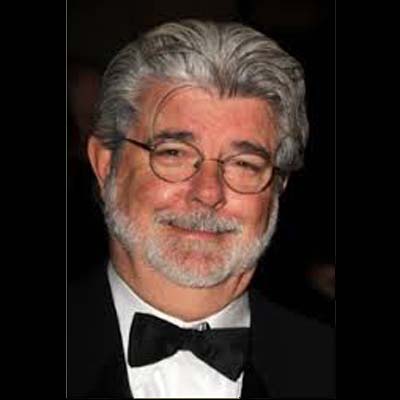
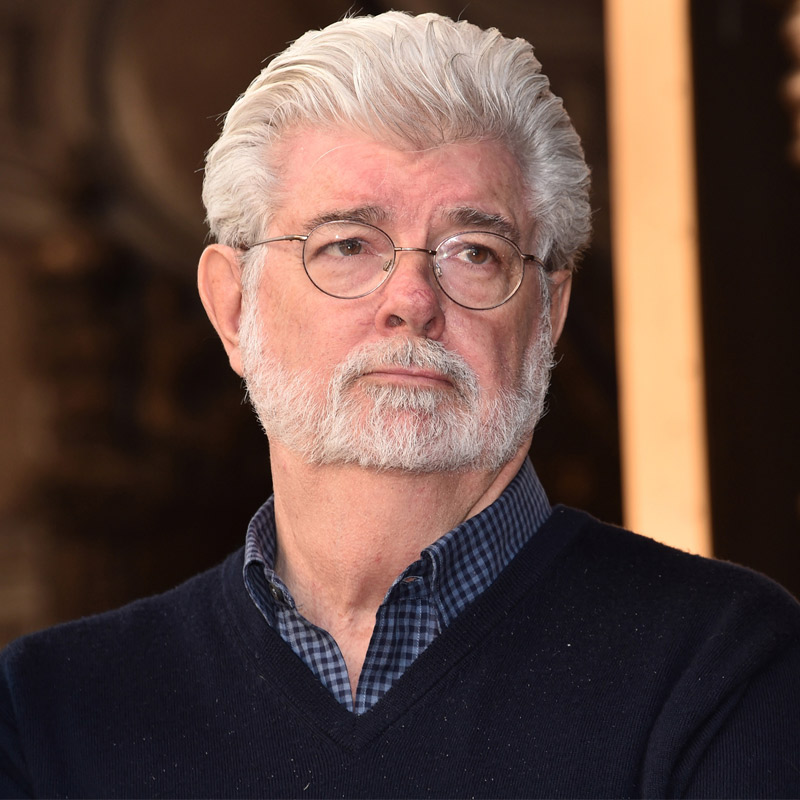
    MUMBAI: In the run up to the Academy Awards on 22 February, Wealth-X has released a list of the top 10 richest individuals in the American film industry. George Lucas tops the list with $5.4 billion as the wealthiest Hollywood tycoon.


    Lucas is the director and producer of the Star Wars blockbuster films. His fortune of $5.4 billion is mostly derived from revenue from the Star Wars franchise and the sale of LucasFilm to Disney for $4 billion in 2012.


    Unlike other directors and producers, Lucas, 70, banked on one film idea, directing only six feature films over the course of his career – four of which were Star Wars movies.


    In contrast, Steven Spielberg – who ranks third on the Wealth-X list with an estimated fortune of $3.3 billion–has directed more than 30 feature films, including classics such as ET, Jaws and Jurassic Park.


    All 10 individuals on the Wealth-X Hollywood Rich List are male film producers and directors. Collectively, they control more than $20 billion of personal wealth.


    The complete list of the richest movie moguls in Hollywood is as follows: 


    1) George Lucas – $5.4 billion (Star Wars films)

    2) Arnon Milchan – $5.2 billion (Pretty Woman, 12 Years A Slave)

    3) Steven Spielberg – $3.3 billion (ET, Jaws)

    4) Austin Hearst – $1.9 billion (The Vow)

    5) Ryan Kavanaugh – $1 billion (The Social Network, Little Fockers)

    6) Jeffrey Katzenberg – $910 million (The Lion King, Shrek)

    7) Thomas Tull – $870 million (The Hangover, 300)

    8) Jerry Bruckheimer – $850 million (Top Gun, Pirates of The Caribbean)

    9) Steve Tisch – $720 million (Forrest Gump)

    10) James Cameron – $670 million (Avatar, Titanic)

  • Prime Focus World’s 3D solutions for filmmakers

    Prime Focus World’s 3D solutions for filmmakers

    Of late, several projects have deployed the process of making stereo images from non-stereo traditional 2D images, also called stereo conversion or dimensionalisation or 3D imagery. And one of the leading stereo conversion studios, Prime Focus World, has had a very successful track record of converting 2D films into 3D, and assisting filmmakers shoot in 3D during the filming process itself.

    While it is generally the directors and filmmakers who reach out to Prime Focus World to convert a 2D film into a 3D one, right from the scripting stage to pre-production and production, the studio too seeks out filmmakers to show them the possibilities of converting their films into 3D.

    Prime Focus World senior stereoscopic supervisor Justin Jones has worked with clients including Lucasfilm, Dreamworks Animation, Paramount Pictures, Relativity Media and Warner Bros, apart from collaborating with Industrial Light & Magic visual effects supervisors, John Knoll and Dennis Muren.

    Jones’ mandate is to oversee the creative aspect of 3D projects. Early in the project cycle, he collaborates with the client to develop a creative strategy and establish the show structure and workflow. He works closely with the show’s producer to conduct shot analysis, schedule consultation, departmental organisation and pipeline development. It is also part of Jones’ job to keep tab on the progress made by the show across teams in North America, India and the United Kingdom.

    Coming to technicalities, stereoscopic 3D is currently found in four basic formats, including anaglyph (red-cyan), polarised passive (movie theatres and many 3DTVs), active-shutter (DLP projectors and many 3DTVs) and autostereoscopic (parallax barrier like Nintendo 3DS). The tools used for stereo conversion are roto, ocula, in-painting, rubber mapping and projection. Of which, roto is the primary tool used for stereo conversion by volume. While roto just prepares the material, it is the most time-consuming portion of the conversion process.

    “Roto really helps us achieve perfect conversion and helps artistes to have greater control over each pixel during the final conversion process,” says Jones.

    While stereo conversion mainly relies on these tools, there is more to it than just the technical aspect. Many a times, there are creative differences between the studio and filmmakers but Jones believes in first visualising what the director wants and then sitting with the team and ideating on how best to utilise the shots and scenes for perfect conversion into 3D.

    “We convert a few shots and scenes and take it back to the filmmakers to show the difference between 2D and 3D, allowing them to give feedback and implementing it to see if it is beneficial to the conversion,” says Jones.

    With so much to and fro, the entire process is bound to be time-consuming. However, Prime Focus sticks to a very strict schedule to meet deadlines. “We have a track record of converting films in record time and with the right visual effects. What also helps is the abundance of resources that we have at our disposal. On any given project, we would have anywhere between 400 and 450 artistes,” exults Jones. A three-month window is usually kept for every project so as to allow time for final stage testing and checking footage in detail. Jones reveals that The Wizard of Oz (1939) took nearly 14 months from the early stages where the character design was mapped out on paper, which alone took 10 weeks.

    On the whole, it’s been a satisfying journey, what with hours, days, weeks and months of hard work being put in.

    Every project has been unique. Jones recalls doing a lot of stereo renders on Avatar and helping director James Cameron with stereo aspects as well. “Whatever Cameron shot, we worked alongside the stereographers of his team to bring out the best visual result, and were commended for our dedicated efforts,” he says. Working on Transformers alongside Michael Bay and Cory Turner was equally enjoyable, and “Working on Star Wars was a personal high as it is one of my favourite movie franchises. Working with Lucasfilm was a great experience as they have really been doing some great work in the field of advanced technology used in movies,” he says.

    Jones is excited about his current projects which includes Sin City 2: A Dame to Kill For. About the sequel to Sin City, he says, “We are doing all the special effects for the film and the concept, design and executing the visual effects, apart from doing all the stereo effects.”

    Ask him about 3D vs. 2D and he says it all depends on how much thought has really gone into the making of the 3D film. He gives the example of Cameron who was dead sure his film would be in 3D even before starting work on it, which is why he ensured the best use of technology. Ditto for Gravity, which took months of pre-production and visualizing a posse of camera angles and shots before getting made in 3D.

    “The idea is to offer an immersive experience for the viewer. That said, if the film is first shot in 2D and then converted into 3D, it doesn’t necessarily lose out on a great 3D proposition. What is required is a great stereographer who can visualise and find those places that can be used to enhance the 3D effect in the film and bring about an immersive experience. The idea is never to look like a gag for the audience by just throwing things at them in the theatres, but to give them a memory of taking back an experience, not just a movie,” sums up Jones. He is quick to add however that a good 3D effect can never make a bad movie get a good review; “You need to have a good script in place and each aspect of the film needs to be rock solid for great BO and critical acclaim,” Jones ends.

  • PwC report: content value, retransmission fees to boost E&M deals

    PwC report: content value, retransmission fees to boost E&M deals

    MUMBAI: If the new report released by PricewaterhouseCoopers (PwC) comes true, the media and entertainment sector could witness increasingly lucrative retransmission fees and high value for content having key influences on deal activity in the sector.


    The value of deals in the US entertainment, media and communications sector in 2013 more than doubled, driven by several “megadeals,” according to PwC’s year-end update.


    The deal volume year-to-year was relatively stable, the company reveals in its US Entertainment, Media & Communications Deal Insights report, rising by just three per cent to 866, while deal value soared from $96.2 billion to $222.7 billion.


    In broadcasting, deal volume rose from 71 to 87, with deal value soaring from $5.8 billion to $26.3 billion, driven by Comcast’s acquisition of GE’s interest in NBCUniversal. Going forward, deal activity in broadcasting is likely to be influenced by the increasing importance of retransmission revenues, as companies look to broaden their geographic reach.


    “PwC is beginning to see increased activity from US government regulators around anti-trust, intra-market media ownership and foreign media ownership regulations, which will likely be another market factor influencing deal volume,” the report says in its broadcasting 2014 outlook.


    Cable deal volume was stable at 16, but the value of deals fell year-to-year from $9 billion to $5 billion.


    Last year also saw 46 deals in film/content, up from 40, with a value of $0.5 billion, down from $9 billion in 2012. The previous year included Disney’s purchase of Lucasfilm.


    On the 2014 outlook for deals in film and content, PwC says, “The rising value of content has started an industry-wide race to acquire it. Buyers continue to look for ways to bridge the value gap and meet the premiums demanded by content providers through attractive deal structures, beneficial tax structuring and contingent consideration. Recent years have seen several major acquisitions of content assets, and despite the drop in deal value in 2013, the ongoing deal activity is likely to continue. Geographic location will hold no bar as U.S. participants look abroad and foreign players look to the United States for a means to acquire and monetize content.”

  • Lucas files for permission to sell $2 Billion in Disney shares

    Lucas files for permission to sell $2 Billion in Disney shares

    MUMBAI: According to a regulatory filing on the United States Securities And Exchange Commission the creator of the iconic series Star Wars George Lucas may be looking at selling the stock he received when selling Lucasfilm to Disney. A spokesperson on his behalf though countered the statement saying, “(he) does not currently have any plans” to sell.

    The regulatory filing signals his right to sell more than 37 million shares, amounting to all the stock he received when he sold Lucasfilm to Disney for $ four billion last year.

    Disney filed the Form S-3 Registration Statement on Wednesday, and a spokeswoman characterized it as a required formalization of Disney‘s acquisition of Lucasfilm. According to the filing, The George W. Lucas, Jr. Fourth Amended and Restated Living Trust could sell 37,076,679 million shares of Disney — amounting to about 2.1 percent of the company — “from time to time” until the trust no longer holds any of the stock.

    According to the filing the sale of stock could occur via “ordinary brokerage transactions or through any other means described in this prospectus.”

  • Disney acquires Star Wars film Lucasfilm for $4 bn

    Disney acquires Star Wars film Lucasfilm for $4 bn

    MUMBAI: The Walt Disney Company has agreed to acquire American film production company Lucasfilm, best known for Star Wars franchise, in a stock and cash transaction. Lucasfilm is 100 per cent owned by Lucasfilm Chairman and Founder, George Lucas.
    Under the terms of the agreement and based on the closing price of Disney stock on 26 October, the transaction value is $4.05 billion, with Disney paying approximately half of the consideration in cash and issuing approximately 40 million shares at closing.
    The Boards of Directors of Disney and Lucasfilm have approved the transaction, which is subject to clearance under the Hart-Scott-Rodino Antitrust Improvements Act, certain non-United States merger control regulations, and other customary closing conditions. The agreement has been approved by the sole shareholder of Lucasfilm.
    Under the deal, Disney will acquire ownership of Lucasfilm, a leader in entertainment, innovation and technology, including its massively popular and “evergreen” Star Wars franchise and its operating businesses in live action film production, consumer products, animation, visual effects, and audio post production.

    Disney will also acquire the substantial portfolio of cutting-edge entertainment technologies that have kept audiences enthralled for many years. Lucasfilm, headquartered in San Francisco, operates under the names Lucasfilm Ltd, LucasArts, Industrial Light & Magic, and Skywalker Sound, and the present intent is for Lucasfilm employees to remain in their current locations.
    “Lucasfilm reflects the extraordinary passion, vision, and storytelling of its founder, George Lucas,” said The Walt Disney Company Chairman and Chief Executive Officer Robert A. Iger. “This transaction combines a world-class portfolio of content including Star Wars, one of the greatest family entertainment franchises of all time, with Disney‘s unique and unparalleled creativity across multiple platforms, businesses, and markets to generate sustained growth and drive significant long-term value.”
    He also told analysts that the plan is to release a new movie in the series every two to three years thereafter.
    Kathleen Kennedy, current Co-Chairman of Lucasfilm, will become President of Lucasfilm, reporting to Walt Disney Studios Chairman Alan Horn. Additionally she will serve as the brand manager for Star Wars, working directly with Disney‘s global lines of business to build, further integrate, and maximise the value of this global franchise. Kennedy will serve as executive producer on new Star Wars feature films, with George Lucas serving as creative consultant. Star Wars Episode 7 is targeted for release in 2015, with more feature films expected to continue the Star Wars saga and grow the franchise well into the future.
    The acquisition combines two highly compatible family entertainment brands, and strengthens the long-standing beneficial relationship between them that already includes successful integration of Star Wars content into Disney theme parks in Anaheim, Orlando, Paris and Tokyo.
    Driven by a talented creative team, Lucasfilm‘s legendary Star Wars franchise has flourished for more than 35 years, and offers a virtually limitless universe of characters and stories to drive continued feature film releases and franchise growth over the long term. Star Wars resonates with consumers around the world and creates extensive opportunities for Disney to deliver the content across its diverse portfolio of businesses including movies, television, consumer products, games and theme parks.
    Star Wars feature films have earned a total of $4.4 billion in global box to date, and continued global demand has made Star Wars one of the world‘s top product brands, and Lucasfilm a leading product licensor in the United States in 2011. The franchise provides a sustainable source of high quality, branded content with global appeal and is well suited for new business models including digital platforms, putting the acquisition in strong alignment with Disney‘s strategic priorities for continued long-term growth.
    “For the past 35 years, one of my greatest pleasures has been to see Star Wars passed from one generation to the next,” said Lucasfilm Chairman and Founder George Lucas. “It‘s now time for me to pass Star Wars on to a new generation of filmmakers. I‘ve always believed that Star Wars could live beyond me, and I thought it was important to set up the transition during my lifetime. I‘m confident that with Lucasfilm under the leadership of Kathleen Kennedy, and having a new home within the Disney organization, Star Wars will certainly live on and flourish for many generations to come. Disney‘s reach and experience give Lucasfilm the opportunity to blaze new trails in film, television, interactive media, theme parks, live entertainment, and consumer products.”
    The Lucasfilm acquisition follows Disney‘s very successful acquisitions of Pixar and Marvel, which demonstrated the company‘s ability to fully develop and expand the financial potential of high quality creative content with compelling characters and storytelling through the application of innovative technology and multiplatform distribution on a truly global basis to create maximum value.