
Tag: LPSC

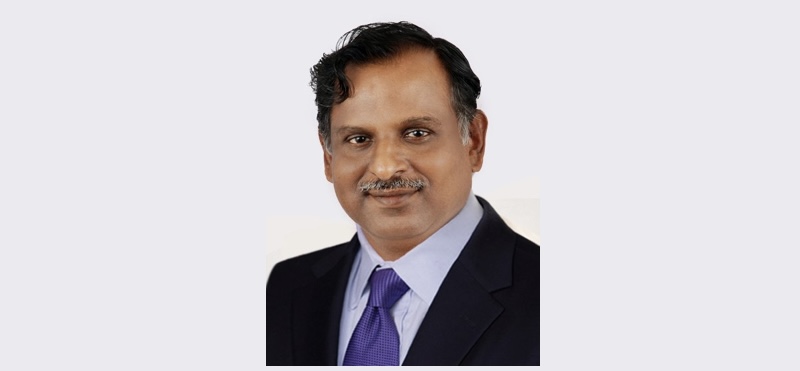
  • V. Narayan to succeed  S. Somnath;  to take over as Isro chairman

    V. Narayan to succeed S. Somnath; to take over as Isro chairman

    MUMBAI: There’s a new head at the Indian Space Research Organisation (Isro) and at the department of space (DoS). On 7 January, the  appointments committee of the cabinet sent out a notification announcing the selection of the head of the liquid propulsion systems centre (LPSC)  V Narayan in the organisation as the man for the job. He will also hold the post of chairman of the space commission. He takes over from current Isro boss S. Somnath  on 14 January when the latter’s term ends.

    Narayan was one of the key architects of India’s development of the cryogenic engine, which on the back of which India’s space program – including launch vehicles and space exploration – could move ahead at the pace it has.

    Speaking to NDTV Narayan said: “We have a clear roadmap for India and I hope to take Isro  to greater heights as we have great talent.”

    As  LPSC  director he has been providing techno-managerial leadership which is engaged in the development of liquid, semi cryogenic and cryogenic propulsion stages for launch vehicles. chemical and electric propulsion systems for satellites, control systems for launch vehicles and transducer development for propulsion system health monitoring.

    Narayanan, who is a rocket and spacecraft propulsion expert joined Isro in 1984 and functioned in various capacities before becoming director of the centre. During the initial phase, for four and a half years, he worked in the solid propulsion area of sounding rockets and augmented satellite launch vehicle (ASLV) and polar satellite launch vehicle (PSLV) in Vikram Sarabhai Space Centre (VSSC). He contributed in the process planning, process control and realisation of ablative nozzle systems, composite motor cases and composite Igniter cases.

    In 1989, Narayan completed his M.Tech in cryogenic engineering with first rank at IIT-Kharagpur and joined the cryogenic propulsion area in the LPSC. Isro’s geosynchronous launch vehicles namely GSLV Mk-II  and GSLV Mk-III capable of placing two-tonne and on four-tonne class communication satellites in geo transfer orbit have cryogenic propulsion stages as terminal stages.

    As one of the few cryogenic members, working  in this area in the initial stages, he carried out fundamental research, theoretical and experimental studies and contributed in the successful development and testing of cryogenic sub systems namely the gas generator, sub-scale cryogenic engine of one tonne thrust and thrust chamber of 12 tonne thrust. 

    Considering the long-lead time required for the development of cryogenic stage of GSLV MkII vehicle, for meeting the initial flights, few of the cryogenic stage hardware were procured from Russia. Towards this, as an expert in cryogenic propulsion,  he contributed in the development of mission management systems, contract management and the successful flights of GSLV MkII vehicle with procured cryogenic stages.

    For sustained operation of GSLV MkII, initially Isro planned for technology acquisition of cryo stage for manufacturing in India. But due to geopolitical reasons, the technology acquisition could not succeed and Isro decided to develop cryogenic upper stage (CUS) indigenously  Narayanan has played crucial role in the successful development of CUS  and contributed in making it operational for the GSLV Mk II vehicle. 

    For the GSLV MkIII experimental mission with CARE module, he conceived and realised the passive cryogenic stage and contributed for the successful experimental flight. As the project, director of the C25 cryogenic project, he provided techno-managerial leadership and conceived, designed and developed the 25 cryogenic propulsion system of GSLV Mk-III launch vehicle powered by an engine developing a thrust of 200kN. 
    He contributed in establishing the necessary infrastructure and facilities for design, analysis, realisation, testing and launching. Due to innovative approach, the C25 cryo stage was developed under his guidance in the shortest time frame with all successful tests and inducted in the GSLV MkIII vehicle. Subsequently he also made the stage operational. 

    His contribution, made India one among six countries in the world to have the complex and high performance cryogenic propulsion systems and made the country  self-reliant in this area. 
    Narayan parallely completed PhD in aerospace engineering from IIT-Kharagpur in 2001. The work carried out as part of M.Tech thesis titled Cavitating Venturies for Flow Control in Cryogenic Rocket Engines and PhD thesis titled Thrust and Mixture Ratio Regulation Systems for Cryogenic Rocket Engines were directly employed in the development of the Indian cryogenic propulsion systems. 

    Towards the GSLV Mk-III M1/Chandrayaan-2 mission, L110 liquid core stage, C25 cryogenic stage, were delivered for the vehicle under his watchful eye. Propulsion systems for orbiter and Vikram lander which include the throttleable thrusters for soft landing were also developed and delivered for the Chandrayaan-2 Mission, under his guidance. As the chairman of the national expert committee constituted to study the reasons for hard landing of the Chandrayaan-2 lander ship, contributed in pin pointing the reasons and corrective actions required to overcome the observations. Realised and delivered all the propulsion systems for Chandrayaan-3. 
    For the Indian human space flight (Gaganyan) programme, he worked on the human rating of C25 and L110 liquid stages of LVM3 vehicle and the development of propulsion modules for crew module and service module and the cabin pressure control systems. He also focused on the thermal and humidity control systems and the propulsion stage for the test vehicle. 

    For enhancing the GTO payload capability of LVM3 vehicle and meeting the future Indian heavy lift  rockets, Narayan guided the team and designed a Lox-kerosene semi cryogenic propulsion system and provided  techno-managerial leadership for its development.

    He took up the development of improving the C25 cryogenic stage performance with higher propellant (32 tonnes of LoX and LH2) loading with higher thrust (22 tonne) engine. His team is also working on developing the 100 tonne  thrust Lox-CH4 engine and electric propulsion thrusters. He has also made significant contribution in the spacecraft propulsion area. 

    Narayan contributed as the member of two failure analysis committees (FACs) of GSLV MkII D3 and GSLV MkII F02 vehicles and , member secretary of the first Indian cryogenic upper stageeEngine FAC. He  was a member of Isro’s 12th Five Year plan-drafting group and contributed in finalsing the propulsion system development during 12th five year plan. He has also finalised the propulsion road map of Isro for the next 20 years (2017 – 2037). As director of  the LPSC, during the last five  years, he has delivered 164 liquid propulsion systems for 41 launch vehicles and 31 space craft missions. 

    V Narayanan, is currently the chairman of LPSC-IPRC co-ordination committee and chairman of programme management council – space transportation systems.

  • PSLV launches four new satellites

    PSLV launches four new satellites

    MUMBAI: In its 10th launch on 10 January India’s Polar Satellite Launch Vehicle (PSLV) PSLV-C7 has successfully launched four satellites namely India’s Cartosat-2 and Space capsule Recovery Experiment (SRE-1), Indonesia’s Lapan-Tubsat and Argentina’s Pehuensat-1 into a 635 km high Polar Sun Synchronous Orbit (SSO).

    Isro claims to having used a Dual Launch Adopter (DLA) in PSLV for the first time to accommodate two primary satellites in tandem.

    PSLV-C7 lifted off from the first launch pad at SDSC Shar at 9:23 am with the ignition of the core first stage and four of the six strap-on motors. The remaining two strap-on motors were ignited 25 seconds after lift-off.

    The important flight events included the separation of the ground-lit strap-on motors, separation of air-lit strap-on motors and the first stage, ignition of the second stage, separation of the heatshield at about 121 km altitude after the vehicle had cleared the dense atmosphere, second stage separation, third stage ignition, third stage separation, fourth stage ignition and fourth stage cut-off.

    Cartosat-2 was the first satellite to be injected into orbit at 981.3 seconds after lift-off at an altitude of 639 km. DLA with the 6 kg Pehuensat-1 was separated about 45 seconds later followed by the 550 kg Space capsule Recovery Experiment (SRE-1) after 120 seconds and the 56 kg Lapan-Tubsat after 190 seconds.

    The four satellites have been placed in a polar orbit at an altitude of 637 km with an inclination of 97.9 degrees with respect to the equator. The initial signals indicate their normal health.

    After its separation from the DLA, the two solar arrays of Cartosat-2 were automatically deployed to generate the electrical power for the satellite. The satellite health is being continuously monitored from the Spacecraft Control Centre of Istrac at Bangalore with the help of its network of stations at Bangalore, Lucknow, Mauritius, Bearslake in Russia, Biak in Indonesia, as well as support from Svalbard ground station in Sweden for the initial phase of the Cartosat-2 mission.

    With Isro Satellite Centre (Isac), Bangalore, as the lead Centre, Cartosat-2 was realised with major contributions from Space Applications Centre (SAC), Ahmedabad, LPSC at Bangalore, and IISU, Thiruvanantha-puram. Istrac is responsible for initial and in-orbit operation of Cartosat-2. The National Remote Sensing Agency (NRSA), Hyderabad receives and processes the data from Cartosat-2.

    Space capsule Recovery Experiment (SRE-1): Space capsule Recovery Experiment (SRE-1), developed by Isro’s VSSC and Isac, is a 550 kg capsule, intended to demonstrate the technology of an orbiting platform for performing experiments in microgravity conditions. After the completion of the experiments, the capsule will de-orbited after a few days and recovered.

    Two days before de-orbiting, SRE-1 will be placed in a Repetitive Elliptical Orbit. Subsequently, it will be reoriented and deboost rocket is fired to make it reenter the earth’s atmosphere. SRE-1 will splashdown in the Bay of Bengal, east of Sriharikota coast.

    SRE-1 is being tracked and monitored by ground stations at Bangalore, Lucknow, Mauritius, Biak in Indonesia, Bearslake in Russia, Saskatoon in Canada and Svalbard in Sweden/Transo in Norway.

    Lapan-Tubsat and Pehuensat-1 were launched under commercial agreements. Lapan-Tubsat is a cooperative venture between Indonesian Space Agency, Lapan and Technical University of Berlin. It is an earth observation satellite besides a technical demonstrator in control systems.

    Pehuensat-1 is a 6 kg Argentinean nano-satellite meant to serve educational, technological and scientific fields. Its developed by University of Comahue of Argentina, AMSAT (Amateur Satellite Association of Argentina) and Argentina Association for Space Technology and is intended to provide an experiment platform to perform amateur radio experiments between colleges and universities of Argentina.


