Tag: LPG

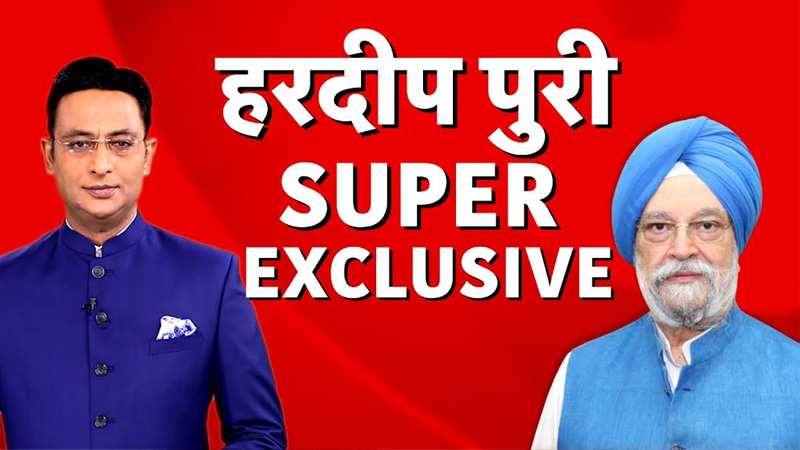
  • Minister Hardeep Singh Puri’s exclusive interview on LPG price cut on News18 India

    Minister Hardeep Singh Puri’s exclusive interview on LPG price cut on News18 India

    Mumbai: News18 India’s managing editor Kishore Ajwani conducted an exclusive interview with union minister of petroleum & natural gas and housing and urban affairs Hardeep Singh Puri. The interview centered around the government’s decision to reduce the price of liquefied petroleum gas (LPG) cylinders for domestic use by Rs 200 per cylinder, as announced by union minister Anurag Thakur. This reduction amounts to an 18 per cent decrease in the cost of a 14.2-kg cooking gas cylinder. The interview unveiled significant insights into the context, rationale, and implications of this decision.

    Union minister Hardeep Singh Puri began by addressing questions about the timing of prime minister Modi’s decision to lower LPG prices. He asserted that the opposition’s concerns regarding the timing need not overshadow the significance of the decision itself. Stressing the democratic nature of the government, the minister underscored that the decision was taken in honour of the upcoming Rakshabandhan festival, symbolising the government’s commitment to the welfare of India’s sisters.

    Highlighting the transformative journey of access to LPG, Puri illuminated the evolution from a time when 45 per cent of India’s population lacked LPG access before 2014. This stark reality has evolved into a commendable achievement, with the total number of LPG connections growing from 14 crore to 32 crore in 2023, he added. The ‘Ujwala Yojana’ scheme stands out as a cornerstone of this achievement, benefiting 9 crore 60 lakh beneficiaries who receive a direct 200 rupee subsidy. Minister Puri further revealed that even those not covered by the scheme would now enjoy a reduced cylinder price of 900 rupees from the earlier 1100 rupees, while Ujwala Yojana beneficiaries would be entitled to LPG cylinders at an astonishingly affordable 700 rupees. Future plans to expand the Ujjwala Yojana by approximately 75 lakh connections underscore the government’s resolute mission to ensure universal LPG access.

    When queried about the potential reduction of petrol and diesel prices, the union minister responded with an emphasis on fair comparisons. He raised questions concerning non-BJP states’ reluctance to reduce VAT in response to the central government’s reduction of central cess. The minister detailed a pattern of global petrol and diesel price increases, contrasting it with India’s remarkable feat of reducing petrol prices by five per cent and diesel prices by 0.28 per cent over the past two years.

    He then engaged in a state-by-state analysis, drawing attention to the difference in petrol and diesel prices between BJP and non-BJP states. The significant variance in VAT rates painted a compelling picture, with petrol prices differing by up to 11.85 rupees and diesel prices by 10.67 rupees.

    Expanding the horizon, he embarked on an international comparison spanning neighbouring countries. He referred to the data showcasing India’s praiseworthy position of reducing petrol prices by five per cent while its neighbours experienced notable increases, ranging from 24.91 per cent to 50.56 per cent. Even on the global stage, the USA encountered a substantial 43.33 per cent rise in petrol prices, in stark contrast to India’s reduction. Similarly, Germany and France, as major G20 countries, witnessed price increases of 18.56 per cent and 22.56 per cent respectively.

    The discourse extended to diesel prices, revealing India’s 0.28 per cent reduction against Sri Lanka’s 87.25 per cent surge and the USA’s 36.70 per cent increase. Puri also highlighted the government’s visionary steps in reducing LPG cylinder prices, benefitting each citizen by 200 rupees and Ujjwala Yojana beneficiaries by 400 rupees, a testament to prime minister Modi’s commitment to the welfare of the people.

    Addressing concerns about election-driven motives, he firmly articulated that elections are inherent to India’s democratic fabric and are independent of policy decisions. The LPG price reduction, a gesture of benevolence to women, aligned with the broader initiatives of women’s empowerment, extended maternity leave, and the abolition of triple talaq.

    The union minister also delved into the challenges posed by “Oil bonds,” underscoring the consequences of past financial decisions and the government’s resolute approach under prime minister Modi’s leadership.

    The interview explored other dimensions of governance, including urban pollution and upcoming events. Puri’s insights provided a comprehensive understanding of the government’s vision, its accomplishments, and the commitment to India’s progress.

  • EC to screen govt ads; PM photo on hoardings disallowed

    EC to screen govt ads; PM photo on hoardings disallowed

    NEW DELHI: Even as the Election Commission has set up committees to screen and clear government advertisements in various forms in the five poll-bound states, it has asked the cabinet secretary to remove the prime minister Narendra Modi’s photograph from hoardings at petrol pumps in Goa and gas consumer certificates in Uttarakhand.

    These committees will examine all ads including those for audio-visual media including television and radio.

    “The Commission had received a complaint that, in Goa, hoardings with photographs of the prime minister were displayed at petrol pumps. The Commission had issued necessary directions on 6 January,” said a letter to the cabinet secretary.

    The Commission said it had also received a press clipping showing that certificates bearing the prime minister’s photograph were being distributed by oil companies to the LPG consumers in Uttarakhand who had surrendered gas subsidy.

    “This is not permissible under the Model Code of Conduct or under the ECI instructions. You are requested to ensure that the instructions are brought to the notice of all concerned for strict compliance in letter and spirit,” the Commission said.

    Earlier this week, the EC had reminded all concerned about its 2004 order that government-funded advertisements which publicise achievements of political functionaries or parties violate the Model Code of Conduct guidelines.

    The Commission had said the posters that publicise achievements of political parties or their functionaries should be either removed or covered suitably in the poll-bound states. Only those government hoardings with general messages on social welfare schemes and awareness campaigns are allowed.

    ALSO READ:  Schedules fixed for broadcasts in five poll-bound states

    ALSO READ:  Poll schedule on social media shows unprecedented reach  

  • EC to screen govt ads; PM photo on hoardings disallowed

    EC to screen govt ads; PM photo on hoardings disallowed

    NEW DELHI: Even as the Election Commission has set up committees to screen and clear government advertisements in various forms in the five poll-bound states, it has asked the cabinet secretary to remove the prime minister Narendra Modi’s photograph from hoardings at petrol pumps in Goa and gas consumer certificates in Uttarakhand.

    These committees will examine all ads including those for audio-visual media including television and radio.

    “The Commission had received a complaint that, in Goa, hoardings with photographs of the prime minister were displayed at petrol pumps. The Commission had issued necessary directions on 6 January,” said a letter to the cabinet secretary.

    The Commission said it had also received a press clipping showing that certificates bearing the prime minister’s photograph were being distributed by oil companies to the LPG consumers in Uttarakhand who had surrendered gas subsidy.

    “This is not permissible under the Model Code of Conduct or under the ECI instructions. You are requested to ensure that the instructions are brought to the notice of all concerned for strict compliance in letter and spirit,” the Commission said.

    Earlier this week, the EC had reminded all concerned about its 2004 order that government-funded advertisements which publicise achievements of political functionaries or parties violate the Model Code of Conduct guidelines.

    The Commission had said the posters that publicise achievements of political parties or their functionaries should be either removed or covered suitably in the poll-bound states. Only those government hoardings with general messages on social welfare schemes and awareness campaigns are allowed.

    ALSO READ:  Schedules fixed for broadcasts in five poll-bound states

    ALSO READ:  Poll schedule on social media shows unprecedented reach  

  • “There’s a lot of mileage in pay TV news”

    “There’s a lot of mileage in pay TV news”

    As the country sheds tears over  onion prices, cringes about the skyrocketing cost of LPG, cribs for a better system in place for tackling the ever-growing crime incidents and hopes for the 2014 general elections to change things, the news channels are gearing up to catch all the action live. 

    And when all the international and domestic news channels are at it, why should the Beeb – the world’s biggest pubcaster that reaches over 360 million households globally; 12 per cent of which are from India – miss a chance to report on the political battle of the world’s so-called largest democracy? 

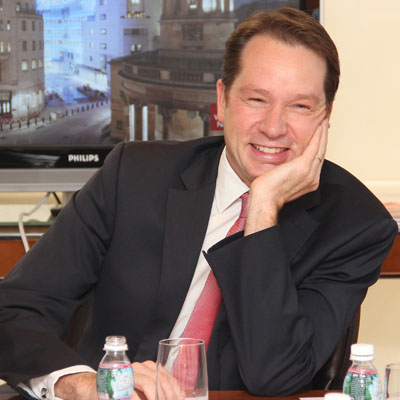
    BBC Global News CEO Jim Egan, who was in Mumbai to launch its India Direct series, reveals that the channel is looking at grabbing more eyeballs during the election season. The channel plans to scale up the coverage on India in the coming months.

     
    And he gave some time to Indiantelevision.com’s Vishaka Chakrapani on the sidelines of the launch, to talk about the BBC World News’ India gameplan, its global digital push wherein it aims to melt the barriers between broadcast and online news. Egan emphasised that India is an important market for BBC in terms of pay TV and digital advertising. Excerpts from the interview:

    What is the benefit of investing in the news business in India?

    When I say investment I’m not talking about corporate investment, it’s about editorial investment. It’s been a good year for us in India. Digitisation has been broadly good for us and we are seeing our household penetration increase. 

    What is the growth in reach that you have experienced due to digitisation?

    It has grown steadily in single digit millions and has reached 30 million now, which means one in four homes. Digitisation is moving at a different pace in different parts of India. We would like to be bigger but we are addressing a relatively niche population in the English language and thus we are never going to be a mainstream news channel in the country.

     
    With so many international channels making a mark in India, how will BBC World News differentiate itself and stay on top?

    We are looking at doing product and editorial investments to the extent we can afford it. Other operators are well resourced such as CCTV in China is well financed, so is Al Jazeera. If we are going to get into a spending arms race, BBC won’t be able to get there. We will capitalise on our reputation and emphasise on being different. Being successful is not about spending a lot as some qualities cannot just be bought.

    Why has the industry been hit with a bout of layoffs happening across the world?

    The last five to 10 years have been very difficult for journalism. It’s coming to terms with internet and digitisation. In  print, it has been a very difficult time, but not so much in India. A lot of broadcast journalism has been buffeted by the internet, particularly in international news. You see lots of retrenchment and people closing bureaus. BBC is slightly different because we have both public and commercial funding that has helped us expand and maintain ourselves. We are swimming against the tide but we are doing it deliberately because we think having a well funded and well resourced international network of correspondents is what success is about.  

    What about the entry of many international news channels in the market? Could that also be a reason that’s leading to increased competition?

    There’s been a bit of fragmentation but I don’t see demand for news going down. Demand for news is going in different directions. But as long as you are prepared from the editorial and corporate points, there’s good business to be made. It’s just at slightly different places these days.  

    We would like to be bigger but we are addressing a relatively niche population in the English language and thus we are never going to be a mainstream news channel in the country…

    In the future, would having multilingual skills be an important criteria for journalists?

    That’s an interesting one. I don’t think we would hire someone just because they can speak many languages but the ability to broadcast and write digital content in those languages is something we are seeking to develop and nurture. We are going to have a dedicated Asian edition of our website with front page stories about India and China. There will be global programmes to improve the profile and output of bilingual journalists such as the ones in India. We are producing more relevant and easier to find content for our websites.  

    How important is India on a global scale for BBC World News?

    India has been and will be important for us. There is huge digital consumption that is growing in the mobile sector here. India is the fourth biggest market in terms of traffic, the first three being the US, Australia and Canada in that order. We need a big English speaking market to do well for us, and I’m leaving the UK out of this. One thing particularly exciting about India is that in the other markets digital penetration is nearing saturation point but in India there is a lot of room for growth in the mobile sector.

    In the recent years, the budget of BBC has been cut by 20 per cent. Does that affect the investment?

    The 20 per cent cut is due to TV licence fee being frozen for a period of five years, taking inflation into account. Internationally, we are funded through advertisements while domestically we are run by public money which is an involuntary payment of about $200 a year. We have the challenge and the freedom to earn commercial revenues. 

     
    Original content on mobile is what people seem to be asking for. Is that something you are looking to cash on?

    We are not doing that in mobile because on this platform the key for us is about following news from screen to screen. It’s about trying to make news consumption something that people can take with them with their screens and stay up to date on their mobile phones. That’s the editorial idea. The product idea is to get more video content on mobile. One line growing more steeply than mobile is ‘video on mobile’ as people’s devices become better, internet packs get cheaper and network availability becomes more reliable.  From the commercial point of view, it is working with the advertising community for digital. 

    How big is mobile advertising given that mobile marketing forms a relatively small part of the marketing budgets in India?

    I don’t think mobile marketing in India is necessarily small compared to other countries. In most countries, mobile advertising has lagged behind mobile consumption of media. That’s another area where you are seeing rapid change and the amount of money we are generating from mobile globally has come a long way in the last four months. India is one of the biggest growth markets for mobile apart from sub Saharan Africa where mobile device consumption is also increasing.

      
    Do you see threat from OTT in the country?

    When I’m in India I haven’t till date heard people worrying about OTT. TV adoption is still growing as well as pay TV penetration, although not so drastically. Too many people have written of TV news as something people want to consume and as well as pay for. But I think there’s quite a lot of mileage left in pay TV news.  

    How do you deal with carriage fees in the country?

    I’m glad to say we don’t pay for carriage but we rather earn from it. I wouldn’t say we haven’t had a problem with it but it’s been a business policy. We don’t think we should have to pay people to carry us. We are very proud of the quality of BBC World News. Our business policy is often questioned.

     When do we get to see BBC HD TV in India?

    One of the new features of the new office in London is its native HD transmission from glass to glass, ie camera to screen. In a number of markets in Asia we are introducing BBC World News in HD. We would love to launch in HD here but we don’t have any active discussions underway. The markets in the world where we are present in HD, like Singapore, have given us good feedback and we believe HD would be a good value addition to our distributors.


    We will capitalise on our reputation and emphasise on being different. Being successful is not about spending a lot as some qualities cannot just be bought…

     Looking at a possibility if FDI norms are eased in India, do you see a Hindi news channel from BBC?

    I don’t think we will set up a corporate vehicle here to be honest. We have a Hindi show called Global India on ETV so it is a content supply set of arrangement. We’d like to be bigger in Hindi and other languages but I don’t see us making a corporate investment in the Hindi news business.

    Do you see the possibility of a JV in India?

    We were examining a possibility of doing a JV in the Hindi language but it didn’t work out due to issues such as FDI regulations and MIB stipulation around editorial. The concept of editorial content is very hard to share.

    There is also a financial reason. We are not in a position to make capital investment into a JV that will be successful and have an impact in one of the world’s highly contested news landscape. We are never going to be better at covering Indian news than the Indian news providers themselves.

    We will cover Indian news to show them globally but not try to outdo the local competition. That is something that you cannot do because it is an extremely dangerous and expensive game. 

    Will we see BBC World News going regional?

    We always talk about relevance more than presence. Although we won’t be a part of the Indian domestic news landscape, we want to be relevant to audiences here. There are financial limitations to such a prospect too. We can’t tailor everything for 100 different markets around the world. So, instead we always think from our broadcast centres as to where is the peak audience at that point of time that will view the channel. 

    How many Indian advertisers do you have and how have they been doing lately?

    We have about 10-20 advertisers from India such as Karnataka tourism, Bharati Airtel, Micromax and airlines who want to reach an international audience through TV as well as online. Our Europe market was hit badly due to recession but Asia stayed better. However, this year has seen a slowdown from our Indian advertisers.