Tag: L’Oreal Paris

  • IBS: Rebuilding brands, building economies

    IBS: Rebuilding brands, building economies

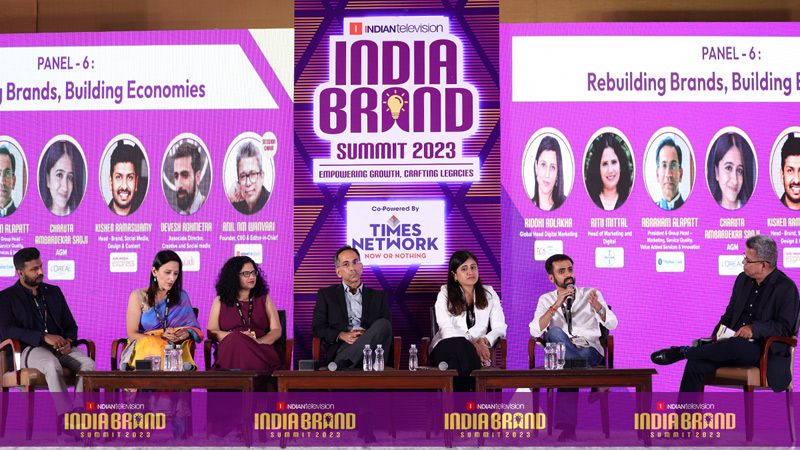
    Mumbai: The India Brand Summit held on 28 November 2023 at The Lalit Mumbai, convened leaders, marketers, entrepreneurs, and experts to explore current trends, challenges, and opportunities in the dynamic brands and marketing arena.

    The session offered a comprehensive exploration of the strategies and approaches required to revitalize brands to contribute to the growing economy. Through this session, We delve into the intricate relationship between brand revitalization and its impact on larger economic landscapes.

    The key highlights of the session were How brand revitalization efforts can contribute to stimulating economies, attracting investments, and creating jobs. Indicators to understand the brand’s current perception, customer sentiment, and market positioning. Strategies for Brand Revitalization – To explore methods to refresh brand messaging & how to adapt to evolving consumer preferences. To underscore the role of digital platforms and technology in brand rebuilding. To examine how brand extensions in brand rebuilding initiatives translate into tangible economic benefits. Recognizing the global scope of brand rebuilding & how it can collectively contribute to the development of the country

    The session was chaired by Indiantelevision.com group founder – CEO & editor in chief Anil NM Wanvari had panellists including Bayer consumer health division India head of marketing and digital Ritu Mittal, Tata consultancy services global head of digital marketing Riddhi Adlakha, Thomas Cook (India) Ltd president & group head – marketing, service quality, value-added services & innovation Abraham Alapatt

    Loreal Paris AGM Charuta Ambardekar Saoji, Air India Express head-brand, social media, design & content Kishen Ramaswamy, Shaadi.com associate director creative and social media Devesh Rohmetra

    Anil began the session by asking,  “How is each of your houses? How are each of you transforming yourself to serve this new consumer? And what’s happened to the brand that you’re associated with?”

    Devesh stated “So as you mentioned, like how and we were just talking about it that you know how the world around this is changing so much and especially not just economically, culturally and in all aspects, the institution of marriage is changing, There was an idea of arranged marriages, which has now changed to planned marriages as we spoke about. There was a time when parents found you somebody and said, this person looks like a good person. This is going to be your party. Those were arranged marriages. Now we’re in a world when parents come to you and then they look for you and they find multiple suitors for you, for you to meet, match a vibe and you know eventually then settle down with one of them. That’s something that we can do, say planned marriages. It is somewhere between love marriages and arranged marriages. So it’s chosen by you but may be found by somebody else. That’s what we at shaadi.com are also trying to do right? You spoke about the economic changes in our lives and our lifestyles. I’ll give you a great insight. Recently we were doing some research on our data from the platform. And we found out that women who are, you know, doing very well professionally and financially, independently. Are underplaying their salaries by a lot on our platform. So we found out that you know, people who are women, who are at very senior positions and very good companies, global companies have added their salaries at let’s say 12 LPA ++, Now that can be anything. So technically they are not lying, but we know this for a fact they are much higher than that. But they are doing that to kind of fit in and be more suitable or for multiple other reasons. Also found out that you remember there was a time when government job was the thing. if you’re a guy who has a government job, you are right, now entrepreneurs and MBAs are the new government jobs. They are the most suitable suitors on our platform. People are more desirable suitors on the platform, almost like, how a government job used to be. So yeah, we are also changing our brand approach. We are not trying to be the regressive, matchmakers that everybody thinks that we are.  We are trying to evolve our brand approach to fit the new narrative of our society and hopefully, it works out pretty soon.”

    Anil asked, “How are the changes that have impacted you how are you reacting to the changes and how has it impacted what you’re doing apart from localizing, colors maybe shades?”

    Charuta replied, “ Loreal Paris is a 114-year-old brand present in 150-plus countries. It’s massive from a global point of view. It has three pillars, One is women empowerment or because you’re worth it like everyone knows, the Second is science and the third part is inspiration and luxury. Now these three pillars don’t really change. They don’t need to be revitalized. So no matter which country we move to exactly like you said, the macroeconomic trends of more working women, more disposable income consumption shifting from household to individual consumers, and digitization. So that really helps a company like L’Oreal. So it’s more from a brand point of view we don’t need to drastically change our brand image from country to country however what we need to adapt in a growing economy like India. Firstly, are our products the correct products for Indian women? Many times what happens is when you launch a new brand comes into a country, there is a plug-and-play. So you have imports that come in and that’s what gets sold. But over a period of time, a scale builds. The products have to be made for the country. They have to be tested on Indian skin, on Indian hair and that’s the first step. And that’s how you will get skin. The more you make such products, the more you produce in the country, the costs become lower, the volume increases and this is a virtual cycle that everyone in FMCG slash beauty wants to get into. So that’s the first thing for us to do, which we did. I think the second thing is that this consumer is also very demanding. So it’s no longer to say for example, just about Shampoos to quote hair care there is a routine. So shampoo, everyone uses shampoo conditioner, half the consumers use conditional, then you have serums, then you have some hair masks and so many other products just in one category. And it is our responsibility as a company who’s known for this and who has been at this. We are the number one beauty brand in the world to really bring to the market newer and newer gestures like this. And this is what we do, So we play everything. So we play in terms of formats, smaller packs, etc. For the mass market. At the same time, we play high and low. So we play high for the evolved consumer who’s online. So in fact L’Oreal is a pioneer when it comes to e-commerce. When it comes to digitization, we have invested ahead of the curve. We foresaw that this is happening and in fact from 2018-2019 onwards we are over-indexed on our investments and that’s really helped us because that’s where the consumer is. Currently, there are 660 million smartphones in the country. So that’s massive and some around half of that household, so 330 million households, so around 2 smartphones. So the way we look at consumers has changed and that’s really helping us. So in terms of premiumization, new gestures, format change, and our brand itself being positioned being international, the consumer has come to that now and that’s what they asked for. So it really helps us create this virtual circle.”

    Abraham further spoke about his company adding, “The fastest-growing major economy in the world. So as a result of that, we’re pushing up a fair amount of people literally every year into the consumption disposal segment, which is a segment that we in the travel industry focus on. Two is that the youngest demography in the world obviously has a lot of implications in terms of media consumption, lifestyle, attitude towards saving or suspending as you refer to, and so on. And the third is the fastest-growing digital economy and the sort of rapid shift from analog to digital that India has witnessed leapfrogging various other economies. So if you look at our category, I think brand for those who don’t know, Thomas Co we are 143-year-old pioneer in modern travel as we know it. Everything from the first traveller’s check to the first hotel coupon was invented by Thomas Co. So Thomas Co India itself in its own right as I was explaining to you as a multinational, we are in 25 countries and five continents ourselves. We bought the British brand when it was liquidated in 2019. So we are the original Thomas Co now. So our whole attitude on the backdrop of these three trends is really looking at how we need to shift from a sustainability standpoint. One is this whole positioning, So I think where we are most focused on is what we call premium mass, which is the segment that’s big enough to want high-quality experiences when they travel and go on holiday especially. But at the same time, not too much customization because we recognize that’s not really a space that we are good at in terms of scale. So clearly positioning-wise, we are in the premium mass phase. Two is because of the young demography thing. The big shift is the shift from travel to places to travel for experiences. So you have a segment that’s coming to us over the last 10 years that’s coming from I want to do this and this. So why should I be going rather than I want to go here? What can I do? So that’s a big shift and that really signifies, not just young in terms of age, but young in terms of attitude, experience late travelers. And the third piece is, of course, the digital-first economy that India has already become. And that really means from a discovery point of view, from a transactional consumption point of view. We’ve shifted from being pure traditional, which is where we were born and while a lot of our competitors appear online, we have what we call Omni channel. So we allow customers to interface with us purely offline or analogue if that’s the mode they prefer and a lot of us stand that way and your digital which is the evolved customers may be customers like you and I, but most of India actually is a hybrid. So you have a lot of digital discovery and digital part analog consumption. This has got to do with ticket size. This has to do with the involvement of the family, This has got to do with complexity. This has to do with these applications and foreign exchange, a lot of HR physical processes still. So I think these are three big trends and three shifts that we’re making. So I’m happy to say that from pre-pandemic to post a lot of focus is on going after younger customers because we realize we appeal more to older customers. We’ve actually managed to recreate products and experiences and reach young customers in a funky, quirky way. We’ve actually managed to bring down the average age of our customers by 10 years over the last three-year period. Which I think makes us squat in the middle of the Indian demography average age.

    Anil moved on to the next question, “What’s been going on at bio-consumer health products?”

    Ritu commented, “Bayer globally has three divisions: Crop Science, Pharmaceuticals, and Consumer Health, operating in over 80 countries. The Consumer Health Business was launched in India in 2021 amidst the pandemic, presenting unique challenges. Our mission, upon launch, became centered on enhancing and democratizing access to self-care in India. This involves not only improving product availability but also providing easier access to information. Now, let’s explore why this mission is critical. In a rapidly growing economy like India, where individuals harbor significant dreams and aspirations, the need for better self-care is paramount. Data reveals that the average peak productivity period for an Indian lasts only seven years, nearly half that of a Chinese individual. India ranks 158 out of 195 countries in productivity surveys, signaling a substantial scope for improvement. Improving self-care is crucial for both individuals and the economy. The healthcare system in India is strained, with a ratio of one doctor per 2000 people, contrasting with the WHO’s recommended ratio of one doctor per 1000 people. This imbalance worsens in rural areas. Therefore, effective self-care can alleviate the burden on the healthcare system.

    Next, how do we drive this mission further? Despite being present in India for over 50 years, our flagship brand Saridon has seen minimal innovation. We are currently working on new developments, and although details are limited due to ongoing projects, we are excited about the potential. The introduction of formats can stimulate self-care adoption, as observed in developed markets for vitamins and supplements. While this trend is emerging in India, its scale remains relatively small. Leveraging our expertise, we aim to make these products more accessible to a broader audience.

    Creativity can play a pivotal role in simplifying complex scientific concepts for consumers. Besides leveraging science and expertise, translating it into relevant, easy-to-understand, and memorable ideas is a key area of intervention needed. In terms of technology, we have explored the potential of AI to launch a voice-AI-based program, leveraging the penetration of mobiles in India. In a pilot program initiated in Uttar Pradesh last year, a voice chatbot provides consumers with information on managing headaches, offering solutions both with and without pills. Under the “without pills” pillar, modules were designed to address common stressors, such as financial and relationship issues, contributing to better stress management and, consequently, reduced absenteeism and enhanced productivity.

    McKinsey’s self-care report from 2018 suggests that good health through self-care can contribute up to half a point to a country’s GDP. Recognizing this potential, we continue to focus on enhancing self-care practices in India, combining innovation, creativity, and technology for a healthier and more productive future.”

    Riddhi further commented about his company,  “So the way I would look at this opportunity is to talk today about how people think. TCS is an enterprise that basically deals with the B2B world. Everybody knows about TCS, but surprisingly, a lot of people still don’t know about TCS.

    We are in enterprise we have gone service products, platforms, consulting, all of it under one umbrella. We definitely take a lot of pride in working with almost everybody who was on the stage. So we take a lot of pride right from Air India to some called Bayer or Loreal, not with shadi.com. So we believe in getting married in-house.

    The way I would look at it is we’re trying to serve three different segments. The segment that I would say is there are a lot of people who know and who want to join us in India because we’re TCS we’re a tech giant Little did you know that we’re actually touching every person’s daily walk of life. Sure, right without actually talking about technology to rather enabling a person on your terms of your postal services to get a passport today is TCS even your postal services. So there are various such not just like I said, these are products and platforms, you go to any one of your retail stores like a chroma everything that comes on your bill is to TCS, what you’re seeing through AI is through TCS, if you’re seeing something on Air India the technology backbone is TCS. So that’s one segment that we deal into the second segment that we’re definitely Catering is to our customer’s customer and I think that’s what we spoke briefly inside. Our job is not to go back and create brand awareness for ourselves, but literally have our customers know more about themselves. what do I mean by this? So today, if I want to help them innovate, and growth transform, I need to become the strategic partner. I don’t need to be considered a technology giant alone. Tech definitely is an enabler for a lot of things that we do today. But do I also have to go back and become a transformative partner to you, I need to sit down with you and be hand in glove with your problems, your challenges your needs. And that’s the role that teachers are playing today. And here is the way marketing plays and also my brand image in India would be very different. And people would love to know me, versus somebody sitting in North America, or Latin America, or as a matter of fact, within Canada or Europe, Little do people know that we do not advertise in French, or in Spanish, or we are talking to German, and we talk to them in their language. But we will always consider ourselves as tech people, which is when the transformation journey is going to change the way we talk to these customers. And the way we are bringing ourselves out is the different side of TCS that we talked about today. So that’s the segment number two. Segment number three is bringing the two ecosystems together. We can’t do this separately because, at the end of the day, we may be the president of each and every company, we may be the CEOs of every company, but we’re individuals who have daily needs. How are we connecting the two to dry this entire ecosystem from this white animal? is what we’re trying to achieve.

    Kishen further about his company added, “Air India Express has been a legacy brand. It’s been there for about 18 years now. And if you look at Air India as a group, it’s been there for nineteen years., I think our brand has seen a transformation in the last five years I was part of AirAsia India, and now it’s part of Air India Express, It has taken us over two years of work that we have put into Air India Express itself, although a legacy brand, it had its own positioning in the Middle East Market, etc. But we wanted to take that ahead in terms of what it means like if we have to completely revitalize a brand such as Air India Express, which has a legacy of Air India as well as the Tata has now how do we bring that across to the new consumers, right, that is what we wanted to take. At the core of any airline, it is the three pillars that we look at which is connecting people, places, and cultures, right? We wanted to take that one step ahead, we wanted to say that you know, we would stand for an airline that will make meaningful connections, we will bring you the most unique of experiences and we will give you the best in value. But also tying it back to being rooted to the culture that we are coming from like being an Indian airline, we need to have that Indian warmth as well. We call it the unique Indian warmth. There is a reason for us to position it as a unique Indian walk because there is a classification in India or anybody anywhere else where the media is classified as a full-service airline and a low-cost carrier, We don’t classify ourselves as a low-cost carrier. The only reason for that is when you look at the differentiation between the first full-service airline and low-cost airline. There is not much of a difference we rather give you more value, we feel that we give you more value than a full-service airline where you get to choose how you want to fly. We have as a low-cost carrier, as they say, we give you options for you to choose from in terms of if you want to eat something like a wage meal or a non-veg. That is what you get from a full-service airline you will you will be asked whether Veg or non-veg and we will give you a full menu, we have four major options. If you don’t want to carry baggage, why would you want to pay for it? Those are value additions that are there. But you don’t get to choose a full-service airline. But you can do so with a low-cost carrier, which comes across as a value-based service. So we call ourselves a class of its own. And we position ourselves as fly as you are, right? You decide how you want to fly with us. You decide what you want to take with you, you decide how much you want to pay for it. We have everything that you want, you just have to choose and decide what is the experience you want. That is what we stand for. Now as a brand, that has been there for about 18 years now, how do we revitalize it we had to look at it from the ground down It’s not just about putting a great ad on TV. It’s about changing everything from our systems to our website. As Riddhi said, it’s been powered by TCS right now, we have a brand new website, which we launched last few months back even there, we had so much interest from the consumers and we saw a 130 per cent increase in terms of people visiting our website. India is Ota driven market for us to achieve that is great, people took an interest in terms what we are doing, we launched our brand in October and since then, our brand value has increased by over 3x people are looking for us and seeing that what is that new brand stands for we have a known livery that we have achieved, we are looking at completely revitalizing our service standards, we are looking at everything that has been there on Air India Express and looking at how can we improve our services from ground up? How do we talk to the customers, what do we serve them everything. So, that is what we are doing as a brand that you will see I think in India, as an Air India group, we have about 470 orders and then that that means that we will be getting about 190 aircraft in the next five years. And in the next 15 months, we will be adding about 50 aircraft which shows how much the economy is going to grow.” 
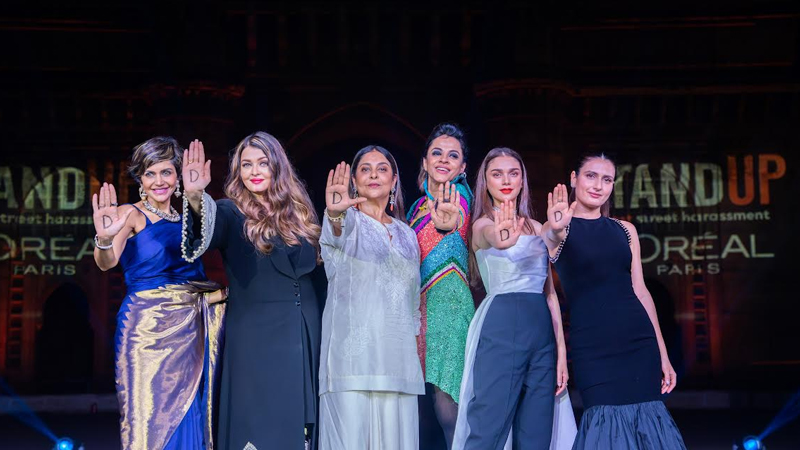
  • L’Oréal Paris stands up against street harassment at the iconic Gateway of India

    L’Oréal Paris stands up against street harassment at the iconic Gateway of India

    Mumbai: L’Oréal Paris, world’s #1 beauty brand, hosted a remarkable event at the Gateway of India on 4 October, reiterating its unwavering commitment to its purpose – Stand Up Against Street Harassment. Industry stalwarts, senior leaders at government organizations and celebrities – L’Oreal Paris’ brand spokespeople Aishwarya Rai Bachchan and Aditi Rao Hydari, Prasoon Joshi, Chairman Asia Pacific, CEO & Chief Creative Officer, India, McCann Worldgroup, Aditi Tatkare, Minister of Women & Child Development, Maharashtra, Rekha Sharma, Chairperson of the National Commission for Women, and Supreet Singh, co-founder of Red Dot among others – graced the event with their presence. It served as a compelling testament to the brand’s dedication to raising awareness about street harassment and empowering individuals to combat it effectively.

    To build this global movement, Stand Up takes its training into the heart of local communities by partnering with local NGOs expert in gender-based violence, in each country. In India, L’Oreal Paris has partnered with Red Dot, Action Aid and Breakthrough to foster the movement within the country. Stand Up is focused on raising awareness about street harassment and training people with Right To Be’s 5D’s methodology, an expert-approved bystander intervention training program pioneered by Right To Be. It is five tools to learn how to safely respond when experiencing or witnessing street harassment. To date, more than 2 million people have been trained with Stand Up across 42 countries. In India alone, Stand Up has trained 608,000 individuals.

    97 per cent of Stand Up trainees feel more empowered to intervene when witnessing street harassment compared to before their Stand Up training. More than 9 out of 10 Stand Up trainees are convinced they could do at least one thing to combat street harassment if they were to witness it (vs 67 per cent in the general population).

    “L’Oréal Paris has always championed women’s empowerment and “Stand Up” initiative reinforces the brand’s unwavering commitment to the cause. Through this initiative, we aspire to create a culture and community of respect, dignity and worth. The event at the Gateway of India marks a pivotal moment in our journey with ‘StandUp against street harassment’. We firmly believe in the transformative power of collective action and are positive that together we can make our public spaces safer. I urge everyone to take the Stand Up training in order to equip themselves to safely intervene when they witness or experience street harassment,” said L’Oréal India director – consumer products division Pankaj Sharma.

    Launched in March 2020, L’Oréal Paris joined forces with Right To Be, a renowned NGO specializing in combating all forms of harassment, to raise a voice and educate the consumers on how to ‘Stand Up against street harassment’. Since the beginning, this initiative has been at the forefront of L’Oréal Paris’ mission to address the pervasive issue of street harassment safely with the power of the 5Ds methodology. Today, at the iconic Gateway of India in Mumbai, L’Oréal Paris reaffirmed its steadfast commitment to this initiative.

    Hosted by Mandira Bedi, the event commenced with a welcome address by Ines Caldeira, Global Deputy General Manager – L’Oréal Paris, followed by an opening act performed by talented trio Fatima Sana Shaikh, Aditi Rao Hydari and Shefali Shah along with Sanjukta Sinha who gave a mesmerizing dance performance. During the performance, the audience witnessed a spectacle at the Gateway of India created through well-designed projection mapping tools and showcasing several compelling statistics pertaining to the cause. The projections depicted the journey of a woman from caution to confidence, a transition that the Stand Up initiative aims to achieve. This was followed by an address by L’Oréal Paris brand spokesperson Aishwarya Rai Bachchan, who spoke about the cause initiative and women empowerment at length.

    The evening continued with a thought-provoking panel discussion, skillfully moderated by renowned journalist Faye D’Souza. The panel featured distinguished figures such as actor and producer, John Abraham, Prasoon Joshi, Chairman Asia Pacific, CEO & Chief Creative Officer, India, McCann Worldgroup, who is also a renowned screen writer & lyricist, Supreet Singh, co-founder of Red Dot, and Rekha Sharma, chairperson of the National Commission for Women, who spoke about the significant issue of street harassment and its indiscriminate impact on individuals regardless of their gender. The event then concluded with a captivating performance by Manasi Scott which was followed by a dance performance by the Question Mark Crew.

  • Manashi Guha appointed L’Oréal consumer products division managing director – UK & Ireland

    Manashi Guha appointed L’Oréal consumer products division managing director – UK & Ireland

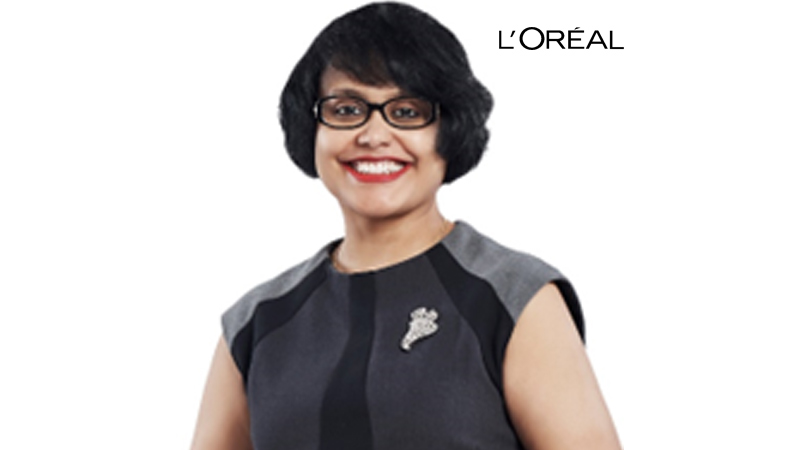
    Mumbai: L’Oréal announces a strategic leadership appointment in the consumer products division (CPD), with Manashi Guha nominated to a new assignment as managing director, CPD for L’Oréal UK & Ireland from 1 October. CPD holds a unique brand portfolio including its four iconic global brands of L’Oréal Paris, Maybelline New York, Garnier and NYX Professional Make Up.

    Guha was most recently a founding member of the South Asia Pacific Middle East North Africa (SAPMENA) Zone Management Committee, a new Zone formed in 2021 as a strategic growth region for L’Oréal Groupe. The region, home to 40 per cent of the world’s population, is one of the fastest-growing for L’Oréal worldwide and a global talent hub.  Guha established CPD’s strategic mission for the new zone, tapping into a huge market potential where 50 per cent of the world’s new consumers will come from.  

    Her growth strategy starts with people and she is known for trailblazing new growth paths and transforming with agility. During her tenure, SAPMENA has not only strengthened its iconic global brands, but also transformed L’Oréal’s go-to market in the region and set people foundations for exceptional results across all three years.  

    Guha’s new appointment reflects rising global leadership talent emerging from the SAPMENA region. With her leadership experience in emerging and fast-evolving markets, particularly the dynamic markets of India and Indonesia, Guha will bring to her new assignment in UK & Ireland an entrepreneurial mindset, consumer centricity, agility, passion for innovation and excellence.  

    Commenting on the appointment, Guha said, “It’s been an honor to lead an incredible team of passionate entrepreneurs in the set-up of SAPMENA. South Asia Pacific with the Middle East is leading the beauty revolution and consumer sophistication with diverse beauty ideals and a dynamic digital culture of on-demand, always-connected and hyper social; we can bring a lot to the rest of the world.  I hope to bring that learning into my new role. But more importantly, as an Asian Indian wo(mentor), I believe the world is our oyster – we create our reality by unapologetically being who we are. L’Oréal Groupe is an incredible place to create your own reality where I have been recognized and encouraged for bringing my true self to the table.” 

  • Brands pay homage to the ‘silent heroes’ on International Nurses Day

    Brands pay homage to the ‘silent heroes’ on International Nurses Day

    MUMBAI: Celebrated world over as the birthday of Florence Nightingale, 12 May or ‘International Nurses Day’ recognises the work of nurses around the globe. Since the beginning of the pandemic, compromising their own safety, nurses have become the primary caregiver and family to countless Covid patients isolated away from their homes and loved ones.

    Lauding their tireless effort and to shine a spotlight on their contributions, brands paid homage to these selfless healthcare professionals working on the frontlines of the battle against Covid-19.

    L’Oréal Paris shared its heartfelt gratitude for the covid warrior nurses through a digital film featuring their brand ambassadors Aditi Rao Hydari, Sobhita Dhulipala, Shakti Mohan and Mithali Raj. The film carries a strong message and is a humble tribute to these heroes for their phenomenal strength, grit, and selfless contribution.

    Global b2b platform Bulk MRO that services corporations, governments and healthcare networks across Europe, North America, India, Middle East, and Africa saluted the nurses’ spirit of service through a post on LinkedIn.

    It said: “It’s International Nurses Day today, and we’re honouring the men and women at the front lines who are going above and beyond while facing what most of us can’t even imagine.

    Today’s registered nurses are everyday heroes. They are putting their health and safety on the line to help us in the fight against Covid-19, and we owe it to them to do our part to keep our families and communities safe.

    #NursesAreHeroes #InternationalNursesDay #NursingWeek2021 #ThankYouNurses”

    Advertising agency Schbang created an appreciation post for the occasion tagging the brands, with the words: “In appreciation for all the nurses who work 24/7 to help us fight the virus!”

    #CreatingASchbang #InternationalNursesDay #Myntra #Aqualens #COVID19“

    https://www.linkedin.com/posts/letschbang_creatingaschbang-internationalnursesday-myntra-activity-6798192467184291840-JbAx/

    Ahmedabad-based Software company, Safal Infosoft also shared a tribute on its LinkedIn account:

    “Your knowledge, courage & kindness are a key asset to keep the population safe & healthy #InternationalNursesDay #DataNote “

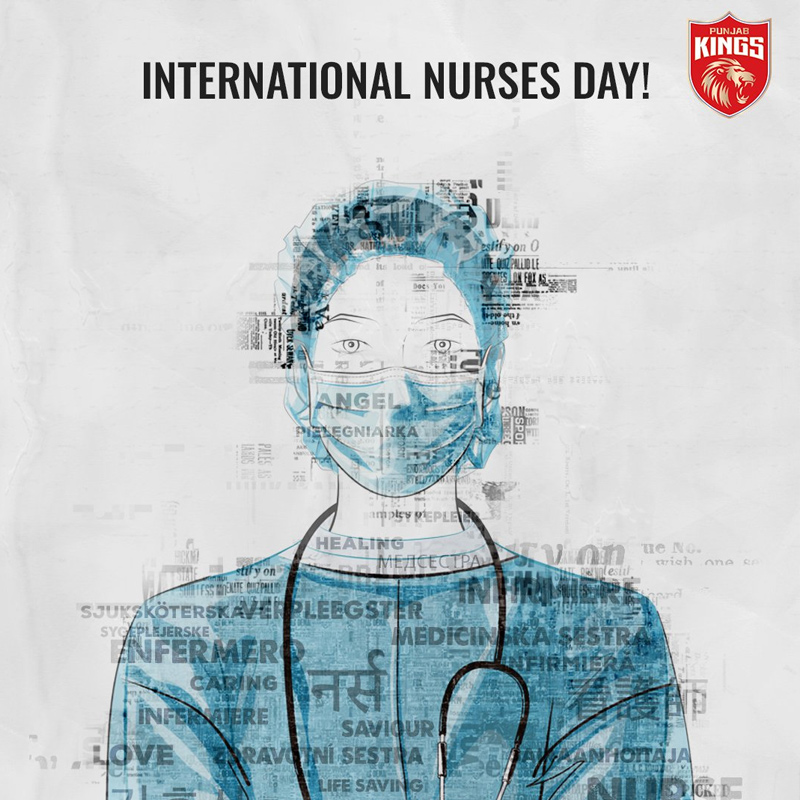
    IPL franchise Punjab Kings also took to their Twitter handle with a tribute to the hands that care: “To the silent heroes who work tirelessly and serve fearlessly. We are indebted to you “

    #InternationalNursesDay #SaddaPunjab


    Kansai Nerolac Paints shared an International Nurses Day post on their social media channels with the words: “It’s the nurses who worked night and day in our service, and they continue to stand strong and care for all of us. Let us show them our gratitude for their service and contribution. Happy International Nurses Day! #Nerolac #InternationalNursesDay #ColoursThatCare


    Online media page Social Samosa posted a throwback to Lifebuoy’s tribute to nurses to commemorate the day:
    “Throwback to Lifebouy’s soap art tribute for #Nurses on the occasion of #InternationalNursesDay “

    Lifebuoy wanted to celebrate the invaluable service rendered by medical workers, especially nurses. To commemorate International Nurses Day 2020, hand-carving the image of a nurse into a regular bar of Lifebuoy soap, Lowe Lintas had used the image across social media channels, to keep the cause and the brand connected, while shining a light on the amazing work done by those who are keeping us safe.

  • On Earth Day, brands rally around our Blue Planet

    On Earth Day, brands rally around our Blue Planet

    MUMBAI: Every year, 22 April is celebrated as Earth Day all over the world. The practice dates back to 1970, when scores of people took to the streets on this day in protest of the negative impacts of 150 years of industrial development. With the world reeling under a global health crisis, this day is a reminder that everyone can contribute to a better, safer, and consequently healthier planet.

    Ahead of World Earth Day, several brands launched campaigns and even new products to demonstrate their support for the environment:

    The Google Doodle
    Search engine Google on Thursday marked the annual Earth Day through a video doodle on its home page highlighting how everyone can plant the seed to a brighter future—one sapling at a time. The film shows how just one sapling planted by each of us can turn into a forest of trees, even outliving the humans who planted them. The underlying message is: ‘This Earth Day—and everyday—we encourage everyone to find one small act they can do to restore our Earth. It’s bound to take root and blossom into something beautiful.’

    MTV says ‘Using Plastic is a Crime’

    MTV India launched a new satirical film ahead of World Earth Day 2021 giving out a powerful message that “Using Plastic is a Crime” and people who continue to use plastic carelessly, without any thought, should be treated on par with criminals. The film opens to a setting of a potential crime scene, where a masked killer is all set to choke a man with a plastic sheet. Much to the victim and the killer’s surprise, the police arrive at the scene, leading on to an unexpected discourse by the cop on the evils of using plastic, rather than focusing on the crime itself. It concludes with the masked man pledging never to use plastic so carelessly again.

    Godrej #TwoDegreesCooler on global warming

    The Godrej Group, through a digital film, urges individuals and industry owners to help slow down climate change, by turning to smart usage of resources. The film titled #TwoDegreesCooler showcases the brand’s commitment to limit global warming to well-below two degrees Celsius by 2050 and help India keep her part of the Paris agreement. Whether we can succeed in this mission or not, depends on each one of us, the film says. It ends by reminding us that ‘it’s all we need to restore our Earth’.

    Animal Planet bats for all animals

    On Earth Day, Animal Planet lived up to its name and reached out to all pet lovers on behalf of the wild animals inhabiting our planet, through a series of telling posts on its Instagram handle. The message it strove to spread via this digital campaign, featuring different species of wild birds and animals in their natural habitats, being : Just like our pets, they too deserve our unconditional love. And we can do so by protecting their home. They may not be our pets, but they’re just as precious. And if we don’t take care of the Earth, then we’re not taking care of them. Let’s act towards saving the planet and all its wonders, together.


    Discovery India

    Discovery India too shared a poignant digital campaign to mark Earth day, with some moving posts revolving around the trees and marine life of our planet. It posts said:

    “When trees are cut, it affects all species. Deforestation contributes to climate change and threatens life on earth. This #EarthDay let’s support more sustainably produced products and pledge to protect our friends, the trees.” And “If the disposal of plastic materials & packaging into our oceans continues, it is estimated that by the year 2050 there will be more plastic in the oceans than there are fish (by weight). This #EarthDay let’s rethink plastic disposal & support effective methods of recycling plastic.”


    L’Oréal for the Future, because our Planet is Worth it

    Global cosmetics giant L’Oréal Paris has unveiled a new sustainability program, ‘L’Oréal for the Future, because our Planet is Worth it’, on the occasion of World Earth Day. The beauty brand pledged to reduce its carbon footprint by 50 per cent by year 2030. Among the key goals set by the brand include its aim to use 100 per cent recycled plastic, 100 per cent sustainable cardboard and operate 100 per cent carbon neutral factories by 2030. The beauty brand has also announced its decision to contribute €10 million to environmental projects around the world.

    Reebok launches sustainable eco-friendly shoe:

    Sports brand Reebok’s Floatride Energy GROW is a plant-based running shoe for high-performance. It combines the award-winning Forever Floatride Energy model with the commitment and responsibility to protect the environment and strives to create a fitter planet.

    In a bid to up its sustainability efforts, Reebok is focusing on creating products using recycled or repurposed materials. The global sportswear brand is committed to reducing virgin polyester from its material mix and eliminating it altogether by 2024.

    Wildermart, an online grocery store that aims to be a truly sustainable model, opened its doors in India on Earth Day with a hard-hitting digital launch campaign to raise awareness about the current state of our planet, the impact of clean consumption and what we can do to be a part of the solution with the click of a button. Calling itself ‘your clean grocery store’ it claims to offer a conscious solution to help everyday consumption be clean, green and earth-friendly. Launched in Bangalore, with an offering of over 1,000+ products across 30+ categories the brand aims to take this sustainable model to conscious consumers across the country within the next 3 years. In a show of support, animal rights activist and environmentalist Maneka Sanjay Gandhi made the first purchase on the portal today. 

    Bombay Shaving Company on the environmental cost of disposable razors

    Personal care brand for men & women Bombay Shaving Co released a short, factual video on its social media platforms to encourage “shaving responsibly”.

    The video talks about some hard hitting facts regarding disposable plastic razors prevalent in the personal care industry like: “Did you know, that over 2 billion disposable razors are produced in the world and almost 200 million razors are bought and disposed of every year. A normal disposable razor is made completely out of plastic.” It wraps up with the message: “It poses a health hazard for animals, marine life, and even safety workers.”  

    The solution? Switch to metal. The brand declares that their precision safety razor is recycle-ready, reduces plastic waste, and gives you a much better shaving experience, without hurting the environment.

  • On Earth Day, L’Oréal Paris pledges to reduce its carbon footprint by 50%

    On Earth Day, L’Oréal Paris pledges to reduce its carbon footprint by 50%

    Mumbai: Amid increasing urgency to combat climate change, brands around the world have begun reevaluating their production practices. Now, beauty brand L’Oréal Paris has announced its sustainability program, ‘L’Oréal for the Future, because our Planet is Worth it’, on the occasion of World Earth Day.

    The brand has pledged to embrace the ambitious mission of reducing its carbon footprint by 50 per cent on every finished product. It has also announced its decision to contribute €10 million to environmental projects whose beneficiaries are communities of women around the world.

    “Now is the time to accelerate sustainable innovation, to make the shift to a circular economy and to reduce the impact of our products,” said L’Oréal Paris global brand president Delphine Viguier-Hovasse, adding that between 2005 and 2020, the brand’s factories and distribution centres had already reduced CO2 emissions by 82 per cent, water consumption by 44 per cent, and waste generation by 35 per cent.

    “There is still much work to be done but we will remain strong in our resolve to make a difference and play our part in this race against climate change. We have a duty to change the codes of beauty to adopt a more sustainable approach and to empower our consumers to achieve responsible consumption,” she added.

    Among the key pledges made by the brand include its aim to use 100 per cent recycled plastic, 100 per cent sustainable cardboard and operate100 per cent carbon neutral factories by 2030. Along with financial support, it will also develop specific programs that empower women in leadership positions.

  • We want to create a culture & community of respect: L’Oréal Paris–India’s Pau Gruart

    We want to create a culture & community of respect: L’Oréal Paris–India’s Pau Gruart

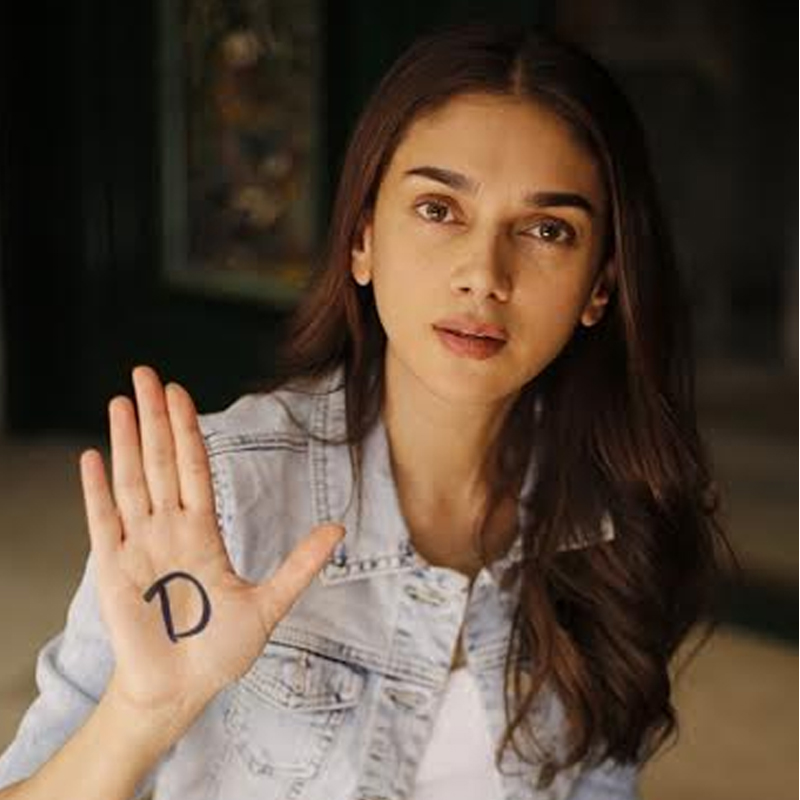
    MUMBAI: L’Oréal Paris launched its global initiative ‘Stand Up Against Street Harassment’ in India in November last year with NGO Breakthrough as its on-ground training partner. The aim was to train one million people in India in bystander intervention to tackle street harassment by 2022. The program, with actor Aditi Rao Hydari as its brand ambassador, applies the global ‘5D’ methodology of Direct, Distract, Delegate, Document, and Delay – to help victims and bystanders to take these actions when faced with harassment in public places. 

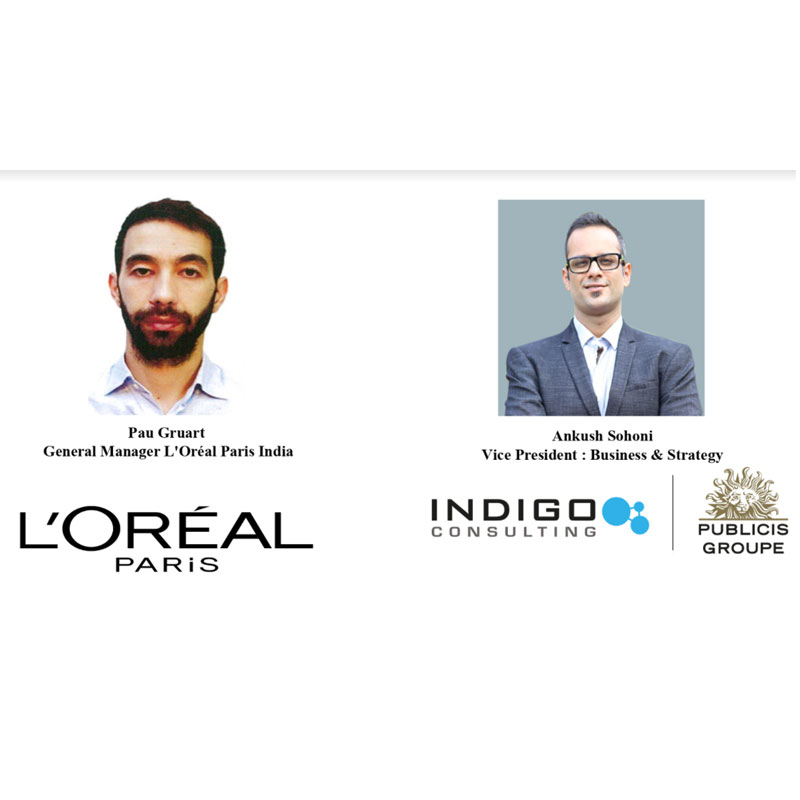
    Now, on the occasion of International Anti-Harassment Week, Indiantelevision.com’s Anupama Sajeet spoke to L’Oréal Paris – India general manager Pau Gruart to know more about the beauty conglomerate’s drive against street harassment and what it hopes to accomplish through it. Gruart also shared insights on the long-term impact of Covid2019 on the beauty industry and why he believes the changes brought about by 2020 in consumer behaviour and consumption “are real and here to stay”.

    Edited excerpts:

    On what inspired the global cosmetics giant to take on this initiative.

    Globally, L’Oréal Paris has always stood for women's empowerment. We are committed to addressing the barriers between women and their ambition. An international survey done by L’Oréal Paris-Ipsos showed that sexual harassment is one of the most important issues worldwide. It happens everywhere, every day, and takes away the right of women to feel safe in the public spaces and impacts their sense of self-worth. We felt there was a need to empower people to take action for themselves, and others. Thus, L’Oréal Paris launched a campaign to encourage women and men to intervene safely if they experience or witness street harassment. We partnered with Hollaback! a global, people-powered movement to end harassment in all its forms, and Breakthrough India, an organisation working to make violence and discrimination against women and girls unacceptable, for its launch in India.

    On what the brand hopes to achieve through this initiative.

    We want our program to create awareness about street harassment and let people recognise the issue for what it is. We want to create a culture and community of respect, dignity, and worth by empowering over one million people with the 5D’s methodology, developed by Hollaback – training that can be taken digitally from the standup-india.com site. In India, we are also going on-ground with our partner Breakthrough India. We hope to create a bystander movement that discourages harassers, supports victims, and empowers bystanders to intervene by equipping them with safe methods to do so.

    On the findings of the study conducted by L’Oréal Paris in partnership with Ipsos.

    When we investigated to know the most important issue women face in their daily lives, we discovered that the #1 issue was street harassment. So, we commissioned Ipsos to investigate the scale of sexual harassment in public spaces.  The survey found that 80 per cent of women have experienced sexual harassment in public spaces, at least once in their lives. 76 per cent of people (men and women) have witnessed sexual harassment. While 28 per cent globally said they did not know what to do when asked why they didn’t intervene.

    In India, the survey revealed that 81 per cent of those spoken to feel there is a lack of training on how to intervene to put an end to sexual harassment. At least 54 per cent of Indians said someone helped while witnessing sexual harassment and 79 per cent said it improved the situation when someone did intervene.  

    These stats clearly show there is intent, but people do not have the tools or strategies that can help them change the narrative. So we decided to #StandUp Against Street Harassment and help people become a part of the solution in preventing street harassment. Our program offers people free training in the 5D methodology that gives them five simple, safe strategies to diffuse a situation without endangering themselves or the victim. 

    On the disruption caused by Covid2019 and changes in consumer behaviour.

    Firstly, I don’t think there is going to be any ‘going back to pre-Covid normal’. The changes brought about by 2020 in consumer behaviour and consumption are real and here to stay. Digital has become an extremely important aspect of our strategy. Fortunately, L’Oréal Paris has been leading the field when it comes to digital for years now. We have transformed from a beauty company to a Beauty Tech company. We have been able to ride on this shift in consumer behaviour effectively. We have been delivering a much richer online experience for our consumers, capturing the DIY and digital trend through: 

    -Delivering education (on products) in a virtual way

    -Use VR/AR tools to try the product and see how it looks on you

    – Live sessions and leveraging influencers for consumers to help them on their DIY journeys

    -Access to e-consultants who can further help answer queries 

    L’Oréal Paris Hair Colour, for example, leveraged technology to hold the consumer’s hand ‘virtually’ as she took her first steps into the hair colouring journey at home. We did this by organizing special sessions with our Hair Colour expert to clarify all her questions, having a virtual try-on on our website where you can see how the colour will look on you. So, we educated, demonstrated, and consulted – all virtually.

    On the long-term impact of Covid on the beauty industry.

    Beauty is an eternal requirement, linked to a fundamental need to feel and look good. While we have been in the business for 110 years globally, the desire for beauty has been with humankind for many more years, and that is not going to change. Even if you look at what happened last year during the lockdown with practically no socialising, people still experimented and expressed themselves in different ways with their makeup. Eyes got a lot more focus, even long-stay lipsticks became a mainstay in makeup bags. Like everything else, the market will transform. With Covid2019, it might go through an accelerated phase of transformation in products, consumer use, distribution, etc but as long as we are close to the consumers and thinking of satisfying their needs, the beauty market will be fine.

  • ‘Stand Up’ to street harassment, says L’Oréal Paris

    ‘Stand Up’ to street harassment, says L’Oréal Paris

    NEW DELHI: On the occasion of United Nations International Day for the Elimination of Violence against Women, L’Oréal Paris has launched its international bystander intervention training programme – Stand Up – in India.  

    As per an ActionAid Survey of 2016, 79 per cent of women living in Indian cities have been subjected to harassment or violence in public. Even the national capital and the financial capital of the country are not able to provide a completely safe environment for their female residents, highlights a 2019-report by Praja Foundation, stating that 50 per cent of people in Delhi and 21 per cent in Mumbai felt that women were not safe in the respective cities. 

    These are just a few numbers but very clearly indicate how massive the issue of street harassment in India is. 

    Launching the campaign and an associated website in India via a virtual press conference, L’Oréal Paris general manager India Pau Gruart stated that the issue of women safety is very close to LÓréal’s brand ethos.

    “As a brand, we have always stood up for women empowerment but we always want to take one step further and make a concrete difference. This initiative deepens our sense of purpose and it is in total consistency with our brand essence,” he added.

    The brand has partnered with NGO Breakthrough to deliver on-ground training and sensitise the community towards the problem of harassment in public spaces and make them safer for people across genders. They are aiming to train 1 million people in India in the skill of upstanding using the 5Ds defined by NGO Hollaback!: Direct, Delegate, Document, Distract, Delay. 

    Breakthrough India president and CEO Sohini Bhattacharya noted, “Breakthrough has been working for over 20 years to make violence and discrimination against women unacceptable. We are very proud to partner with L’Oréal Paris in empowering young people to take action, for themselves, and for others, now and in the future. Bystanders are often not equipped to tackle street harassment and feel helpless during such situations. Based on the expert-approved 5D’s methodology, Stand Up makes a clarion call to citizens to take action against street harassment, by encouraging them to undertake a simple and effective training program, that not only supports victims but also enables bystanders to safely intervene. Stand Up will enable women to reclaim public spaces.” 

    Brand ambassador Aditi Rao Hydari added that she finds this approach more empowering than physically harming the preparator and feels that this will sensitise the community more towards cases of harassment in public spaces. 

    The brand with the support from Breakthrough is aiming to amplify the cause across the country, even to the remotest corners. It is already planning influencer activities and campus programmes to make the training more accessible. 

    Gruart shared, “At the heart of Stand Up, which is our most important global cause as a brand, is the training programme. We are going to direct all our marketing activities towards the training. For instance, we could have a classic tool of digital media; all inputs there will be one click away from the online training. We are also seeking influencer support and brand ambassador support to amplify it.”

    Bhattacharya continued, “We are willing to make the youth of the country the true crusaders for this cause. We will be enrolling people for fellowship programmes and training them in 5Ds and how they can teach further. They then will act as our ambassadors.”

    Gruart also noted they are looking for bigger partnerships across the country that might start coming into shape in 2021. 

    L’Oréal Paris has a wide portfolio of products for the Indian market including makeup, skin-care, hair colour, hair care and men's products. In 2020, the brand roped in actor Aditi Rao Hydari, former cricketer Mithali Raj and popular TV personality Shakti Mohan as its brand endorsers for the Indian market. It has launched several campaigns with these brand endorsers. L’Oréal Paris closely works with salons and hair-dressers who act as the last mile influencers for the brand.

  • L’Oréal Paris announces its latest #WinOverDamage campaign featuring Aishwarya Rai Bachchan and Sobhita Dhulipala

    L’Oréal Paris announces its latest #WinOverDamage campaign featuring Aishwarya Rai Bachchan and Sobhita Dhulipala

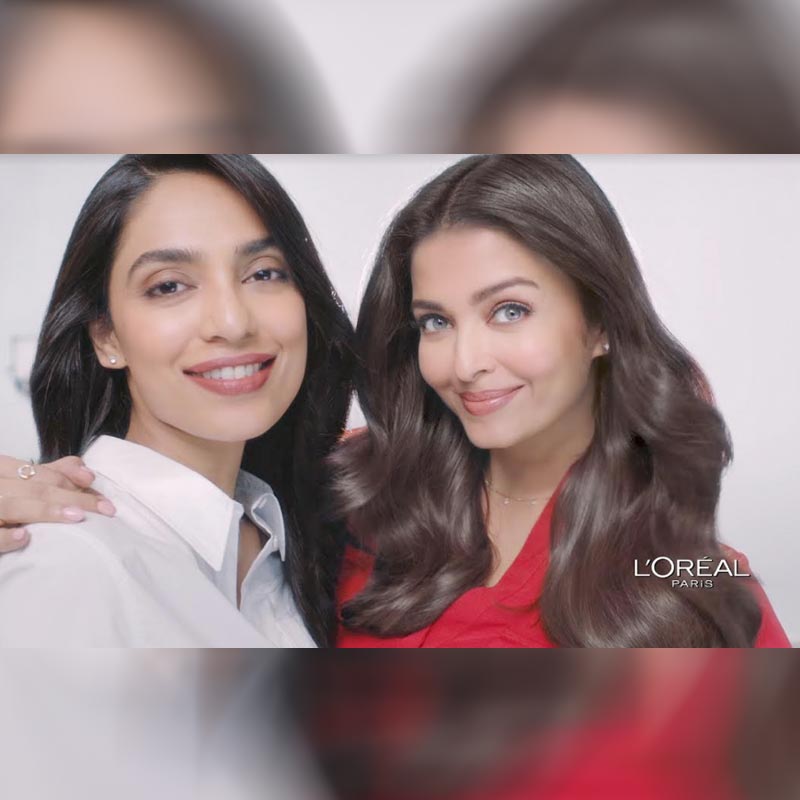
    MUMBAI: The global iconic French brand, L’Oréal Paris announces the launch of its Total Repair 5 #WinOverDamage campaign today featuring global ambassador Aishwarya Rai Bachchan and the talented Sobhita Dhulipala as the new face in the campaign. The commercial film was launched today across all platforms showcasing the two actresses shooting in harsh conditions.

    The creative premise of the advertisement revolves around effectively winning over hair damage with the #WinOverDamage campaign. In the commercial, while Aishwarya’s hair is prim and proper throughout, she notices Sobhita’s hair needs extra care to look on point, considering the adverse shooting environment. She recommends Sobhita to try the L’Oréal Paris Total Repair 5 Advanced Repairing range of shampoo, conditioner and serum to fight against the 5 problems of hair fall, dryness, roughness, dullness and split ends.

    Speaking on the announcement, Pau Gruart, General Manager L’Oréal Paris, said, “We are elated to announce the release of our Total Repair 5 #WinOverDamage campaign with the gorgeous Aishwarya Rai Bachchan and Sobhita Dhulipala. Harnessing the latest in scientific innovations tailored to specific haircare needs, the campaign aims to highlight the proposition of our Total Repair 5 hair care range that helps repair hair damage because we believe every woman deserves the extra care and she truly is worth it!”

    Speaking on the occasion, Sobhita Dhulipala said, “I am thrilled to be associated with L’Oréal Paris for their latest campaign. Keeping up with all the responsibilities that a woman shoulders while she plays different roles in her personal and professional life, she often tends to compromise on self-care. That’s when products like Total Repair 5 come to her rescue. It is very empowering to be able to represent this new generation’s idea of beauty because every woman is worth it!”

    The campaign is now live and will be amplified in the next few days across all online and offline platforms.