Tag: London

  • BBC searches for best young band in the world

    BBC searches for best young band in the world

    MUMBAI: BBC World Service has launched The Next Big Thing. This is a competition to find the best young group or solo artist on the planet. The contest is open to anyone as long as they are 18 or under, unsigned and performing original music.

    Music by the entrants will be played on World Service throughout the autumn and a winner will be chosen by listeners and music industry experts in December during a one-hour special broadcast.

    Producer Ben Williams says the aim of the competition is to give a helping hand to young artists who may not have access to the music industry. “There’s fantastic musical talent all over the world but many people struggle to get that first break, and that’s where we come in. We are looking for brilliant new music – the quality of the recording isn’t important.”

    The contest will be run with the help of the BBC’s language services, meaning the final shortlist of six acts could include songs in any language, giving it a truly global feel.

    Artists who are interested in entering the competition should send one track to the World Service by 3 November 2006. CDs and tapes should be sent to The Next Big Thing, Bush House, London. MP3s can be emailed to the BBC at thenextbigthing@bbc.co.uk.

    The contest is part of a special season of programmes from World Service Generation Next, which explores the world through the eyes of the next generation – their passions, concerns and interests.

  • CNN embarks on a Quest for Art

    CNN embarks on a Quest for Art

    MUMBAI: CNN anchor Richard Quest who hosts the show Quest picks up his brush and canvas in October to get under the skin of the art world. The show airs on 28 October at 1130 am, 7:30 pm. On the trail of the big name stars in art, Quest catches up with British artist, David Hockney at the opening of his portrait retrospective at the National Portrait Gallery in London. What does it take to crack the big time? Is mere talent enough? Hockney discusses the path of his career and guides Quest through the treacherous waters of artists, critics, curators, galleries and auction houses. So, is the CNN budding artist up to the challenge?

    Quest takes a stab at making a modern masterpiece under the watchful eye of well-liked art icon Rolf Harris. Harris has been a fixture of the popular art scene for decades, introducing generations of children to art in his role as a TV cartoonist, and who recently was chosen to paint a portrait of HM The Queen for her 80th birthday celebrations. With his catchphrase “Do you know what it is yet?” Harris shows Quest how to turn his photo into an impressionist masterpiece.

    If it’s that simple to paint, is it actually worth anything? Next stop on this QUEST for art is a trip to world famous auction house Sotheby’s for a fascinating look behind the scenes at a major auction. The lucky gavel, the pre-auction rituals; the whole business of ‘Art’ is probed.

    To widen Quest’s appreciation of art, he meets up with two of the best guides in the business, to help him discover his inner aficionado. Evening Standard art critic Brian Sewell takes him on a tour of Britain’s National Gallery, exercising his expert tutelage in bringing Caravaggio and Van Dyke paintings to life. Also, in her long awaited return to the small screen, art expert, hermit and consecrated virgin, Sister Wendy Beckett enthuses Quest in her passion for the creative force behind the canvas.

    Sooner of later, Quest must approach the ‘Art Establishment’. With a reputation for being inaccessible and exclusive, art fixtures like the Turner Prize polarise the public, and with this in mind, Quest seeks to bust a few myths. From this year’s Turner Prize candidates to the Tate Modern contemporary art collection, art does not get much more contemporary than this. It’s up to Tate Modern curator Vicente Todoli to win Quest round over the merits of the modern movement.

    One group unlikely to be convinced is the next stop on the QUEST odyssey – the Stuckists. Implacably opposed to anything “establishment”, with the Turner Prize top of their hit list, their argument is heartfelt. Who will have the deciding point of view?

    Famed sculptor Grayson Perry, himself a Turner Prize winner in 2003, chats to Quest and provides some middle ground. The self-styled ‘Transvestite potter from Essex’ proves an engaging and authoritative guide through the maelstrom of modern art.

    Last stop on the Quest for art is a corner of rural England, to meet a man who arguably understands our relationship with art better than anyone. Former forger John Myatt has copied the biggest and best names in the art world. Having been to prison, he has now rehabilitated himself and runs a highly successful business creating ‘Genuine Fakes’!


  • Rolando Santos is CNN Intl senior VP, international relations

    Rolando Santos is CNN Intl senior VP, international relations

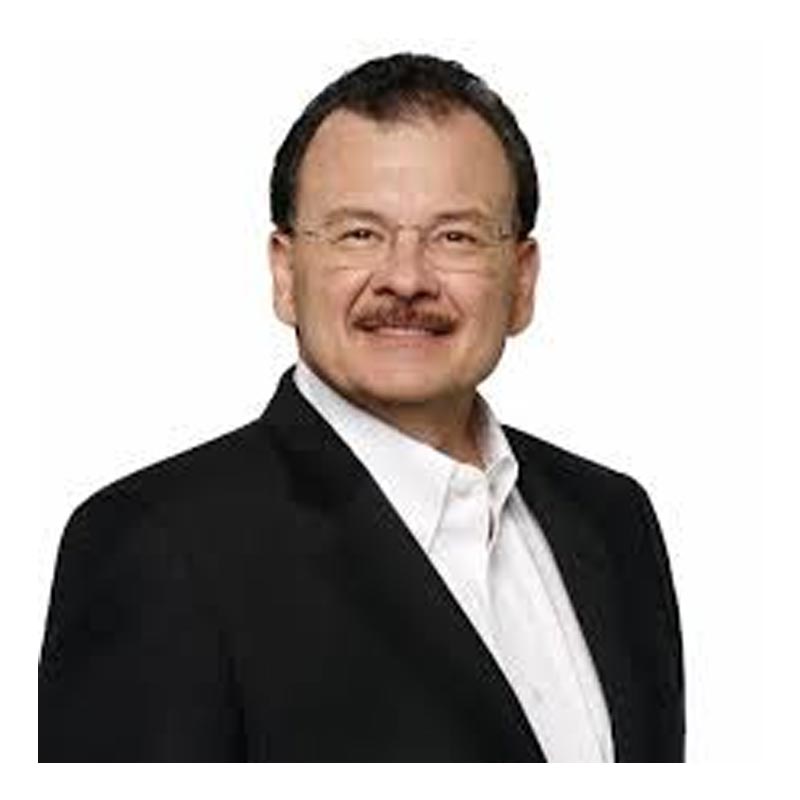
    MUMBAI: Rolando Santos is joining CNN International as senior VP, international relations. The announcement was made by CNN international MD Chris Cramer. In this role, Santos will play an integral part in the development of future CNN services around the world while working closely with CNN’s International affiliates and joint venture partnerships.

    Santos, currently executive vice president and general manager of Headline News, takes up his new role with CNN in mid-September. Cramer says, “Rolando has unrivaled experience in the creation of numerous CNN services, including CNN en Español in 1997, CNN + in Spain and CNN Turk in 1999,” Cramer said. “As we continue to build upon CNN’s international heritage and global influence, he is the perfect choice to work alongside our worldwide partners, affiliates and colleagues.”

    As a member of CNN International’s senior management group, Santos will work closely with Turner Broadcasting’s global business development teams identifying potential new platforms and editorial partnerships. He will also assume editorial liaison with some of CNN’s sister channels, CNN-IBN in India and CNN Turk in Turkey and will oversee CNN’s International Professional Program, which brings together journalists from around the world for hands-on editorial training in Atlanta

    He says, “I have enjoyed working in the international arena and helping launch so many successful CNN services around the world and, more recently, building Headline News into the dynamic news channel that it has become. This is the perfect opportunity to return and help shape CNN’s international growth and future.”

    Since 2002 Santos has served as executive VP and GM of Headline News, responsible for its development and overall operations. Prior to that he was president of CNN en Español, CNN’s 24-hour Spanish-language news network, where he oversaw all daily operations and editorial content of CNN en Español and CNN en Español Radio. He was also played a significant role in the development and launch of new international news networks such as CNN+ and CNN Turk.

    Additionally, he oversaw the Spanish-language newsgathering operations, including a fully bilingual staff in Atlanta, a worldwide network of Spanish-speaking correspondents and eight full-service bureaus in Los Angeles, Miami, New York, Washington, D.C., Buenos Aires, Jerusalem, London and Mexico City.

  • Nat Geo Intl opens production firm in London

    Nat Geo Intl opens production firm in London

    MUMBAI: National Geographic Television International (NGTI) has set up a production outfit Change Productions in London.

    Media reports state that the firm will be helmed by former Wall to Wall executive producer Ben Goold. The production firm will specialise in high-quality factual programming for both UK and international broadcasters, mainly in the science, natural world, history, archaeology, arts, culture and religion genres.

    NGTI president Ian Jones says that it has diversified considerably in the past year. now it represents kids’ programming, has a head of business development for digital media and continue to increase the third-party hours that it represents.

    “Change Productions will operate in the UK independent production sector, focusing on the best opportunities for the team with U.K. and international broadcasters”.

  • TNS appoints Mezzasalma as head of internet, television and radio audience measurement sector

    TNS appoints Mezzasalma as head of internet, television and radio audience measurement sector

    MUMBAI: TNS has appointed Andrea Mezzasalma as head of TNS’ Internet, Television and Radio Audience Measurement sector (iTRAM), responsible for managing the global business.

    Mezzasalma will take over from Mike Gorton who has been with TNS for five years and played a key role in developing the iTRAM sector and consolidating TNS as an industry leader in TV and radio audience measurement, informs an official release.

    Gorton will be retiring from TNS this year but will remain with the Group as a consultant.

    Mezzasalma will be relocated from Milan to London, has a high profile in the global media measurement industry. He became the youngest partner in Eurisko, a leading Italian marketing information company, where he was pivotal in developing and marketing innovative technologies for audience measurement. Eurisko was acquired by NOP World in 2003, and more recently by GfK.

    TNS chief executive David Lowden said: “Andrea has an excellent track record as an innovator with a deep understanding of technology. With rapid changes in technology, media measurement is becoming more complex and TNS is responding to this challenge by developing more sophisticated models to enable data segmentation, digitisation and internet measurement. Andrea will provide valuable expertise in the technology and audience measurement fields to take the iTRAM team forward and deliver growth in this important sector.

    TNS has recently secured a number of high profile contracts across the globe including its appointment to the RAJAR/BARB London Portable Meter/Panel Development audience measurement programme and a pioneering TV audience measurement agreement in the US with Charter Communications. Andrea will oversee these projects and manage the teams involved in driving international plans forward, the release adds.

  • Get shaken & stirred on Discovery Travel & Living new series Cocktail Kings

    Get shaken & stirred on Discovery Travel & Living new series Cocktail Kings

    MUMBAI: Aiming to break away from the routine family dramas and soaps, the lifestyle channel Discovery Travel & Living has been showcasing a variety of shows to spearhead the emerging trend of contemporary alternative television.

    Starting today and to be aired every Thursday at 10 30pm, the new series Cocktail Kings introduces two professional cocktail makers, Colin Asare-Appiah and Dimitri Lezinska as they travel to cities across Europe and the USA where they meet the locals, see the sights, uncover the best things to do and the best places to be seen doing them.

    A 13 episodes series, it focuses on different locations from Colin’s home turf in London and Dimitri’s in Paris, to Milan, Berlin, Athens, other cities across Europe, then over to the US to New York, Miami, San Francisco and Seattle.

    Spending two days at each location, Colin and Dimitri experience the more unusual activities each city offers, apart from seeking out the most stylish bars, restaurants and hotels.

    Once completely saturated in the culture and personality of each city, Colin and Dimitri each then create a brand new cocktail based upon their experiences. Of the two, the cocktail that best reflects the city’s style will be placed on the cocktail list at one of the city’s coolest bars – where a cocktail-making session will take place.

    Committed to providing content that gets viewers to escape from the day-to-day grind of everyday life, Cocktail Kings is all set to woo the discerning viewer.

  • NBC to air Madonna tour in November

    NBC to air Madonna tour in November

    MUMBAI: NBC will airMadonna: The Confessions Tour Live.

    This is a two-hour special and will air in November 2006.The special will be taped this summer at Wembley Stadium in London, UK during the pop icon’s worldwide sold-out 25-city Confessions Tour and marks the first time that NBC will air a concert of Madonna.

    NBC Entertainment president Kevin Reilly says, “Madonna is one of the greatest artists of our time and never fails to generate excitement. We think this is going to be a big event for television.”

    The concert special will feature songs from the artist’s recent multi-platinum Warner Bros. Records release “Confessions On A Dance Floor,” which debuted at No. 1 in 29 countries and has sold over eight million copies around the globe. The broadcast will also include some of Madonna’s greatest hits from her career.

    The broadcaster has also struck a deal for the sitcom Nobody’s Watching. The pilot episode has been downloaded 600,000 times on youtube. The show’s concept centers on Derek and Will, two young television addicts from Ohio who are frustrated with the dreadful state of television programming.

    As a result, they decide to become the subjects of a reality show when a major network gives them the opportunity to create their own sitcom. Unaware that the network executives are manipulating and recording their every word and move, the two continue their crusade to develop what they hope will be great television.

    The pilot for the series had been lying virtually dormant since last eyar until it became available on www.youtube.com several weeks ago. It attracted a good fan base.

  • Channel NewsAsia goes in for new look

    Channel NewsAsia goes in for new look

    MUMBAI: News broadcaster Channel NewsAsia dons a new look from today 17 July. The channel says that the transformation is a celebration of its evolution and achievement over the past seven years.

    In undergoing the transformation, the channel aimed to give a dynamic, smart and contemporary feel. The on-air look, in-house trailers and colour scheme have been changed.

    Apart from the staple top-of-the-hour news bulletins, there are also new weekend programmes.

    MediaCorp News, MD Woon Tai Ho says, “We have come out with a concept called platinum lifestyle; it’s really high-end leisure, high-end travel, high-end dining and high-end spending, so we could have programmes from watches to cars, hunting for wine to hunting for property. But eventually, the real challenge really would be technologically-driven programmes, that’s high-definition documentaries, and how we tap into the whole cyberworld.”

    The London-based broadcast design company, English & Pockett, was hired to revamp the channel’s studio, converting it from a virtual set to a new “hard set” where the news anchors will present news right from the busy newsroom.

    The channel will also move to a new digital newsroom environment by the end of the year when all the news gathering will be done on-line. The channel’s website, channelnewsasia.com has also been given a makeover.

    It has a new layout and clearer navigation. It now offers more entertainment content like movie reviews and trailers as well as special features and product reviews. There are also added features like photo galleries for selected news stories and streaming of video clips.

  • Eros International listed on London’s Alternate Investment Market

    Eros International listed on London’s Alternate Investment Market

    MUMBAI: Eros International plc, the international media and entertainment group that owns and distributes Bollywood content globally in a variety of formats, began trading on the AIM market of the London Stock Exchange, under the ticker ‘EROS’. The company was listed on 4 July.

    The flotation follows a placing of the company’s shares which raised over £22.5 million ($41 million). The company will be capitalised at approximately £176.0 million ($321 million), at the placing price of at £1.76 per ordinary share, states an official release.

    The company also said it would use the funds raised to expand its business and exploit content over new media such as online cable, wireless and mobile.

    Eros International chairman and CEO Kishore Lulla says, “This is an exciting day for everyone at Eros and a new chapter in the growth of our business. We are proud to bring Eros to the market as a publicly traded company.”

    Eros International also promotes the B4U television channel network. Founded in India in 1977, the company has a film library containing more than 1,300 titles and more than 110 employees in India, Britain, the United States, United Arab Emirates, Australia and Fiji, as per the release.

  • ‘Key to successful radio programming is to know what territory you can own & defend against predators’ : Steve Martin – BBC World Service on-air editor

    ‘Key to successful radio programming is to know what territory you can own & defend against predators’ : Steve Martin – BBC World Service on-air editor

    BBC World Service on-air editor Steve Martin has been responsible for the present on-air image that BBC’s English Radio Network holds, be it the sound identity of the network or its on-air promotions. Radio, to Martin, is something that establishes a certain personal connection through what it offers.

    According to Martin, content should be strong enough to trigger emotional reactions among consumers. He emphasizes that the players should better know their audience, the better knowledge they have, more acceptable forms of presentation will be created.

    Martin has his own theory on the sales & promotion aspect, which goes beyond the commercial break. He says the content should be creating and raising awareness of the product or the service.

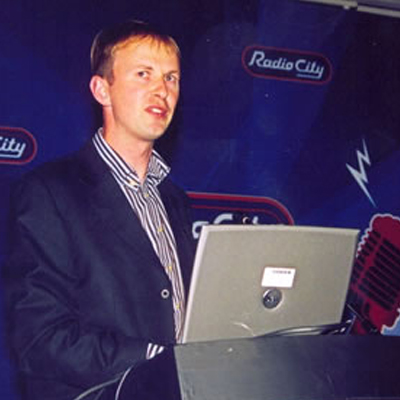
    On his way to London, BBC World Service on-air editor Martin spent two days in Mumbai, attending a seminar organized by FM channel Radio City.

    Indiantelevision.com’s Manisha Bhattacharjee caught up with Martin during his brief stay in the city, to get a perspective on the evolving business.

    Excerpts:

    Could you provide a brief of overview of the current radio status in UK?
    Today, it is an extremely mature and diverse radio market. BBC now operates 10 national networks some of which are only available on the digital platform, the rest of them on FM and AM in the traditional way. And we also operate a network of 38 local radio stations which is centered in all different cities and towns in England. We run two radio stations in Wales, two in Scotland, and two in Northern Ireland. So in any one place in Great Britain you are guaranteed to get at least five to six BBC radio stations. Plus you will get a similar number of commercial services in some places and in some places there are more. It’s a very developed market now.

    Now that is really diverse. Was there any kind of regulatory push, which also enhanced the market?
    In Britain, it is permissible for a radio group to own several radio stations in one market. This isn’t the case in India.

    When this happens you don’t find much similarities between two radio stations, because if you are going to own two radio stations in the same market, the last thing you want to be doing is exactly the same thing and cannibalizing the same audience. So you ensure that the two radio stations are broadly complementary. That makes good business sense and you ensure that on each radio station in a particular territory, which is not only hugely successful but it is also defensible against any other outside broadcaster. The key to successful radio programming is to know what territory you can own and defend against predators.

    That works for the public service as well. In BBC we are publicly funded and do not have a commercial imperative. We are all there to maximize revenues. However, because we are publicly funded, we have a duty to serve absolutely everybody of the UK population. So we have an obligation to ensure that our services are broadly complementary.

    For example: We run a national new music service, which specializes in breaking new music. It is a patronage in the arts in terms of supporting new talents in new music and it plays hits also of the popular culture.

    Please comment on BBC service radio networks’ programming strategy. How different is it from that of commercial radio stations?
    BBC service radio networks are distinctive from the commercial radio stations. It would be wrong to say that we solely do things that the market can’t support. Because we have an obligation to provide something to everybody, the services have to be popular. But these are absolutely distinctive.

    We would take creative risks with our programming such as of BBC Radio 2 – we will do a speech based consumer phone-in and discussion stations are doing that. On Radio 1 we will break great new music and we will take risks with that. We invest in social action programming, investigating issues that young people are facing in Britain today. And on BBC Radio 3 we support orchestras. So our patronage of the hour is not just something having on the plaque on the wall, it is actually real money going into supporting musicians creating music and support the cultural life of Britain today. So that some of the stuff that we do in music, commercial service radio stations don’t indulge in.

    In speech radio, we are the single biggest broadcast news gathering operation anywhere in the world. And in UK specifically, we run an intelligent speech radio station which is not just news and current affairs but includes drama, documentary and cultural programmes.

    Please comment on the competition between BBC and the commercial radio stations. How does it affect the market?
    Commercial radio is first and foremost a business and these radio stations will try to know the most profitable territories in programming terms. I think it is fair to say that because of the pressure of BBC, which is innovating in programming, the commercial radio stations have raised their game and are not going in for cutting the investment in programming and creating the cheapest programming possible.

    Because of the competition from BBC, we have got a healthy creative section within the commercial radio stations in the UK. Commercial radio stations invest heavily in research and keep us on our toes.

    Also, the regulatory framework ensures through the system of licensing that the stations are held to a particular format and have to comply with the terms of format licensing issues by the regulator. This ensures that there is a spread of different formats in any one market. But the commercial stations would want that in any case because they wouldn’t want two stations duplicating the same output.

    In the present scenario, how different is the US radio market from that of the UK radio market?
    They have a public radio network but that is quite different from what BBC is doing and it appeals to a particular niche audience. In recent years, the arrival of satellite radio through XM Satellite and Sirius Satellite Radio, which has made a huge number of formats available from coast to coast, which is great if you are driving. It allows one to listen to the same station through the journey.

    Last year, 25 % of UK radio revenues came from S&P activity

    The evolution of the radio industry, in particular it’s rapidly growing digital uptake, does that signify a threat posed by digital radio to terrestrial radio?
    More radio is good for the industry; it is good for the consumers, because, it gives more choice. You are more likely to hear what you want when you want it. That’s a positive force. BBC has been a pioneer in digital radio in UK, we have strongly welcomed it. It has enabled us to provide new services and are able to reach sections of the community which were otherwise being undeserved.

    It does mean that more communication radio stations will compete against us but that said that adds to the totality of choice available to UK radio listeners and that’s got to be healthy.

    I think where the challenge comes for the commercial stations is to manage the investment. You’ve got to invest in the new technology of rolling out the transmitter networks providing new radio services before getting enough listeners to turn a profit from those. So there is the issue of funding. That’s where the challenges lie from the business point of view.

    BBC has been leading the roll-out of digital radio infrastructure. So we have been an enabler for the commercial. Because every time you buy a digital radio set, not only do you have new BBC radio station but you have access to the new commercial stations as well.

    Radio is probably looking at greater fragmentation of its audience (like any other media). Is this an encouraging sign for the marketers or advertisers?
    If I was an advertiser and I knew there was a radio stations that supports on a functional and emotional level, with a clear voice to my target listeners. I know I will be able to buy just that station and eliminate waste on my ad spend. It is going to be good for advertisers as there is more choice on where to put spends.

    It may mean that in order to reach the audience you need more than one radio station but you can be selective in the stations you buy and eliminate waste.

    If you have only one station in the market, or all the stations sound the same, then you are guaranteeing to be wasting some of your advertisers’ spend. Because you will be talking to people who are not within your target audience or your advertising campaign. So, the more the fragmentation the easier it is to target the specific audience segment you are interested in.

    More relevant, from an advertisers’ point of view, is maximizing reach – the number of different people who listen in a week. But consumers generally hate advertisements as it is an interruption?
    Well, listeners don’t hate radio advertising. They primarily hate bad radio advertising. Secondly, the scene is changing, first there were advertising spots, and then came sponsorship. But now there’s S&P (sales and promotion) and its growing fast. Last year, 25 per cent of UK radio revenues came from S&P activity. It takes the client beyond the commercial break by creating and raising awareness of the product or the service.

    It can exploit the closeness and personal nature of radio for brands. It can also give brand endorsement from popular and trusted RJs and can create great radio entertainment for listeners. It can bring in new listeners for the radio station.

    Today, the Indian radio market is perceived as an industry which is booming. What’s your perception?
    At the moment of course, we have a situation where a lot of radio stations are broadcasting music, of course with a very similar play list. It is yet to be seen, if anybody has the guts or intelligent research in order to tone down or target their music specifically. That’s an inevitability. Whoever does that will be hugely successful in the market.

    Knowing that the radio FM market is at its nascent stage; doesn’t that give even more opportunities for the players to take risks as they are still craving a place for themselves?
    You have to be extremely brave indeed to say good-bye to a certain section of one audience. The industry is booming at the moment people are running successful businesses with this model. I believe the only question is as the radio market matures, how long the situation can continue before the audience will expect a degree of choice? But I think at the same time it would be wrong to suggest that there isn’t some choice there already.

    Though music is largely played, the individual stations have invested in individual personalities who will become listeners’ friends over time and they will be characterizing differently, between station A and station B. So it just doesn’t have to be just about music. It could be emotional qualities, personalities, attitude of the presenters or RJ’s on the air. There are a number of ways you can introduce to a radio station format something that is particular to your radio stations that is owned by you and over time you become famous for and that is about segmentation and building brands.

    Are players reluctant to experiment primarily due to lack of news and current affairs?
    In any market you have to accept the regulatory framework which is in place. And in India, that’s the regulation.

    In markets where it is allowed to broadcast different types of news on radio channels, it is a popular form of radio programming. And you will also find the people will have different news needs as the day continues.

    At breakfast time for example, people tend to want information, the kind of information they need to get into the day and through the day. Then, later in the day, people may want to think a little more about the issues and not just get information but come to their own conclusion about what it means for them. So, we talk about this journey through the day from information in the morning to an understanding in the evening and people have a need for or devote a lot of time to knowing in the morning and thinking in the evening.

    In the markets where we are producing speech programming through the day we produce a range of news programmes. We run a programme called World Today which is a fast moving double headed presentation programme by two presenters. Very high story counts and have live reports from correspondents from across the globe. It is fairly light in tone. Later in the day, News Hour is a longer broadcast with one or two big stories from the day so far with a range of perspectives from the other BBC correspondents and other figures who are involved in the news story.

    We produce news programmes in such a way that they are available to listeners at a time when they better satisfy their news needs.

    What is the strategy to have a successful station format and positioning of the radio channel?
    A key thing about radio is that it is an emotional medium. Radio is company, a complement for life, and so the key thing to be successful in radio, firstly you research in an audience. Know exactly whom you are talking too. What makes them tick. What their interests are. What kind of tone of voice you need to adapt and from there devising a radio format and delivering consistently. So that your audience knows exactly where to find the things that you are offering and you are rendering the whole thing up in a consistent tone of voice which becomes part of your brand identity.

    People around the world say what they love most about their favourite radio stations are personalities, the music, and the local information that helps get them through the day.