Tag: London Olympics

  • Saying traditional TV is dying in India is premature

    Saying traditional TV is dying in India is premature

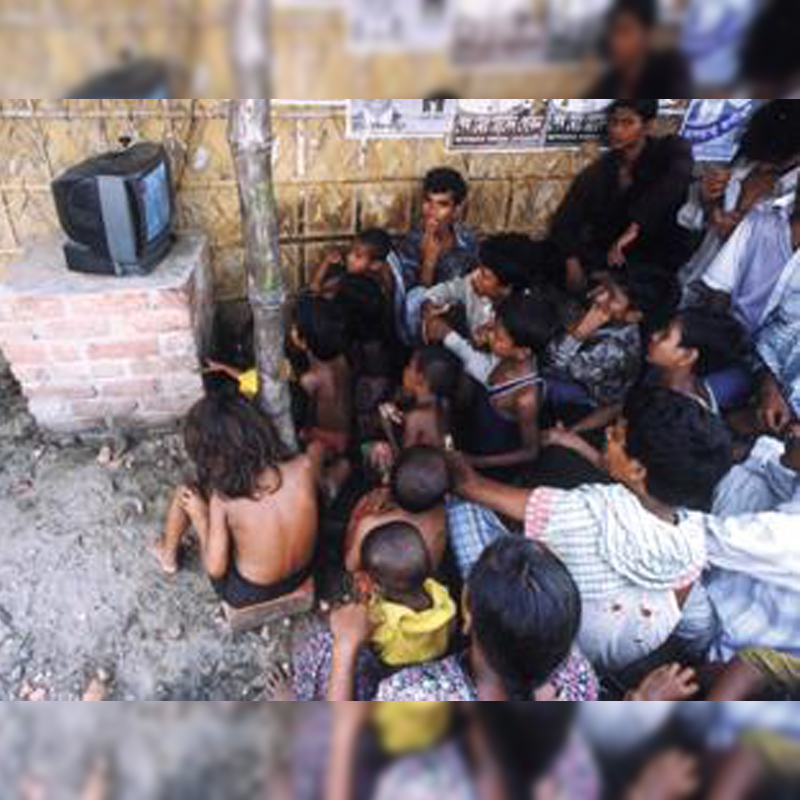
    On a recent road trip to Ladakh with friends we stopped at a nondescript roadside ‘dhaba’ (makeshift eatery) near the Himachal Pradesh and J&K border for tea and to stretch sore limbs. As tea was being boiled, stifled giggling from inside the hutment attracted me. While trying to see if my smart-phone was working so I could check-in on FB, I peeped inside. A group of local kids were enjoying a soap opera on television; courtesy DD FreeDish, a free-to-air DTH platform. My mobile phone, in the meanwhile, showed no signs of life with a No-Network message flashing.

    This, and many other such examples in India’s hinterland, highlight a fact loud and clear: India may be going digital, but Bharat (as non-urban hinterlands of India is referred to by some sociologists and marketers) still roots for the traditional. Such instances also tell us that in a country as diversified, complex and challenging as India, traditional habits, like TV watching, are there to stay despite technological disruptions like streaming video and smart-phones.

    Globally, death of traditional TV viewing has been predicted for past few years. But data and analytics from more mature and developed markets and even some East Asian nations – where digital is a big draw – show that TV as we know it is not going away anytime soon.

    A US Department of Labour Survey, released early 2016, states that watching TV was the leisure activity that “occupied the most time (2.8 hours per day), for those aged 15 and over.”

    BARB (UK equivalent of BARC India) data shows that average daily video viewing by all individuals is 4hrs 35mins and that TV accounts for 94 per cent of all video advertising time. Over the last decade, despite several “disruptive” technological developments, time spent watching TV has hardly dipped, as was being forecast. More importantly, TV continues to have largest reach of all media: it reaches 71per cent of population in a day, 93per cent in a week, and 98 per cent in a month.
    And, these are markets with near total saturation of TV homes, and a highly developed and widespread digital eco-system.

    What about India?

    Appetite for more TV content is only bound to grow given that only 153 million homes in India have TV out of a total of about 250 million (a penetration of about 60 per cent). Rise in disposable incomes, increasing fragmentation of families and continued challenges of Indian infrastructure are bound to push TV viewing higher.

    All-India BARC data for 47 weeks appear to validate that. Average daily TV viewing stands at 3 hours 16 minutes, showing headroom for growth, compared to more mature TV markets that have higher TV penetration rate of 97+ per cent.

    India has close to 900 licensed channels and while Ministry of Information and Broadcasting (MIB) agrees some of these licensees may not be on air, but scores of applicants are in queue too — another indicator of growth in appetite for TV.

    But, what about the perception that traditional TV viewership is losing out due to growth of digital platforms?

    Let’s look at BARC India data for a recent TV event, the Rio Olympics. TV viewership for Rio 2016 grew 2.65 times as compared to London 2012. While 16 million unique viewers watched the broadcast of London Games in India, the corresponding figure for Rio Games is 43 million (using the same viewership base – 1million+ towns). If one looks at the all-India (Urban+Rural) base, Rio 2016 set another high of 203.8 million unique viewers.

    This brings us to cricket, India’s fav sports (apart from politics). BARC data shows that a new viewership high was achieved during an India-Pakistan ICC T20 World Cup match in 2016, which generated a whopping 80.5 million impressions across Star Sports Network and DD National. And these numbers came on the back of not just a larger number of people watching TV, but also considerable higher time spent on TV.

    When asked about linear TV’s impending death in India owing to digital’s growth, Colors CEO and President of the Advertising Club (of India) Raj Nayak waved away the analysis asserting, “I am ready to stick out my neck on this. People who say that traditional television is dying don’t know what they are talking about. TV has been growing and there is still big headroom for its growth in India.”

    India may be adopting mobile phones faster than the US or other western countries, and a major percentage of them are smart-phones. Still, challenges for digital players are big and many ranging from costly data, indifferent bandwidth speed and getting the right content mix for a country that has 22 official languages and over 700 dialects.

    At Vidnet2016, an OTT conference organised by indiantelevision.com recently, Hotstar chief Ajit Mohan admitted that high cost of data is a major hurdle for expansion of streaming services like Hotstar and others like Voot, dittoTV, BoxTv, Arre, Savvn, Hooq, Viu, SonyLiv, etc.

    Data pointing to greater consumption of TV is one side of the picture. Globally, studies and data also indicate that TV remains a highly effective form of advertising.

    A study by the Institute of Practitioners of Advertising (UK’s equivalent of India’s AAAI) shows that TV continues to guarantee best commercial outcomes of campaigns for things such as sales, profit, market share, etc. Echoing similar sentiments, Colors’ Nayak added, “Digital advertising does not have the same impact that TV (advertising) has… Even Amazon, Google and other e-commerce companies have to use TV to make an impact.”

    US-based eMarketer (started in 1996 to study digital trends and considered one of the most widely cited research providers in the media) admits that despite a drop in TV watching time, in general, it hasn’t stopped marketers from pouring significant amounts of money into television advertising.

    Without discounting the strides being made by digital players in India (and they seem to be mushrooming all over like dotcoms during the dotcom boom of the late 1990s), traditional TV’s importance and reach still outstrips that of digital.

    Pointing out that digital does offer consumers choices of watching TV (government lingo for video consumption) at different time and in different formats, a senior government official, having worked at MIB, on condition of anonymity admitted that TV is not going away from India. Rather, the size of India will help it retain its pre-eminence as opposed to other media.

    GroupM too testifies to TV’s strong presence in India compared to other segments of media like print, OOH and digital. In projections made in January 2016, which are re-visited mid-year to do any course corrections if necessary, the company said television was estimated to grow by 17.6 per cent to touch Rs 27,074 crore (Rs. 2,7,0740 million) this year against Rs 23,022 crore (Rs. 23,02,20 million) last year as far as advertising spends go.

    Colors’ Nayak aptly sums up the issue: “There is no doubts that digital will see growth at a phenomenal pace especially with Reliance Jio addressing the bandwidth and speed issues, but digital must be seen as another platform for delivering content and that’s it. There will be lot of content consumption on digital platforms, but it will not be at the cost of (traditional) TV viewing.”

    Like Nayak, I too am ready to bet my bucks on linear or traditional TV in India. Digital has to travel many more miles in India before it can be a replacement for TV, which is still far off from near-saturation point or even plateauing off.

    (Author is Consulting Editor to indiantelevision.com)

  • Saying traditional TV is dying in India is premature

    Saying traditional TV is dying in India is premature

    On a recent road trip to Ladakh with friends we stopped at a nondescript roadside ‘dhaba’ (makeshift eatery) near the Himachal Pradesh and J&K border for tea and to stretch sore limbs. As tea was being boiled, stifled giggling from inside the hutment attracted me. While trying to see if my smart-phone was working so I could check-in on FB, I peeped inside. A group of local kids were enjoying a soap opera on television; courtesy DD FreeDish, a free-to-air DTH platform. My mobile phone, in the meanwhile, showed no signs of life with a No-Network message flashing.

    This, and many other such examples in India’s hinterland, highlight a fact loud and clear: India may be going digital, but Bharat (as non-urban hinterlands of India is referred to by some sociologists and marketers) still roots for the traditional. Such instances also tell us that in a country as diversified, complex and challenging as India, traditional habits, like TV watching, are there to stay despite technological disruptions like streaming video and smart-phones.

    Globally, death of traditional TV viewing has been predicted for past few years. But data and analytics from more mature and developed markets and even some East Asian nations – where digital is a big draw – show that TV as we know it is not going away anytime soon.

    A US Department of Labour Survey, released early 2016, states that watching TV was the leisure activity that “occupied the most time (2.8 hours per day), for those aged 15 and over.”

    BARB (UK equivalent of BARC India) data shows that average daily video viewing by all individuals is 4hrs 35mins and that TV accounts for 94 per cent of all video advertising time. Over the last decade, despite several “disruptive” technological developments, time spent watching TV has hardly dipped, as was being forecast. More importantly, TV continues to have largest reach of all media: it reaches 71per cent of population in a day, 93per cent in a week, and 98 per cent in a month.
    And, these are markets with near total saturation of TV homes, and a highly developed and widespread digital eco-system.

    What about India?

    Appetite for more TV content is only bound to grow given that only 153 million homes in India have TV out of a total of about 250 million (a penetration of about 60 per cent). Rise in disposable incomes, increasing fragmentation of families and continued challenges of Indian infrastructure are bound to push TV viewing higher.

    All-India BARC data for 47 weeks appear to validate that. Average daily TV viewing stands at 3 hours 16 minutes, showing headroom for growth, compared to more mature TV markets that have higher TV penetration rate of 97+ per cent.

    India has close to 900 licensed channels and while Ministry of Information and Broadcasting (MIB) agrees some of these licensees may not be on air, but scores of applicants are in queue too — another indicator of growth in appetite for TV.

    But, what about the perception that traditional TV viewership is losing out due to growth of digital platforms?

    Let’s look at BARC India data for a recent TV event, the Rio Olympics. TV viewership for Rio 2016 grew 2.65 times as compared to London 2012. While 16 million unique viewers watched the broadcast of London Games in India, the corresponding figure for Rio Games is 43 million (using the same viewership base – 1million+ towns). If one looks at the all-India (Urban+Rural) base, Rio 2016 set another high of 203.8 million unique viewers.

    This brings us to cricket, India’s fav sports (apart from politics). BARC data shows that a new viewership high was achieved during an India-Pakistan ICC T20 World Cup match in 2016, which generated a whopping 80.5 million impressions across Star Sports Network and DD National. And these numbers came on the back of not just a larger number of people watching TV, but also considerable higher time spent on TV.

    When asked about linear TV’s impending death in India owing to digital’s growth, Colors CEO and President of the Advertising Club (of India) Raj Nayak waved away the analysis asserting, “I am ready to stick out my neck on this. People who say that traditional television is dying don’t know what they are talking about. TV has been growing and there is still big headroom for its growth in India.”

    India may be adopting mobile phones faster than the US or other western countries, and a major percentage of them are smart-phones. Still, challenges for digital players are big and many ranging from costly data, indifferent bandwidth speed and getting the right content mix for a country that has 22 official languages and over 700 dialects.

    At Vidnet2016, an OTT conference organised by indiantelevision.com recently, Hotstar chief Ajit Mohan admitted that high cost of data is a major hurdle for expansion of streaming services like Hotstar and others like Voot, dittoTV, BoxTv, Arre, Savvn, Hooq, Viu, SonyLiv, etc.

    Data pointing to greater consumption of TV is one side of the picture. Globally, studies and data also indicate that TV remains a highly effective form of advertising.

    A study by the Institute of Practitioners of Advertising (UK’s equivalent of India’s AAAI) shows that TV continues to guarantee best commercial outcomes of campaigns for things such as sales, profit, market share, etc. Echoing similar sentiments, Colors’ Nayak added, “Digital advertising does not have the same impact that TV (advertising) has… Even Amazon, Google and other e-commerce companies have to use TV to make an impact.”

    US-based eMarketer (started in 1996 to study digital trends and considered one of the most widely cited research providers in the media) admits that despite a drop in TV watching time, in general, it hasn’t stopped marketers from pouring significant amounts of money into television advertising.

    Without discounting the strides being made by digital players in India (and they seem to be mushrooming all over like dotcoms during the dotcom boom of the late 1990s), traditional TV’s importance and reach still outstrips that of digital.

    Pointing out that digital does offer consumers choices of watching TV (government lingo for video consumption) at different time and in different formats, a senior government official, having worked at MIB, on condition of anonymity admitted that TV is not going away from India. Rather, the size of India will help it retain its pre-eminence as opposed to other media.

    GroupM too testifies to TV’s strong presence in India compared to other segments of media like print, OOH and digital. In projections made in January 2016, which are re-visited mid-year to do any course corrections if necessary, the company said television was estimated to grow by 17.6 per cent to touch Rs 27,074 crore (Rs. 2,7,0740 million) this year against Rs 23,022 crore (Rs. 23,02,20 million) last year as far as advertising spends go.

    Colors’ Nayak aptly sums up the issue: “There is no doubts that digital will see growth at a phenomenal pace especially with Reliance Jio addressing the bandwidth and speed issues, but digital must be seen as another platform for delivering content and that’s it. There will be lot of content consumption on digital platforms, but it will not be at the cost of (traditional) TV viewing.”

    Like Nayak, I too am ready to bet my bucks on linear or traditional TV in India. Digital has to travel many more miles in India before it can be a replacement for TV, which is still far off from near-saturation point or even plateauing off.

    (Author is Consulting Editor to indiantelevision.com)

  • Danny Boyle tipped to direct next Bond film

    Danny Boyle tipped to direct next Bond film

    MUMBAI: Slumdog Millionare fame director Danny Boyle is tipped to direct the next 007 film after Skyfall director Sam Mendes refused to take the assignment.
     
    It is said that producer Barbara Broccoli is said to have chatted with Boyle at a recent awards ceremony.
     
    The Oscar winner previously won a lot of appreciation for his extra-ordinary performance at the London Olympics‘ opening ceremony, which featured 007 star Daniel Craig and the Queen double in a Bond sketch.
     
    Here it may be remembered that veteran Bond producer Michael G Wilson had recently said that he certainly could be a Bond director.

  • Daniel Craig signs two more Bond films

    Daniel Craig signs two more Bond films

    MUMBAI: Daniel Craig is set to become the longest serving James Bond on screen as he reportedly signed two more movies in the James Bond franchise.
    The nest Bond offering, Skyfall is Craig‘s third film as the protagonist spy James Bond since he replaced Pierce Brosnan in 2006 as 007 in Casino Royale. His second film in the role was The Quantum of Solace released in 2008. Skyfall hits theatres on 9 November.
    It has also been reported that Sony has re-upped its deal to co-finance the film with MGM.
    The film received a huge promotional push during the London Olympics, with Craig participating in a taped sketch with Queen Elizabeth during the opening ceremony.

  • Olympics viewership growing among younger viewers in the US

    Olympics viewership growing among younger viewers in the US

    MUMBAI: US broadcaster NBC has announced that through seven days of its coverage of the on-going 2012 London Olympic Games, overall viewership is up double digits among teens and teenage girls.

    Overall viewership for teen girls, 12-17, is up 54 per cent versus 2008 (8.3 rating vs. 5.4 rating) and overall viewership for teens 12-17 is up 29 per cent versus 2008 (7.2 rating vs. 5.6 rating).

    Teen viewership of the London Games is more than six times higher than traditional broadcast viewing habits, and teen girl ratings for NBC‘s coverage of the London Olympics is 89 per cent higher than the No. 1 rated prime-time show on broadcast television in the same demographic (Glee/Fox), according to an official statement from NBC.

    Teen girl ratings for the London Olympics are also more than double the rating of the number one prime-time shows on remaining competing broadcast networks.

    The NBC data provides more viewership details. More than three times as many female teens watched the London Olympics in prime-time than purchased a movie ticket to The Twilight Saga: Eclipse.

    Around 171 per cent more teens watched NBC‘s coverage of the London Olympics than shopped at Abercrombie and Fitch in the last three months, NBC stated.

    In addition to an increase in broadcast viewing habits, young people are also engaging with NBC Olympics digital content.

    Through the first seven days of the London Olympics, NBC is averaging 1.7 million teen viewers, the most for any non-US Summer Olympics since the 1992 Barcelona Olympics. Through the same time period, 174.9 million Americans have watched the Olympics on the networks of NBCUniversal, ahead of Beijing‘s 174.1 at the same point through the Games.

  • London Olympics draws record viewership

    MUMBAI: London Olympics started with an exceptional performance especially in the United Kingdom with 23.5 million viewers tuning in for the opening ceremony on BBC1 for an 82.3 per cent market share, making it the top of the year so far, according to Eurodata TV Worldwide trends.

    Viewing figures were also high across the World for the spectacular opening ceremony. In France the event gathered great audiences on TF1 with 8.7 million viewers and a 56.9 per cent market share, that is to say a better score compared to Beijing 2008 (5 million viewers on France 2).

    Over in Germany on ZDF, 7.6 million sports fans watched the event for a 43.5 per cent market share. Although this matched results for Beijing, it nonetheless represents a drop compared to Athens 2004, partly due to the length of the ceremony added to the time difference.

    Among Spanish audiences on La 1, the event gathered 5.6 million viewers with 46.1 per cent market share, more than doubling the results of Athens 2004. This huge rise demonstrates that the Spanish are more and more enthusiastic for sports in general, thanks to the incredible success of local athletes and teams.

    Italians also appreciated the Opening Ceremony with more than 5.5 million people tuning in on Rai 1 with a market share of 42.6 per cent, in line with previous Games.

    In China, despite a big time difference, CCTV1, CCTV5 and CCTV News realised good figures (all three channels combined) with 22.2 million viewers and a 49 per cent market share. It is the proof that the previous Olympics created a keen interest.

    The data used is from multiple sources to capture the viewership of the various countries. These are: Eurodata TV Worldwide; Médiamétrie (France); Nielsen (USA); Auditel (Italy); BARB (UK); AGF,GfK Fernsehforschung (Germany); CSM Media Research (China); Kantar Media (Spain).

    The women’s football competition started with a big match between two favourites for the gold medal: France and the USA. This game, the remake of the 2011 FIFA World Cup semi-final, achieved great audience in France with 1 million viewers and a 8.8 per cent market share on France 4, compared to a 2.2 per cent channel average market share over the first semester of 2012.

    In the UK, BBC1 gathered 1.8 million viewers and a 18.3 per cent market share for the game between Great Britain and New Zealand. These results demonstrate the increasing support for women’s football, as it commands increasingly impressive TV audiences.

    Men’s basketball started with big expectations on Sunday. The new US Dream Team was up against France, one of the strongest challengers. On France 3, the game was followed by 3.9 million viewers and a market share of 33.3 per cent. The match was a huge success both for the spectacular game and the impressive TV audience figures taking into account the usual little regular exposure of basketball.

    Road cycling, one of the most popular competitions, took place on 28 Saturday. Reason: Bradley Wiggins won the Tour de France in July, his appearance at the Opening Ceremony once again, stoking British enthusiasm for the sport.

    In the UK, BBC3 averaged 788,100 viewers with a 7.7 per cent market share for the race and peaked at 2 million viewers (18.5 per cent market share) just before the last hope for a British medal disappeared in this race.

    Eurodata TV Worldwide vice-president Jacques Braun said, “The United Kingdom is known worldwide as a country of sports tradition, so this event could be seen as a symbolic return to their roots. Furthermore, the Euro 2012, the NBA Finals, the Tour de France and Wimbledon were great boosters for this amazing sports summer with the performances of Bradley Wiggins and Andy Murray. The performance of cycling in this Olympics demonstrates again the ingredients of TV ratings success: a whole country or city getting behind their hero with medals at stake.”

  • CNBC-TV18 to launch ‘The Olympian Effort’ on 30 June

    CNBC-TV18 to launch ‘The Olympian Effort’ on 30 June

    Mumbai: CNBC-TV18 is launching a new six-part series – The Olympian Effort – on 30 June.

    Built around the 2012 London Olympics, the show gives a 360 degree view of the Games. It salutes the spirit of sportsmanship and takes an “in-depth” look at the business of Olympics.

    The series will air every Saturday at 12 noon and 8 pm and every Sunday at 9 pm.

    There will be a special episode on India and the Olympics. It will showcase India’s history and track record at the Olympics, the past winners and their moments of glory. The show will then look at the Indian 2012 contingent, their prospects and the country’s expectations from them.

    As the series progresses, it will dive deeper into the business of Olympics and analyse how Indian businesses and companies with Indian stakes are getting involved and leveraging on the games. The show will capture the expectations of various athletes and contingent sponsors as well as the first time broadcaster of Summer Olympics ‘ESPN Star Sports’.

    A special episode will be anchored out of London itself that will provide a global view of the 2012 London Olympics and its impact on Brand London. Interviews with global sponsors and organisers will provide an insight to their views and expectations from the games. The series will conclude after the closing ceremony which will analyse the 2012 games and brand London from all aspects.

  • Ad spends in the US to slow down in 2012: Study

    Ad spends in the US to slow down in 2012: Study

    MUMBAI: Magnaglobal a division of IPG Mediabrands has released its updated US Media Owners Advertising Revenue Forecast.


    The 2011 forecast remains unchanged at 1.6 per cent growth, including the impact of political and Olympics (P&O) advertising, and it still expects media suppliers to generate $173.5 billion of ad revenues in 2011. Due to persistent weakness in the US economy, however, it has revised the 2012 growth forecast down from 4.8 to 2.9 per cent, including P&O.


    A slowdown in real personal consumption expenditures, manufacturing activity, and ongoing problems in the labour and housing markets all contribute to the revised outlook.
     
    The estimates are further impacted by continued disinflation. The forecasts encompass core media categories including Television, Internet, Print, Radio and Outdoor, as well as direct marketing categories (Direct Mail, Directories). Excluding direct marketing components, the revenue growth of core media categories is estimated at 2.9 per cent in 2011 and 4.3 per cent in 2012.


    Under the current expectations of a slow-but-positive economic recovery in 2012, media suppliers’ advertising revenues will continue to recover from the severe recession of 2008-2009.


    Magnaglobal expects revenues to reach $178.5 billion in 2012, which is still significantly less than the pre-recession level of 2007 ($206.1 billion).


    National mass media will continue to gain share due to strength in national online display, online video, mobile and national cable network advertising. Across the three media segments, TV will be the fastest growing medium after Online in 2012, with advertising revenues increasing by 7.1 per cent compared with online’s 11.6 per cent.


    Television will benefit from the “quadrennial bonanza.” The agency believes that the 2012 elections and the Summer Olympics will generate incremental revenue of $3.1 billion for television: $2.5 billion in political advertising (the highest spending ever, mostly on local broadcast television) and $633 million around the London Olympics (up 5.5 per cent compared with Beijing 2008, and primarily fuelling National Broadcast TV revenues).


    Direct media is exhibiting an increasing discrepancy between traditional activities (Directories and Direct Mail) and digital (Internet Yellow Pages, Paid Search, Lead Generation). Traditional direct media remains significant ($26.2 billion in 2011), but it is increasingly challenged by digital alternatives. Digital direct media, on the other hand, continues to outperform.


    Paid Search growth has accelerated this year to 21.7 per cent, and is expected to maintain double-digit growth in 2012 (13 per cent). Recent algorithm improvements have helped accelerate cost-per-click trends and have led brands to rely more heavily on search engine marketing and search engine optimization while eschewing low-quality sites. For 2011, it now expects $31.1 billion in total online advertising, up 19.5 per cent versus 2010.