Tag: Lok Sabha

  • Delays in decision on power usage by AIR Aligarh led to loss of Rs 1.78 crore

    Delays in decision on power usage by AIR Aligarh led to loss of Rs 1.78 crore

    NEW DELHI: Delays in assessing contracted load of power supply and seeking approval of the competent authority to reduce load resulted in an avoidable payment of 1.78 crore by All India Radio in Aligarh, according to a report of the Comptroller and Auditor General (CAG).


    CAG reported the matter to the Information and Broadcasting Ministry (I&B), but failed to get a reply until the presentation of the report to the Lok Sabha.


    AIR Aligarh had a contracted load of 3000 KVA with the Uttar Pradesh Power Corporation (UPPCL) for its power supply. Under the agreement with UPPCL, demand charges are levied on actual maximum demand recorded in a month or 75 per cent of the contracted load, whichever is higher, along with charges of actual energy consumed at the rates applicable from time to time.


    Audit analysis of electric load revealed (April 2011) that actual consumption during 2008-09,  2009-10  and 2010-11 ranged between 558 KVA and 1116 KVA, 544 KVA and 1008 KVA and 572 KVA and 760 KVA respectively, and showed declining trend over these years.


    However, AIR Aligarh made no efforts to re-assess the demand and get its contracted load reduced. Consequently, it continued to pay demand charges for 2250 KVA per month (calculated at 75 per cent of the contracted load of 3000 KVA).


    AIR Aligarh while accepting (August 2011) the audit observation, stated that low demand was on account of existing transmitters working on lower capacity and new transmitters expected to be installed. The reduction in load would be taken up with the State Electricity Board after installation of new transmitters.


    It subsequently informed (May 2014) that reduction in load to 1250 KVA was approved by the Director General, on 21 April 2014 and the matter has been taken up with UPPCL.

  • SC Panel announces guidelines for govt ads

    SC Panel announces guidelines for govt ads

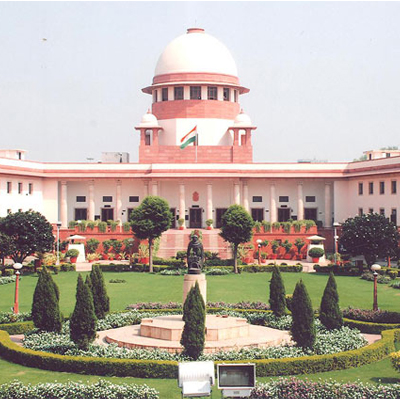
    NEW DELHI: A Supreme Court-appointed high- powered committee recently announced guidelines on government advertisements in order to prevent misuse of public funds for furthering political motives.


    The guidelines recommend that names and pictures of political parties and their office bearers should be not mentioned in government advertisements.


    The report, submitted to the apex court, also emphasises that only pictures and names of the President, the Prime Minister, Governor and Chief Ministers be published to ‘keep politics away from such ads’.


    The guidelines have been framed by a three-member committee headed by eminent academician Professor NR Madhava Menon to regulate expenditure and contents of such advertisements paid out of tax payers’ money. The committee also comprises of former secretary general of Lok Sabha TK Viswanathan and solicitor general Ranjit Kumar. The apex court had decided to frame these guidelines on 23 April to prevent the misuse of public money.


    The apex court bench headed by chief justice P Sathasivam with justice Ranjan Gogoi and N V Ramana had said that the existing guidelines of the Directorate of Advertising and Visual Publicity (DAVP) do not cover such advertisements. There was therefore a need for substantive guidelines to be issued by the Court until the legislature enacts a law in this regard.


    The report also added that the committee has included suggestions of the Election Commission about severe restrictions on such advertisements six months prior to elections.


    It further endorsed that a deadline should be fixed for prohibiting their publication and the poll panel should be authorised for the purpose.


    The report recommended that the central and state governments must decide in advance on a list of personalities whose birth or death anniversaries will be marked with ads.


    The government must then specify which Ministry should release the ad to avoid different departments and state-run companies from paying tribute to the same leader with a multitude of ads. “There should be a single advertisement only,” the Committee said.


    The Bench had also noted that the Directorate of Advertisement and Visual Publicity (DAVP) guidelines do not lay down any criteria for the advertisements to qualify for public purpose as opposed to partisan ends and political mileage, adding that there is a need to distinguish between the advertisements that are part of government messaging and daily business and advertisements that are politically motivated.


    The Government in its counter affidavit claimed that 60 per cent of the advertisements released by the DAVP on behalf of various ministries/departments/public sector undertakings of the Central Government relate to classified or display/classified category such as UPSC/SSC or recruitment, tender and public notices, etc. The respondents asserted that government advertisements sometime carry messages from national leaders, ministers and dignitaries accompanied with their photographs.


    However, Government counsel K Radhakrishnan said the purpose of such advertisements is not to give personal publicity to the leaders or to the political parties they belong to rather the objective is to let the people know and have authentic information about the progress of the programmes/performance of the government they elected and form informed opinions, which is one of the fundamental rights of the citizens in our democracy as enshrined in the constitution.

  • STBs considered as telecom equipment to encourage indigenous production: Javadekar

    STBs considered as telecom equipment to encourage indigenous production: Javadekar

    NEW DELHI: The Department of Telecommunications (DoT) has issued orders confirming that set top boxes (STBs) are part of telecommunication equipments. This has been done to promote indigenous production of STBs.

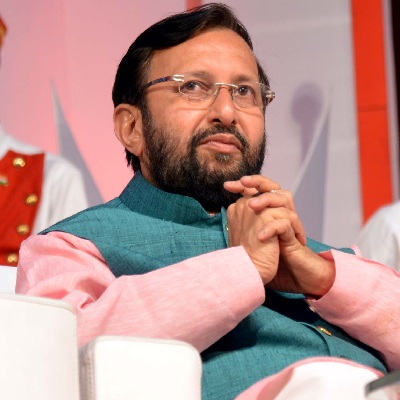
    Information and Broadcasting Minister Prakash Javadekar today informed the Lok Sabha that this was done after his ministry along with other ministries took up the constraints of Indian manufacturers in the production of indigenous STBs, in view of the fact that an estimated 110 million STBs would be required for the third and fourth phase of digital access system (DAS).


    While the earlier government had introduced digitisation in the country, it failed to chalk out a clear path for it, especially for boosting indigenous production of STBs. The new government had assured all the players that it would look at every sector’s problems and work on them. This thrust to indigenous STB makers seems to be a step forward in that direction.


    Javadekar also said that a task force has been set up to finalise the modalities and study the implementation of the last two phases of DAS which need to be completed by 31 December 2014. A Deloitte report prepared for ASSOCHAM recently said about 12 million STBs have been seeded and 80 per cent consumer application forms received as of December 2013. The Telecom Regulatory Authority of India (TRAI) claims 100 per cent digitisation has taken place in the second phase of DAS.

    TRAI has also said that recommendations on the new direct to home (DTH) licences would be brought out very soon. HITS licences have been issued to two players and are expected to enable digitisation in Phase III and Phase IV markets.

    Meanwhile, the report notes ‘complaints have poured in against STBs. People in the city are complaining about digital STBs installed in their residences and commercial organisations. Visual and sound disturbances coupled with channels going off air from time to time have left viewers unhappy.’


    It also noted that ‘in the haste to install STBs in the city, cable operators have overlooked a crucial step – that of filling in the conditional access form (CAF) before installation of the device. The purpose behind mandating DAS was to identify the actual number of cable viewers in the country. But with most customers not filling in the form, the purpose still remains defeated.’


    ‘With penetration of TV in India standing at approximately 65 per cent, at present, the country has close to 80 million non-TV households, which present a key opportunity for the television distribution players. This low level of penetration holds a great potential for players to increase their subscribers and revenues. Drivers such as rising incomes, decreasing household size, multi TV phenomenon and rising urbanisation would only provide a further fillip.’

  • Lok Sabha passes TRAI amendment bill

    Lok Sabha passes TRAI amendment bill

    NEW DELHI: The appointment of former Telecom Regulatory Authority of India (TRAI) chairman Nripendra Misra as principal secretary to the Prime Minister got legislative sanction in the Lok Sabha when it passed the amendment to the TRAI Bill to remove the clause which bars appointment of former TRAI officers in government posts.


    The amendment was passed despite protests by the Congress. The Nationalist Congress Party which is an ally of the Congress had over the weekend said that it would support the amendment as this was not the first case of a retired government servant being re-employed in the government. The Trinamool Congress which had initially said it would oppose the bill decided to support it.


    The Bill replaces the ordinance issued on 28 May by the Bharatiya Janata Party which said it was based on merits while the Congress has criticised the government for showing undue haste in bringing a person specific ordinance.


    Under Parliamentary procedures, any ordinance has to be replaced by an Act within six weeks of the session that commences after the promulgation of the ordinance.


    The government strongly defended the move. Law and Telecom Minister Ravi Shankar Prasad said the government is in “full power to bring the bill” and the effort was to bring TRAI on par with other similar organisations like the Competition Commission.


    Misra, a 69-year old 1967-batch Indian Administrative Service officer of Uttar Pradesh cadre who retired in 2009, joined the Prime Minister’s Office the day the ordinance was promulgated. Before the Ordinance was promulgated, the TRAI Act prohibited its chairman and members from taking up any other job in central or state governments after demitting office.


    The TRAI Act 1997 says: “The chairperson or any other member ceasing to hold office as such, shall (a) be ineligible for further employment under the Central government or any state government or (b) not accept any commercial employment for a period of two years from the date he ceases to hold such office.”


    The amended section now reads: “The chairperson and the whole-time members shall not, for a period of two years from the date on which they cease to hold office as such, except with the previous approval of the Central government, accept “(a) any employment either under the Central government or under any state government; or “(b) any appointment in any company in the business of telecommunication service.”


    Although the BJP is in a minority in the Rajya Sabha, the Bill is expected to be passed in the Upper House as the Samajwadi Party and Bahujan Samaj Party apart from NCP and TMC are also supporting it.


    The bill will become a law after it is passed by the Rajya Sabha and assented to by the President.

  • Government takes legislative step to accommodate Nripendra Misra in PMO

    Government takes legislative step to accommodate Nripendra Misra in PMO

    NEW DELHI: The change of government always brings about a shake-up of senior executives in various posts, and this is done even if it necessitates changing laws to accommodate an individual or an individual’s chosen one.


    The Telecom Regulatory Authority of India (TRAI) is being amended so that former TRAI chairman Nripendra Misra – a 1967-batch IAS officer who is now 69 years of age – can be appointed as principal secretary to Prime Minister Narendra Modi.


    A bill in this regard was introduced in the Lok Sabha to replace an ordinance brought out by the government to amend the act which prohibited its chairman and members from taking up any other job in the central or state governments after demitting office.


    Some Congress members told indiantelevision.com that this would open the Pandora’s Box as it would be used by every successive government to bring their favourites to key posts. Furthermore, this precedent may lead to amendments in other organisations where similar restrictions have been put in place.  


    With the Bharatiya Janata Party issuing a whip to its members to support the bill, it is bound to be passed. However, it may face a tougher task in the Rajya Sabha where the BJP does not have a majority.


    The TRAI (Amendment) Bill, 2014 was debated in the House today.


    According to the present TRAI Act: “The chairperson or any other member ceasing to hold office as such shall (a) be ineligible for further employment under the central government or any state government or (b) not accept any commercial employment, for a period of two years from the date he ceases to hold such office.”


    The ordinance amends this section to read as: “The chairperson and the whole-time members shall not, for a period of two years from the date on which they cease to hold office as such, except with the previous approval of the central government, accept “(a) any employment either under the central government or under any state government; or “(b) any appointment in any company in the business of telecommunication service.”


    Misra is an IAS officer from the Uttar Pradesh cadre and his appointment as principal secretary will be co-terminus with the term of the PM or till further orders, according to an order issued by the Ministry of Personnel. The principal secretary to the PM is a key post and acts as main link for coordination among Prime Minister’s Office, cabinet secretariat and secretaries of ministries. 

  • SRFTI lauds proposed ‘Institute of National Importance Status’ by FM

    SRFTI lauds proposed ‘Institute of National Importance Status’ by FM

    KOLKATA: Praising the proposal made by Finance Minister Arun Jaitley to accord Satyajit Ray Film and Television Institute (SRFTI) in Kolkata the status of ‘Institute of National Importance,’ its director has said that the move would open up new vistas in education of aspirants as well as boost international collaborations.


    FTII Pune and SRFTI Kolkata, the two premium film institutes in the country, would be accorded the status of institutes of national importance, Finance Minister Arun Jaitley said in his budget speech in Lok Sabha on Thursday.


    “It is good to know that SRFTI is being considered important on a national scale. It will open up new avenues for education in cinema and television. We have collaborative projects but this status will provide a boost to further partnerships globally,” SRFTI director Sanjaya Pattanayak said.


    Veterans from the Bengal film and television industry also lauded the decision. “Education in filmmaking is important,” they added.


    Experts feel that though Bengal was supposed to get more in terms of textile, agriculture and farming, the Budget mentioned nothing on those lines. “It is good that the minister at least thought about SRFTI. It will help students who are keen to take television and cinema as career options,” experts added.

  • News channels reform before Modi’s big Budget 2014

    News channels reform before Modi’s big Budget 2014

    NEW DELHI: The presentation of the general budget on 10 July morning by Finance Minister Arun Jaitley will perhaps be the most keenly watched analysis of the financial shape of the nation since the early 90s when the then Finance Minister Manmohan Singh presented his budget.


    This is also perhaps the first time in recent years that the budget is being presented by a man from the legal profession.


    Although only Lok Sabha TV has the permission to cover the budget live from inside the portals of Lok Sabha, almost every channel in the country – and certainly every business channel – will be taking the beam from Lok Sabha TV and then adding its own analysis programmes.


    CNBC TV18, Doordarshan News, Times Now, and most other News channels plan to commence the discussion on the budget from around 8.00 am with experts talking about expectations, and then beaming the live presentation from 11.00 am onwards.


     The entry of websites like moneycontrol.com and economylead.com streaming the budget and by social media will be an added feature this year, as many websites have already announced plans in this regard.


    With the new dispensation in place, the aspirations of the common man are soaring high and many are wondering whether the ruling Bharatiya Janata Party will live up to its slogan of ‘Acche din aaney waley hain.’


    The presentation is expected to be followed soon after by the reaction of Prime Minister Narendra Modi on Doordarshan and Lok Sabha TV and an exhaustive interview of Jaitley about his budget on Doordarshan.


    In addition, channels will cover live the press meet by senior Finance Ministry officials in the afternoon about the various facets of the budget.


    The coverage on CNBC TV18 will be led by Shereen Bhan, on Times Now by Arnab Goswami, and on NDTV 24×7 by Prannoy Roy. Times Now has articulated its standpoint by saying ‘Everyone deserves a piece of this super budget. Get Yours.’ The channel though also warns that it may be a bitter pill.


    Other channels like CNN-IBN, Aaj Tak, ABP News, Sahara Samay, P-7, News X and others have also lined up experts who will analyse the budget. The channels will also have teams that will go to Parliament House premises to get the reactions of various political leaders.


     For the business channels, it will be a particularly exhaustive day as they will also have a link with the National Stock Exchange and Bombay Stock Exchange to get the latest ups and downs.


     Zee Business which is a Hindi business News channel will telecast the pre-Budget discussions and analysis from 7.00 am onwards and will bring in live and uninterrupted coverage of the Budget Speech. The channel will articulate, analyse and keep the common man abreast of all the impacts that Budget is going to have on their daily lives.


     Interestingly themed as the ‘Abki baar, sapne sakaar,’ Zee Business will have expert panels, business leaders and corporate captains throughout the day to give their expert advice. After the Finance Minister’s speech, Zee Business will undertake a series of power packed Budget Bulletins. Some of these bulletins will comprise high power panel discussions and will involve expert comments from the nation’s top business leaders and policy makers.  Some of the key Ministers holding important portfolios have already appeared and shared their views, and will also do so during post-Budget analysis programmes. They include Power, Coal, New & Renewable Energy Minister Piyush Goyal, Information & Broadcasting Minister Prakash Javadekar and Commerce & Industry Minister Nirmala Sitharaman.


    Special shows have been conceptualised with thorough research from the industry point of view without losing the ground reality and its impact on the common man. Expert opinions, industry perspective viz–a–viz market reaction and informative bulletins will be telecast.


    Zee Business will also organise a viewer’s engagement programme throughout the day from different parts of the country where commoners get a voice to air their reaction and feedback on the pertinent issues on budget.


     Zee Media CEO Samir Ahluwalia said, “With clear understanding of the expectations of the India Inc. as well as indications of the common man, Zee Business is poised to present a comprehensive Budget coverage. Through special programming and initiatives focusing on budget expectations, analysis and impact, Zee Business will once again ensure specialised coverage on Budget Day.”


    Added CNBC-TV18 managing editor Shereen Bhan, “The key question we will be asking is if the budget will be able to deliver. There will be a sharp focus on market reactions, the stance taken by other countries giving India a thumbs up and about investment in domestic capital. We will analyse the long term and short term ideas the government has as well as the reforms that will be taken up to revive the economy.”

  • Esha Media Research sees surge in demand of Railway Budget 2014 news clips

    Esha Media Research sees surge in demand of Railway Budget 2014 news clips

    KOLKATA: As the Union Railway Minister Sadananda Gowda started presenting his maiden Rail Budget in Lok Sabha on 8 July, Esha Media Research, a media monitoring and research company, saw an increase in inquiries, seeking news clips of the Railway Budget.


    The enquiries were for news clips in parts or as a whole from different stakeholders and interested parties across the ecosystem including big information technology (IT) companies and foreign direct investors (FDIs). The BJP-led government has mooted railway digitisation and foreign investment to improve the country’s railway system.


    Esha Media Research says that it currently monitors 140 channels across the nation in all languages. “We are tracking the entire railway budget and also certain areas like IT, FDI, freights in parts,” Esha Media Research managing director R S Iyer informed indiantelevision.com.


    “Tracking for railways is more as compared to last year,” Iyer said. “Apart from business houses, we are also receiving inquiries from media agencies tracking the economic content,” he added. Without mentioning the names of the clients and agencies, he revealed that there are some forums across the world that are interested to know and analyse the seriousness of the Prime Minister Narendra Modi-led BJP government.


    “We have been tracking from morning all the government interviews across channels, and they will continue to take place till the end of prime time today, maybe until 11pm. We have also started uploading the files,” Iyer informed.


    Gowda, during his budget presentation, said that his Ministry would seek cabinet approval for allowing foreign direct investment in the state-owned network, but passenger services would be excluded.


    The Railway Minister proposed work stations in select trains as a pilot project this year apart from offering technology for automatic closing of doors both in main line and suburban sections.


    He also said that the e-ticketing mechanism would be strengthened to allow 120,000 simultaneous bookings. The proposed overhaul of the e-ticketing system would support 7,200 tickets per minute as against the current 2,000 tickets per minute


    The budget also talked about the expansion scope of online booking, including streamlining of booking on mobiles, and providing Wi-Fi in A1 and A category stations and in select trains. E-procurement would be made compulsory for procurements worth Rs 25 lakh and more said Gowda.


    “Overall the budget was crisp and concise and the government played safe by not hiking the fare on the day of the budget but two weeks before it,” said a financial expert.


    Stock markets have not reacted very favourably to the railway budget-the BSE closed 562 points down at 4pm today as compared to the its pre-opening at 9am. The NSE CNX Nifty index also closed 2.11 per cent lower than its opening today.

  • Frankly Speaking with Modi

    Frankly Speaking with Modi

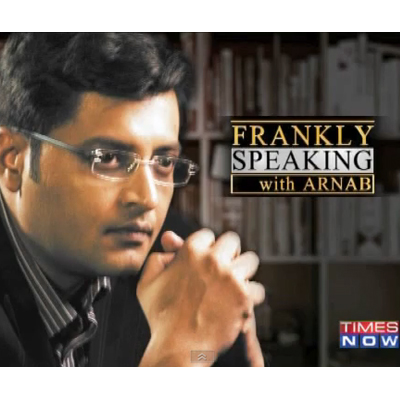
    MUMBAI: The channel which claims to be the headquarter for 2014 elections and the man who gets personalities to speak frankly has finally got BJP’s prime ministerial candidate, Narendra Modi, on the channel.

    Times Now has added another feather to its cap by becoming the first English News channel to get an interview with Narendra Modi. The man has already given a lot of interviews since the elections started to various Hindi channels, to name a few: ETV Gujarati, India News, Aaj Tak, CNBC Awaaz, Zee News etc.

    ETV Gujarati opened the score for Modi and his string of interviews. However, English News channels have tried their level best to get the man on to their channel; and since then failed.

    CNN IBN’s deputy editor Sagarika Ghose even tweeted asking the man to give an interview to “best” journalists. To which India TV’s chairman and editor-in chief Rajat Sharma replied, “Well, I already got one. You should watch good news channels too.”

    The channels editor-in-chief Arnab Goswami who got Rahul Gandhi first on his ‘Frankly Speaking’ show can now finally breathe a sigh of relief to get Modi before any of his rivals did. The Rahul Gandhi interview became a trend and also a butt of jokes. The hashtag #RahulSpeaksToArnab trended for days after the interview as jokes, parodies, cartoons and even remixes of the interview flooded the internet space.

    With Varansi going to polls on 12 May from where Modi fights against AAP’s Arvind Kejriwal, BJPs prime ministerial candidate is already in news. The time seems perfect for the channel to speak to the man.

    In the interview to Goswami, Modi will speak about issues ranging from his campaign to the recent controversy over his ‘caste’ comments and also Priyanka Gandhi’s ‘Neech Rajniti’ jibe.

    With Times Now and Twitter getting into a partnership for the 2014 general elections, hashtags have become common for the channel. The hashtag this time around is #ModiSpeaksToArnab. One will have to wait and watch to see what will trend after the interview airs on 8 May at 9pm.

  • Election 2014: The rise of social media

    Election 2014: The rise of social media

    MUMBAI: India is witnessing an election with several firsts to its credit. Not only is it the first time that a million youth are voting, it is also the first time the campaign spends of political parties are second only to the USA, the first time channels are jostling to show which one is more unique and it is also the very first time that social media is so actively involved in elections.

    IBN network managing editor Vinay Tewari puts it as:  “Today for any big event, social media communication is big. No news channel can survive without social media.” The 2009 Lok Sabha elections did not see as much mobile and social media penetration. So much so, the FICCI FRAMES annual report did not have a ‘new media’ section till 2011. 

    According to the report, the total number of internet users in India is 214 million, out of which 130 million access it through their mobile phones. This is just 17 per cent of the total population of the country!

    “It took a decade for the country to grow from a 10 million to 100 million internet user base and only three years to double (2011 to 2013) that number to 100 million.” says the report.

    According to India Today Group COO Digital Salil Kumar, “The age group of 18 to 24 years and then those above 24 years are the most vocal in the metros but maximum growth is being witnessed from tier two and three towns.”

    The FICCI FRAMES 2014 report says that by the end of 2013 there were nearly 72 million rural Indians who had accessed internet at least once in their lives and 49 million were active internet users. The primary reason that holds them back is unavailability of content in their local languages, which is something channels and mediums are trying to slowly bridge.

    Naturally, channels are pulling out all stops to get viewers hooked onto the second screen. CNN-IBN has a tie up with Microsoft and Google; ABP News and Aaj Tak are using their intense social media following; Times Now and CNBC-TV18 have tie ups with Twitter; while NDTV depends on its own proprietary material such as second screen and its app which has six million downloads.

    Aaj Tak had come up with an innovative campaign last year called E-Election (E-Chunav) where users were asked to virtually vote for their state parties in Delhi, Madhya Pradesh, Rajasthan and Chattisgarh, in order to gauge the mood of netizens. “With a dedicated team in place, we have been leveraging the medium to disseminate news, listen to feedback, hear views of the community and share  them back with audiences on TV, including the panelists on programmes,” says Kumar.

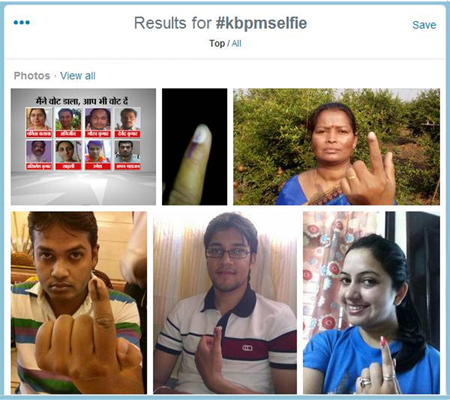
    ABP News started the trend #KBPMSelfie that encouraged voters to send selfies of their inked fingers through Twitter, Facebook and mail, leveraging its popular show Kaun Banega Pradhan Mantri (KBPM). It claimed to have received more than one lakh pictures. "We use social media actively throughout the year and we only see this activity increasing as news consumption on this platform is growing," says MCCS marketing manager Vikas Singh, the company that runs ABP News.

    An important medium for feedback, social media can no longer afford to be clubbed together with TV.  In fact, intensification on social media is not just for the elections but also post elections to retain people.  While Aaj Tak wants to improve its engagement with viewers as well as build brand loyalty among them, ABP News' Singh maintains, "From a channel perspective, it helps us communicate much better with our audience. Earlier if it used to be a one way communication, social media now helps it to become a two way channel. News travels faster and a lot of consumption of news happens through referrals, sharing and comments."

    According to Tewari, “The current focus is only elections. Post that, the interest in politics may decline but creating stickiness is something everyone is doing.”

    Word of mouth has become the biggest marketing tool today. The fact that news travels and gets consumed faster through social media means that it is effectively used for content dissemination and to provide breaking news. ‘Viral’ and ‘trends’ are the new operative words.

    Twitter claims that the buzz around the 2014 election on its platform in the last year has increased 600 per cent while the mention of political parties and candidates since the beginning of 2014 has gone up 10 times.


    Facebook has come up with an ‘I’m a Voter’ campaign urging voters to click the button and tell everyone about their moment of pride.

    This also brings us to the question as to how much of this information can actually be termed dependable? Times Now is doing live sentiment analysis of Twitter feeds while Network 18’s news channels are analysing election data through Microsoft’s technology. However, NDTV group CEO Vikram Chandra feels that these data are not very conclusive. “Though social media is an important factor, it is not necessarily the single factor that will dominate voting decisions. You have to also keep in mind that only a particular segment of the population has access to the internet or twitter. So mood gauging is fine but I am a bit wary of how far you can take it,” he says.

    With ABP News focusing on Facebook (3.9 million), Twitter (5.05 lakh) and G+ respectively while Aaj Tak on Facebook (6.5 million), Twitter (30,000), G+, YouTube, Flickr and Pinterest, CNN-IBN and IBN7 on their own websites first and NDTV depending on the second screen with its own application having 3.2 million followers on Facebook and 1.92 million on Twitter, how much of this information can be relied upon becomes a pertinent question.
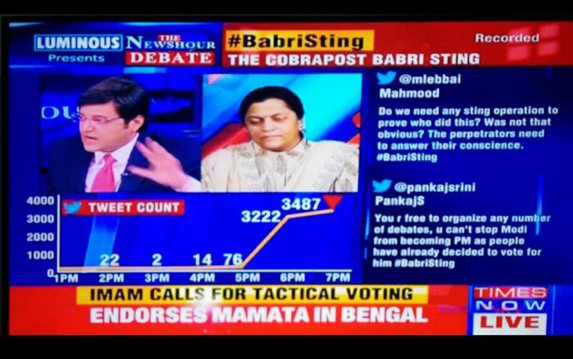
    “In the last election, social media was considered a medium of a few. Internet penetration was not so deep. In the current environment, it is considered a major influencer and a lot of recourses have also been deployed by all political parties to influence the voter,” points out Kumar. Online data says that in 2009, the number of Facebook users was 1.6 million which has now crossed 100 million,  while Twitter which had about 0.6 million subscribers, hasn’t really caught up and currently has approximately 40 million visitors. However, it seems to now be making the most buzz.

    “Voting for Lok Sabha #Election2014 in India begins today in what has truly been the country’s first Twitter election” said a Twitter statement on the first day of elections. Even then, the social media user penetration in the country stands at 10.5 per cent of the total population, which is expected to grow to 17.2 per cent by 2017. So, although channels are vehemently focusing on communication through digital media, it still remains a small but actively growing part of the population.

    Quite possible that by then the meaning, use or method of ‘social media’ might change. However, channels are keenly tracking the number of followers, likes, people talking about it and the growth level. As India’s mobile and internet penetration sharpens and connections become better and cheaper, the social media landscape for news will totally change.